

Reviewed · POMPEII TOURS
Pompeii: Entry Ticket and Guided Tour with an Archaeologist
Pompeii is easiest to understand when someone helps you read the stones. This two-hour walk with an archaeologist takes you from the Marina Gate and Forum to private homes, shops, baths, and theaters, showing how ordinary people lived before Mount Vesuvius buried the city in 79 AD.
I like two things right away: skip-the-line entry saves precious time at a busy archaeological site, and a group capped at 20 people is small enough to keep up with the guide. The route also covers the major sights without trying to force every corner of Pompeii into one short visit.
The main drawback is the site itself. Pompeii is vast, uneven, and tiring, with stretches of ancient paving and occasional steps. You will need comfortable shoes, water, and a little patience with the headset when crowds or street noise make the audio harder to hear.
Key points to know before booking
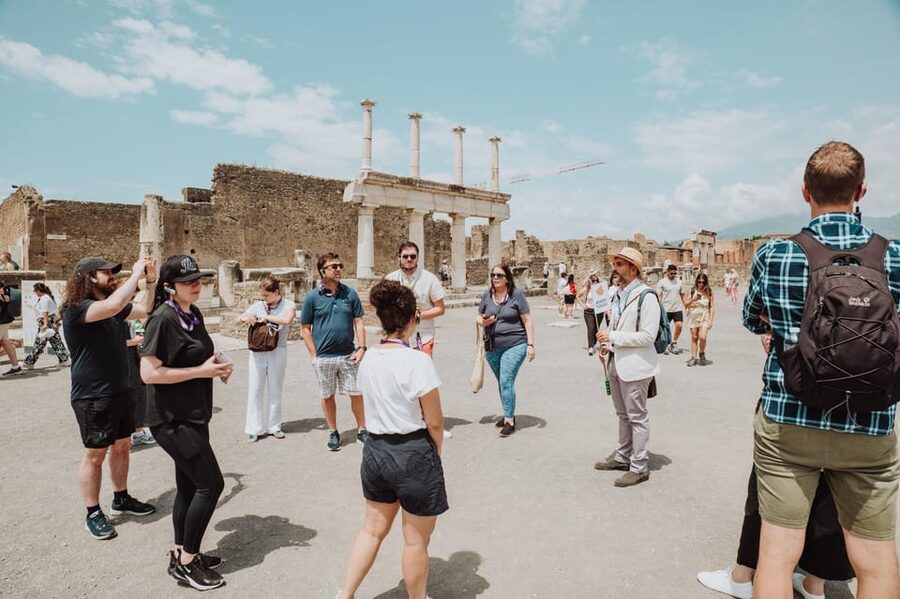
- A guide gives the ruins meaning: Learn how houses, shops, baths, temples, and public buildings worked instead of simply walking past old walls.
- The core route is well chosen: The House of the Faun, Lupanar, House of Menander, Forum, Macellum, and Forum Baths offer a useful cross-section of Pompeii.
- The tour is limited to about two hours: It gives you a strong introduction, then leaves you time to continue on your own.
- The walk is physically demanding: Expect uneven stones, a long route, and some steps. This is not suitable for wheelchair users or people with mobility impairments.
- The $35 price is reasonable: You receive the Pompeii Express entry ticket, a live guide, and a small-group tour, though food, drinks, and transport are extra.
- The guide can shape the whole experience: Guides such as Teresa, Anna, Alfredo, Raffaella, and Mario have been praised for clear explanations, humor, and vivid stories about daily Roman life.
Why an archaeologist changes Pompeii
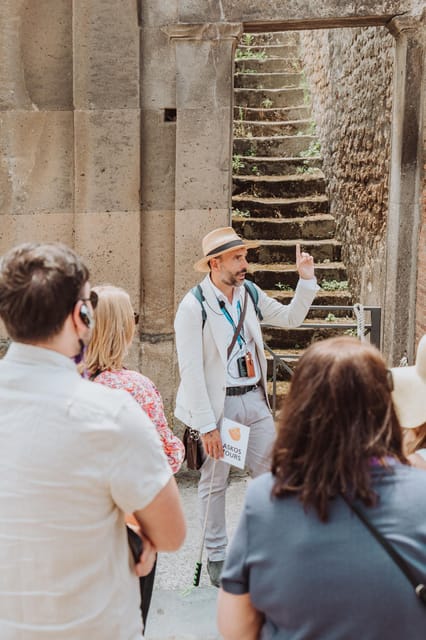
Pompeii can look confusing when you first enter. You see walls without roofs, streets without traffic, and rooms whose purpose is not always clear. A guide provides the missing clues: where people shopped, how public baths worked, why a large house had a particular layout, and how the city fit into Roman society.
That help matters here more than at a compact monument. Pompeii covers a huge area, and its most interesting details are often small. A painted sign, a counter with storage jars, a raised stepping stone, or a household shrine can tell you more about everyday life than a grand temple. Guides such as Teresa and Anna have been praised for explaining those details in a lively, easy-to-follow way.
The archaeologist-led format also adds useful context. You are not just hearing dates and names. You can expect discussion of architecture, mythology, social life, and the routines of ordinary Pompeiians. Mario, for example, has been praised for connecting the ruins with Roman philosophy, art, and sociology.
That does not mean every guide will have the same personality. Some are funny and energetic, while others take a more formal approach. The consistent advantage is having someone who can point out what you would likely miss alone.
More Entry Tickets in Pompeii
- Pompeii: Skip-the-Line Entrance Ticket with Audio Guide
★ 4.0 · 2,509 reviews - Pompeii: Skip-the-line-Ticket and Guided Tour
★ 4.6 · 1,152 reviews - Pompeii: Skip-the-Line Entry Ticket with Digital Guide App
★ 4.1 · 770 reviews
Starting at Porta Marina and the city gate
The tour begins at one of the available meeting locations, with the exact point depending on the option you book. The itinerary then moves through Porta Marina, one of Pompeii’s principal entrances, for about 10 minutes.
This is a smart place to begin. A city gate helps you picture Pompeii as a working town rather than a silent excavation. The route from the gate leads into the urban core, where public buildings, religious sites, shops, and houses once crowded together.
The ancient street surfaces are part of the appeal, but they are also where you first notice the physical challenge. Large paving stones can make walking awkward, especially in thin-soled shoes. If rain has fallen, they may be slippery, so give yourself time and watch your footing.
Temple of Apollo and the Forum

The Temple of Apollo is treated as a pass-by stop of roughly 10 minutes. Even a short explanation here can help you understand the religious side of Pompeii and the way temples were positioned within the city.
The tour then spends about 20 minutes around the Foro Civile di Pompei, the main Forum. This was the civic heart of the city, surrounded by important public and religious buildings. It is one of the places where Pompeii’s scale becomes clear.
The Forum can be busy, and a guide must balance explanation with movement. That is where the headset becomes useful. Headsets are supplied for groups of 10 or more, allowing you to hear the guide while standing a short distance away to take photographs.
The downside is practical rather than historical. One person found the earpiece awkward and had to hold it close to hear in noisy areas. Keep the device positioned carefully, and do not expect perfect sound in every crowded section.
House of the Faun: Pompeii’s grand domestic side
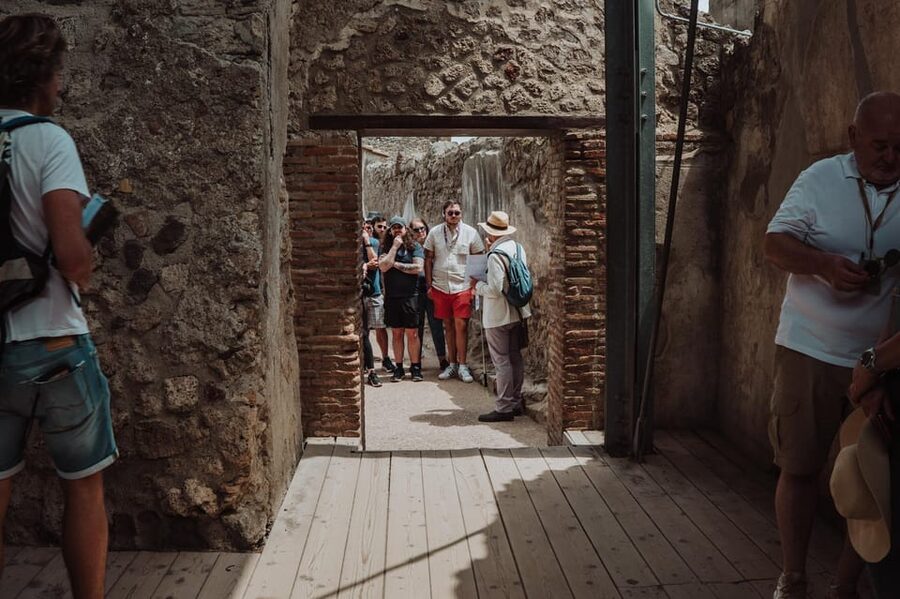
The House of the Faun receives about 20 minutes of guided attention. It is one of Pompeii’s best-known residences and helps show the difference between a modest home and an elite Roman house.
The name comes from the faun statue associated with the property. The house is also known for its impressive scale and decorative features, giving you a sense of how wealth was displayed through space, art, and architecture.
This stop is especially useful because the guide can explain how to read a Roman home. You may find it easier to understand the relationship between courtyards, reception rooms, gardens, and household activity when someone maps out the flow of the house for you.
A short stop cannot cover every room or detail. That is one reason to treat the tour as an introduction rather than a final visit. If the House of the Faun catches your interest, ask your guide what nearby areas deserve a second look after the group walk ends.
More Guided Tours in Pompeii
- Pompeii: Guided Tour with Skip-the-Line Entry
★ 4.9 · 812 reviews - Pompeii: Afternoon to Sunset Guided Tour with Ticket
★ 4.9 · 484 reviews - Herculaneum: Skip-the-Line Guided Tour with Archaeologist
★ 4.8 · 3,439 reviews - Pompeii: Guided Walking Tour with Entrance Ticket
★ 4.3 · 1,423 reviews
Lupanar and the less polished side of Roman life
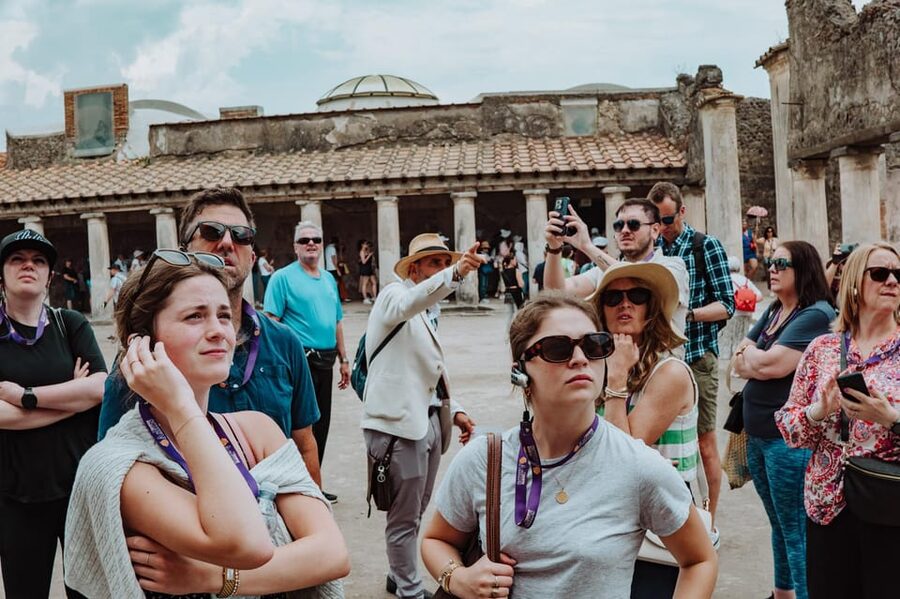
The Lupanar, Pompeii’s famous brothel, is another 20-minute guided stop. Its small rooms and surviving wall paintings make it one of the most talked-about parts of the site, but it is worth seeing as more than a sensational attraction.
The building opens a window onto commerce, class, and private life in the Roman city. A good guide can explain the setting without reducing it to a joke. The strongest guides use it to show how Pompeii served residents, workers, sailors, and passing customers.
This area can become crowded, so your position in the group may affect how much you see. Stay close enough to hear, but do not block narrow entrances. The small-group format helps, though 20 people is still a noticeable group in tight rooms.
House of Menander and the life of the wealthy
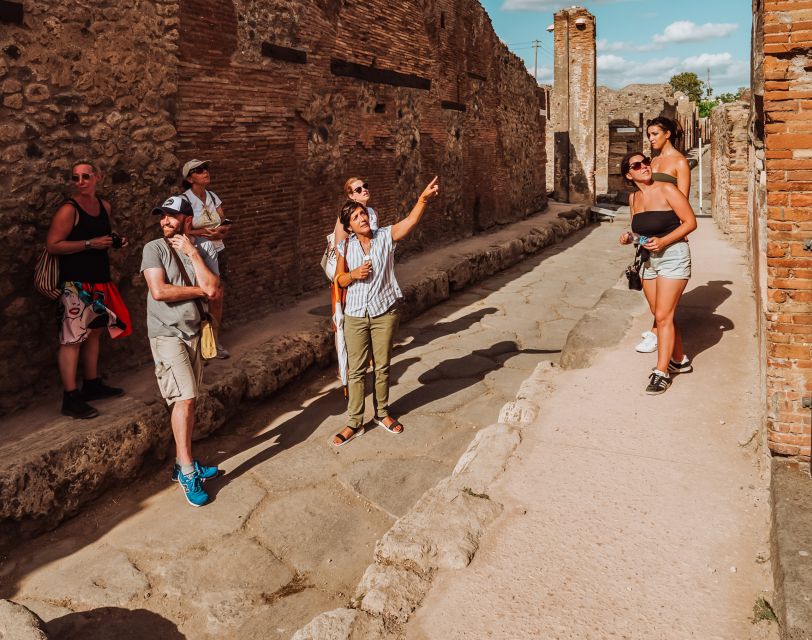
The House of Menander gets another 20-minute guided visit. Named for the Greek playwright, it offers more evidence of the taste and status of a wealthy household.
Here, the value of the guide lies in connecting decoration with social life. Roman homes were not simply private places to sleep. Their rooms could display education, taste, family standing, and financial success. You might find the guide discussing how art and layout helped a household make an impression on guests.
This is also a useful counterpoint to the Lupanar and the streets. Pompeii becomes more human when you see both grand houses and working spaces in the same tour. Guides such as Alfredo and Amedeo have been praised for focusing not only on rulers and famous figures, but also on regular people and their daily routines.
Macellum and Forum Baths
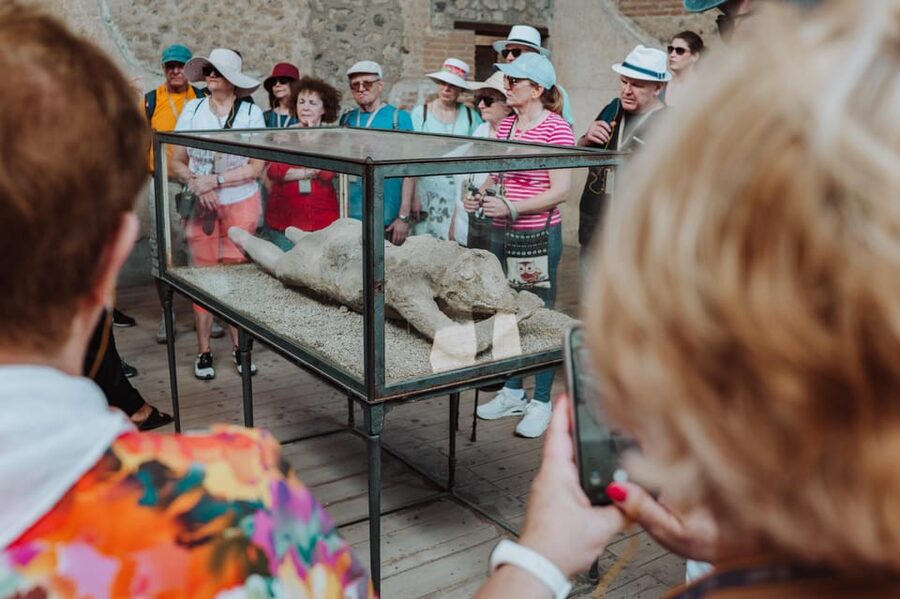
The Macellum, an ancient market building, receives about 10 minutes. This is where the tour shifts from private homes to food, trade, and public commerce.
A market is a useful reminder that Pompeii was a living town before it became an archaeological site. You can think about the movement of goods, customers, and workers through the city. The guide’s explanation helps you connect the building with the shops and streets around it.
The Forum Baths are covered for about 10 minutes. Roman baths were social spaces as well as places for washing, and they reveal the city’s engineering and public habits.
These shorter stops are not meant to provide a room-by-room examination. Instead, they add necessary variety to the route. You see religion, government, domestic life, commerce, and public leisure within a single walk. That range is one of the tour’s strongest features.
Plaster casts, theaters, and the human cost
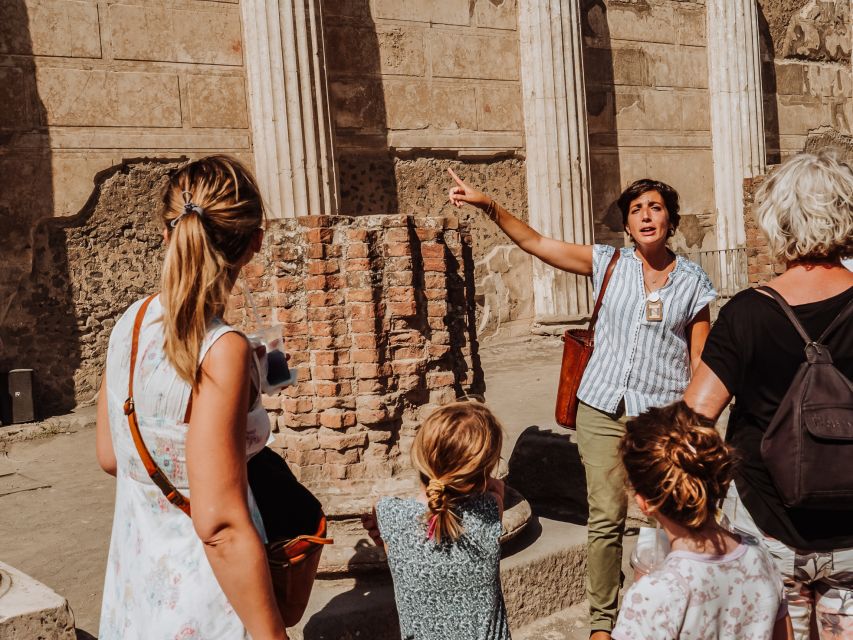
The route also includes notable areas such as the plaster casts of victims and Pompeii’s historic theaters. The exact amount of time at each may depend on crowd levels, the guide’s route, and the pace of the group.
The plaster casts are among the most emotional parts of Pompeii. They make the eruption personal in a way that walls and columns cannot. This is a quiet stop, and you may want a moment to take in what you are seeing rather than rush straight to photographs.
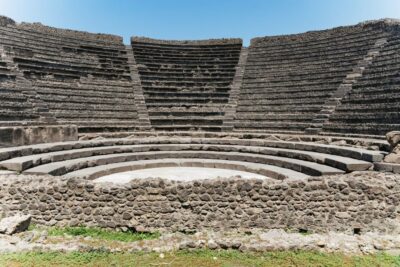
The theaters show another side of city life. Public entertainment was part of the social fabric of Roman Pompeii, and the buildings help you picture crowds gathering before the eruption interrupted everything.
Because this is a moving walking tour, you should not expect long periods at every landmark. If a particular theater or set of casts matters most to you, tell the guide early. The best guides are able to point out where you can return after the tour.
Two hours, then more time on your own
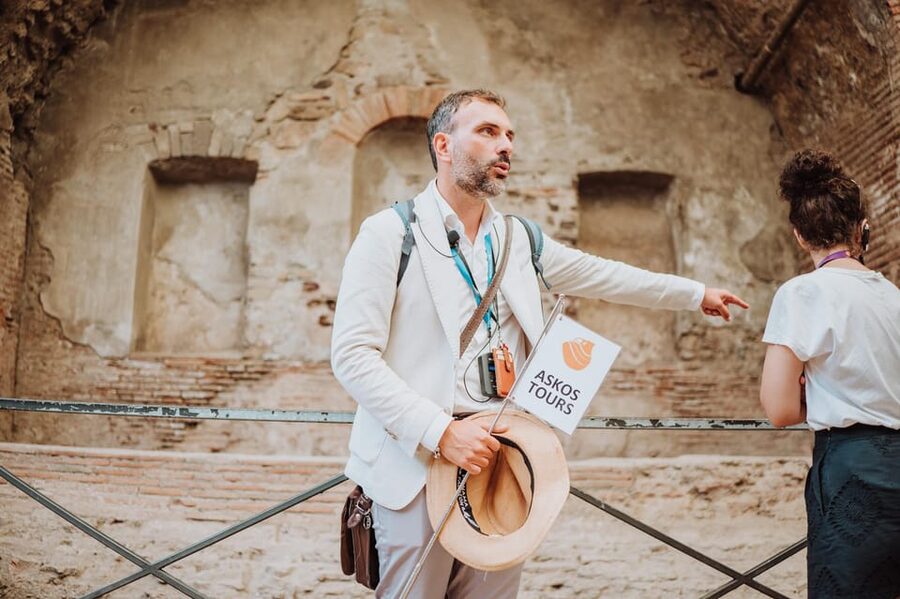
The advertised duration is two hours, but several people have found that the overall experience can run longer or leave them exploring well afterward. The guided portion gives you a route through the key areas, then your ticket and location inside the ruins make it possible to continue on your own.
That extra time is important. Pompeii is too large for a serious visit in two hours alone. The guided walk gives you a framework, but you may want a longer visit if you care about architecture, frescoes, domestic life, or archaeology.
The warning is simple: bring water and a snack for afterward. Food and drinks are not included, and one person became dehydrated and hungry after spending more than two extra hours exploring. Pompeii can quietly turn a short tour into a half-day outing.
You should also leave room in your schedule rather than booking a tight connection immediately afterward. The tour provider has sometimes helped when trains from Naples caused delays, but that is not something to count on. Transport to and from the site is your responsibility.
The $35 price and what you receive
At $35 per person, this is a fair price for a first visit. The fee includes the Pompei Express entrance ticket, an archaeologist guide, and a small-group tour. It also saves you the effort of planning a route through a very large site.
The value depends on how you like to visit archaeological sites. If you enjoy reading every sign and setting your own pace, you may prefer an independent visit. If you arrive without much background, the guide can prevent you from spending hours looking at buildings without knowing why they matter.
Skip-the-line access is useful during busy periods, though it does not make Pompeii quiet. You still share the site with other groups, and famous locations such as the Lupanar can feel crowded.
The tour is offered in English, Spanish, French, Italian, Portuguese, and German. Groups can reach 20 people, and headsets are provided when there are at least 10. Confirm the meeting point for your selected option, since it can vary.
Who should book this Pompeii tour?
I would choose this tour for a first visit, especially if you have only a few hours in Campania. It suits anyone who wants the major sights explained clearly without committing to a full-day private guide.
It is also a good fit for families with older children and teenagers who may lose interest in bare ruins but respond to stories about homes, shops, baths, food, and Roman routines. Unaccompanied minors are not permitted, so children must be with an adult.
You should think twice if you use a wheelchair, mobility scooter, or have serious difficulty walking. The activity is not suitable for wheelchair users or people with mobility impairments, and scooters are not allowed. The uneven paving is not a minor detail.
Dogs are allowed only under specific conditions: they must weigh no more than 10 kilograms, be no taller than 40 centimeters, remain on a leash, and be carried inside buildings. You must also collect waste. Anyone under 18 should bring a passport or identity card to qualify for free admission.
Practical ways to enjoy the walk
Wear supportive shoes with a firm sole. Pompeii’s ancient streets are uneven, and you may climb a few steps. Comfortable shoes will do more for your day than stylish ones.
Bring water, sun protection, and a light layer. The tour takes place outdoors across a broad site, and weather can affect your comfort. The walk can still go ahead in rain, but wet paving makes footing more demanding.
Keep your guide in sight when the group moves. If you stop for a photograph, rejoin quickly, since narrow streets and large crowds can make it easy to lose the group.
Listen for the final recommendations. Guides often suggest additional areas to explore after the formal tour, and that advice can help you avoid wandering without a plan. Pompeii is large enough that a simple route suggestion saves real time.
Should you book it?
Book this Pompeii tour if you want the ruins to make sense, not just look impressive. For $35, you get admission, a live archaeologist guide, skip-the-line access, and a route that covers the city’s key public and private spaces.
I would not choose it if you need full accessibility, dislike walking on uneven ground, or want to explore every corner at your own pace. For most first-time visitors, though, the guide is the difference between seeing old walls and understanding a Roman city. Plan to stay longer afterward if you can, carry water, and treat the two-hour tour as your useful starting point rather than the whole Pompeii story.
FAQ
How long does the Pompeii guided tour last?
The guided tour lasts two hours. You may continue exploring Pompeii on your own after the guided portion.
What is included in the price?
The $35 price includes the Pompei Express entrance ticket, an archaeologist guide, and a small-group tour. Headsets are included for groups of 10 people or more.
How large is the tour group?
The group can include up to 20 people.
Which languages are available?
Live guides are available in English, Spanish, French, Italian, Portuguese, and German.
Is the tour suitable for wheelchair users?
No. The activity is not suitable for wheelchair users or people with mobility impairments. Mobility scooters are also not allowed.
Are children and dogs allowed?
Unaccompanied minors are not allowed. Children under 18 should bring a passport or identity card to qualify for free admission. Dogs are permitted only if they weigh no more than 10 kilograms, measure no more than 40 centimeters in height, remain leashed, and are carried inside buildings.
Just added around Pompei Campania
- Pompeii 3hours Villa of Mysteries tour with an Archaeologist★ 4.8 · 486 reviews
- Pompeii: Small-Group Tour of Pompeii and Herculaneum★ 4.8 · 867 reviews
- Pompeii: Skip-the-line-Ticket and Guided Tour★ 4.6 · 1,152 reviews
- Pompeii: Skip-the-Line Entry & Audioguide★ 3.8 · 225 reviews
- Pompeii: Guided Tour with Skip-the-Line Entry★ 4.9 · 812 reviews
- Pompeii: Skip-the-Line Entry Ticket with Digital Guide App★ 4.1 · 770 reviews
- Pompeii: Tour with Archaeologist Guide & Skip-the-Line Entry★ 4.5 · 478 reviews
- Pompeii: Afternoon to Sunset Guided Tour with Ticket★ 4.9 · 484 reviews
Pompeii Tours, compared.


From Naples: Pompeii Ruins & Mount Vesuvius Day Tour
Read our review →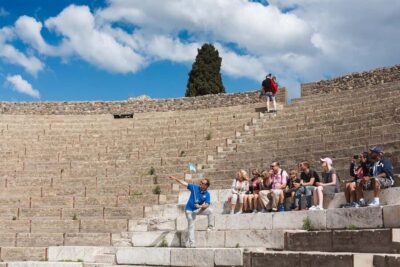
From Rome: Pompeii, Amalfi Coast, and Sorrento Day Trip
Read our review →
From Rome: Pompeii, Amalfi Coast and Positano Day Trip
Read our review →Pompeii Small Group Tour with an Archaeologist
Read our review →
Pompeii, Amalfi Coast and Positano Day Trip from Rome
Read our review →
Pompeii and Mount Vesuvius Day Trip from Rome with Pizza Lunch
Read our review →Browse the lists this tour appears in