
Reviewed · POMPEII TOURS
Pompeii: Tour with Archaeologist Guide & Skip-the-Line Entry
Pompeii makes far more sense with someone to explain what you are seeing. A wall of brick and stone can look like a ruin, but a guide can point out the old street design, horse-tie rings, shop counters, bath buildings, and the small details of daily Roman life. The two-hour route covers the essential sights, including the House of Menander, Thermopolium, Lupanare, and Forum.
I like the priority entry, which saves time at a busy archaeological site, and I like the guides’ habit of adding context rather than simply naming buildings. Guides such as Angelo, Teresa, Paolo, Lilian, Roberta, and Mario are praised for clear explanations, humor, and thoughtful pacing. The main drawback is that two hours only gives you an introduction, and the meeting point can be difficult to find if you arrive in a hurry.
Key points to know before booking

- A guide changes what you see: Pompeii’s ruins become easier to understand when someone explains their purpose and connects them to ordinary Roman life.
- The route covers major highlights: You visit Porta Marina, Teatro Piccolo, House of Menander, Thermopolium, Terme Stabiane, Lupanare, and the Forum.
- The tour lasts about two hours: It is a focused introduction, not a complete visit to every corner of the enormous site.
- Priority entry saves useful time: You avoid the long ticket line and begin the archaeological visit sooner.
- Audio equipment may be used: Groups larger than eight receive a radioguide, while smaller groups may use an audio guide with an English-speaking guide.
- Plan to stay afterward if possible: The tour ends at the meeting point, but you can use the remaining day to explore more of Pompeii on your own.
Why Pompeii works better with a guide
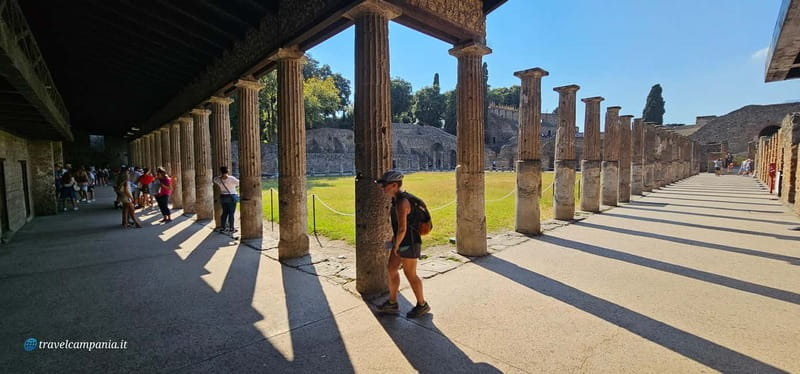
Pompeii is unusual because the city was preserved by disaster. The eruption of Mount Vesuvius in AD 79 buried streets, houses, shops, theaters, baths, and public spaces under ash and debris. That destruction stopped the city in time, leaving an extraordinary record of Roman life.
The trouble is that Pompeii is not always easy to read by yourself. You may see a doorway, a painted wall, or a broad paved street without knowing what made it important. A good archaeology guide supplies the missing story. You learn not only what a building was called, but how it was used and what it tells you about the people who lived here.
This tour also reaches beyond the most obvious ruins. It brings together public monuments and ordinary places, from the Forum to the Thermopolium, where food and drink were sold. That mix is one of the strongest parts of the experience.
The walk lasts approximately two hours and is conducted in Italian, English, Spanish, French, or German. The route is fairly concentrated, but Pompeii involves uneven ground, exposed streets, and a lot of walking. The activity is not suitable for wheelchair users or people with mobility impairments.
More Skip-the-Line Tickets in Pompeii
- Pompeii: Skip-the-Line Entrance Ticket with Audio Guide
★ 4.0 · 2,509 reviews - Pompeii: Skip-the-line-Ticket and Guided Tour
★ 4.6 · 1,152 reviews - Pompeii: Guided Tour with Skip-the-Line Entry
★ 4.9 · 812 reviews
Meeting at the Welcome Box
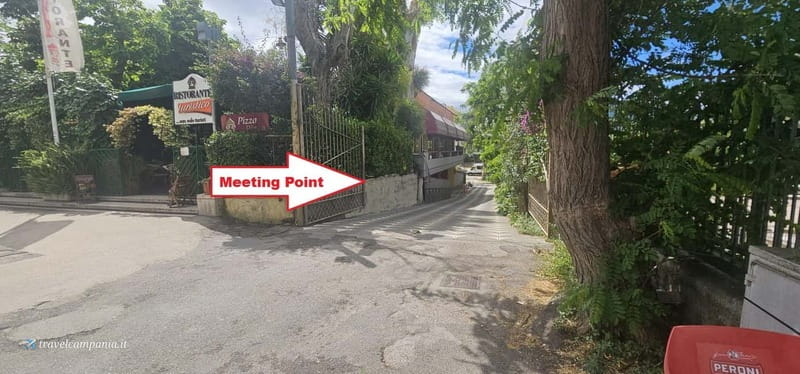
The tour begins at the Welcome Box in Pompeii, with the guide leading the group into the archaeological area. Allow time to locate the meeting point. One of the few recurring practical problems is that the check-in spot can be less obvious than expected, especially if you are arriving by train, dealing with crowds, or trying to make a fixed start time.
Bring your passport or identity card, including documentation for children. A copy is accepted. Bags are not allowed, so pack lightly and check the current arrangements before arriving. Bikes, alcohol, and drugs are also prohibited.
The entrance ticket is included, as is an authorized guide with archaeological expertise. Transport and lunch are not included, so you make your own way to Pompeii and arrange food separately. At $57 per person, the price is reasonable if you value interpretation and want to save time at the entrance. It is less appealing if you prefer to wander alone or plan to spend only a short time at the site.
Porta Marina: the first view of ancient Pompeii
The route begins at Porta Marina, one of Pompeii’s main entrances. This is a useful opening point because it immediately puts you inside the city’s old circulation system. Your guide sets the scene, explains the city’s long history from its foundation in the seventh century BC, and describes how the eruption transformed it in AD 79.
Expect roughly 10 minutes here. That is enough for orientation, but not a long lecture. The value is in getting a basic sense of the city before moving into its theaters, homes, shops, baths, and public spaces.
Pompeii can feel confusing at first, with streets leading in many directions and buildings opening onto one another. A short introduction at the gate helps you get your bearings fast.
Teatro Piccolo and the city’s public life

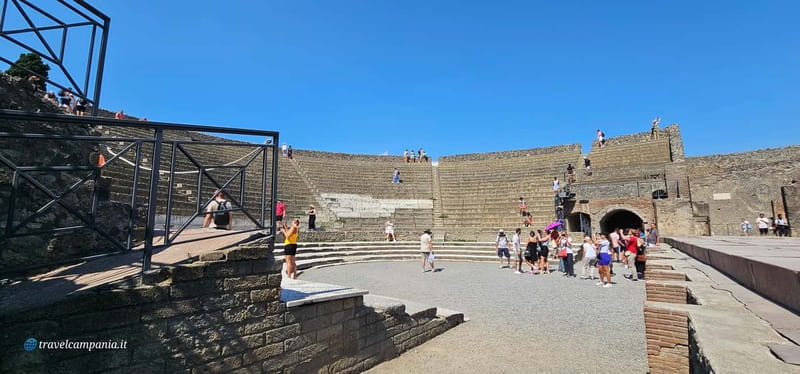
The next stop is Teatro Piccolo, or the Small Theater, with about 10 minutes of guided explanation. Pompeii was not only a place of private houses and commercial activity. It had entertainment, public gatherings, and spaces designed for shared civic life.
This stop gives the tour some balance. You are not looking only at domestic rooms or disaster remains. You also see how the city organized leisure and public events.
The theater visit is brief, so you should not expect a full performance-history lesson. Instead, it works as a compact look at the social side of Pompeii and helps explain why theaters mattered in Roman towns.
More Skip-the-Line Tickets in Pompei Campania:
- Pompeii: Skip-the-Line Entry Ticket with Digital Guide App
★ 4.1 · 770 reviews - Pompeii: Skip-the-Line Entry & Audioguide
★ 3.8 · 225 reviews - Florence: Skip-The-Line Uffizi Gallery Timed Entry Ticket
★ 4.5 · 27,832 reviews - Vatican Museums & Sistine Chapel Skip-the-Line Entry Ticket
★ 4.4 · 13,838 reviews
House of Menander: art and private life
The House of Menander receives about 15 minutes. It is one of the tour’s more rewarding stops because it shifts attention from public spaces to the home.
Here, your guide can explain how a Roman residence was arranged and how decoration, rooms, and household spaces reflected the life of its owners. The house is also a good place to learn how archaeologists use paintings, architecture, and objects to reconstruct daily routines.
This is where the tour’s specialist guidance becomes especially useful. Without context, an ancient house can look like a set of bare walls. With explanation, you begin to picture movement through the rooms, domestic work, decoration, and the social role of the household.
Thermopolium: an everyday Roman shop
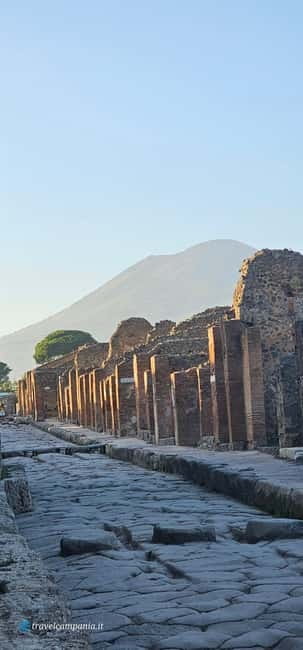
The Thermopolium is scheduled for about 15 minutes and offers one of the most accessible glimpses of ordinary life. A thermopolium was a food and drink shop, a place where people could buy something ready to eat.
I particularly like this stop because it brings Pompeii down from grand monuments to practical daily habits. You can think about how residents ate, bought goods, and used commercial spaces in their neighborhood. It is the kind of detail that makes the ancient city feel less abstract.
Your guide may also point out small features that are easy to pass without noticing. One guide was praised for identifying places where horses could be tied and explaining details in the road design. That is the sort of observation that rewards having an expert beside you.
Terme Stabiane: Roman bathing culture
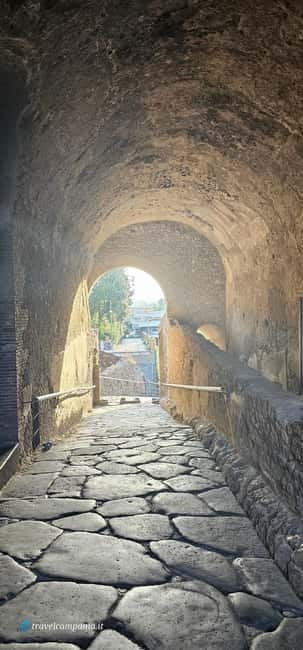
The tour then spends about 15 minutes at Terme Stabiane, the Stabian Baths. Roman baths were much more than places to wash. They were part of social life, exercise, relaxation, and public routine.
The baths help you understand how Roman cities served their populations. They also provide a useful contrast with the private house and food shop. Pompeii’s residents used shared facilities and public spaces as part of normal urban life.
This stop is another example of why a guided walk has value. The remains may not explain themselves, but the layout and surviving features can tell you how people moved through the building and what the different areas were for.
Lupanare: a direct look at Roman commerce

The Lupanare, traditionally identified as a brothel, receives the longest stop on the route at around 20 minutes. That extra time makes sense. It is one of Pompeii’s most talked-about buildings, but it needs careful explanation to avoid reducing the visit to a quick novelty stop.
The guide can place the building within the wider commercial life of the city and explain what its small rooms, paintings, and layout reveal. The subject matter is adult, so families should consider whether the stop suits their children.
Because the Lupanare is popular, it can become crowded. The audio system is useful here and elsewhere, particularly when groups gather in narrow areas. Some people find the earpieces loud, but they help you hear the guide when other groups are nearby.
The Forum: Pompeii’s civic center
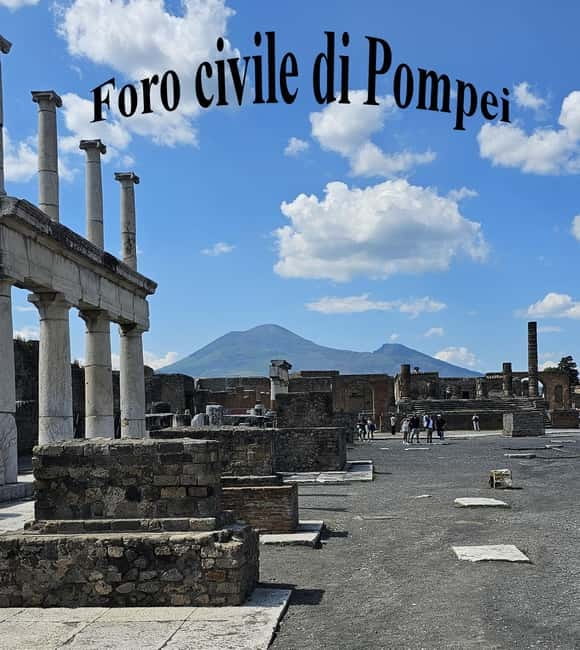
The final major stop is the Foro Civile di Pompei, or Forum. You spend about 15 minutes with the guide, followed by roughly 10 minutes of free time.
The Forum is the right place to pull the story together. After seeing homes, shops, baths, theaters, and a commercial building, you arrive at the city’s central public space. Your guide explains how the Forum functioned as a place of politics, religion, business, and civic display.
The guided explanation is the main event here, but the short free period matters too. You can look around at your own pace, take photographs, and let the scale of the city sink in. Ten minutes is not enough for a long independent visit, but it gives you a pause before returning to the meeting point.
How the audio system and group size affect the walk
The tour uses different arrangements depending on the group. When more than eight people are present, a radioguide is included. If no more than four people are taking the tour in the same language, the format may be an audio guide combined with an English-speaking guide.
That setup can make a real difference in Pompeii. The site can be crowded, and the guide may need to move between narrow streets and open public areas. You can keep walking while still hearing the explanation instead of clustering tightly around one person.
The tradeoff is that the equipment may not feel perfect for everyone. One useful practical point is to tell the guide if the volume is uncomfortable. The system is still generally valuable because missing half the explanation can make a short tour feel much thinner.
What the guide adds to the experience
The strongest feature here is the human explanation. The best guides do more than recite dates. They connect the ruins to Roman customs, crafts, household routines, road design, and the city’s social structure.
Mario is praised for being funny, kind, and very well informed. Teresa is described as professional and humorous, while Lilian is noted for clear explanations and friendly interaction. Paolo is praised for keeping the group moving while supplying plenty of information. These details suggest that the guide can shape the entire experience, and that is true at Pompeii more than at many sights.
A guide can also adjust the route around crowds. One guide was especially good at choosing when to enter certain areas so the group avoided the largest clusters. That matters at the Lupanare and other compact spaces.
You should still keep your expectations realistic. Guide quality can vary by person and language group, and two hours passes quickly. The value comes from getting a strong framework, then exploring further on your own if you have the time.
Making the most of the rest of your day
The tour ends back at the meeting point. If your schedule allows, stay at Pompeii after the guided walk. The guide can suggest areas to see next, and several guides specifically help people decide how to continue independently.
This is the best way to handle the tour’s main limitation. Two hours is enough to explain the key sites, but not enough to see the entire archaeological area in detail. Think of the guided route as your introduction, not your complete Pompeii visit.
A map can help you plan the remaining time. Free lockers are available at the gates for storing a backpack, and water fountains can be found around the site, though they may not be clearly marked. These small conveniences are useful on a longer visit.
Who should book this Pompeii tour?
I would choose this tour if you want Pompeii to make sense, prefer an expert explanation, or have limited time before a train or another activity. It also suits families and mixed-age groups because the guide can turn bare ruins into a connected story.
The tour is a good match for first-time visitors, history fans, and anyone uneasy about navigating a huge archaeological site alone. The priority entrance is especially useful when the ticket line is long.
I would think twice if you need step-free access, use a wheelchair, have difficulty walking over uneven ground, or want a slow photography-focused visit. It is also not the best choice if you want to spend all day in one house or study individual artworks at length.
Is the $57 price worth it?
At $57, you are paying for three things: the Pompeii Express entrance ticket, priority access, and a two-hour authorized archaeology guide. The ticket and queue savings have practical value, but the guide is the main reason to book.
Without context, Pompeii can become a long walk through walls and stones. With a strong guide, you learn how the buildings relate to each other and how people lived before the eruption. The price is fair for that introduction, especially if this is your first visit or you are fitting Pompeii into a busy day.
Reserve only if you can arrive at the meeting point with time to spare. Free cancellation is available up to 24 hours before the activity for a full refund, and you can reserve now and pay later, which helps if your Campania plans are still shifting.
Should you book it?
Yes, if you want a focused, well-explained first look at Pompeii and plan to remain at the site afterward. The mix of public buildings, private homes, shops, baths, and the Forum gives you a useful picture of Roman city life, while priority entry keeps the day moving.
Book with care if mobility is an issue, if you dislike group audio systems, or if two hours is all you have for Pompeii. In that case, the tour can still show you the main sights, but you will need to accept a brisk introduction rather than a full exploration.
FAQ
How long does the Pompeii tour last?
The guided visit lasts approximately two hours. The route includes a short period of free time at the Forum before the activity ends back at the meeting point.
What does the Pompeii ticket include?
The activity includes a Pompeii Express entrance ticket and an authorized guide with archaeological expertise.
Which languages are available?
The live guide is available in Italian, Spanish, French, English, and German.
Is transport included?
No. Transport and lunch are not included, so you must make your own way to the meeting point in Pompeii.
What identification should I bring?
Bring a passport or identity card for each participant, including children. A copy of a passport or identity card is accepted.
Is the tour suitable for wheelchair users?
No. The activity is not suitable for wheelchair users or people with mobility impairments.
Just added around Pompei Campania
- Pompeii 3hours Villa of Mysteries tour with an Archaeologist★ 4.8 · 486 reviews
- Pompeii: Small-Group Tour of Pompeii and Herculaneum★ 4.8 · 867 reviews
- Pompeii: Skip-the-line-Ticket and Guided Tour★ 4.6 · 1,152 reviews
- Pompeii: Skip-the-Line Entry & Audioguide★ 3.8 · 225 reviews
- Pompeii: Guided Tour with Skip-the-Line Entry★ 4.9 · 812 reviews
- Pompeii: Skip-the-Line Entry Ticket with Digital Guide App★ 4.1 · 770 reviews
- Pompeii: Afternoon to Sunset Guided Tour with Ticket★ 4.9 · 484 reviews
- Pompeii: Day Tour of Pompeii and Vesuvius with Bus Transfer★ 4.2 · 250 reviews
Pompeii Tours, compared.

Entry Ticket and Guided Tour with an Archaeologist
Read our review →

From Naples: Pompeii Ruins & Mount Vesuvius Day Tour
Read our review →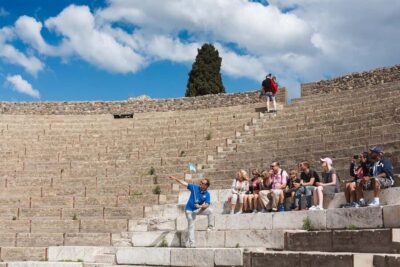
From Rome: Pompeii, Amalfi Coast, and Sorrento Day Trip
Read our review →
From Rome: Pompeii, Amalfi Coast and Positano Day Trip
Read our review →Pompeii Small Group Tour with an Archaeologist
Read our review →
Pompeii, Amalfi Coast and Positano Day Trip from Rome
Read our review →Browse the lists this tour appears in