
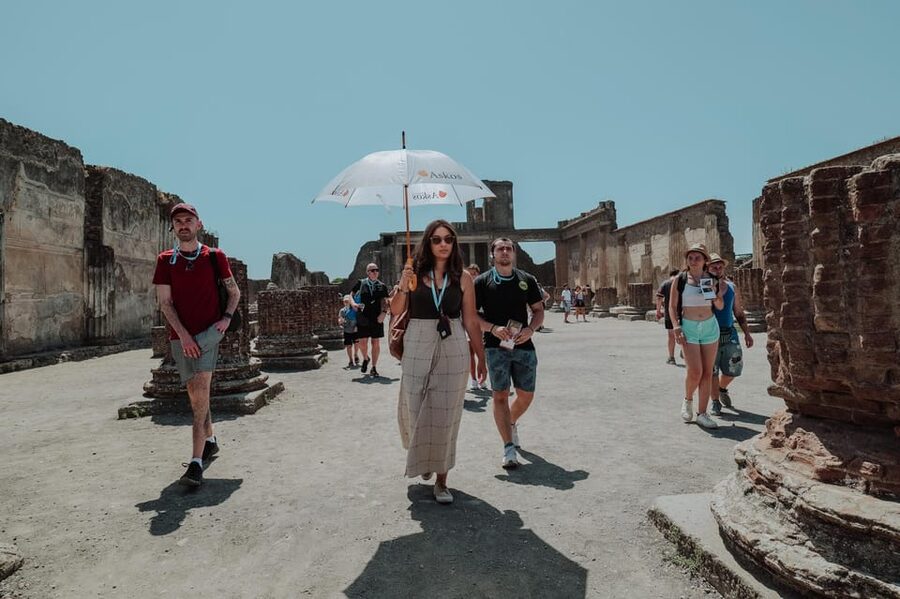
Reviewed · POMPEII TOURS
Pompeii 3hours Villa of Mysteries tour with an Archaeologist
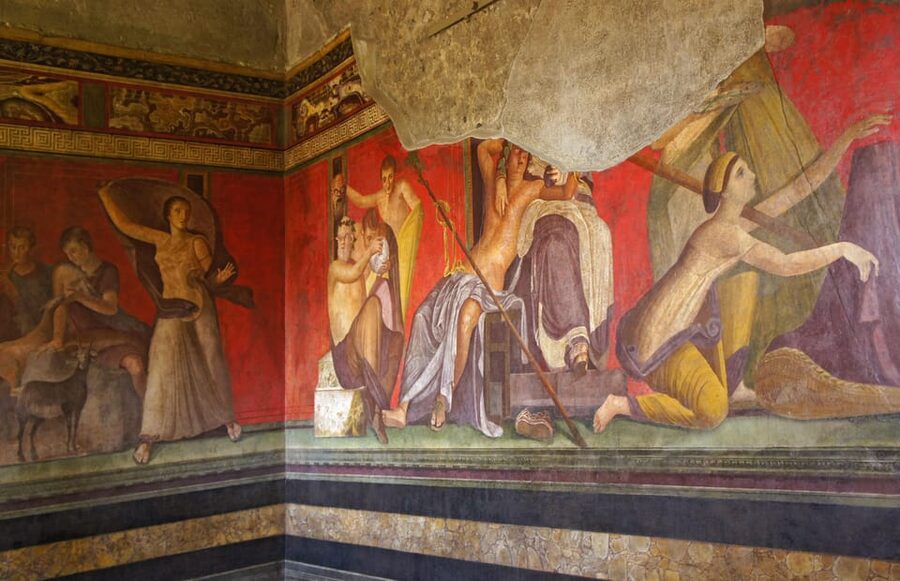
The best part of this Pompeii tour comes at the end: the Villa of the Mysteries, with its famous, puzzling frescoes and quieter setting beyond the busiest streets. An archaeologist guide helps you read the paintings, houses, shops, and public buildings as evidence of ordinary Roman life, not just as old walls.
I like the small-group format, which makes it easier to hear the guide and ask questions. I also like the practical route through major homes, theaters, baths, and public spaces, with guides such as Teresa, Julia, Antonella, and Anna Sorrento known for lively explanations and smart crowd timing. The catch is simple: Pompeii is enormous. Three hours gives you an excellent framework, not every corner of the city.
Key points at a glance

- The Villa of the Mysteries is included, adding one of Pompeii’s most memorable fresco cycles to the main archaeological site.
- An archaeologist leads the walk, bringing professional site knowledge to buildings, artwork, and Roman daily life.
- The route covers major highlights, including the House of the Vettii, House of the Faun, Large Theatre, Forum, basilica, baths, and lupanare.
- Small groups make a difference, especially when the guide is explaining details inside crowded houses.
- Crowd-aware routing can save time, with several guides adjusting the order of stops to avoid packed entrances.
- Plan extra time afterward, because three hours cannot cover all of Pompeii.
Why the Villa of the Mysteries makes this tour different

Pompeii offers plenty of guided walks, but this one has a clear prize at the far end of the route. The Villa of the Mysteries sits outside the central cluster of the city, and its painted rooms are among the most striking sights in the archaeological park.
The frescoes show a ceremonial scene whose meaning is still debated. You will not simply walk past painted figures and hear a date. Your archaeologist can explain the competing interpretations, the role of ritual imagery, and the way Roman wall painting worked within a wealthy villa.
That setting also changes the pace. The villa area can feel calmer than the Forum and the most popular houses. One guide also points out that this section includes another villa and a cemetery, giving you room to pause, explore, or have a quick snack if you bring one.
This is not a private tour, and access is not the same as an after-hours visit. The advantage is that the Villa of the Mysteries is part of your archaeological park ticket, so you do not need to arrange it separately.
More Ghost Tours in Pompei Campania:
- The Dark Side of Florence: Mysteries and Legends
★ 5.0 · 2,785 reviews - Florence: Dark Mysteries and Legends Guided Walking Tour
★ 4.6 · 1,081 reviews - Rome by Night Walking Tour – Legends & Criminal Stories
★ 4.5 · 1,003 reviews
Meeting at Porta Marina Superiore
The tour begins at Via Villa dei Misteri, 2, at the entrance known as Porta Marina Superiore. Look for the guide holding an ASKOS TOURS sign.
That detail matters at Pompeii. The site has more than one entrance, and arriving at the wrong gate can waste valuable time. Give yourself enough time to identify Porta Marina Superiore before the scheduled start, especially if you are arriving by train, taxi, or local transport.
Transportation is not included, so you make your own way to the gate. Food and drinks are not included either. Bring water from the start. There are refill stations inside, but one is not reached immediately, and the heat can build quickly on the exposed ancient streets.
The tour runs in rain or shine. Wear comfortable closed-toe shoes. Flip-flops are a poor choice on Pompeii’s uneven paving, and a hat is useful in summer. Bring a passport or identity card, as requested for the activity.
The first houses: Roman life behind the walls

The route begins with the city itself, then moves into domestic spaces where the guide can explain how Pompeii worked as a lived-in town. This is where an archaeologist makes a real difference.
At the House of the Vettii, you can look beyond the size and decoration of the home. The paintings, courtyards, rooms, and household design offer clues about status, wealth, work, and social life. The house is visually impressive, but it can also become crowded, so a good guide helps you focus on details instead of trying to absorb everything at once.
The House of the Faun is another major stop. Its scale and decoration show the ambitions of an elite Pompeian household. This is a place where you may want to linger, but the group must keep moving to maintain the three-hour schedule.
The House of Menander and the House of the Tragic Poet add a different angle. Their names come from important artistic or literary features, and they help you see how domestic buildings were arranged around display, reception, and private life. The guide can connect painted walls and mosaics with Roman ideas about education, status, entertainment, and religion.
One limitation is worth knowing. You may not enter every room in every house, and opening conditions can vary. A comment from one participant specifically wished for more access inside a house. The tour gives you the best use of limited time, but it cannot guarantee a full inspection of each building.
Theaters, shops, and the less polished side of Pompeii
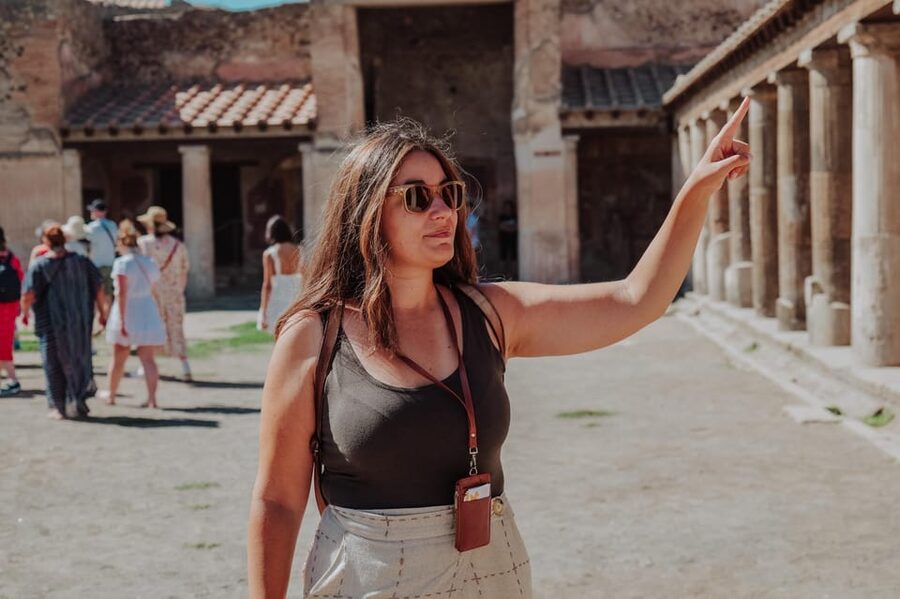
Pompeii was not only a town of villas. It was a working city with entertainment, trade, politics, religion, and plenty of everyday messiness.
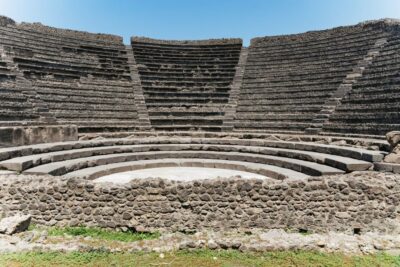
At the Large Theatre, your guide can show how architecture shaped public entertainment and how the building fit into the wider city. The nearby streets help you picture people moving between performances, shops, homes, and public squares.
The Lupanare is one of Pompeii’s most discussed sites. Its small rooms and wall paintings offer a blunt glimpse of commercial sex in the ancient city. It is a compact stop, often crowded, but useful for understanding Pompeii as a real community rather than a museum display cleaned of awkward subjects.
The Forum Baths show another side of public life. Roman bathing was about washing, but also about routine, social contact, and civic culture. You can see how practical facilities were designed and how public buildings depended on engineering that still impresses.
This mix of grand and ordinary places is one of the tour’s strengths. The route does not leave you with only wealthy houses and monumental columns. You see the city’s public habits, private comforts, entertainment, commerce, and religious life.
A few more Pompei Campania half-days worth a look
- Pompeii: Entry Ticket and Guided Tour with an Archaeologist
★ 4.8 · 19,459 reviews - Pompeii: Small Group Tour with an Archaeologist
★ 4.8 · 12,264 reviews - Pompeii: Skip-the-Line Entrance Ticket with Audio Guide
★ 4.0 · 2,509 reviews - Naples: Pompeii and Mt. Vesuvius with Lunch and Wine Tasting
★ 4.5 · 2,454 reviews
The Forum, basilica, and Temple of Apollo
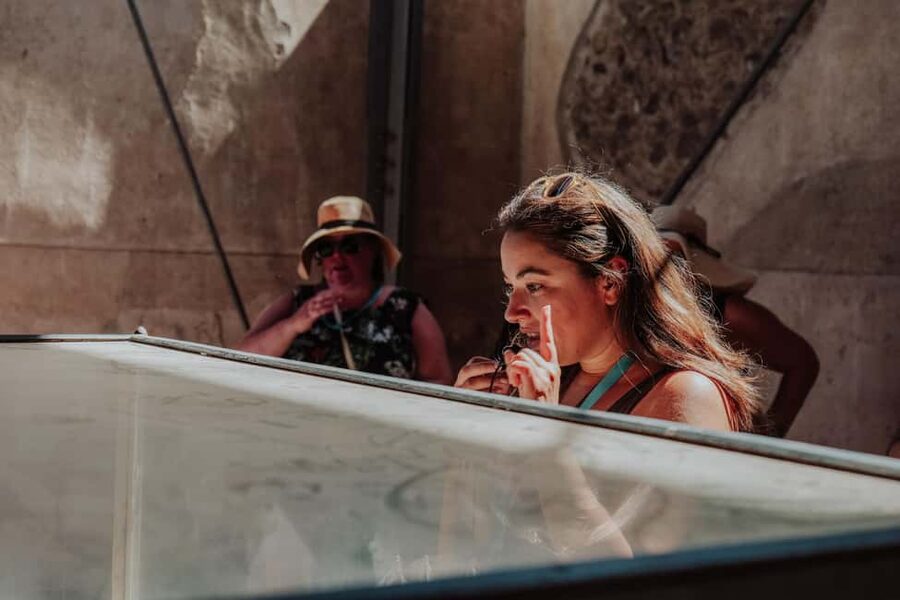
The Basilica and Foro Civile di Pompei bring you into the political and commercial heart of the city. This is where the scale of Pompeii becomes clear. A lone visitor can easily see ruins without understanding how one building related to another. The guide supplies that missing structure.
The Forum was a place for public business, religious ceremony, political display, and daily exchange. The basilica had an important civic and legal role. Together, they show how Roman cities organized public life around open squares, temples, offices, and meeting places.
The Temple of Apollo adds an older religious layer. Its columns and sacred setting help explain that Pompeii was not built all at once. Different periods, customs, and building styles overlap across the site.
These stops can be tiring because much of the route is outdoors, and Pompeii is broad rather than compact. Still, the walk gives you a useful mental map. You begin to understand that the city was not a single ruin but a functioning urban center with different neighborhoods and purposes.
What an archaeologist guide adds
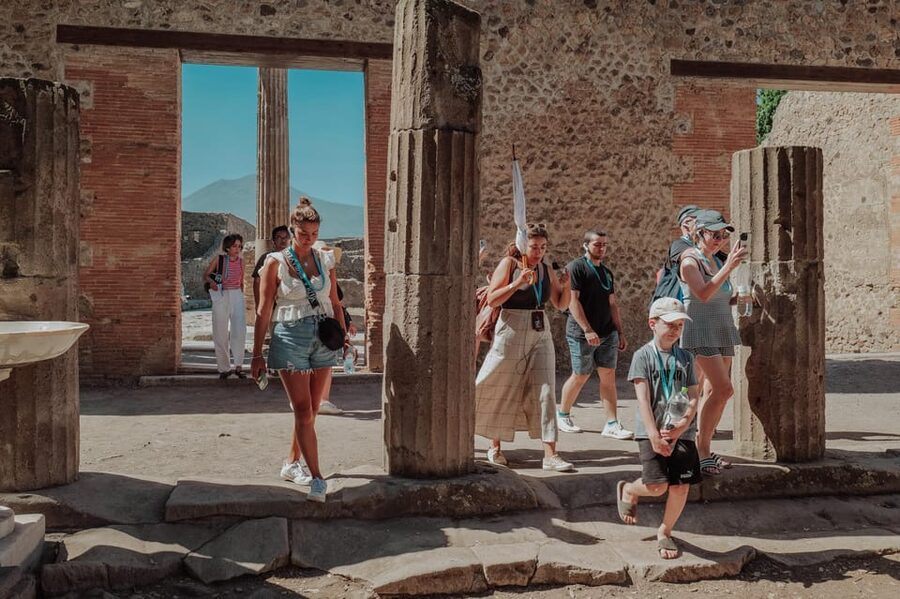
The strongest part of this experience is not simply the number of stops. It is the explanation between them.
Guides including Teresa, Julia, Anna Sorrento, Antonella, Rafael, Yolanda, and Michele have been praised for combining site knowledge with humor and clear English. Several have archaeological work or extended experience at Pompeii, which can add useful context about excavation, conservation, and the ongoing work of uncovering the city.
A strong guide also changes the route when needed. At busy houses, your group may visit a different site first and return when the crowd has thinned. That does not remove the crowds entirely, but it can prevent you from wasting ten minutes standing behind a large group while hearing nothing.
The small group is usually around ten people, based on one detailed account, though the exact group size may vary. Audio earpieces were provided for one group, allowing everyone to hear clearly. Ask questions as you go. The guides are specifically praised for encouraging them, and questions often turn a formal walk into a more useful conversation.
The style can vary by guide. Some are funny and energetic, while others focus more tightly on architecture and archaeology. The consistent benefit is direct access to someone who can explain what you are looking at.
Three hours, the price, and the real value
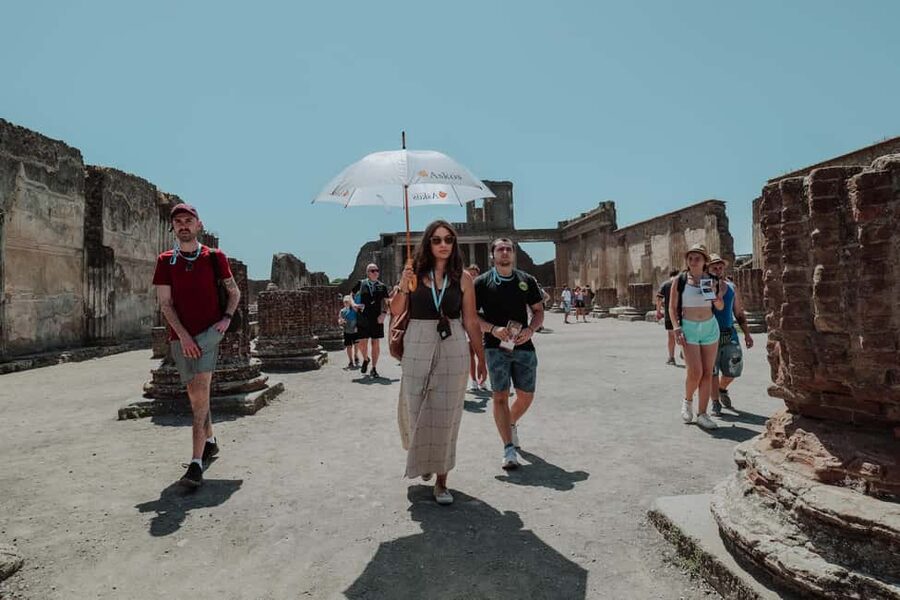
At $88 per person, this is not the cheapest way into Pompeii. The price includes a three-hour small-group tour, an archaeologist guide, and the Pompeii Plus ticket covering the archaeological park and Villa of the Mysteries.
I think the value is strongest if Pompeii is a once-in-a-lifetime stop for you, or if you want the major sights explained rather than photographed. The site is too large for most people to understand fully in a first visit, and a guide helps you spend your energy on meaning instead of navigation.
It is less attractive if you enjoy wandering alone, plan to stay all day with a guidebook, or have already visited Pompeii several times. The tour gives you structure, but structure also means following a set pace.
Three hours can feel surprisingly short. You will cover a great deal, but you will not see the whole archaeological park. Several people continued exploring for hours after the tour, and that is the ideal plan if your schedule allows it. Treat the guided walk as your orientation, then stay inside to revisit a favorite house or seek out areas not included in the route.
The booking terms are practical: you can cancel up to 24 hours before the start for a full refund, and you can reserve now and pay later. Those features matter when weather or transport plans are uncertain, though the tour itself operates in rain or sun.
Who should book this Pompeii walk?
I would choose this tour for a first visit, families with teenagers, couples who want context without a full-day private guide, and anyone interested in archaeology rather than only dramatic ruins.
It also suits visitors based in Naples or along the Amalfi Coast who want a strong introduction before spending extra time on their own. The guides’ ability to explain everyday Roman life is especially useful for younger visitors, since houses, baths, theaters, and the lupanare give the ancient city a human scale.
You should think twice if anyone in your party has limited mobility. The experience is not suitable for wheelchair users or people with mobility impairments. Small pets under 10 kilograms are allowed in the park, but they must remain on a leash.
The available guide languages are German, Italian, French, English, Spanish, and Portuguese. Check the starting time and language before paying, since availability can change.
My verdict: a strong introduction with one clear limit
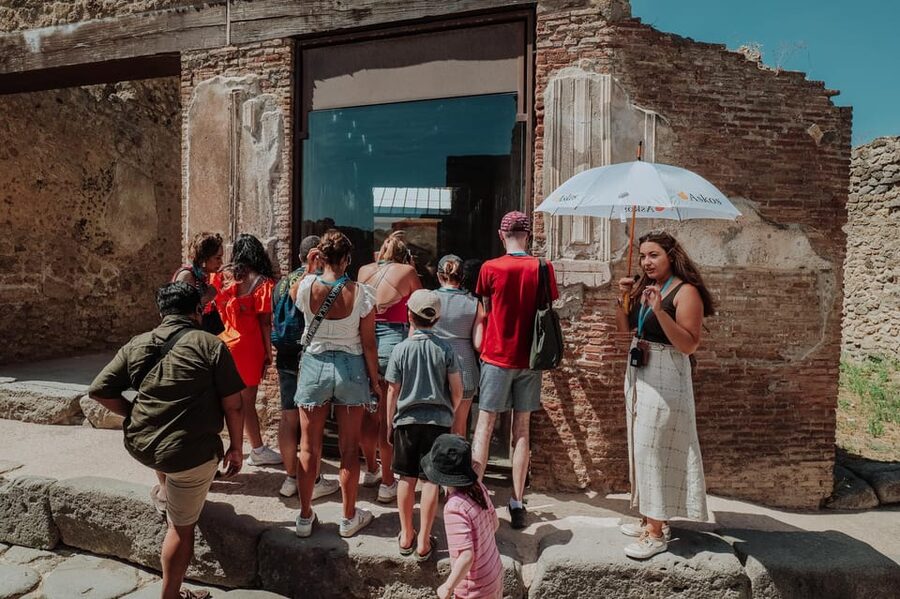
Book this tour if you want Pompeii explained by an archaeologist and you care about seeing the Villa of the Mysteries. The combination of famous homes, public buildings, daily-life details, and crowd-smart routing gives you far more than a quick walk among ruins.
Just keep your expectations realistic. Three hours is an introduction, not the complete city. Bring water, wear proper shoes, arrive at Porta Marina Superiore early, and leave extra time afterward if you can.
At $88, the tour earns its price through the guide and included admission. If you want to understand why Pompeii matters, rather than simply tick it off your Italy list, this is a sensible choice.
FAQ
Where does the Pompeii tour meet?
The guide meets you at Porta Marina Superiore, the entrance gate at Via Villa dei Misteri, 2. Look for an ASKOS TOURS sign.
How long does the tour last?
The guided experience lasts three hours.
Is the Villa of the Mysteries included?
Yes. The included Pompeii Plus ticket covers the Archaeological Park and the Villa of the Mysteries.
What does the $88 price include?
The price includes the three-hour small-group tour, an archaeologist guide, and the Pompeii Plus entrance ticket.
Is transportation included?
No. You must arrange your own transportation to and from Pompeii.
Are food and drinks included?
No. Bring your own water and snacks if needed. Food and drinks are not included.
Which languages are available?
Tours are available in German, Italian, French, English, Spanish, and Portuguese, subject to availability.
What should I wear?
Wear comfortable closed-toe shoes. A hat is recommended in summer, and flip-flops are not suitable.
Can I take the tour in bad weather?
Yes. The tour operates rain or shine.
Is the tour suitable for wheelchair users?
No. The experience is not suitable for wheelchair users or people with mobility impairments.
Just added around Pompei Campania
- Pompeii: Small-Group Tour of Pompeii and Herculaneum★ 4.8 · 867 reviews
- Pompeii: Skip-the-line-Ticket and Guided Tour★ 4.6 · 1,152 reviews
- Pompeii: Skip-the-Line Entry & Audioguide★ 3.8 · 225 reviews
- Pompeii: Guided Tour with Skip-the-Line Entry★ 4.9 · 812 reviews
- Pompeii: Skip-the-Line Entry Ticket with Digital Guide App★ 4.1 · 770 reviews
- Pompeii: Tour with Archaeologist Guide & Skip-the-Line Entry★ 4.5 · 478 reviews
- Pompeii: Afternoon to Sunset Guided Tour with Ticket★ 4.9 · 484 reviews
- Pompeii: Day Tour of Pompeii and Vesuvius with Bus Transfer★ 4.2 · 250 reviews
Pompeii Tours, compared.
Entry Ticket and Guided Tour with an Archaeologist
Read our review →

From Naples: Pompeii Ruins & Mount Vesuvius Day Tour
Read our review →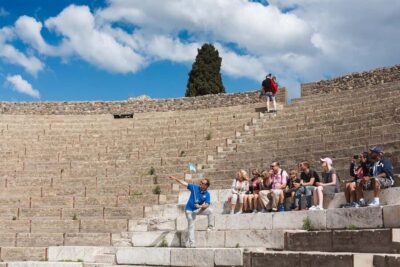
From Rome: Pompeii, Amalfi Coast, and Sorrento Day Trip
Read our review →
From Rome: Pompeii, Amalfi Coast and Positano Day Trip
Read our review →Pompeii Small Group Tour with an Archaeologist
Read our review →
Pompeii, Amalfi Coast and Positano Day Trip from Rome
Read our review →Browse the lists this tour appears in