
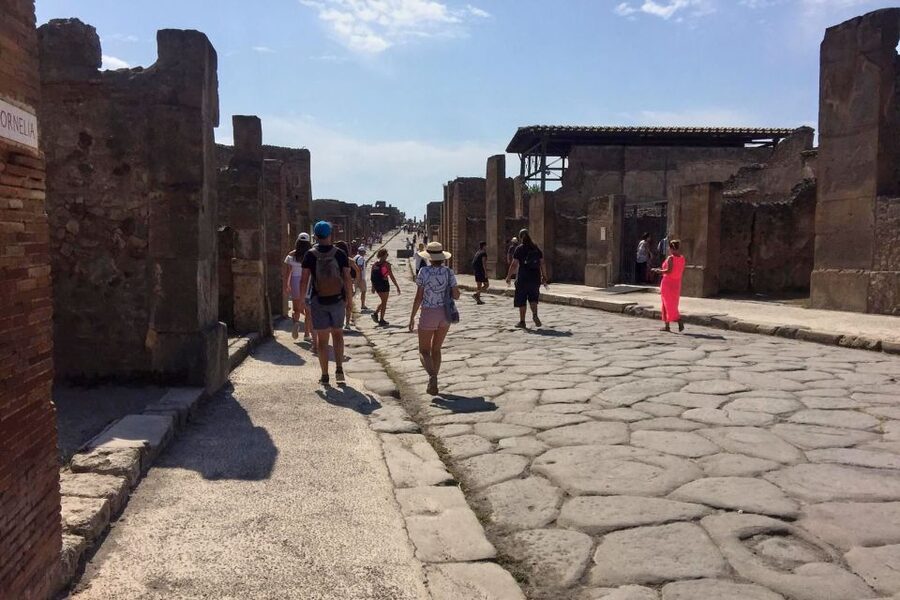
Reviewed · POMPEII TOURS
Pompeii: Guided Walking Tour with Entrance Ticket
Pompeii is one of those places where a guide changes the visit from a walk among old stones into a picture of daily Roman life. You’ll see wine shops, public baths, homes, and the Forum, then hear what the volcanic eruption of 79 A.D. meant for the people who lived here.
I like the included €20 entrance ticket and the headsets, which help you hear the guide across Pompeii’s broad streets. I also like the human touch from the local team: Enzo has helped delayed customers, and guides including Elisa, Francesca, Maria, and Salvatore have earned praise for humor and clear explanations. The weak point is meeting-point organization. Finding the group can be confusing, and some departures have started 30 to 45 minutes late.
Key points to know before you book
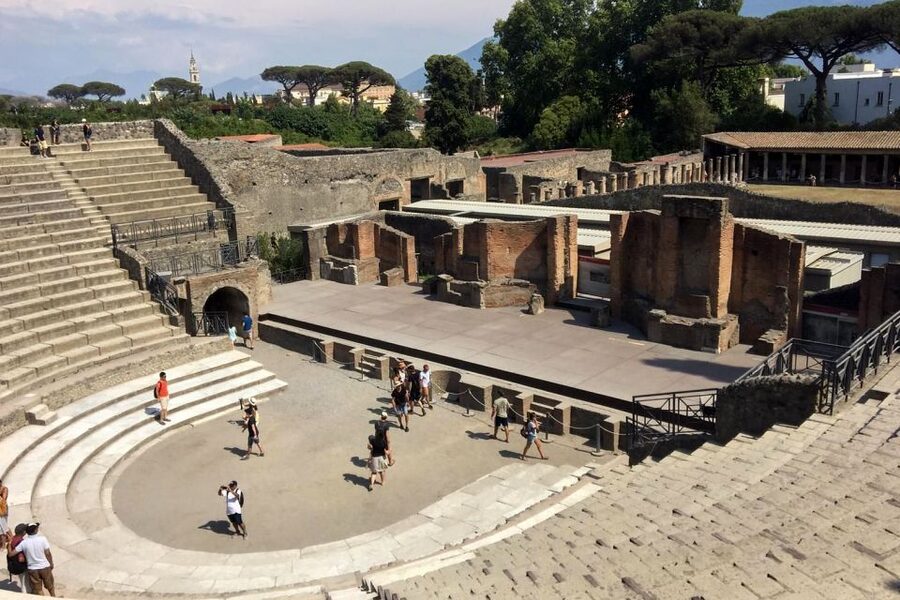
- Two hours covers only a slice of Pompeii: The site is huge, so this is a highlights walk rather than a full exploration.
- The Forum anchors the tour: You’ll connect public buildings, religion, politics, and commerce in one central area.
- Everyday life is the real reward: Thermal baths, homes, shops, streets, and the Lupanare give the ruins a human scale.
- Headsets are normally included: They help in a large group, though comfort and equipment quality can vary.
- Meet at Hotel Vittoria at 10:50am: The stated point is in the hotel garden, outside the Cellini coral shop.
- Plan for heat and uneven ground: Comfortable shoes, suitable clothing, and patience with the walking surface matter.
Why a guide helps at Pompeii
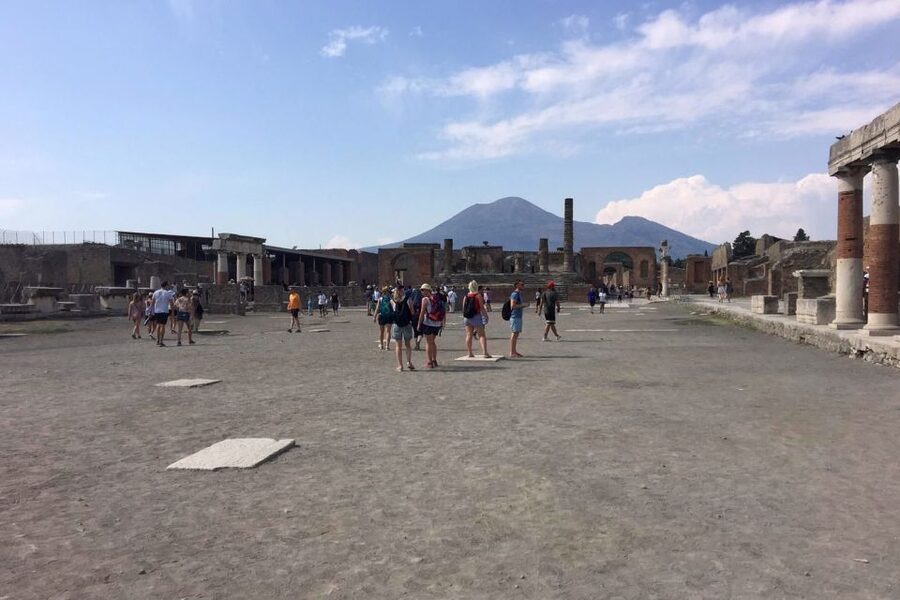
Pompeii can look simple at first glance: walls, paving stones, broken columns, and open doorways. The trouble is that the site is so large, and many buildings are not self-explanatory. A guide gives those remains a purpose.
A street lined with stones becomes a route used by shoppers and workers. A painted sign becomes evidence of trade. A doorway leads to a home rather than an anonymous ruin. The Forum becomes the town’s civic center, not just a broad rectangle of ancient masonry.
I would choose a guided walk if this is your first visit. The tour gives you a usable framework in two hours, then you can decide if you want to stay and explore more on your own. One of the tour’s useful features is that you are not simply moved from one famous photo stop to the next. Guides explain public life, domestic spaces, commerce, and the eruption itself.
The tradeoff is pace. Pompeii is not a site you can fully understand in two hours. You’ll cover a good selection of the main areas, but many streets, houses, and buildings will remain for another visit.
More Entry Tickets in Pompeii
- Pompeii: Entry Ticket and Guided Tour with an Archaeologist
★ 4.8 · 19,459 reviews - Pompeii: Entry Ticket with Optional Audio Guide
★ 4.2 · 12,360 reviews - Mount Vesuvius: Skip-the-Line Ticket and Smart Digital Guide
★ 4.2 · 2,780 reviews
Meeting at Hotel Vittoria near Pompeii Scavi
The meeting point is in Pompeii, at the Hotel Vittoria garden, outside the Cellini coral shop on Via Mare. The stated meeting time is 10:50am, and your guide should have a sign showing the customers’ name.
This sounds straightforward, but allow extra time to find the exact spot. The entrance area can be crowded, and the nearby train station and archaeological entrance create plenty of foot traffic. Some people have had trouble locating the group despite having the written directions.
The operator has sometimes called customers who were hard to find, and staff have walked around looking for people by name. That help is worth having, but you should still arrive early and keep your phone available. If you are arriving by train, check your route carefully. A past visitor specifically warned that the Pompeii Scavi stop is the useful one for the ruins, not the regular Pompeii station.
Late arrivals have received mixed treatment in general, though this team has sometimes waited 20 to 30 minutes, and in one case longer. Do not treat that as a promise. Waiting for late arrivals can also delay the entire group, which has caused some tours to begin 30 to 45 minutes after the scheduled time.
That matters if you have a train, bus, lunch booking, or another timed visit afterward. Build in breathing room.
Entering the archaeological area
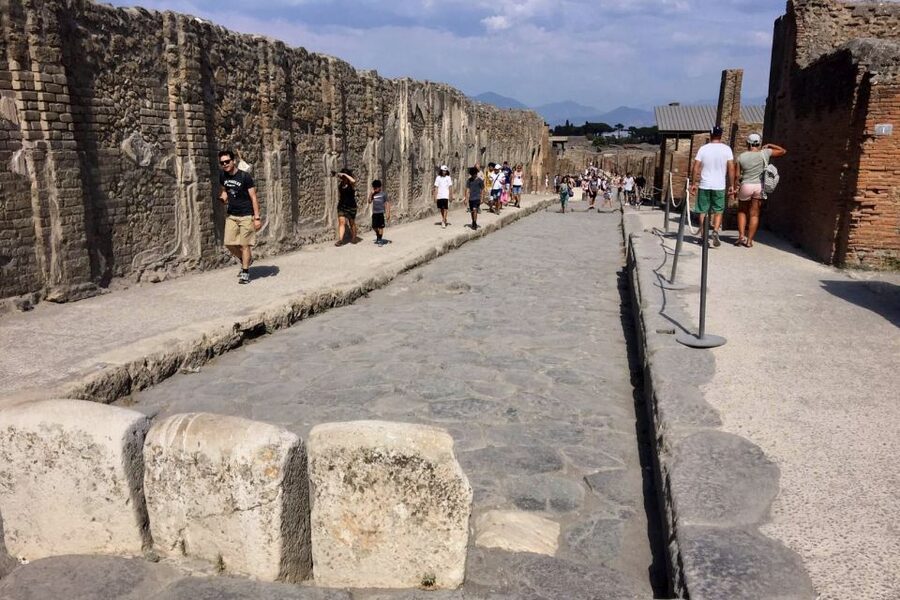
The tour includes the Pompeii Archaeological Site entrance ticket, listed at €20. The practical benefit is that you do not need to stop and purchase a ticket in the regular public line. The guide organizes entry for the group, then the walking tour begins inside the excavation area.
The exact entrance routine can depend on the day and crowd levels. Keep your booking information easy to show, and bring identification for children booked at the child rate. Children may be asked to pay the adult fare if they cannot show a valid passport or ID card at the ticket office.
Once inside, you will be walking outdoors on an ancient street plan. Pompeii is exposed, and shade is limited in parts of the site. Even mild weather can feel hot on the paving stones. A hat, water, sun protection, and light clothing are sensible choices, although food and drinks are not included in the tour.
The experience operates in all weather. That is useful for planning, but it also means you need clothing for the forecast rather than hoping the weather will improve.
The Forum: Pompeii’s public heart

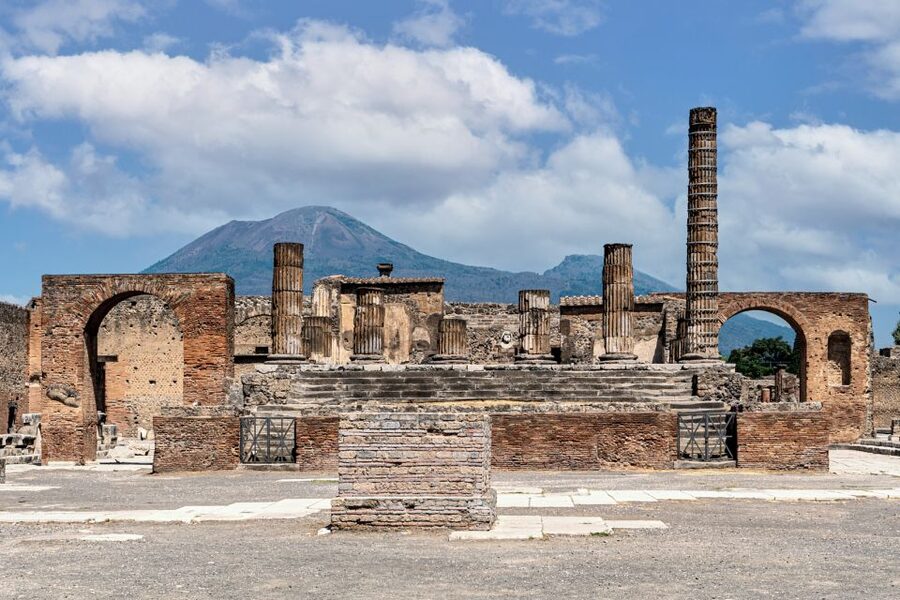
The Forum is one of the most important stops because it gives you the clearest sense of Pompeii as a functioning town. This was not an isolated collection of houses. It was a place of public business, ceremony, religion, and community life.
Your guide can point out how the surrounding buildings fitted together and explain what the space meant to Roman residents. The value is not just seeing the square itself. It is learning to read the town’s layout and understand how public life connected with private homes and commercial streets.
The Forum can also be visually overwhelming. There is a lot to take in, and a two-hour tour cannot pause at every wall or column. Listen for the guide’s main points, take a few photos, and avoid trying to record every sentence. You can return to areas that interest you after the official walk.
More Guided Tours in Pompeii
- Herculaneum: Skip-the-Line Guided Tour with Archaeologist
★ 4.8 · 3,439 reviews - Rome to Pompeii Guided Tour with Wine & Lunch by High Speed Train
★ 5.0 · 1,379 reviews - From Naples: Pompeii Guided Tour with Skip-the-Line Tickets
★ 4.8 · 1,171 reviews - Pompeii: Skip-the-line-Ticket and Guided Tour
★ 4.6 · 1,152 reviews
Thermal baths and the Roman routine
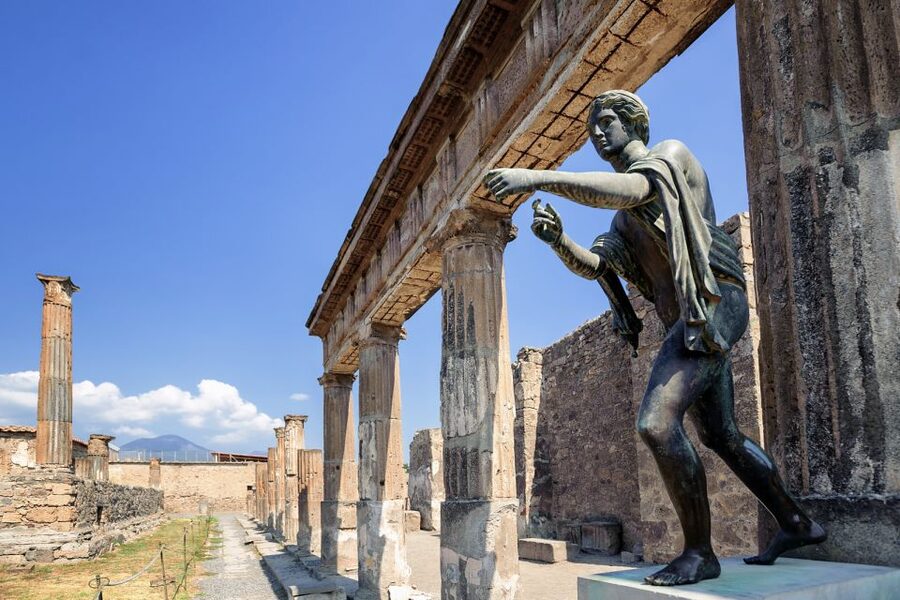
The Thermal Baths offer a more intimate look at ordinary life. Public bathing was not merely about washing. It was part of the Roman social routine, and bath buildings show how much planning went into public comfort and leisure.
A guide helps you recognize the different rooms and explain how the baths worked. Without that context, you might simply see decorated walls and tight spaces. With it, you begin to understand the building as a place used by real residents throughout the day.
This stop is especially useful for families and visitors who want more than political history. It connects the ancient town to familiar routines: meeting friends, exercising, relaxing, and keeping clean. The rooms also remind you that Pompeii was not frozen in an ideal age. It was a busy town where people spent time, worked, argued, traded, and socialized.
The Lupanare and Pompeii’s frank details
The Lupanare is one of Pompeii’s most famous stops. Its presence gives the tour a more direct look at adult commercial life in the Roman town.
Guides generally explain the site without avoiding its purpose, which can be useful if you want a clear account rather than a polished version of the past. One Spanish-language review specifically praised a guide for discussing these subjects without taboos. That approach may not suit every young child, so parents should decide in advance how much historical detail feels right for their group.
The Lupanare is also a good example of why Pompeii needs interpretation. The rooms and surviving decoration do not explain themselves. Your guide supplies the social context, then moves the group onward to other parts of the town.
Shops, wine signs, and the feel of daily life
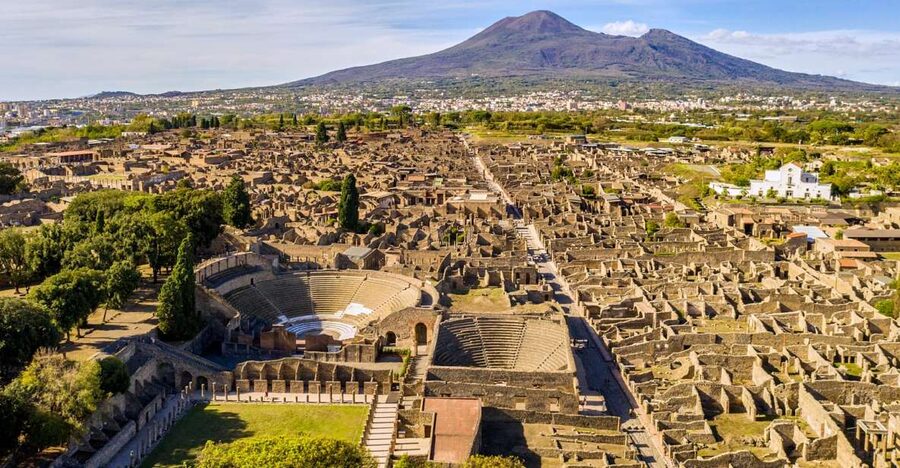
I especially like the shop-lined streets because they make Pompeii feel less like a monument and more like a neighborhood. You may see counters and storefronts connected with food and drink, along with signs that point to products such as wine.
These details are small, but they carry a lot of weight. The Forum tells you how the town worked in public. Shops show how people ate, bought goods, and made a living. Streets show the connection between the two.
The tour also includes domestic spaces and community areas, though the exact buildings can vary by route and site access. Some recent archaeological areas may be closed or restricted for preservation. That is part of the reality of Pompeii: the excavation is still being studied and cared for, and not every doorway is open every day.
What the eruption adds to the visit
The eruption of Mount Vesuvius in 79 A.D. is central to the story, but a good visit does not reduce Pompeii to a disaster scene. The stronger guides place the eruption after explaining how the town functioned.
That order matters. First you see homes, baths, shops, and public buildings as parts of a living place. Then you consider how ash and volcanic rock covered it for nearly two thousand years. The contrast is sobering.
The guide can explain what happened on the day of the eruption and how the town was gradually uncovered over the last few centuries. You’ll also see why preservation is difficult. Weather, foot traffic, and exposure affect ancient walls, paintings, and paving.
Pompeii is still only partly excavated. One guide explained that roughly two-thirds of the town has been uncovered. That means the route you see is both an archaeological site and an ongoing project, not a finished museum frozen in time.
Guides, languages, and headsets
Tours are offered in English, French, Spanish, and Italian. A multilingual guide may lead the walk, so the language you request is not absolutely guaranteed if only one person has booked in that language. If the required language cannot be provided, the operator says it will offer an alternative or a full refund.
The strongest part of this tour is the guide-led storytelling. Elisa has been praised for being funny and well informed. Salvatore is described as engaging and kind. Maria, Francesca, Miguel, Mattia, Imma, Alex, and others have also received strong comments for explaining the site clearly and keeping children involved.
That does not mean every guide will have the same style. Some are lively and joke often. Others are more measured. One recent assessment found the tour informative but wished for more emotional engagement. Another found the guide’s English occasionally hard to follow. Those are fair reminders that a live tour is less uniform than an audio guide.
Headsets are included so you can hear the commentary while walking or standing away from the guide. They are especially useful in a large group or on a noisy street. The equipment has not suited everyone: one person found the earpiece uncomfortable, and an older account said no headsets were used. Expect them to be part of the normal setup, but do not assume perfect sound or comfort.
Timing, group size, and the two-hour limit
The advertised duration is two hours. That is long enough to see major highlights and gain a basic understanding of Pompeii, but it is not long enough to cover the whole excavation area.
The tour can be efficient when it starts on time. You move between major areas, hear the essential explanation, and still have some room for photographs. The headsets help the guide keep walking rather than gathering everyone into a tight circle at every stop.
The main concern is organization at the beginning. Late arrivals, misplaced meeting points, or a guide problem have caused delayed starts. Group size can also vary. Some people have found the group larger than expected, which can make narrow spaces feel crowded and reduce time for questions.
After the tour, you may be able to remain inside and explore sections not covered by the route. The practical value here is high: use the guided portion to learn the site, then wander independently if your schedule and ticket access allow.
Price and overall value at $50
At $50 per person, the tour costs more than buying entry alone, but the comparison is not simply $50 versus €20. You are paying for a live guide, route planning, language support, headsets, and the time saved by avoiding the regular ticket-purchase line.
I think the price is fair for a first visit, especially if you have only a morning or afternoon in Pompeii. A good guide can help you understand far more in two hours than you would by wandering without a plan. The value is strongest when the guide is clear, the group starts promptly, and you use the remaining time to see more on your own.
The value drops if you want a slow archaeological study, a small private group, or time in every open house. This is a shared highlights tour, not a specialist excavation visit. If a delayed start would cause you to miss a train, the schedule risk matters more than the ticket savings.
Free cancellation is available up to 24 hours ahead, and you can reserve now and pay later. Those terms help if your Campania plans are still shifting.
Who should choose this Pompeii walk?
I would recommend it to a first-time visitor who wants the main story without spending a full day planning a route. It suits families when the children can manage two hours of outdoor walking, and the guides have a record of making history accessible with humor and questions.
It is also useful if you are arriving independently from Naples or another Campania base and want an organized entry. Just leave enough time to find the meeting point and allow for a possible delay.
I would think twice if you use a wheelchair, have a mobility impairment, or struggle with uneven walking surfaces. The experience is not suitable for wheelchair users or people with mobility impairments. Pompeii’s broad streets can look manageable, but the ground is still ancient, uneven, and tiring.
Bring comfortable shoes and weather-appropriate clothes. There is no hotel pickup, transportation, food, or drink included, so you arrange your own way to Pompeii and manage refreshments separately.
Should you book it?
Book this tour if you want Pompeii’s major sights explained by a live guide and you value a simple entry plan. The best parts are the clear connection between public buildings and ordinary life, the Forum and bath stops, the frank explanation of the Lupanare, and the chance to see shops and wine signs that make the town feel lived in.
Do not book it expecting to see all of Pompeii, a private experience, or perfectly precise timing. Arrive early at Hotel Vittoria, keep your phone on, wear good shoes, and leave spare time after the tour. With those limits understood, $50 is a reasonable price for a useful first look at one of Italy’s most powerful archaeological sites.
FAQ
How long does the Pompeii guided walking tour last?
The tour lasts two hours. It focuses on major highlights, so you will not see every part of the large archaeological area.
What does the $50 price include?
The price includes the Pompeii Archaeological Site entrance ticket, a professional guide, and headsets to hear the commentary clearly.
Where is the meeting point?
Meet at 10:50am in the garden of Hotel Vittoria in Pompeii, outside the Cellini coral shop on Via Mare, 80045 Pompei. The guide should carry a sign with the customer’s name.
Which languages are available?
Live tours are offered in English, French, Spanish, and Italian. If only one person books a particular language, that language is not guaranteed. An alternative or full refund may be offered if it cannot operate in the requested language.
Can I cancel the booking?
Yes. You can cancel up to 24 hours before the activity for a full refund. You can also reserve now and pay later.
Is the tour suitable for wheelchair users?
No. The activity is not suitable for wheelchair users or people with mobility impairments.
What should I bring?
Bring comfortable shoes, weather-appropriate clothing, and a passport or ID card for children booked at the child fare. The tour operates in all weather, and food and drinks are not included.
Just added around Pompeii
- Vesuvius National Park Skip-the-Line Ticket★ 3.8 · 221 reviews
- From Rome: Sorrento & Pompeii Day Tour with Hotel Pickup★ 4.2 · 257 reviews
- From Rome: Day Trip to Pompeii with Tickets★ 4.4 · 1,161 reviews
- Pompeii Ruins Private Tour with Optional Skip-the-Line Entry★ 4.9 · 732 reviews
- From Rome: Pompeii All-Inclusive Tour with Live Guide★ 4.3 · 261 reviews
- Pompeii 3hours Villa of Mysteries tour with an Archaeologist★ 4.8 · 486 reviews
- Pompeii: Exclusive Tour with Archaeologist and Entry Tickets★ 4.9 · 634 reviews
- Pompeii and Vesuvius Full-Day Tour from Amalfi Coast★ 4.4 · 319 reviews
Pompeii Tours, compared.

Entry Ticket and Guided Tour with an Archaeologist
Read our review →

From Naples: Pompeii Ruins & Mount Vesuvius Day Tour
Read our review →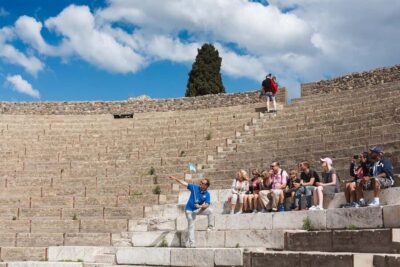
From Rome: Pompeii, Amalfi Coast, and Sorrento Day Trip
Read our review →
From Rome: Pompeii, Amalfi Coast and Positano Day Trip
Read our review →Pompeii Small Group Tour with an Archaeologist
Read our review →
Pompeii, Amalfi Coast and Positano Day Trip from Rome
Read our review →Browse the lists this tour appears in