
Reviewed · POMPEII TOURS
Pompeii: Exclusive Tour with Archaeologist and Entry Tickets
Pompeii is enormous, and its most rewarding details are easy to miss without help. This two-hour archaeologist-led tour gives you a clear route through the Roman city, from Porta Marina and the Forum to painted houses, ancient taverns, plaster casts, and the Large Theatre.
I like the small-group format and the headsets, which make it easier to follow explanations in a busy ruin. I also like the way the tour leaves you with time and advice to continue exploring alone. The main limitation is simple: two hours is enough for a strong introduction, not enough to see all of Pompeii.
Key points at a glance
- Enter through Porta Marina: Meet outside the entrance by Pompei Scavi station and begin at one of Pompeii’s original city gates.
- See the civic heart first: The Basilica, Forum, and temples explain how public, political, and religious life worked.
- Look closely at daily life: Baths, bakeries, Thermopolium taverns, houses, and the Macellum show Pompeii beyond its famous tragedy.
- Learn from an archaeologist: Guides such as Antonio, Riccardo, Livio, Raffaelle, Ivan, Loredana, Monica, and Pierluigi have led tours noted for clear explanations and lively delivery.
- Keep exploring afterward: Your guide points out what deserves a closer look once the group tour ends.
- Know the tradeoff: The route covers many major places quickly, with limited time for long photo stops or wandering.
Why an archaeologist changes Pompeii
Pompeii can look like a pile of old walls if you walk in without a plan. The streets are broad and impressive, but the meaning of a doorway, shop counter, painted room, or worn stone pavement is not always obvious.
A guide who has worked on the site can connect those fragments. You learn how homes were arranged, how trade worked, where people ate, and why the Forum mattered. The story becomes less about a single eruption and more about an ordinary Roman town interrupted in a terrible moment.
The guides are the heart of this experience. Antonio is praised for his passion and his ability to explain excavation methods and daily life. Riccardo is known for a warm manner, strong command of the subject, and a pace that works well in a crowded archaeological park. Livio has been described as funny, responsive, and professional, while Raffaelle has been especially good with families.
Those names do not guarantee who will lead your departure. They do show the level of guide experience associated with this tour. The available languages are English, Italian, French, and Spanish, and a private booking is offered if you want more control over the pace.
More Entry Tickets in Pompeii
- Pompeii: Entry Ticket and Guided Tour with an Archaeologist
★ 4.8 · 19,459 reviews - Pompeii: Entry Ticket with Optional Audio Guide
★ 4.2 · 12,360 reviews - Mount Vesuvius: Skip-the-Line Ticket and Smart Digital Guide
★ 4.2 · 2,780 reviews
Meeting at Porta Marina by the train station
The meeting point is outside Pompeii’s Porta Marina entrance, directly in front of Pompei Scavi, Villa dei Misteri station on the Circumvesuviana railway. Look for the guide holding a Pompei VIP sign.
This location is useful if you are arriving by train, but pay attention to the station name. Pompeii has more than one railway station, and one booking reported nearly going to the wrong place. Check your route before leaving and allow enough time to find the correct entrance.
Your ticket is included, along with the express admission ticket and skip-the-line access. That matters at Pompeii because standing outside in heat or rain is not a good use of your limited sightseeing time. You still need to provide the full name, surname, and age of every participant through the booking message system, and each person should carry a passport or identity card. A photo of the document is accepted.
Porta Marina, Basilica, and the Forum
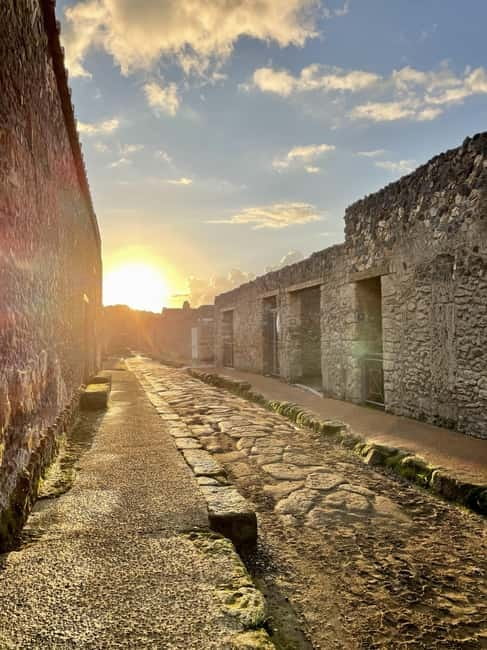
The tour begins at Porta Marina, one of the old entrances to Pompeii. Entering here gives you an immediate sense of the city’s scale. You are not looking at one isolated monument. You are walking into a full Roman settlement with streets, homes, shops, religious buildings, and public spaces.
The first major stops are the Basilica and the Foro Civile, or civic Forum. This is the right place to begin because the Forum was the center of public life. Political business, legal matters, religious ceremonies, and trade all met here.
The Basilica was used for legal and commercial activity. Your guide helps you read the surviving columns and foundations, rather than treating them as background scenery. The Forum itself gives you a useful map of Pompeii’s social structure, with important buildings gathered around one open space.
Two hours requires discipline. You will stop for explanations and photographs, but this is not a slow architectural study. If you enjoy lingering over every column, you will need to return after the guided portion.
Temples, baths, and the Roman idea of public life
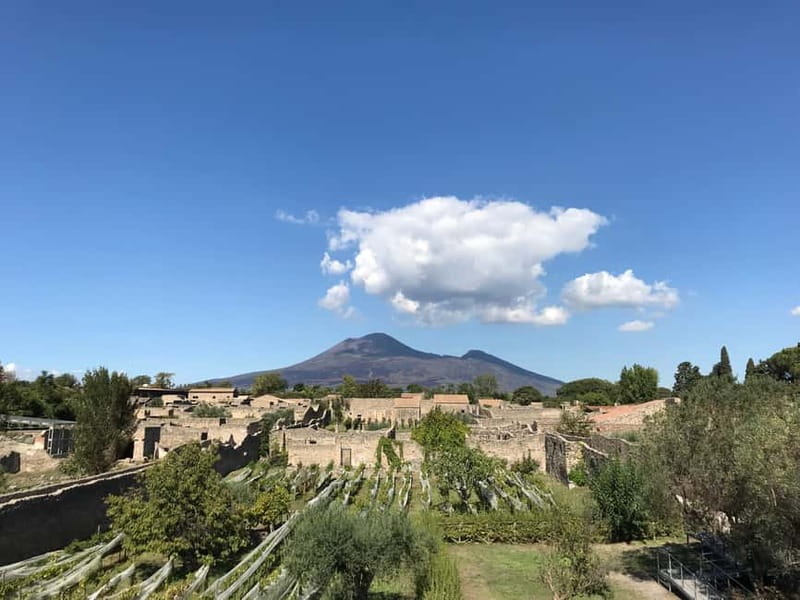
The Temples of Jupiter, Apollo, and Venus add another layer to the Forum. These sites show how religion shaped the town, and they help explain the importance of Pompeii’s position near Mount Vesuvius and the Bay of Naples.
The Temple of Apollo is one of the oldest religious areas in the city. The Temple of Jupiter dominates the north side of the Forum, while the Temple of Venus had an important position overlooking the surrounding area. A guide can point out how their placement and design fit into the wider civic center.
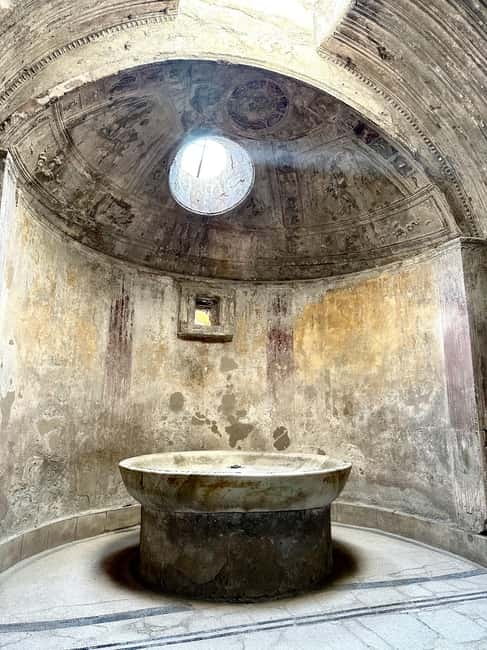
The Forum Baths then bring the experience down to a more personal level. Roman baths were not simply places to wash. They were social spaces, and their rooms reveal the engineering and routine behind public leisure.
I like this part of the route because it prevents Pompeii from becoming only a story of disaster. You see a functioning city with public services, rituals, business, and time set aside for comfort.
A few more Pompeii half-days worth a look
- Pompeii: Small Group Tour with an Archaeologist
★ 4.8 · 12,264 reviews - From Naples: Pompeii Ruins & Mount Vesuvius Day Tour
★ 4.3 · 11,459 reviews - From Rome: Pompeii, Amalfi Coast, and Sorrento Day Trip
★ 4.6 · 7,031 reviews - From Rome: Pompeii, Amalfi Coast and Positano Day Trip
★ 4.6 · 6,620 reviews
The Macellum and Pompeii’s food economy
The Macellum was a market area, and it offers a practical look at how Pompeiians bought and sold food. Its location beside the Forum shows how trade fitted into civic life.
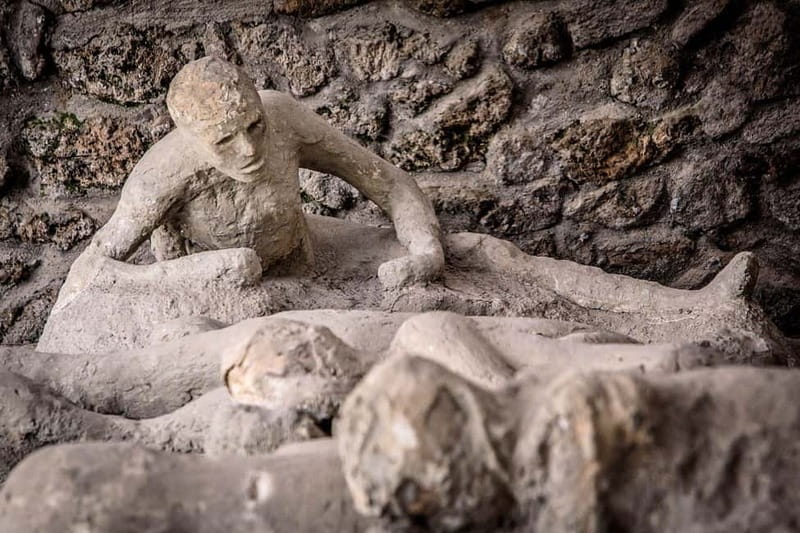
This is also one of the more emotionally difficult stops because plaster casts connected with victims of the eruption are displayed in the area. They are not theatrical props. They are physical records of people caught in the disaster.
Your guide can place these casts within the larger story of the eruption while keeping the focus on the human cost. Expect this stop to be sobering. If you are visiting with young children, the subject may need a little explanation in advance, though the tour has been described as suitable for adults and children when the guide adjusts the level of detail.
Houses where decoration tells the story
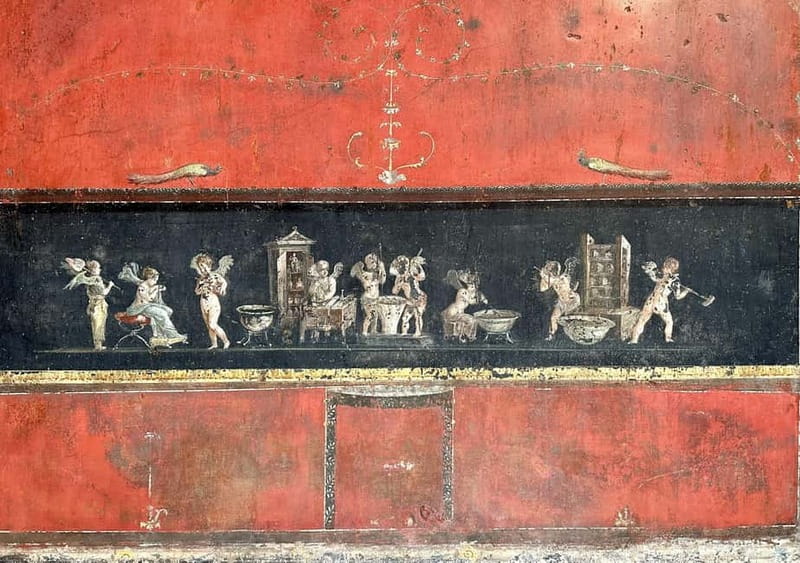
The House of the Tragic Poet, House of the Vettii, and House of the Faun show how much Pompeii’s homes can reveal. Their names often come from a notable painting, owner, or architectural feature, and the houses vary greatly in scale.
The House of the Vettii is especially useful for understanding the display of wealth. Its rooms, painted walls, and decorative details show how prosperous owners used their homes to impress visitors and express social position.
The House of the Faun is one of Pompeii’s largest residences. Its size and mosaics provide a sharp contrast with the smaller homes and shops nearby. You can see that Pompeii was not socially uniform. Some residents had elaborate courtyards and fine art, while others lived and worked in more modest spaces.
The House of the Tragic Poet is known for its decorated rooms and famous mosaic imagery. The appeal here is not just the color of the frescoes. The paintings and floor designs offer clues about taste, mythology, status, and the way rooms were used.
Conditions inside the houses can change, and not every room is always open. The route names these important buildings, but site management and preservation work can affect what you see on a particular day. Your guide can still explain the significance of the house even when access is limited.
Taverns, bakeries, and the ordinary Pompeii
Pompeii becomes most vivid in its shops. The Thermopolium taverns had counters where prepared food and drink could be served. Ancient bakeries show the work behind daily bread, while shopfronts reveal how closely business and home life were linked.
These places are valuable because they move the story away from emperors and temples. You begin to picture workers, customers, cooks, children, and shop owners using the same streets you are walking on.
The guide points out details that you might pass without noticing, including the shape of counters, traces of decoration, and the practical layout of commercial spaces. This is one reason a guided introduction helps. Afterward, you will know where to slow down and what to look for when you explore the rest of the park on your own.
The Lupanare and the Theatre District
The Lupanare, Pompeii’s famous brothel, is another stop that raises questions about Roman society. Its small rooms and wall paintings provide a frank look at sex work in the ancient city, though access and crowd levels can vary.
This is a brief stop on a route that covers a lot of ground. You will get context rather than an extended examination of every image or inscription. If this subject is uncomfortable for your group, tell the guide. The activity information makes clear that the site is not suitable for wheelchair users and people with mobility impairments, and the uneven ancient streets can also be tiring for anyone who walks with difficulty.
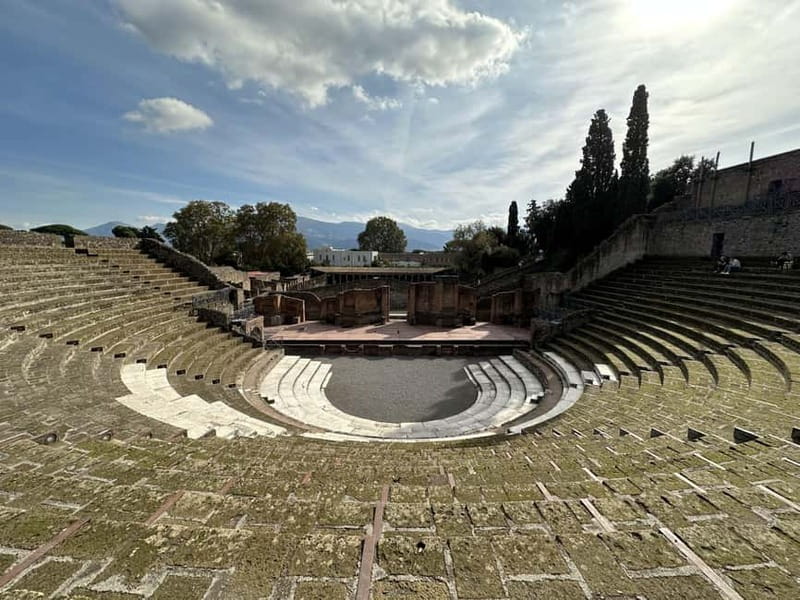
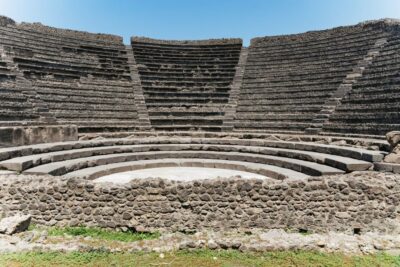
The Large Theatre closes the main route with a strong sense of place. Pompeii’s theatres show that entertainment was a central part of Roman life. The seating, stage area, and surrounding Theatre District help you imagine an audience arriving for a performance nearly two thousand years ago.
The theatre is also a good place to notice the difference between seeing a ruin and understanding a ruin. A guide can explain how spectators entered, where they sat, and how the building fitted into the wider city.
What two hours really gives you
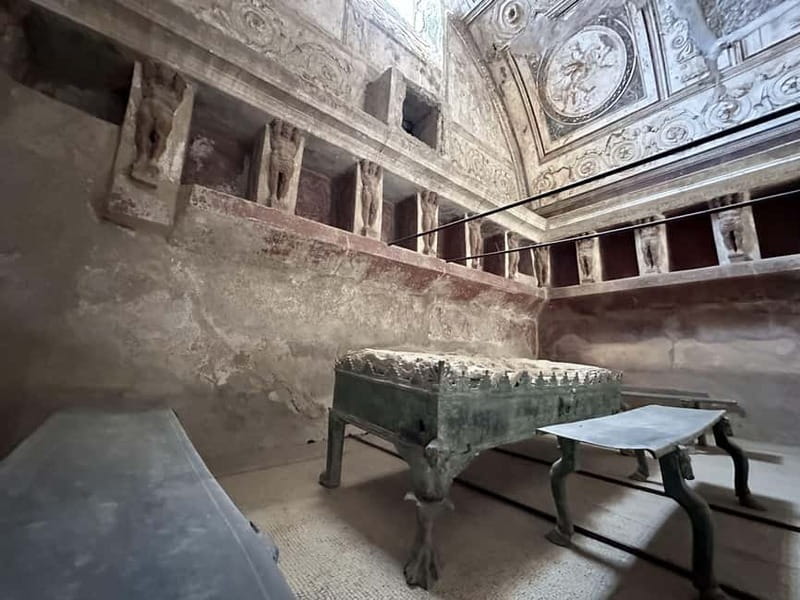
The route covers an impressive number of major areas: Porta Marina, the Basilica, the civic Forum, the Temples of Jupiter and Apollo, the Forum Baths, Macellum, House of the Tragic Poet, House of the Vettii, House of the Faun, Lupanare, and Large Theatre.
That list sounds long because it is. The pace is purposeful. You will move from one area to the next, stop for explanations, take photographs, and keep up with the group. Several people have liked the balance between information and movement, while one visitor wished they had planned more time at Pompeii afterward.
That is the best way to use this tour: treat it as your orientation, not your entire Pompeii visit. After the group finishes, the guide points out places worth seeing on your own. The drop-off points are Pompeii Ruins and Piazza Esedra, giving you a practical end to the visit.
If your schedule allows, stay in the archaeological park after the tour. The morning or afternoon route will give you a map in your head, and independent time will let you return to the houses, streets, or paintings that caught your attention.
Small group, private option, and headsets
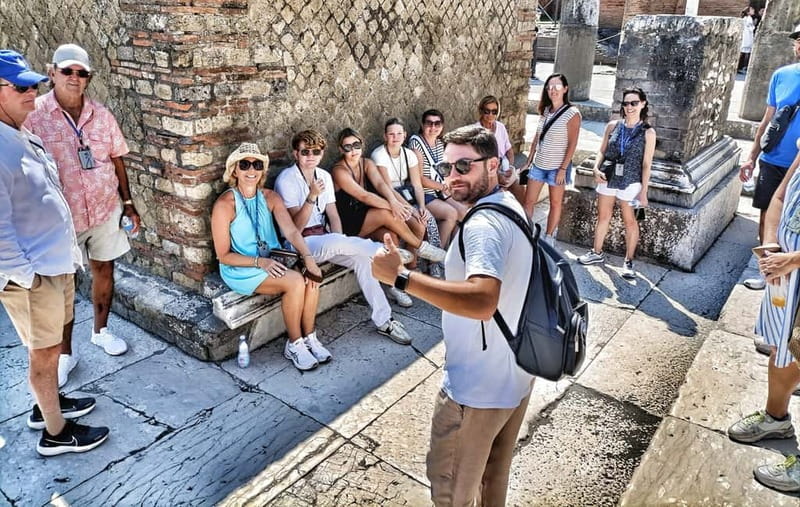
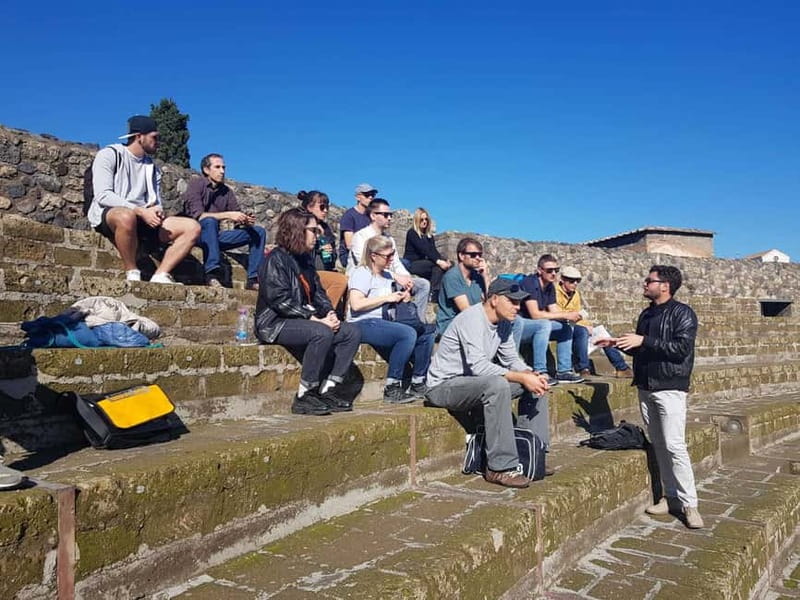
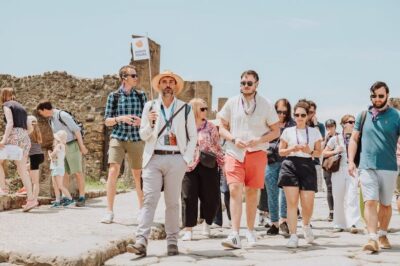
The shared tour uses a small group, which is a useful middle ground between a large walking crowd and the cost of a private guide. The headsets are important. Pompeii is open, noisy, and spread out, so standing close enough to hear every explanation can be difficult without them.
The private option suits families, couples, or groups with a particular interest in archaeology. You can ask more questions and avoid being tied as closely to the pace of other participants. A private booking costs more than the stated $50 shared-tour price, so the value depends on how much you care about flexibility.
At $50 per person, the shared tour is fairly priced for a licensed guide, archaeological expertise, admission, express entry, headsets, and a carefully planned route. Buying a basic ticket alone may cost less, but it leaves you to navigate a vast site and work out the meaning of what you see. The tour earns its price if you want context and a strong first look.
Food, drinks, and transportation are not included. Bring water, wear comfortable shoes, and prepare for a lot of walking on uneven surfaces. Swimwear, alcohol, drugs, pets, and electric wheelchairs are not permitted.
Who should book this Pompeii tour
I would choose this tour if you have only a few hours, are visiting Pompeii for the first time, or want a clear introduction before exploring alone. It is also a good fit for families because the guides can explain a large amount of material without turning every stop into a long lecture.
History fans should appreciate the discussion of excavation work, ancient life, and the difference between a public building and a private home. The tour also suits visitors based in Sorrento or nearby Campania destinations who want a direct, efficient visit without arranging a separate guide and ticket.
You may want something else if your main goal is quiet photography, a very slow study of frescoes, or a full-day examination of the ruins. Two hours moves quickly, and the popularity of Pompeii means some stops may be crowded. Rain and heat can also affect the experience, though the tour can still be informative in poor weather.
Should you book it?
Book this tour if you want Pompeii to make sense, not merely to look impressive. The combination of express entry, a small group, headsets, and a licensed archaeologist gives you a strong start at a complicated site.
At $50, it offers good value when your time is limited. Choose the private option if personal attention matters more than price. Either way, plan extra time after the guided visit if you can. The two-hour route gives you the story and the landmarks. Your own wandering gives Pompeii room to stay with you.
FAQ
How long is the Pompeii archaeologist tour?
The guided experience lasts two hours. You can continue exploring independently afterward, and the guide points out places worth seeing once the group visit ends.
What is included in the price?
The price includes skip-the-line entry tickets, Pompeii admission, a licensed archaeologist guide, a small-group experience, and a headset. Food, drinks, and transportation are not included.
Where is the meeting point?
Meet outside Pompeii’s Porta Marina entrance, directly in front of Pompei Scavi, Villa dei Misteri station on the Circumvesuviana railway. The guide holds a Pompei VIP sign.
Which languages are available?
The tour is available in English, Italian, French, and Spanish.
Can I book a private tour?
Yes. You can choose a shared small-group tour or select a private booking.
Do I need to bring identification?
Yes. Pompeii’s updated ticket rules require the full name, surname, and age of each participant. Bring a passport or identity card, including for children. A photo of the document is accepted.
What should I wear and bring?
Wear comfortable shoes and bring water. You should also carry your passport or identity card.
Is the tour suitable for wheelchair users?
No. The activity is not suitable for wheelchair users or people with mobility impairments. Electric wheelchairs are also not permitted.
Can I cancel the booking?
You can cancel up to 24 hours in advance for a full refund. A reserve-now-and-pay-later option is also available.
Just added around Pompeii
- Vesuvius National Park Skip-the-Line Ticket★ 3.8 · 221 reviews
- From Rome: Sorrento & Pompeii Day Tour with Hotel Pickup★ 4.2 · 257 reviews
- From Rome: Day Trip to Pompeii with Tickets★ 4.4 · 1,161 reviews
- Pompeii Ruins Private Tour with Optional Skip-the-Line Entry★ 4.9 · 732 reviews
- From Rome: Pompeii All-Inclusive Tour with Live Guide★ 4.3 · 261 reviews
- Pompeii 3hours Villa of Mysteries tour with an Archaeologist★ 4.8 · 486 reviews
- Pompeii and Vesuvius Full-Day Tour from Amalfi Coast★ 4.4 · 319 reviews
- Rome: Pompeii Tour with Wine and Lunch by High Speed Train★ 4.8 · 485 reviews
Pompeii Tours, compared.
Entry Ticket and Guided Tour with an Archaeologist
Read our review →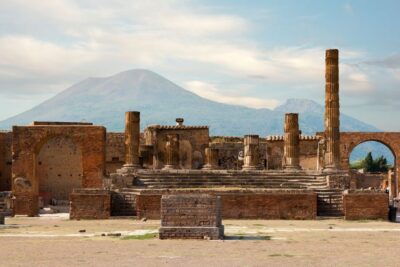
From Naples: Pompeii Ruins & Mount Vesuvius Day Tour
Read our review →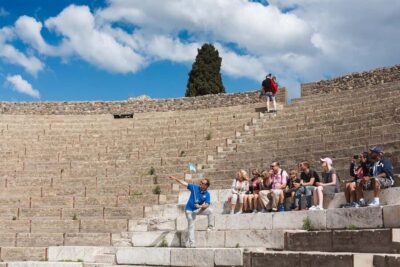
From Rome: Pompeii, Amalfi Coast, and Sorrento Day Trip
Read our review →
From Rome: Pompeii, Amalfi Coast and Positano Day Trip
Read our review →Pompeii Small Group Tour with an Archaeologist
Read our review →
Pompeii, Amalfi Coast and Positano Day Trip from Rome
Read our review →Browse the lists this tour appears in