
Reviewed · POMPEII TOURS
Pompeii: Afternoon to Sunset Guided Tour with Ticket
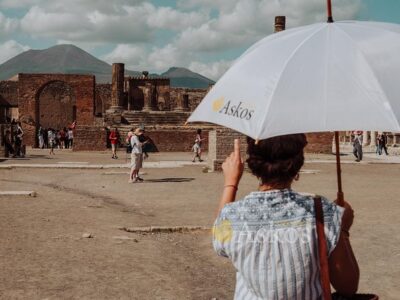
Pompeii is easiest to understand when someone helps you read it as a living city, not just a field of broken walls. This 2.5-hour afternoon tour takes you through civic buildings, bathhouses, homes, bakeries, and old streets while an archaeologist explains how people lived before Vesuvius buried the city in 79 AD.
I like the later time slot, which usually means softer light, less heat, and fewer people than the middle of the day. I also like the small-group feel and the guides, especially Francesco and Frankie, who are often praised for humor, clear stories, and care with different walking speeds. The trade-off is simple: Pompeii is huge, so this tour focuses on key sights rather than trying to cover the entire archaeological site.
Key points to know before booking
- Afternoon timing helps with heat: The later start offers cooler conditions and beautiful light near the end.
- An archaeologist leads the walk: Expect context about Roman buildings, daily life, the eruption, and Pompeii’s wider impact.
- The route covers major highlights: You visit the Forum, Basilica, Thermal Baths, Theater, Antiquarium, homes, bakeries, and neighborhood streets.
- Small groups make questions easier: Private and small-group formats are available, and past group sizes have sometimes been as low as five or around ten people.
- Transport is not included: You make your own way to Ristorante Bar Sgambati and look for the red Enjoy Pompeii sign.
- The site needs sturdy walking: Uneven ancient paving and long distances make this a poor fit for people with mobility, heart, or respiratory problems.
Why an afternoon visit works so well
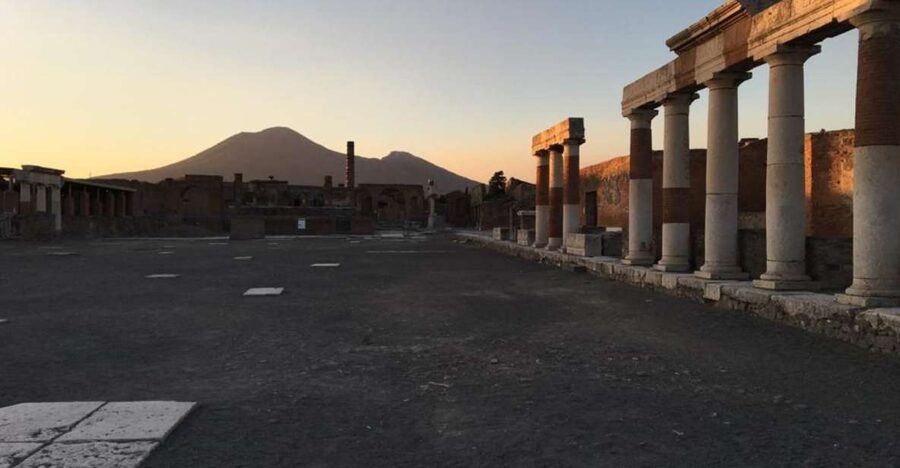
Pompeii can be tiring at midday. Much of the site is open to the sky, shade can be limited, and the old stone streets are not gentle on your feet. A later tour helps in two useful ways: the sun is less harsh, and the ruins take on warmer light as the day winds down.
The timing is especially useful in summer. One afternoon start praised by visitors was 3:30 pm, when the heat had eased and the crowds had begun to thin. Other start times are available depending on the date, so check the schedule when you book.
The sunset element is not a separate viewpoint or a long pause with drinks. It is the atmosphere at the end of the walk, when the site becomes quieter and the light softens. You still spend most of the experience walking and listening, but the final stretch can feel calmer than a busy morning visit.
I would choose this time slot if you are staying in Pompeii, Naples, or nearby Campania and can arrange your own transport. It is less convenient if you need to leave immediately for a train, since the ruins are large and you should allow extra time to reach the station after the tour.
More Entry Tickets in Pompeii
- Pompeii: Entry Ticket and Guided Tour with an Archaeologist
★ 4.8 · 19,459 reviews - Pompeii: Skip-the-Line Entrance Ticket with Audio Guide
★ 4.0 · 2,509 reviews - Pompeii: Skip-the-line-Ticket and Guided Tour
★ 4.6 · 1,152 reviews
Meeting at Ristorante Bar Sgambati
The meeting point is Ristorante Bar Sgambati. Look for the red Enjoy Pompeii sign and arrive with your booking details ready. The location is useful because it is near the archaeological site and close to the Pompeii train station area, but you should still give yourself time to find the exact spot.
One practical warning: Pompeii has several entrances and the site covers a broad area. Do not assume that any nearby gate is the right one. The red sign is the detail to remember.
Transportation is not part of the $58 price. You arrange your own train, taxi, or other ride to the meeting point. That keeps the cost lower than a day trip that bundles transport from Naples or Rome, and it gives you more control over your schedule.
If you plan to catch a train afterward, work backward from the departure time. You may want time to walk out of the archaeological area, find the station, and deal with any delay. The guided portion lasts 2.5 hours, and the site is not a place where you should rush the final exit.
Entering Pompeii through the separate entrance
The ticket includes skip-the-line entry through a separate entrance. That matters at Pompeii, where queues can eat into a short visit, especially during the warmer months.
Skip-the-line entry does not mean you walk straight through without any checks. You should still expect normal ticket and security procedures. Bring an ID card, or a copy of one, as requested by the activity details.
Once inside, your guide sets the pace and shapes the route. That is important because Pompeii can feel confusing at first. Streets run in different directions, buildings open into one another, and a simple map does not explain why a particular doorway, counter, or column matters.
A guide also helps you avoid spending your limited time on less useful wandering. With 2.5 hours, you need a plan. The walk is designed to show important civic, religious, commercial, and residential areas without pretending that you can see every corner.
Reading the Forum and Basilica
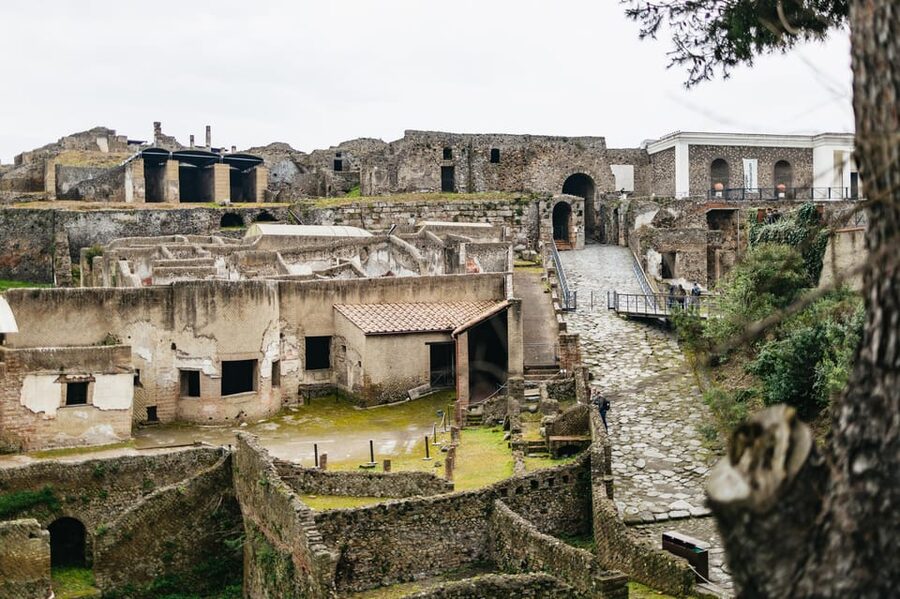
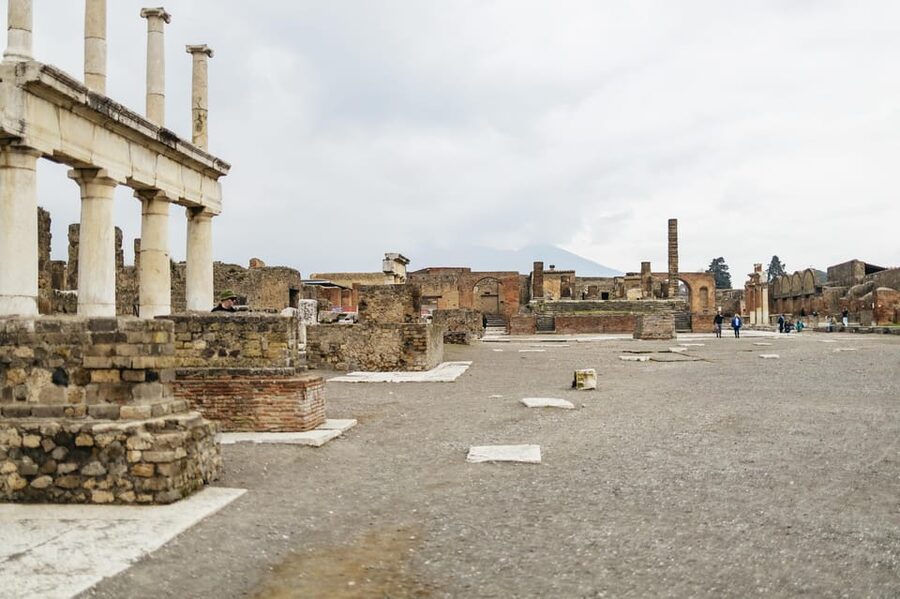
The Forum is the natural place to connect Pompeii’s daily life with its public life. It was the city’s central civic space, and the guide uses the surrounding remains to explain how business, politics, religion, and public gatherings fitted together.
The Basilica is another key stop. Its importance comes from its role in civic and legal life, not just its surviving columns and walls. When you stand among the remains, the guide can point out how Roman architecture created formal spaces for public activity.
This is where an archaeologist guide adds real value. A ruin rarely explains itself. You see stones, thresholds, fragments, and open courtyards. The guide turns those pieces into a picture of how people moved through the city and how its buildings served different groups.
Francesco, Frankie, Angelo, and Anna are among the guides associated with this experience. The strongest descriptions of their style focus on clear explanations, humor, patience, and the ability to answer questions without losing the group’s rhythm. Anna is also described as an archaeologist who has lived in Pompeii all her life, giving her a strong local connection to the place.
More Guided Tours in Pompeii
- Pompeii: Guided Tour with Skip-the-Line Entry
★ 4.9 · 812 reviews - Herculaneum: Skip-the-Line Guided Tour with Archaeologist
★ 4.8 · 3,439 reviews - Pompeii: Guided Walking Tour with Entrance Ticket
★ 4.3 · 1,423 reviews - Rome to Pompeii Guided Tour with Wine & Lunch by High Speed Train
★ 5.0 · 1,379 reviews
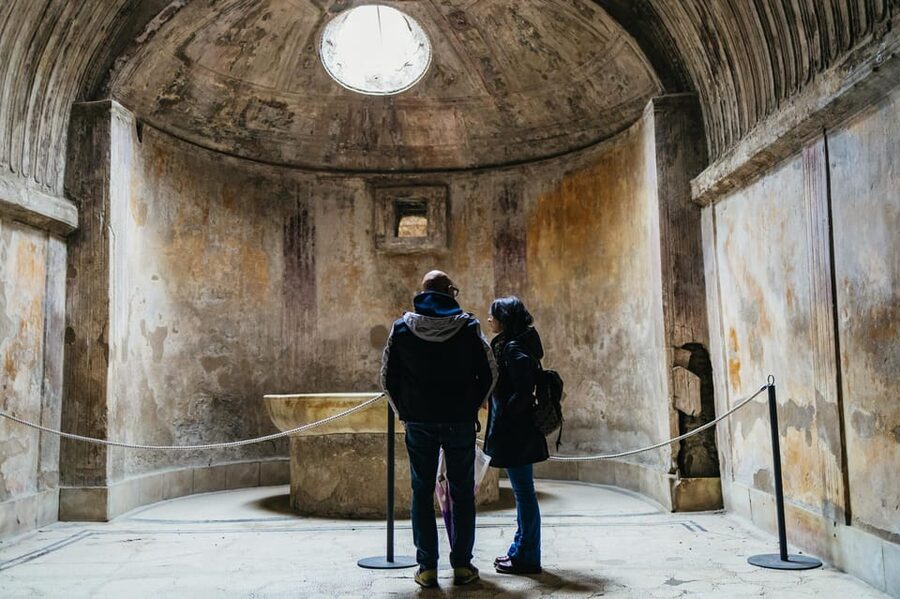
Thermal Baths and Roman engineering
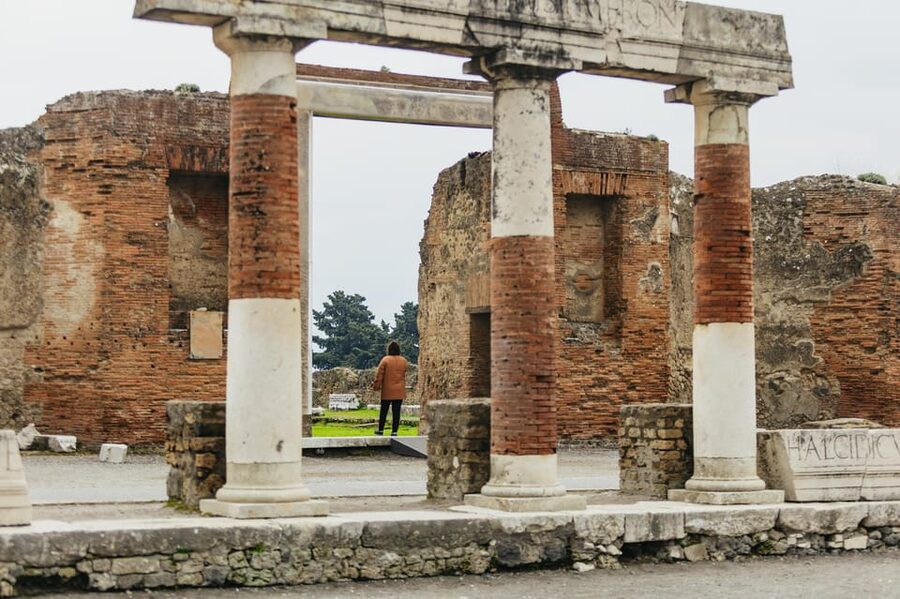
The Thermal Baths show that Pompeii was not only a city of private homes and shops. Public bathing was part of Roman social life, and the bath buildings reveal careful planning, decoration, and engineering.
You can expect the guide to explain how the baths functioned and why they mattered. The point is not simply to look at a room with worn walls. It is to understand the baths as places where people spent time, met others, and took part in a regular part of urban life.
The baths are also a good example of why a focused tour helps. Pompeii contains a great deal of similar-looking masonry. Without some explanation, it can be hard to tell a bathing complex from a private building or a commercial space. A guide gives each stop a purpose.
The Theater and the shape of public entertainment
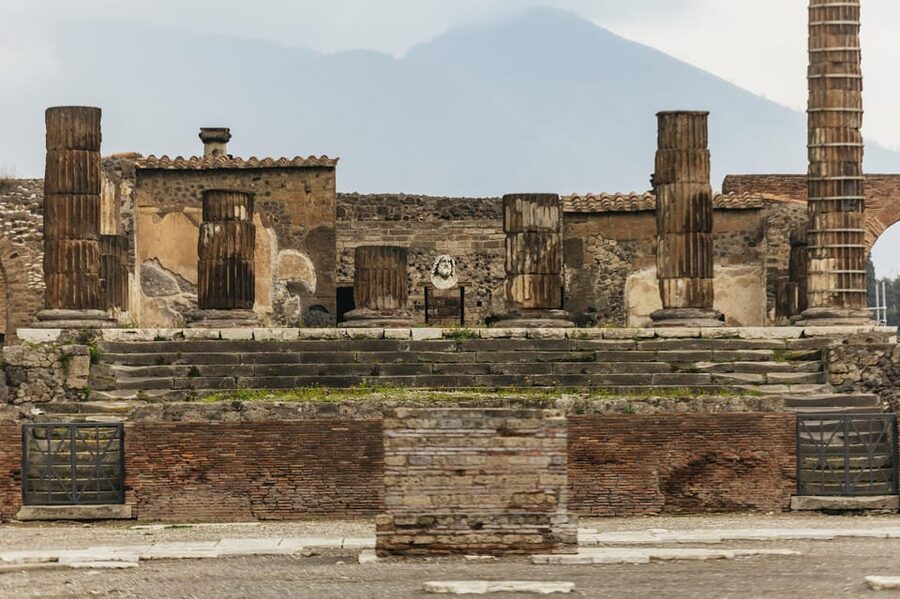
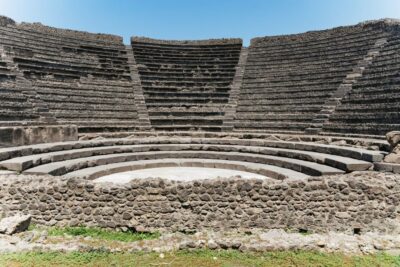
The Theater adds another layer to Pompeii’s public life. It shows how the city made room for performance and shared entertainment, alongside its political and religious spaces.
Your guide explains the Theater as part of the larger urban system. You are not just seeing a preserved structure. You are seeing a place designed for an audience, with its own relationship between performers, spectators, entrances, and surrounding streets.
The Theater is one of the stops that helps younger visitors stay interested, since it offers a clear story about public events. Families with children and teenagers have responded well to guides who mix architecture with stories about people and culture rather than giving a long list of dates.
Bakeries, homes, and ordinary streets
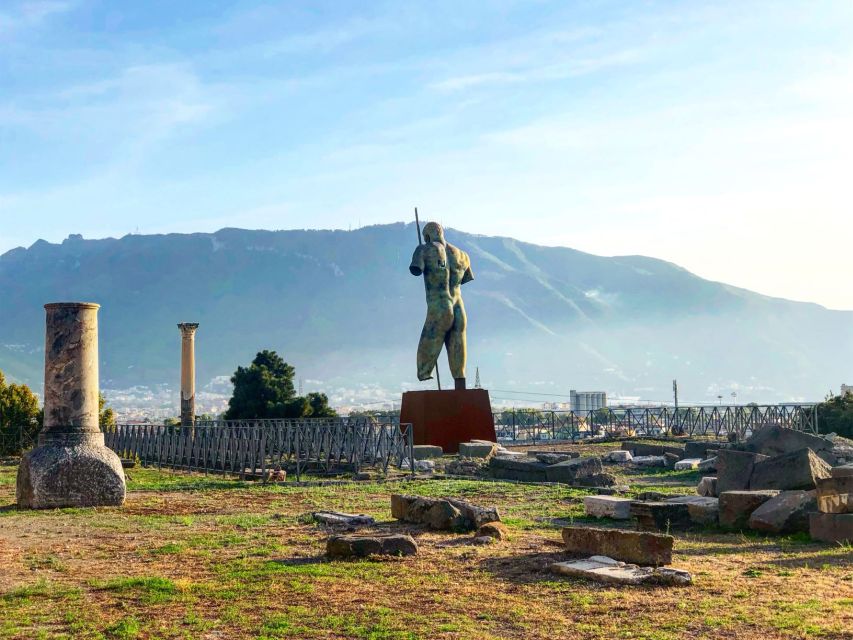
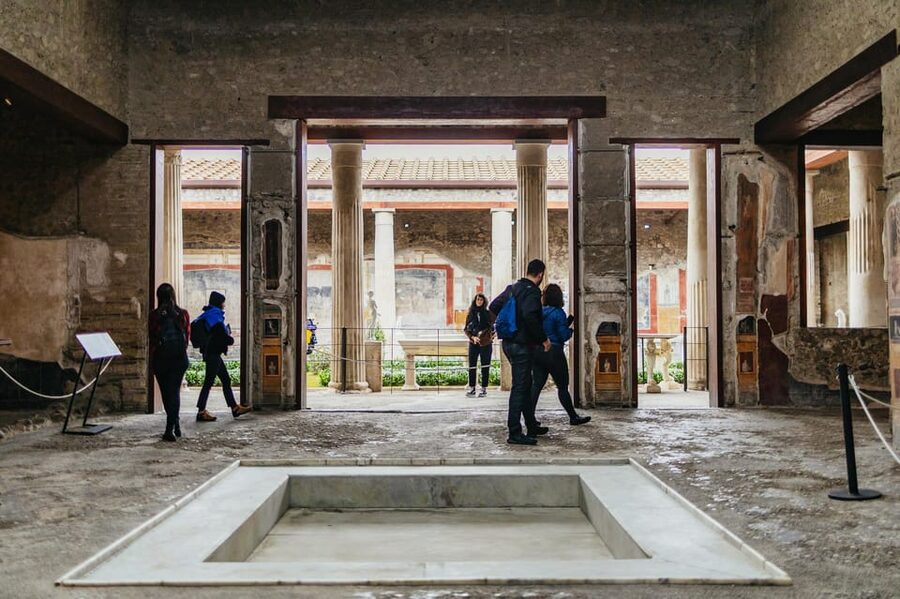
The strongest part of the tour for many people is often not the grandest building. It is the chance to see ordinary Pompeii: a bakery, housing blocks, residential streets, and traces of commercial life.
These places make the city easier to picture. A bakery suggests food production and local trade. A housing block shows how people lived beyond the formal civic center. Narrow streets and worn paving show that Pompeii was a working town, not a stage built only for monuments.
Your guide describes day-to-day life before the eruption, helping you connect the large public buildings with the people who used them. That human scale is what separates a guided visit from simply walking with a map.
The neighborhood sections also show why the site can be overwhelming. You can spend a long time moving between buildings that all seem important. A good guide points out what deserves your attention and keeps the pace manageable.
Understanding the eruption without reducing Pompeii to a disaster story
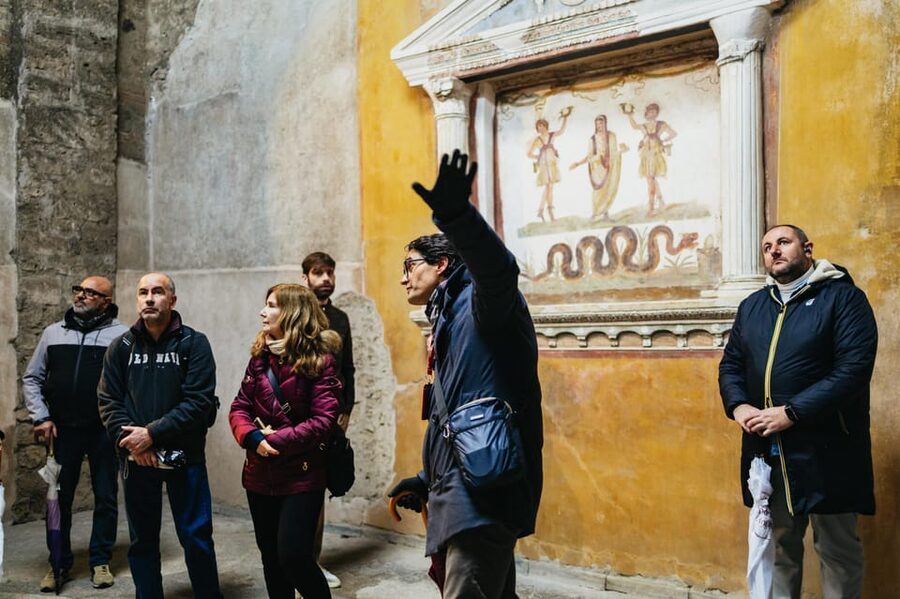
Vesuvius is the reason Pompeii became famous, but the eruption should not be the only story you take away. The city first needs to be understood as a functioning Roman community, with work, homes, public buildings, trade, entertainment, and social routines.
The guide explains the eruption and its effect on Pompeii, while also placing it in a broader social context. That helps you see the ruins as evidence of a society interrupted, rather than as a collection of dramatic remains.
This part of the tour can be sobering. You may hear about the sudden destruction and the way the city was buried, but the focus remains on archaeology and human life. The best guides balance the difficult subject with practical explanations of what researchers can learn from the site.
What the $58 price really covers
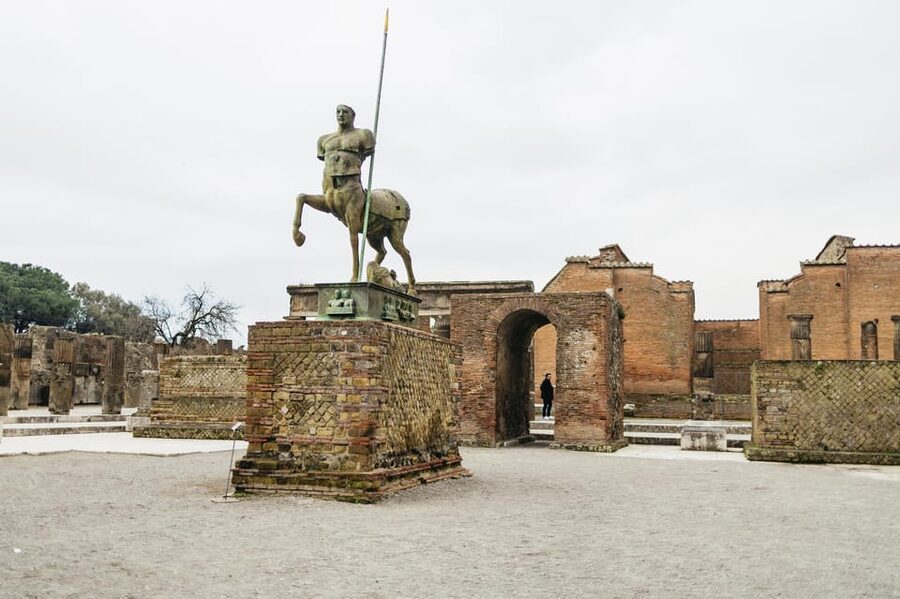
At $58 per person, this is not the cheapest way into Pompeii. You can find a basic entry ticket and walk around on your own. The value comes from combining the ticket with a live archaeologist guide and a planned route through a very large site.
I think the price makes sense if this is your first Pompeii visit and you want to understand what you are seeing. A map can show you where the Forum is, but it cannot explain how the city worked, why a building mattered, or what daily life may have looked like.
The value is also stronger for a short stay. You do not need to spend a full day trying to cover everything. In 2.5 hours, the guide concentrates on major sights and helps you keep enough energy for the rest of your evening.
Private and small-group choices are available. A private tour costs more in many booking situations, but the smaller format can make it easier to ask questions and adjust the pace. Standard small groups offer a useful middle ground for most people.
Walking conditions, heat, and who should book
Bring a sun hat. Even in the afternoon, you will spend much of the tour outside. Comfortable shoes matter because the route includes ancient streets and uneven surfaces.
This is not a suitable activity for people with mobility impairments, heart problems, or respiratory issues. The listed guidance also excludes people over 95. Pompeii is a large archaeological site, and the walking distance can be demanding even when the temperature is mild.
I would also think carefully about young children who dislike walking or listening for long periods. The content can work well for older children and teenagers, especially with an engaging guide, but the tour is not a ride or a short monument visit.
The pace seems to be one of the better features of the experience. Guides have adjusted for mixed-age groups, looked for shade, warned people about uneven ground, and allowed time for questions. That does not remove the physical demands, but it can make the visit more comfortable.
Guide style and language choices
Tours are offered in English, Italian, and French. Private and small-group formats are available, so check the exact option before paying.
The guides most often associated with strong experiences include Francesco, also called Frankie, along with Angelo, Anna, Sasa, and others. The common strength is not a single scripted performance. It is the mix of archaeology, local insight, humor, and attention to the group.
Francesco is repeatedly singled out for making the history easy to follow without making the tour feel like a lecture. Angelo is praised for passion and clear explanations. Sasa has worked well with groups that included both children and older adults. Anna brings archaeological training and a lifelong connection to Pompeii.
Your assigned guide may be different, so do not book only because of one name. The important point is the format: a live specialist can respond to your questions and change emphasis based on the group. That is something an audio guide cannot do.
Time to explore after the guided walk
The guided tour is structured around the main sights, but you may have time to continue exploring after it ends. That can be useful if the guide points out the Theater, Arena, or another area you want to see more closely.
One practical tip is to ask your guide what remains open and where to go next. The Arena is specifically worth adding if it is not part of your guided route. Since Pompeii is so large, you should not expect to see every major building during the 2.5-hour walk.
This is also why I like the tour as a stand-alone Pompeii visit rather than combining Pompeii with several other destinations in one rushed day. The site rewards attention. Even a focused tour can leave you wanting more, which is a better problem than spending the entire visit trying to keep up with a packed schedule.
Should you book this Pompeii tour?
Book it if you want the main story of Pompeii, a sensible route, and a guide who can explain what you are looking at in real time. The afternoon timing is especially appealing in warm weather, and the $58 price is fair when you value the included entry ticket and archaeologist-led interpretation.
Skip it if you prefer to wander alone for a full day, need transportation included, or cannot manage uneven ground and extended walking. You should also choose a morning or longer visit if seeing a very large number of buildings matters more to you than a relaxed highlight tour.
For most first-time visitors, I would book the small-group afternoon option, wear a hat and good shoes, and leave extra time after the tour for the Arena or another area you want to revisit. Pompeii is too important to rush, but it is also too large to approach without a plan.
FAQ
How long does the Pompeii guided tour last?
The guided walking tour lasts 2.5 hours.
What is included in the price?
The price includes skip-the-line entry to Pompeii through a separate entrance and an archaeologist guide.
Is transportation included?
No. You need to make your own way to the meeting point at Ristorante Bar Sgambati.
Where do I meet the guide?
Meet at Ristorante Bar Sgambati and look for the red Enjoy Pompeii sign.
Which languages are available?
Guided tours are available in Italian, English, and French.
Is this a private tour or a group tour?
Private and small-group options are available. Check the selected option when booking.
What should I bring?
Bring a sun hat and an ID card. A copy of your ID is accepted.
Can I cancel the booking?
You can cancel up to 24 hours in advance for a full refund.
Is the tour suitable for people with mobility or health concerns?
The activity is not suitable for people with mobility impairments, heart problems, respiratory issues, or people over 95.
Just added around Pompei Campania
- Pompeii 3hours Villa of Mysteries tour with an Archaeologist★ 4.8 · 486 reviews
- Pompeii: Small-Group Tour of Pompeii and Herculaneum★ 4.8 · 867 reviews
- Pompeii: Skip-the-line-Ticket and Guided Tour★ 4.6 · 1,152 reviews
- Pompeii: Skip-the-Line Entry & Audioguide★ 3.8 · 225 reviews
- Pompeii: Guided Tour with Skip-the-Line Entry★ 4.9 · 812 reviews
- Pompeii: Skip-the-Line Entry Ticket with Digital Guide App★ 4.1 · 770 reviews
- Pompeii: Tour with Archaeologist Guide & Skip-the-Line Entry★ 4.5 · 478 reviews
- Pompeii: Day Tour of Pompeii and Vesuvius with Bus Transfer★ 4.2 · 250 reviews
Pompeii Tours, compared.
Entry Ticket and Guided Tour with an Archaeologist
Read our review →
From Naples: Pompeii Ruins & Mount Vesuvius Day Tour
Read our review →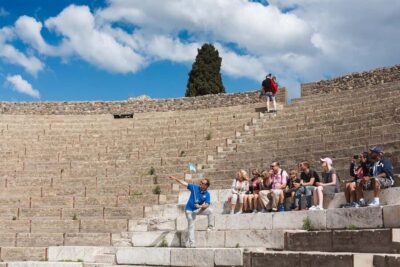
From Rome: Pompeii, Amalfi Coast, and Sorrento Day Trip
Read our review →
From Rome: Pompeii, Amalfi Coast and Positano Day Trip
Read our review →Pompeii Small Group Tour with an Archaeologist
Read our review →
Pompeii, Amalfi Coast and Positano Day Trip from Rome
Read our review →Browse the lists this tour appears in