

Reviewed · POMPEII TOURS
Ercolano: Herculaneum Entry Ticket with Optional Audio Guide
Herculaneum gives you something Pompeii often cannot: the feeling of entering a real Roman neighborhood, not simply walking past scattered ruins. The volcanic material preserved roofs, doors, wooden furniture, food, and frescoes, so you can look into rooms and picture daily life with unusual clarity.
I like the site’s manageable size and the chance to explore at your own pace. I also like that the ticket can include an audio guide, which adds useful detail about Roman homes, social life, shops, baths, and the people who lived here. The main drawback is the guide app. It can be hard to match the right track to the building in front of you, and the phone signal may be weak.
Key points to know before you go
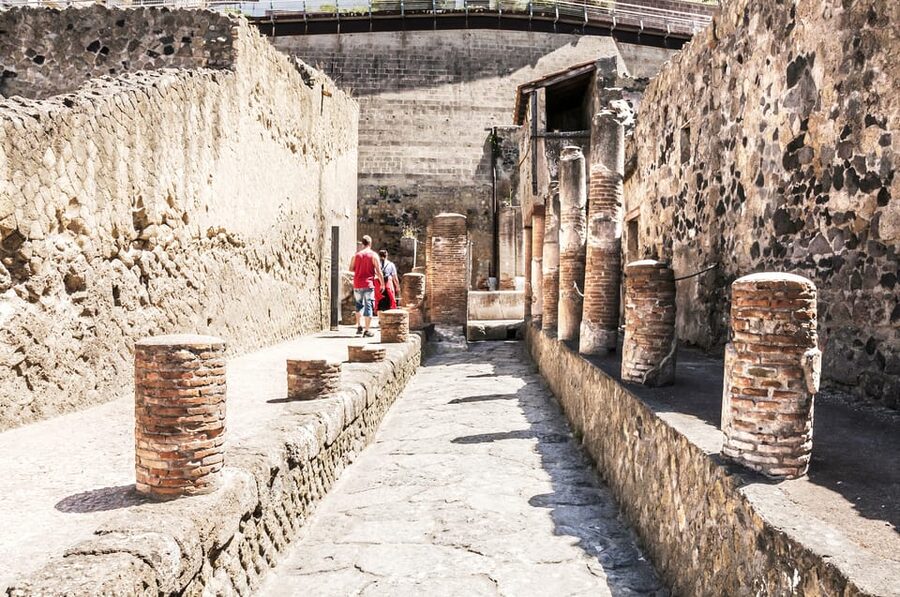
- A compact ancient town: You can see the main area in about three hours without the scale becoming exhausting.
- Remarkable preservation: Roofs, beds, doors, food, mosaics, and frescoes survived in ways that make the town feel startlingly close.
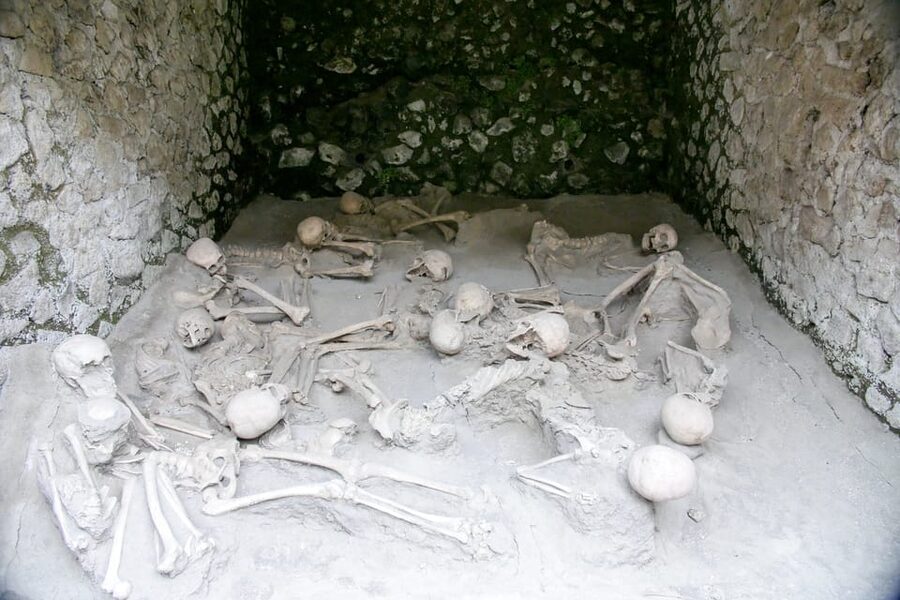
- A moving shoreline story: About 300 skeletons were found near the ancient port, a sobering reminder of the eruption’s human cost.
- Audio guide choices: Select the digital app or a physical device, and bring headphones for the app.
- Less crowded than Pompeii: Herculaneum is smaller, quieter, and easier to take in at a steady pace.
- Check the ticket desk carefully: Your mobile voucher is redeemed at the on-site online ticket desk, not simply scanned at any entrance line.
Why Herculaneum feels different from Pompeii
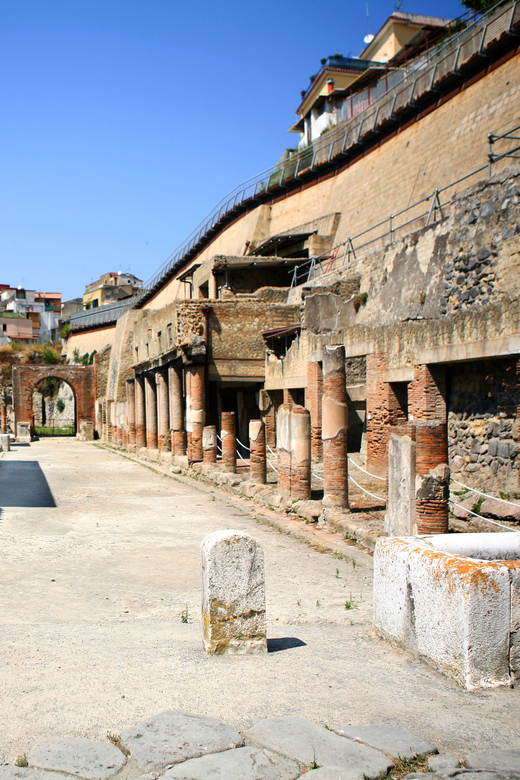
Pompeii is larger and more famous, but its size can work against you. You may spend much of your visit walking between buildings, checking a map, and trying to decide what not to miss. Herculaneum is more compact. That lets you spend more time looking closely at individual rooms and objects.
The difference comes partly from the eruption itself. Pompeii was covered mainly by ash and pumice, while Herculaneum was buried beneath a dense volcanic flow. That material sealed buildings more completely. As a result, Herculaneum retained features that usually disappear from archaeological sites: upper floors, wooden elements, doors, furniture, and household goods.
You should not expect every building to be perfectly complete. Ancient walls are still damaged, some areas may be closed, and the site has a weathered feel. Yet the preserved details are powerful. A painted wall, a threshold, or a simple bed frame can tell you more about ordinary Roman life than a grand monument viewed from a distance.
The visit is also physically easier than Pompeii in one important sense: you have less ground to cover. You will still walk on uneven and cobbled surfaces, so comfortable shoes matter. The site has shade in some buildings and under parts of the streets, but summer heat remains a serious consideration.
More Ancient Ruins in Pompeii
- From Naples: Pompeii Ruins & Mount Vesuvius Day Tour
★ 4.3 · 11,459 reviews - Herculaneum: Skip-the-Line Guided Tour with Archaeologist
★ 4.8 · 3,439 reviews - Pompeii: Archaeological Park Tour with Ticket on request
★ 4.5 · 2,283 reviews
Entering the site with the mobile voucher
Your ticket is redeemed at the on-site online ticket desk. This detail matters because the redemption point can be confusing at first. Look for the desk at the archaeological site where ticket holders are processed, rather than assuming your phone voucher takes you straight through a separate gate.
The process is generally straightforward, but it may not be an instant QR-code scan. Some people have had to wait while staff handled the admission process, even when there was no long queue. Allow a little extra time, especially if you have a train, reservation, or other fixed appointment afterward.
The ticket is valid for one day, so you are not tied to a guided group or a short entry window. The attraction operates on seasonal hours:
- From March 16 through October 14, opening hours are 9:30 AM to 7:30 PM. Last admission is at 6:00 PM, and you must leave the archaeological area by 7:00 PM.
- From October 15 through March 15, opening hours are 8:30 AM to 5:00 PM. Last admission is at 3:30 PM, and the area closes to visitors at 4:40 PM.
Check the current availability and entry time when booking. Arriving early is a smart move in warmer months, and winter visits can be especially calm. The shorter winter hours are less forgiving, though, so do not arrive late in the afternoon.
Walking the cobbled streets and residential blocks

Once inside, you walk down into the excavated town. The modern streets above give little warning of what lies below. The ancient city opens up as a grid of lanes, houses, shops, public buildings, and painted walls.
The cobbled streets are not just routes between sights. They help you understand how the town worked. Doorways open onto rooms where people lived, sold goods, worshipped, bathed, and conducted business. Pause at thresholds and look at the surviving decoration. Small details often reward a slower pace more than the best-known buildings do.
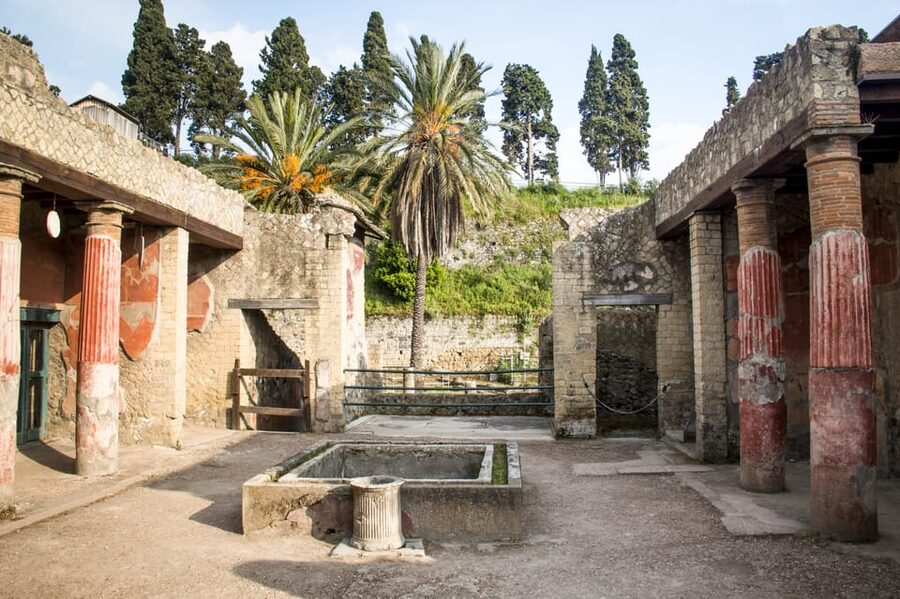
Herculaneum’s houses are the heart of the visit. Many retain room layouts and wall decoration that make it easier to picture a household in use. You might see a fresco still holding its color, a doorway with its original shape, or a room where the relationship between public and private space is clear.
The site does not always provide enough explanation beside each room. This is where the audio guide can help, although it is not always easy to use. If you choose the app, download it before reaching the site. The application uses a fair amount of data, and mobile coverage may be poor inside Herculaneum.
Bring headphones. The app is not necessarily the same as an official on-site guide, and some of its tracks can be difficult to connect with the place you are standing in. You may need to pause, check the map, and match the number or location yourself.
Frescoes, furniture, food, and everyday life
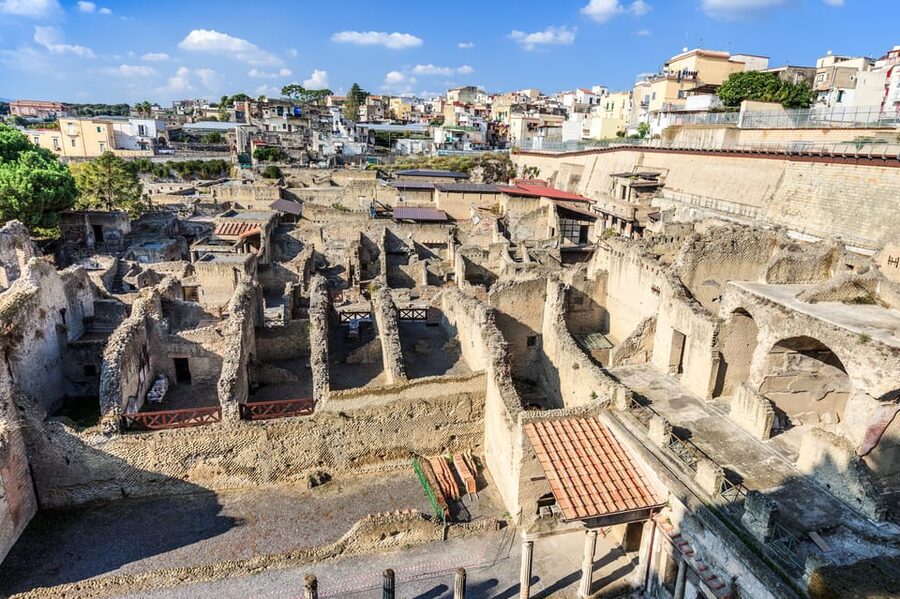
Herculaneum is valuable because it shows more than public architecture. It gives you fragments of daily routine.
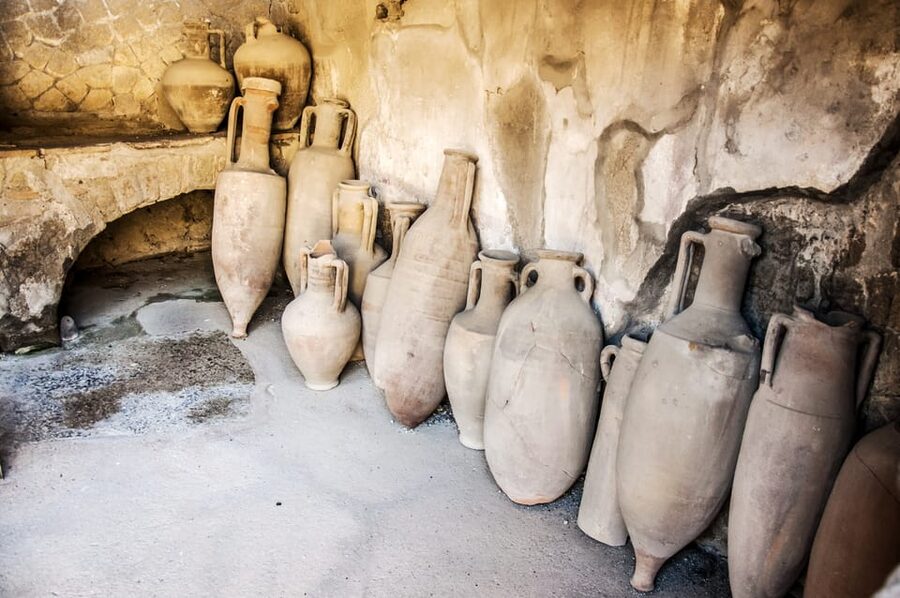
The preserved houses can include beds, doors, household goods, and food. These objects turn the eruption from a distant historical event into something more immediate. A roof beam or a carbonized object may look modest, but it survived because the volcanic material sealed the town quickly.
Look closely at the wall paintings. Some are decorative, some relate to mythology, and others helped owners show status. You do not need to know every artistic term to appreciate the effect. The colors and patterns make it clear that Roman homes were not plain stone boxes.
The audio guide is most useful when it explains people and social structure, not just bricks and room shapes. A good explanation can help you understand why a house was arranged as it was, who might have used a shop, and how public and private life overlapped.
If you prefer to wander quietly, you can skip the audio. The site is rewarding on its own, but you will miss some context. This is one reason a live guide may suit serious history fans better. No guided tour is included with this ticket, so a live guide must be arranged separately.
More Audio Guide Tours in Pompeii
- Pompeii: Entry Ticket with Optional Audio Guide
★ 4.2 · 12,360 reviews - Pompeii: Skip-the-Line Entrance Ticket with Audio Guide
★ 4.0 · 2,509 reviews - Pompeii: Skip-the-Line Entry Ticket with Audio Guide or Tour
★ 4.1 · 1,364 reviews - Herculaneum: Skip-the-Line Entry Ticket with Audio Guide
★ 4.3 · 870 reviews
Public baths, shops, and the gymnasium
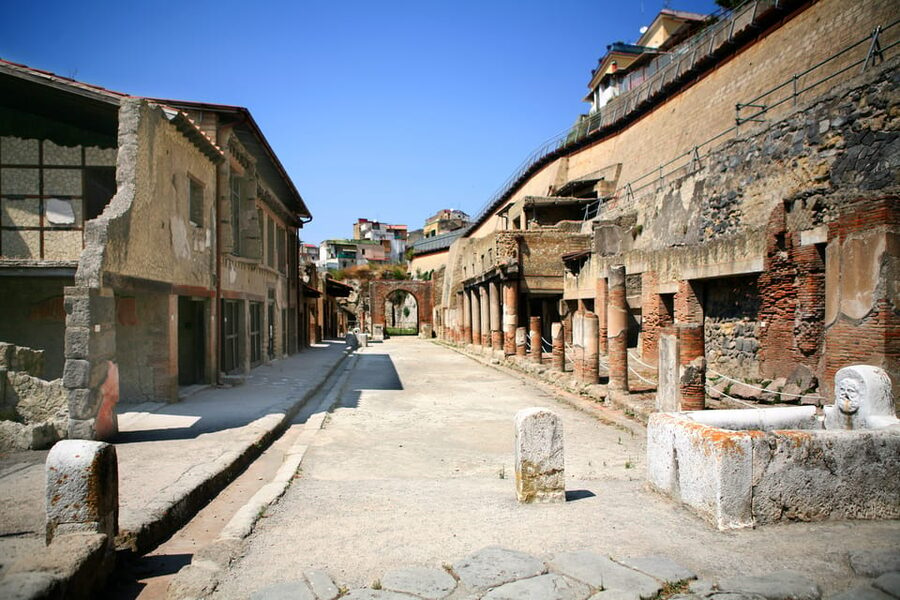
The public buildings show that Herculaneum was not only a collection of private homes. Shops, a public gymnasium, and public swimming baths reveal the social side of the town.
The baths are particularly useful for understanding Roman routine. They were places for washing, exercise, conversation, and social contact. Look at the surviving rooms and decoration, then imagine the steady movement of people through spaces designed for a shared daily ritual.
The shops help anchor the town in ordinary commerce. Ancient streets become easier to understand when you see where goods were sold and how storefronts connected with nearby homes. The gymnasium adds another piece of the picture, showing the importance of exercise and public life.
The drawback is that interpretation can be uneven. Some visitors want more information boards for individual rooms and features. If you are not using an audio guide, carry a printed map or use the site map carefully, since finding the correct building from a phone-based guide can take patience.
The ancient port and the human cost of 79 AD
The most haunting part of Herculaneum is near the old shoreline and boathouses. About 300 skeletons were found in the area, belonging to people who did not escape the eruption.
This is not a quick photo stop. The remains force you to think about the final moments of the town’s population. Herculaneum is often praised for its architecture, but the human story gives the visit its emotional weight.
The site should be approached with respect. You are looking at archaeological evidence of a disaster, not a dramatic display designed only to entertain. Some people will find this section difficult, while others will consider it essential to understanding the eruption.
It also changes how you see the rest of the town. After viewing the shoreline remains, a doorway or a household object feels less like an isolated artifact. It becomes part of a real neighborhood interrupted in a single catastrophic moment.
How long you need and how to plan your pace
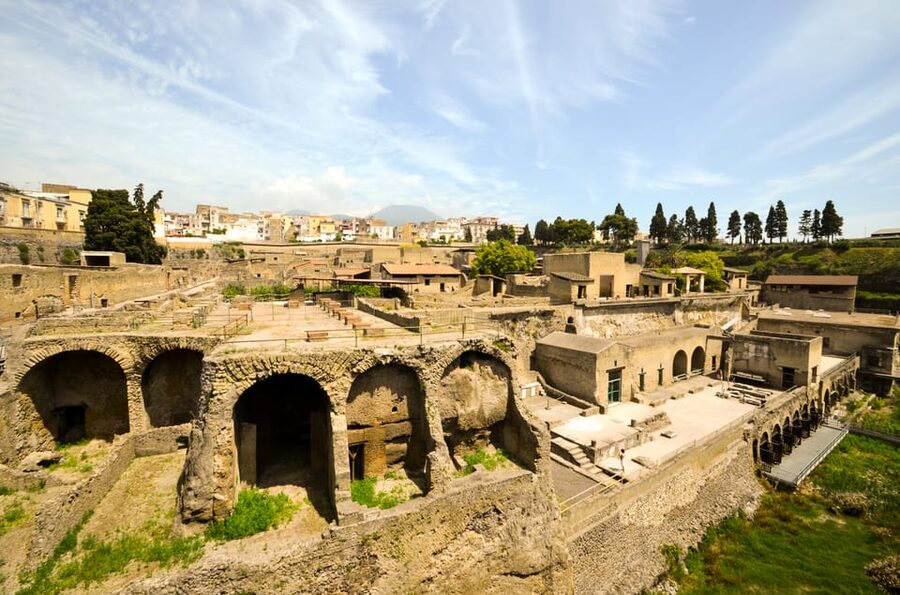
Plan on about three hours for a solid first visit. That gives you enough time to walk the main streets, enter several houses, see the public buildings, and spend time near the ancient shoreline.
You could stay longer if you read every display, listen to all the audio material, and study the architecture. The ticket is valid for one day, so you are not pushed into a fixed two-hour route. Still, the site’s compact size means most people do not need an entire day unless they prefer a very slow archaeological visit.
In summer, start early or visit later in the day within the admission hours. Take an umbrella for shade, especially if the sun is strong. Some houses and covered streets offer relief, but you should not count on constant shade.
Winter offers cooler conditions and, often, a quieter atmosphere. The tradeoff is the shorter opening schedule. Wear shoes with a firm sole in every season. Cobbles and uneven surfaces are part of the experience.
Is the audio guide worth adding?
The answer depends on how you like to visit archaeological sites.
The audio guide can add useful material about Roman society, the residents, and the purpose of individual rooms. Some tracks give you a stronger sense of people and habits than a basic architectural tour would.
The digital version is convenient, but its layout is not always clear. It can be tricky to find the correct dialogue for the building in front of you, and the map or tracking function may not work perfectly. Download the app and its content before arriving, and bring headphones.
The physical audio guide device is another option if you prefer not to rely on your own phone. Confirm which version and language you have selected. The information lists English, French, German, Italian, and Spanish for the audio options, while the digital app details specifically identify English, French, Italian, and Spanish.
If you want a connected story and personal answers, choose a separate live tour. This ticket includes admission, not a guide. For independent visitors, the audio option is a useful extra, but it is not essential.
Price, value, and possible booking frustrations
The listed price is $21 per person. That is a fair price if you want simple entry and plan to explore independently, especially since Herculaneum can occupy several hours without requiring a full-day commitment.
The value becomes less clear if the booking price is much higher than the ticket price at the site. Some people have paid a sizeable premium and then received only the basic admission because the audio guide could not be recognized at the audio desk. Check exactly what your selected option includes before paying.
You also do not need to pay for a transfer or a live tour simply to enjoy the ruins. The ticket lets you walk through the town on your own. If you want to control your pace and avoid the cost of a private guide, this is a sensible format.
The booking terms are flexible: you can cancel up to 24 hours before the visit for a full refund, and a reserve-now, pay-later option is available. Those terms are useful when your Campania schedule is still changing.
Who should book this Herculaneum ticket?
I would choose it for anyone interested in Roman homes, ancient city planning, archaeology, or the human story of Vesuvius. It suits visitors who want a quieter and more manageable alternative to Pompeii, while still seeing baths, shops, frescoes, mosaics, and domestic spaces.
Families with older children may appreciate the compact layout and the surviving objects, though the emotional shoreline section may need explanation. It also works well for independent visitors who dislike being hurried through rooms.
I would think twice if you expect a polished, fully narrated tour with clear signs at every stop. The audio app can be awkward, and the basic ticket does not include a live guide. Visitors who need detailed interpretation may prefer to arrange a separate guided tour.
Should you book it?
Yes, if Herculaneum fits your Campania plans and you want to see an ancient town where ordinary buildings and household details survived unusually well. The compact scale makes it easier to appreciate than Pompeii, and three hours is enough for a meaningful visit.
Book carefully. Confirm whether you are buying admission with the digital or physical audio guide, download the app before arrival, bring headphones, and allow time at the ticket desk. If the price is far above the site’s own admission cost, compare options before paying.
FAQ
How long is the Herculaneum ticket valid?
The ticket is valid for one day.
How much does the experience cost?
The listed price is $21 per person.
Is a live guided tour included?
No. The ticket includes entry and an optional audio guide, but not a live guided tour.
What does the digital audio guide include?
The digital option is an audio guide app downloaded to your smartphone. The listed app languages are English, French, Italian, and Spanish.
Is a physical audio guide available?
Yes. You can select a physical audio guide device instead of the digital app.
What languages are listed for the audio options?
The activity information lists English, French, German, Italian, and Spanish. The digital app details specifically list English, French, Italian, and Spanish.
Where do you redeem the mobile voucher?
You redeem the mobile voucher at the online ticket desk on site at the Herculaneum archaeological area.
What are the summer opening hours?
From March 16 to October 14, the site is open from 9:30 AM to 7:30 PM. Last admission is at 6:00 PM, and you must leave the archaeological area by 7:00 PM.
What are the winter opening hours?
From October 15 to March 15, the site is open from 8:30 AM to 5:00 PM. Last admission is at 3:30 PM, and the archaeological area must be left by 4:40 PM.
Can you cancel for a refund?
Yes. You can cancel up to 24 hours in advance for a full refund. A reserve-now, pay-later option is also available.
More Entry Tickets in Pompeii
- Pompeii: Entry Ticket and Guided Tour with an Archaeologist
★ 4.8 · 19,459 reviews - Mount Vesuvius: Skip-the-Line Ticket and Smart Digital Guide
★ 4.2 · 2,780 reviews - From Naples: Pompeii Skip-the-Line Entry Ticket and Tour
★ 4.4 · 2,753 reviews - Pompeii: Guided Walking Tour with Entrance Ticket
★ 4.3 · 1,423 reviews
Just added around Pompeii
- Vesuvius National Park Skip-the-Line Ticket★ 3.8 · 221 reviews
- From Rome: Sorrento & Pompeii Day Tour with Hotel Pickup★ 4.2 · 257 reviews
- From Rome: Day Trip to Pompeii with Tickets★ 4.4 · 1,161 reviews
- Pompeii Ruins Private Tour with Optional Skip-the-Line Entry★ 4.9 · 732 reviews
- From Rome: Pompeii All-Inclusive Tour with Live Guide★ 4.3 · 261 reviews
- Pompeii: Exclusive Tour with Archaeologist and Entry Tickets★ 4.9 · 634 reviews
- Pompeii 3hours Villa of Mysteries tour with an Archaeologist★ 4.8 · 486 reviews
- Rome: Pompeii Tour with Wine and Lunch by High Speed Train★ 4.8 · 485 reviews
Pompeii Tours, compared.

Entry Ticket and Guided Tour with an Archaeologist
Read our review →

From Naples: Pompeii Ruins & Mount Vesuvius Day Tour
Read our review →
From Rome: Pompeii, Amalfi Coast, and Sorrento Day Trip
Read our review →
From Rome: Pompeii, Amalfi Coast and Positano Day Trip
Read our review →Pompeii Small Group Tour with an Archaeologist
Read our review →
Pompeii, Amalfi Coast and Positano Day Trip from Rome
Read our review →Browse the lists this tour appears in