

Reviewed · POMPEII TOURS
Pompeii: Skip-the-Line Guided Tour with Expert Archaeologist
Pompeii makes far more sense when an archaeologist helps you read its worn stones, faded paintings, bakeries, shops, and homes. The site is huge, and without context you can easily walk past the details that show how ordinary Romans lived before Mount Vesuvius buried the city in 79 AD.
I like the small-group format, which makes it easier to hear the guide and ask questions. I also like the way the route changes with current excavations, giving you a look at Pompeii as a living archaeological project, not just a frozen monument. The main drawback is the heat and hard walking, with little shade and limited places to stop for food or toilets.
Key points at a glance
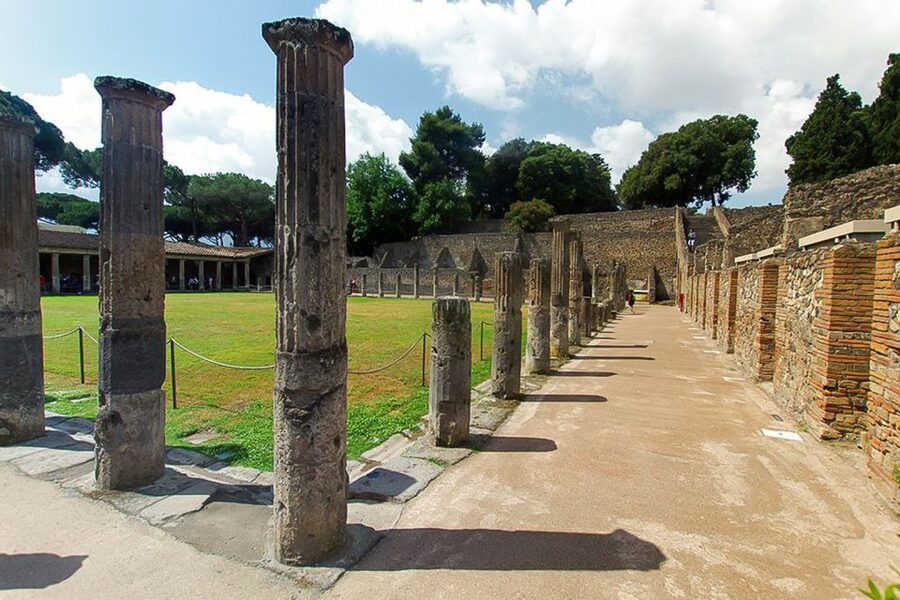
- Archaeologist-led storytelling: Guides such as Ilaria, Enzo, Brunella, Anna, and Sonia bring technical details down to earth with clear explanations and lively stories.
- A broad three-hour route: The longer option reaches the Forum, temples, baths, shops, bakery, cemetery, villas, plaster casts, city walls, and selected excavation areas.
- A shorter two-hour choice: Pompeii Express focuses on major sights such as the Forum, temples, and shops.
- Skip-the-line entry: Pre-reserved admission saves time at the Pompeii Archaeological Park entrance.
- Strong family appeal: Guides have kept children engaged, including groups with children as young as eight.
- Prepare for sun and stone: Wear sturdy, closed-toe shoes, carry plenty of water, and bring a hat or sun umbrella.
Why Pompeii is better with an archaeologist
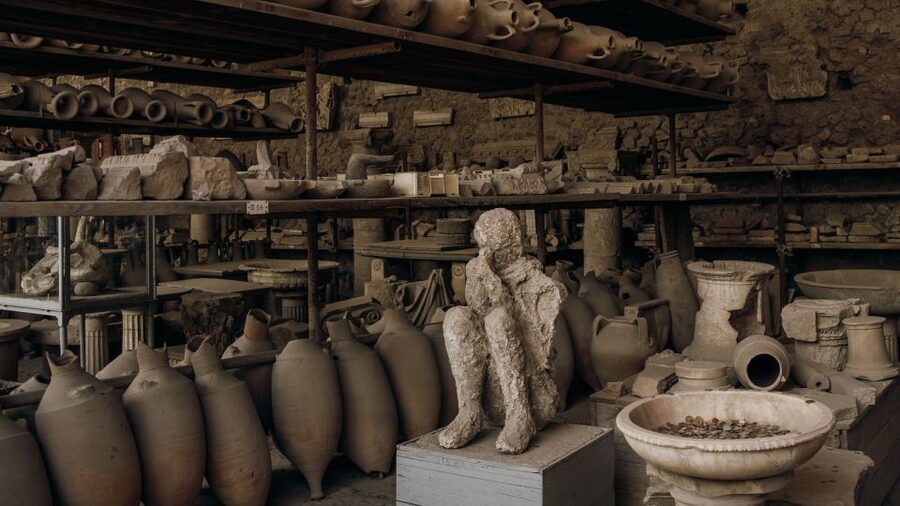
Pompeii is not a tidy museum laid out for easy reading. It is a broad Roman city of streets, walls, courtyards, shops, temples, public buildings, and homes, much of it worn down by time and weather. A guide gives those remains a human scale.
You might see a row of stone counters and think they were tables. Your guide can explain how they worked as food shops. You might pass a narrow room and miss that it was part of a bath complex, bakery, or house. The point of this tour is not simply to walk farther. It is to notice more.
The guides are trained archaeologists and official Pompeii guides. That matters here because the site contains layers of evidence that are not always obvious. A cracked wall, a street surface, or a small architectural feature can help explain how the city was organized and how people used it.
Names that appear often in the guide team include Ilaria, Anna, Enzo, Brunella, Sonia, Paulo, and Vincenzo. The strongest praise centers on their clear English, humor, patience, and ability to answer questions without making the visit feel like a lecture. Ilaria and Brunella are particularly good choices for families if their schedules are available, based on the way they have handled children’s questions and mixed-age groups.
More Guided Tours in Pompeii
- Pompeii: Entry Ticket and Guided Tour with an Archaeologist
★ 4.8 · 19,459 reviews - Herculaneum: Skip-the-Line Guided Tour with Archaeologist
★ 4.8 · 3,439 reviews - Pompeii: Guided Walking Tour with Entrance Ticket
★ 4.3 · 1,423 reviews
Meeting at the Villa dei Misteri entrance
The tour begins at Via Villa dei Misteri, 1, at the entrance gate for Pompeii Archaeological Park. Look for the meeting point across from the Hortus Pompei restaurant, where the guide holds a green Walks sign.
Arrive 15 minutes early. This is practical advice, not fussiness. The entrance area can feel confusing, and two visitors specifically found the meeting instructions and end point less clear than they would have liked. Have the exact meeting details open on your phone and make sure everyone in your group knows the guide’s sign.
The pre-reserved ticket is included, so you do not need to spend your arrival time sorting out admission. The skip-the-line benefit is most useful at busy times, though it does not remove the need to arrive promptly. Once the group is together, you enter the archaeological park and begin the walking route.
Headsets are provided when needed. In a small group, that can make a big difference. You do not need to crowd around the guide to catch every sentence, and you can look at a wall or doorway while still following the explanation.
The Forum, temples, and civic Pompeii
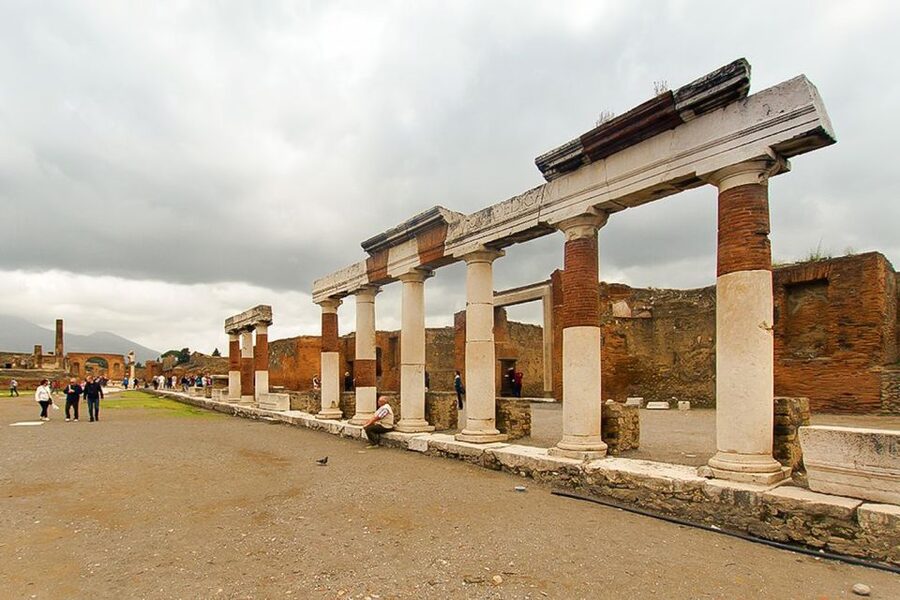
The Forum is one of the essential stops. This broad public space was the heart of civic life, and it helps you understand Pompeii as a working city rather than a collection of ruins.
The route also includes the Temple of Apollo and other religious buildings. These stops provide useful contrast with the shops and houses. Pompeii was not just a place where people ate, slept, and traded. It had public rituals, political life, commercial rules, and carefully planned civic spaces.
This is where a guide earns the fee. The remaining columns and paving stones can look repetitive when seen alone. With an explanation of what happened in the Forum and how the buildings related to one another, the area becomes easier to picture.
The two-hour Pompeii Express option concentrates on this central section, along with temples and shops. It suits you if Pompeii is one stop in a packed day, if you are traveling with young children, or if you know that three hours of walking in sun will be too much. It will not give you as broad a view of the city, but it covers the main public core.
Shops, bakeries, and daily life
I particularly like the stops that focus on ordinary life. Public monuments are impressive, but shops, kitchens, bakeries, and street details show how people actually used the city.
The tour visits the remains of a Roman bakery, where food remains were found almost intact. It also includes an ancient supermarket, or food shop, offering a useful reminder that Pompeii was a place of errands and quick meals, not only grand villas.
You will see shops, houses, and public baths. The baths show how important shared facilities were to Roman urban life, while the homes offer clues about status, family life, decoration, and private space. The guide’s job is to connect these fragments so that you can imagine a normal day before the eruption.
The route can include one of the old brothels if that is appropriate for your group. Families may want to ask the guide what will be included before the stop. The tour is not designed as a sensational visit. The brothel is one part of a larger explanation of Roman society and city life.
More Skip-the-Line Tickets in Pompeii
- Mount Vesuvius: Skip-the-Line Ticket and Smart Digital Guide
★ 4.2 · 2,780 reviews - From Naples: Pompeii Skip-the-Line Entry Ticket and Tour
★ 4.4 · 2,753 reviews - Pompeii: Skip-the-Line Entrance Ticket with Audio Guide
★ 4.0 · 2,509 reviews - Sorrento: Skip-the-Line Pompeii Express Tour by Train
★ 4.8 · 2,038 reviews
Plaster casts and the human cost of 79 AD
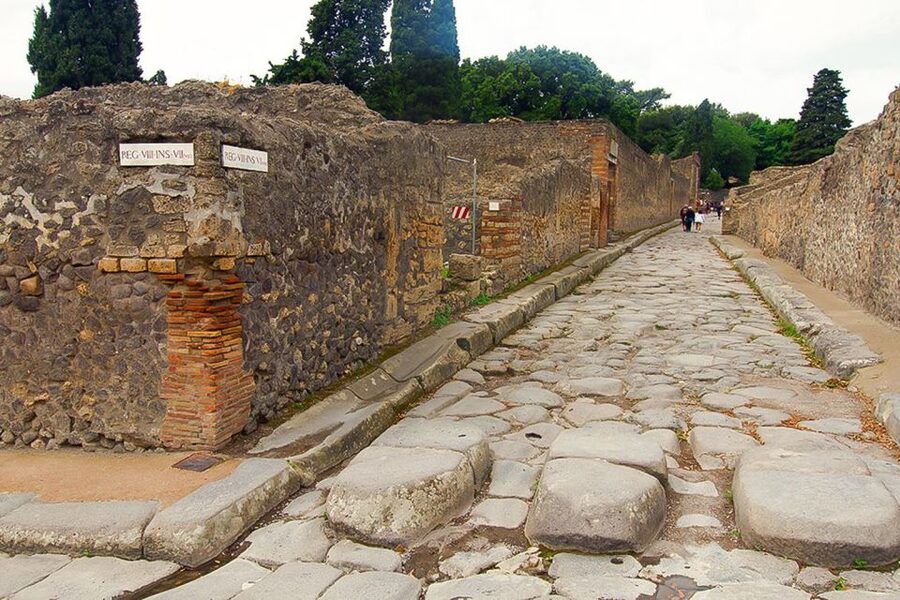
Pompeii is often presented as a time capsule, but that phrase can make the place sound neat and distant. It was a real city, and its destruction was sudden and deadly.
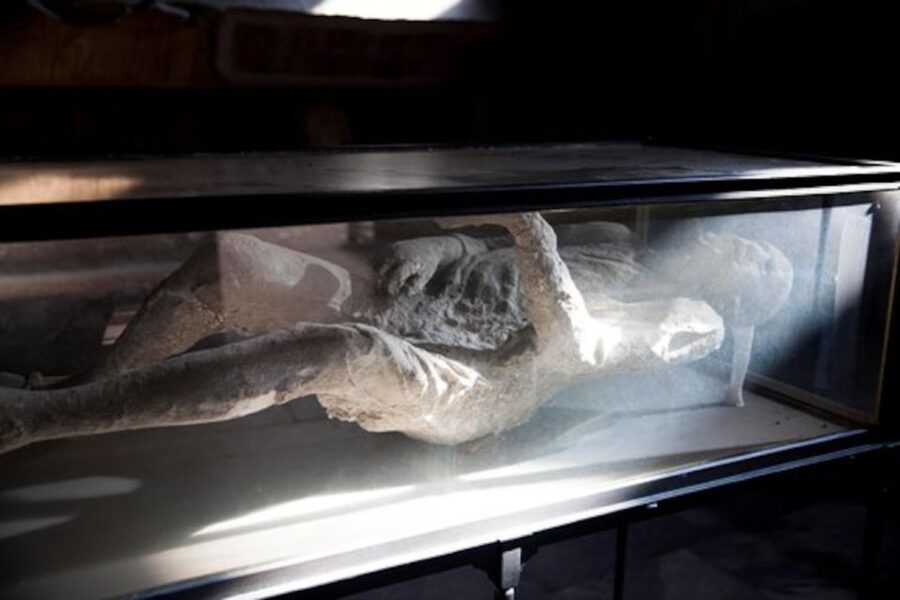
The plaster casts of people caught in the eruption are among the most emotional sights. They show bodies at the moment of death, making the disaster painfully personal. This is not an easy stop for everyone, especially young children, so you should be ready for a serious change in mood.
A good guide handles the casts with care. The point is not shock. It is to help you understand that the streets, shops, and houses belonged to people with routines, families, work, and fears. Several guides are praised for telling those human stories without losing the archaeological facts.
The eruption is also a reminder that Pompeii is not fully known. About one-third of the city remains uncovered, and excavation and preservation continue. Your route may include recently opened or newly investigated areas, depending on what is accessible that day.
Recent excavations and a changing route
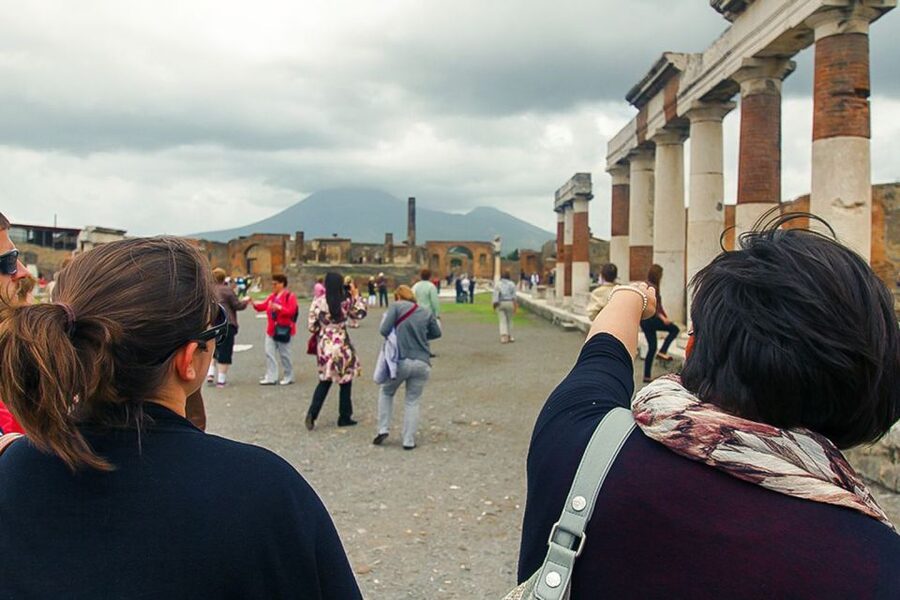
One of the more unusual parts of this tour is that the itinerary is not completely fixed. The guide adapts the visit as new discoveries are opened or preservation work changes access.
That can be a strength. You are not simply following a route designed years ago. You may get a brief look at an active archaeological site and learn how researchers uncover, record, and protect the remains.
It also means you should not expect every group to see exactly the same rooms. Pompeii has closures, restoration work, and changing access. The guide will choose the best available route, with the aim of showing both famous sights and less obvious details.
This flexibility is especially useful on the three-hour Complete Pompeii option. It gives the guide enough time to move beyond the Forum and include more of the city. A three-hour visit still cannot cover every corner. Pompeii is simply too large. But it gives you a better sense of scale and variety than the shorter route.
City walls and views toward Naples
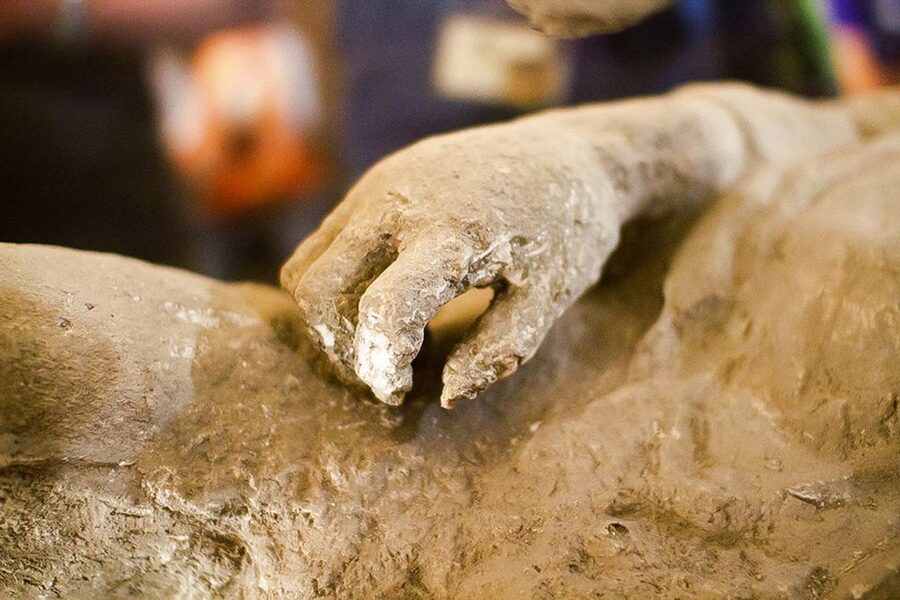
The route can continue along the old city walls, where you get panoramic views toward Naples. This stop changes the rhythm of the visit after several hours among stone streets and enclosed buildings.
From the walls, you can better understand Pompeii’s position and layout. The view also gives you a physical sense of how extensive the site is. The city is not one small ruin that can be crossed in a few minutes. It is a large urban area, and the wall walk helps put the excavated streets into context.
The city walls may be less important to you than the houses, shops, or Forum, but I find this kind of viewpoint useful. It gives your feet a short change of surface and helps prevent the visit from becoming a blur of similar stone blocks.
The real cost is sun, stone, and stamina
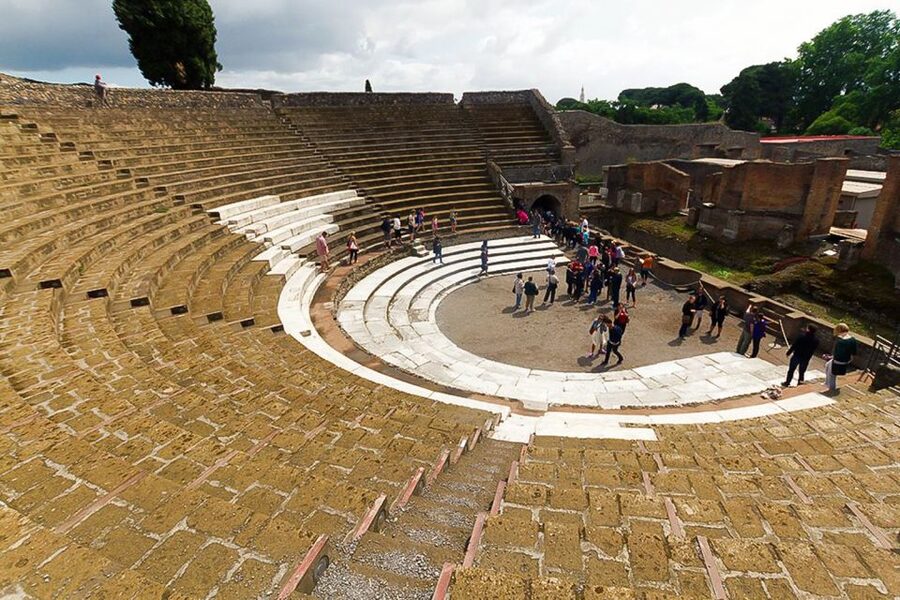
The listed price is $70 per person. For a two to three hour guided visit with reserved entry and an archaeologist, I consider that fair value if you want to understand Pompeii rather than simply see it.
The strongest reason to pay for a guide is not the ticket shortcut alone. It is the interpretation. Without help, you can spend hours walking through a huge area and remember only a few walls. With a good guide, the same stones become shops, homes, public baths, religious spaces, and places tied to individual lives.
There are tradeoffs. The tour requires a moderate walking pace and is not suitable for wheelchair users, people with mobility impairments, or strollers. High heels are not allowed, and baby strollers cannot be brought along. Full names must match passports or ID cards, and children need identification too.
Pompeii is also hot. Much of the route is exposed, and one visitor described the site as mostly sun and stone. Bring plenty of water, sunscreen, and a hat. A UV umbrella can help in bright weather, though you need to use it without blocking the group’s view. Closed-toe shoes are a smart choice, especially on uneven surfaces.
Facilities are limited. There may be only one toilet stop during the route, and food and drink queues can be long. Use the toilet before entering and carry water with you. Do not count on buying a quick drink halfway through the tour.
How the small group changes the visit
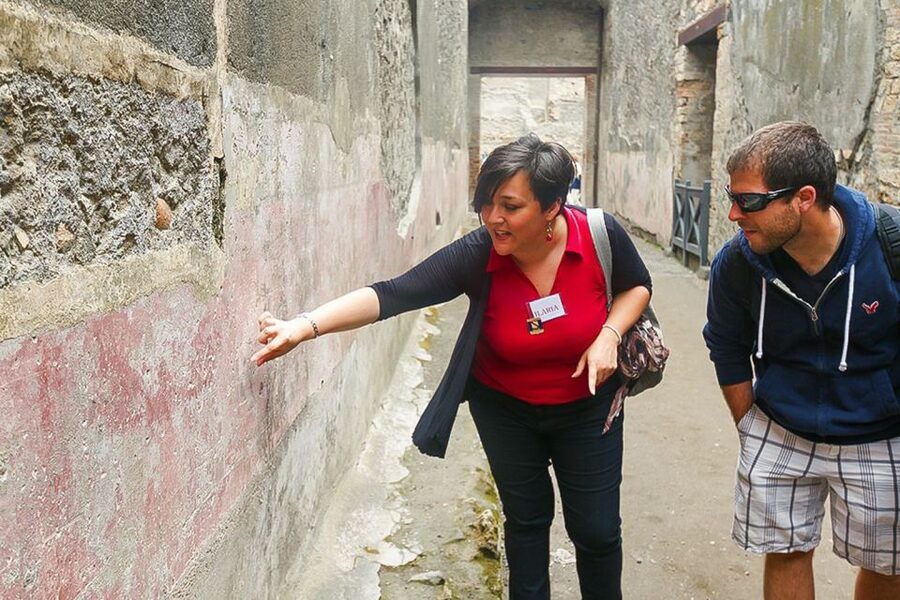
The small-group format is more valuable at Pompeii than at many city sights. The site is spread out, and the ground can be uneven. A very large group would make it harder to hear, ask questions, or gather around a detail.
Here, headsets can keep the group moving while the guide speaks. You can stop to study a doorway or wall instead of pressing shoulder to shoulder around the guide.
The guide also has more room to adjust the pace. One guide took extra care with a group member who had walking trouble, while still keeping the visit moving. That does not mean the tour is suitable for serious mobility limitations. It means the human side of the group is taken seriously when someone needs a little more time.
Families can also do well here. Children may not care about dates and building names, but they often respond to food shops, graffiti, houses, bodies, and stories about daily life. Guides such as Sonia and Ilaria have been praised for answering children’s questions and keeping them involved for all three hours.
Which version should you book?
Choose the longer Complete Pompeii option if this is your main Pompeii visit. You will have time for the Forum and major temples, then move into baths, shops, houses, the bakery, cemetery, plaster casts, city walls, and possibly recent excavation areas.
Choose Pompeii Express if you have only two hours, are traveling with very young children, or want a focused introduction before exploring independently. The shorter route covers the Forum, temples, and shops, but it will not offer the same breadth.
The three-hour route may leave you tired. That is part of the bargain. Pompeii rewards time, but it does not make walking easy. Wear the right shoes, accept a slower pace, and plan the rest of your day with enough recovery time.
The activity is offered in English, with private or small-group formats available. Private touring gives you more control over questions and pace, while a small group generally offers the better price for most visitors.
Should you book this Pompeii tour?
Book it if you want Pompeii to feel like a city with people in it, not just a field of ruins. The archaeologist guides are the main reason to choose it, and the repeated praise for Ilaria, Anna, Enzo, Brunella, Sonia, and others points to a consistently strong guiding team.
I would choose the three-hour option for a first visit, especially if Pompeii is a major reason for your time in Campania. I would choose Express for a tight schedule or limited stamina.
Skip it only if you strongly prefer to wander alone and already understand Roman urban archaeology. For most people, the $70 cost pays for structure, context, reserved entry, and details you would likely miss on your own. Just bring water, protect yourself from the sun, and arrive early at the Villa dei Misteri entrance.
FAQ
How long does the Pompeii tour last?
The standard tour lasts about three hours. A shorter Pompeii Express option lasts two hours and focuses on the park’s main highlights.
Where does the tour meet?
Meet at the entrance gate for Pompeii Archaeological Park on Via Villa dei Misteri, 1, across from the Hortus Pompei restaurant. The guide holds a green Walks sign.
Is skip-the-line entry included?
Yes. Pre-reserved Pompeii admission tickets are included in the tour price.
What sights are included?
The route can include the Forum, Temple of Apollo, other temples, public baths, houses, shops, a Roman bakery, an ancient food shop, a cemetery, plaster casts, city walls, and selected excavation areas. The exact route can change as access and excavation work change.
Is the tour suitable for people with mobility impairments or wheelchairs?
No. The tour requires walking at a moderate pace and is not suitable for people with mobility impairments, wheelchair users, or strollers.
What should I bring?
Bring a passport or ID card, comfortable closed-toe shoes, water, sunscreen, and a hat. Children also need a passport or ID card. High heels are not allowed.
Just added around Pompeii
- Vesuvius National Park Skip-the-Line Ticket★ 3.8 · 221 reviews
- From Rome: Sorrento & Pompeii Day Tour with Hotel Pickup★ 4.2 · 257 reviews
- From Rome: Day Trip to Pompeii with Tickets★ 4.4 · 1,161 reviews
- Pompeii Ruins Private Tour with Optional Skip-the-Line Entry★ 4.9 · 732 reviews
- From Rome: Pompeii All-Inclusive Tour with Live Guide★ 4.3 · 261 reviews
- Pompeii: Exclusive Tour with Archaeologist and Entry Tickets★ 4.9 · 634 reviews
- Pompeii 3hours Villa of Mysteries tour with an Archaeologist★ 4.8 · 486 reviews
- Pompeii and Vesuvius Full-Day Tour from Amalfi Coast★ 4.4 · 319 reviews
Pompeii Tours, compared.

Entry Ticket and Guided Tour with an Archaeologist
Read our review →
From Naples: Pompeii Ruins & Mount Vesuvius Day Tour
Read our review →
From Rome: Pompeii, Amalfi Coast, and Sorrento Day Trip
Read our review →
From Rome: Pompeii, Amalfi Coast and Positano Day Trip
Read our review →Pompeii Small Group Tour with an Archaeologist
Read our review →
Pompeii, Amalfi Coast and Positano Day Trip from Rome
Read our review →Browse the lists this tour appears in