Reviewed · POMPEII TOURS
Herculaneum: Skip-the-Line Entry Ticket with Audio Guide
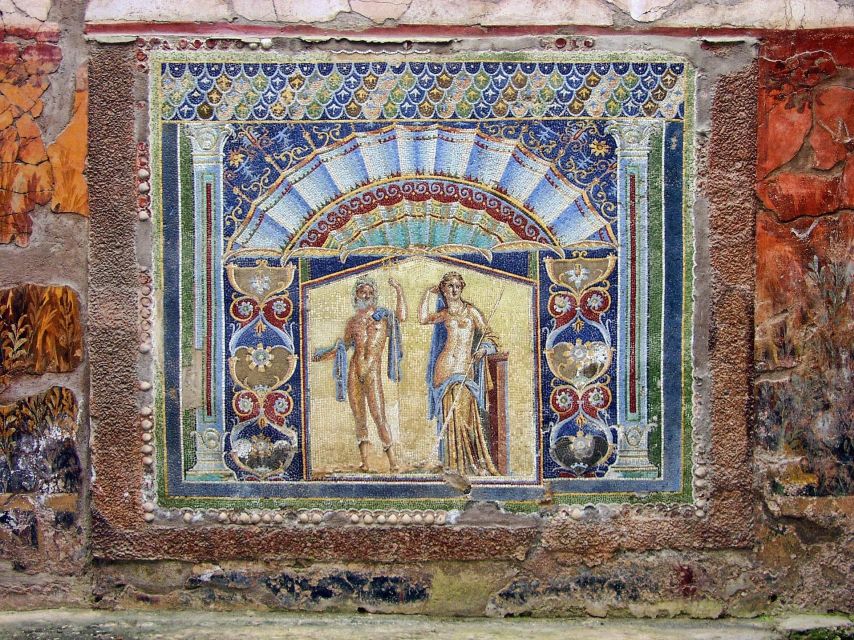
Herculaneum gives you something Pompeii cannot quite match: a smaller Roman town where wooden doors, furniture, frescoes, and mosaics survived the eruption of Vesuvius in 79 AD. The compact streets make it easier to picture daily life, from a public fountain stop to a wealthy home and a modest slave quarter.
I like the freedom to set your own pace, and the audio guide adds useful context without tying you to a group. I also like the value at about $15 per person, provided you choose the option that actually includes the entry ticket. The main catch is the ticket and audio collection process, which can involve separate desks, unclear queues, and audio numbers that do not always match the site perfectly.
Key points to know before you go
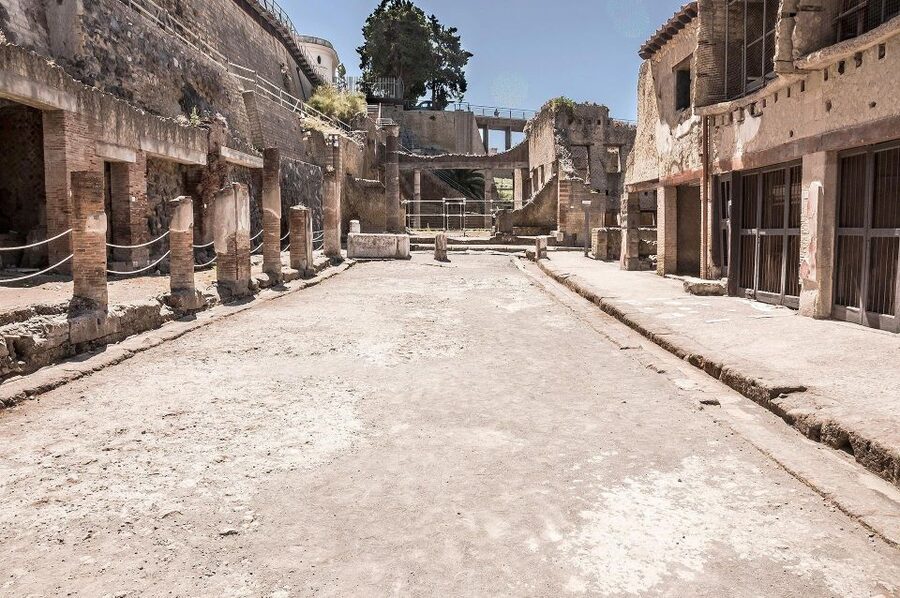
- Allow two to four hours: The site is smaller than Pompeii, but there is far more to examine than the modest size suggests.
- Look for original details: Frescoes, mosaics, doors, wooden fittings, statues, and household spaces make the ruins unusually personal.
- Use the audio guide flexibly: You can choose stops in any order, but the numbering and directions may require patience.
- Check your booking option: Some choices provide the audio guide only, with the archaeological park ticket bought separately.
- Go early if possible: The site is generally calmer at opening time, then becomes busier as the day goes on.
- Wear proper shoes: Cobblestones and steep steps make comfortable footwear important.
Why Herculaneum feels different from Pompeii
Herculaneum was buried by the eruption of Mount Vesuvius in AD 79, the same disaster that covered Pompeii. Yet the two sites offer different experiences.
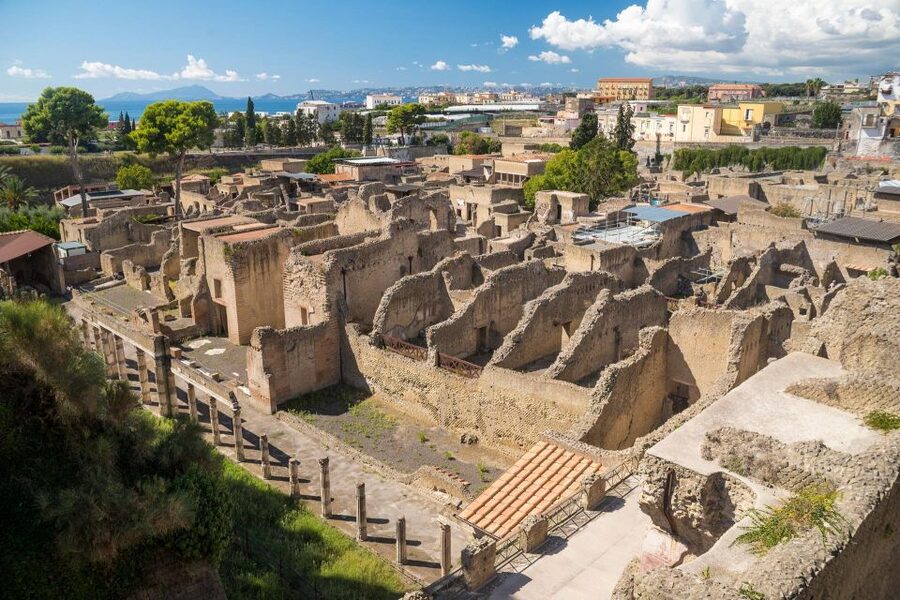
Pompeii is vast. You can spend a full day there and still leave with streets and houses unseen. Herculaneum is more compact, so I find it easier to understand as a living town. You move from one building to the next without the same sense of losing the thread.
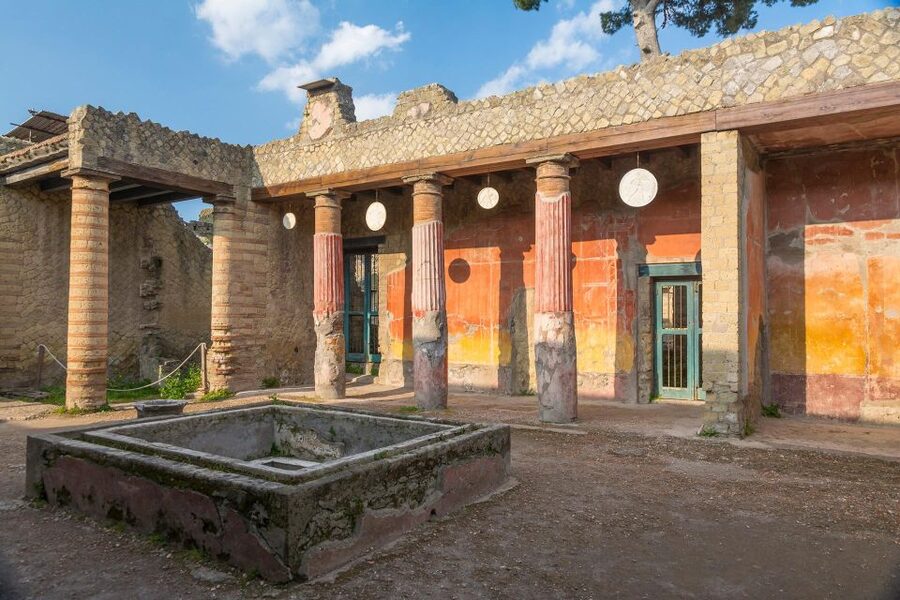
The preservation is the real draw. Volcanic material sealed parts of Herculaneum so effectively that wooden doors, beams, furniture, wall decoration, and household objects survived. The effect is not just visual. A painted wall or a worn threshold helps you picture the people who used the room.
The site also ends with one of its most moving areas. Near the old shoreline, around 300 people died while waiting for rescue from the sea. The boat and the skeletons make the eruption feel less like a distant textbook event and more like a human disaster.
That final section can be difficult to see, especially for children. It is also one of the strongest reasons to visit. Herculaneum is not only about beautiful houses. It shows what happened when ordinary people had almost no time to escape.
More Ancient Ruins in Pompeii
- From Naples: Pompeii Ruins & Mount Vesuvius Day Tour
★ 4.3 · 11,459 reviews - Herculaneum: Skip-the-Line Guided Tour with Archaeologist
★ 4.8 · 3,439 reviews - Pompeii: Archaeological Park Tour with Ticket on request
★ 4.5 · 2,283 reviews
Arriving at the archaeological park
The meeting point is the Herculaneum ticket office. You show your booking confirmation there, but the practical procedure may not be as direct as the phrase skip-the-line suggests.
Depending on the ticket option and the day, you may need to visit a small office near the entrance to collect the audio device, then deal with the entry ticket at another desk. Some visitors have been sent to the bookshop or into the standard queue before being redirected. This is not a major problem when the line is short, but it could matter during a busy period.
Look for staff and ask clearly where to collect each part of your booking. Do not assume that a queue marked for general tickets is also the correct place for an audio-guide voucher. The skip-the-line benefit can be useful when demand is high, but on quieter mornings there may be little or no line to skip.
Bring your passport or another accepted form of identification. The audio device may be issued against identification, and an insurance card has also been accepted. If you prefer your own earphones, check the device you receive. One version works with headphones or earbuds, while Bluetooth use has not always been available.
Once inside, take a moment to get your bearings. Ask for the printed map if it is not handed to you. The map is useful because the park’s numbered stops and the audio guide do not always line up neatly with the route you are walking.
Following the map through the ancient town
The audio guide is designed for independent exploring. You select a numbered point on the device and listen to the explanation, then continue when you are ready. You are not locked into one route, which is a real advantage if one building is crowded or temporarily closed.
The trouble is that the site numbers can be confusing. Some numbers on the device have not matched the numbers visible at the ruins, and the physical order does not always follow the audio order. At times, the commentary may jump to another house or begin halfway through a description.
I would not let this put you off. Use the guide as a source of background rather than a strict navigation system. Keep the map open, confirm the building name when possible, and do not worry about following every stop in numerical order. The best visit is often a loose circuit with time to look around between recordings.
The sound can also be quiet on some devices. Hold the unit close to your ear, or use compatible headphones if available. Families may find it easier to share the listening, while independent visitors can move at a more natural pace.
Villas, frescoes, mosaics, and wooden doors
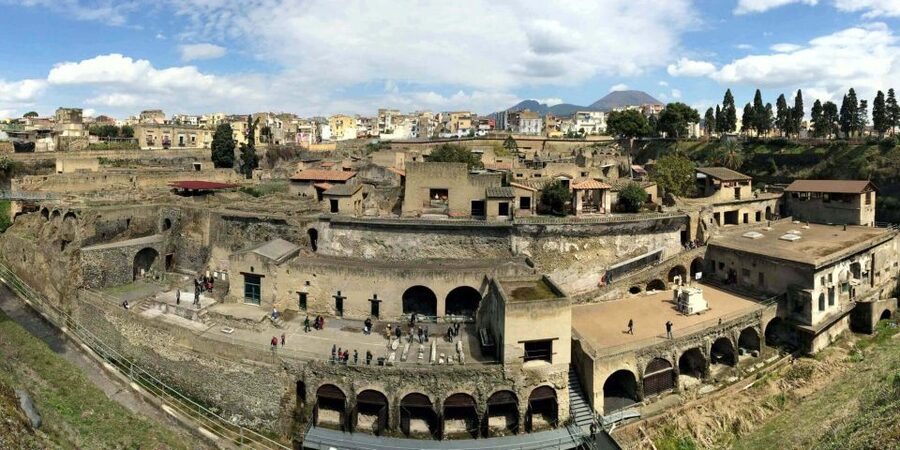
The houses are the heart of Herculaneum. Here, you are not simply looking at foundations. You may see rooms with painted walls, patterned floors, surviving doors, and architectural details that make the space feel occupied.
The wealthy homes show how Roman owners used decoration to signal status. Look for painted scenes, mosaic floors, statues, and rooms arranged around open areas. The audio guide explains how these spaces worked and helps you distinguish a reception room from a service area.
Then compare those houses with the quarters used by slaves and workers. The difference in size, decoration, and comfort tells you more than a general explanation of Roman social classes ever could. Herculaneum lets you see inequality built into the same neighborhood.
The colors are another reason to take your time. Some wall paintings remain surprisingly clear, while others are faded or protected. Do not rush from one famous house to the next. Small details, such as a threshold, a storage area, or a fragment of wood, often say more about daily life than the grandest room.
A few exhibits may be closed on the day of your visit. Internal signs are not always strong, so it may not be immediately obvious what you are looking at once you enter a building. The audio guide helps, but a printed map and a little patience make a noticeable difference.
More Audio Guide Tours in Pompeii
- Pompeii: Entry Ticket with Optional Audio Guide
★ 4.2 · 12,360 reviews - Pompeii: Skip-the-Line Entrance Ticket with Audio Guide
★ 4.0 · 2,509 reviews - Pompeii: Skip-the-Line Entry Ticket with Audio Guide or Tour
★ 4.1 · 1,364 reviews - Ercolano: Herculaneum Entry Ticket with Optional Audio Guide
★ 4.1 · 581 reviews
Markets, fountains, temples, and ordinary routines
Herculaneum is valuable because it is not only a collection of grand villas. Its streets preserve the framework of a working town.
Use the map to find the ancient market and imagine the practical rhythm of shopping, storage, and food preparation. Public fountains show how residents collected water. Streets and shopfronts reveal how homes and businesses sat close together.
The audio guide adds useful explanations about the Roman way of life. It helps you connect a room to its purpose instead of seeing only stones and painted plaster. That context is especially helpful if you have not studied Roman archaeology.
Temples and religious spaces add another layer. You can see places connected with ancient gods and learn how religion fitted into public and private life. The visit works best when you alternate between listening and looking. If you play every track without stopping to study the building, the park can become a procession of facts.
You can also sit in several areas, which is welcome on a hot day. There are places to pause and take in the views across the excavated site. A packed lunch is possible in suitable areas, and there is a café or place to buy a snack and drink. Toilets have received poor marks for upkeep, so plan accordingly rather than expecting polished visitor facilities.
The boat sheds and the most difficult stop
Near the lower section of the site, you reach the area associated with people who tried to escape toward the sea. The boat and the human remains are among the most serious parts of the visit.
This is where Herculaneum shifts from architectural pleasure to grief. The preserved objects and skeletons show that the eruption was not a neat archaeological event. People waited for rescue and did not survive.
Some visitors prefer to finish here, while others choose to see it earlier and then continue with the houses. The audio guide can explain the setting, but no recording can remove the emotional weight of the room. Give yourself time before moving on.
The museum and antiquarian area near the entrance or exit also deserves attention. It contains artifacts and furniture that help explain what you have seen in the streets and houses. If you have only planned a quick walk, allow extra time for these displays.
How long should you spend at Herculaneum?
The advertised duration is one day, meaning your ticket is valid for a day visit rather than a fixed short tour. In practical terms, plan on at least two to three hours.
Two hours can work if you want the main houses, the most important painted rooms, and the shoreline area. Three hours gives you time to use the audio guide without rushing. Four hours suits anyone who wants to examine buildings closely, listen to most of the commentary, pause for food, and visit the museum displays.
One family spent about four hours moving slowly around the park. Other visitors completed the main route in around three hours, while a shorter stop of a couple of hours still allowed a satisfying visit. I would not combine Herculaneum with an overloaded day unless your schedule is tight. The site may be compact, but rushing past the details defeats its main strength.
Opening time is a smart choice. The park is often quieter then, and you can study the first houses before more people arrive. Later in the morning, the narrow routes can feel busier.
Is the $15 price good value?
At about $15 per person, this is a reasonable way to add structure to a self-guided visit, especially if the entry ticket is included in the option you select. The audio guide gives you historical explanation without the cost or fixed route of a private guide.
Read the wording carefully before paying. The available choice may be listed as an audio guide without a ticket, with the Herculaneum entry ticket selected as an extra. If you accidentally book only the audio component, you will need to buy admission at the park.
The value depends on how you use it. If you are happy to wander among ruins with a map, you may not need an audio device. If you want help understanding the difference between a service room, temple, shop, and wealthy residence, the commentary earns its modest price.
A live guide can be better for questions and navigation. Some visitors have been offered upgrades to guided visits, including tours led by Tony or Fabio, and Amara has also been praised for clear explanations. Those upgrades are not part of the standard audio booking, so treat them as an optional possibility, not a guaranteed feature.
The standard product gives you independence. That matters if members of your group want different amounts of time at each house.
Transport, shoes, and practical planning
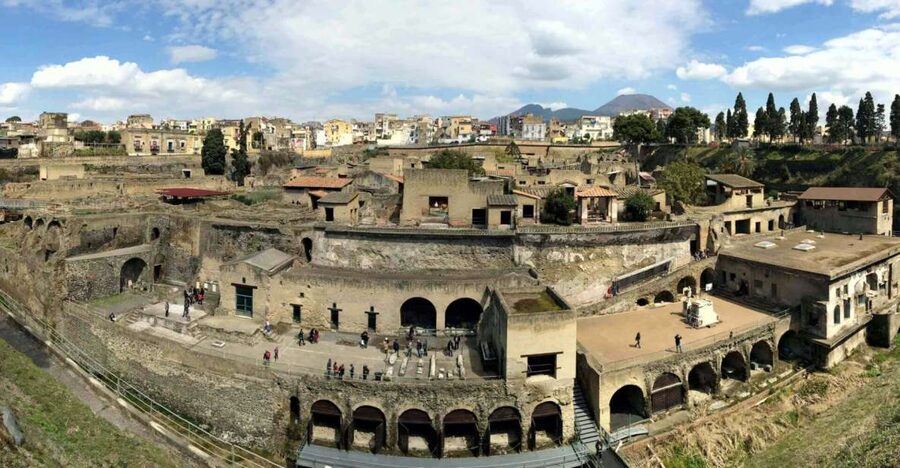
The park is in Herculaneum, in Campania, and can be reached by EAV train from Naples. The station is roughly a 12-minute walk from the archaeological area. The train connection also works for a visit from Pompeii, with one visitor finding the journey easy from Pompeii’s central station.
Wear comfortable shoes with good grip. The route uses cobblestones, uneven surfaces, and some steep steps. This is an archaeological site, not a smooth museum floor.
Carry identification for the audio device and ask for the map at the start. If you are visiting in hot weather, begin early and use shaded places for longer listening sessions. A snack and drink are available on site, and there are places where you can sit with a packed lunch.
The audio guide is available in English, French, German, Italian, and Spanish. It is not a live guide, so you will not have someone beside you to explain a confusing room or answer a question. That tradeoff is the price of moving independently.
The activity allows cancellation up to 24 hours before the visit for a full refund, and reserve-now, pay-later booking is available. Check the starting time and ticket conditions at booking, since the ticket and audio-only choices can differ.
Herculaneum or Pompeii?
If you have time for only one site, Herculaneum is the easier place to grasp in a single visit. Its smaller size and stronger preservation make it possible to see houses, public areas, and the final shoreline displays without committing a full day.
Pompeii gives you scale. It helps you understand the size of a Roman city and offers a much wider set of streets and buildings. Herculaneum gives you finer detail and a more focused walk.
If your schedule allows both, visit both. The contrast is useful. Pompeii shows the reach of the disaster, while Herculaneum shows what happened inside a more compact town. You will also arrive at Herculaneum with enough Roman context to make sense of the homes and public spaces.
Who should book this experience?
I would choose this for history fans, first-time visitors to the Bay of Naples, families with older children, and anyone who prefers to set their own pace. It works especially well if you like stopping for photographs, spending extra time in one house, or skipping a commentary that does not interest you.
It is less suitable if you want a polished, guided walk with perfect directions and immediate answers. The audio numbering can be awkward, some buildings may be closed, and the entry process may involve more than one desk.
Book it if you want a reasonably priced introduction to one of Italy’s most remarkable Roman sites, and if you are prepared to use the audio guide flexibly. Choose a live guide instead if personal explanation matters more to you than independence.
FAQ
Does the ticket include entry to Herculaneum?
It depends on the option selected. Some choices include the Herculaneum entry ticket, while the audio-guide-only option requires the entry ticket to be selected as an extra.
Where do I collect the ticket and audio guide?
Show your ticket at the Herculaneum Archaeological Park ticket office. You may need to visit a separate office or desk to collect the audio device.
Is this a guided tour?
No. The standard experience is self-guided with an audio guide and map. Optional guided-tour upgrades may sometimes be offered, but they are not part of the standard booking.
Which languages are available on the audio guide?
The audio guide is available in English, French, German, Italian, and Spanish.
How long should I plan for the visit?
Plan for at least two to three hours. Four hours is reasonable if you want to move slowly, listen to more commentary, and see the museum displays.
Do I need identification?
Bring a passport or ID card. Identification may be required when collecting the audio device, and an insurance card has also been accepted.
Can I use my own headphones?
Some audio devices work with headphones or earbuds. Bluetooth capability has not always been available, so check the device at collection.
Is the site easy to walk around?
The route includes cobblestones and some steep steps. Comfortable shoes are specifically recommended.
Can I visit Herculaneum from Naples by train?
Yes. The site can be reached by EAV train from Naples, followed by a walk of about 12 minutes from the station.
Can I cancel the booking?
You can cancel up to 24 hours in advance for a full refund. Reserve-now, pay-later booking is also available.
More Skip-the-Line Tickets in Pompeii
- Sorrento: Skip-the-Line Pompeii Express Tour by Train
★ 4.8 · 2,038 reviews - From Naples: Pompeii Guided Tour with Skip-the-Line Tickets
★ 4.8 · 1,171 reviews - Pompeii: Skip-the-line-Ticket and Guided Tour
★ 4.6 · 1,152 reviews - Pompeii: Guided Tour with Skip-the-Line Entry
★ 4.9 · 812 reviews
More Entry Tickets in Pompeii
- Pompeii: Entry Ticket and Guided Tour with an Archaeologist
★ 4.8 · 19,459 reviews - Mount Vesuvius: Skip-the-Line Ticket and Smart Digital Guide
★ 4.2 · 2,780 reviews - From Naples: Pompeii Skip-the-Line Entry Ticket and Tour
★ 4.4 · 2,753 reviews - Pompeii: Guided Walking Tour with Entrance Ticket
★ 4.3 · 1,423 reviews
Just added around Pompeii
- Vesuvius National Park Skip-the-Line Ticket★ 3.8 · 221 reviews
- From Rome: Sorrento & Pompeii Day Tour with Hotel Pickup★ 4.2 · 257 reviews
- From Rome: Day Trip to Pompeii with Tickets★ 4.4 · 1,161 reviews
- Pompeii Ruins Private Tour with Optional Skip-the-Line Entry★ 4.9 · 732 reviews
- From Rome: Pompeii All-Inclusive Tour with Live Guide★ 4.3 · 261 reviews
- Pompeii: Exclusive Tour with Archaeologist and Entry Tickets★ 4.9 · 634 reviews
- Pompeii 3hours Villa of Mysteries tour with an Archaeologist★ 4.8 · 486 reviews
- Rome: Pompeii Tour with Wine and Lunch by High Speed Train★ 4.8 · 485 reviews
Pompeii Tours, compared.

Entry Ticket and Guided Tour with an Archaeologist
Read our review →

From Naples: Pompeii Ruins & Mount Vesuvius Day Tour
Read our review →
From Rome: Pompeii, Amalfi Coast, and Sorrento Day Trip
Read our review →
From Rome: Pompeii, Amalfi Coast and Positano Day Trip
Read our review →Pompeii Small Group Tour with an Archaeologist
Read our review →