
Reviewed · OPERA & CLASSICAL CONCERTS
Rome: “The Most Beautiful Opera Arias” Concert
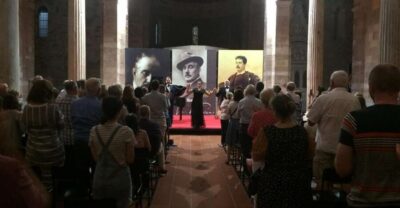
Just meters from Piazza Venezia, a small Waldesian Church becomes an opera house for the evening. Two singers and a pianist perform familiar arias from La Traviata, Turandot, and Rigoletto, along with Neapolitan songs and Vivaldi. The close setting lets you hear the voices without a huge theater between you and the performers.
I like the excellent acoustics, which make the church feel much larger than it is. I also like the short, approachable program: you get a taste of opera without committing to a long performance or needing previous knowledge.
The main consideration is that this is a modest church concert, not a full staged opera. Seating can be uncomfortable in some places, lighting is simple, and the performance is usually closer to 50 minutes than the 70 minutes sometimes described.
Key Points Before You Book
- Piazza Venezia location: The Waldesian Church sits in central Rome, making it easy to pair with an evening walk or dinner.
- Close-up performance: The small room places you only a short distance from the singers, pianist, and host.
- Familiar music: Expect selections from La Traviata, Turandot, Rigoletto, Tosca, Neapolitan songs, and Vivaldi.
- Good first opera: The bite-size format works well for children, teenagers, and anyone new to the art form.
- Strong vocal performances: The soprano, tenor, and pianist receive the most consistent praise, with Roberto sometimes serving as both pianist and host.
- Allow about 50 minutes: The concert has no stated break and may finish sooner than the advertised 70-minute description.
A Small Opera House Near Piazza Venezia
Rome gives you grand churches, vast ruins, and opera houses with velvet seats. This concert offers something different: a small room, a piano, and singers close enough for you to see the effort behind every phrase.
The Waldesian Church is only a few meters from Piazza Venezia, one of the city’s busiest central crossroads. That makes the concert easy to add to a day of sightseeing around the Capitoline Hill, Pantheon, Trevi Fountain, or Roman Forum. You do not need to plan a separate trip across town.
The setting is warm and simple rather than lavish. That is part of the appeal, but it also sets the right expectation. You are not attending a full production with scenery, costumes, an orchestra, and a pit. You are attending a chamber-style recital in a church.
I find that distinction important. If you want drama acted out on stage, choose a full opera. If you want to hear the core musical moments of famous works in a central and relaxed setting, this format makes good sense.
More Opera & Concerts in Rome
- Rome: Opera Concert at Palazzo Poli – Fontana di Trevi
★ 4.7 · 1,026 reviews - Rome: The Three Tenors at St. Paul’s Church Concert Ticket
★ 4.7 · 699 reviews - Rome: The Four Seasons by Vivaldi
★ 4.7 · 595 reviews
What the 50-Minute Concert Feels Like
The performance begins with seating in the church. A host or greeter shows you to your pew, and directions are sent in advance so you can make your own way to the venue. The host may speak English or Italian. Roberto has been mentioned as a particularly engaging pianist and host, though the exact performers can vary.
The program is built around opera arias rather than a single complete work. That means the pace stays lively. You might move from a powerful soprano number to a tenor aria, then to a Neapolitan song or a piano selection.
The performers usually include two singers and one pianist. The cast has included artists such as Marco, Francesca, Julia, Christian, and Antonieta at different performances, so you should not expect one fixed lineup every night. The important point is the structure: professional-level voices supported by a grand piano in a close setting.
The published information sometimes describes the program as a 70-minute journey, while the stated duration is 50 minutes. In practice, you should plan for roughly 50 minutes. Some performances may run a little longer or include an encore, but this is best treated as a short concert without a break.
That length works well after a full day on your feet. You can sit down, hear several famous pieces, and still have time for dinner or a late stroll. In summer, the shorter format is especially useful when the heat has taken some of the energy out of you.
The Music: Famous Arias Without a Full Opera
The appeal here is recognition. You do not need to know every composer or follow a complicated plot to enjoy the music.
Selections may include arias from:
- La Traviata by Giuseppe Verdi
- Turandot by Giacomo Puccini
- Rigoletto by Giuseppe Verdi
- Tosca by Giacomo Puccini
- Works associated with composers such as Puccini, Bellini, and Mascagni
- Traditional Neapolitan songs
- Vivaldi’s Four Seasons
Arias from La Traviata bring romantic drama and soaring melody. Rigoletto gives the singers a chance to show both lyrical control and theatrical force. Turandot and Tosca can provide the big, emotional moments that many people hope to hear when they book an Italian opera concert.
One performance included a rendition of E lucevan le stelle from Tosca, a tenor favorite with a direct emotional pull. The exact running order is not guaranteed, so you should treat these titles as examples rather than a fixed promise.
The Neapolitan songs give the program a lighter and more familiar turn. Vivaldi provides a change of color, with the pianist carrying more of the musical focus. This mix prevents the concert from feeling like a single long block of solemn opera.
That variety is why I would recommend it to someone who says, I am not sure I like opera. You hear the famous melodies first. The story and technical details can come later.
Why the Church Acoustics Matter
The church is modest, but the acoustics are one of the strongest reasons to book this concert. Voices carry naturally through the room, and the sound does not have to compete with a full orchestra.
You hear the singers’ breath, changes in volume, and the way a note gathers force. In a large opera theater, that sound is grander but more distant. Here, the singer is physically close and the room helps the voice travel.
The piano also benefits from the setting. The accompanist has to respond closely to the singers, and several performances have been praised for the pianist’s sensitivity. Roberto, in particular, has been singled out for his musicianship and friendly presence.
There is a tradeoff. A church is not a purpose-built concert hall. Some pews may be less comfortable than others, and one report specifically noted seats that needed repair. Lighting is also basic, with no elaborate stage design. If atmosphere for you means theatrical spotlights and polished production effects, you may find this plain.
For me, the plain setting works because it keeps your attention on the voices. Still, consider arriving with realistic expectations. This is a musical performance in a church, not a theatrical spectacle.
Same city, a completely different sort of day:
- Vatican: Museums & Sistine Chapel Entrance Ticket
★ 4.5 · 144,003 reviews - Vatican Museums & Sistine Chapel Tour with Optional Basilica
★ 4.3 · 67,413 reviews - Colosseum, Roman Forum & Palatine Guided Tour
★ 4.7 · 63,148 reviews - Vatican Museums, Sistine Chapel & St Peter’s Basilica Guided Tour
★ 4.5 · 39,149 reviews
How Close You Sit to the Artists
The small size is central to the experience. You are not looking down from a distant balcony or watching singers become tiny figures on a large stage. The performers are close enough to create a private-concert feeling.
That closeness also makes the concert feel personal. The singers can connect with the room, and the pianist or host may speak to the audience between pieces. Some performances have included simple Italian words or audience participation, adding a friendly touch without turning the concert into a lesson.
Seat allocation can depend on the option you book. The meeting point may also vary by option, so check the confirmation carefully rather than assuming every booking uses exactly the same entrance or seating arrangement.
There has been at least one complaint from a customer who paid for a better seat but was placed in the last row. That suggests you should confirm what a premium seat actually includes before paying extra. Since the room is small, even the back may be close to the artists, but the best view still matters if you care about seeing facial expressions and the pianist’s hands.
Is It Good for Children and First-Time Opera Listeners?
I think this is one of the better ways to introduce opera to a young person. A full opera can last several hours, often in another language, with a complex plot and long stretches between the famous scenes. This concert cuts straight to the musical highlights.
The 50-minute length helps. A child or teenager can enjoy the spectacle of the voices without having to sit through an entire evening. One family found the format especially effective for teenagers, and another used it as a first classical music experience for a grandchild.
The mix of serious arias, lively songs, and engaging performers also helps. The program is not presented as a formal academic lecture. You can simply listen and respond to the music.
For very young children, the church setting still requires quiet behavior. The room is intimate, so conversation and movement will be noticeable. Older children, teenagers, and adults who are curious about opera should fit comfortably into the format.
Value at $40 Per Person
At $40 per person, this is good value if you want live music in central Rome without paying for a full evening at a major opera house. You get an opera ticket, a central location, professional singers, a pianist, and a distinctive venue.
The comparison is not quite fair if you set it beside a complete opera production. A full opera offers orchestra, sets, costumes, staging, and a longer running time. This concert gives you a concentrated sample of well-known music at a lower price.
The short duration is both the value and the limitation. At about 50 minutes, you are paying for a compact cultural experience rather than a whole night of entertainment. If you want an activity to fill three hours, this will not do that.
For a Rome itinerary, I like the flexibility. You can attend before dinner, after an afternoon of sightseeing, or as a final stop before walking through the historic center. The central setting means you can build the rest of the evening around it.
There is no hotel pickup, drop-off, or parking included. You make your own way to the church, and the address and map are sent in advance. That is simple, but you should allow time to find the correct entrance, especially since the meeting point can vary by booking option.
What the Evening Does Best
The strongest part is the combination of excellent voices and closeness. The room lets you notice the character of each singer. A powerful tenor can fill the church, while a soprano can shift from delicate passages to ringing high notes without the performance feeling distant.
The piano gives the concert a clean, focused sound. You will not hear the full mass of an orchestra, but you do hear the melody and vocal line clearly. For many people, that makes the music easier to follow.
The host can also shape the mood. Roberto has been described as warm, funny, and passionate about music. Other hosts and performers may differ, but the best evenings seem to include a personal welcome rather than a cold start.
I also appreciate that the music is familiar. You do not need to study a program beforehand. If you recognize a melody from a film, advertisement, or previous concert, the connection is immediate.
Where the Experience Falls Short
The simple production will not please everyone. There may be no guide, formal commentary, or detailed explanation of the operas. You receive directions to the church, but this is not a walking tour and does not come with a historical talk about Rome.
The performance area may also feel underlit. One practical suggestion has been to use more theatrical lighting. That would add drama, but it would also change the quiet church character that many people like.
Seating is another small concern. Pew comfort varies, and some seats may need attention. If you have mobility or comfort concerns, check the seating arrangement before booking and ask the operator about the available option.
Finally, the audience size can vary. A small audience makes the concert feel personal, but it can also leave the room feeling quieter than expected. The singers still perform close-up, yet you should not assume a packed concert hall atmosphere.
Planning Your Visit Around the Concert
Check the starting time when you choose your date, since schedules can vary. I would arrive with enough time to locate the church and settle into your pew before the music begins.
Because the concert is near Piazza Venezia, it fits neatly with central Rome. You might visit the Roman Forum earlier, walk past the Monument to Vittorio Emanuele II, or stop at the Pantheon before heading to the church. Afterward, you are well placed for dinner or an evening walk.
Do not drive unless you have a clear reason and a parking plan. Parking is not included, and the activity provides no transportation. The central location is better suited to an itinerary based on walking and public transport.
The operator offers free cancellation up to 24 hours before the scheduled start, and you can reserve now while paying later. Those terms are useful if your Rome schedule is still shifting, but always check the conditions attached to your selected option.
Who Should Book This Rome Opera Concert?
I would choose this for a first opera experience, a relaxed cultural evening, or a family looking for something more memorable than another restaurant meal. It is also a good fit if you want famous Italian music but do not want to spend a full evening at a large theater.
The concert suits:
- First-time opera listeners
- Couples seeking a short evening activity
- Families with older children or teenagers
- Visitors who enjoy piano and vocal music
- Anyone staying near central Rome
- People who want familiar arias rather than a full opera plot
I would think twice if you want a full staged production, a large orchestra, formal opera-house seating, or extensive explanations in English. You may also prefer another option if uncomfortable pews or simple lighting would bother you.
Should You Book It?
Book it if you want a close, affordable taste of Italian opera in a central Rome church. The voices, piano, and acoustics are the real draw, and the 50-minute format makes the experience easy to fit into a busy sightseeing day.
Go in expecting a chamber recital, not a complete opera. Accept the plain setting, check your seating option, and allow for a performance closer to 50 minutes than 70. With those expectations, this is a thoughtful choice for hearing famous arias in Rome without making opera feel formal or intimidating.
FAQ
Where does the opera concert take place?
The concert takes place in a Waldesian Church near Piazza Venezia in central Rome. The exact meeting point may vary depending on the booking option.
How long does the concert last?
The stated duration is 50 minutes. Some descriptions refer to a 70-minute musical journey, but you should plan for a concert of about 50 minutes.
What music is performed?
The program can include arias from La Traviata, Turandot, Rigoletto, and Tosca, as well as Neapolitan songs and Vivaldi’s Four Seasons. The exact program may vary.
Who performs the music?
The concert generally features opera singers accompanied by a pianist. Performers mentioned for different concerts include Roberto, Julia, Marco, Francesca, Christian, and Antonieta, but the cast may vary.
Is the concert suitable for people who have never seen opera?
Yes. The short format and familiar arias make it suitable as an introduction to opera.
Is there a guide included?
No formal guide is included. A host or greeter may welcome you and show you to your pew, with English and Italian available.
Is transportation included?
No. Hotel pickup, hotel drop-off, and parking are not included. You make your own way to the venue.
How much does the concert cost?
The listed price is $40 per person. This includes the opera ticket.
Can I cancel my booking?
You can cancel up to 24 hours in advance for a full refund. The activity also offers a reserve-now, pay-later option.
More Live Music in Rome
- Rome: Italian Opera Concert and Traditional Dinner
★ 4.1 · 453 reviews - Rome: “Opera’s Greatest Hits” Opera Concert with Aperitif
★ 4.7 · 187 reviews - Venice: Interpreti Veneziani Concert at Church of San Vidal
★ 4.8 · 3,256 reviews - Florence: Santa Monaca Church Italian Opera Concert Ticket
★ 4.7 · 2,692 reviews
Just added around Rome
- Boat excursion to Gaeta with a stop for swimming and snorkeling 2 HOURS★ 5.0 · 240 reviews
- Palatine Hill and Roman Forum Tour with Fast-Track Entrance★ 4.2 · 417 reviews
- Tivoli: Villa D’Este & Villa Adriana Pass & App Audioguide★ 4.4 · 364 reviews
- Tivoli: Villa D’Este Entry Ticket and App Audio Guide★ 4.3 · 191 reviews
- From Rome: Villa D’Este & Villa Adriana Day Trip with Lunch★ 4.4 · 289 reviews
- Vatican Museums & Sistine Chapel Skip-the-Line Guided Tour★ 4.6 · 254 reviews
- Rome: Capitoline Museums and Centrale Montemartini Tickets★ 4.4 · 328 reviews
- Rome: The Three Tenors at St. Paul’s Church Concert Ticket★ 4.7 · 699 reviews
Opera & Classical Concerts, compared.
La Fenice Opera House Entry Ticket with Audio Guide
Read our review →
Santa Monaca Church Italian Opera Concert Ticket
Read our review →
Vivaldi’s Four Seasons Live Classical Music Concert
Read our review →
Vivaldi’s Four Seasons Concert & Music Museum Visit
Read our review →
Vivaldi Four Seasons Concert at Vivaldi Church
Read our review →
Opera Concert at Palazzo Poli – Fontana di Trevi
Read our review →Browse the lists this tour appears in