
Reviewed · MUSEUMS
Rome: Capitoline Museums and Centrale Montemartini Tickets
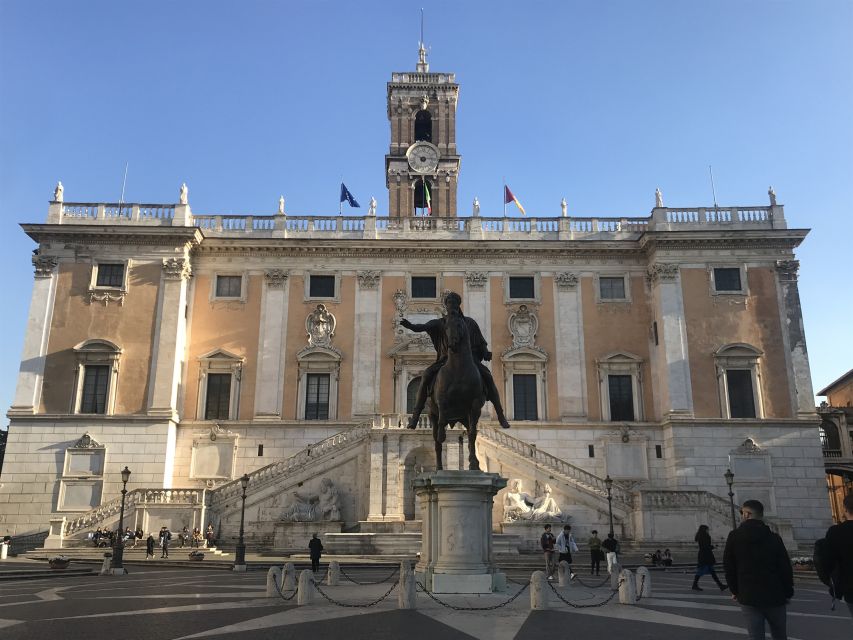
The most unusual part of this museum visit comes at Centrale Montemartini, where ancient Roman sculpture shares space with the machinery of Rome’s first public thermoelectric power plant. I like the sharp contrast between marble gods and huge industrial engines, and I like that the Capitoline Museums place you right in Michelangelo’s graceful piazza above the Roman Forum.
The main drawback is practical: the two museums are not next door. You must arrange your own transfer, which takes about 10 minutes by car or 30 minutes by public transportation. Also, check your ticket date carefully at the Touristation office, since a booking-date error has caused real confusion for at least one visitor.
Key points to know before you book
- Michelangelo’s Piazza del Campidoglio: Begin in one of Rome’s most elegant public squares, designed by Michelangelo on Capitoline Hill.
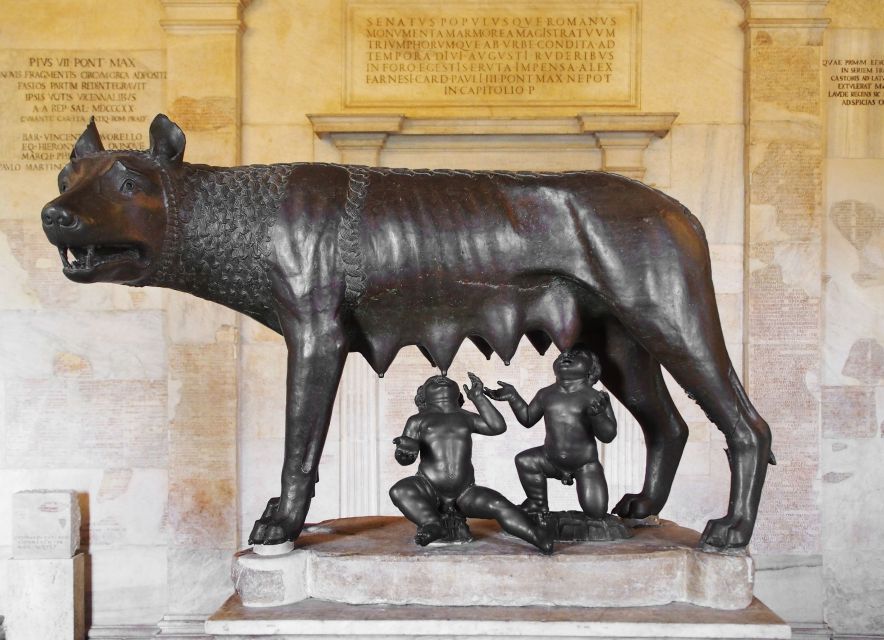
- The She-wolf of Rome: See the famous sculpture of the wolf with Romulus and Remus, one of the city’s most recognizable symbols.
- Ancient art with industrial machinery: Centrale Montemartini places Roman sculpture inside a former power station, creating a museum unlike the usual marble-filled galleries.
- Two ticket choices: You can visit only the Capitoline Museums or select the combined option with Centrale Montemartini.
- Useful extras: Your booking includes skip-the-line entry, assistance at the Touristation office, free Wi-Fi, and a smartphone audio guide download.
- Allow half a day: The advertised duration is 3 to 5 hours, but the combined visit needs extra time for the trip between locations.
Start at the Touristation office on Piazza d’Aracoeli
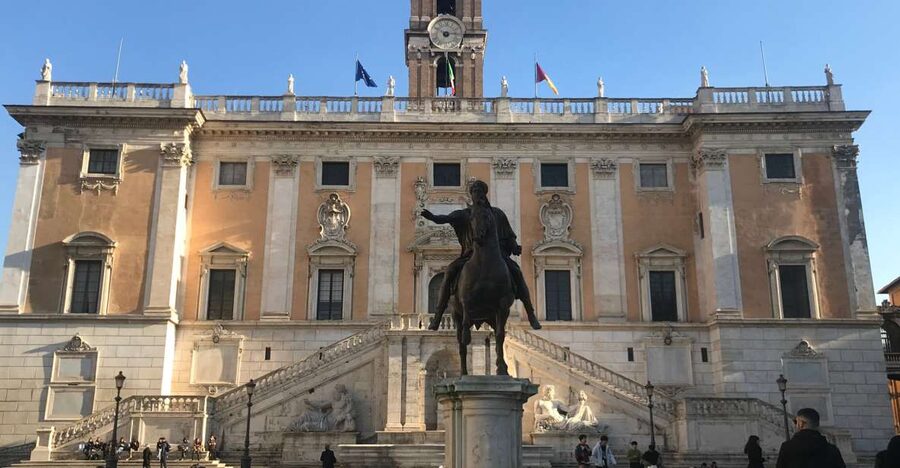
Your first stop is not a museum entrance. Go to the TOURISTATION ARACOELI office at Piazza d’Aracoeli 16 to redeem your voucher. Look for the fountain and orange flags outside. This small detail matters, since Capitoline Hill has several entrances, stairways, and grand buildings that can make a first visit confusing.
The office provides assistance before you enter. It also offers free Wi-Fi, which is handy for downloading the City APP audio guide to your phone. Bring your own charged device and headphones if you want to use the audio guide comfortably, since this is not a guided tour with a person leading you from room to room.
One practical point deserves attention. Check the date printed on your ticket before leaving the office. A booking error once showed a March date for a February visit, creating an unpleasant dispute at the entrance. If anything looks wrong, ask the Touristation staff to correct it before you head up the hill.
The booking includes skip-the-line entry to the Capitoline Museums. That usually matters most when you are visiting Rome during a crowded period and want to protect a fixed afternoon schedule. It does not mean every part of the museum will be empty, but it removes the main ticket-purchase wait.
More Entry Tickets in Rome
- Vatican: Museums & Sistine Chapel Entrance Ticket
★ 4.5 · 144,003 reviews - Rome: Pantheon Fast-Track Ticket and Official Audio Guide
★ 4.3 · 21,008 reviews - Rome:Hop-On Hop-Off Panoramic Open Bus Ticket 3 Circuits x 1
★ 4.0 · 15,405 reviews
Michelangelo’s Capitoline Hill sets the mood
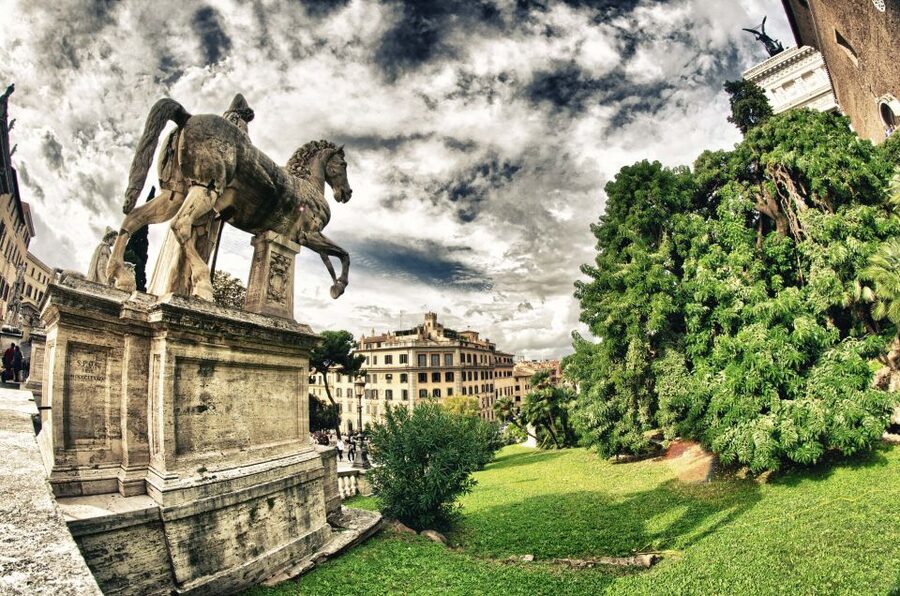
The Capitoline Museums begin before you reach the galleries. Piazza del Campidoglio sits at the top of Capitoline Hill, one of Rome’s Seven Hills, and Michelangelo designed its grand arrangement of buildings and paving. From here, you can look toward the Roman Forum, the ancient center of public and political life.
Take a few minutes in the square before rushing inside. The layout is one of the visit’s great pleasures, especially if you have already seen Rome’s rougher ancient ruins and want to understand how later artists framed them. Michelangelo’s architecture gives the hill a measured, formal feeling, while the Forum below supplies the dramatic reminder that Rome’s oldest layers are still underfoot.
The museums occupy the Palazzo dei Conservatori, Palazzo Nuovo, and the connecting spaces around the piazza. Your visit is less like walking through one modern hall and more like moving through a historic complex. Expect sculpture, paintings, inscriptions, and objects linked to Rome’s political and civic story.
This setting gives the Capitoline Museums a different character from a stand-alone art museum. The buildings, piazza, hill, and Forum view all help explain why this collection belongs here.
The Capitoline collection tells Rome’s story
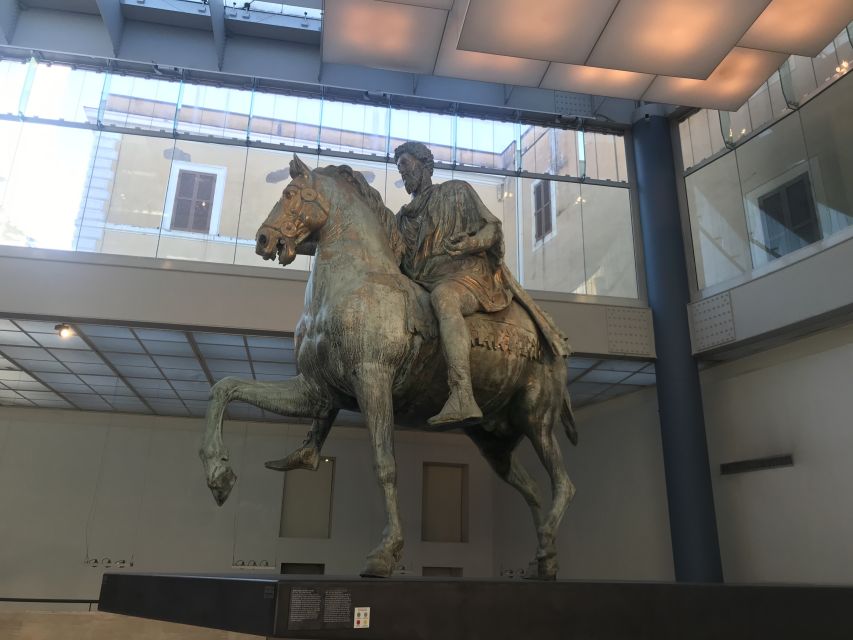
Pope Clement XII opened the collection to the people of Rome in 1734. That decision made the Capitoline Museums one of the world’s oldest public museum institutions, and it still shapes the visit today. The point is not simply to display attractive ancient objects. The collection presents Rome through the things its citizens, rulers, artists, and archaeologists preserved.
You will encounter sculpture and artifacts from different periods of the city’s past. The stated exhibition range reaches from the Republican era through the late Imperial Age, giving you a long view of how Rome developed from a republic into the center of a vast empire.
The collection works best if you take your time with the connections. A statue is not only a statue here. It may relate to a temple, a public monument, a political figure, or a later attempt to reconstruct Rome’s ancient identity. The available smartphone audio guide can help supply that context, though you should expect to guide yourself rather than follow a carefully paced tour.
The museum is a good choice for anyone who wants more than a quick photograph of the Colosseum or Forum. It brings smaller objects and indoor collections into the larger story of the city. You can look closely at ancient works, then step outside and connect them with the ruins below.
The She-wolf and Rome’s founding story
The She-wolf of Rome is the museum’s best-known symbol. The sculpture shows the wolf associated with Romulus and Remus, the legendary founders of Rome. It is an essential stop, but do not treat it as the entire museum.
The image carries several layers of meaning. It links the city to its foundation legend, and it shows how Rome has repeatedly used ancient symbols to explain its power and identity. Seeing it inside the Capitoline Museums gives the object a civic setting that a reproduction or outdoor copy cannot match.
Because this is one of the most famous works in the museum, it can attract attention quickly. Give yourself time to look beyond the main icon. The collection includes many other objects tied to Rome itself, and the museum’s value comes from the larger group rather than one famous sculpture.
If you are visiting with children, the founding story offers an easy way into the collection. The museum also has children’s books available at the ticket exchange office, a useful touch for families who want something more engaging than a long sequence of statues.
More Museum Tours in Rome
- Vatican Museums & Sistine Chapel Tour with Optional Basilica
★ 4.3 · 67,413 reviews - Vatican Museums, Sistine Chapel & St Peter’s Basilica Guided Tour
★ 4.5 · 39,149 reviews - Rome: Vatican Museums, Sistine Chapel & Basilica Tour
★ 4.3 · 13,872 reviews - Vatican Museums & Sistine Chapel Skip-the-Line Entry Ticket
★ 4.4 · 13,838 reviews
What makes Centrale Montemartini different
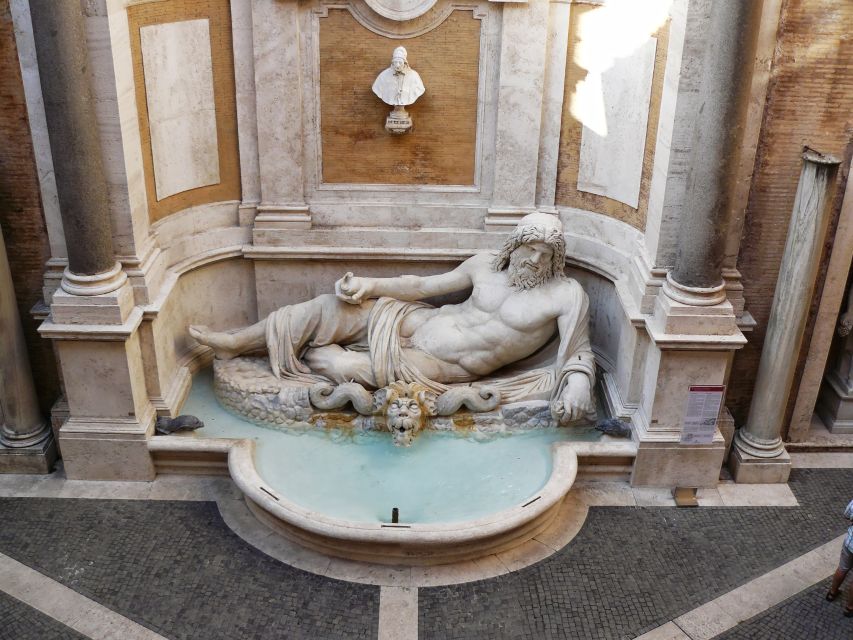
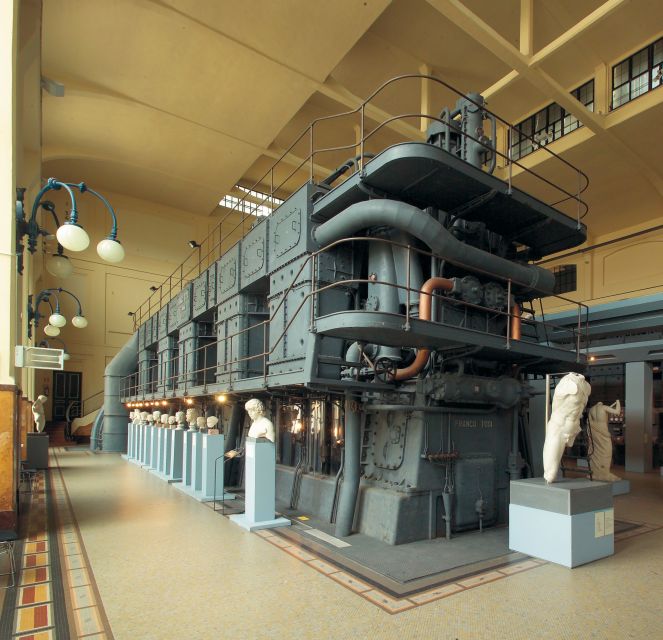
If you choose the combined ticket, you add a museum with a very different setting. Centrale Montemartini was Rome’s first public thermoelectric power plant. It has been converted into an exhibition space for the Capitoline Museums, but the industrial character remains central to the experience.
The best-known exhibition, The Machines and the Gods, places hundreds of ancient sculptures beside the plant’s old machinery. This is not a minor change of scenery. The contrast forces you to view classical art in a new way. Marble figures represent temples, myths, and civic ideals, while boilers, engines, and industrial equipment recall the modern systems that powered the city.
I like this stop because it avoids the familiar museum pattern of one elegant gallery after another. The former power plant gives the sculptures physical scale and a harder setting. Ancient Rome feels less isolated from later urban life.
The display also helps reconstruct major monumental complexes and traces the development of the ancient city from the Republican period to the late Imperial Age. You might find this easier to understand at Centrale Montemartini than in a more traditional museum because the large objects and open industrial spaces give the material room to breathe.
Still, choose the combined ticket only if you have enough time. Centrale Montemartini is about 10 minutes away by car or around 30 minutes by public transportation. The ticket does not include that transfer, and there is no hotel pickup or drop-off. You will need to plan the route yourself and leave room for waiting, finding the entrance, and changing your pace between the two locations.
Is the combined ticket worth $42?
At about $42 per person, the price makes the most sense when you value both the museum access and the time saved by having admission arranged in advance. You receive skip-the-line entry to the Capitoline Museums, and the combined option includes reserved entry to Centrale Montemartini. The Touristation assistance, Wi-Fi, and phone audio guide add convenience, though this remains a self-guided visit rather than a personal tour.
For a first-time visitor to Rome, the Capitoline Museums alone can fill a rewarding few hours. You get the famous piazza, Forum views, the She-wolf, Roman sculpture, and a broad collection connected directly to the city. If your schedule is tight, that single-site option may give you the better balance.
The combined choice offers stronger value for museum fans and repeat visitors. Centrale Montemartini is not simply another room of ancient art. It gives you a different way to see the collection, and the old power plant is the sort of setting you will remember after the usual marble halls begin to blur together.
The price is less attractive if you expect a guided experience or included transportation. Neither is provided. You are paying for access, reserved entry, and support at the starting office, not for a guide who explains every room or a driver who carries you between museums.
How to plan the 3 to 5 hours
For the Capitoline Museums on their own, allow several hours. Begin with the piazza and Forum view, then move through the museum buildings at a steady pace. Stop for the major works, but leave time for less famous objects that add detail to Rome’s story.
If you add Centrale Montemartini, think of the booking as a half-day plan rather than two quick stops. The transfer alone can take 10 minutes by car or 30 minutes using public transportation, and that estimate does not include time spent waiting or finding your way.
A sensible order is to start with the Capitoline Museums, since the meeting point and ticket exchange are at Piazza d’Aracoeli. Afterward, make your way to Centrale Montemartini if you still have energy and enough time. The change from Michelangelo’s hilltop piazza to an industrial museum creates a natural second chapter.
Do not schedule the combined visit too tightly against a restaurant booking, train, or major timed attraction. The advertised 3 to 5 hours leaves some variation, and your transfer is independent.
The booking offers free cancellation up to 24 hours in advance and allows you to reserve now and pay later. Those terms are useful if your Rome plans are still shifting, but you should still check the starting time and the selected option carefully before finalizing.
Who will enjoy this museum visit most?
You should consider this experience if you want Roman history explained through objects rather than only ruins. It suits visitors who enjoy sculpture, architecture, archaeology, and the way a city’s past is presented in a museum.
The Capitoline Museums are also a strong choice if you want a central Rome stop with a memorable setting. The piazza and Forum view add value even before you enter the collection.
Choose Centrale Montemartini if unusual museum spaces appeal to you. The former power station gives the visit a practical, industrial edge. It is especially useful for anyone who has already seen several conventional collections and wants a change in mood.
Families can make good use of the visit if children respond to stories, founders, animals, and dramatic settings. The She-wolf gives younger visitors a clear point of entry, and children’s books are available at the ticket exchange office.
This is less suitable if you want a live guide, a fixed narrative, or a completely effortless transfer between sites. The audio guide is on your phone, and the combined option requires you to move across Rome independently.
Small details that improve the visit
Redeem your voucher at Piazza d’Aracoeli 16, not at a random museum door. The fountain and orange flags help identify the office.
Check the printed visit date while staff are still available. Do not wait until an entrance attendant spots a problem.
If you carry a larger backpack, free lockers are available in the museum building. That makes it easier to move through the galleries without carrying a bulky bag.
Download the City APP audio guide before entering if possible. Free Wi-Fi is included, but having your phone ready saves time.
If you are visiting between November 19, 2025, and March 15, 2026, the ticket includes access to the Cartier e il Mito ai Musei Capitolini exhibition. Check that your selected date falls within those dates if this temporary display is part of your plan.
Should you book it?
Book the Capitoline Museums option if you want a central, history-packed visit with Michelangelo’s piazza, Forum views, the She-wolf, and a major collection of Roman art and artifacts. The skip-the-line entry and Touristation assistance are useful, especially when you want a clean plan without joining a guided group.
Add Centrale Montemartini if you can spare the extra time and like museums with an unusual setting. The old power plant, huge machines, and ancient sculpture make it the more distinctive half of the experience.
Skip the combined option if you dislike arranging transfers or have a packed Rome schedule. At $42, the visit offers solid value for museum lovers, but it is not an all-inclusive tour. You get access and support, then you set your own pace.
FAQ
Where do I redeem my ticket?
Redeem your voucher at the TOURISTATION ARACOELI office at Piazza d’Aracoeli 16. Look for the fountain and orange flags in front of the entrance.
What does the Capitoline Museums ticket include?
The ticket includes skip-the-line entry to the Capitoline Museums, assistance at the Touristation office, free Wi-Fi, and a City APP audio guide for your smartphone.
Is Centrale Montemartini included automatically?
No. You must select the combined option to include Centrale Montemartini. The museum is about 10 minutes away by car or 30 minutes by public transportation.
Is transportation between the two museums included?
No. You must arrange and pay for transportation between the Capitoline Museums and Centrale Montemartini yourself.
How long does the experience take?
The stated duration is 3 to 5 hours. Visiting both museums requires time for the transfer between locations.
Can I cancel the booking?
Yes. You can cancel up to 24 hours in advance for a full refund. You can also reserve now and pay later.
Just added around Rome
- Boat excursion to Gaeta with a stop for swimming and snorkeling 2 HOURS★ 5.0 · 240 reviews
- Palatine Hill and Roman Forum Tour with Fast-Track Entrance★ 4.2 · 417 reviews
- Tivoli: Villa D’Este & Villa Adriana Pass & App Audioguide★ 4.4 · 364 reviews
- Tivoli: Villa D’Este Entry Ticket and App Audio Guide★ 4.3 · 191 reviews
- From Rome: Villa D’Este & Villa Adriana Day Trip with Lunch★ 4.4 · 289 reviews
- Vatican Museums & Sistine Chapel Skip-the-Line Guided Tour★ 4.6 · 254 reviews
- Rome: The Three Tenors at St. Paul’s Church Concert Ticket★ 4.7 · 699 reviews
- St. Peter’s Dome Climb, Basilica and Vatacombs Tour★ 4.7 · 230 reviews
Museums, compared.
Vatican: Museums & Sistine Chapel Entrance Ticket
Read our review →
Vatican Museums & Sistine Chapel Tour with Optional Basilica
Read our review →
Vatican Museums, Sistine Chapel & St Peter’s Basilica Guided Tour
Read our review →
Skip-The-Line Uffizi Gallery Timed Entry Ticket
Read our review →
Vatican Museums, Sistine Chapel & Basilica Tour
Read our review →
Vatican Museums & Sistine Chapel Skip-the-Line Entry Ticket
Read our review →Vatican Museums, Sistine Chapel & Basilica Tour
Read our review →
Vatican Museums & Sistine Chapel Guided Tour
Read our review →Browse the lists this tour appears in