
Reviewed · OPERA & CLASSICAL CONCERTS
Venice: Vivaldi’s Four Seasons Concert & Music Museum Visit
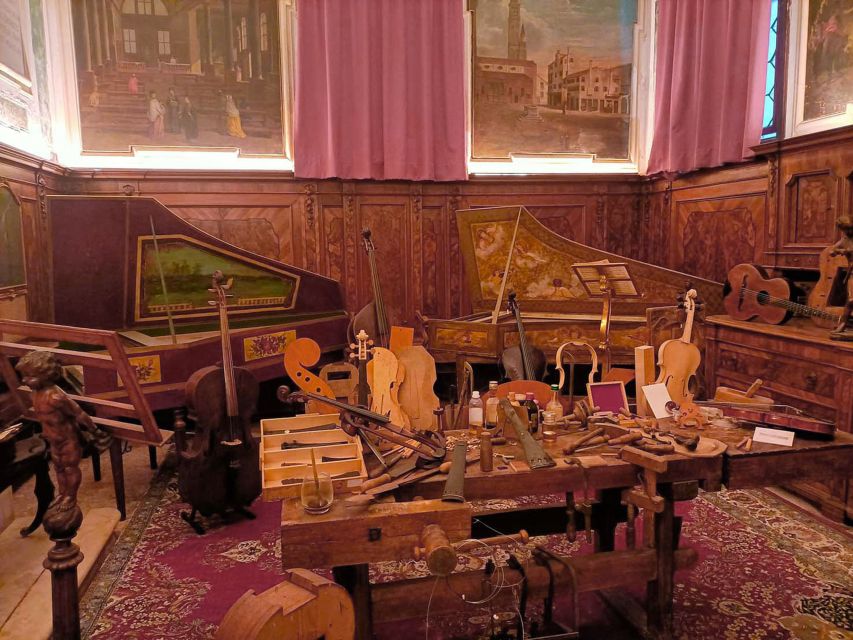
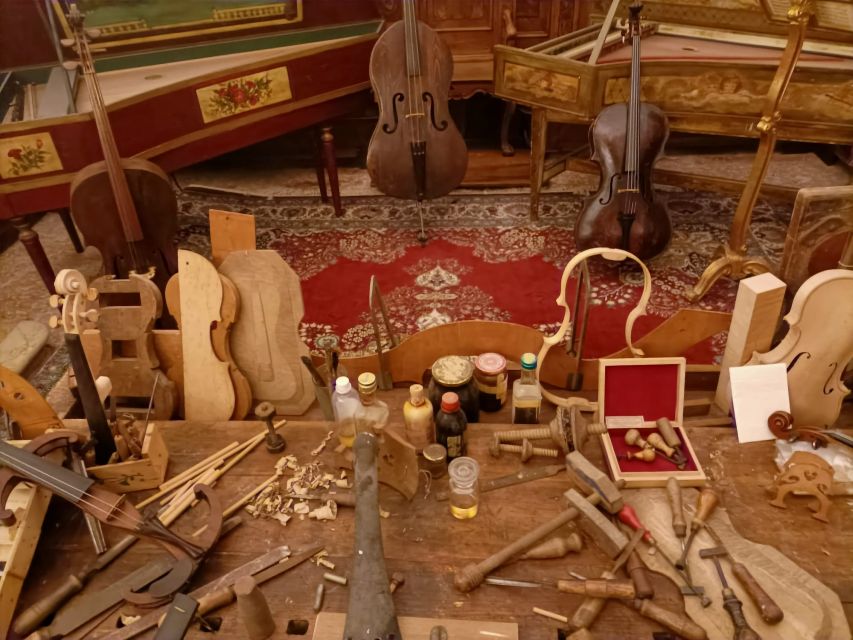
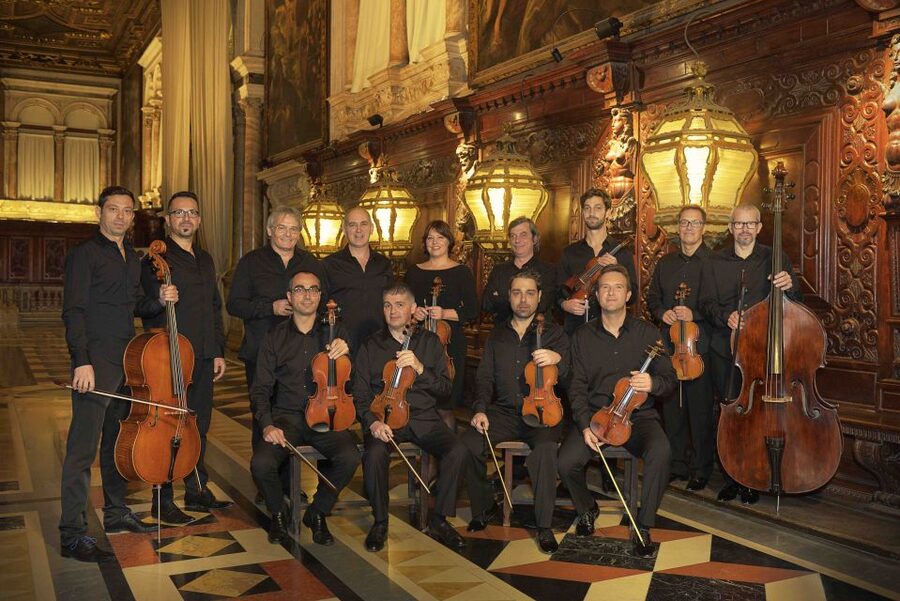
Venice gives Vivaldi’s Four Seasons the setting it deserves: an old church, excellent acoustics, and a Venetian baroque orchestra that has performed together for 35 years. You also get access to the Music Museum, where 200 original instruments show how violins and other stringed instruments were made and preserved.
I especially like the pairing of music and objects. Seeing a violin connected with Matteo Goffriller, Antonio Vivaldi’s violin maker, gives the concert more meaning. I also like the price, about $46 per person, for both the museum and a live performance in a historic church. The main caution is seating: it is first come, first served, and the wooden chairs can be noisy or uncomfortable.
Key points to know before booking
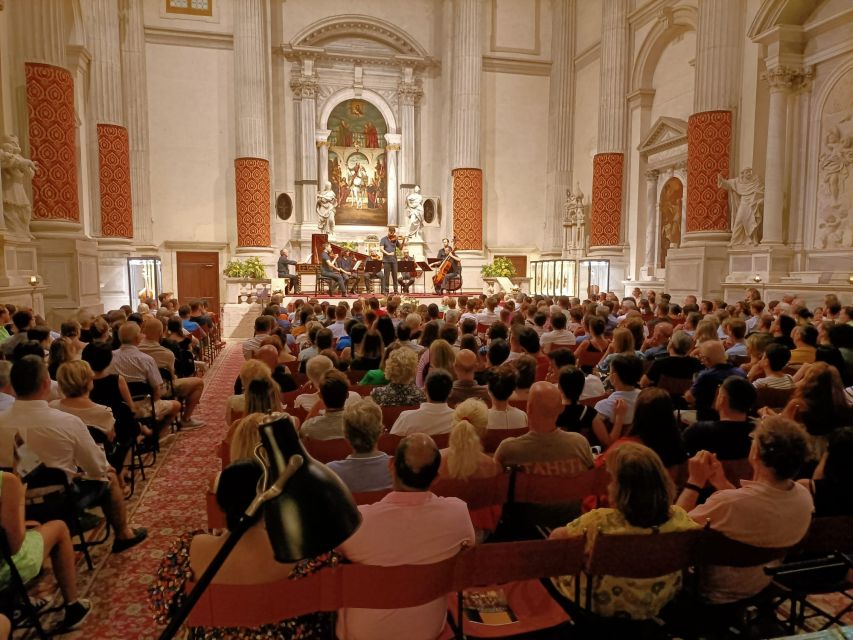
- Hear Vivaldi in San Vidal Church: The concert setting is one of the experience’s strongest features, with church acoustics and historic artwork around you.
- Visit 200 original instruments: The Music Museum covers instruments made from 1600 to 1900, including Amati, Bergonzi, and Goffriller examples.
- Arrive 30 to 45 minutes early: There are no assigned seats, and early arrival gives you a better chance of sitting near the musicians.
- Expect a serious performance: Interpreti Veneziani is a long-established Venetian baroque orchestra, not a short demonstration for tourists.
- Plan the museum visit carefully: Opening hours are listed as 10 AM to 1 PM and 2 PM to 7 PM, but one recent booking found it closed earlier than expected.
- Prepare for a quiet, phone-free concert: Food, drinks, photography, video, audio recording, and noise are not allowed during the performance.
Why Vivaldi sounds right in Venice
Antonio Vivaldi was born in Venice, and his music is closely tied to the city. You do not need to know classical music to appreciate the appeal. The Four Seasons gives you easy entry points: birdsong, storms, hunting scenes, flowing water, and changing moods are all built into the music.
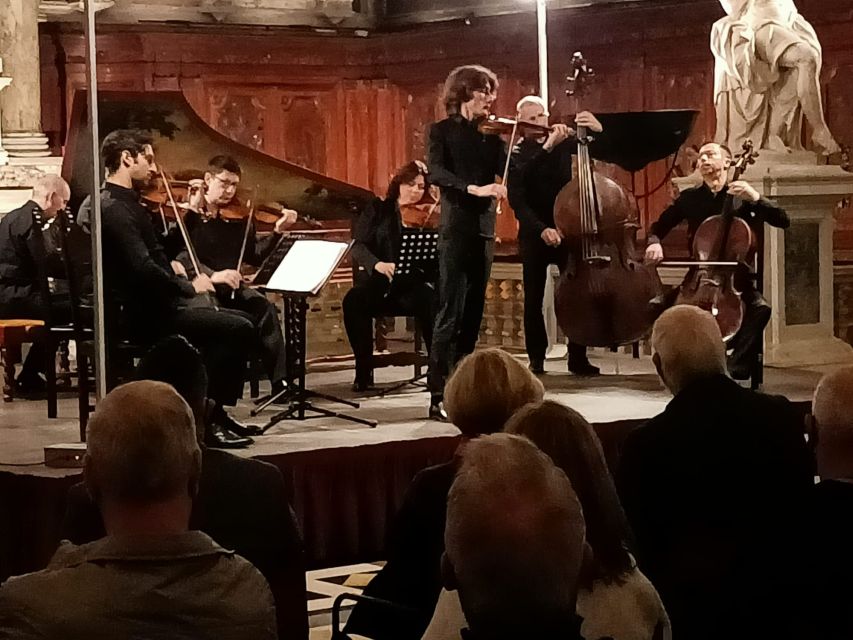
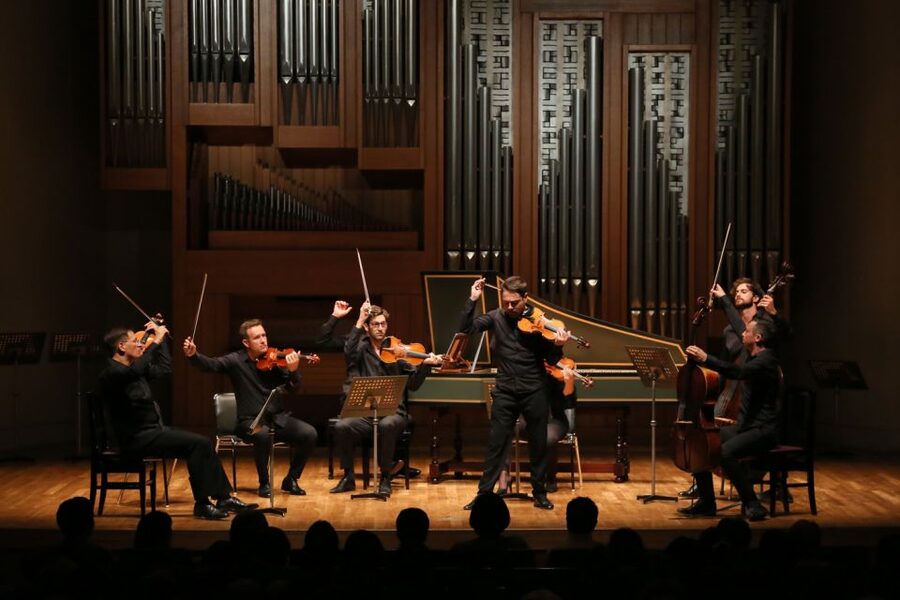
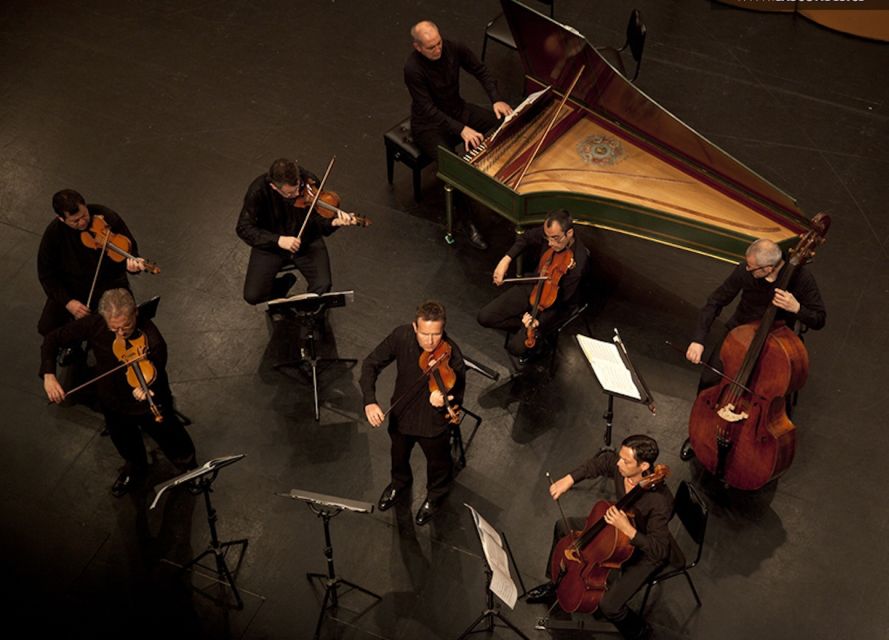
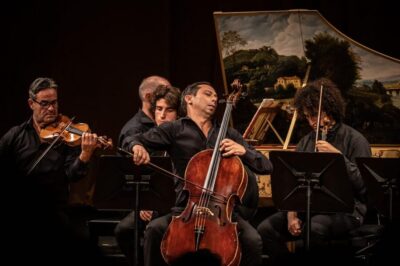
The performance is given by Interpreti Veneziani, described as a Venetian baroque orchestra with 35 years of history. That matters because this is not simply background music in a pretty room. The musicians treat the concert as a proper performance, with a featured soloist and strong energy across the ensemble.
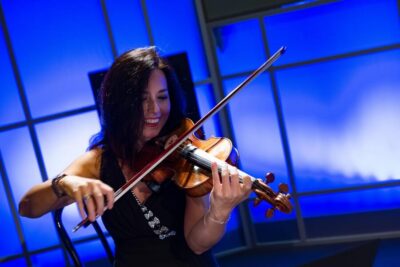
The playing style can vary from one evening to another. Expect a clean baroque tone, but also some expressive, romantic interpretation. One particularly memorable performance featured violinist Nicola Granillo, whose reading of the first movement of Autumn made a strong impression. The orchestra also performs additional pieces, and the program may finish with an encore.
The Four Seasons usually receives the biggest response, especially Primavera, or Spring. If you already know the work, listen for the contrast between the delicate passages and the sudden bursts of speed. If this is your first classical concert, the music is accessible enough to carry you along without a lecture or long introduction.
More Museum Tours in Venice
- Venice: St. Mark Basilica Ticket, Audioguide+History Gallery
★ 3.9 · 4,780 reviews - Venice’s Best: Basilica, Doge’s Palace, Gondola & History Gallery
★ 4.5 · 2,478 reviews
San Vidal Church and the Venice setting
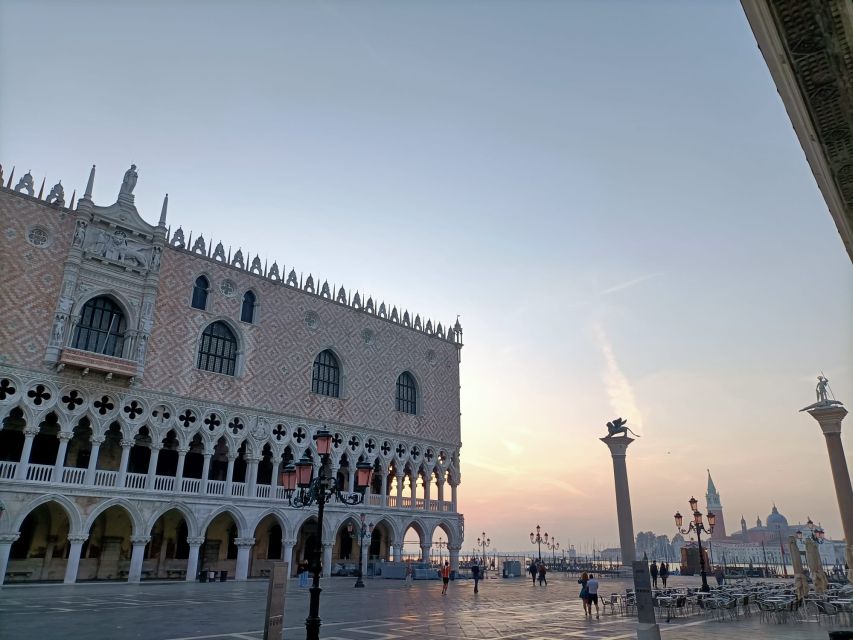
The concert takes place at the Church of San Vidal, positioned between the Accademia Galleries and St. Mark’s Square. It is about 10 minutes from Rialto Bridge, making it practical to combine with an evening walk through central Venice.
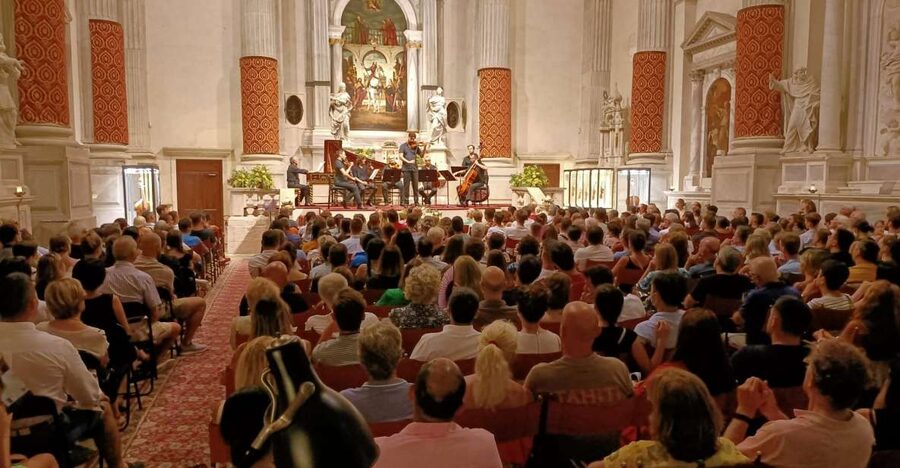
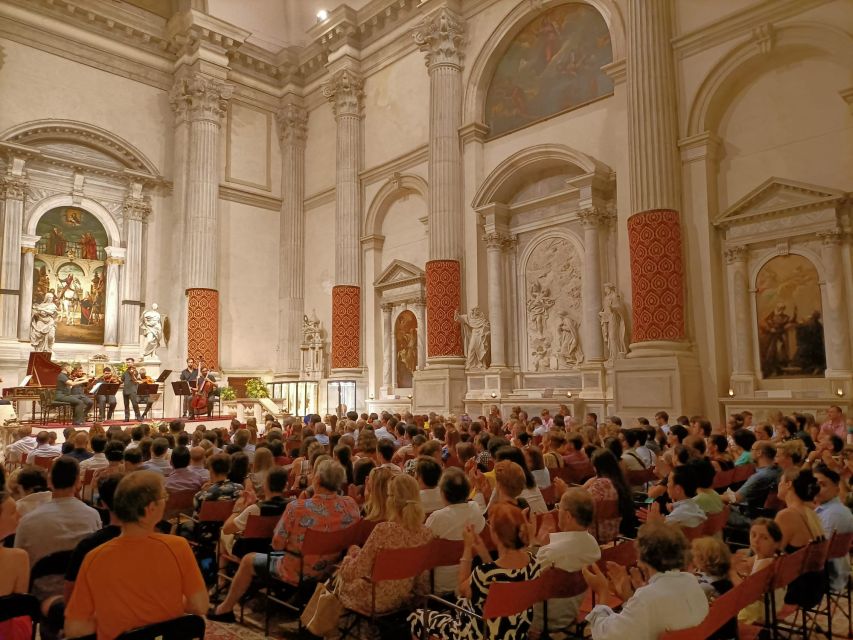
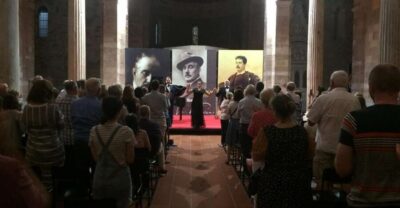
The church gives the concert its character. You are surrounded by old Venetian architecture, paintings, and a quiet sense of place that a modern concert hall cannot reproduce. The acoustics are a major part of the appeal. Strings can sound bright and direct, while the church adds a soft resonance around the notes.
The setting is not perfect for every listener. Summer evenings can become warm because there is no air conditioning, and there are only a few bathrooms. The chairs have also drawn complaints for being uncomfortable and occasionally noisy. If you need a soft, spacious seat with lots of legroom, this may feel basic.
The seating arrangement is simple: there are no assigned places. You show your ticket and take an available seat. Arriving 30 minutes early is sensible, while 40 to 45 minutes gives you a better chance of sitting close to the stage during busy periods.
Late arrivals may still find a seat, since the church is large and the layout is organized. Still, you should not count on the exact position you want. Some people prefer the front rows for a close view of the musicians. Others like a side bench or a place against the marble wall, where the seating can feel more comfortable and the sound remains clear.
The meeting information also names San Maurizio Church. Since the supplied details refer to both San Vidal and San Maurizio, check the exact venue shown for your concert date before setting out. The principal concert description identifies San Vidal as the main location.
The Music Museum: instruments you can see before the concert
The Museo della Musica di Venezia is at S. Marco, 2603, 30124 Venezia VE. Entry is included with this experience, and you can visit before or after the concert date according to the stated conditions.
The collection includes about 200 original musical instruments made between 1600 and 1900. That period covers the years when instrument making changed from a local craft into a highly refined art. You will see why the shape, wood, varnish, and internal construction of a violin all affect its sound.
The collection includes instruments from the School of Cremona, with double basses connected to makers such as Bergonzi and Amati. These names matter to anyone interested in string instruments, but the museum is not only for experts. The display gives you a physical sense of how much care went into objects that might look simple at first glance.
The Venetian material is especially relevant to this concert. You can see a violin by Matteo Goffriller, the maker associated with Vivaldi. That link makes the museum more than a general collection of old instruments. It connects the object in front of you with the composer you will hear later.
I recommend visiting the museum before the concert if your schedule allows. You can then listen for the qualities you have just seen: the polished wood, the curved body of the violin, and the small details that help produce a voice lasting for centuries.
The museum is open daily from 10 AM to 1 PM and from 2 PM to 7 PM according to the activity information. There is a break in the middle of the day, so do not arrive at 1:15 PM expecting to walk straight in. One booking also reported finding the museum closed at 5 PM despite the stated hours, so it is wise to confirm the current schedule locally rather than relying on the final listed closing time.
The instructions around museum entry have not always been clear. Keep your booking information available, and allow extra time if you plan to visit on a separate day. You can use the museum access before or after the concert date, but the experience is listed as valid for one day, so confirm the applicable date on your booking.
How the concert program works
The headline is Vivaldi’s Four Seasons, but the program also includes other pieces. That variety can be welcome, especially if you already know the Four Seasons well. It lets you hear the ensemble in different moods and gives the soloist more room to show technique.
The Four Seasons is usually the emotional center of the evening. It moves through four compact concertos, each built around a different season. Spring begins with familiar brightness, Summer brings tension and storms, Autumn turns more dramatic, and Winter creates sharp contrasts between cold stillness and movement.
The solo violin has an important role. You will see the lead player respond to the ensemble, not simply play above it. The best moments come when the musicians appear to listen closely to one another, especially in the quick passages and sudden changes in volume.
The second half may feel less powerful to some listeners if the Four Seasons comes first. A recent program was described as having a slight anticlimax after Vivaldi’s main work, although the encore was enjoyable. This is a matter of taste rather than a serious weakness, but it is useful to know if you are attending mainly for the famous piece.
The strict concert rules are a benefit for the music. Phones and cameras stay out of sight, and photography, flash, video, and audio recording are not allowed. Food and drinks are also prohibited. Staff enforce the rules, which means you can watch the musicians without a screen appearing in front of you.
More Opera & Concerts in Venice
- Venice: La Fenice Opera House Entry Ticket with Audio Guide
★ 4.6 · 11,742 reviews - Venice: Vivaldi’s Four Seasons Live Classical Music Concert
★ 4.6 · 2,524 reviews - Venice: Vivaldi Four Seasons Concert at Vivaldi Church
★ 4.8 · 1,864 reviews
Price, value, and what you are really paying for
At about $46 per person, this is not the cheapest way to hear music in Venice. You may find a lower price at the church itself on some dates, and one booking reported paying €39 online compared with €31 on site. Availability, queues, and the convenience of booking ahead can affect that comparison.
The value is stronger if you use both parts of the experience. The museum gives you a short cultural visit during the day, while the concert supplies a full evening activity in a historic setting. You are paying for the musicians, the venue, and the chance to hear Vivaldi in his home city, not only for a seat.
This is also a practical choice for a first classical concert. You do not need to dress formally, memorize a program, or understand technical musical terms. The Four Seasons is recognizable, the performance is visually engaging, and the church setting gives the evening a clear sense of occasion.
Families can make good use of it. Teenagers who might resist a long symphony have a better chance of connecting with this program because the movements are short and strongly contrasted. The museum adds a hands-on visual element, although you must not touch the exhibits.
Who will enjoy this most
I would recommend this to you if you want one polished cultural evening without committing to an opera or a long concert. It works particularly well for first-time classical listeners, couples looking for a special night, and families with older children or teenagers.
It is also a good choice if you are already familiar with Vivaldi. Hearing the music live lets you notice details that recordings can flatten, especially the dialogue between soloist and ensemble. The venue adds a layer that headphones cannot provide.
You may want to skip it if you dislike firm seating, warm rooms, or first come, first served arrangements. It is not designed as a guided museum tour, either. The English-speaking host or greeter can assist you, but the supplied details do not identify a personal guide or promise a long explanation of each instrument.
The experience is wheelchair accessible. Smoking, bikes, large bags, luggage, pets other than assistance dogs, food, and drinks are not allowed. Unaccompanied minors and party groups are also not accepted, so this is aimed at a quiet concert audience rather than a casual drop-in crowd.
A practical plan for your day
Start with the Music Museum during one of its listed opening periods. The morning slot from 10 AM to 1 PM is the safest choice if you want to avoid rushing later. Spend enough time with the string instruments to understand the connection between the collection and the concert.
After the museum, leave room for lunch and a walk. San Vidal sits in a useful part of Venice, close to the Accademia area and within walking distance of Rialto. One concertgoer found the Zattere boat stop convenient, so public transport may help depending on where you are staying.
Arrive at the church 30 to 45 minutes before the start time. This is the best advice in the entire booking. You can avoid a last-minute queue, choose your preferred area, and settle in before the music begins. If you arrive later, you may still get a good seat, but you lose control over the choice.
Keep your ticket and venue details easy to reach. The meeting information refers to San Vidal Church and San Maurizio Church, and museum instructions have caused confusion for some people. A quick check before leaving your hotel can prevent an unnecessary walk through Venice with concert clothes and tired feet.
The activity is offered with free cancellation up to 24 hours before the scheduled time, and reserve now, pay later availability can make planning easier. English assistance is provided. Check the available start times for your date, since the concert schedule is not one fixed daily departure.
Should you book the Vivaldi concert and museum?
Book it if you want a strong Venice memory built around live music, historic surroundings, and real instruments rather than another sightseeing stop. The performance is the main reason to go, and the museum makes the price easier to justify.
I would book early enough to secure your preferred date, then arrive early on the night itself for seating. Just keep your expectations realistic: the church chairs are basic, the room can get warm, and the museum hours deserve a second check.
For most visitors, this is a very good-value cultural evening. You hear a Venetian orchestra perform Vivaldi, see instruments linked to the city’s musical tradition, and spend time in a church where the setting is part of the experience. If those details appeal to you, this is an easy Venice activity to add.
FAQ
Where does the concert take place?
The main concert location is San Vidal Church, between the Accademia Galleries and St. Mark’s Square. The meeting information also names San Maurizio Church, so check the exact venue shown for your date.
What is included in the ticket?
The ticket includes entry to the Music Museum and the live concert featuring Vivaldi’s Four Seasons and other pieces. Staff assistance is also included.
How many instruments are in the Music Museum?
The museum has about 200 original musical instruments made between 1600 and 1900. The collection includes instruments linked with Amati, Bergonzi, and Matteo Goffriller.
When is the Music Museum open?
The listed opening hours are 10 AM to 1 PM and 2 PM to 7 PM every day. Hours can change, so check before visiting, especially if you plan to arrive late in the afternoon.
Are concert seats assigned?
No. Seating is first come, first served. Arriving 30 to 45 minutes before the performance gives you a better chance of choosing a preferred seat.
Can I take photographs or record the concert?
No. Photography, flash photography, video, and audio recording are not allowed. Food, drinks, smoking, large bags, bikes, and pets are also prohibited, although assistance dogs are allowed.
More Live Music in Venice
- Venice: Interpreti Veneziani Concert at Church of San Vidal
★ 4.8 · 3,256 reviews - Florence: Santa Monaca Church Italian Opera Concert Ticket
★ 4.7 · 2,692 reviews - Rome: “The Most Beautiful Opera Arias” Concert
★ 4.3 · 2,495 reviews - Lucca: Puccini Festival Opera Recitals and Concerts
★ 4.7 · 1,278 reviews
Just added around Venice
- Boat Tour at Devil’s Saddle: 4 Swim Stops, Snorkeling & Prosecco★ 5.0 · 263 reviews
- Catamaran tour stops bathing and snorkeling toast with prosecco★ 5.0 · 214 reviews
- Venice: Lords of the Night Prison’s Palace Cells & Tortures★ 4.0 · 1,067 reviews
- St Mark’s Basilica and Doge’s Palace Priority Entry Ticket★ 4.2 · 885 reviews
- Venice: Hard Rock Cafe with Set Menu for Lunch or Dinner★ 4.4 · 1,102 reviews
- Venice: Doge’s Palace and St. Mark’s Basilica Guided Tour★ 4.6 · 458 reviews
- Venice: Walking tour, Doge Palace, & St. Mark’s Basilica★ 4.5 · 884 reviews
- Punta Sabbioni: Murano, Burano & Torcello Guided Boat Tour★ 4.3 · 236 reviews
Opera & Classical Concerts, compared.
La Fenice Opera House Entry Ticket with Audio Guide
Read our review →
Santa Monaca Church Italian Opera Concert Ticket
Read our review →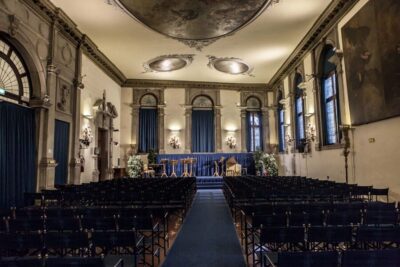
Vivaldi’s Four Seasons Live Classical Music Concert
Read our review →
Vivaldi Four Seasons Concert at Vivaldi Church
Read our review →
Opera Concert at Palazzo Poli – Fontana di Trevi
Read our review →Browse the lists this tour appears in