
Reviewed · EVENING EXPERIENCES
Venice: Lords of the Night Prison’s Palace Cells & Tortures
Venice’s old prison is not a grand palace tour. It is a darker, more unusual look at the republic, with cells, courtrooms, and torture devices tucked beside St. Mark’s Square. You’ll see inmate graffiti, learn how prisoners ate and slept, and hear how Casanova escaped after being held under the authority of the Lords of the Night.
I like the way the visit puts ordinary prison life beside the machinery of Venetian justice. I also like the small-group format, which makes it easier to ask questions about the objects and stories. Guides such as Julia, Tiziana, Kristian, and Christian have been singled out for clear, lively explanations.
The main drawback is scale. The prison section is fairly small, and the visit usually lasts about 45 to 60 minutes. Some of the experience focuses heavily on torture equipment, so you may find it less satisfying if you want a long, detailed tour of prison architecture or the wider political history of Venice.
Key points to know before you go

- Casanova’s prison story: Follow the rooms and upper areas connected with the famous 18th-century escape.
- A working route through old cells: See where prisoners were held, read inmate graffiti, and learn about food, drink, sleeping arrangements, and punishment.
- Torture displays: Examine historical devices and hear how the Venetian justice system used interrogation and punishment.
- A useful add-on to Doge’s Palace: The prison is across the bridge from the Doge’s Palace entrance, but this ticket does not include either the palace or the Bridge of Sighs.
- Short, inexpensive visit: At about $11 per person, it fits easily into a busy St. Mark’s itinerary.
- Stairs and dark rooms: Limited mobility can make the route difficult, and the visit is not recommended for people with mobility impairments.
Finding the prison beside St. Mark’s Square

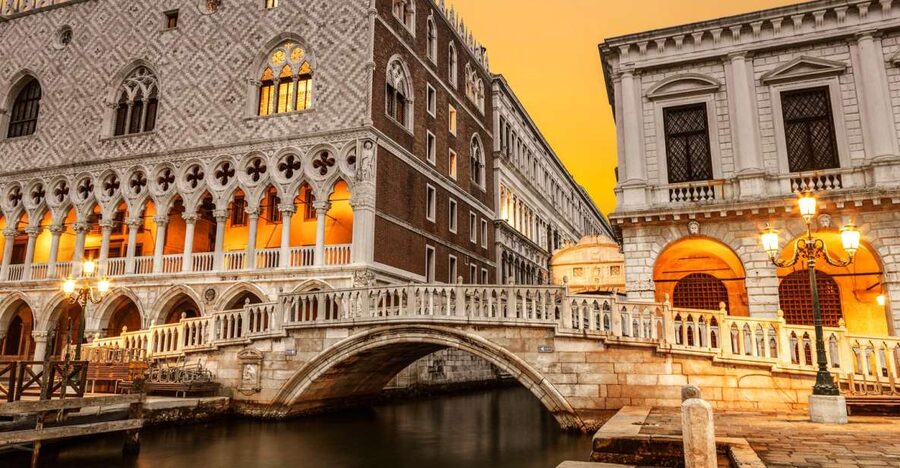
The Prison’s Palace, or Palazzo delle Prigioni, sits right beside the Doge’s Palace near the Riva degli Schiavoni. It is easy to get close, but the entrance instructions deserve attention.
Stand in Piazza San Marco with the Doge’s Palace in front of you and the basin behind you. Walk to the right side of the palace entrance, cross the bridge, and look for the prison entrance on your left. The meeting point is inside or at the prison building, so do not simply wait in the square.
This is one place where arriving a little early helps. A few people have found the entrance confusing, especially because the route involves going into the building and upstairs. The attraction is open from 10 a.m. to 5 p.m., with the exact tour time depending on availability.
The setting is useful for planning. You can visit the prison before or after seeing St. Mark’s Basilica, the Doge’s Palace, or the waterfront. Just remember that this admission does not include the Doge’s Palace or the Bridge of Sighs.
More Evening Tours in Venice
- Venice: Catamaran Sunset Jazz Cruise with Aperitivo
★ 4.7 · 1,206 reviews - Venice: Guided Canal Kayak Tour at Day, Night, or Sunset
★ 4.7 · 318 reviews
The courtroom and the machinery of Venetian justice
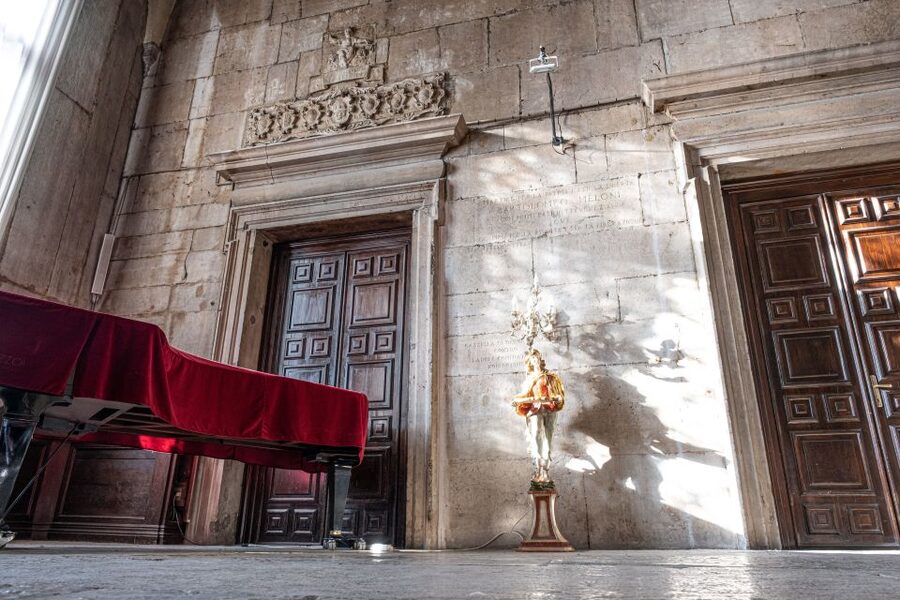
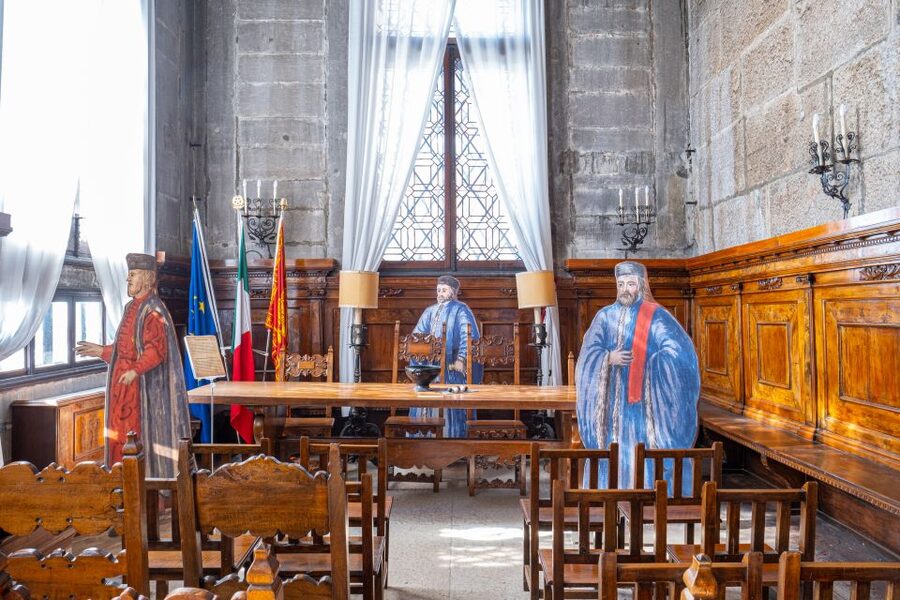
The route begins with the public face of justice. You enter an imposing courtroom and learn how the Venetian Republic dealt with crime across its territories.
The guide explains the Council of Ten, the powerful group of Venetian politicians responsible for justice and state security. This context matters because the prison was not an isolated holding place. It was part of a wider legal system, with officials, hearings, punishments, and political control all tied together.
A live guide makes the biggest difference here. Placards can tell you what an object is, but a guide can explain how the courtroom, prison cells, and torture rooms related to one another. The best guides also answer questions as you go rather than saving everything for the end.
English and Italian tours are available. The tour may be bilingual, so an English-speaking group could occasionally hear explanations in Italian as well. Previous tours have included three languages, which can make the pace slower, but the groups are often small enough for people to hear clearly.
Guides have varied in style. Julia has been praised for answering questions carefully, while Tiziana was noted for being patient and engaging. Kristian and Christian have also led tours that combine historical detail with a little humor. The guide is not just decoration here. The objects are more meaningful when someone explains their purpose and place in the justice system.
Inside the cells: food, sleep, and inmate graffiti
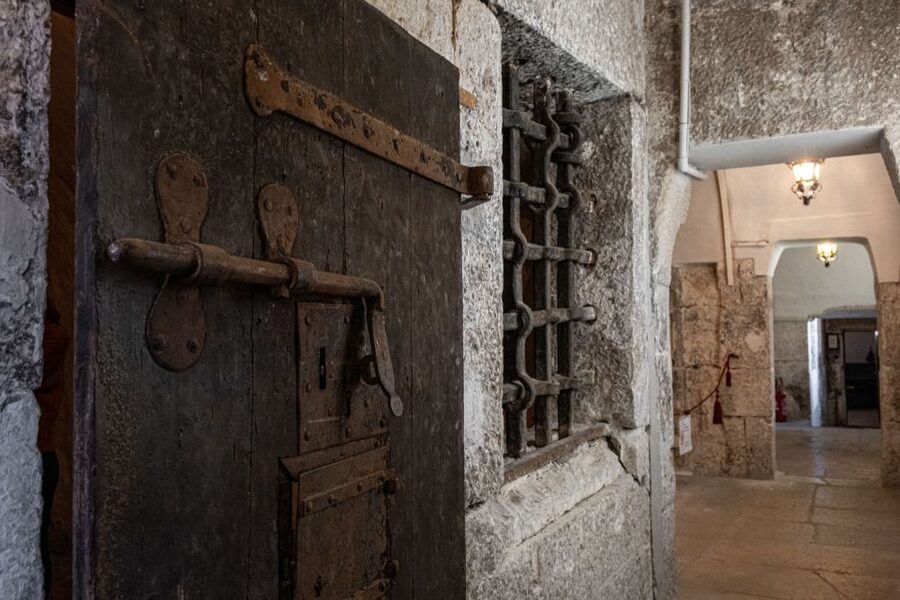
The cells give you the most direct sense of daily prison life. These are cold, enclosed spaces, and the atmosphere is a sharp change from the bright marble and open water outside.
You learn what prisoners ate and drank, where they slept, and what daily life looked like behind the walls. The route also includes graffiti left by inmates. These marks are among the most personal parts of the visit because they connect the building to real people rather than only to famous names and grim objects.
Do not expect a large prison complex with endless corridors. The exhibition occupies a relatively compact area, and some people complete it quickly when exploring without a guide. That is not necessarily a fault, especially if you are fitting the visit between major sights, but it does affect how you judge the price.
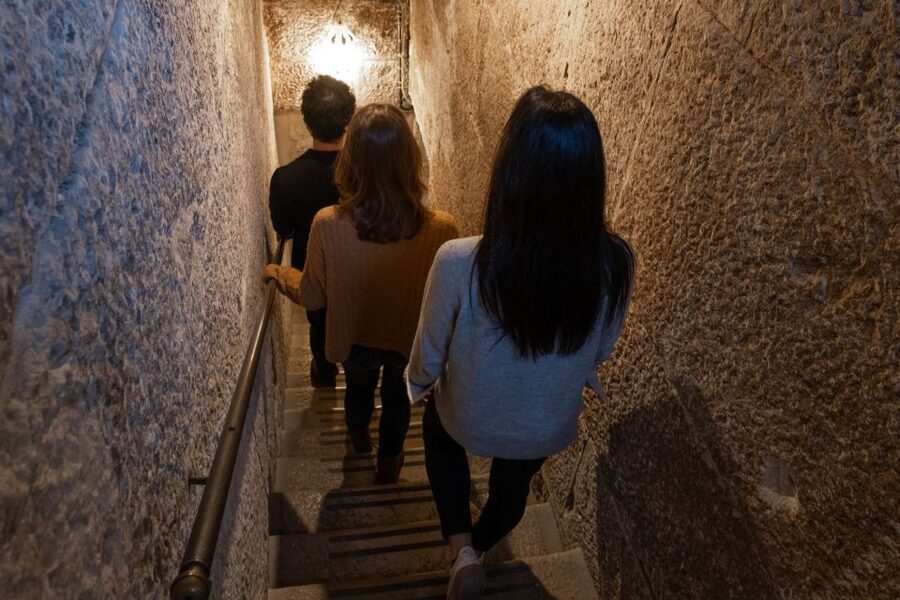
Some areas are on two floors, and parts of the route include stairs. The rooms can be dark and narrow. If you have limited mobility, this is not a good choice. The activity is specifically not recommended for people with mobility impairments.
The prison also offers a useful contrast with the grand rooms of the Doge’s Palace. The palace shows how Venice presented its power. The prison shows what happened when that power was turned toward confinement and punishment.
Torture rooms and unsettling historical objects
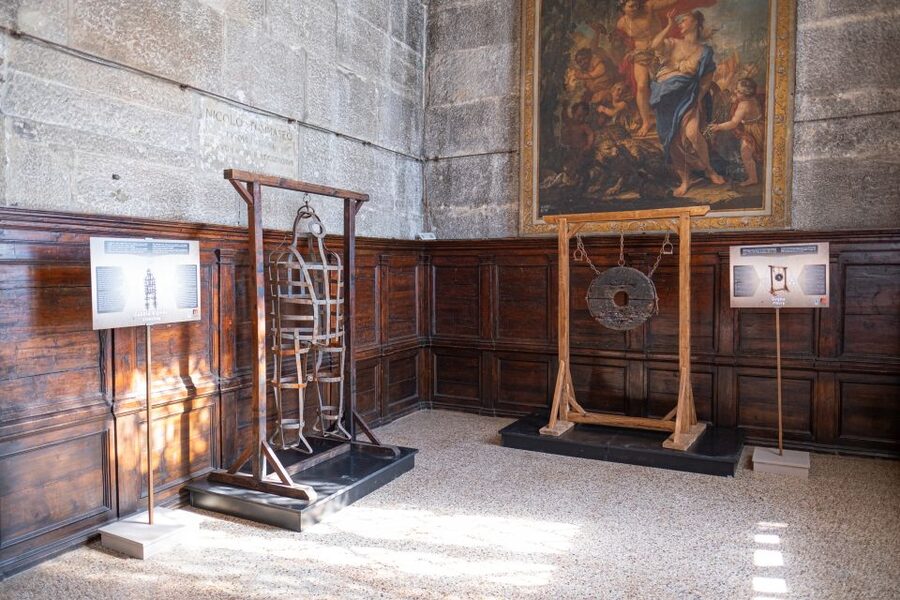
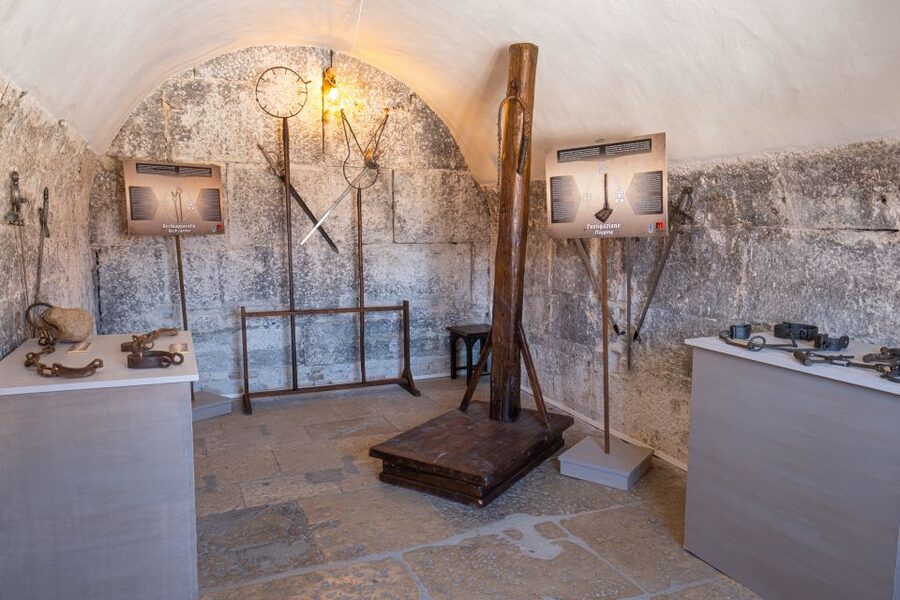
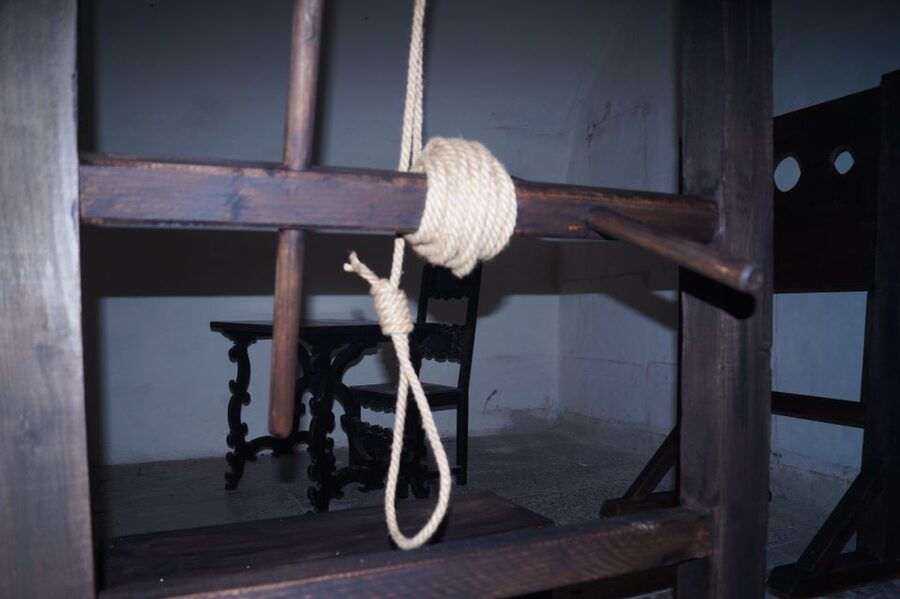
The torture displays are the most graphic part of the visit. You see a range of devices associated with punishment and interrogation, along with explanations of how they were used.
The presentation is not a modern theme-park scare attraction. It is a historical exhibition, but the subject is still disturbing. Some objects are difficult to look at, especially when you consider that they were designed for use on human beings.
This section receives much of the guide’s attention. That can be helpful if you want to understand the devices rather than simply glance at them. Several objects do not have extensive explanations beside them, so a guide can add information that you would otherwise miss.
The balance varies by tour. Some guides focus on the torture tools and punishment methods, while others spend more time on prison life, court procedure, and the political role of the Council of Ten. If you prefer the social side of history, ask questions about the inmates, the cells, and the justice process.
Families should use their judgment. Some children have found the subject interesting, but the displays are grim. The material may be better suited to older children and teenagers who can handle discussions of torture and imprisonment.
Same city, a completely different sort of day:
- Venice: Doge’s Palace Reserved Entry Ticket
★ 4.6 · 42,716 reviews - Venice: Grand Canal Gondola Ride with App Commentary
★ 4.1 · 18,908 reviews - Boat Trip: Glimpse of Murano, Torcello & Burano Islands
★ 4.3 · 15,699 reviews - Venice: Grand Canal by Gondola with Live Commentary
★ 4.1 · 13,681 reviews
Casanova’s escape and the upper route
The Casanova story gives the visit its most famous character. Giacomo Casanova was arrested and held in the Venetian prison before making a celebrated escape.
You hear how he broke out, including the role of the upper parts of the building. The story works well because it turns the prison from a collection of rooms into a place of movement, planning, and risk. Casanova’s escape is not just a footnote. It helps you understand why the building’s layout mattered.
The tour can include an attic area linked with Casanova’s imprisonment and escape. Access to certain rooms may depend on the selected route and current arrangements, so check what your ticket includes before booking.
Another highlight is a passage connecting parts of the prison complex. It dates from the 1500s and has not always been open to the public. This is the sort of detail that makes the guided option worthwhile: you are not simply reading about the prison, but walking through spaces that carried people, guards, and prisoners from one part of the complex to another.
The story is also a reminder to keep expectations in check. Casanova is the best-known prisoner connected with the site, but the visit is not a full biography of his life. The tour uses his escape to explain the building and its security rather than making him the only subject.
What the guided option adds
You can choose entry with a live guide or visit with an audio guide, depending on the option you select. Live tours are offered in Italian and English. The optional audio guide is available in English, French, Spanish, and Italian.
I would choose the live guide if the price difference is small or if you enjoy asking questions. The guide can explain displays that have limited signage, adjust the amount of detail, and point out details that are easy to miss. A small group also makes the experience feel more personal.
A guide may not be essential for a visitor who enjoys reading every panel. One person found that much of the information was available on the signs, and that is a fair point. If you want to move at your own pace, entry only may suit you better.
The audio guide offers a middle option. You receive commentary without joining a live group, but you lose the chance to ask about an unusual device or clarify a confusing part of the story. Use the supplied audio guide link to check the available commentary before your visit.
The tone of the live tour can vary. Some guides use humor to keep the subject from becoming too heavy. Others take a more formal approach. The strongest tours combine facts about the prison with stories about the people who passed through it.
How long the visit takes and what the $11 price buys
The advertised duration is one day because the ticket is valid for one day, but the actual visit is much shorter. Plan on roughly 45 to 60 minutes for the guided route, with some time afterward to look around on your own.
That length is a strength if you have limited time in Venice. At about $11 per person, the prison offers a reasonably priced break from the most expensive sights around St. Mark’s. It is especially useful as a short stop before lunch, after a visit to the basilica, or while waiting for a later reservation.
The value depends on what you expect. If you want a grand state palace, this is not it. If you want a focused historical stop with real cells, courtroom spaces, inmate graffiti, torture displays, and the Casanova story, the price is easier to justify.
The attraction is also a practical choice for repeat visitors who have already seen the main monuments. It gives you a different view of Venice, one based on law, punishment, and confinement rather than paintings, ceremonies, and church interiors.
Entry-only tickets may be enough for confident readers. For most people, I would lean toward the guided option because the route is compact and the guide can supply context quickly. You are paying less for extra time than for better interpretation.
What this ticket does not include
The prison sits beside two of Venice’s most famous sights, so it is easy to assume that one ticket covers all three. It does not.
You do not receive access to Doge’s Palace or the Bridge of Sighs. To walk across the Bridge of Sighs from the palace side and see its interior, you need admission to the Doge’s Palace.
This distinction matters when building your day. The prison visit complements the Doge’s Palace, but it does not replace it. A visitor who wants Venetian government rooms, palace art, and the interior of the Bridge of Sighs should book the palace separately.
If you already have a Doge’s Palace ticket, the prison makes a logical companion visit. The two sites tell connected but different stories: one presents the authority of the republic, while the other reveals the darker side of that authority.
Who should book this experience
I recommend this visit to you if you enjoy unusual history, crime stories, old buildings, and the less polished side of Venice. It suits solo visitors, couples, and families with older children who are comfortable with grim material.
It is also a good fit if you want a short activity near St. Mark’s that costs far less than a major museum ticket. The visit gives you a clear subject and a manageable time commitment.
You may want to skip it if you dislike torture displays or want a large, expansive prison complex. The exhibition is fairly small, and some of the tour time can focus more on punishment devices than on the prisoners themselves.
For the best experience, arrive with enough time to find the entrance, choose the guided option if you want extra explanation, and ask about the cells and Casanova’s route. After the formal tour, stay a little longer if allowed. That extra time lets you revisit the displays and take in the atmosphere without the group moving on.
Final verdict: a worthwhile short stop in Venice
You should book the Prison’s Palace tour if you want a compact, affordable look at Venetian justice and prison life. The strongest reasons are the actual cells, inmate graffiti, the old passageways, and the Casanova escape story.
I would not treat it as a substitute for Doge’s Palace. Think of it as a darker companion visit, one that shows how the republic handled people who fell under its laws. At around $11, it offers enough genuine atmosphere and explanation to earn a place in a St. Mark’s itinerary, provided you are comfortable with stairs and unsettling displays.
FAQ
Where is the Prison’s Palace?
It is beside Doge’s Palace near Piazza San Marco. With Doge’s Palace in front of you and the San Marco basin behind you, walk right, cross the bridge, and find the prison entrance on your left.
Does the ticket include Doge’s Palace?
No. Admission to Doge’s Palace is not included.
Can I visit the Bridge of Sighs with this ticket?
No. Access to the Bridge of Sighs is not included. You need admission to Doge’s Palace to see the bridge from inside.
How long does the tour last?
The guided visit usually takes about 45 to 60 minutes. The ticket is valid for one day, and you may be able to continue looking around after the guided portion.
What languages are available?
Live guides are available in Italian and English. The optional audio guide is available in English, French, Spanish, and Italian. The live tour may be bilingual.
Is the tour suitable for people with limited mobility?
No. The route includes stairs and dark, enclosed areas, and the activity is not recommended for people with mobility impairments.
Just added around Venice
- Boat Tour at Devil’s Saddle: 4 Swim Stops, Snorkeling & Prosecco★ 5.0 · 263 reviews
- Catamaran tour stops bathing and snorkeling toast with prosecco★ 5.0 · 214 reviews
- St Mark’s Basilica and Doge’s Palace Priority Entry Ticket★ 4.2 · 885 reviews
- Venice: Hard Rock Cafe with Set Menu for Lunch or Dinner★ 4.4 · 1,102 reviews
- Venice: Doge’s Palace and St. Mark’s Basilica Guided Tour★ 4.6 · 458 reviews
- Venice: Walking tour, Doge Palace, & St. Mark’s Basilica★ 4.5 · 884 reviews
- Punta Sabbioni: Murano, Burano & Torcello Guided Boat Tour★ 4.3 · 236 reviews
- Padua to Venice Boat Cruise of the Brenta Riviera★ 4.5 · 418 reviews
Evening Experiences, compared.

Winner 2025 Florence Sunset Food & Wine Tour by Eating Europe
Read our review →
Mount Etna Morning or Sunset Day Trip with Tasting
Read our review →
Sunset Jeep Tour of Mount Etna and Lava Flow Caves
Read our review →
Paranormal Night Walking Tour & Secret Backstreets
Read our review →

From Milazzo: Panarea and Stromboli Boat Trip by Night
Read our review →
Agrigento: Valley of the Temples Skip-the-Line Sunset Tour
Read our review →Browse the lists this tour appears in