
Reviewed · OPERA & CLASSICAL CONCERTS
Rome: Giuseppe Verdi’s “La Traviata” Live Performance
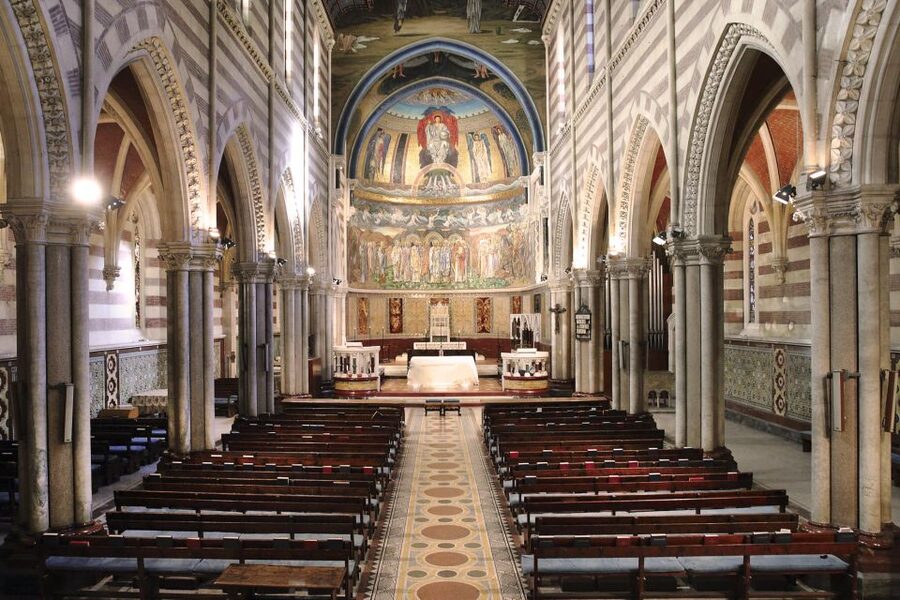
Verdi’s La Traviata gets an unusual Rome setting here: St. Paul’s Within the Walls Church on Via Nazionale. Instead of a grand opera house, you sit inside an old church and watch Violetta’s tragic story unfold with live voices, orchestra, and choir just a short distance away.
I like two things right away. First, the church gives the evening a special sense of place, especially if you want more than another standard night out in Rome. Second, the $41 price is a sensible way to hear a full opera with professional soloists, rather than paying traditional opera-house prices.
The main catch is practical: the stage sits at floor level, and the church pews do not give everyone a clear view. The sound can be excellent, but your sightline depends heavily on where you sit. Arrive early, especially if seeing the singers matters as much as hearing them.
Key points to know before you book
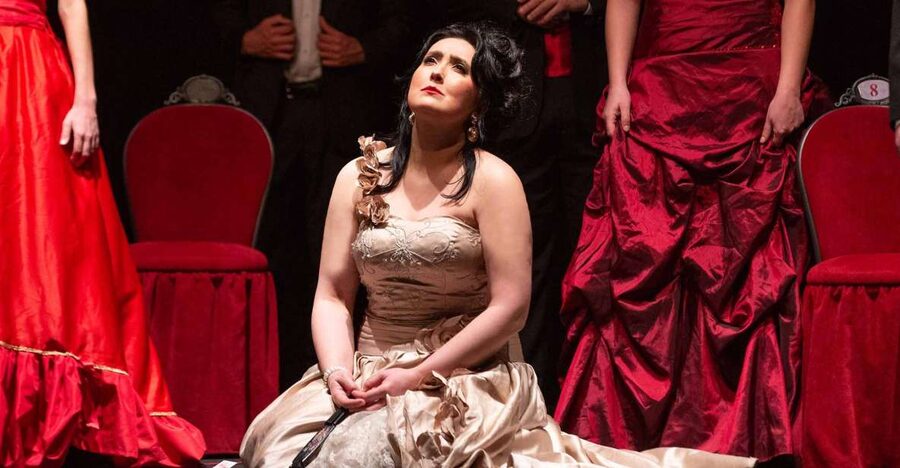
- Verdi’s best-known tragedy: Follow Violetta Valéry, Alfredo Germont, and Giorgio Germont through a three-act story of love, duty, and sacrifice.
- A church instead of an opera house: St. Paul’s Within the Walls supplies atmosphere, but its acoustics and seating are not designed exactly like a theater.
- Live Italian performance: The opera is sung in Italian, with Opera e Lirica soloists, choir, orchestra, and conductor Elvin Dhimitri.
- Two-hour evening: The performance begins at 8:30 pm and ends around 10:30 pm, making it an easy fit after a day of sightseeing.
- Good value at $41: Your ticket covers admission, while food and drinks are separate.
- Arrive early for a better view: The farther back you sit, the more difficult it may be to see the singers and dancers.
Why La Traviata works so well for a night in Rome
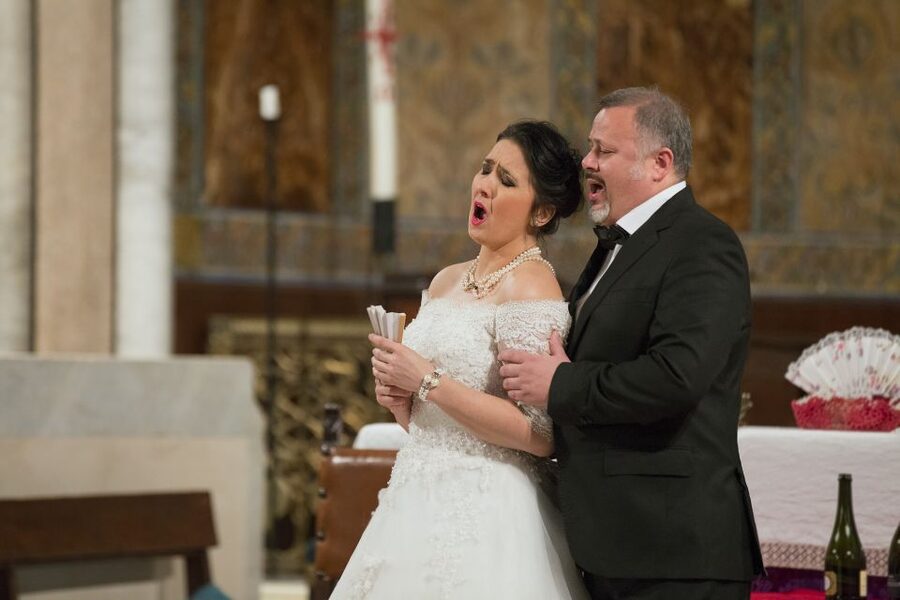
La Traviata is one of the easiest famous operas to connect with emotionally, even if you know little about opera. At its center is Violetta Valéry, a celebrated Parisian courtesan who falls in love with Alfredo Germont. Their happiness runs into social pressure, family demands, and Violetta’s declining health.
The opera was composed by Giuseppe Verdi to a libretto by Francesco Maria Piave. It premiered in Venice in 1853 and was first titled Violetta, after its central character. Verdi based the story on Alexandre Dumas fils’s La Dame aux Camélias, a play drawn from his novel.
That background matters because La Traviata is not a distant story about kings, warriors, or mythic heroes. It focuses on ordinary human pressure: reputation, money, family honor, and the cost of giving up personal happiness. You do not need to be an opera specialist to understand the basic conflict.
The performance is presented in three acts, though the evening lasts about two hours. It is a shortened version of the full work, according to the performance information and audience feedback, so you should not expect every musical or dramatic passage found in a full-length staging at a major opera house.
Still, the central music and story remain intact. If you have never attended an opera, La Traviata is a practical first choice because the melodies are familiar, the plot is direct, and the emotional stakes are easy to follow.
More Opera & Concerts in Rome
- Rome: “The Most Beautiful Opera Arias” Concert
★ 4.3 · 2,495 reviews - Rome: Opera Concert at Palazzo Poli – Fontana di Trevi
★ 4.7 · 1,026 reviews - Rome: The Three Tenors at St. Paul’s Church Concert Ticket
★ 4.7 · 699 reviews
Entering St. Paul’s Within the Walls
The venue is St. Paul’s Within the Walls Church at Via Nazionale 16/A. You make your own way there rather than meeting a guide elsewhere in Rome. The location puts the performance in a central part of the city, though you should allow enough time to find the church and settle in before the 8:30 pm start.
The building is part of the appeal. Its church interior creates a quieter, more intimate atmosphere than a large opera venue. You are close to the performers, and the setting gives the evening a distinctly Roman character without turning the opera into a formal sightseeing tour.
I especially like the way this venue changes the mood of the performance. You are not simply entering a hall built for rows of seats and a stage. You are attending music inside a historic religious space, with the architecture forming the backdrop.
That atmosphere also brings limits. Churches are tall, open spaces, and the sound does not behave exactly as it would in a theater designed for opera. Some parts of the building may produce excellent acoustics, while other seats can receive a less clear or slightly distorted sound.
The church can also become warm, especially in summer. Ventilation and cooling are limited, and some people have found the heat uncomfortable during the two-hour performance. You should take this seriously if you dislike warm indoor spaces or are visiting Rome during a hot spell.
What happens from 8:30 to 10:30 pm
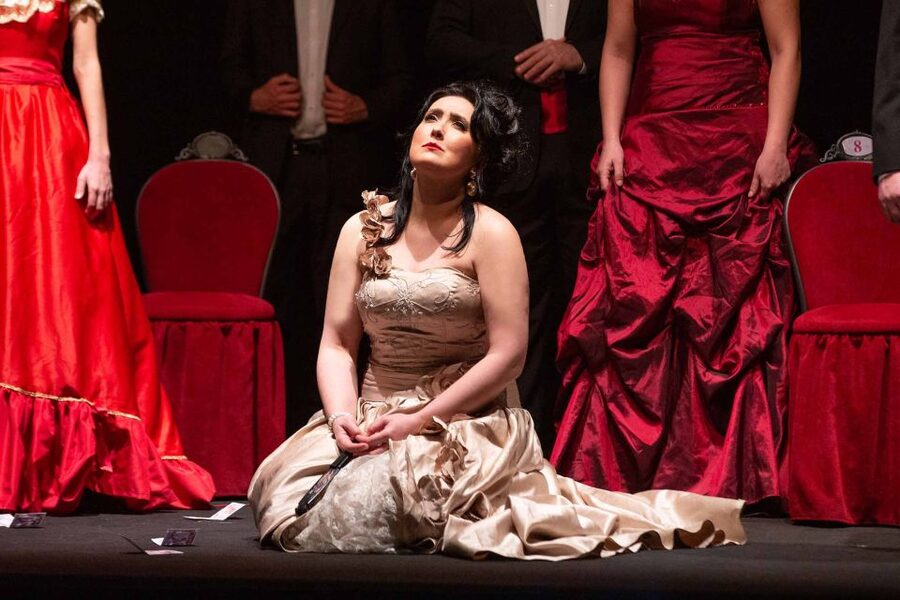
The evening follows La Traviata’s three-act structure. The performance includes solo singers, the Opera e Lirica Orchestra, and a choir representing the social world around Violetta and Alfredo. The cast also includes supporting roles such as Flora Bervoix, Annina, Gastone, Baron Douphol, the Marquis d’Obigny, and the Commissioner.
Aleksandra Buczek performs Violetta Valéry, the soprano lead. Emil Alekperov sings Alfredo Germont, while Cristian Alderete takes the role of Giorgio Germont, Alfredo’s father. Anastasiia Demchenko performs Flora and Annina. Elvin Dhimitri conducts.
The first act introduces Violetta’s social circle and her meeting with Alfredo. This is where you begin to hear the opera’s famous vocal writing and see the contrast between public celebration and private feeling. If you are unfamiliar with the story, this act can move quickly, especially because the singing is in Italian.
The second act brings the central conflict. Violetta and Alfredo attempt a life together, but Giorgio Germont asks Violetta to give up the relationship for the sake of his family. This is the emotional heart of the opera, and the father’s demand gives the story more weight than a simple romance.
The third act brings the tragedy to its close. You see the consequences of Violetta’s sacrifice and illness, with the music carrying much of the final emotion. The production also includes choir passages and, according to the performance presentation, ballet interludes. These dances are an added feature, though you may not see them clearly from every seat.
Because the opera is not in English, I strongly recommend reading a short plot outline before you arrive. That small bit of preparation can make a big difference. At least one audience member found that many people left after the first act, apparently because they could not follow the story. You will get much more from the performance if you know who Violetta, Alfredo, and Giorgio are before the curtain rises.
The singing, orchestra, and church acoustics
The strongest part of the evening is the music. The cast includes soloists from important Italian theaters and music academies, and the performance uses a live orchestra and choir rather than a recording.
The soprano role of Violetta is demanding, and Aleksandra Buczek carries much of the opera’s emotional weight. The lead voice needs to move from bright, agile passages to more vulnerable and dramatic moments. Alfredo and Giorgio also matter greatly, since the opera’s main tension depends on the contrast between Alfredo’s love and his father’s stern sense of duty.
The orchestra is led by Elvin Dhimitri. Several audience comments specifically praised the musicians, conductor, and vocal range of the singers. You can expect a performance built around strong voices and familiar Verdi melodies, not a casual recital with a few selected arias.
The acoustics are one of the more unpredictable parts. From a good position, the tall church interior can send the music clearly through the space. Some people have found the sound fantastic, while others have noticed distortion or less balance because the church was not designed as an opera theater.
Your seat matters. A position closer to the front may give you a more direct sound and a better view, though a front seat is not always available at the basic price. If hearing is your main priority, the venue can work very well. If you need perfect theatrical sound and sightlines, a purpose-built opera house will be safer.
Same city, a completely different sort of day:
- Vatican: Museums & Sistine Chapel Entrance Ticket
★ 4.5 · 144,003 reviews - Vatican Museums & Sistine Chapel Tour with Optional Basilica
★ 4.3 · 67,413 reviews - Colosseum, Roman Forum & Palatine Guided Tour
★ 4.7 · 63,148 reviews - Vatican Museums, Sistine Chapel & St Peter’s Basilica Guided Tour
★ 4.5 · 39,149 reviews
Seating is the biggest tradeoff
The church uses pew seating, and the arrangement is intimate rather than theater-like. One audience member counted about 20 rows, which gives you an idea of the compact scale. You are not sitting in a huge auditorium far from the singers.
But the stage is not raised high above the audience. The performers are at floor level, so people in front can block part of your view. This is particularly noticeable if you are shorter or seated toward the back.
Arriving only ten minutes before the start can leave you with fewer choices. One person who arrived late had to sit to the side and struggled to see past taller people. Another could hear the music well but had difficulty watching the action. If you care about the visual side of opera, get there early and choose your seat carefully.
The dancers can be harder to follow from some pews, too. Their movements take place across a low performance area, and even people who paid more than the cheapest ticket have found the view less than ideal.
The benches are another factor. They are hard, and the performance lasts two hours. Some seats may use plastic chairs beside the pews, which can be less comfortable still. A small cushion could make the evening easier, although you should not expect theater-style padded seating.
How much value do you get for $41?
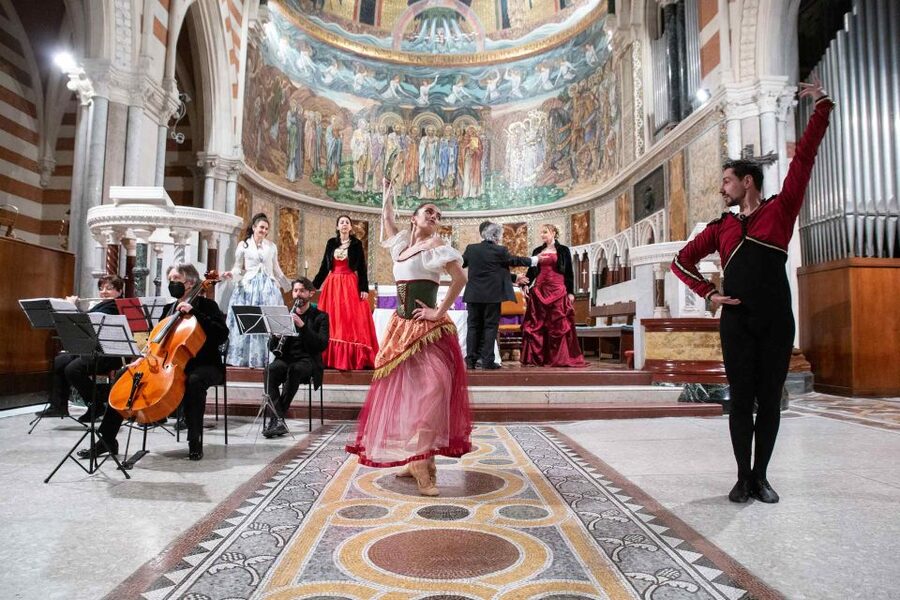
At $41 per person, this is a relatively affordable way to attend a live opera in Rome. The ticket includes the performance, singers, orchestra, choir, and access to the church venue. Food and drinks are not included, so plan dinner or a snack separately.
I consider the price especially reasonable for a first opera. You get the basic ingredients of the form: a well-known Verdi score, soloists, a conductor, supporting chorus, and a dramatic story. You also avoid the cost of a formal opera-house production while still hearing live music in a memorable setting.
The value depends on what you want most. If you want a beautiful evening of music and atmosphere, $41 is attractive. If you want perfect visibility, soft seats, air conditioning, and the polished stage design of a major theater, the low price comes with clear compromises.
A special occasion may justify looking at better seating if that option is available. The closer you are to the front, the more likely you are to see faces, gestures, and any ballet sections. For a casual first visit, the standard price can still work, provided you accept that your view may not be ideal.
Who should book this performance?
I would recommend it to anyone curious about opera but not ready to commit to an expensive night at a major theater. La Traviata has a clear emotional story, and the two-hour format is manageable after a full day in Rome.
It also suits couples looking for a quieter evening, families with older children, and teenagers who are open to classical music. One young person reportedly enjoyed the opera as a first proper performance, which makes sense: the story has romance, family conflict, and a strong tragic ending.
Music lovers should enjoy the combination of orchestra and voices. The church setting also makes this a good choice if you want an evening connected to Rome’s architecture rather than another restaurant or crowded bar.
I would be more cautious if you have mobility or comfort concerns. The event is wheelchair accessible, but the seating itself is not plush, and sightlines can be difficult. Pets are not allowed. You should also think twice if you cannot comfortably follow Italian singing without English subtitles or a plot guide.
Useful planning details
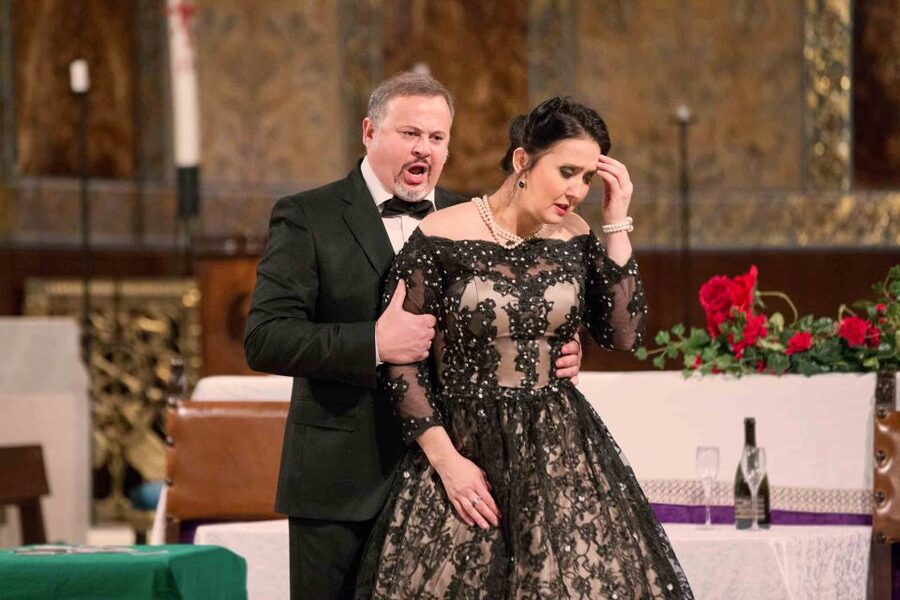
The performance starts at 8:30 pm and ends around 10:30 pm. That timing leaves room for an early meal, but food and drinks are not provided with the ticket.
The meeting point is simple: St. Paul’s Within the Walls Church, Via Nazionale 16/A. You make your own way there, so do not arrive at the last minute. Early arrival is the best practical advice for both seating and orientation.
The booking terms are flexible. You can cancel up to 24 hours ahead for a full refund, and a reserve-now, pay-later option is available. The activity is wheelchair accessible, but you should still expect church-style seating rather than a modern theater layout.
The overall rating is 4.3 from 435 ratings, which fits the experience well. The artistic side receives the strongest praise, especially the voices, orchestra, and church atmosphere. The recurring cautions are also consistent: Italian-only singing, hard pews, heat in warm weather, and blocked views from some seats.
Should you book La Traviata in Rome?
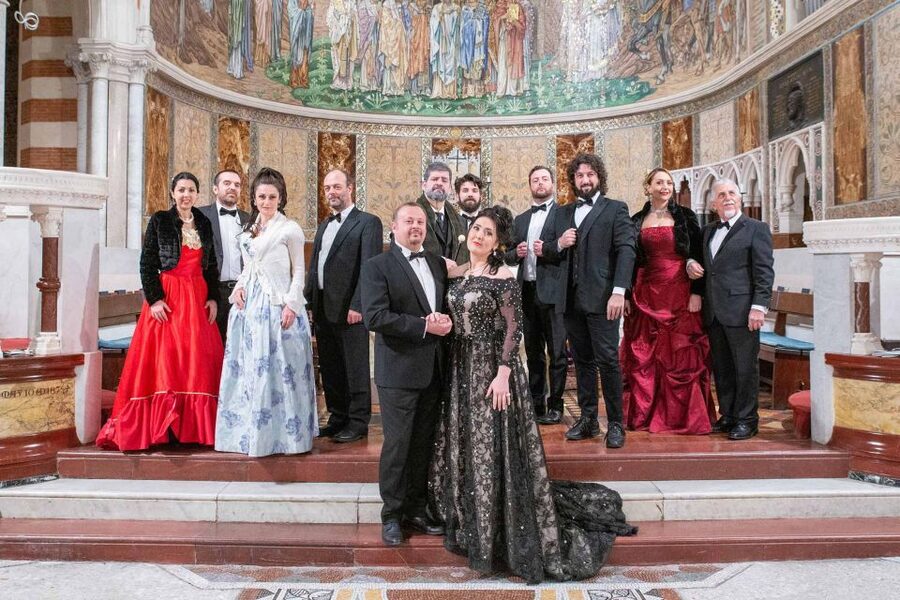
Book it if you want accessible live opera, beautiful surroundings, and strong singing at a modest price. The setting is memorable, the score is famous, and the performance gives you a real taste of Italian opera without requiring a costly formal evening.
Prepare for it properly. Read the plot, arrive early, and choose a front position if seeing the stage is important. Bring patience for church acoustics and hard benches, especially in summer.
I would not choose this as a substitute for a full-scale opera-house production if polished staging and clear views are your top priorities. But for a first opera, a musical night in Rome, or an atmospheric introduction to Verdi, this is a very sensible booking.
FAQ
Where is La Traviata performed?
The performance takes place at St. Paul’s Within the Walls Church, located at Via Nazionale 16/A in Rome.
What time does the opera start?
The performance starts at 8:30 pm.
What time does the performance end?
The opera ends at approximately 10:30 pm.
How long does the performance last?
The stated duration is two hours.
Is La Traviata performed in English?
No. The opera is performed in Italian. Reading the plot before arrival can help you follow the story.
Who conducts the performance?
Elvin Dhimitri is the conductor.
Who performs Violetta Valéry?
Aleksandra Buczek performs the role of Violetta Valéry.
What is included in the ticket?
The ticket includes admission to the La Traviata performance.
Are food and drinks included?
No. Food and drinks are not included.
Is the venue wheelchair accessible?
Yes, the activity is listed as wheelchair accessible.
Are pets allowed?
No. Pets are not allowed.
Can I cancel my booking?
Yes. Cancellation up to 24 hours in advance qualifies for a full refund. A reserve-now, pay-later option is also available.
Just added around Rome
- Boat excursion to Gaeta with a stop for swimming and snorkeling 2 HOURS★ 5.0 · 240 reviews
- Palatine Hill and Roman Forum Tour with Fast-Track Entrance★ 4.2 · 417 reviews
- Tivoli: Villa D’Este & Villa Adriana Pass & App Audioguide★ 4.4 · 364 reviews
- Tivoli: Villa D’Este Entry Ticket and App Audio Guide★ 4.3 · 191 reviews
- From Rome: Villa D’Este & Villa Adriana Day Trip with Lunch★ 4.4 · 289 reviews
- Vatican Museums & Sistine Chapel Skip-the-Line Guided Tour★ 4.6 · 254 reviews
- Rome: Capitoline Museums and Centrale Montemartini Tickets★ 4.4 · 328 reviews
- Rome: The Three Tenors at St. Paul’s Church Concert Ticket★ 4.7 · 699 reviews
Opera & Classical Concerts, compared.
La Fenice Opera House Entry Ticket with Audio Guide
Read our review →
Santa Monaca Church Italian Opera Concert Ticket
Read our review →
Vivaldi’s Four Seasons Live Classical Music Concert
Read our review →
Vivaldi’s Four Seasons Concert & Music Museum Visit
Read our review →
Vivaldi Four Seasons Concert at Vivaldi Church
Read our review →
Browse the lists this tour appears in