
Reviewed · POMPEII TOURS
Pompeii: Skip-the-Line Tickets and Tour with Archaeologist
Pompeii is far more than a collection of broken walls. Its original volcanic streets, bakeries, homes, baths, and public squares still show how an ancient Roman town worked. With an archaeologist leading the way, you get the stories and clues that are easy to miss when walking alone.
I like the separate entrance, which saves precious time, and the small-group format, which makes it easier to hear and ask questions. I also like the strong focus on ordinary life, from bread ovens to dining rooms and political gatherings. The main drawback is the short running time: two hours gives you a clear introduction, not a full tour of this enormous site.
Key points to know before booking
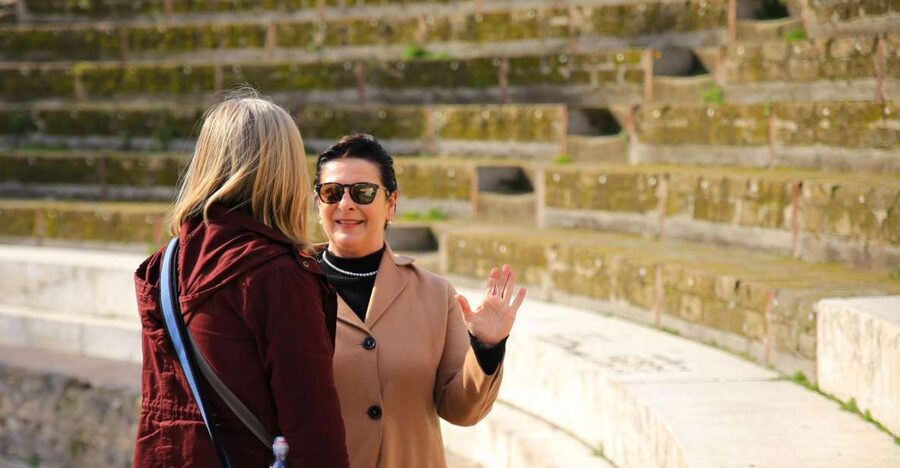
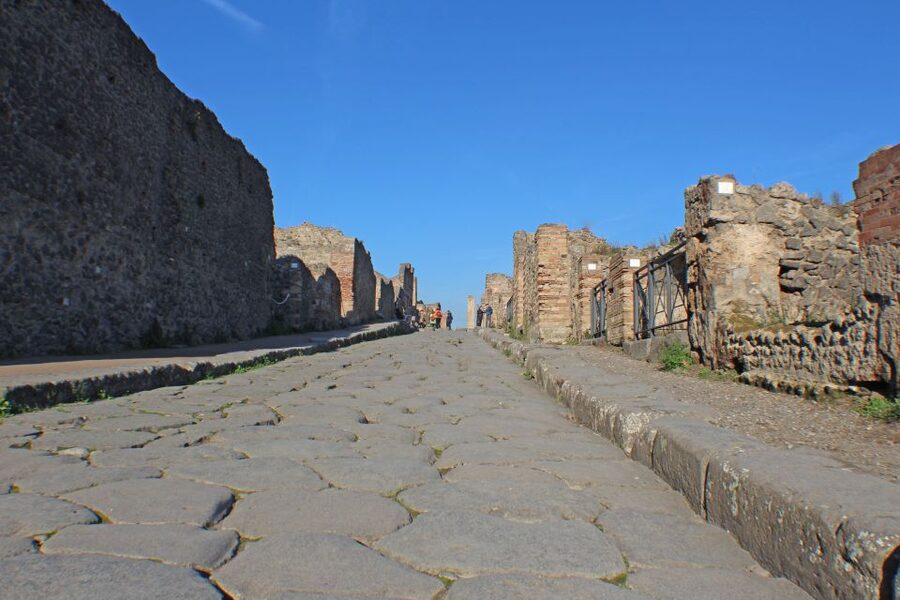
- Walk on original Roman pavement: Expect uneven volcanic stones, so comfortable shoes matter.
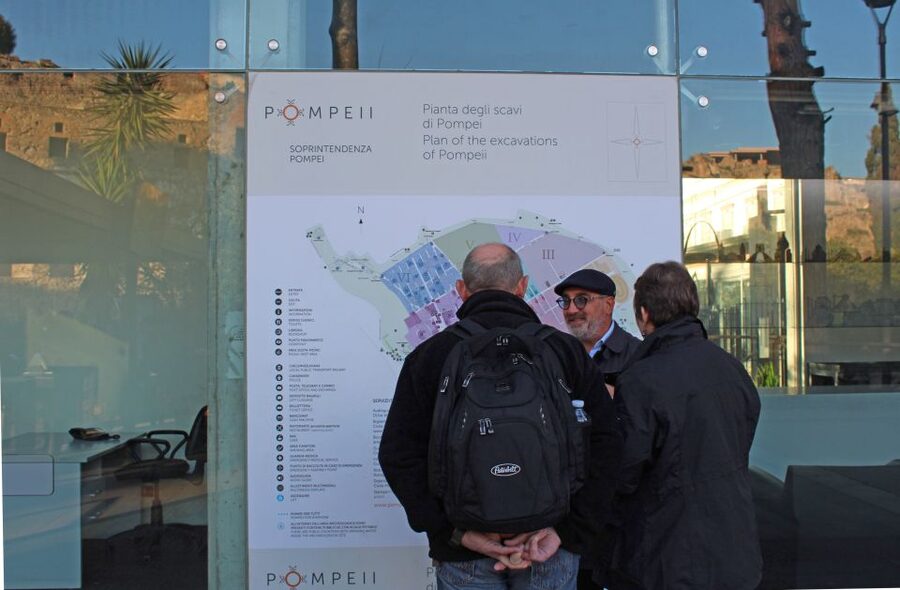
- Meet near Porta Marina Inferiore: The guide waits outside Coffee Shop Vittoria, close to the archaeological entrance.
- Look for an archaeologist guide: Lello, Italo, Raffaele, and other guides have been praised for clear explanations, humor, and lively storytelling.
- Plan for a focused route: You see major areas and selected details, but Pompeii is too large to cover in two hours.
- Best for families and first-time visitors: Guides use stories, questions, and humor to make ancient daily life easier to understand.
- Bring sun protection and water: There is little reason to expect shade throughout your walk, and the site can be hot.
Why a guided Pompeii visit makes such a difference
Pompeii can look confusing at first. You enter a huge archaeological area filled with streets, columns, doorways, courtyards, painted walls, and fragments of buildings. Without context, it is easy to admire the stones without understanding what each space once did.
This tour gives you a working picture of the city. Instead of simply pointing at a house, the guide explains how Romans used its rooms. Instead of passing a bakery, you learn to notice the ovens and imagine the daily rhythm of preparing food. The ancient town begins to feel like a place where people lived, worked, argued, ate, worshipped, and tried to get ahead.
I especially value the archaeologist’s viewpoint. The best guides do more than repeat dates. They explain what the remains can tell us, what archaeologists have reconstructed, and why some parts of the city are still difficult and expensive to restore. That kind of explanation helps you read the site after the tour ends.
The guides also bring different personalities to the walk. Lello, also written as Lelo or Lello in booking information, is repeatedly singled out for warmth, humor, and his ability to involve children. Italo is praised for explaining not only what visitors are seeing, but how to interpret it later when exploring alone. Raffaele is described as especially strong on detailed archaeological explanations. Your guide may be someone else, but the experience is built around an English-speaking professional who knows how to make the ruins understandable.
More Entry Tickets in Pompeii
- Pompeii: Entry Ticket and Guided Tour with an Archaeologist
★ 4.8 · 19,459 reviews - Pompeii: Entry Ticket with Optional Audio Guide
★ 4.2 · 12,360 reviews - Mount Vesuvius: Skip-the-Line Ticket and Smart Digital Guide
★ 4.2 · 2,780 reviews
Meeting at Porta Marina Inferiore
Your meeting point is the entrance of Coffee Shop Vittoria, close to Porta Marina Inferiore. This is a useful detail to take seriously. Pompeii has several gates and the archaeological area is large, so do not simply walk toward the first entrance you see and hope to find the group.
Allow enough time to locate the coffee shop and gather before the scheduled start. The guide then leads the group toward the archaeological entrance and uses a separate line for entry. That matters most during busy periods, when waiting outside in the sun can take energy away from the visit itself.
The tour includes the admission ticket and a professional guide. Hotel pickup, transport, food, and drinks are not included, so you need to reach Pompeii on your own and take care of refreshments separately.
Some tours have finished near the train station, which can be handy if you are continuing by rail. Treat that as a practical possibility rather than a guaranteed drop-off service. The official arrangement is a meeting at Porta Marina Inferiore, with no hotel pickup or return transfer.
Entering Pompeii without the long general line
The separate entrance is one of the clearest practical benefits here. You are not paying only for interpretation. You are also buying a smoother start to the visit.
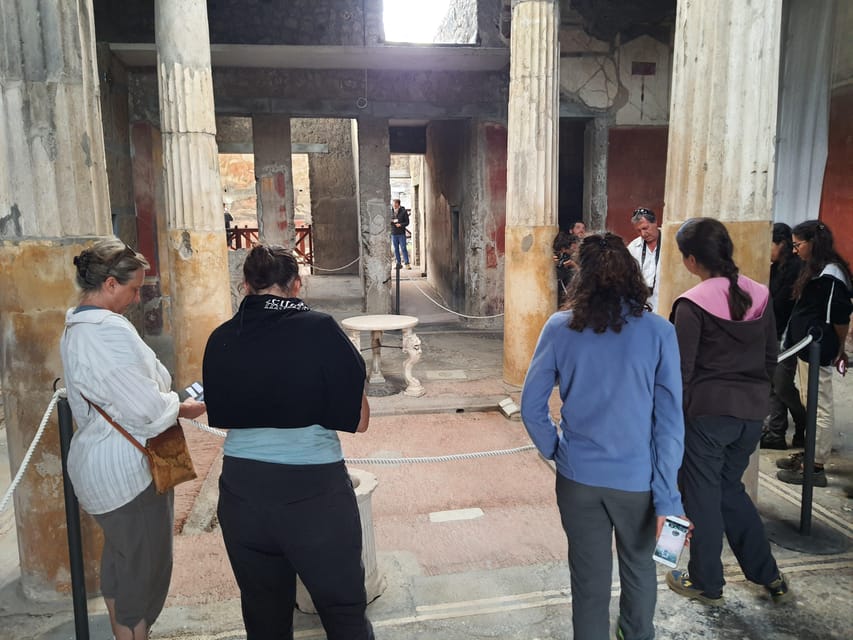
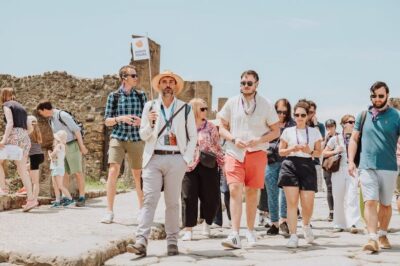
Once inside, the guide gets the group moving through the ancient streets. Headsets have been used on some tours, allowing people to hear without crowding around the guide. That is useful on a busy day, when a tight circle around one person can block doorways and make it hard to see the detail being discussed.
The small-group setup also helps. A group of around 15 people has been described, though the exact size can vary. That is small enough for the guide to check that people are following, answer questions, and keep the walk from feeling like a distant lecture.
There is one point to keep in mind: skip-the-line access does not mean the entire site will feel empty. Pompeii is a major attraction, and other groups will be moving through the same streets. The benefit is getting past the entry queue, not having the ruins to yourself.
Walking the original streets and reading the city
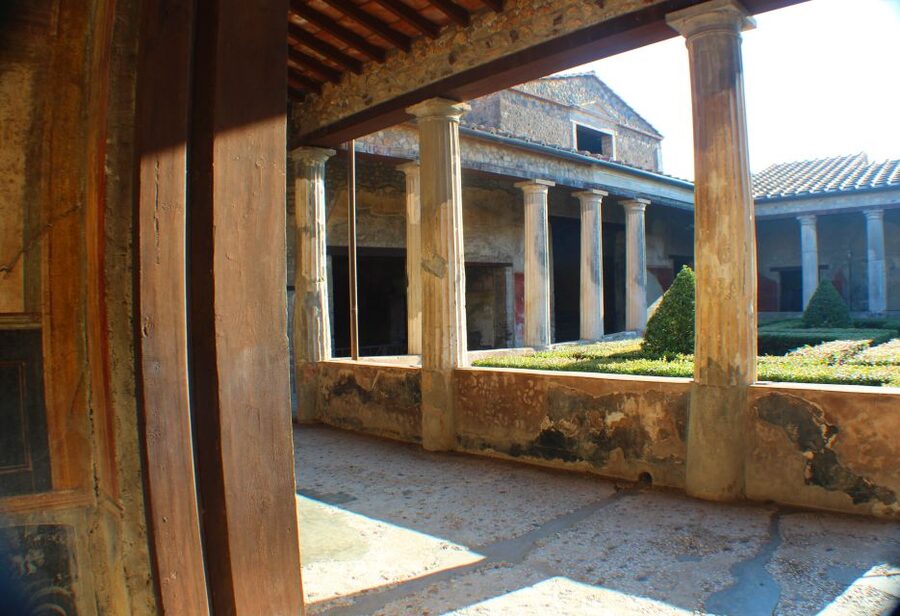
The streets are among the best parts of the visit. You walk over volcanic stone paving worn by ancient feet, carts, and daily traffic. The surface is uneven, so trainers or sturdy walking shoes are a much better choice than thin sandals or dress shoes.
The guide uses the street plan to explain how the town functioned. You learn where people gathered, where they shopped, and how public life connected with private homes. The value is not only in seeing individual buildings. It is in understanding the relationship between them.
Pompeii is large enough that a two-hour route can only cover a small portion of the whole area. That is not necessarily a flaw. A skilled guide selects places that explain the city well, then gives you ideas for what to see if you stay longer.
This is where Italo’s reported approach is particularly useful. He has been praised for teaching people how to interpret the ruins on their own. After the guided walk, you can spend additional time exploring with a better sense of what you are looking at instead of wandering from one structure to the next.
More Skip-the-Line Tickets in Pompeii
- Herculaneum: Skip-the-Line Guided Tour with Archaeologist
★ 4.8 · 3,439 reviews - From Naples: Pompeii Skip-the-Line Entry Ticket and Tour
★ 4.4 · 2,753 reviews - Pompeii: Skip-the-Line Entrance Ticket with Audio Guide
★ 4.0 · 2,509 reviews - Sorrento: Skip-the-Line Pompeii Express Tour by Train
★ 4.8 · 2,038 reviews
Villas, dining rooms, and the texture of Roman home life
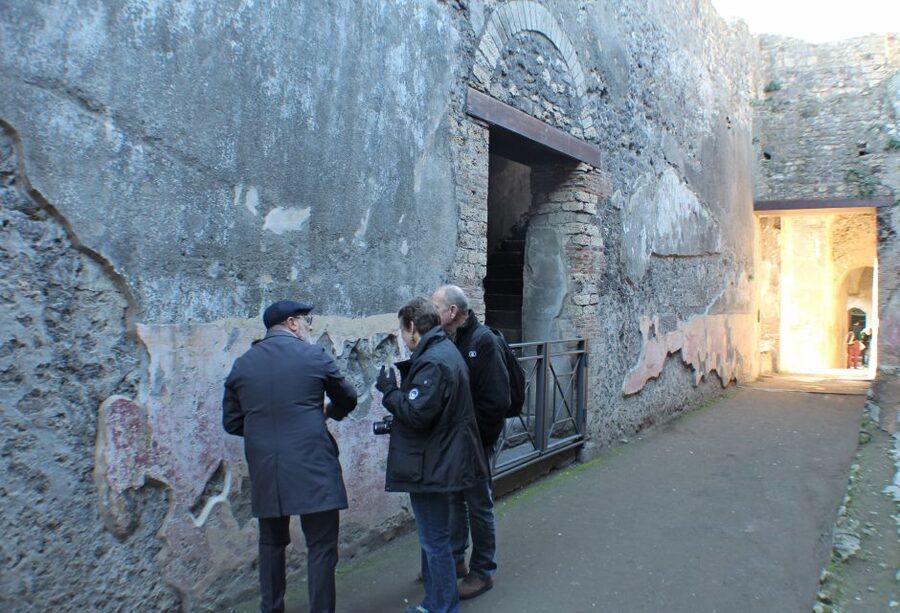
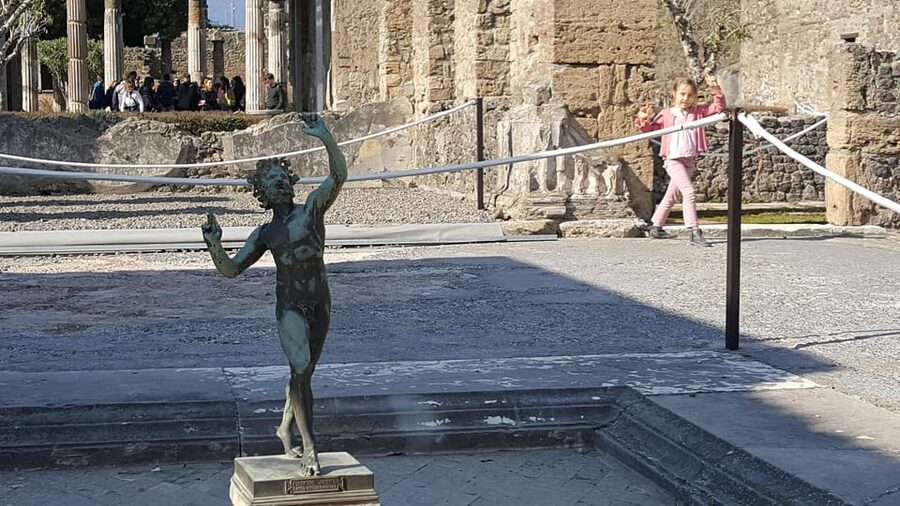
The tour brings you into the private side of Pompeii, where preserved rooms reveal social habits as well as architecture. You might see spaces connected with eating, entertaining, sleeping, or household work.
One memorable image is the marble triclinium, the formal dining arrangement where diners reclined during a feast. The guide uses details like this to explain the social world of Roman homes, including the difference between a room designed to impress and a room intended for practical work.
The storytelling works best when it connects a building to people. You can picture wealthy residents entertaining friends, women preparing for a meal, or household workers moving through rooms that were never meant to be viewed as museum displays. The site feels more human when the guide explains how status shaped the way people used their homes.
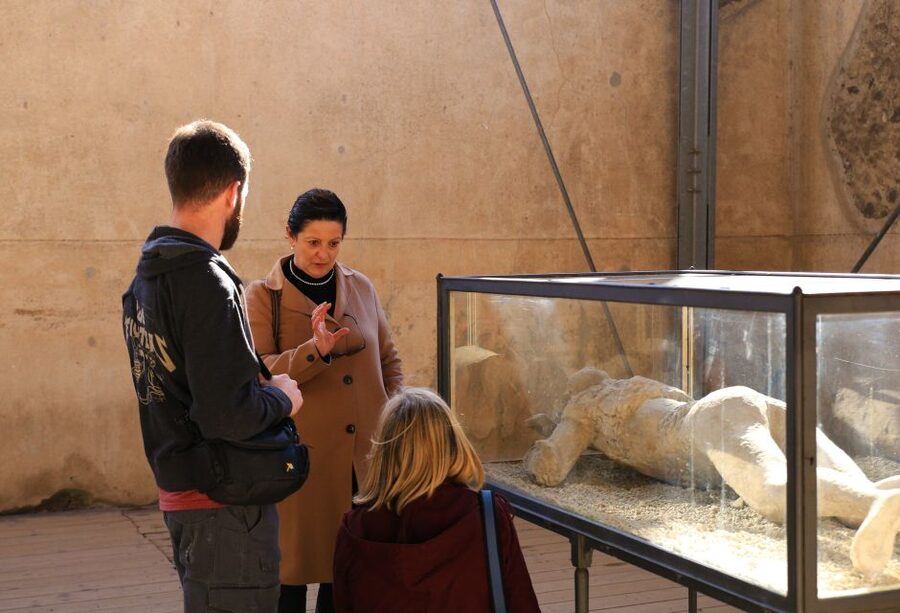
Some preserved areas carry difficult stories, including evidence of slavery and death. A sensitive guide can give these places the respect they deserve while explaining the facts. That balance matters. Pompeii is fascinating, but it is also a place marked by a catastrophe that killed residents and buried their world.
The Forum and Pompeii’s public life
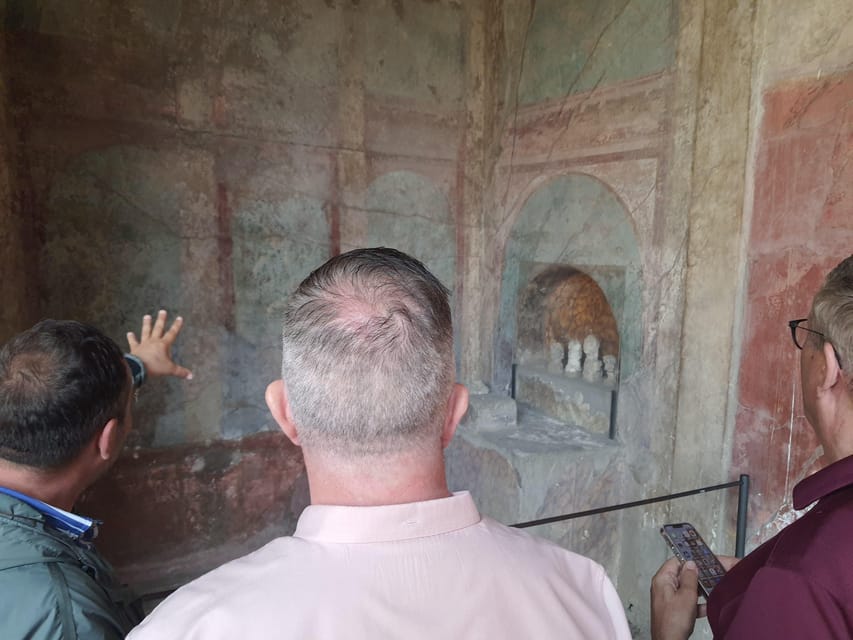
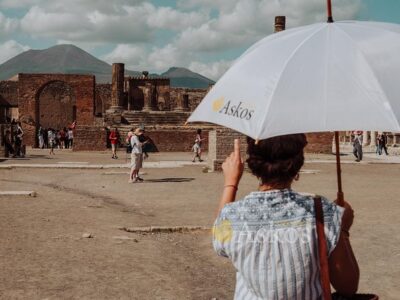
The Forum was the city’s main public center, where commerce, politics, religion, and social life came together. This is one of the places where a guide’s explanation adds real value because the remaining columns and open spaces do not explain themselves.
You learn to imagine people moving through the square, merchants selling goods, and politicians speaking to the public. The guide also places the Forum within the wider Greek-Roman culture of the town, showing that Pompeii was not simply a collection of homes. It was a functioning city with public institutions and competing interests.
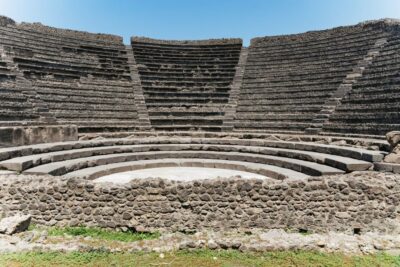
The Forum can also help you understand scale. Pompeii was not a small village frozen in time. It had public buildings, entertainment spaces, commercial areas, and homes of different sizes. A short visit cannot show everything, but the Forum gives you a strong framework for understanding the rest.
Bakeries, baths, and the practical details
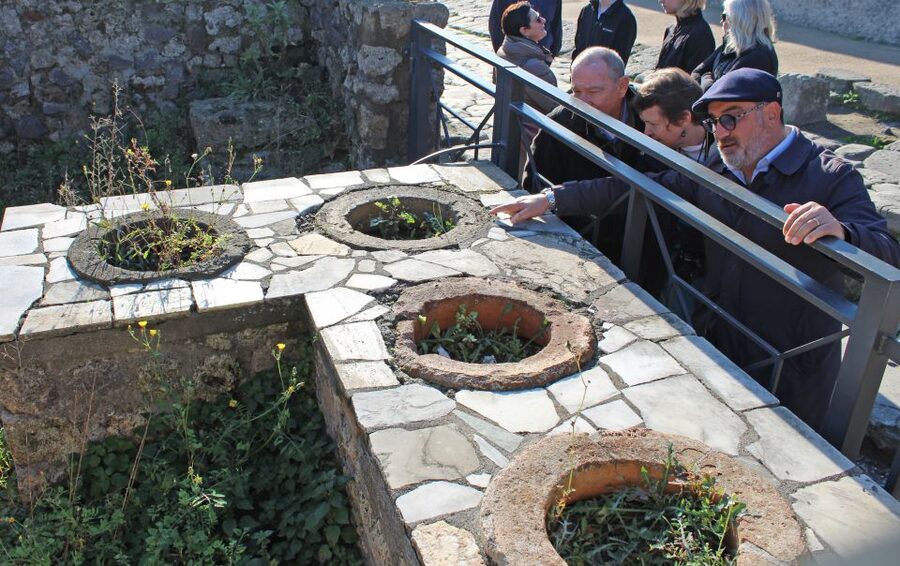
The most memorable details are often the least grand. Ancient bakeries, ovens, water systems, public baths, and gymnasium areas reveal the ordinary work that kept the city alive.
The guide may point out where bread was baked and explain what the equipment suggests about food preparation. You can imagine the smell of fresh bread rising from the ovens, but the important point is the physical evidence: the tools and spaces show that food production was organized and central to city life.
The baths offer a different lesson. They were places for washing, exercise, and social contact, not just private hygiene. The gymnasium helps you picture physical training and the public culture around it. These stops are especially effective for families because they turn abstract Roman customs into things you can see.
This is also where children tend to benefit from a lively guide. Lello is often praised for keeping young people involved through questions, humor, and direct interaction. The tour is not designed as a separate children’s program, but the storytelling can make the ancient world easier for ages 11 and up to follow.
What two hours can and cannot cover
The advertised duration is two hours. Some past outings have lasted closer to two and a half hours, but you should plan around the stated schedule rather than assume extra time.
Two hours is enough for a strong introduction. You can see selected major landmarks, learn how Roman residents lived, and leave with a plan for exploring more on your own. It is a good length if Pompeii is one stop in a busy Campania itinerary.
Two hours is not enough to see the entire archaeological area. The site is vast, and even a focused visit covers only a fraction of it. If you have a special interest in villas, painted rooms, political buildings, or the disaster itself, plan additional independent time after the tour.
This shorter format can actually be a benefit for some people. Pompeii demands a lot of walking, and the heat can be tiring. A focused route gives you the strongest context before you decide whether to keep exploring. If you want a slow, all-day archaeological study, this is not the right format.
The $105 price and what you receive
At $105 per person, this is not a bare admission ticket. The price includes entry, an English-speaking professional guide, and skip-the-line access through a separate entrance.
I see the value in the guide more than in the ticket itself. Pompeii is easy to visit independently, but it is much harder to understand independently. The guide’s ability to explain daily life, point out details, and show you how to read the ruins can turn a confusing walk into a coherent visit.
The price makes the most sense if you are visiting Pompeii for the first time, have limited time, or care about archaeology and Roman life. It also works well for families who want children to stay engaged instead of drifting through a long series of silent ruins.
The value is less clear if you already know Pompeii well, plan to spend several full days on site, or prefer moving at your own pace. In that case, a simple ticket may give you more freedom. You also need to budget separately for drinks and lunch.
Practical advice for a smoother visit
Wear shoes that can handle uneven volcanic paving. Bring a sun hat, sunscreen, and water, since the walk is outdoors and shade cannot be counted on throughout the route.
Large bags, luggage, baby strollers, and umbrellas are not allowed. Pack lightly and do not arrive with a suitcase expecting to take it inside.
When booking, provide every participant’s name and last name exactly as shown on the relevant identification documents. Children need a passport or ID card.
The tour is offered in English with a live guide. Free cancellation is available up to 24 hours before the start for a full refund, and the reserve-now, pay-later option can help if your Campania schedule is still changing.
Who should book this Pompeii tour?
I would choose this for a first visit, especially if you want the city explained rather than simply photographed. It is also a strong choice for families, history lovers, and anyone arriving by train who wants a clear route through a very large site.
The tour suits people who enjoy a guide with personality. Lello, Italo, Raffaele, Anna, Leonardo, Maria, and other guides connected with this experience have been described as warm, funny, patient, and able to explain difficult subjects in plain English.
I would hesitate if you dislike group tours, need complete control over your pace, or want to spend the whole day investigating every open building. The route is selective by necessity, and the two-hour limit means you will leave parts of Pompeii unseen.
Should you book it?
Book it if you want context, efficient entry, and human stories instead of a silent walk through ruins. The archaeologist-led format gives you a useful introduction to Roman streets, homes, public life, food, bathing, and the hard work of preserving the site.
Do not book it expecting to cover all of Pompeii. Think of this as a focused first chapter. If you can stay afterward, use the guide’s suggestions to continue on your own. For most first-time visitors, that combination offers a good balance: expert explanation first, personal wandering second.
FAQ
How long does the Pompeii archaeologist tour last?
The listed duration is two hours. Some past tours have run for about two and a half hours, but you should plan your schedule around the stated two-hour duration.
Where do I meet the guide?
Meet at the entrance of Coffee Shop Vittoria, close to the Porta Marina Inferiore entrance to the Pompeii archaeological site.
Is admission to Pompeii included?
Yes. The package includes admission to the archaeological site and a professional guide.
Is the tour offered in English?
Yes. The activity includes a live English-speaking guide.
What should I bring?
Bring comfortable shoes, a sun hat, sunscreen, and water. Children should have a passport or ID card.
Can I bring a stroller or large bag?
No. Baby strollers, luggage, large bags, and umbrellas are not allowed.
Can I cancel the booking?
Yes. You can cancel up to 24 hours in advance for a full refund. The reserve-now, pay-later option is also available.
Just added around Pompeii
- Vesuvius National Park Skip-the-Line Ticket★ 3.8 · 221 reviews
- From Rome: Sorrento & Pompeii Day Tour with Hotel Pickup★ 4.2 · 257 reviews
- From Rome: Day Trip to Pompeii with Tickets★ 4.4 · 1,161 reviews
- Pompeii Ruins Private Tour with Optional Skip-the-Line Entry★ 4.9 · 732 reviews
- From Rome: Pompeii All-Inclusive Tour with Live Guide★ 4.3 · 261 reviews
- Pompeii: Exclusive Tour with Archaeologist and Entry Tickets★ 4.9 · 634 reviews
- Pompeii 3hours Villa of Mysteries tour with an Archaeologist★ 4.8 · 486 reviews
- Pompeii and Vesuvius Full-Day Tour from Amalfi Coast★ 4.4 · 319 reviews
Pompeii Tours, compared.
Entry Ticket and Guided Tour with an Archaeologist
Read our review →
From Naples: Pompeii Ruins & Mount Vesuvius Day Tour
Read our review →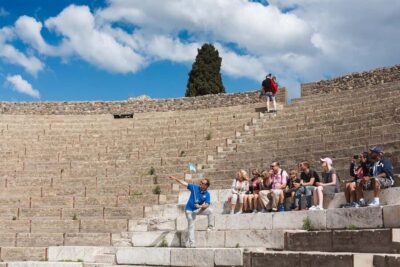
From Rome: Pompeii, Amalfi Coast, and Sorrento Day Trip
Read our review →
From Rome: Pompeii, Amalfi Coast and Positano Day Trip
Read our review →Pompeii Small Group Tour with an Archaeologist
Read our review →
Pompeii, Amalfi Coast and Positano Day Trip from Rome
Read our review →Browse the lists this tour appears in