

Reviewed · POMPEII TOURS
From Naples: Pompeii & Herculaneum with Archaeologist Guide
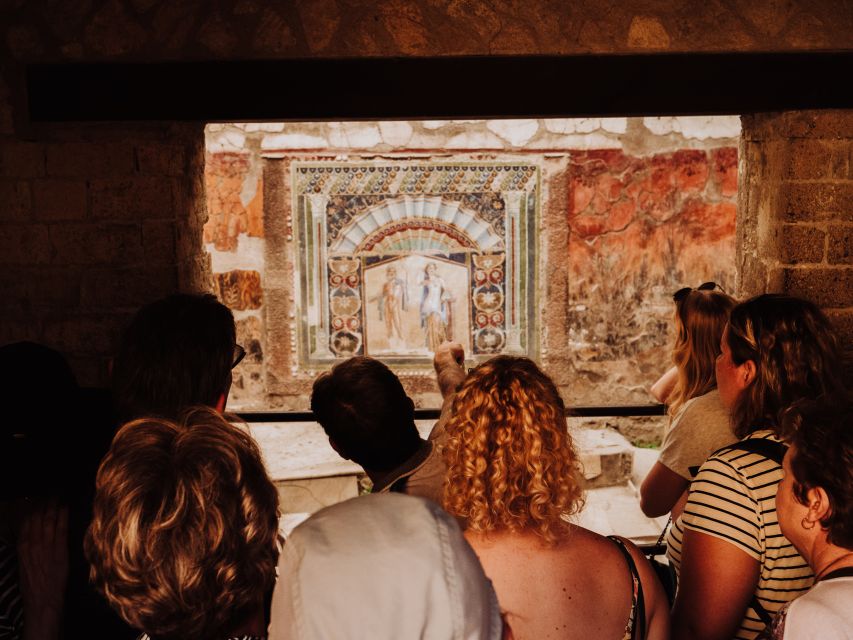
Pompeii gets the fame, but Herculaneum may be the surprise of the day. Its carbonized wooden doors, vivid wall paintings, mosaics, and seaside skeletons make ancient Roman life feel startlingly close. I like that this tour pairs both sites with an archaeologist guide, rather than leaving you to decode a huge field of ruins on your own.
I also like the small-group minibus and skip-the-line entry. Guides such as Raphael, Roberta, Michele, and Gennaro have been praised for making the sites clear, funny, and human. The trade-off is time: two hours at each excavation gives you the main sights, but not every street and house.
What makes this day trip worthwhile
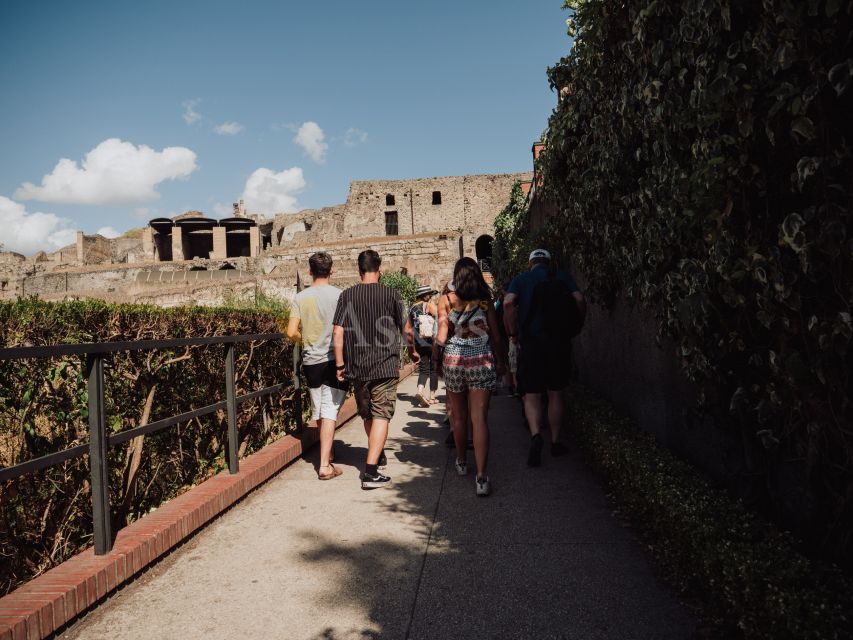
- Herculaneum’s preserved wood and paintings: See details that survived because mud sealed the town.
- Pompeii’s essential Roman sights: Visit the forum, basilica, bakery, Lupanar, private houses, and plaster casts.
- An archaeologist-led visit: Guides explain how Romans lived, worked, worshiped, and died.
- Skip-the-line admission: Spend your limited day inside the sites instead of waiting at the entrance.
- Shared minibus from Naples: Travel between the station, Herculaneum, and Pompeii without arranging separate transport.
- A compact but demanding schedule: Seven hours covers both sites, with walking, slopes, stairs, and a short lunch stop.
Two cities, two different stories
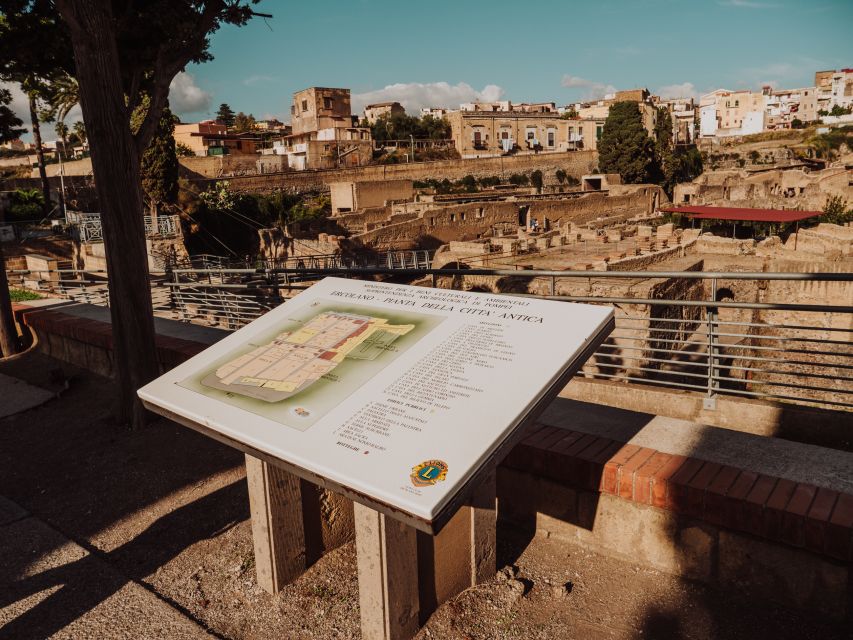
The great strength of this excursion is the pairing. Pompeii and Herculaneum were both destroyed by Mount Vesuvius in 79 AD, but the volcanic disaster preserved them in different ways.
Pompeii was covered by falling ash and pumice. Its streets, public buildings, shops, houses, and painted rooms reveal a large Roman town caught in the middle of ordinary life. You see the shape of a full city, including its forum, baths, bakery, and entertainment spaces.
Herculaneum was buried under a much deeper flow of mud. The material sealed the town more tightly, preserving objects that usually vanish from ancient sites. Wooden furniture, doors, beams, mosaics, and wall paintings are among the details that make the smaller excavation feel unusually intimate.
I find the contrast useful. Pompeii gives you scale and urban drama. Herculaneum gives you texture. Seeing both in one day helps you understand why the same eruption produced such different archaeological evidence.
More Ancient Ruins in Pompeii
- From Naples: Pompeii Ruins & Mount Vesuvius Day Tour
★ 4.3 · 11,459 reviews - Herculaneum: Skip-the-Line Guided Tour with Archaeologist
★ 4.8 · 3,439 reviews - Pompeii: Archaeological Park Tour with Ticket on request
★ 4.5 · 2,283 reviews
Meeting in Naples and riding south
The meeting point is in front of the Starhotels Terminus entrance, opposite Naples Central Station. Look for the guide holding an Askos Tours sign. This is a practical location if you are staying near the station or arriving by train.
The group travels in a shared modern minibus with a professional English-speaking driver. The vehicle transfer to Herculaneum takes about 45 minutes, followed by roughly 30 minutes to Pompeii and another 45 minutes back to Naples. Tolls and parking are included, so you do not need to manage those details yourself.
A group can include up to 20 people. That is small enough for a more personal visit, though not private or quiet. Some groups use headsets, which helps you follow the guide when other visitors are nearby.
The minibus saves you from arranging separate train or taxi connections, and it keeps the day on a fixed timetable. The downside is limited flexibility. If you want to stop for an unscheduled coffee, linger in one house, or leave early, this is not the right format.
Herculaneum: the most detailed stop
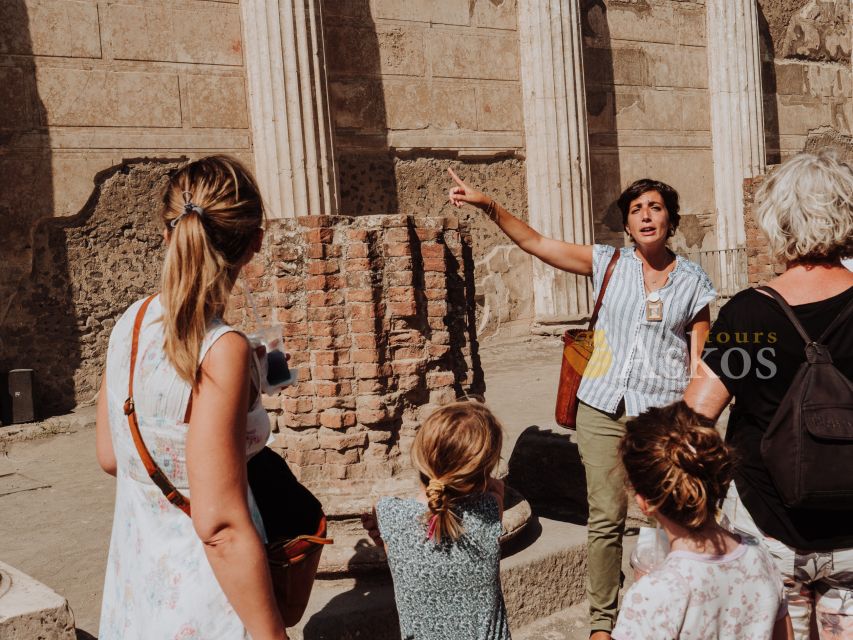
The first archaeological visit lasts about two hours. Herculaneum was buried beneath a landslide of mud around 20 meters deep, and that heavy covering helped preserve materials that would normally rot or burn away.
Your guide leads you through the main remains, including the Temple of the Augustali, the thermal baths, the forum, the Samnite House, the Gymnasium, and the House of the Deers. You also visit the beach area, where more than 300 skeletons were found.
That last detail gives the site a serious edge. Herculaneum is not only about handsome mosaics and bright wall decoration. The skeletons show the human cost of the eruption and help explain why the site feels more personal than its larger neighbor.
Look closely at the preserved wood. Carbonized objects and wooden architectural elements are among the most memorable parts of the visit because they connect you with practical Roman life: doors, furniture, fittings, and building materials rather than only stone foundations.
The Thermal Baths and private houses show another side of the town. Mosaics and painted rooms offer clues about wealth, taste, and daily routines. A good guide can point out how the spaces were used and what the surviving details tell us.
Two hours is a sensible amount of time for a first visit. You get the central route without becoming worn out before Pompeii, but you will not see every corner. Herculaneum is smaller than Pompeii, yet its uneven surfaces, stairs, and grades still demand comfortable shoes.
The lunch break before Pompeii
After Herculaneum, the group transfers to Pompeii and takes a lunch break of about 40 to 45 minutes. Meals are not included, so plan for this pause as a chance to buy food or eat something you brought.
One practical warning is worth keeping in mind: the available lunch option can be expensive, with one account putting the cost at about €30 per person. If you want to control your budget, bring your own food if permitted for the stop or ask the guide where the group will eat before ordering.
This is not a leisurely restaurant outing. The break exists to keep the long day moving, so keep an eye on the meeting time. The driver may wait only up to five minutes for late arrivals, and Pompeii still requires a full two-hour walk afterward.
Same city, a completely different sort of day:
- Pompeii: Entry Ticket and Guided Tour with an Archaeologist
★ 4.8 · 19,459 reviews - Pompeii: Entry Ticket with Optional Audio Guide
★ 4.2 · 12,360 reviews - Pompeii: Small Group Tour with an Archaeologist
★ 4.8 · 12,264 reviews - From Rome: Pompeii, Amalfi Coast, and Sorrento Day Trip
★ 4.6 · 7,031 reviews
Pompeii’s forum, shops, and private homes
The Pompeii visit lasts about two hours and begins after skip-the-line entry. The route covers many of the excavation’s headline sights, starting with the Marina Gate and moving through the Basilica and Forum.
The Forum was the town’s public center, while the Basilica served legal and commercial purposes. These large spaces help you understand Pompeii as a functioning Roman city, not simply a collection of ruined houses.
The Forum Baths show how bathing fit into public life. The Bakery and the Termopolium Capuano bring the tour down to street level, where food preparation and quick meals were part of the town’s daily rhythm.
The Lupanar, or brothel, is another well-known stop. Its rooms and surviving imagery can prompt questions about Roman social life, and the guide provides context that is more useful than simply pointing out the building’s name.
Private houses add contrast. The House of the Faun is one of the site’s grand residences, while the House of the Tragic Poet offers a smaller setting with important decorative details. The guide also brings you to the plaster casts, among the most sobering remains at Pompeii.
The casts are not original bodies. They were created by filling cavities left in the hardened ash after organic material decomposed. Seeing them is powerful, but it is also emotionally difficult. You should be prepared for a visit that shifts quickly from architecture and daily life to sudden death.
Two hours gives you a strong introduction. You will see the major public buildings and several famous homes, but Pompeii is too large for a complete visit in one afternoon. The pace is generally manageable, though the stone streets, slopes, and stairs can be tiring.
Why the archaeologist guide matters
Pompeii and Herculaneum are places where a guide adds real value. Without context, you may notice a painted wall, a high pavement, or a row of rooms without understanding what made it important.
The strongest guides on this route explain small details about Roman life and death, not only dates and names. Raphael has been praised for combining accuracy, humor, and quick thinking in crowded areas. Roberta has been singled out for patient explanations and a warm approach. Michele’s background working at Herculaneum allows him to point out details that are easy to pass by.
Other guides named by participants include Vito, Gennaro, Julia, Juliano, and Michael. The guide assigned to your departure can vary, so you should not book on the assumption that one particular person will lead your group.
The common thread is an English-speaking archaeologist guide who gives the ruins a human scale. You learn how Romans used their homes, shops, baths, temples, and streets. That is far more helpful than rushing from one famous building to the next with only a map.
Headsets may be provided, depending on the group setup. They are especially useful at Pompeii, where many groups occupy the same narrow streets and it is easy to lose the thread of an explanation.
Time, walking, and the physical effort
The advertised duration is seven hours, with transfers, two guided visits, and a lunch break. The full sequence includes roughly 45 minutes to Herculaneum, two hours there, about 30 minutes to Pompeii, a 40 to 45-minute break, two hours at Pompeii, and about 45 minutes back to Naples.
That is a full day, even though the sightseeing time at each site is limited. I would choose this tour if you want a well-organized first look at both excavations. I would not choose it if you have already seen Pompeii in detail or want several hours for photography and independent wandering.
Wear sturdy walking shoes. The surfaces are ancient and uneven, and you will encounter significant stairs, slopes, and changes in level. The tour is not suitable for wheelchair users or people with limited mobility.
The outing runs in rain or shine. Bring a raincoat if the forecast looks uncertain. A passport or identity card is required, and large bags or luggage are not allowed. Baby seats are available upon request.
Is $168.79 a fair price?
At $168.79 per person, this is not the cheapest way to see Pompeii and Herculaneum. The price includes shared minibus transportation, parking and tolls, the Pompeii Express ticket, the Herculaneum ticket listed at €16, and the archaeologist guide.
The value depends on what you want to avoid. You are paying for transport from central Naples, coordinated entry, and a guide who can make two complicated sites understandable in one day. If you would otherwise need separate train tickets, taxis, entrance tickets, and a guide, the package becomes easier to justify.
The price does not include lunch. That matters because the break is short and the convenient food option may cost around €30 per person. Budget for that separately or bring something suitable.
I see this as a convenience and interpretation purchase, not a bargain admission ticket. The tour is most useful for a first-time visit, a shore excursion, or a short stay in Naples when you want both sites without handling every connection yourself.
Who should book this experience?
I would recommend it to first-time visitors who want the essential Pompeii and Herculaneum sights in one day. It also suits anyone arriving in Naples by train, since the meeting point is directly opposite the central station.
The tour works well for people who prefer a clear plan, shared transport, and an expert explanation at each stop. It is also a strong choice for history fans who want to compare two different forms of volcanic preservation.
I would think twice if you need a wheelchair-accessible route, dislike fixed schedules, or want long periods of independent exploration. The group size can reach 20, and the two-hour limits mean you will see the highlights rather than the whole archaeological area.
Should you book it?
Book this tour if you want both ancient cities in one organized day and value an archaeologist’s interpretation more than free time. Herculaneum is the special reason to choose this pairing, while Pompeii supplies the grand streets, forum, houses, shops, and plaster casts.
Skip it if you plan to spend a full day or more at Pompeii alone, need a slower pace, or prefer to arrange your own transport and meals. For most first visits from Naples, though, the combination of skip-the-line admission, minibus transfers, and strong guides makes the high price easier to defend.
FAQ
Where does the tour start?
The tour starts in front of the Starhotels Terminus entrance, opposite Naples Central Station. Look for the guide holding an Askos Tours sign.
Where does the tour end?
The activity ends back at the same meeting point at Starhotels Terminus.
How long does the experience last?
The stated duration is seven hours. The schedule includes transport, guided visits to both sites, and a lunch break.
How much time is spent at Herculaneum?
The guided visit at Herculaneum lasts about two hours.
How much time is spent at Pompeii?
The guided visit at Pompeii lasts about two hours, after a lunch break of approximately 40 to 45 minutes.
Are entrance tickets included?
Yes. Pompeii Express and Herculaneum entrance tickets are included.
Is lunch included?
No. Meals are not included in the tour price.
Is the tour conducted in English?
Yes. The live tour guide and driver service are provided in English.
Is the tour suitable for wheelchair users?
No. The tour is not suitable for wheelchair users or people with limited mobility because the sites include stairs, slopes, and uneven surfaces.
What should I bring?
Bring a passport or identity card, comfortable walking shoes, and a raincoat if rain is possible. Large bags and luggage are not allowed.
Can I cancel the booking?
You can cancel up to 24 hours in advance for a full refund. The reserve-now, pay-later option is also available.
Just added around Pompeii
- Vesuvius National Park Skip-the-Line Ticket★ 3.8 · 221 reviews
- From Rome: Sorrento & Pompeii Day Tour with Hotel Pickup★ 4.2 · 257 reviews
- From Rome: Day Trip to Pompeii with Tickets★ 4.4 · 1,161 reviews
- Pompeii Ruins Private Tour with Optional Skip-the-Line Entry★ 4.9 · 732 reviews
- From Rome: Pompeii All-Inclusive Tour with Live Guide★ 4.3 · 261 reviews
- Pompeii 3hours Villa of Mysteries tour with an Archaeologist★ 4.8 · 486 reviews
- Pompeii: Exclusive Tour with Archaeologist and Entry Tickets★ 4.9 · 634 reviews
- Pompeii and Vesuvius Full-Day Tour from Amalfi Coast★ 4.4 · 319 reviews
Pompeii Tours, compared.

Entry Ticket and Guided Tour with an Archaeologist
Read our review →

From Naples: Pompeii Ruins & Mount Vesuvius Day Tour
Read our review →
From Rome: Pompeii, Amalfi Coast, and Sorrento Day Trip
Read our review →
From Rome: Pompeii, Amalfi Coast and Positano Day Trip
Read our review →Pompeii Small Group Tour with an Archaeologist
Read our review →
Pompeii, Amalfi Coast and Positano Day Trip from Rome
Read our review →Browse the lists this tour appears in