
Reviewed · POMPEII TOURS
Pompeii Ruins Private Tour with Optional Skip-the-Line Entry
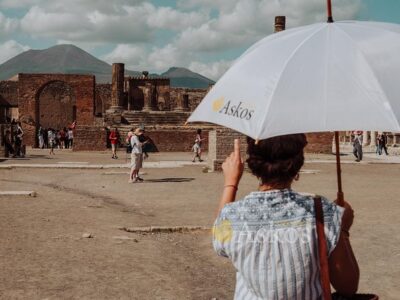
Pompeii is not a museum filled with objects behind glass. It is an ancient city you can walk through, with streets, homes, shops, temples, and public squares still laid out beneath Mount Vesuvius. This private two-hour tour gives you a guide to explain what you are seeing instead of leaving you to guess at piles of stone.
I like the small private group, which lets you ask questions and adjust the pace. I also like the focus on ordinary Roman life, from how homes and shops were arranged to how people used the Forum. The main drawback is time: Pompeii is huge, and two hours covers the key sights rather than the whole city.
I also like the range of guides, including archaeologists such as Lucia, Francesca, and Carmen, and lively local guides such as Rossella, Daniela, Julia, and Imma. One practical caution: confirm the meeting point carefully, since the guide may meet you at the tour office outside the ruins rather than inside the archaeological site.
Key points to know before booking
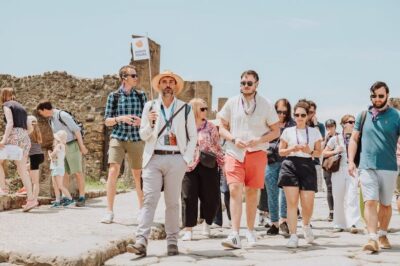
- A private guide for up to eight people: You get a personal tour rather than a large group, with room for questions and some itinerary flexibility.
- A focused route through Pompeii: The usual highlights include Porta Marina, the Forum, temples, porticoes, law courts, and plaster casts.
- Express entry depends on your option: Select the package with skip-the-line tickets if you want admission arranged with the tour.
- Two hours is an introduction, not a full visit: Pompeii covers a vast area, so plan extra time if you want to explore farther on your own.
- Guiding is available in five languages: English, Italian, French, Spanish, and German are offered.
- Bring identification and leave large bags behind: A passport or ID card is required, and luggage is not allowed.
Why a private guide changes Pompeii
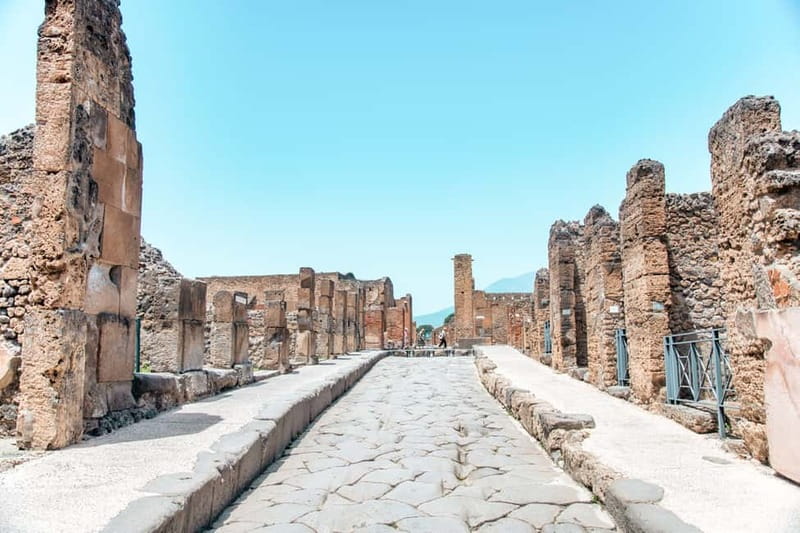
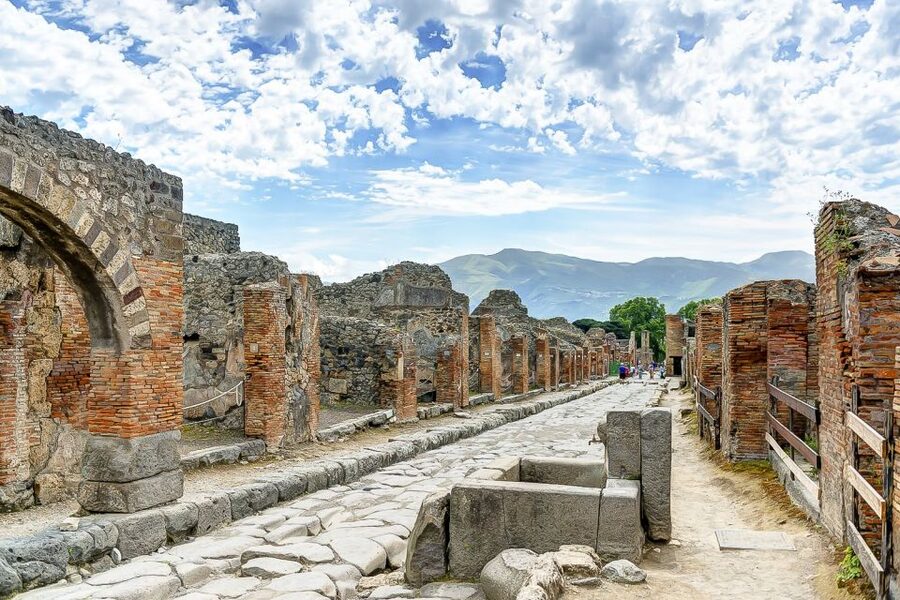
Pompeii can be hard to read at first. You see broad stone streets, roofless buildings, faded wall paintings, and fragments of columns, but the original purpose of each space is not always clear. A good guide supplies the missing pieces: this was a shop, that was a public building, and those raised stones helped people cross the street without stepping into runoff.
That interpretation is the real reason to book this tour. You are not simply walking around an old city. You are learning how people lived, worked, worshipped, ate, entertained themselves, and died in a Roman provincial town.
The private format matters even more at Pompeii than it does at a compact monument. You can stop to ask why a doorway is shaped a certain way, how a house differed from a shop, or what a building tells you about Roman social life. Carmen, an archaeologist by training, has reportedly explained small details such as how to distinguish a home from a business by its entrance. That sort of observation is easy to miss on your own.
The guide can also adjust the presentation to your group. Julia, for example, has been especially good at keeping teenagers engaged, adding humor and daily-life details without turning the visit into a school lecture. For families with children of different ages, that balance is useful.
More Ancient Ruins in Pompeii
- From Naples: Pompeii Ruins & Mount Vesuvius Day Tour
★ 4.3 · 11,459 reviews - Herculaneum: Skip-the-Line Guided Tour with Archaeologist
★ 4.8 · 3,439 reviews - Pompeii: Archaeological Park Tour with Ticket on request
★ 4.5 · 2,283 reviews
Starting at Porta Marina, Pompeii’s old gateway
The route includes Porta Marina, one of Pompeii’s original entrances. It is a fitting place to begin because it helps you understand Pompeii as a working city, not merely as an archaeological site.
From here, your guide can set the scene before you move farther into the ruins. Pompeii was a provincial town with about 20,000 residents. It had commercial streets, civic buildings, religious spaces, private homes, and places for leisure. The eruption of Vesuvius in 79 AD buried the city under layers of ash and pumice, preserving details that normally disappear when an ancient town is abandoned.
The city remained covered for roughly 1,700 years. Excavations in the 1800s and 1900s gradually brought its streets and buildings back into view. That long burial is why Pompeii feels so different from many ancient sites. The city was not rebuilt over and over into a new urban center. Much of its layout remained fixed beneath the volcanic material.
Porta Marina also gives your guide a chance to explain the setting. Vesuvius is central to the story, but the tour is not only about the eruption. The strongest part of the visit is the picture of daily life before the disaster.
Walking the ancient streets
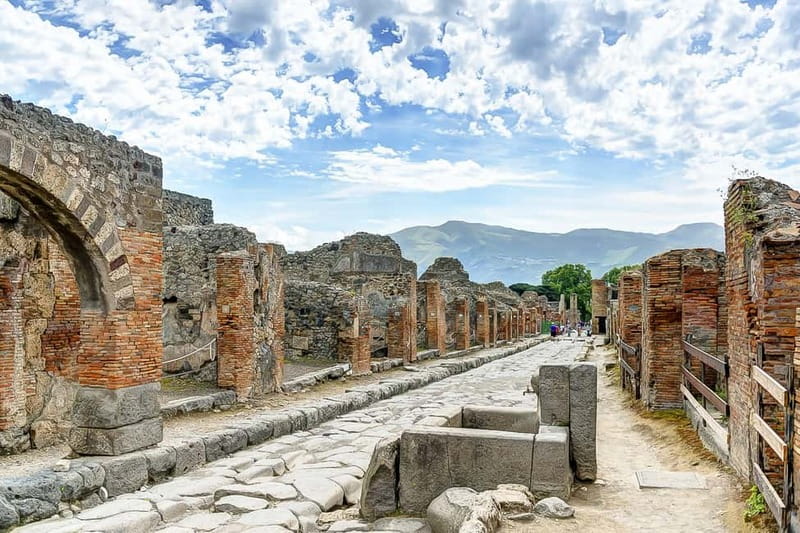
Pompeii’s streets are among its most memorable features. You follow the same basic routes used by residents nearly two thousand years ago, passing walls, thresholds, paving stones, and building fronts. I find this more revealing than simply looking at isolated ruins because the street plan shows how the city functioned as a whole.
Your guide will help you notice practical details. A doorway can suggest whether you are looking at a home or a shop. The position of a building along the street can reveal how people entered, worked, and moved through the city. Even small fragments become more useful once someone explains their role.
The walking itself deserves some planning. You are covering ancient streets and large open areas, not strolling along a smooth modern pavement. One guide, Daniela, is praised for keeping the group moving at a steady pace while still making room for questions. That is the right approach here, since stopping too often can make it hard to reach the main sights, but racing through the ruins can leave you tired and confused.
If anyone in your party has knee trouble or difficulty walking, mention it before you begin. At least one visitor found the pace too quick despite having warned the guide about a knee problem. The private format gives you a better chance of arranging a sensible rhythm, but you should still make your needs clear at the start.
The Forum and Pompeii’s public life
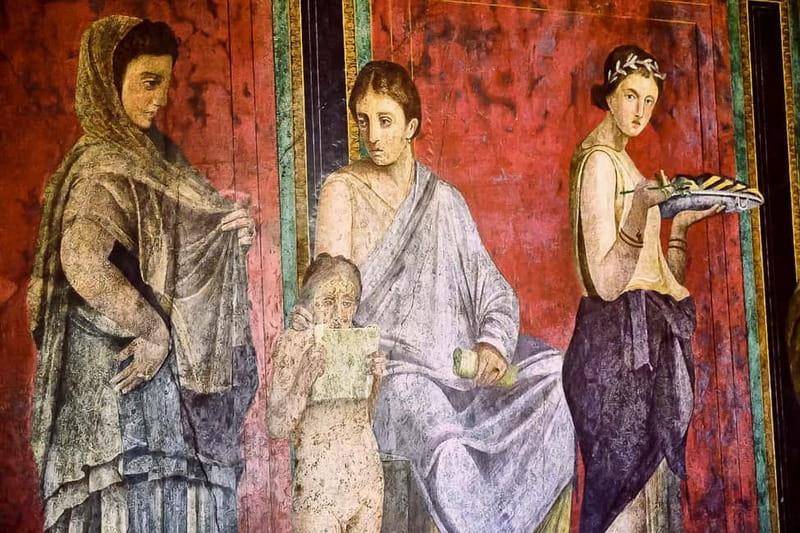
The Forum is the central stop on the tour and one of the clearest places to understand Pompeii as a civic center. This was the city’s main square, surrounded by temples, porticoes, and law courts.
Your guide can explain how the Forum served several roles at once. It was a place for public business, religious activity, legal matters, and community life. The open space and surrounding buildings give you a stronger sense of Roman public life than a single preserved room could.
This is also where a private guide earns their fee. The columns and foundations can look repetitive if you do not know what you are seeing. An archaeologist guide such as Lucia or Francesca can provide the historical context, while a guide such as Rossella can add stories and everyday details that make the buildings easier to picture.
The Forum is not always a quiet place. Pompeii is one of Italy’s most important archaeological sites, and it can attract many people. A private guide can help you avoid standing in the middle of a crowd when explaining a building, and may choose a shaded place for the group when possible. Julia has been praised for finding shade and keeping teenagers interested, two small things that make a hot archaeological site much easier.
More Private Tours in Pompeii
- Private Pompeii, Positano & Amalfi coast Tour from Rome
★ 4.5 · 1,888 reviews
Temples, porticoes, and law courts
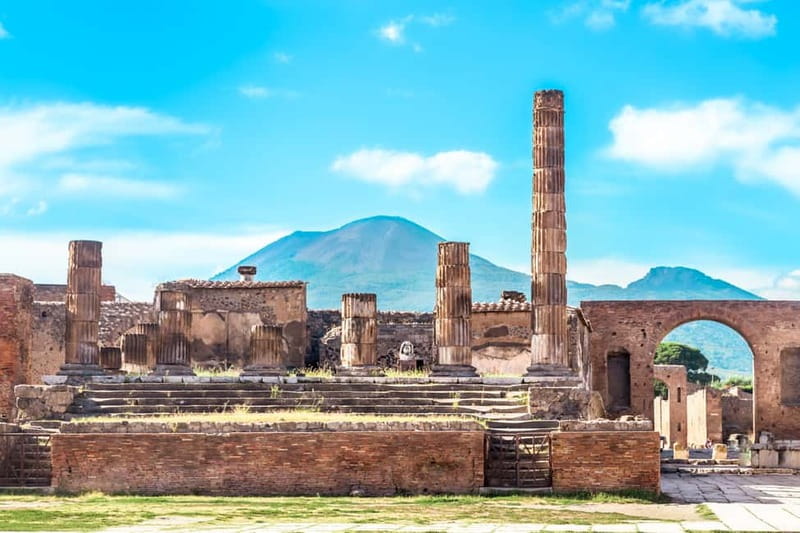
The buildings around the Forum show how religion, government, and social life were tied together in the Roman world. The temples are not just religious remains. Their position around the main square reveals how visible worship was in public life.
The porticoes help you picture the Forum as an active civic space, with covered walkways framing the square. The law courts point to the legal side of city life. Pompeii was not simply a settlement around a volcano. It had systems, institutions, public ceremonies, and disputes that required formal places to be handled.
The guide’s job here is to connect the architecture to people. A strong explanation can tell you how the same square worked for officials, worshippers, merchants, and residents coming into town. Guides such as Imma and Mele have been appreciated for adding small background facts rather than delivering a long, dry lecture.
That matters because Pompeii can easily become a blur of columns and walls. You will remember more if each building has a clear purpose. The tour aims to give you that framework in a short time.
The plaster casts and the human story
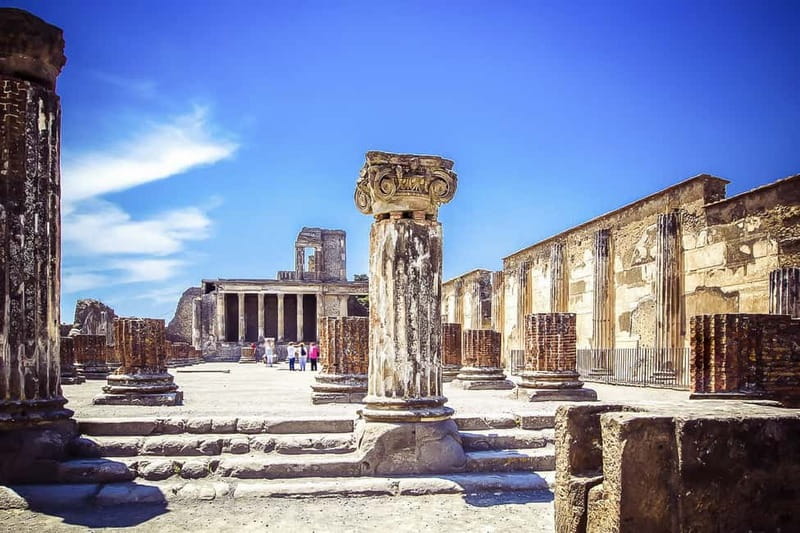
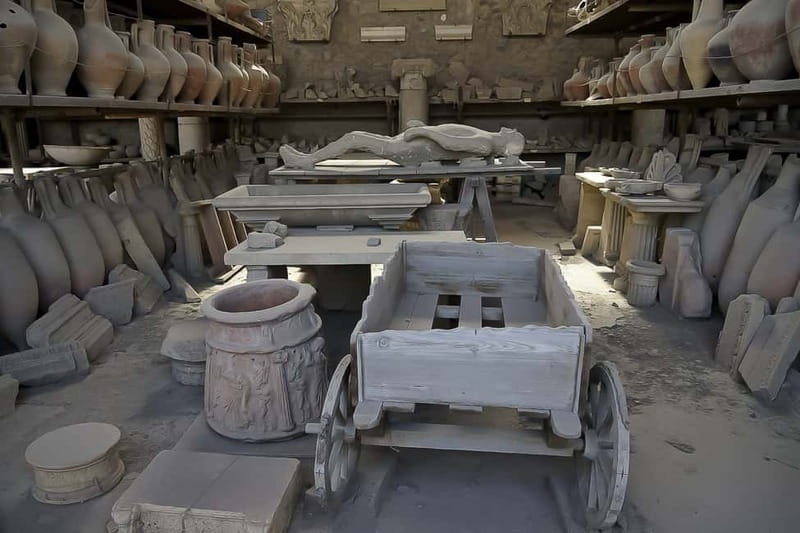
The plaster casts are among Pompeii’s most affecting sights. When excavators found cavities left by bodies in the hardened ash, they filled them with plaster to preserve the shapes of the people and animals caught in the eruption. The result is not a distant historical symbol. It is a direct reminder that real residents and pets were in the city when Vesuvius erupted.
The casts can be difficult to see, especially for younger children, so families may want to prepare them for an emotional stop. At the same time, these figures help explain the scale of the disaster better than statistics alone. About 20,000 people lived in the town, and around 2,000 died.
A guide can discuss the casts with care, placing them within the larger story rather than treating them as spectacle. That human focus is one of the tour’s strongest features. You move from public squares and buildings to the personal cost of the eruption.
The volcanic material also explains why Pompeii survived in such detail. Around 20 feet of ash and pumice covered the city, sealing everyday objects and spaces for centuries. The disaster destroyed Pompeii, but the burial also preserved an unusually detailed record of Roman life.
Two hours inside a very large archaeological site
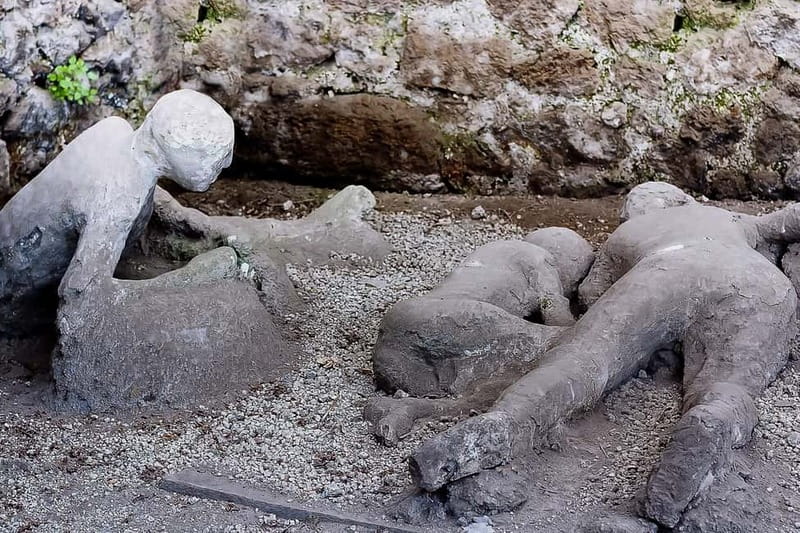
Two hours is enough for an organized introduction. It gives you a route through the most important areas, with a guide keeping the visit focused and explaining what matters. It is not enough to see every open building, distant quarter, or optional site.
That limitation is worth taking seriously. Several guides are praised for fitting a great deal into the allotted time, but the tour still has to make choices. If you want to wander slowly, study wall paintings, or visit areas beyond the central route, you will need extra time after the guided portion.
The private format helps here. Giulia has adapted routes for groups that wanted to continue exploring on their own, including an ending near the Cassina dell’Aquila area so they could rest before going farther. You may also want to add the Villa of the Mysteries, but that requires arranging the appropriate Pompeii Plus ticket separately.
Think of the guided tour as a strong orientation. You learn how Pompeii fits together, see the headline sights, and finish with a better sense of where to spend your remaining time. If Pompeii is your main reason for visiting Campania, do not treat the two-hour tour as your entire day unless you are satisfied with a highlights visit.
Price, tickets, and what you receive
The listed price is $254.89 per group of up to eight people. That can look high for a two-hour activity, but the calculation changes when you fill the group. For eight people, the guide cost works out to about $32 per person before considering ticket arrangements. For two people, it is a much more expensive private experience.
I see the best value for families or friends who can share the fee. You get a private guide, a route designed for your group, and the ability to ask questions without being part of a large crowd. The value is weaker if you are traveling alone or as a couple and mainly want to walk around independently.
Check the exact booking option before paying. The express skip-the-line ticket is included only with the appropriate package. Another option may be offered without tickets, in which case you need to arrange admission separately. On the first Sunday of each month, entrance is free, but tickets cannot be reserved ahead of time and entry is not guaranteed. That is a poor day to rely on a carefully timed private visit unless you are comfortable with uncertainty.
Free parking may be available, but it is not something to count on as a guaranteed feature. The meeting point can also change based on the option you select. Read the confirmation closely, and do not assume the guide will meet you inside the ruins. One practical point is especially important: the tour office may be outside the archaeological site.
Guide quality and language choices
The strongest part of this experience is the guide. The guides named in the available material include Imma, Marina, Daniela, Giulia, Julia, Lucia, Giada, Rossella, Irene, Alexandra, Carmen, Francesca, and Mele. You are not guaranteed one particular person, but these examples show the range of the team.
Several guides have an archaeology background, including Lucia, Francesca, and Carmen. That can be valuable if you want details about excavation, architecture, and how scholars interpret the remains. Other guides focus on storytelling, family engagement, and clear explanations of daily life.
The tour is offered in English, Italian, French, Spanish, and German. If you have a strong language preference, choose it when booking and confirm it in advance. The supplied experiences include guides praised for clear English, strong French, and explanations that worked for groups ranging from children to adults in their 50s and beyond.
I would choose this tour for anyone who wants more than a short introduction from an audio guide. It is especially useful for families, first-time visitors, history fans, and people with only a limited window in Pompeii. It is less suitable if you dislike guided pacing or prefer to spend ten minutes examining every room.
Practical details that affect your visit
Bring a passport or ID card. Large bags and luggage are not allowed, so arrive with only what you need for the visit.
Wear practical shoes and be ready for a fair amount of walking on ancient streets. The site can be physically demanding, and the short schedule means the guide may need to keep moving to cover the main stops. Tell the guide about mobility concerns before the route begins, not halfway through it.
The activity ends back at the meeting point. Since the meeting location can vary, confirm both the starting place and the expected finish before you set out. If you are arriving by train or coordinating a later connection, allow time to find the office and regroup afterward.
You can cancel up to 24 hours before the activity for a full refund, and the reserve-now, pay-later option lets you hold a place without paying immediately. Those policies are useful if your Campania plans are still shifting.
Who should book this Pompeii tour?
Book it if you want Pompeii explained in plain language and you value a private guide who can answer questions. It is a particularly good match for a family with teenagers, a mixed-age group, or friends who can split the group price.
Book it if you have only two hours inside the ruins and want to use that time well. The route covers the essential public areas and gives you a clear introduction before you explore farther alone.
Think twice if you want a full-day archaeological visit. Two hours will not cover all of Pompeii, and admission may not be included in every package. You should also reconsider a first-Sunday visit if guaranteed entry matters to you.
Should you book it?
I would book this private tour for a first visit, especially with four to eight people sharing the cost. Pompeii is large, and a guide can turn scattered remains into a readable Roman town, from Porta Marina and the Forum to the temples, law courts, streets, and plaster casts.
Choose the express-ticket option if avoiding the ticket queue is important, and confirm the meeting point outside the ruins. Plan extra time afterward if you want to visit the Villa of the Mysteries or explore beyond the guided route. This is a focused, useful introduction to Pompeii, not the last word on the site, and that is exactly why it works well for most first-time visitors.
FAQ
How long is the Pompeii private tour?
The guided tour lasts two hours. Since Pompeii is very large, you will see the main highlights rather than every part of the archaeological site.
What does the tour include?
The experience includes a guided tour of Pompeii and access to Porta Marina. Skip-the-line express admission is included only with the option that provides tickets.
Is the tour private?
Yes. It is a private group experience for up to eight people.
Which languages are available?
Live guiding is available in English, Italian, French, Spanish, and German.
What should I bring?
Bring a passport or ID card. Large bags and luggage are not allowed inside the experience.
Is Pompeii free on the first Sunday of the month?
Entrance is free on the first Sunday of each month, but tickets cannot be reserved ahead of time, so entry is not guaranteed.
More Skip-the-Line Tickets in Pompeii
- Mount Vesuvius: Skip-the-Line Ticket and Smart Digital Guide
★ 4.2 · 2,780 reviews - From Naples: Pompeii Skip-the-Line Entry Ticket and Tour
★ 4.4 · 2,753 reviews - Pompeii: Skip-the-Line Entrance Ticket with Audio Guide
★ 4.0 · 2,509 reviews - Sorrento: Skip-the-Line Pompeii Express Tour by Train
★ 4.8 · 2,038 reviews
Just added around Pompeii
- Vesuvius National Park Skip-the-Line Ticket★ 3.8 · 221 reviews
- From Rome: Sorrento & Pompeii Day Tour with Hotel Pickup★ 4.2 · 257 reviews
- From Rome: Day Trip to Pompeii with Tickets★ 4.4 · 1,161 reviews
- From Rome: Pompeii All-Inclusive Tour with Live Guide★ 4.3 · 261 reviews
- Pompeii: Exclusive Tour with Archaeologist and Entry Tickets★ 4.9 · 634 reviews
- Pompeii 3hours Villa of Mysteries tour with an Archaeologist★ 4.8 · 486 reviews
- Pompeii and Vesuvius Full-Day Tour from Amalfi Coast★ 4.4 · 319 reviews
- Rome: Pompeii Tour with Wine and Lunch by High Speed Train★ 4.8 · 485 reviews
Pompeii Tours, compared.
Entry Ticket and Guided Tour with an Archaeologist
Read our review →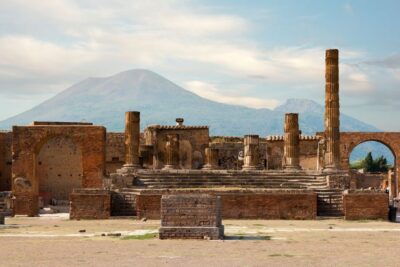
From Naples: Pompeii Ruins & Mount Vesuvius Day Tour
Read our review →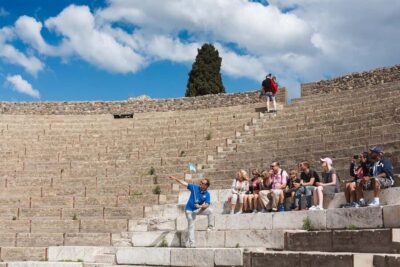
From Rome: Pompeii, Amalfi Coast, and Sorrento Day Trip
Read our review →
From Rome: Pompeii, Amalfi Coast and Positano Day Trip
Read our review →Pompeii Small Group Tour with an Archaeologist
Read our review →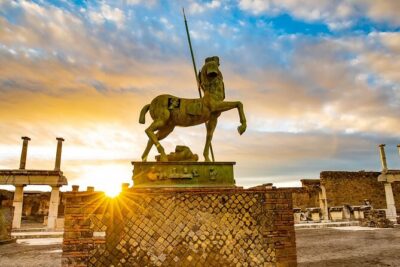
Pompeii, Amalfi Coast and Positano Day Trip from Rome
Read our review →Browse the lists this tour appears in