
Reviewed · POMPEII TOURS
Pompeii: Archaeological Park Tour with Ticket on request
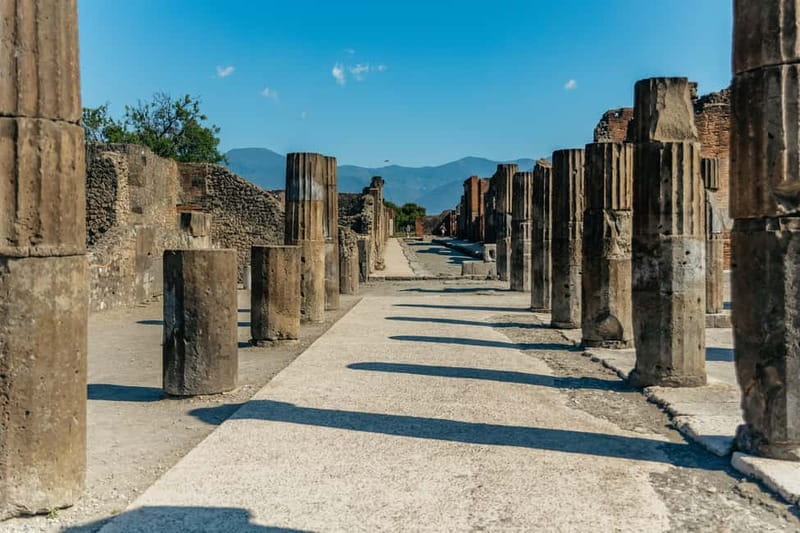
Pompeii is best understood on foot, one worn stone street at a time. This two-hour guided walk takes you through an ancient Roman town frozen by the eruption of Mount Vesuvius in 79 AD, with homes, public buildings, frescoes, and everyday objects still visible.
I like the archaeologist guide, who explains what you are seeing instead of leaving you to guess at half-crumbled walls. I also like the compact length: you get the main story and key monuments, then have the option to keep exploring alone.
The main drawback is simple: Pompeii is enormous, and two hours only covers a portion of it. The meeting point at the train station can also take a little effort to find, especially if you expect a large company booth at street level.
Key points to know before booking
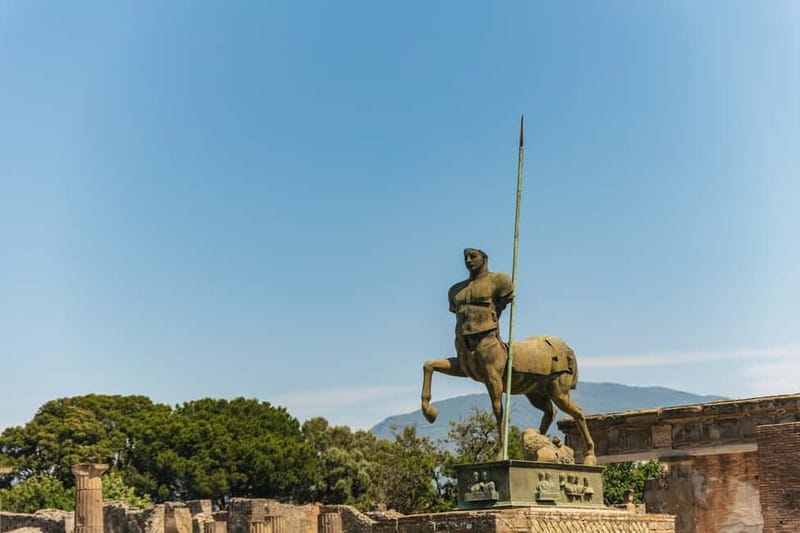
- The two-hour route focuses on Pompeii’s main story, including the amphitheater, small theater, public gymnasium, homes, frescoes, and casts.
- An archaeologist leads the walk, adding context about Roman daily life, the eruption, and the purpose of public spaces.
- Ticket selection matters: choose the option that includes the park ticket if you want the express entry arrangement.
- Meet at Tempio Travel Info Point, on the first floor beside the entrance of the Circumvesuviana Train Station.
- Headsets are available for groups of 16 or more, which helps when the group grows beyond a small walking party.
- You can continue on your own after the guided portion, useful because the archaeological park is far too large for a single short route.
Why a guide helps at Pompeii

Pompeii can look like a giant field of walls if you arrive without context. A guide gives those walls a job. A raised counter becomes part of a food shop. A fountain reveals how residents collected water. A painted room suggests how people decorated their homes and received visitors.
That interpretation is the chief reason I would choose this tour over simply entering and wandering. The guides explain how the town worked as an everyday Roman community, not just as a disaster site. You hear about streets, houses, public buildings, entertainment, meals, and social life before the eruption changed everything.
The strongest guides also make the tragedy feel personal without turning the visit into a spectacle. The casts of citizens and pets are especially moving. They show the human cost of the eruption in a way that a timeline or museum label cannot.
Guides named in the feedback include Lara, Emiliana, Eraldo, Frederica, Maria, Marco, and Laura. You are not guaranteed a particular person, but the repeated praise for clear explanations, humor, energy, and a steady pace points to the guide as the heart of the experience.
More Ancient Ruins in Pompeii
- From Naples: Pompeii Ruins & Mount Vesuvius Day Tour
★ 4.3 · 11,459 reviews - Herculaneum: Skip-the-Line Guided Tour with Archaeologist
★ 4.8 · 3,439 reviews - Discover the Ancient Ruins of Pompeii: Day Trip from Rome
★ 3.5 · 2,247 reviews
Meeting at the Circumvesuviana station
The tour begins at Tempio Travel Info Point, on the first floor next to the entrance of Pompeii’s Circumvesuviana Train Station. You exchange your voucher there for the park ticket, depending on the option you selected.
Give yourself time to locate the meeting point. The station is not always as intuitive as a standard city attraction entrance, and it helps to look for the Tempio Travel sign rather than a large booth carrying the tour company name. The meeting instructions place the start by the station, so do not simply head straight to the archaeological park gate without checking in first.
The meeting area also has luggage storage for €6, according to one useful account. That can help if you arrive by train with bags and do not want to carry them around the ruins. The tour itself does not include hotel pickup or drop-off, so you need to make your own way to the station.
If you are driving, free parking may be available at Osteria Nonna Cherubina on Via Andolfi 46, if open and if spaces remain. One account found the walk from there took about 15 minutes, while construction made the route harder to use at the time. Parking directly near the site was also reported at €3 per hour. Since parking conditions can change, treat these as practical possibilities rather than guaranteed arrangements.
Ancient streets and the shape of daily life
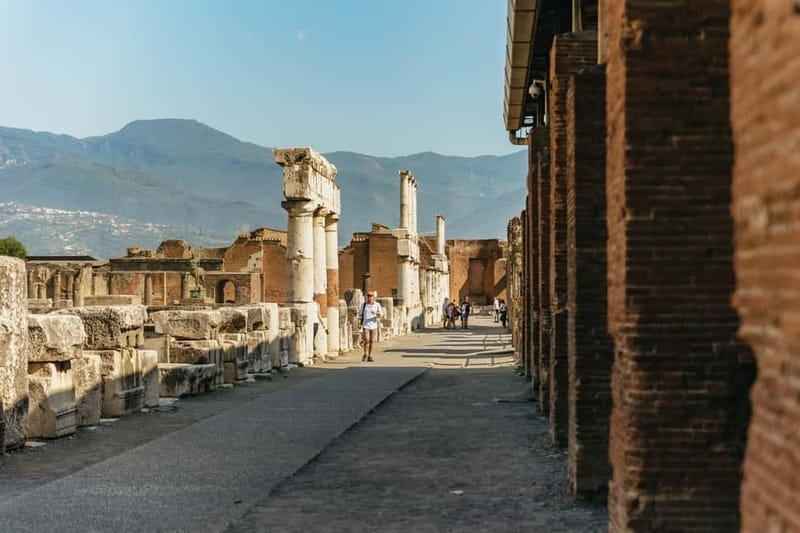
Once inside, the tour follows old Roman streets and moves through the town’s public and private spaces. The power of Pompeii comes from its ordinary details. You are not only looking at temples or grand monuments. You are seeing the places where people walked, worked, ate, exercised, watched performances, and held banquets.
The guide points out features that are easy to miss. Water fountains, for example, are more than decorative stonework. Their design and placement help explain how residents used the town’s water system. Small clues like this turn the ruins into a functioning settlement.
The houses are another strong part of the route. Some still contain frescoes and room layouts that reveal how Roman homes were arranged. Your guide explains what the rooms may have been used for and how domestic spaces connected to the social life of the town.
You will not see every house or street in the park. That is not a flaw in the tour so much as a fact of Pompeii’s size. A focused route gives you a framework, then you can decide where to spend extra time after the guide leaves.
The amphitheater, theaters, and public gymnasium

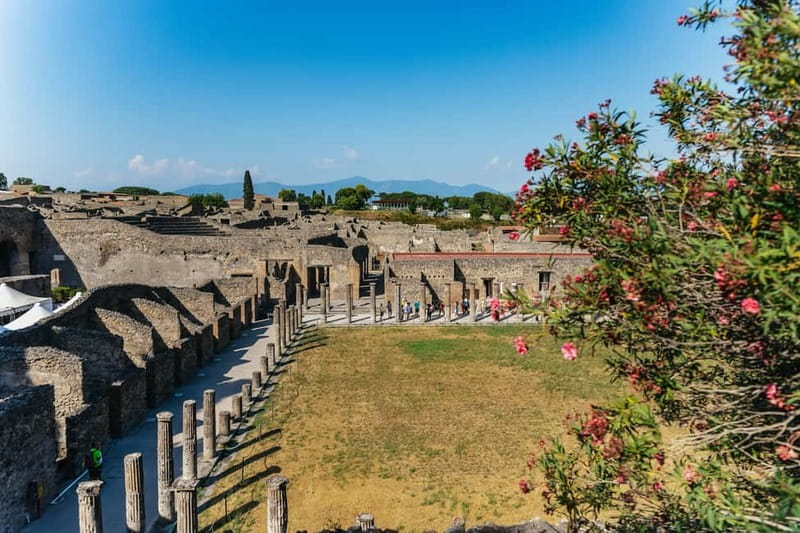
The Roman Amphitheater is one of the main stops. It shows how entertainment fit into public life and gives the walk a change of scale after the narrower streets and house interiors.
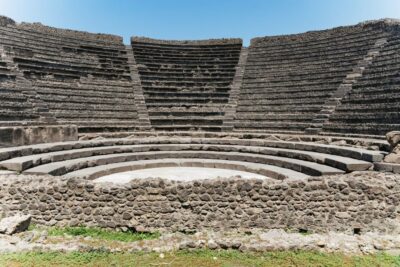
The small theater offers another view of Roman leisure. Its size helps you picture a more contained performance space, while the guide supplies the missing pieces: who used it, how it fit into the town, and why public buildings mattered to daily life.
The public gymnasium adds yet another layer. Pompeii was not only a place of homes and shops. It had spaces for exercise and community activity, with public life organized around buildings that served different parts of the population.
These stops are useful because they help you read Pompeii as a living town rather than a collection of ruins. You see how entertainment, exercise, domestic life, and public gatherings all occupied the same urban system.
More Entry Tickets in Pompeii
- Pompeii: Entry Ticket and Guided Tour with an Archaeologist
★ 4.8 · 19,459 reviews - Pompeii: Entry Ticket with Optional Audio Guide
★ 4.2 · 12,360 reviews - Mount Vesuvius: Skip-the-Line Ticket and Smart Digital Guide
★ 4.2 · 2,780 reviews - From Naples: Pompeii Skip-the-Line Entry Ticket and Tour
★ 4.4 · 2,753 reviews
Frescoes, household objects, and the human cost
The frescoes are among the most memorable sights because their color and detail survive against the rough stone around them. Your guide can explain what these paintings suggest about Roman taste, room use, and the people who lived in the houses.
Everyday objects are just as important. A cup, counter, tool, or household feature can say more about ordinary life than a large monument. Pompeii’s value lies in this close connection to people who had routines, meals, work, jokes, pets, and worries much like our own.
Then the tour turns toward the eruption and its victims. The casts of citizens and animals are difficult to see, but they are central to understanding what happened. Volcanic ash covered the town, preserving spaces and leaving voids where bodies had been. The casts make the event immediate.
A good guide keeps the tone respectful. The better moments of this tour appear to come from that balance: clear information, some humor when appropriate, and enough care around the tragedy to let you absorb it without rushing.
A two-hour route with time to continue alone
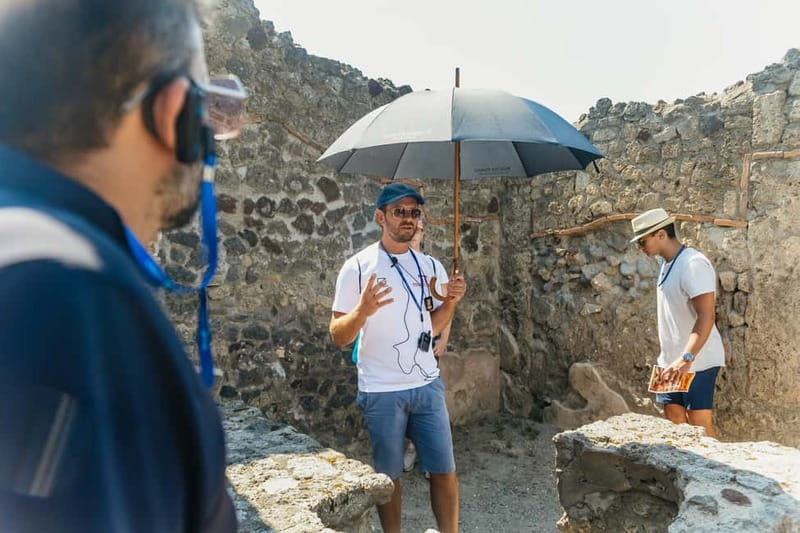
Two hours is a sensible length for a first visit, especially in hot weather. The ruins are exposed, and a longer guided walk can become tiring when you are standing on uneven ancient streets under the sun.
The route covers a solid set of major themes, but it does not pretend to show the entire archaeological park. After the guided section, you can continue exploring on your own and use the guide’s suggestions to choose other areas.
That arrangement works well for different kinds of visitors. If you have a train to catch, the guided portion gives you a clear introduction without taking the whole day. If you have more time, you receive a useful map in your head before wandering farther.
One important practical point: the park’s hours and daylight affect how much you can enjoy the site. A person arriving late in the day reported that it was dark by 5 p.m. Check the starting time carefully, particularly in winter or on a short daylight schedule.
Group size, headsets, and the pace
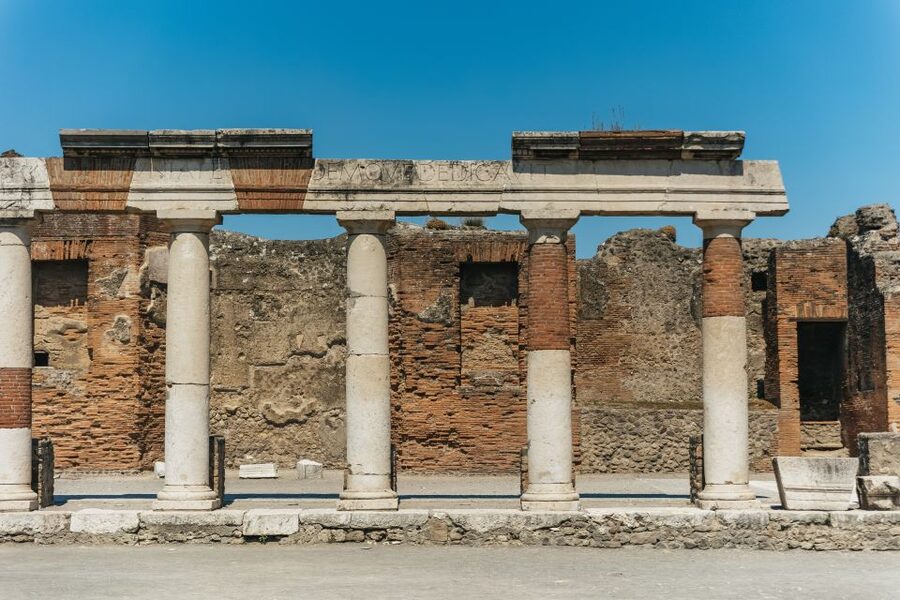
This is a group tour, not a private visit. Groups can reach more than 20 people, and the beginning may feel a little busy while everyone gathers and enters. That is the tradeoff for the lower price.
Headsets are provided for groups of 16 or more. They make a real difference when the guide is speaking beside a crowded building or when the group stretches along a street. One account specifically found the earpiece worked well and made the explanations easy to follow.
The pace is generally described as relaxed but purposeful. The guide keeps the group moving while allowing time for photos and short looks around. In extreme heat, a guide may direct the group toward shaded areas when possible, though shade is not something you can count on throughout the park.
Wear shoes suitable for a long walk over old stone surfaces. Bring your passport or identity card, as this is listed as a required item. Water, sun protection, and a hat are sensible choices for an exposed archaeological site, even though they are not listed as included equipment.
What the $31.89 price gets you
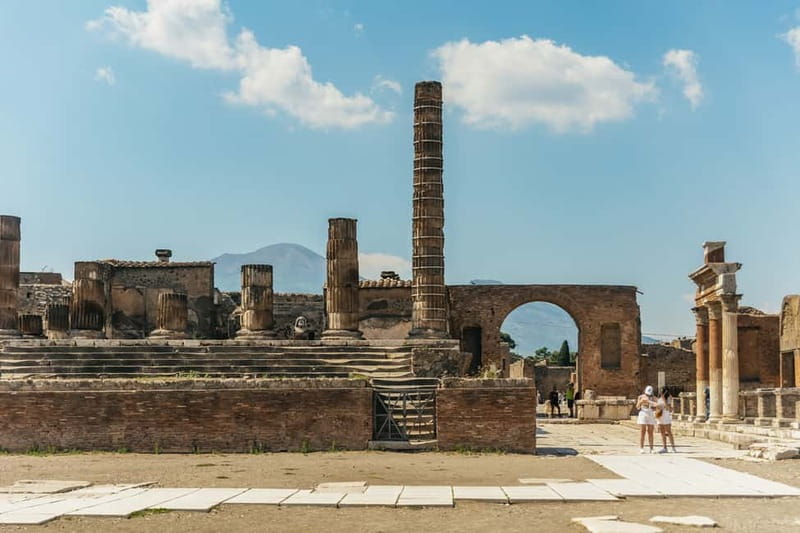
At $31.89 per person, the value depends on the ticket choice. The price is appealing for a two-hour guided introduction, but you need to confirm if your selected option includes the express ticket to the Archaeological Park of Pompeii. The booking information makes clear that ticket and no-ticket options are available.
That distinction matters. If you choose an option without the entrance ticket, you will need to handle admission separately. If you choose the ticket option, the tour provider arranges the express entry component and exchanges your voucher at the meeting point.
The fee also pays for the guide, the organized meeting process, and the chance to hear explanations that are difficult to recreate from signs alone. Pompeii rewards prior knowledge, but most visitors do not arrive with a working map of the town. A guide helps you use limited time well.
I would consider it good value for a first visit, especially if you have only a few hours or want a clear introduction before continuing independently. It is less suited to someone who already knows Pompeii well and prefers to set their own route from the first minute.
Language, cancellations, and the first Sunday
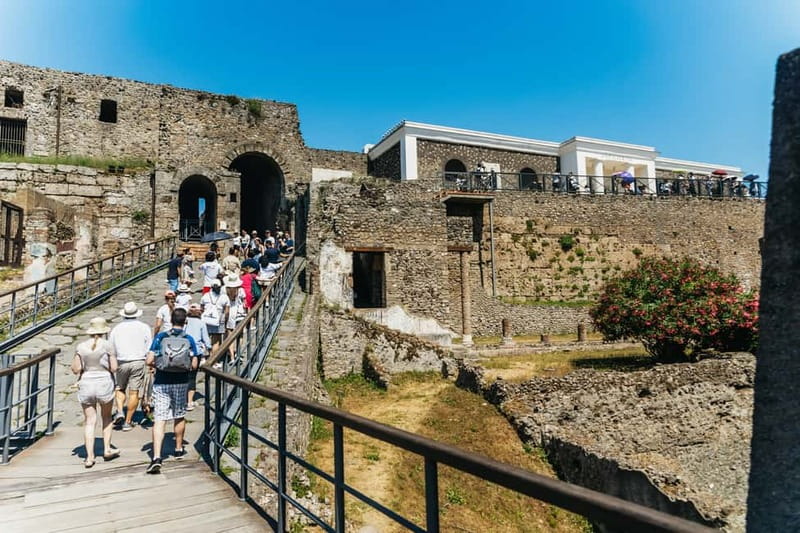
The live tour is offered in English and Italian. Check the language available at your chosen time when booking, since the guide language affects how much you get from the walk.
Cancellation is free up to 24 hours before the activity for a full refund. You can also reserve now and pay later, which helps if your Campania schedule depends on trains, weather, or a changing day trip plan.
On the first Sunday of each month, entrance to Pompeii is free, but tickets cannot be reserved ahead of time and entry is not guaranteed. That makes the ticket-free arrangement less secure on those dates. If seeing Pompeii is a major part of your plans, confirm exactly what is included before you commit to that day.
Who should book this Pompeii tour?
I would choose this tour for a first visit, a short stop in Pompeii, or a family group that wants the main sights without committing to a full day. The two-hour format is also practical for anyone traveling with a teenager or someone who may tire in the heat.
It suits you particularly well if you enjoy learning through stories and examples. The guide connects fountains, rooms, theaters, homes, and public spaces, giving you a better sense of how Roman life worked.
I would think twice if you want a slow, detailed study of every major house, painting, and street. Pompeii is too large for that in two hours. In that case, use this as an introduction, then stay afterward for your own exploration, or choose a longer visit.
Should you book it?
Book this tour if you want a clear two-hour introduction, an archaeologist guide, and help with the first confusing steps of entering Pompeii. The strongest reason to choose it is not simply skipping a line. It is the explanation that turns scattered ruins into a town with homes, public life, entertainment, and real people.
Before paying, check two things: that your option includes the entrance ticket if you need one, and that the starting time leaves enough daylight. Meet at Tempio Travel Info Point on the first floor of the Circumvesuviana station, allow extra time to find it, and plan to continue alone afterward if you want more of Pompeii.
FAQ
How long does the Pompeii tour last?
The guided walking tour lasts two hours.
Where does the tour begin?
Meet your guide on the first floor next to the entrance of Tempio Travel Info Point in the Circumvesuviana Train Station.
Where does the activity end?
The activity ends back at the meeting point.
Is the Pompeii entrance ticket included?
It depends on the option you choose when booking. You must select between the ticket and no-ticket options.
Does the tour include express entry?
The express ticket to the Archaeological Park of Pompeii is included if you select that extra option.
What languages are available?
The live tour guide is available in English and Italian.
Is a hotel pickup included?
No. Hotel pickup and drop-off are not included.
Do I need identification?
Yes. You should bring a passport or identity card.
Are headsets provided?
Headsets are available for groups of 16 or more.
Can I cancel the booking?
You can cancel up to 24 hours in advance for a full refund. Reserve now and pay later is also available.
Just added around Pompeii
- Vesuvius National Park Skip-the-Line Ticket★ 3.8 · 221 reviews
- From Rome: Sorrento & Pompeii Day Tour with Hotel Pickup★ 4.2 · 257 reviews
- From Rome: Day Trip to Pompeii with Tickets★ 4.4 · 1,161 reviews
- Pompeii Ruins Private Tour with Optional Skip-the-Line Entry★ 4.9 · 732 reviews
- From Rome: Pompeii All-Inclusive Tour with Live Guide★ 4.3 · 261 reviews
- Pompeii: Exclusive Tour with Archaeologist and Entry Tickets★ 4.9 · 634 reviews
- Pompeii 3hours Villa of Mysteries tour with an Archaeologist★ 4.8 · 486 reviews
- Pompeii and Vesuvius Full-Day Tour from Amalfi Coast★ 4.4 · 319 reviews
Pompeii Tours, compared.

Entry Ticket and Guided Tour with an Archaeologist
Read our review →

From Naples: Pompeii Ruins & Mount Vesuvius Day Tour
Read our review →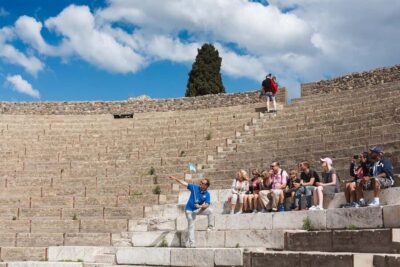
From Rome: Pompeii, Amalfi Coast, and Sorrento Day Trip
Read our review →
From Rome: Pompeii, Amalfi Coast and Positano Day Trip
Read our review →Pompeii Small Group Tour with an Archaeologist
Read our review →
Pompeii, Amalfi Coast and Positano Day Trip from Rome
Read our review →Browse the lists this tour appears in