
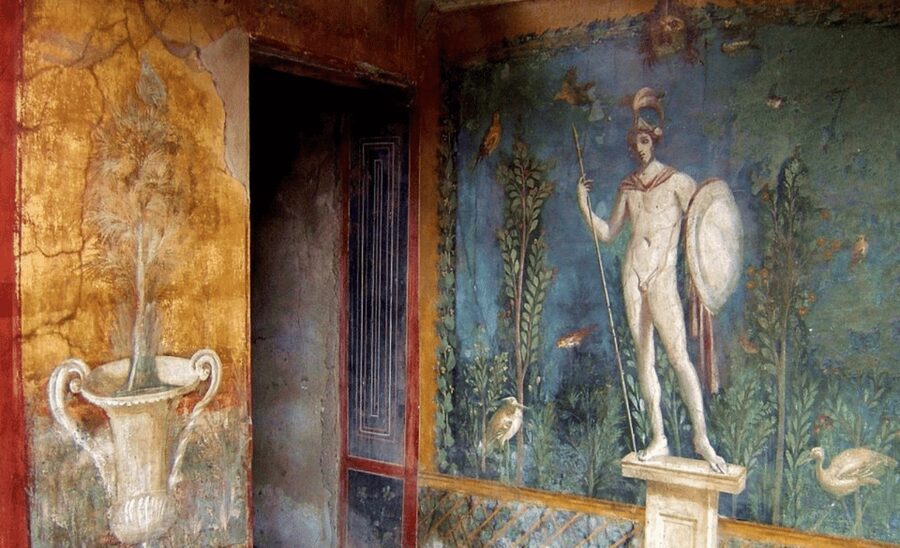
Reviewed · POMPEII TOURS
Pompeii: Skip-the-Line Entry Ticket with Audio Guide or Tour
Pompeii is not a single ruin or a quick photo stop. It is a broad Roman city, with streets, houses, temples, theaters, fountains, and eerie plaster casts of people caught in the eruption of 79 C.E. This experience gives you fast-track entry and lets you explore the site with either a phone-based audio guide or a live guide.
I like the easy ticket pickup beside the entrance and the freedom to stay inside after a two-hour guided tour. The audio option also works well for visitors who want to stop at the House of the Faun, Forum, or temples in their own order. The main drawback is the app: location playback and navigation can be unreliable, and you need your own charged phone and headphones.
Key points
- Fast-track entry: Collect your official ticket at the Vox City point in Piazza Esedra, directly in front of Hotel Vittoria.
- Two ways to visit: Choose a self-guided audio tour or a live tour in English, Spanish, or Italian.
- Major Roman sights: See the Forum, temples of Venus, Apollo, and Jupiter, theaters, baths, villas, fountains, and aqueduct remains.
- Flexible timing: The listed visit lasts two hours, but you can remain inside afterward and many people spend two to four hours or longer at the site.
- Audio guide limits: The app offers many points of interest, but it does not always suggest the best route or identify the top priorities.
- Important omission: The ticket does not include the suburban villas, including the Villa of the Mysteries, Villa of Diomedes, or Villa Regina.
Pompeii is a city, not a single archaeological stop
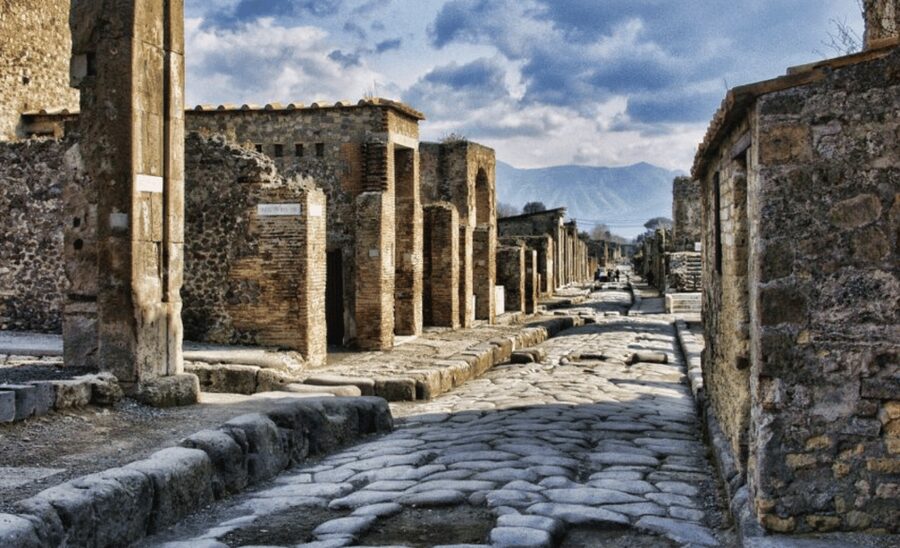
The first thing to understand is scale. Pompeii covers roughly 44 square hectares in the visitor information, while the activity description gives 50 hectares. Either way, this is a large open-air site, not a compact museum you can finish in an hour.
You walk along ancient streets buried by ash and pumice when Mount Vesuvius erupted in 79 C.E. The city was destroyed, but the same ash helped preserve walls, mosaics, shop details, household objects, and the outlines of daily life. You can see where people lived, worshiped, traded, washed, watched theater, and moved through the city.
That scale makes the choice between a live tour and audio guide important. A good guide gives you a route and explains why the remains matter. The audio option gives you more control, but you must handle the map and decide what to skip.
More Audio Guide Tours in Pompeii
- Pompeii: Entry Ticket with Optional Audio Guide
★ 4.2 · 12,360 reviews - Pompeii: Skip-the-Line Entrance Ticket with Audio Guide
★ 4.0 · 2,509 reviews - Herculaneum: Skip-the-Line Entry Ticket with Audio Guide
★ 4.3 · 870 reviews
Picking up your ticket at Piazza Esedra

Your voucher is not the entry ticket itself. Take it to the Vox City information point in Piazza Esedra, in front of Hotel Vittoria, and exchange it for the official Pompeii ticket.
This meeting point is close to the excavation entrance, which is the strongest practical feature of the arrangement. Several visitors found the booth easy to locate, even on busy days, and staff generally provided clear directions. The pickup process usually takes only a few minutes, but arrive with enough time to find the stand and, if needed, download the audio guide before entering.
The fast-track benefit applies to the ticket line. It does not mean you have a private archaeological site or a completely empty entrance. On crowded days, though, avoiding the main ticket queue can save useful time, especially in hot weather.
If you choose the live tour, meet at the same Vox City point. Tours leave at the booked time, so arriving about five minutes early is sensible. The tour languages are English, Spanish, and Italian.
Choosing between a live guide and the phone audio tour
The live option is the safer choice if Pompeii is a major reason for your trip. The site has no obvious single route, and many buildings can look like piles of ancient stone unless someone points out the original function and surviving details.
Guides such as Grace and Maria received warm praise for clear explanations, humor, and steady communication. Mario was also singled out for making the visit enjoyable. One particularly experienced guide was described as having 45 years at Pompeii, a level of local familiarity that can add meaning to details you would otherwise walk past.
The live tour lasts about two hours, but you can generally remain in the ruins afterward and continue on your own. That is a valuable arrangement. You get an organized introduction, then have the option to revisit a favorite house or explore another street without being tied to the group.
The live tour also helps when crowds gather around popular sights. A guide can move you through the busy sections, keep the group together, and use the two-hour window well. If you want a clear explanation of Roman life and the eruption rather than a series of short facts, I would pay extra for this option.
The audio guide is better for independent visitors, families with different interests, and anyone who dislikes moving at group speed. The digital map lets you select sites and listen when you reach them. The commentary is offered in English, French, Spanish, German, and Italian.
The quality is mixed. Some audio clips are concise and useful, which is helpful in the heat and keeps younger visitors from losing interest. Other sections feel brief, and the app can leave you to work out the route yourself. The site has more than 100 possible points of interest, yet the app does not always tell you which ones deserve priority.
The audio app needs preparation
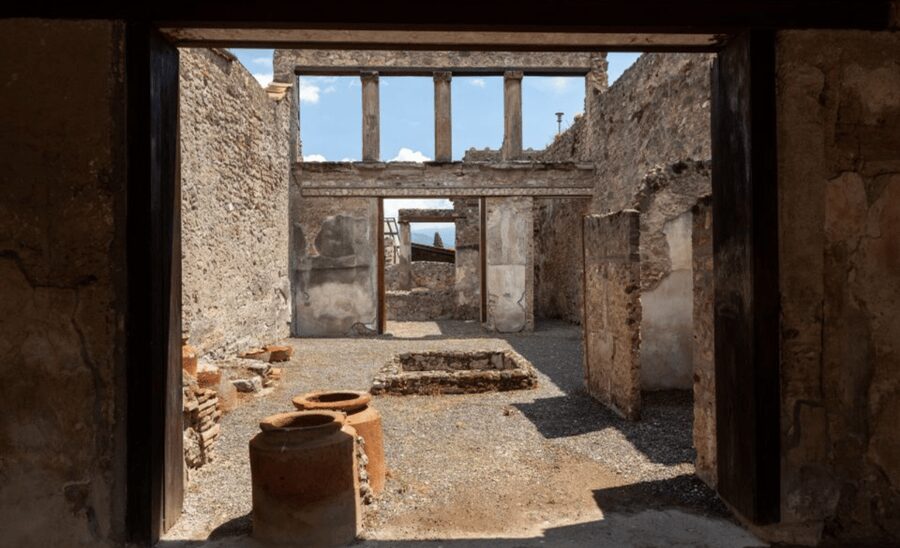
Download the audio guide from the QR code on your voucher before you arrive. This is one of the most important tips for this activity. You need a charged smartphone and your own headphones, and it is wise to complete the download while you have a reliable internet connection.
The automatic playback feature is a weak point. Some users found that audio started as they approached a site, while others had to open each point manually. GPS location and playback also did not work reliably for everyone.
The app is not the official Pompeii audio guide, so its numbering may not match signs or site references inside the ruins. You may need to compare the digital map with a printed site map or the signs around you.
Bring a power bank if your phone battery is already low. A long visit with GPS, map use, and audio can drain a phone quickly. Also pick up a proper site map if one is available. The digital map helps, but it does not always provide the clear overview you need in a city this large.
More Entry Tickets in Pompeii
- Pompeii: Entry Ticket and Guided Tour with an Archaeologist
★ 4.8 · 19,459 reviews - Mount Vesuvius: Skip-the-Line Ticket and Smart Digital Guide
★ 4.2 · 2,780 reviews - From Naples: Pompeii Skip-the-Line Entry Ticket and Tour
★ 4.4 · 2,753 reviews - Pompeii: Archaeological Park Tour with Ticket on request
★ 4.5 · 2,283 reviews
Start at the Forum with Vesuvius behind you
The Forum is the natural place to get your bearings. This broad civic center was the heart of Pompeii, surrounded by religious, political, and commercial buildings. Mount Vesuvius rises in the distance, a constant reminder of the event that ended the city.
From here, the temples of Venus, Apollo, and Jupiter help you see the religious side of Roman public life. The remains are incomplete, but the setting and surviving foundations make the forum one of the best places to understand how Pompeii was organized.
Do not rush through the open spaces. The Forum gives you a sense of Pompeii as a functioning city, rather than a collection of attractive walls. Your guide can explain the buildings and public rituals. With the audio option, take time to use the map and listen at several points before moving into the residential streets.
Houses, mosaics, and signs of private life
Pompeii becomes most human inside its houses. The House of the Faun is one of the key residences, with its grand scale and surviving decorative work. You can also find mosaics in the public baths and details that show how design, status, and practical life came together.
Look for the House of Sirico and its inscription, Salve lucru, meaning welcome, profit. It is a small but memorable reminder that Pompeii was full of business, ambition, and personal messages, not just temples and official monuments.
Wine jars marked Vesuvinum offer another witty detail. The name plays on Vesuvius and vinum, the Latin word for wine. These traces make the city feel less distant. You are not only looking at grand ruins, but also at jokes, commerce, household habits, and ordinary concerns.
The audio guide can help you find such details, but only if you locate the right point on the map. If you choose the live tour, ask your guide to point out smaller inscriptions and domestic features. They are easy to miss when you walk without a plan.
Theaters, baths, fountains, and everyday infrastructure
Pompeii’s large theater area gives you a change of pace from the streets and houses. The theaters show how entertainment fitted into public life, while the baths reveal the social and practical side of Roman cities.
You can also pass remains of aqueducts and fountains. These are not always the most dramatic sights, but they explain how the city functioned. Water supply, public washing, drainage, and movement through the streets are part of the story.
The site rewards curiosity. A visitor who only follows the most famous houses may miss the practical features that make Pompeii understandable. I recommend giving yourself time to look at street surfaces, fountains, doorways, and the relationship between public buildings and homes.
The plaster casts bring the eruption close
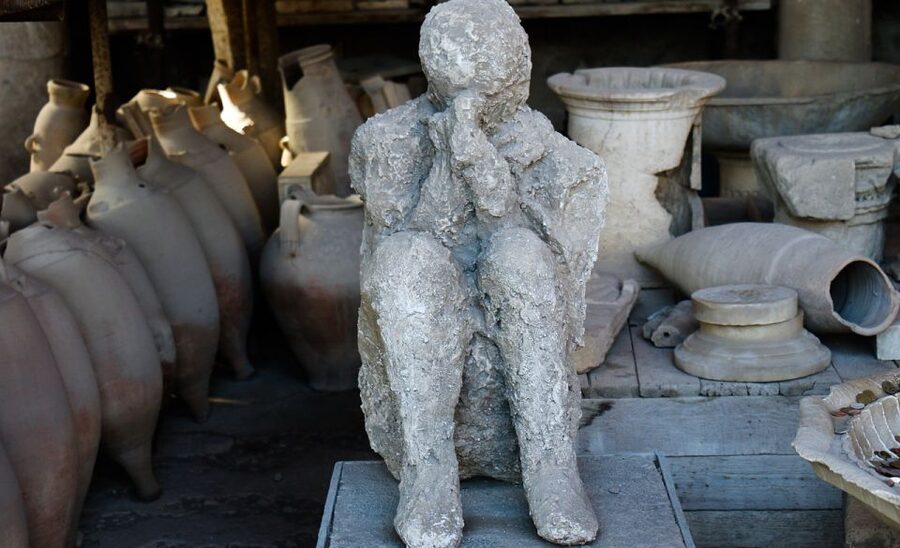
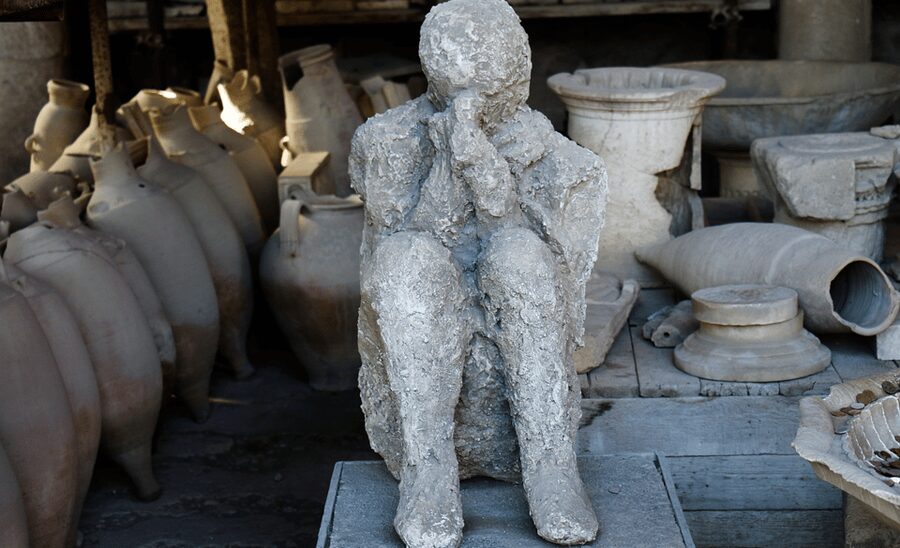
The plaster casts of victims are among the most haunting sights in Pompeii. They preserve the shape of people caught in the eruption, making the disaster personal in a way that walls and mosaics cannot.
Approach this section slowly. It can be emotionally difficult, and the casts are not simply another photo stop. They show the human cost of the eruption and balance the fascination of Pompeii’s preservation with the tragedy that caused it.
The eruption in 79 C.E. both destroyed and preserved the city. That contradiction is central to the visit. You see an ancient place frozen in a moment, but you also see evidence of fear, loss, and sudden disruption.
How long should you allow?
The listed duration is two hours, which is enough for a focused introduction or a live highlights tour. It is not enough to see every part of Pompeii at a relaxed pace.
The visitor information says people typically spend two to four hours inside. Some visitors stayed for six hours with this type of ticket. If you are using the audio guide, allow at least three hours if possible, especially if you want to stop for photographs and listen to more than the main points.
The live tour gives you a useful structure for the first two hours. Afterward, you can continue through the ruins independently. That combination offers better value than treating the two-hour tour as your entire Pompeii visit.
Pompeii is tiring. The site is large, the ground can be uneven, shade is limited in some areas, and summer heat can slow you down. Bring water, check the weather, and wear shoes suited to walking on ancient streets. Rain can also change the experience quickly, as there are many exposed areas.
What the $37 price really buys you
At $37 per person, this is more than a basic admission ticket. You are paying for the convenience of advance booking, fast-track access, ticket collection near the entrance, and either digital commentary or a live guide, depending on the option.
The value is strongest on busy days, when avoiding the ticket queue saves time and uncertainty. It is also useful if you want a live guide but do not want to arrange a separate private tour.
The audio package is harder to judge. The official admission price shown on one collected ticket was about 19 euros, so the extra cost mainly covers the booking service and audio product. If the app works properly, the map and short explanations add value. If the download fails or automatic playback does not work, the added cost feels less justified.
For the best balance, I would choose the live tour if this is your only Pompeii visit. Choose the audio option if you mainly want fast entry and the freedom to wander, and you are comfortable managing an app yourself.
What is not included
This ticket covers the main Pompeii archaeological site, but not the suburban villas. The Villa of the Mysteries, Villa of Diomedes, and Villa Regina are specifically excluded.
That matters because you may see them listed in guidebooks or maps and assume they are part of the same admission. If those villas are a priority, check their access separately before booking.
The ticket also does not include headphones or a mobile device. You must bring both for the phone audio guide. A site map may not be supplied as part of the pickup, so plan to obtain one or save a useful map before entering.
Who should book this Pompeii experience?
I would recommend it to first-time visitors who want to avoid the main ticket queue and prefer a simple meeting point near the entrance. It also suits people arriving from Naples or elsewhere in Campania who want a fixed entry arrangement rather than sorting everything out on arrival.
The live version is best for anyone who wants context, a sensible route, and help with a site that can feel confusing. Families may also prefer it because a guide can keep the visit moving and explain the most important sights without requiring constant phone use.
The audio version suits independent visitors who want to stop for photographs, skip less interesting areas, or remain after the main tour. It is less suitable if your phone has limited battery, poor internet access, or trouble running map-based apps.
Should you book it?
Book this experience if saving time at the entrance matters and you want either a live introduction or a flexible audio option. The ticket collection is close to the gate, and the ability to continue exploring after a live tour is a real advantage.
I would choose the guided option for a first visit, especially during a busy period. Choose audio only after downloading it in advance, bringing headphones, and accepting that you may need to select points manually rather than follow a perfect route.
Pompeii itself is the reason to go. The ticket arrangement makes entry easier, but the guide choice determines how much meaning you take from the streets, houses, temples, and human remains.
FAQ
Where do I pick up the Pompeii ticket?
Exchange your voucher at the Vox City information point in Piazza Esedra, in front of Hotel Vittoria. The point is close to the archaeological site entrance.
Does the ticket let me skip the entry line?
Yes. The ticket includes skip-the-line entry for the main ticket queue. You still need to collect the official ticket before entering.
Is a live guide included?
A live guide is included only if you select the guided tour option. Guided tours are available in English, Spanish, or Italian.
What languages are available for the audio guide?
The audio commentary is available in English, French, Spanish, German, and Italian.
Do I need my own phone and headphones?
Yes. The audio guide requires your own charged smartphone and headphones. Download it using the QR code on your voucher before arrival.
Can I stay inside Pompeii after the guided tour?
Yes. The guided portion lasts about two hours, and you can continue exploring the ruins afterward.
Does the ticket include the suburban villas?
No. The ticket does not include the Villa of the Mysteries, Villa of Diomedes, or Villa Regina.
How long should I spend at Pompeii?
The listed activity lasts two hours, but visitors typically spend two to four hours inside. You can spend longer if you want to explore more of the large archaeological site.
More Skip-the-Line Tickets in Pompeii
- Herculaneum: Skip-the-Line Guided Tour with Archaeologist
★ 4.8 · 3,439 reviews - Sorrento: Skip-the-Line Pompeii Express Tour by Train
★ 4.8 · 2,038 reviews - From Naples: Pompeii Guided Tour with Skip-the-Line Tickets
★ 4.8 · 1,171 reviews - Pompeii: Skip-the-line-Ticket and Guided Tour
★ 4.6 · 1,152 reviews
Just added around Pompeii
- Vesuvius National Park Skip-the-Line Ticket★ 3.8 · 221 reviews
- From Rome: Sorrento & Pompeii Day Tour with Hotel Pickup★ 4.2 · 257 reviews
- From Rome: Day Trip to Pompeii with Tickets★ 4.4 · 1,161 reviews
- Pompeii Ruins Private Tour with Optional Skip-the-Line Entry★ 4.9 · 732 reviews
- From Rome: Pompeii All-Inclusive Tour with Live Guide★ 4.3 · 261 reviews
- Pompeii: Exclusive Tour with Archaeologist and Entry Tickets★ 4.9 · 634 reviews
- Pompeii 3hours Villa of Mysteries tour with an Archaeologist★ 4.8 · 486 reviews
- Pompeii and Vesuvius Full-Day Tour from Amalfi Coast★ 4.4 · 319 reviews
Pompeii Tours, compared.

Entry Ticket and Guided Tour with an Archaeologist
Read our review →

From Naples: Pompeii Ruins & Mount Vesuvius Day Tour
Read our review →
From Rome: Pompeii, Amalfi Coast, and Sorrento Day Trip
Read our review →
From Rome: Pompeii, Amalfi Coast and Positano Day Trip
Read our review →Pompeii Small Group Tour with an Archaeologist
Read our review →
Pompeii, Amalfi Coast and Positano Day Trip from Rome
Read our review →Browse the lists this tour appears in