
Reviewed · POMPEII TOURS
Herculaneum: 3D Walking Tour with Skip-the-Line Ticket
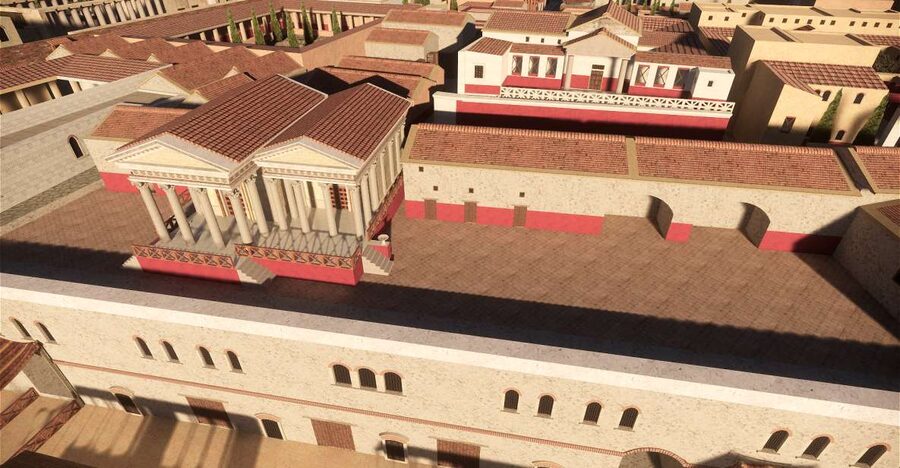
Herculaneum becomes easier to understand when the broken walls in front of you are matched with 3D reconstructions of the Roman homes, temples, and squares that once filled the town. This two-hour walking tour pairs smart glasses with a live tour assistant, so you can see both the surviving ruins and the buildings as they may have looked before the 79 AC eruption.
I like the small-group feel, which makes it easier to hear the guide and ask questions. I also like the freedom after the guided portion: return the glasses, then keep exploring the archaeological park at your own pace. The main drawback is that the glasses take a little practice, and strong sun or hot weather can make two hours on the site tiring.
Key points at a glance
- 3D views over real ruins: The glasses place reconstructions directly over Herculaneum’s surviving streets and buildings.
- A helpful human assistant: Guides such as Chiara, Luigi, Roberta, and Daniela F. help with the equipment and explain the site.
- Skip-the-line entry included: You avoid the standard ticket queue, though you still need to reach the meeting point on time.
- Six audio languages: Recorded commentary is available in English, French, German, Spanish, Italian, and Portuguese.
- Useful for families with older children: Children under eight cannot use the 3D system, but children aged eight and above can take part.
- Extra time inside the park: After the two-hour tour, you may stay and explore Herculaneum independently.
Seeing Herculaneum rebuilt through smart glasses
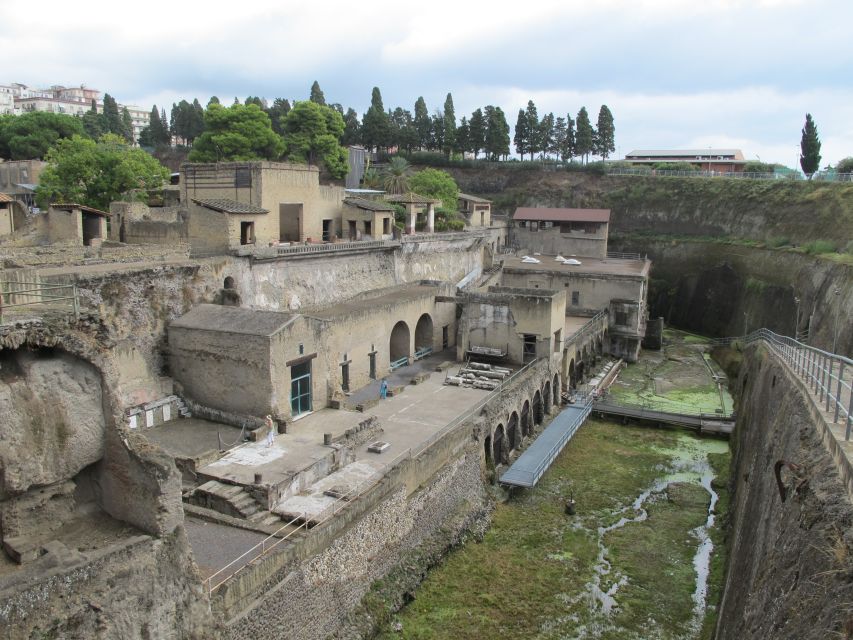
Herculaneum is easier to picture than many ancient sites because the ruins preserve walls, rooms, mosaics, and streets at a remarkable level. Still, even a well-preserved wall can be hard to read without help. The AR glasses address that problem by placing digital images over the remains in front of you.
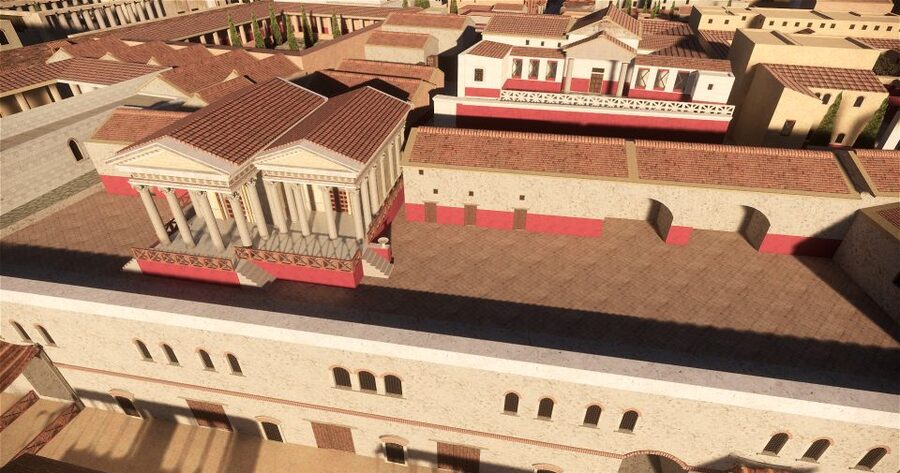
You look through a transparent lens rather than at a closed screen. As you turn your head, the virtual reconstruction follows the site, offering a 360-degree view of buildings and public spaces. This makes the visit feel less like studying isolated fragments and more like walking through a functioning Roman town.
The glasses are not a replacement for the ruins. Their value comes from the comparison. You can look at a surviving wall, then see how it fitted into a complete house or temple. You can also look away from the digital image and examine the original stone, paint, and decoration with your own eyes.
The experience was designed with an archaeology team, and the route focuses on important temples, houses, and squares. The precise sequence can vary with the tour, but the central idea remains the same: the software shows the ancient form of the place while your feet remain on the real Roman streets.
More Ancient Ruins in Pompeii
- From Naples: Pompeii Ruins & Mount Vesuvius Day Tour
★ 4.3 · 11,459 reviews - Herculaneum: Skip-the-Line Guided Tour with Archaeologist
★ 4.8 · 3,439 reviews - Pompeii: Archaeological Park Tour with Ticket on request
★ 4.5 · 2,283 reviews
Meeting the assistant beside the ticket office
The meeting point is in the snack area next to the ticket office, close to the vending machines. Look for the assistant holding a sign marked AR Tour. This is a useful detail because Herculaneum’s entrance area can be busy, and searching around the gate wastes time.
Your assistant provides the glasses and gives a short introduction to their controls. Expect a few minutes of adjustment as you learn how to look through the lens, follow the images, and turn your head for a wider view. One practical tip is to arrive early enough to find the meeting point without rushing. If you arrive late, the group is held for only five minutes.
The assistant stays with you during the walk. This matters because the glasses are part of the tour, not a device handed over with no support. Chiara, Luigi, Roberta, Alessia, Lucia, and Daniela F. are among the assistants who have led tours, and the strongest part of the guiding is often their patience and personal attention.
The live guide speaks English or Italian. The recorded audio adds French, German, Spanish, and Portuguese, so you have more language options for the historical explanation. If your group includes people with different language needs, the guide can still help manage the visit. One group had English and Spanish speakers, and the assistant switched languages when needed.
The first walk through the ancient town
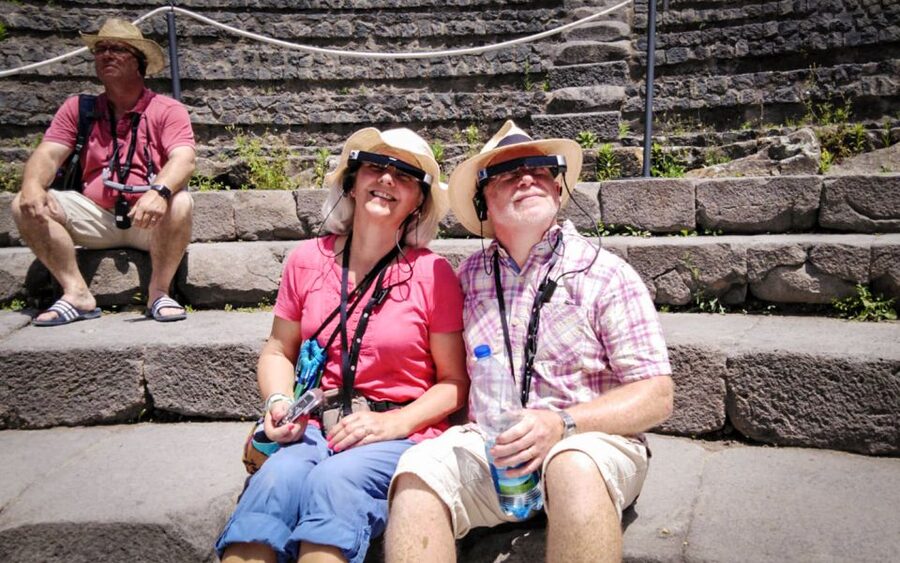
Once the glasses are working, you begin walking through Herculaneum. The site itself supplies the physical setting: ancient streets, building remains, walls, and open public areas. The digital layer adds the missing roofs, upper sections, decoration, and full building shapes.
This first section is where the technology earns its place. A bare wall can tell you that a building once existed. A holographic reconstruction helps you see its scale and position in relation to the street. The result is particularly useful in open squares, where it can be difficult to understand what enclosed the space and how the buildings worked together.
The assistant explains what you are seeing and keeps the group moving through the archaeological area. You are not simply wandering around with a headset. The guide gives the visit a clear route and helps you connect the visual material with the story of Herculaneum before the eruption.
The experience is designed to be fun, but it does not treat the site like a theme park. The real ruins remain central. The digital images are there to make the archaeology more readable, not to hide the age and damage of the town.
Houses, temples, and squares in 3D
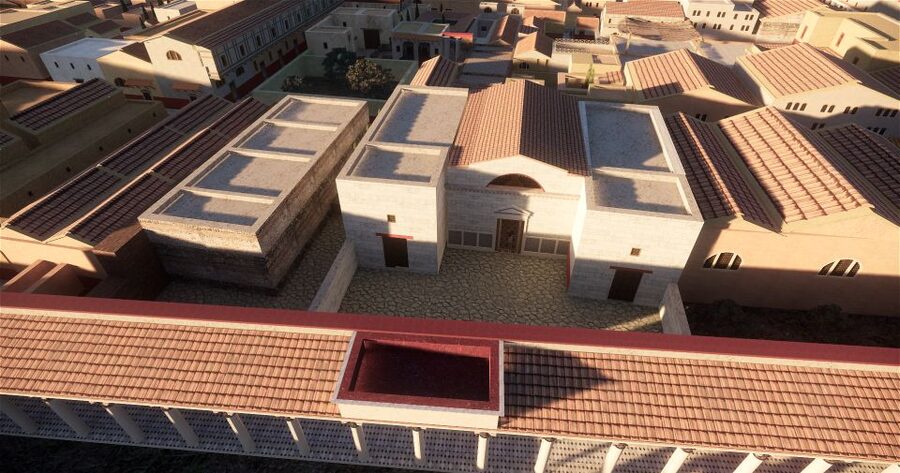
The tour’s main stops focus on the most important buildings in Herculaneum. The supplied details do not give a fixed list of house names or a minute-by-minute route, so you should think of this as a guided overview rather than a private tour of every corner.
At houses, the glasses help you picture Roman domestic life. You may see how a room related to the rest of the building and how a damaged structure once formed part of a larger home. This is useful for visitors who want context rather than a long list of dates and names.
Temples and public buildings gain a similar benefit. The reconstruction shows the structure as a complete building, while the guide explains its place in the town. Squares are especially well suited to the AR format because the open space lets you turn your head and take in the buildings around you.
The technology is most effective when you compare the virtual image with what survives. Take a moment to study both. If you stare only at the hologram, you lose some of the pleasure of the actual archaeology. If you ignore the reconstruction, you lose much of the reason to book this particular tour.
More Entry Tickets in Pompeii
- Pompeii: Entry Ticket and Guided Tour with an Archaeologist
★ 4.8 · 19,459 reviews - Pompeii: Entry Ticket with Optional Audio Guide
★ 4.2 · 12,360 reviews - Mount Vesuvius: Skip-the-Line Ticket and Smart Digital Guide
★ 4.2 · 2,780 reviews - From Naples: Pompeii Skip-the-Line Entry Ticket and Tour
★ 4.4 · 2,753 reviews
What the 79 AC eruption adds to the story
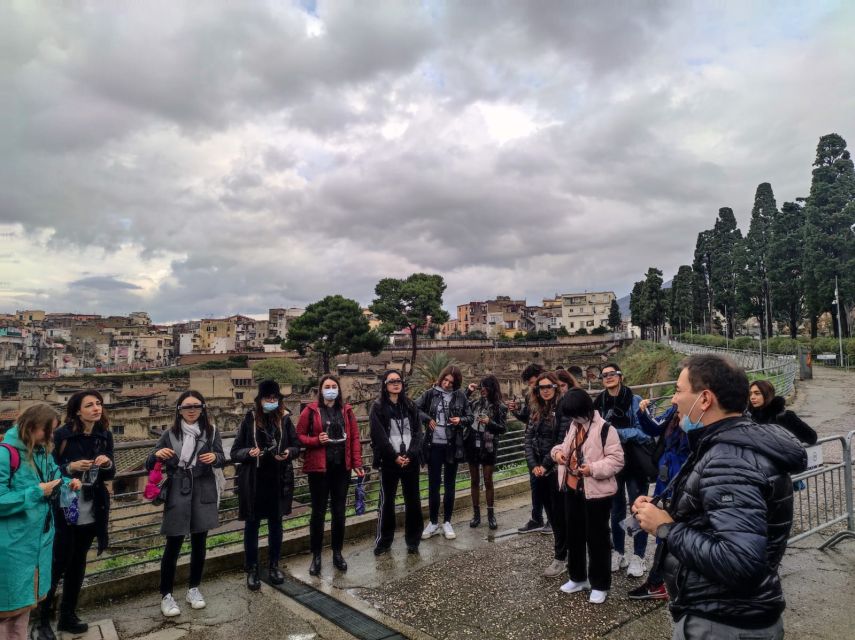
The tour also explains the eruption that destroyed Herculaneum in 79 AC. The event is not treated as an isolated disaster. It helps explain why the town looks the way it does today, with buildings preserved yet damaged and buried.
The digital reconstructions give you a before-and-after contrast. First you see a Roman town with active homes, public spaces, and religious buildings. Then you look back at the surviving remains and understand how the eruption changed them.
This is one reason Herculaneum can be a powerful stop for families. The 3D images offer children a clear visual starting point, while the guide can answer questions and add detail. Children under eight may enter the park with a normal ticket, but they cannot use the 3D technology, so this particular tour suits families with older children better.
The glasses can be worn over regular eyeglasses. You should still bring sunglasses, a sun hat, and weather-appropriate clothing. The tour runs in all weather, and the site offers little relief from heat during a sunny visit.
How good are the glasses in practice?
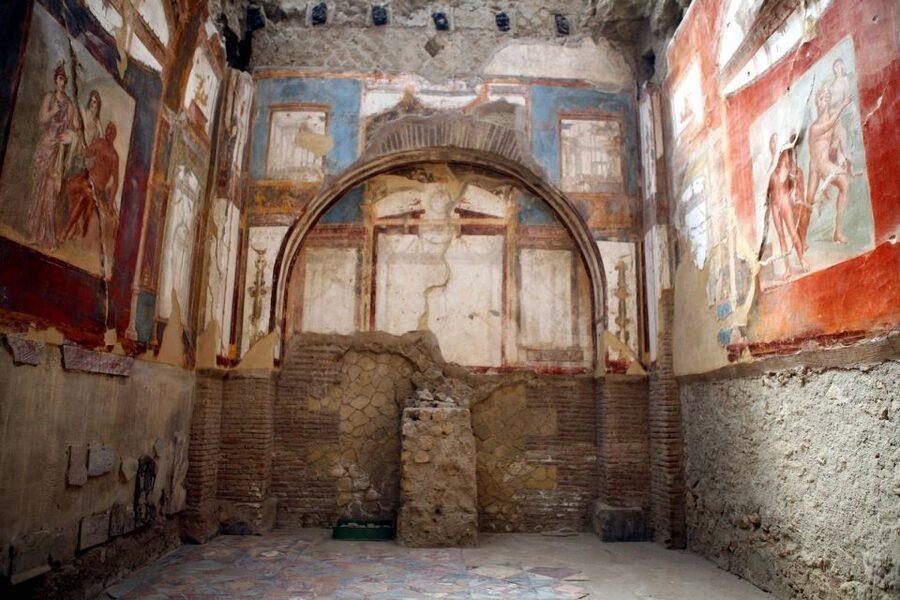
The equipment is light and uses a transparent lens, so you can continue seeing the ground and the ruins around you. That is important in an archaeological park with uneven walking surfaces. Comfortable shoes and comfortable clothing are sensible choices.
There is a short learning curve. Some people need time to work out how to position the glasses and turn their heads to see the complete image. Once the controls make sense, the 360-degree effect becomes more enjoyable, especially when you want to inspect a building from different angles.
The AR images are not equally necessary at every point. In some places, the ancient remains already explain themselves well. In others, the reconstruction gives you the missing shape and makes the building much easier to understand. I would treat the glasses as a strong visual aid rather than the sole reason to visit Herculaneum.
Bright heat is the bigger practical concern. A two-hour walking tour can feel long on a hot day, especially while wearing glasses and concentrating on the digital images. Lucia has guided groups through very hot conditions, and the assistant can help you focus on the most important parts, but you should dress for the weather and carry what you need for a sunny outdoor visit.
The human side of the tour
The assistant is not just there to distribute equipment. The best guides add patience, humor, and extra explanation. Alessia has been especially good with questions from a nine-year-old, while Roberta has included children in the discussion and handled several languages.
Chiara has guided very small groups, including tours with only two people. That kind of group can make it easier to ask about details and pause for an explanation. Luigi has also been praised for combining clear information with a friendly manner.
Group size can vary, so do not assume you will always receive a private tour. Still, the format is more personal than a large crowd following a flag through a major attraction. A smaller group also helps you hear the audio and see the holographic images without too much waiting.
The guide speaks during the walking tour, while the recorded audio is available in six languages. If you want a fully live tour in French, German, Spanish, or Portuguese, confirm the arrangements when booking, since the stated instructor languages are English and Italian.
What you get for $45.55
At $45.55 per person, this costs more than simply entering Herculaneum with a standard ticket. You are paying for the archaeological admission, skip-the-line access, the AR glasses, the recorded commentary, and the assistant who stays with you.
The value depends on how you like to visit ancient sites. If you already know Roman architecture well and prefer to read signs alone, the 3D system may feel optional. If you often look at ruins and struggle to picture the original buildings, the visual reconstruction can justify the extra cost.
Skip-the-line entry also has practical value. It saves time at the ticket queue and gets you into the site with less fuss. It does not remove the need to arrive at the meeting point on time, and it should not be confused with transport. You must make your own way to Herculaneum.
The two-hour route is long enough to introduce the site without taking your entire day. Since you can remain in the park after returning the glasses, the price works better for visitors who plan to stay longer and see more of the ruins independently.
Planning the rest of your visit
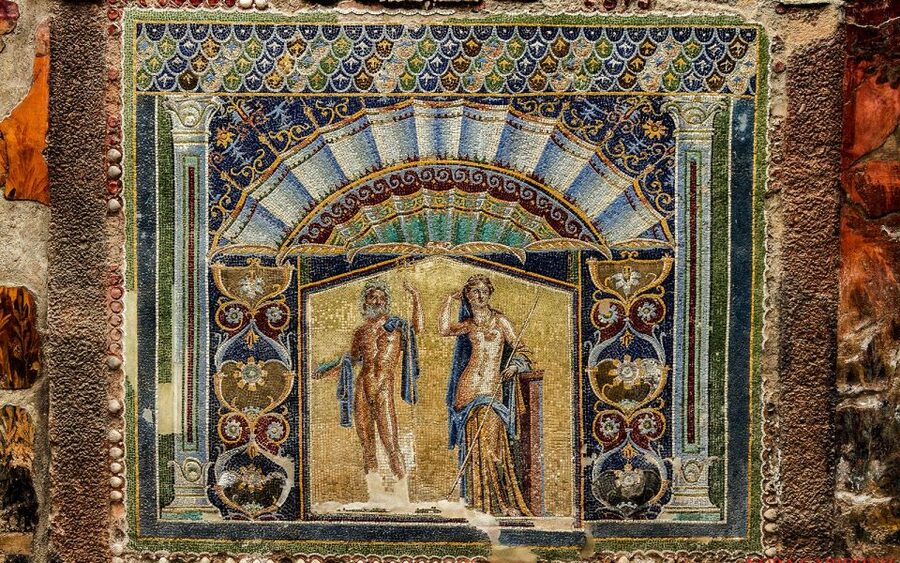
Herculaneum is a worthwhile place to visit on its own, and this tour gives you a structured introduction before you explore alone. After the glasses are returned, you may continue around the archaeological park using your own pace and interests.
I would plan extra time if you want to examine the surviving rooms, streets, and decorations closely. The guided portion gives you a framework, but the independent time lets you stop without holding up the group.
The tour does not include transportation. Plan your route to the entrance in advance, then allow a little extra time to find the snack area and vending machines. If you are connecting this visit with another attraction, avoid scheduling something immediately afterward. The tour is listed as two hours, and independent exploration can easily add more time.
The site is outdoors, so sun protection matters. Bring sunglasses, a sun hat, weather-appropriate clothing, and comfortable shoes. Children may need a passport or identity card, and visitors using youth or EU citizen rates must show a valid identity document or passport at the ticket office or pay the full fare.
Who should book the AR tour?
I would choose this tour if you want a clear visual explanation of Herculaneum and enjoy using technology to make ancient buildings easier to understand. It is also a good match for families with children aged eight and above, couples who prefer a guided visit without a full-day commitment, and visitors who want help before exploring independently.
It may not suit you if you prefer a quiet, self-guided archaeological visit or dislike wearing glasses while walking. The digital images are an aid, not a substitute for taking time with the actual ruins. Hot weather can also make the experience less comfortable.
The strongest reason to book is the combination of real archaeology and digital reconstruction. The strongest practical advantage is the chance to keep exploring after the guided section. At $45.55, I think the tour offers fair value for first-time visitors who want help making sense of the site, especially if skip-the-line entry and a patient guide matter to you.
FAQ
How long does the Herculaneum 3D walking tour last?
The tour lasts two hours. After the glasses are returned, you may remain in the archaeological park and explore independently.
Where does the tour begin?
Meet in the snack area next to the ticket office, near the vending machines. Look for the Tour Assistant holding a sign marked AR Tour.
Is skip-the-line entry included?
Yes. The activity includes a skip-the-line ticket for Herculaneum.
What languages are available?
The instructor languages are English and Italian. Recorded audio is available in English, French, German, Spanish, Italian, and Portuguese.
Can children take part?
Children under eight can enter the park with a normal ticket, but they cannot use the 3D technology. The activity is not suitable for children under eight.
Can I wear the AR glasses over my regular glasses?
Yes. The AR glasses can also be worn by participants who already wear eyeglasses.
What happens if the weather is bad?
The tour takes place in all weather conditions. Wear suitable clothing and bring comfortable shoes, sunglasses, and a sun hat as needed.
More Skip-the-Line Tickets in Pompeii
- Pompeii: Skip-the-Line Entrance Ticket with Audio Guide
★ 4.0 · 2,509 reviews - Sorrento: Skip-the-Line Pompeii Express Tour by Train
★ 4.8 · 2,038 reviews - Pompeii: Skip-the-Line Entry Ticket with Audio Guide or Tour
★ 4.1 · 1,364 reviews - From Naples: Pompeii Guided Tour with Skip-the-Line Tickets
★ 4.8 · 1,171 reviews
Just added around Pompeii
- Vesuvius National Park Skip-the-Line Ticket★ 3.8 · 221 reviews
- From Rome: Sorrento & Pompeii Day Tour with Hotel Pickup★ 4.2 · 257 reviews
- From Rome: Day Trip to Pompeii with Tickets★ 4.4 · 1,161 reviews
- Pompeii Ruins Private Tour with Optional Skip-the-Line Entry★ 4.9 · 732 reviews
- From Rome: Pompeii All-Inclusive Tour with Live Guide★ 4.3 · 261 reviews
- Pompeii: Exclusive Tour with Archaeologist and Entry Tickets★ 4.9 · 634 reviews
- Pompeii 3hours Villa of Mysteries tour with an Archaeologist★ 4.8 · 486 reviews
- Pompeii and Vesuvius Full-Day Tour from Amalfi Coast★ 4.4 · 319 reviews
Pompeii Tours, compared.
Entry Ticket and Guided Tour with an Archaeologist
Read our review →
From Naples: Pompeii Ruins & Mount Vesuvius Day Tour
Read our review →
From Rome: Pompeii, Amalfi Coast, and Sorrento Day Trip
Read our review →
From Rome: Pompeii, Amalfi Coast and Positano Day Trip
Read our review →Pompeii Small Group Tour with an Archaeologist
Read our review →
Pompeii, Amalfi Coast and Positano Day Trip from Rome
Read our review →Browse the lists this tour appears in