
Reviewed · POMPEII TOURS
Pompeii Small Group Tour with an Archaeologist
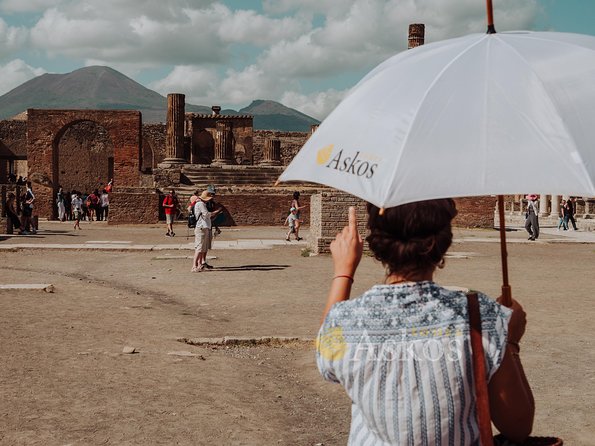
Pompeii makes far more sense with someone who can read its streets, walls, and worn mosaics. This two-hour tour with an archaeologist takes you from the Basilica and Forum to the plaster casts, ancient homes, baths, brothel, and theaters, giving you a clear route through a site that can otherwise feel like a giant stone maze.
I especially like the focus on ordinary Roman life, from the paved streets and bathhouses to the House of Menander and Lupanar. I also like that you can stay inside the ruins after the guided walk and continue on your own. The main drawback is the group size, which can reach 20 people, and two hours is enough for highlights, not all of Pompeii.
Key points to know before booking
- Archaeologist-led route: Guides including Alessandra, Paolo, Teresa, Vincenzo, and Amedeo are praised for clear explanations, humor, and thoughtful pacing.
- Major Pompeii highlights: See the Basilica, Forum, victim casts, House of Menander, Stabian Baths, Lupanar, House of the Faun, and both theaters.
- Skip-the-line entry included: Your Pompeii Express ticket is included, so the guide takes you directly into the archaeological park.
- Maximum group of 20: This is a good value tour, but it is not an intimate private walk.
- Uneven ancient streets: Expect steps, ramps, sloping paths, and very little shade. Sturdy shoes, water, a hat, and sunscreen matter.
- Ends inside Pompeii: You can keep exploring after the formal tour, but you need to find your own way to an exit.
Why a guide matters at Pompeii
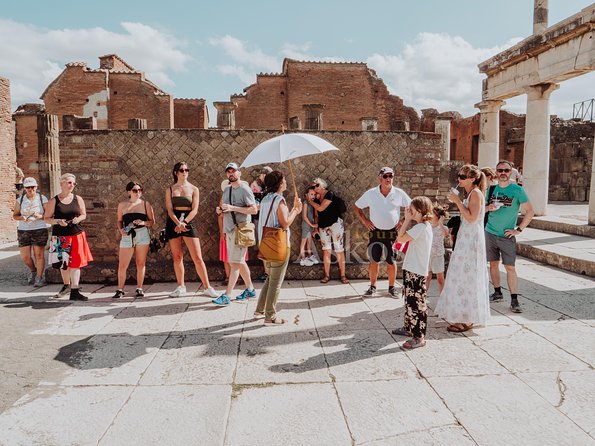
Pompeii is not a tidy museum arranged room by room. It is a whole Roman city, with streets, shops, houses, public buildings, fountains, temples, theaters, and baths spread across a large archaeological park. A map can show you where things are, but it cannot always tell you why a building mattered or how one space connected to daily life.
That is where an archaeologist guide earns the ticket price. A good guide helps you notice details that are easy to walk past, such as the purpose of a portico, the layout of a Roman bath, the decoration inside a wealthy home, or the way public and private spaces fit together.
The strongest guides on this tour appear to be the ones who combine facts with storytelling. Alessandra is described as bringing together Pompeii’s past, current excavations, and future preservation work. Paolo is praised for his enthusiasm and care for the site. Teresa is noted for adjusting her pace so everyone can follow. Amedeo and Vincenzo bring humor into the explanations, which can help keep children and teenagers involved.
That range matters because Pompeii can be emotionally heavy as well as fascinating. The eruption destroyed the city and killed many of its residents. The tour does not treat the ruins as a simple collection of pretty frescoes. It includes the plaster casts of victims, giving the catastrophe a human scale.
A few more Pompeii half-days worth a look
- Pompeii: Entry Ticket and Guided Tour with an Archaeologist
★ 4.8 · 19,459 reviews - Pompeii: Entry Ticket with Optional Audio Guide
★ 4.2 · 12,360 reviews - Pompeii: Small Group Tour with an Archaeologist
★ 4.8 · 12,264 reviews
Meeting at Porta Marina Superiore
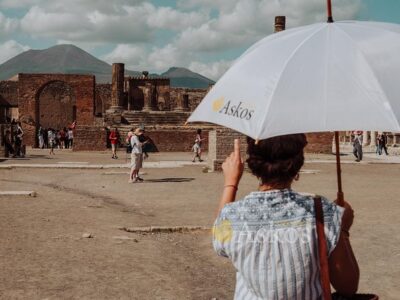
The meeting point is at the main archaeological entrance called Porta Marina Superiore, at Via Villa dei Misteri 2 in Pompei. Look for the Askos Tours sign held by the guide or local coordinator.
The tour includes a Pompeii Express entrance ticket and is designed to take you straight inside with skip-the-line access. That saves useful time, especially at busy periods, though the exact pace can still depend on the group and on conditions at the entrance.
Arrive early. Pompeii is large, phone reception can be poor inside, and it is not easy to catch up with a group once it has moved deep into the site. A late arrival can mean missing the guided portion even if the entrance ticket is still provided.
The tour lasts about two hours. It ends inside the ruins rather than at the entrance, which is handy if you want to continue exploring. It also means you should listen carefully when the guide explains how to reach an exit. One useful improvement would be clearer end-of-tour directions, since the ancient streets are not always intuitive.
The Basilica and Forum: Pompeii’s public heart
The first main stop is the Basilica, a large open portico that sheltered business and legal activity. This was not a church in the modern sense. It was a place where merchants, officials, and other members of the community carried out public affairs.
From there, the route continues to the Forum, Pompeii’s main public square. This is one of the essential stops because it gives you a sense of the city’s civic center. Temples, public buildings, and gathering spaces surrounded the square, and the guide can help you understand how the Forum functioned within Roman society.
The Forum is also a good early lesson in scale. Pompeii was not merely a small settlement frozen by volcanic ash. It was an active city with organized public life, private wealth, entertainment, religion, and commerce.
Do not expect to linger alone at every building. With a group of up to 20, the guide needs to position everyone where they can hear and see. The benefit is a structured route; the tradeoff is that you may need to wait while the whole group gathers before moving on.
The plaster casts in the Granaries of the Forum

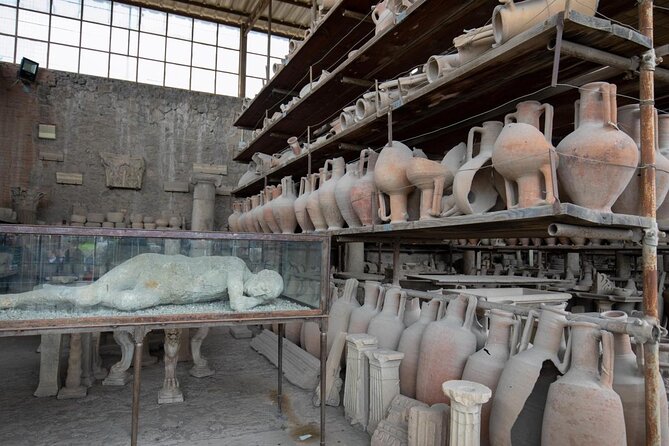
The Granaries of the Forum provide one of the tour’s most affecting moments. Inside, you will see marble tables and fountain basins that once decorated homes, along with plaster casts of victims from the eruption. The display also includes casts of a dog and a tree.
These casts are not simply archaeological curiosities. They show the final positions of people and animals caught in the disaster, making the eruption feel immediate rather than distant. Your guide can provide context, but this is also a place where you may want a quiet moment.
The stop is brief, listed at about 15 minutes. That is enough to see the main displays and hear the explanation, but not necessarily enough for extended reflection if the area is crowded.
Same city, a completely different sort of day:
- From Naples: Pompeii Ruins & Mount Vesuvius Day Tour
★ 4.3 · 11,459 reviews - From Rome: Pompeii, Amalfi Coast, and Sorrento Day Trip
★ 4.6 · 7,031 reviews - From Rome: Pompeii, Amalfi Coast and Positano Day Trip
★ 4.6 · 6,620 reviews - Pompeii, Amalfi Coast and Positano Day Trip from Rome
★ 4.5 · 6,250 reviews
Walking Pompeii’s original streets
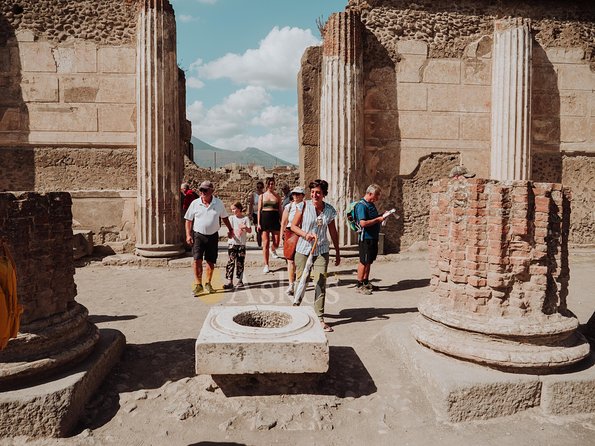
Between the main buildings, you will walk along Pompeii’s original paved roads. The streets are one of the pleasures of the visit, but also one of its physical challenges.
The paving is uneven, and some routes include steps, ramps, and short steep climbs. Wear sturdy walking shoes, not smooth-soled fashion shoes. Bring a small bottle of water, especially in summer, and add sunglasses, sunscreen, and a hat because shade is limited.
This is not the best choice for anyone with serious mobility difficulties. Mobility scooters are not allowed, and the tour specifically warns about steps, ramps, and sloping ground. If you have a mobility concern, contact the operator before booking to ask about a more suitable private option.
House of Menander: a glimpse of private wealth
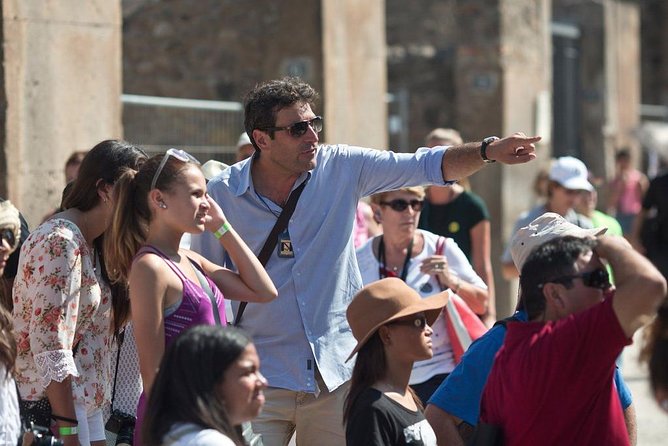
The House of Menander is one of Pompeii’s grandest private residences. Its architecture, decoration, and contents show how wealthy families used domestic space to display status.
This stop helps balance the public buildings earlier in the route. The Basilica and Forum show the city at work, while the House of Menander shows how an affluent household lived and entertained. Look for the relationship between courtyards, rooms, decoration, and movement through the house.
A guide is especially useful here. Without context, the remains can look like disconnected walls. With an explanation, you can begin to picture how a Roman home was organized and why certain areas received more decoration than others.
Stabian Baths and the Lupanar
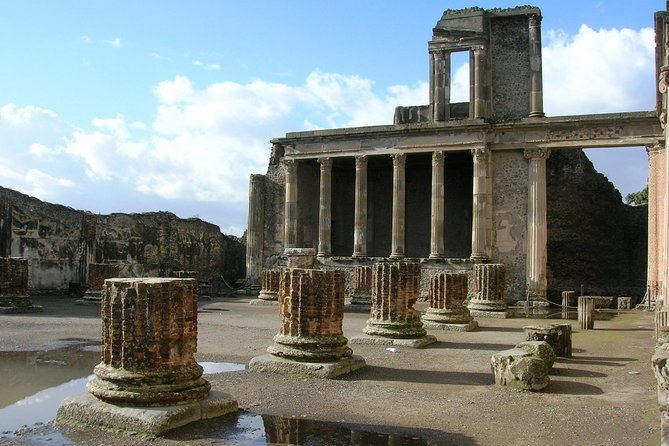
The Stabian Baths are the oldest thermal complex in Pompeii and occupy a large area near the Brothel Lane, the Holconius crossroads, and Via Stabiana. Roman baths were not just places to wash. They were social spaces where people met, exercised, relaxed, and took part in a familiar rhythm of city life.
The ruins can help you understand how much planning went into public comfort. The bath complex had separate spaces and systems that supported a communal routine. Your guide will point out the features that make the site more than a set of old rooms.
Next comes the Lupanar, Pompeii’s most famous brothel. Its small rooms and surviving wall paintings make it one of the most talked-about stops in the city. It can be crowded, and the narrow layout may make viewing difficult at busy times, but it remains an important part of understanding the full range of Pompeii’s social life.
Families with older children and teenagers should know that this stop concerns adult themes. The tour welcomes children when accompanied by an adult, but parents should decide if the subject and surviving imagery are suitable for their group.
House of the Faun and Pompeii’s theaters
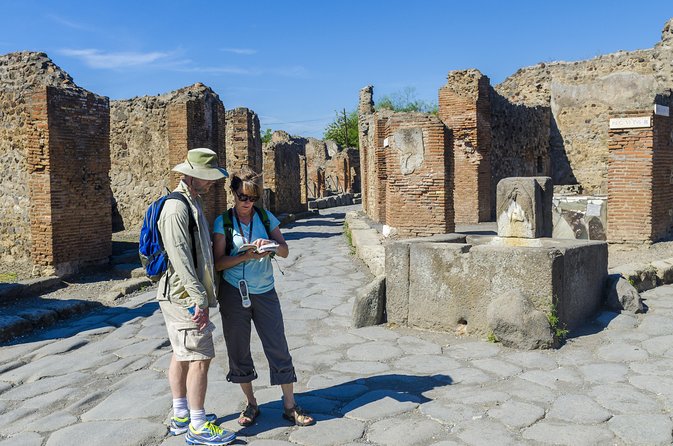
The House of the Faun is another grand private residence and one of the largest homes in Pompeii. It gives you a second look at elite domestic life after the House of Menander, with a broader sense of how much space and decoration wealthy owners could command.
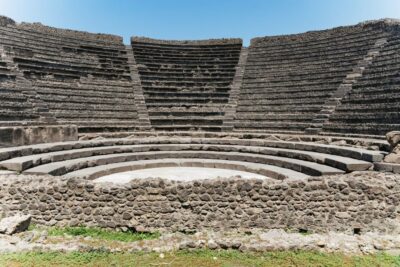
The route also includes a short look at the Teatro Piccolo, or small theater. This stop is brief, but it adds another layer to the city’s public life. Pompeii offered more than work and worship. Performance and entertainment mattered too.
The final stop is the Teatro Grande, the city’s most important theater. Ending here makes good sense. After seeing homes, baths, shops, and civic buildings, you finish with a place where large crowds gathered for performances.
The theater is also a useful final orientation point. Ask your guide about the best way to continue exploring from there, since the tour finishes inside the archaeological park rather than returning you to the gate.
How long is two hours at Pompeii?
Two hours is a useful introduction, not a complete visit. The route covers many of the most famous areas, and the guide gives you a framework for exploring more on your own afterward.
Several guides are praised for fitting a lot into the time without making the walk feel rushed. That is the ideal result: you see major highlights, understand what you are looking at, and retain enough energy to continue independently.
Still, the schedule is tight. Each listed stop receives roughly 10 to 15 minutes, with additional walking between sites. If you like lingering over every mosaic or reading every sign, you may want to plan extra time after the tour.
Pompeii can be confusing to navigate alone, especially if you are trying to cover the site efficiently. The guided portion helps you get your bearings quickly. Afterward, you can revisit an area that caught your interest or seek out other parts of the park at your own pace.
Price, group size, and practical value
At $35.67 per person, this is a reasonable price for a licensed guide with an archaeological background, a Pompeii Express entrance ticket, and a structured two-hour route. It is especially good value if this is your first visit and you would otherwise pay admission but struggle to understand what you are seeing.
The maximum group is 20 people. That is small enough for a shared walking tour, but not small in the same sense as a private tour or a group of six. You may spend time waiting for everyone to gather at important rooms and displays.
Headsets are supplied for groups of 16 or more. In theory, that helps you hear the guide while standing in open spaces. Technical problems can happen, and one poor experience involved delays caused by faulty whisper equipment. This appears to be an exception rather than the normal rhythm, but it is worth keeping in mind if you value a tightly timed visit.
The tour operates year-round, rain or shine. Bring suitable clothing for the forecast, but do not count on changing the route because of weather. The site has limited shade, so summer heat can make the uneven walking harder.
Who should book this Pompeii tour?
I would choose this tour for a first visit, families with older children, couples, and anyone who wants historical context without paying for a private guide. It also suits people arriving with limited time, since the route concentrates on major buildings and ends early enough for further exploring.
The tour is a particularly good fit if you enjoy stories about people rather than only dates and architectural labels. Guides such as Alessandra, Paolo, Teresa, Amedeo, and Vincenzo are praised for making the city understandable, humorous, and human.
I would think twice if you need a slow pace, have significant mobility limitations, or want to photograph every room without interruption. A private or specially adapted tour may be better in those cases.
The cancellation policy is simple: cancel at least 24 hours before the start time for a full refund. Cancellations or changes inside that window are not refunded. Service animals are allowed, and small dogs up to 10 kilograms and 40 centimeters in height may enter under the stated leash and carrying rules.
Should you book it?
Yes, if you want a clear introduction to Pompeii and value having an archaeologist explain what you are seeing. The tour covers the key public spaces, a wealthy Roman house, baths, a brothel, victim casts, and both theaters, then leaves you inside the ruins to continue alone.
Book it knowing that this is a highlights walk, not a full-day archaeological study. Arrive early, wear strong shoes, bring water, and allow extra time afterward. For roughly $36, the guide can save you from wandering past important buildings without understanding them, which is exactly the kind of help Pompeii demands.
FAQ
How long does the Pompeii tour last?
The guided experience lasts approximately two hours.
Where does the tour meet?
Meet at Porta Marina Superiore, the main entrance to Pompeii, at Via Villa dei Misteri 2 in Pompei. Look for an Askos Tours sign.
Where does the tour finish?
The tour finishes inside the Pompeii archaeological ruins. You can continue exploring after the guided portion.
Is the entrance ticket included?
Yes. The Pompeii Express entrance ticket is included in the tour price.
Is this a skip-the-line tour?
Yes. The tour includes skip-the-line entry through the Pompeii Express ticket.
How large is the group?
The maximum group size is 20 people per guide.
Are headsets provided?
Headsets are provided for groups of 16 people or more.
Is the tour suitable for people with mobility difficulties?
The tour is not recommended for people with mobility issues because the route includes steps, ramps, uneven ground, and short steep climbs. Mobility scooters are not allowed.
Can I cancel for a refund?
You can receive a full refund if you cancel at least 24 hours before the experience begins. Cancellations or changes made less than 24 hours before the start time are not refunded.
Just added around Pompeii
- Vesuvius National Park Skip-the-Line Ticket★ 3.8 · 221 reviews
- From Rome: Sorrento & Pompeii Day Tour with Hotel Pickup★ 4.2 · 257 reviews
- From Rome: Day Trip to Pompeii with Tickets★ 4.4 · 1,161 reviews
- Pompeii Ruins Private Tour with Optional Skip-the-Line Entry★ 4.9 · 732 reviews
- From Rome: Pompeii All-Inclusive Tour with Live Guide★ 4.3 · 261 reviews
- Pompeii: Exclusive Tour with Archaeologist and Entry Tickets★ 4.9 · 634 reviews
- Pompeii 3hours Villa of Mysteries tour with an Archaeologist★ 4.8 · 486 reviews
- Pompeii and Vesuvius Full-Day Tour from Amalfi Coast★ 4.4 · 319 reviews
Pompeii Tours, compared.
Entry Ticket and Guided Tour with an Archaeologist
Read our review →
From Naples: Pompeii Ruins & Mount Vesuvius Day Tour
Read our review →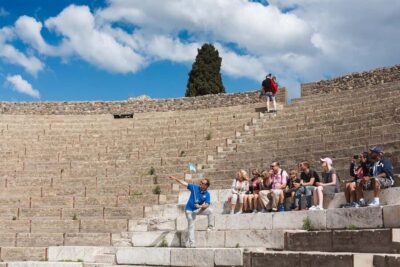
From Rome: Pompeii, Amalfi Coast, and Sorrento Day Trip
Read our review →
From Rome: Pompeii, Amalfi Coast and Positano Day Trip
Read our review →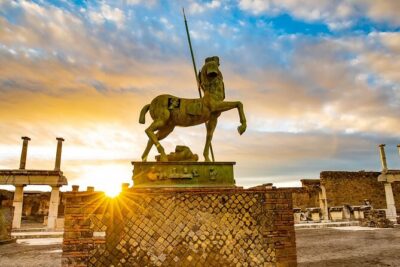
Pompeii, Amalfi Coast and Positano Day Trip from Rome
Read our review →
Pompeii and Mount Vesuvius Day Trip from Rome with Pizza Lunch
Read our review →Browse the lists this tour appears in