
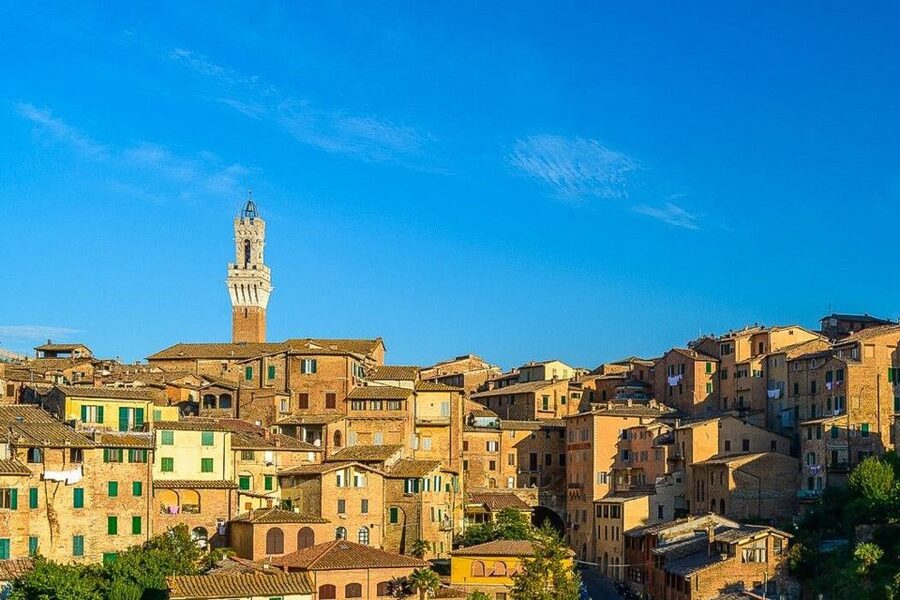
Reviewed · SKIP THE LINE
Siena: Walking Tour and Skip-the-Line Duomo Tickets
Siena’s Palio tradition is the key to understanding this proud Tuscan city, and this tour brings that story into the streets. You’ll hear how the Contrade, Siena’s neighborhood districts, prepare all year for a bareback horse race around Piazza del Campo, then finish inside the extraordinary Duomo.
I like the way the tour combines local stories with major sights, rather than treating Siena as a string of old buildings. I also like the practical finish: your guide takes you into the cathedral with a reserved ticket, where you can continue looking after the formal tour ends. The main drawback is time. Two hours goes quickly, and some people may want less attention on places such as the bank and Basilica di San Domenico and more time inside the Duomo.
Key points to know before booking
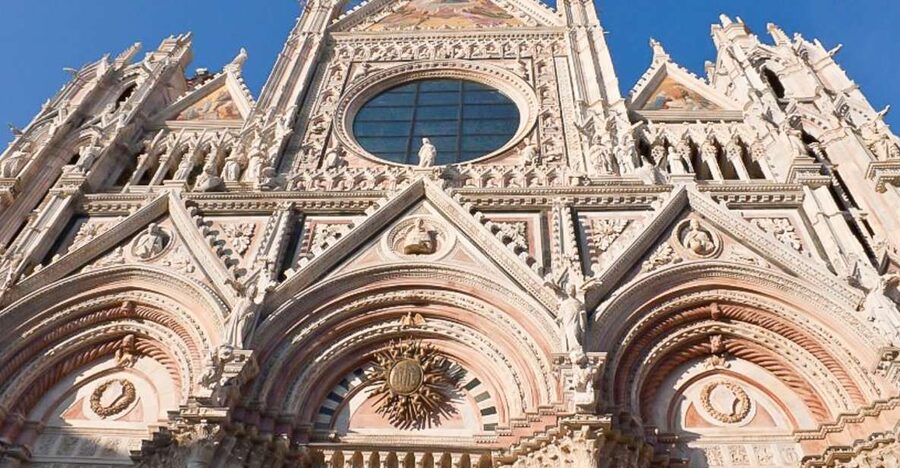
- The Palio gives Siena its character: Learn how the Contrade shape local identity and daily life.
- The Duomo comes last: The cathedral tour includes art by Donatello, Michelangelo, Bernini, and other major artists.
- Skip-the-line entry matters: Long cathedral queues can eat up much of a short visit to Siena.
- Local guides set the tone: Elio, Claudia, Giorgia, Julia, Elena, and Ambra are among the guides praised for clear explanations, humor, and love of the city.
- The route is active: Expect narrow lanes, cobblestones, standing, and some walking at a steady pace.
- Dress carefully: Churches require covered shoulders and knee-length trousers or skirts.
Starting at Piazza San Domenico
The meeting point is Piazza San Domenico, under the large tree in front of the church. This is a sensible place to begin because the basilica and its setting introduce Siena before you reach the better-known center.
You’ll want to arrive ready for a walking tour, not a coach excursion. There is no hotel pickup, so you make your own way to the square. Wear shoes that can handle uneven cobblestones, and bring something to cover bare shoulders. Short skirts, sleeveless shirts, and bare feet are not allowed inside the churches.
The tour is conducted in English by an authorized local guide. That local connection matters in Siena. Guides such as Claudia, who is from the city, and Elio have been praised for combining facts with humor and personal stories. Giorgia and Julia are also noted for speaking clearly and keeping the pace comfortable.
The equipment can include headsets, which help when the group moves through crowded streets or large interiors. Audio quality may vary, though. One useful tip is to pay close attention when the guide checks that everyone can hear, especially if English is not your first language.
More Entry Tickets in Tuscany
- Siena: Siena Cathedral and Piccolomini Library Entry Ticket
★ 4.5 · 3,462 reviews - Venice: Leonardo Da Vinci Museum Entrance Ticket
★ 4.5 · 3,560 reviews - Rome: Leonardo da Vinci Exhibition Entrance Ticket
★ 4.4 · 2,885 reviews
Basilica di San Domenico and the story of St. Catherine
The first major stop is the Basilica di San Domenico, one of Siena’s important religious buildings. The church is closely tied to St. Catherine, patron saint of Italy, and the guide uses the site to explain her place in Siena’s religious and civic story.
This stop is more than a quick photo opportunity. It gives you a sense of how faith, local pride, and public life have overlapped in Siena for centuries. The church also helps explain why Siena developed such a strong identity around its saints and neighborhoods.
The tradeoff is time. A two-hour route cannot linger at every chapel or artwork. If you are especially interested in St. Catherine or religious art, you may want to return later on your own. The tour’s job here is to give you the background that makes the rest of Siena easier to read.
Siena’s narrow streets and medieval center
From San Domenico, the route moves through the historic center, a UNESCO World Heritage Site. This is where the tour feels most useful for first-time visitors. Siena’s streets twist, rise, and open suddenly into small squares, so a guide helps you connect places that can otherwise seem scattered.
You’ll see grand Gothic buildings and hear how the old Republic gained wealth through trade and banking. The streets are not a stage set. They still form the working center of the city, with local neighborhoods, shops, restaurants, and civic traditions tied to the same lanes.
The walking is not hard in the sense of a hike, but it is not flat, effortless strolling either. Cobblestones and narrow passages make supportive shoes important. The tour is not suitable for people with mobility impairments, and anyone who dislikes standing or walking on uneven ground should plan carefully.
Guides often add useful local advice along the way. Elio, for example, has pointed people toward good restaurants and gelaterias and away from poor choices. That sort of advice can be worth as much as another architectural detail, especially if this is your first few hours in Siena.
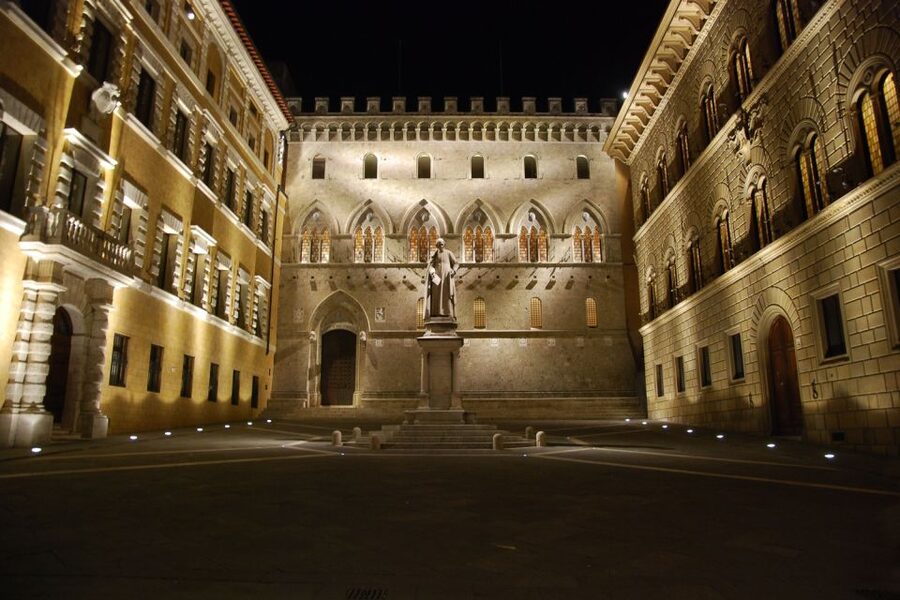
Palazzo Salimbeni and the city’s banking past
The route includes Palazzo Salimbeni, the headquarters of what is described as the world’s oldest bank. The building gives you a clear picture of Siena’s commercial power and the wealth behind its grand civic architecture.
You may find this stop less immediately exciting than the Duomo or Piazza del Campo. That is fair. Still, it answers an important question: how did a medieval hill town create such ambitious churches and palaces? The answer is tied to money, trade, and the Republic’s long civic competition.
One practical point came through clearly in the feedback about the tour: some people would prefer more cathedral time and less time at the bank. If you already know Siena’s economic story, this part may feel brief but sufficient. If you like understanding how cities worked, it adds useful context.
More Walking Tours in Tuscany
- Siena: 3h Private City Walking Tour with Optional Cathedral
★ 4.7 · 392 reviews - Siena Walking Tour with Cathedral and Crypt & Museum Option
★ 4.9 · 380 reviews - Discover Siena: Guided Walking Tour and Cathedral Visit
★ 4.3 · 314 reviews - Lucca: 2-Hour City Center Walking Tour
★ 4.7 · 1,314 reviews
Palazzo Tolomei and the city’s Gothic face
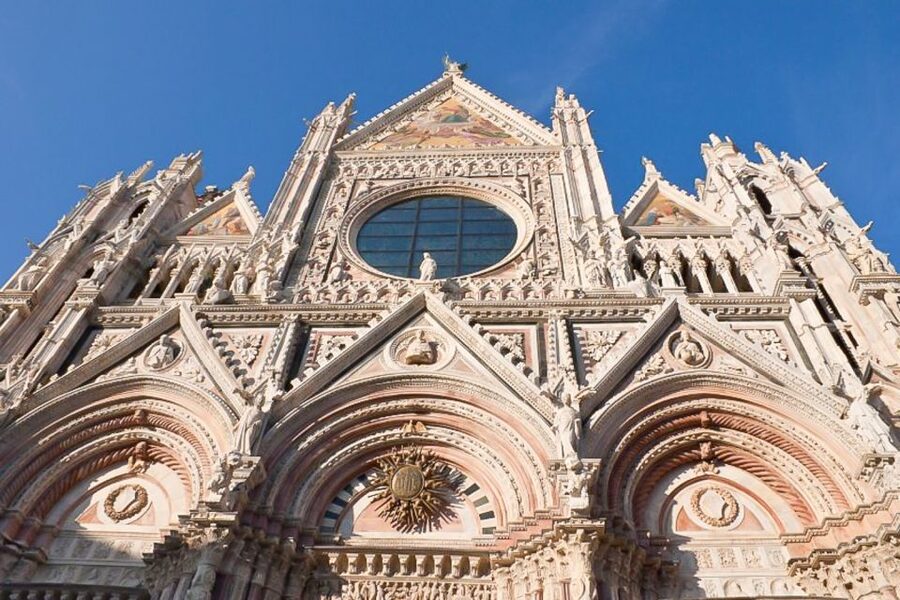
Palazzo Tolomei is an imposing private Gothic building and another chance to see Siena’s civic architecture up close. The guide explains what to look for in the building and places it within the rivalry and wealth of the old city.
This is one of the advantages of a walking tour over a quick sightseeing list. You are not simply told that a palace is old. You learn why its style, location, and scale matter. The guide can also point out details that you might pass without noticing.
The route remains fairly brisk because the Duomo still lies ahead. You should expect exterior explanations and stops rather than long interior visits at every building. The goal is to give you a strong map of Siena, not to replace a full day of museum visits.
Piazza del Campo and the Palio
Piazza del Campo is the emotional center of the tour. The shell-shaped square is the place where Siena’s famous Palio horse race takes place, and the guide explains why the event means far more than a seasonal sporting contest.
You’ll hear about the Contrade, the city neighborhoods that compete in the race. Each district has its own identity and waits all year for the chance to take part. The race itself is fast and wild, with riders competing bareback around the square, but the tradition reaches into neighborhood life, ceremony, loyalty, and rivalry.
This section is often the part that turns Siena from a pretty medieval town into a place with a living social structure. Guides such as Ambra and Claudia have been praised for explaining the Contrade with warmth and detail. Their local perspective helps you understand why the Palio still matters to people who live here.
Take a moment to look around the square after the explanation. The buildings curve around you, and the scale of the place makes the race easier to imagine. The tour does not provide a Palio event ticket, and it does not claim to recreate race day. Instead, it gives you the background you need to recognize the symbols and neighborhood loyalties you may notice elsewhere in Siena.
Food, neighborhoods, and useful local advice
The tour also touches on Siena’s culinary traditions. The food discussion is not a separate cooking class, but it adds a practical layer to the walk. A guide who understands the city can suggest where to eat after the tour and help you avoid choosing a restaurant only because it sits beside the busiest square.
This is a good reason to ask questions. Several guides are praised for staying after the formal explanations to offer restaurant tips, book suggestions, or ideas for using the rest of the day. If your visit is short, ask what deserves a longer look and what you can safely skip.
The tour works particularly well as one of your first activities in Siena. It gives you a map of the center, introduces the Contrade, and helps you decide where to spend more time afterward. One visitor used it on arrival and then planned a second day around the places that deserved a closer look.
Entering Siena Cathedral with a skip-the-line ticket
The Duomo is the final stop, and this order makes sense. After hearing about Siena’s wealth, religion, and artistic rivalry, you enter the building that brings all three together.
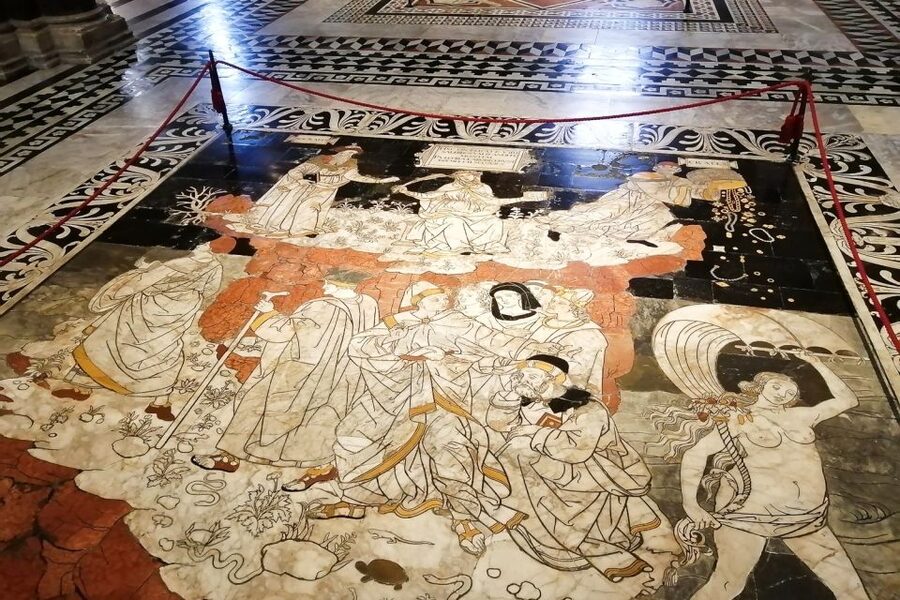
The cathedral contains major works by Donatello, Michelangelo, Bernini, and other artists. Your English-speaking guide explains the chapels and the art rather than leaving you to wander through a grand but confusing interior. The marble decoration and the famous floor are major highlights, although how much of the floor is uncovered can vary.
The skip-the-line ticket is not a minor extra. Siena can draw long queues at the cathedral, and one person reported avoiding a line that appeared likely to take around two and a half hours. Even if the wait is shorter on your day, fast entry protects a valuable part of a short visit.
The Duomo is also where the tour’s value becomes easiest to judge. At $47 per person, the cost is not low for a two-hour activity. But it includes a guided city walk and cathedral entry, and the ticket can save a large amount of time. If you have only a morning or afternoon in Siena, that combination makes the price easier to justify.
The formal tour ends at the cathedral, and you may be able to remain inside afterward with your ticket. That gives you a chance to revisit an artwork, study the marble floor, or take in the building without trying to keep up with the group. Confirm the exact ticket conditions with your guide on the day.
What the guides do best
The strongest part of this experience is the guide. Names that come up often include Elio, Claudia, Giorgia, Julia, Elena, Ambra, and Giulia. The individual style will vary, but the best guides bring three things: clear English, strong command of Siena’s story, and an easy way with questions.
Elio is known for humor, lively explanations, and useful food advice. Claudia is praised for her pride in Siena and her ability to connect art, architecture, and local customs. Giorgia is described as organized and attentive to the group, while Julia is noted for clear speech and entertaining stories.
That personal element matters because Siena can feel confusing when you first arrive. The guide gives you a thread to follow, from St. Catherine to the Republic, from the bank to the Palio, and from local neighborhoods to the cathedral.
The main limitation is group size. Groups can be large, with more than 30 people on some departures. Headsets help, but small streets and crowded interiors can still make the experience feel less personal. If you prefer quiet, detailed discussion at every stop, a private tour or smaller group may suit you better.
Timing, clothing, and practical details
The tour lasts two hours. That is long enough for a strong introduction, but not long enough for a complete visit to every church, palace, and museum in Siena.
Plan to arrive at Piazza San Domenico with comfortable walking shoes. The route uses cobblestone streets, and you should expect regular standing. The tour is not designed for people with mobility impairments.
Church clothing rules are strict enough to take seriously. Cover your shoulders, and wear trousers or a skirt that reaches the knees. Women may want to carry a light shawl. Pets are not allowed.
The experience is offered in English and includes an authorized local guide plus skip-the-line admission to the Duomo or Cathedral. Hotel pickup is not included. You can cancel up to 24 hours before the activity for a full refund, and the reserve-now, pay-later option gives you some flexibility if your plans are still shifting.
Who should book this Siena tour?
I would choose this tour if you have limited time, want a clear introduction to Siena, or prefer to understand the city before exploring on your own. It is also a smart first-morning activity because the guide helps you decide how to use the rest of your visit.
You will get the most from it if you enjoy local stories, civic traditions, art, and walking. The Palio and Contrade explanations are especially useful if you want to see Siena as a living city rather than only an attractive medieval backdrop.
I would think twice if you want a long, slow cathedral visit or dislike group tours. Two hours means choices must be made, and the route gives attention to the bank, San Domenico, and the city streets as well as the Duomo.
Should you book it?
Book it if the skip-the-line cathedral entry and local explanation of the Palio matter to you. The tour offers a good mix of art, architecture, history, food tips, and everyday Siena in a compact package.
Skip it if you already know the city well or plan to spend several hours exploring the Duomo alone. For most first-time visitors, though, $47 is reasonable when the ticket and time saved are factored in. Just wear proper shoes, dress for church entry, and accept that the two-hour schedule is an introduction, not the final word on Siena.
FAQ
How long does the Siena walking tour last?
The guided walking tour lasts two hours.
Where does the tour meet?
The meeting point is Piazza San Domenico, under the large tree in front of the church.
Is hotel pickup included?
No. You must make your own way to the meeting point.
Is the tour offered in English?
Yes. The tour includes an authorized live English-speaking local guide.
Does the tour include entry to Siena Cathedral?
Yes. Skip-the-line admission to the Duomo or Cathedral is included.
What should I wear for the churches?
You need covered shoulders and knee-length trousers or skirts. Comfortable shoes are also necessary for the cobblestone streets.
Is the tour suitable for people with mobility impairments?
No. The tour is not suitable for people with mobility impairments.
Just added around Siena
- Total Immersion Wine Tour in Chianti★ 4.9 · 430 reviews
- From Siena: Pienza and Montepulciano Small-Group Tour★ 4.9 · 220 reviews
- Siena Walking Tour with Cathedral and Crypt & Museum Option★ 4.9 · 380 reviews
- Siena: Pasta and Tiramisu Cooking Class with Wine★ 4.8 · 274 reviews
- Siena: Educational Wine Tour & Tasting★ 5.0 · 203 reviews
- Discover Siena: Guided Walking Tour and Cathedral Visit★ 4.3 · 314 reviews
- Siena: San Gimignano, Chianti & Montalcino Small-Group Tour★ 4.6 · 195 reviews
- From Siena: Tuscany Hills Wine Tour★ 4.1 · 323 reviews
Skip the Line, compared.
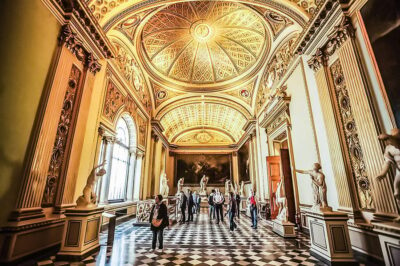
Skip-The-Line Uffizi Gallery Timed Entry Ticket
Read our review →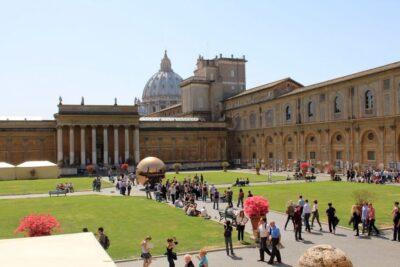
Vatican Museums & Sistine Chapel Skip-the-Line Entry Ticket
Read our review →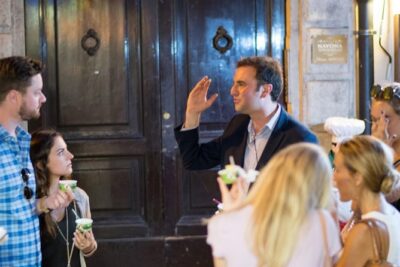
Skip-the-Line Group Tour of the Vatican, Sistine Chapel & St. Peter’s Basilica
Read our review →
Michelangelo’s David Skip-the-Line Entry Ticket
Read our review →
Vatican Museums & Sistine Chapel Skip-The-Line Ticket
Read our review →
Vatican, Sistine Chapel & St. Peter’s Skip-the-Line Tour
Read our review →
Skip-the-Line Vatican, Sistine Chapel & St. Peter’s | Small Group
Read our review →
Vatican: Vatican Museums Sistine Chapel Skip-the-Line Ticket
Read our review →Browse the lists this tour appears in