
Reviewed · MUSEUMS
Venice: Leonardo Da Vinci Museum Entrance Ticket
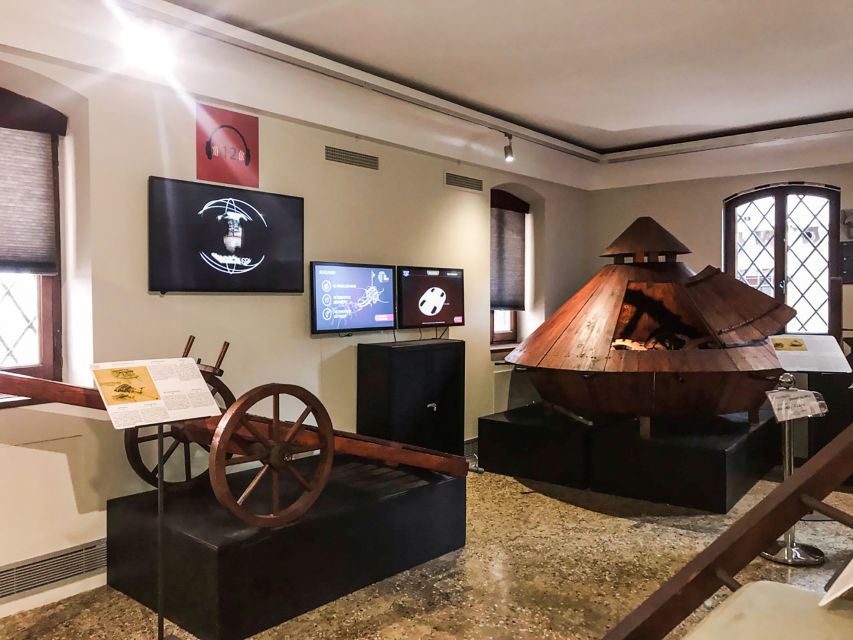
Leonardo da Vinci’s genius becomes easier to grasp when you can turn a gear, test a wooden structure, or study a flying machine built from his notes. This hands-on museum in San Polo presents working reproductions rather than only glass cases, making Leonardo’s ideas feel practical and surprisingly modern.
I like the mix of machines and art, and I like that children, teenagers, and adults can all find something to do. The main drawback is size: you can see the museum in 30 minutes if you move quickly, though puzzle fans and families may stay for 60 to 90 minutes.
Key points to know before you go
- Working reproductions: Operate machines rebuilt from Leonardo’s drawings, with changes made only when his original proportions required it.
- Four themed sections: The displays are arranged around Earth, Water, Fire, and Air.
- Excellent for families: Hands-on puzzles, machines, drawing activities, and visual exhibits give children a reason to look closely.
- Compact visit: Plan on about an hour, or up to 90 minutes if you try most activities and read the displays.
- Useful location: The museum is at Campo San Rocco, behind the Frari Church and opposite the Scuola Grande di San Rocco.
- Good small-purchase value: A $10 ticket includes entry, photography, and a 10 percent bookshop discount.
What this Leonardo museum actually offers
This is not a guided tour through Venice, and it is not a large art museum filled with original Leonardo paintings. It is a self-guided exhibition built around reproductions, models, multimedia displays, and activities.
That distinction matters. You come here to understand how Leonardo thought. His notebooks show a man who moved freely between painting, engineering, anatomy, architecture, mechanics, and natural science. The museum turns those ideas into objects you can inspect and, in many cases, operate.
Descriptions are available in Italian, English, French, German, Spanish, and Russian. Multimedia material adds background on Leonardo’s life and work, so you can move at your own pace instead of waiting for a guide or joining a fixed group.
The museum is family-friendly without being only for children. Adults who enjoy design, engineering, art, or Renaissance history will find plenty to examine. Children have more reason to touch and test the displays, while older visitors can focus on the drawings, anatomy studies, and the way Leonardo linked observation to invention.
More Entry Tickets in Tuscany
- Siena: Siena Cathedral and Piccolomini Library Entry Ticket
★ 4.5 · 3,462 reviews - Rome: Leonardo da Vinci Exhibition Entrance Ticket
★ 4.4 · 2,885 reviews - Pisa: Leaning Tower & Cathedral Tickets with Timed Entry
★ 4.3 · 2,365 reviews
Finding the museum near San Rocco
The entrance is at Campo San Rocco, 3052 Venezia, in the building called the Scoletta di San Rocco. It is opposite the Scuola Grande di San Rocco and behind the Church of the Frari.
You present your ticket at the museum reception and enter. There is no tour guide waiting at a separate meeting point, so do not stand in the square looking for a person with a sign. The museum itself is the meeting point.
This part of Venice is useful for a short cultural stop because it sits near major sights, yet the museum offers a break from the narrow streets and crowded routes around the most famous landmarks. You can pair it with the Frari Church or Scuola Grande di San Rocco, but allow extra time if you want to read the exhibits and try the machines.
Some visitors have found the staff helpful with luggage storage during the visit. That service is not described as a formal inclusion, so ask at the desk rather than relying on it.
Earth, Water, Fire, and Air
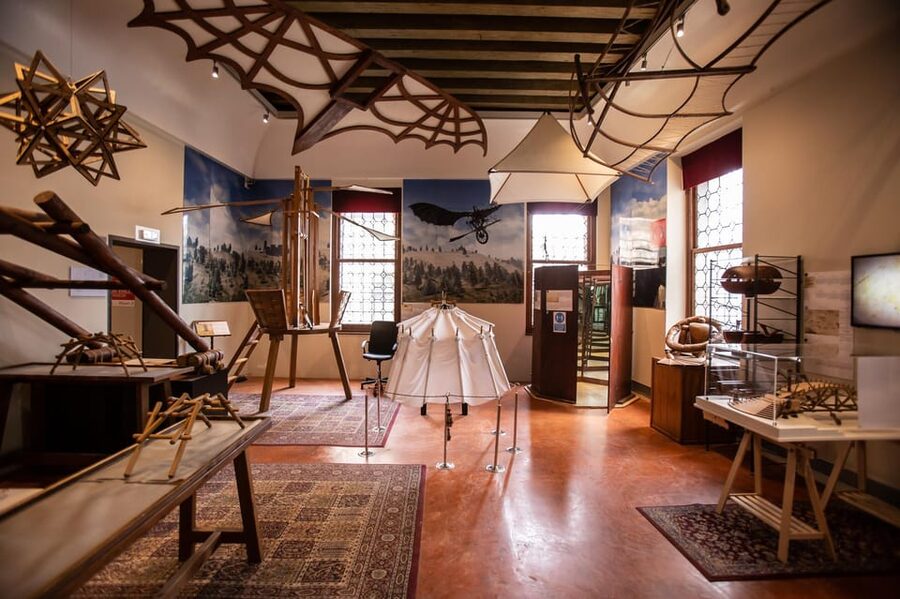
The exhibition is arranged around four elements: Earth, Water, Fire, and Air. This gives the visit a simple structure and helps you move from one idea to the next without needing a guide.
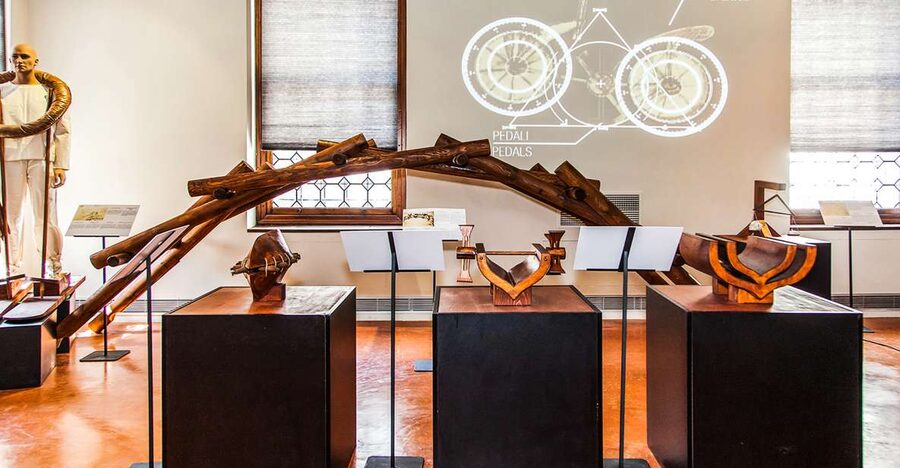
The Earth section connects Leonardo’s work to building, mechanics, and structures. Look for models that show how weight, balance, and joined pieces can produce a strong form. The wooden bridge puzzle is a favorite hands-on challenge, and it is easier with a second person. If you are visiting with a child, let them try first, then work out the solution together.
The Water section focuses on movement, flow, and devices connected with water. These models help explain why Leonardo studied rivers and currents. The point is not that every machine was built for practical use in his lifetime. The point is that he observed a problem, drew it from several angles, and tested ways to control natural forces.
Fire introduces mechanical power and motion. Turning or activating a model gives you a quick lesson in gears, leverage, and transfer of force. You do not need an engineering background to understand the basic ideas, but taking a moment to see which part moves first makes the displays more rewarding.
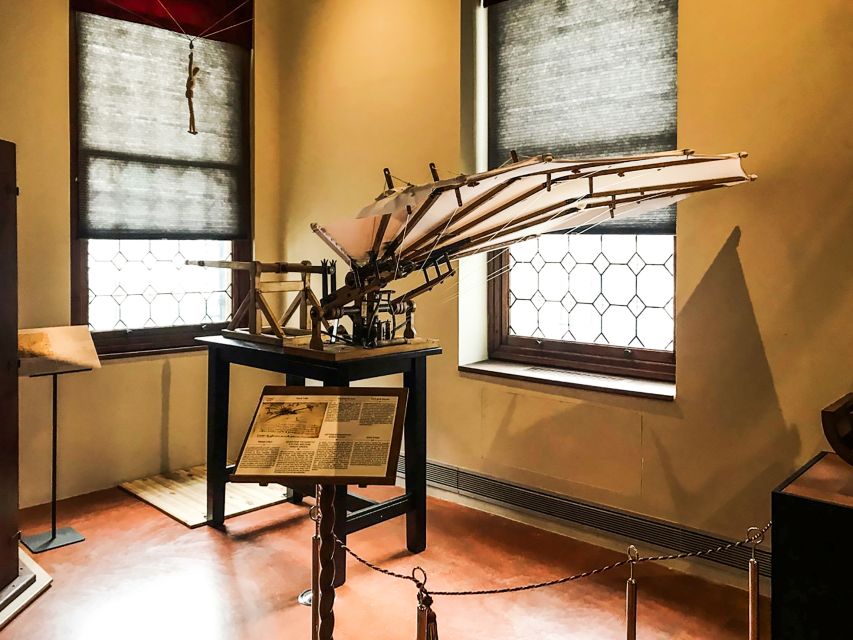
Air includes Leonardo’s interest in flight and the movement of air. His flying-machine concepts can look fanciful at first, but the accompanying material shows how carefully he studied wings, birds, and the mechanics of lift. The models are valuable because they make the difference between an inspired idea and a workable machine easier to see.
Not every model will operate with the same ease. Some have been rebuilt according to Leonardo’s designs, but modern changes were needed where his original proportions would not work safely or practically. Treat the displays as working interpretations of his drawings, not as original Renaissance objects.
The inventions are made to be touched
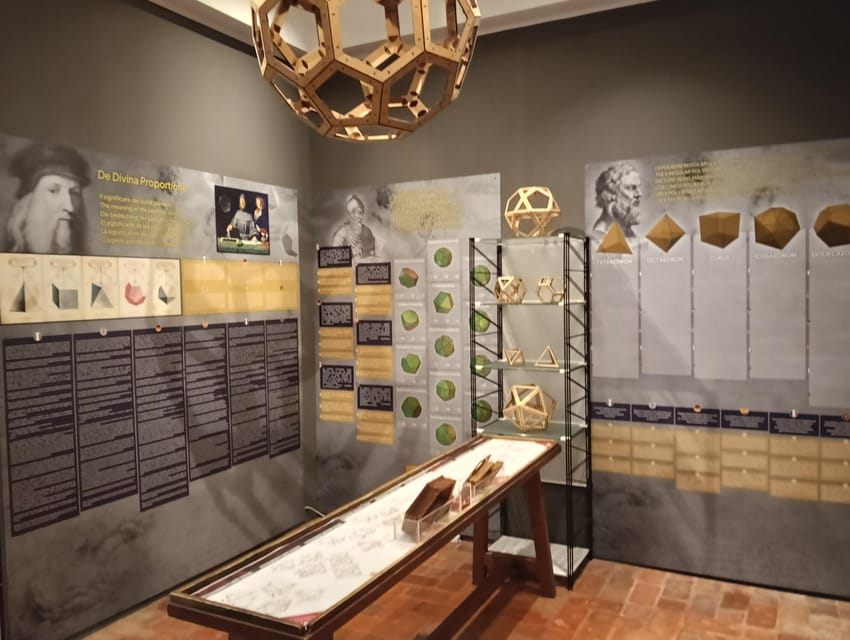
The best reason to buy this ticket is the chance to interact with the machines. You are not simply reading a label beside a model. You can test mechanisms and see how Leonardo’s ideas connect.
That hands-on quality is especially useful for children and teenagers, who may lose interest in a room of paintings or manuscripts. Here, a question such as How does this move? can lead to a short lesson in physics.
Adults should not hang back. The museum is designed so that older visitors can take part, and several activities are satisfying even when you already know the broad story of Leonardo’s inventions. A mirror box on the ground floor is one of the most memorable displays. It lets you see your reflection from different angles and turns a simple optical idea into a visual trick.
Upstairs, the wooden construction puzzles call for patience. The hexagon activity needs all the pieces to make sense, so do not assume you have failed if the first attempt does not work. A second person is useful for the bridge puzzle, both for holding pieces and for spotting the logic of the design.
The interactive displays also make this a good rainy-day or hot-weather stop. The museum has air conditioning, a practical advantage during Venice’s warmer months, though the compact rooms can feel busy when several families are using the same machines.
More Museum Tours in Tuscany
- Milan: Science and Technology Leonardo da Vinci Museum Entry
★ 4.5 · 7,169 reviews - Golf Cart Tour to Fiesole Roman Theatre and Museum
★ 4.5 · 2,039 reviews - Milan: Pinacoteca Ambrosiana & da Vinci Codex Exhibition
★ 4.6 · 1,816 reviews - Leonardo Da Vinci Museum Entrance Ticket
★ 4.5 · 1,458 reviews
Leonardo the artist, anatomist, and observer
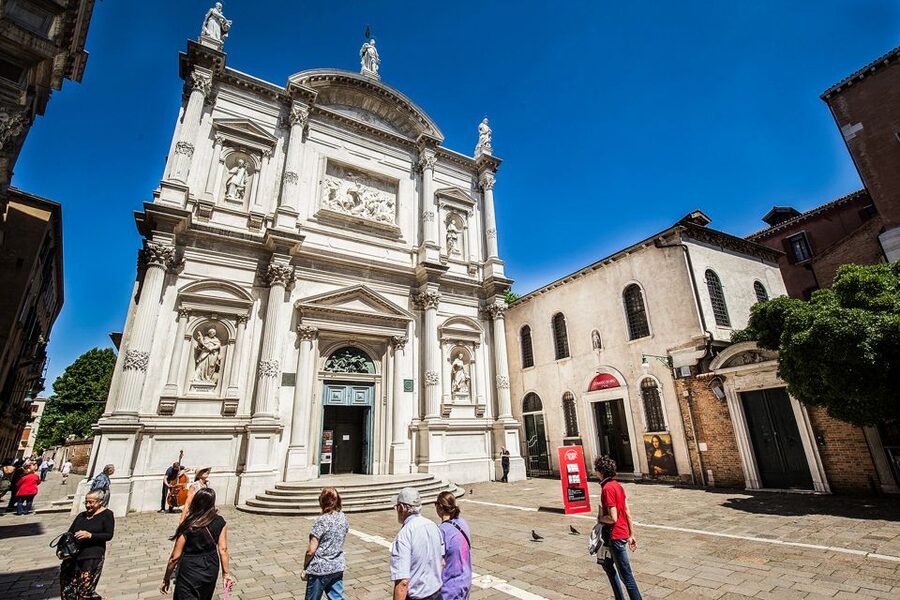
It is easy to reduce Leonardo to the Mona Lisa and The Last Supper. This museum broadens the picture.
The anatomy displays show how closely he studied the human body. His work was not based only on artistic imagination. He examined structure, movement, proportion, and the relationship between parts of the body. The medical material helps explain why his figures feel so physically convincing.
High-resolution, backlit reproductions of major paintings add an art component to the machine displays. These are not original works, so art lovers should not treat the museum as a substitute for seeing Leonardo’s paintings in person. Still, the reproductions are useful for close study, particularly when you want to compare the visual artist with the engineer and anatomist.
Short videos and multimedia displays explain his life and achievements without demanding a long lecture. One film gives a concise overview, which is helpful if you know Leonardo mainly as a painter. You can watch it early to get your bearings, then return to the machines with a better sense of how the subjects connect.
I like this balance because it shows that Leonardo did not work in neat modern categories. His study of water could inform an engineering idea. His anatomy work could support his painting. His interest in birds could lead to experiments with flight. The exhibition works best when you follow those connections instead of treating each machine as an isolated curiosity.
How long should you allow?
The museum’s size is both its strength and its limit.
If you are pressed for time, you can make a quick circuit in 30 to 60 minutes. That is enough to see the main machines, read selected labels, and try a few activities. This makes the ticket easy to fit between church visits, lunch, and a walk through San Polo.
For a more relaxed visit, plan on about 90 minutes. That gives you time to watch the film, examine the anatomy material, use the interactive models, attempt the puzzles, and browse the shop.
The small footprint keeps the visit manageable for families with young children. You are unlikely to reach the point where everyone is tired from crossing a huge museum. The downside is that visitors who want a major Leonardo collection may finish wishing there were more rooms and more original material.
The last entrance is one hour before closing, so do not arrive at the very end of the day expecting a full visit. Check the available starting times when booking, especially if you are fitting this around a fixed Venice schedule.
Is the $10 ticket good value?
At $10 per person, this is a reasonable short museum stop, particularly if you will use the interactive displays. The ticket includes entry and photography, and children under three enter free. You also receive a 10 percent discount in the bookshop.
The value depends on what you want. If you are looking for original masterpieces, a large collection, or a formal lecture, this will feel limited. If you want a clear, practical introduction to Leonardo’s inventions, the ticket earns its price quickly.
I consider it especially good value for a family. One adult can read the explanations while children test a model, then everyone can regroup around a puzzle or video. A solo visitor who moves quickly may spend only 30 minutes inside, but the price remains modest for a central Venice attraction.
The bookshop adds a pleasant final stop, with Leonardo-themed gifts and souvenirs. The discount is useful if you already plan to buy a book, puzzle, or small educational item, but the museum remains worth visiting even if you skip the shop.
Who will enjoy it most?
This museum suits you if you like:
- Hands-on science and engineering
- Leonardo’s machines and drawings
- Short museums that fit into a busy itinerary
- Family activities with an educational angle
- Art presented alongside anatomy and mechanics
- A quiet indoor break from Venice’s streets
It is particularly strong for families with children, teenagers, and curious adults. Several displays are simple enough for younger children, while the ideas behind them give older visitors something to think about.
It may not suit you if you want original Renaissance art or a large, silent gallery. The museum is compact, and some displays depend on visitors handling them carefully. Children should be supervised, since the machines are interactive exhibits, not toys.
One practical tip: if the museum provides an audio guide through a QR code, look for it at the front shop or entrance before moving through the rooms. It may not be repeated throughout the exhibition. Also keep in mind that children under 15 must enter with an adult.
My booking advice
I would book this ticket if you have one or two hours in Venice and want something more active than another picture-lined gallery. The combination of working models, anatomy, painting reproductions, and puzzles gives the visit a clear purpose.
Book it with realistic expectations. This is a small interactive museum, not a major Leonardo collection, and there is no guided tour included. For most people, the sweet spot is 60 to 90 minutes. If that sounds right, the $10 price and flexible cancellation up to 24 hours ahead make it an easy addition to a Venice day.
FAQ
Where is the Leonardo da Vinci Museum in Venice?
It is at Campo San Rocco, 3052 Venezia, in the Scolette di San Rocco building. The entrance is opposite the Scuola Grande di San Rocco and behind the Church of the Frari.
Is this a guided tour?
No. The ticket provides museum entry, and you explore the exhibition independently. There is no guide to meet at a separate location.
How long does a visit usually take?
You can see the museum in about 30 to 60 minutes, but allow up to 90 minutes if you want to try the machines, solve the puzzles, watch the video, and read the displays.
What languages are available?
Descriptions and multimedia material are available in Italian, English, French, German, Spanish, and Russian.
Are children allowed to enter alone?
No. Children under 15 must be accompanied by an adult. Children under three receive free admission.
Can I take photographs inside?
Yes. Photography is included with the entry ticket.
Can I cancel the ticket?
Yes. You can cancel up to 24 hours in advance for a full refund. You can also reserve now and pay later, according to the booking conditions.
Just added around Tuscany
- Florence Sunset Food Tour with Wine & Dine at a Tuscan farmhouse★ 5.0 · 194 reviews
- Wine Tasting Experience in Ponte Vecchio: Best Tuscany selection!★ 5.0 · 197 reviews
- Val d’Orcia Brunello Wine Tour with Montalcino and Montepulciano★ 4.5 · 359 reviews
- Wine Experience In Chianti Hills from Florence★ 4.5 · 195 reviews
- Tuscany Vespa Tour: Lunch & Wine Tasting, Countryside Roads★ 5.0 · 614 reviews
- Tuscany Vespa Tours Through the Hills of Chianti★ 5.0 · 515 reviews
- Tuscany Vespa Tour from Florence with Wine Tasting★ 5.0 · 425 reviews
- Tuscany Bike Tours Through the Chianti Hills with Wine Tasting★ 5.0 · 1,300 reviews
Museums, compared.
Vatican: Museums & Sistine Chapel Entrance Ticket
Read our review →
Vatican Museums & Sistine Chapel Tour with Optional Basilica
Read our review →
Vatican Museums, Sistine Chapel & St Peter’s Basilica Guided Tour
Read our review →
Skip-The-Line Uffizi Gallery Timed Entry Ticket
Read our review →
Vatican Museums, Sistine Chapel & Basilica Tour
Read our review →
Vatican Museums & Sistine Chapel Skip-the-Line Entry Ticket
Read our review →Vatican Museums, Sistine Chapel & Basilica Tour
Read our review →
Vatican Museums & Sistine Chapel Guided Tour
Read our review →Browse the lists this tour appears in