
Reviewed · MUSEUMS
Milan: Pinacoteca Ambrosiana & da Vinci Codex Exhibition
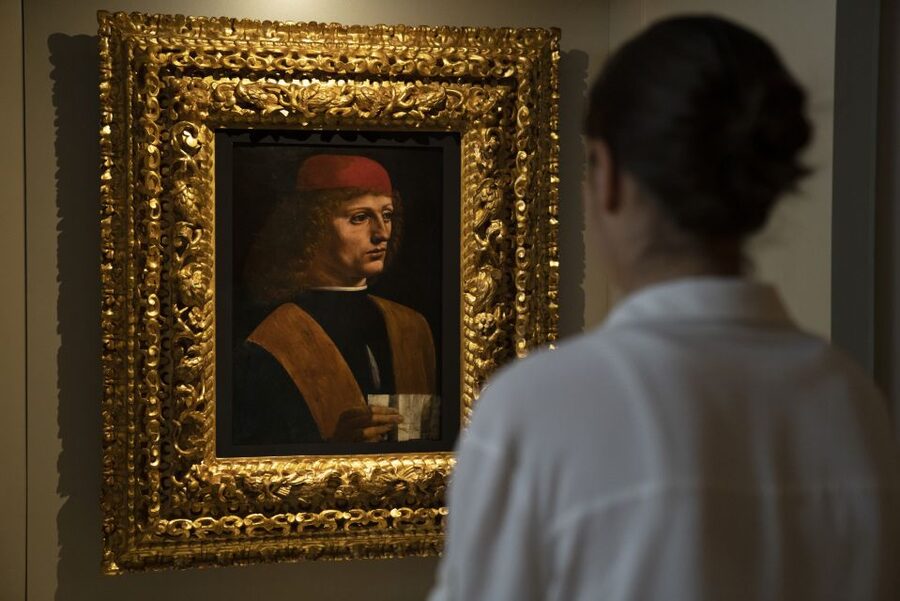
Leonardo da Vinci’s working mind is the star here. Inside Milan’s Pinacoteca Ambrosiana, you can see original drawings from the Codex Atlanticus, alongside paintings by Raphael, Caravaggio, Botticelli, Tiziano, and other Italian masters.
I like the way this visit combines fine art with a historic library, so you are not simply moving from painting to painting. I also like the modest $21 price, which gives you a full day of access and room to explore at your own pace. The main drawback is that the museum can be confusing to navigate, and the optional audio guide costs an extra four euros.
Key points
- Leonardo’s original drawings: See selections from the Codex Atlanticus, including studies tied to his art, engineering, and ideas.
- Raphael’s School of Athens cartoon: A major highlight, with displays explaining how the full-sized design was used.
- A compact but varied collection: Expect paintings, drawings, sculptures, books, pottery, and historic objects.
- Audio guide option: Add the app or ticket-office guide in one of six languages for four euros.
- Central Milan location: Reach the museum from Cordusio or Duomo metro stations, with several tram lines nearby.
- Allow two to three hours: You can move quickly, but extra time lets you read the labels and use the audio guide properly.
Why Leonardo’s Codex Atlanticus matters
The Codex Atlanticus is not a single polished masterpiece. It is a window into Leonardo’s working process, where art, science, engineering, architecture, and observation sit side by side.
At the Ambrosiana, you see original drawings from the world’s largest collection of Leonardo’s original drawings. The pages show the range of his curiosity and the practical way he tested ideas on paper. Some drawings relate to machines and engineering. Others reveal studies of movement, construction, or visual form.
That makes this exhibit different from a room devoted only to finished paintings. You are seeing plans, notes, and experiments. Leonardo’s thoughts are visible in the marks themselves, even when the subject is technical.
The display is also valuable for anyone who has seen Leonardo treated only as the painter of the Mona Lisa or The Last Supper. Here, the emphasis is on the wider man and his times. The exhibition draws on more than 40 years of research, giving the drawings context instead of leaving you to guess what each page represents.
The final Leonardo section is especially important, so do not assume you have seen everything after the first Codex displays. One of the practical lessons from the museum layout is to study the map when you enter. It is easy to miss rooms if you simply follow the first corridor you find.
More Museum Tours in Tuscany
- Milan: Science and Technology Leonardo da Vinci Museum Entry
★ 4.5 · 7,169 reviews - Venice: Leonardo Da Vinci Museum Entrance Ticket
★ 4.5 · 3,560 reviews - Rome: Leonardo da Vinci Exhibition Entrance Ticket
★ 4.4 · 2,885 reviews
Raphael’s cartoon for the School of Athens
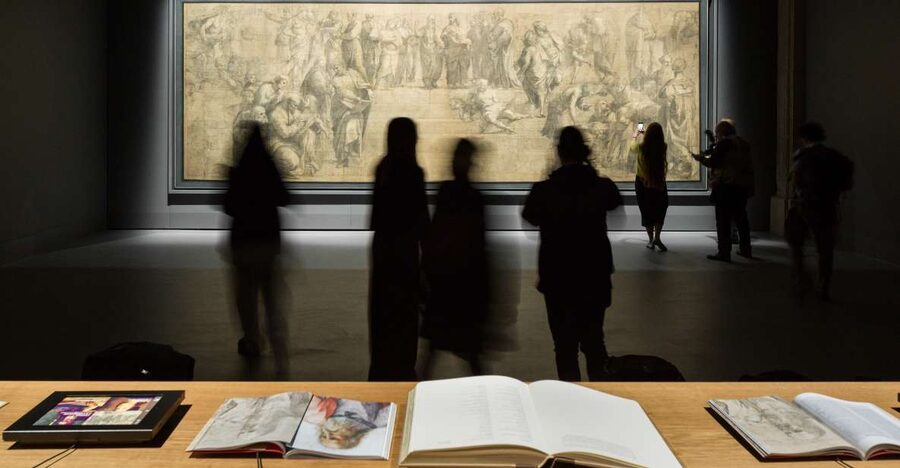
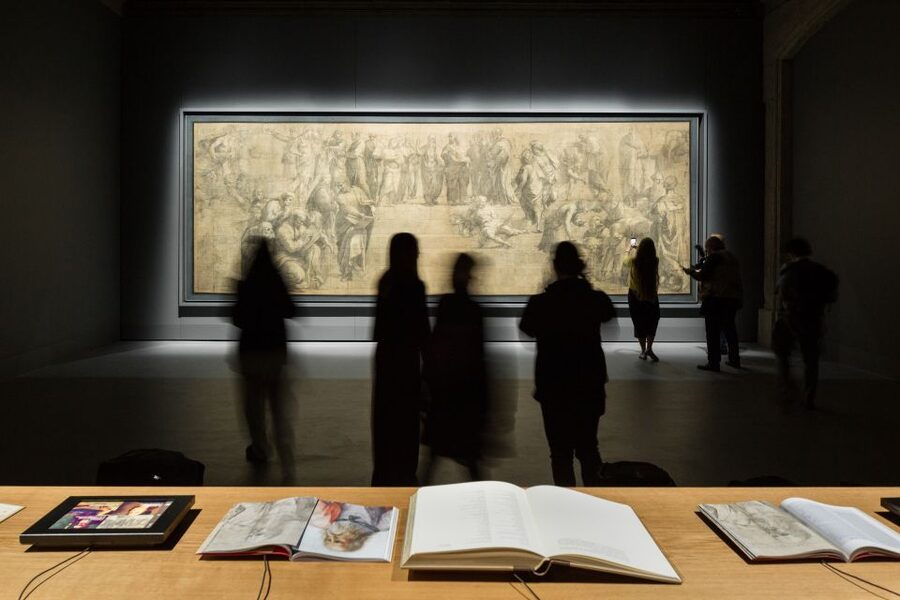
For many people, the most memorable work in the museum is Raphael’s large cartoon for the School of Athens. In this setting, cartoon means a full-sized preparatory drawing, not a humorous illustration.
Raphael used such a design to plan the celebrated fresco in the Vatican’s Stanza della Segnatura. Seeing the preparatory work lets you study the planning behind the finished wall painting. You can look closely at the arrangement of figures, the structure, and the careful distribution of attention across the scene.
The museum also provides an explanation of how the design was transferred to the wall. That process gives the work practical meaning. You are not only looking at a beautiful drawing. You are seeing a working stage in the creation of one of the best-known images of the Renaissance.
If you have limited time, put this room near the top of your list, along with the Leonardo displays. It is a strong reason to visit even if you are more interested in painting than in old manuscripts.
Caravaggio, Botticelli, Tiziano, and the wider collection
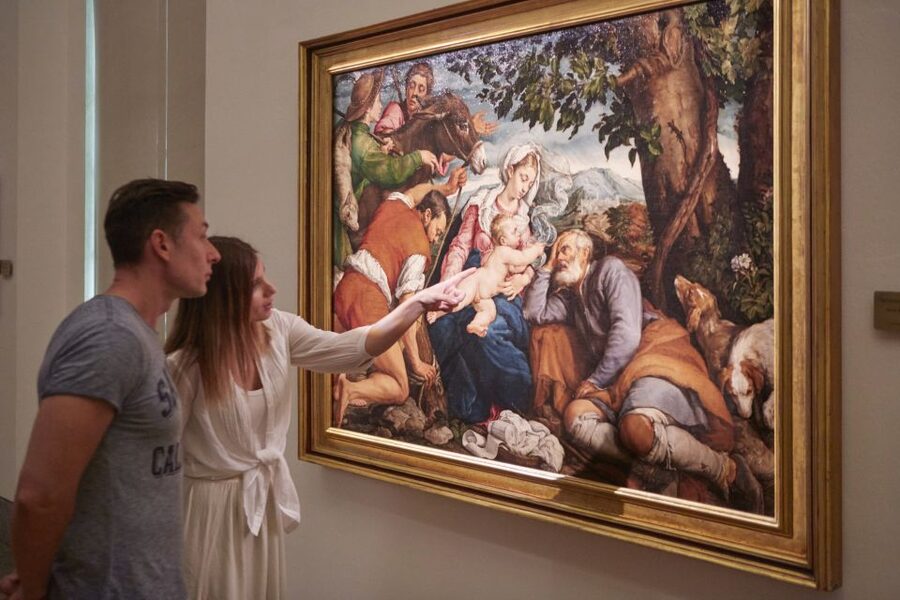
The Ambrosiana is not a one-artist museum. Leonardo draws the most attention, but the Pinacoteca also gives you a compact survey of major Italian art.
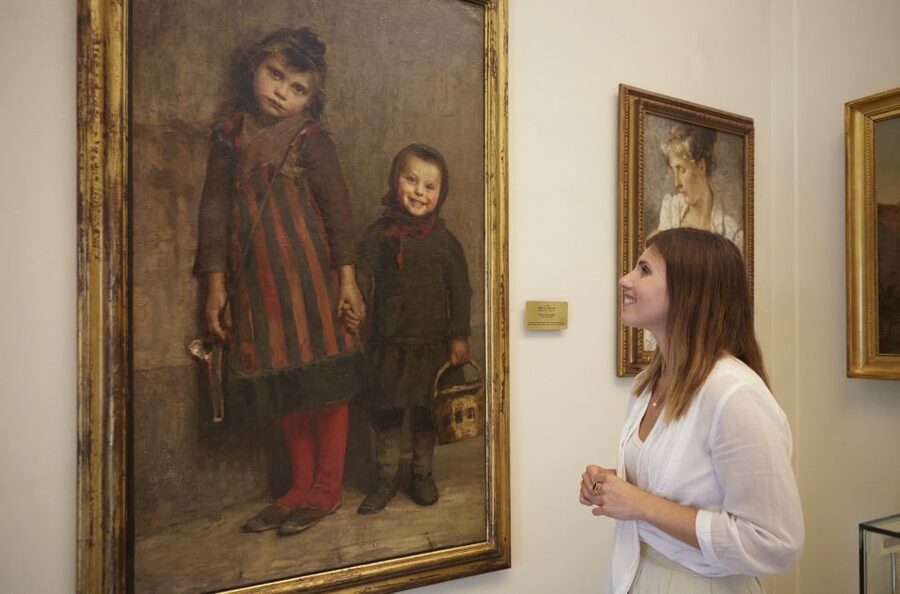
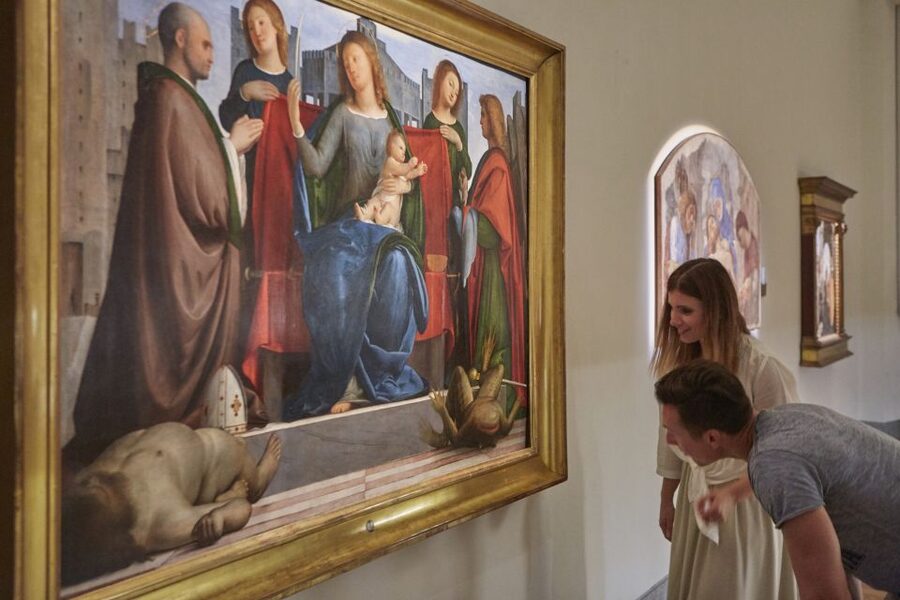
Caravaggio’s still lifes offer a different mood from Leonardo’s restless studies. Look for the close attention to texture, form, and ordinary objects. Botticelli, Raphael, and Tiziano broaden the picture further, showing how varied Italian painting can be across different artists and periods.
You may also encounter sculptures, pottery, architecture, books, and other old objects. That variety is one of the collection’s strengths. A visit does not feel like a narrow Leonardo display followed by a quick exit. The building and its contents work together.
The collection is smaller than Milan’s Pinacoteca di Brera, which can be an advantage. You can see major works without committing an entire day to one large museum. At the same time, a smaller museum still needs careful pacing. If you hurry through the rooms, you may remember Leonardo and Raphael but miss the quieter works between them.
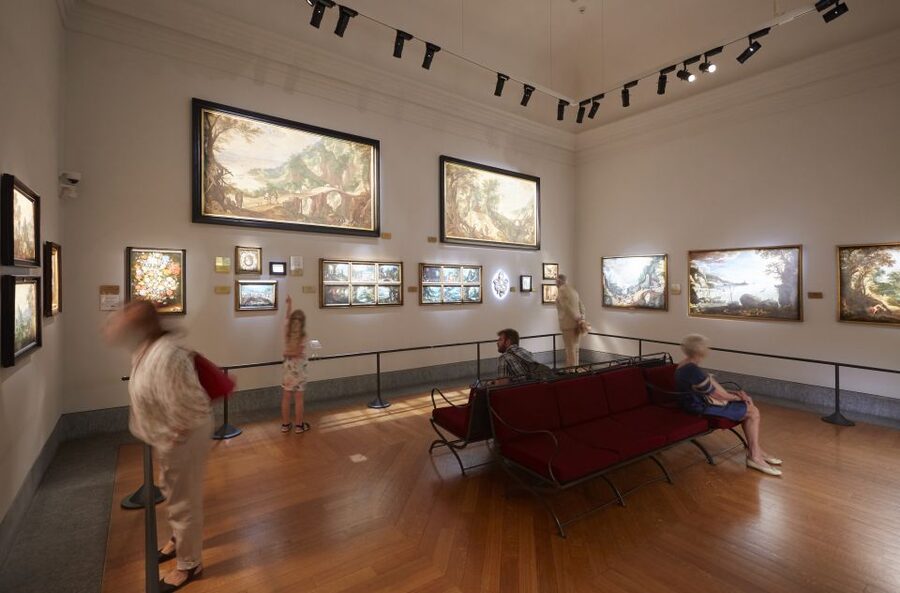
The lighting is generally designed to show the paintings well, and the galleries offer places to sit. Some labels can be difficult to read because of low light, so the audio guide may be helpful if you want more background without standing close to every description.
The Ambrosiana Library and the building itself
The museum occupies part of the historic Ambrosiana complex, and the setting is a major part of the experience. You are moving through a place associated with books, scholarship, art, and collecting, not just a modern gallery with neutral walls.
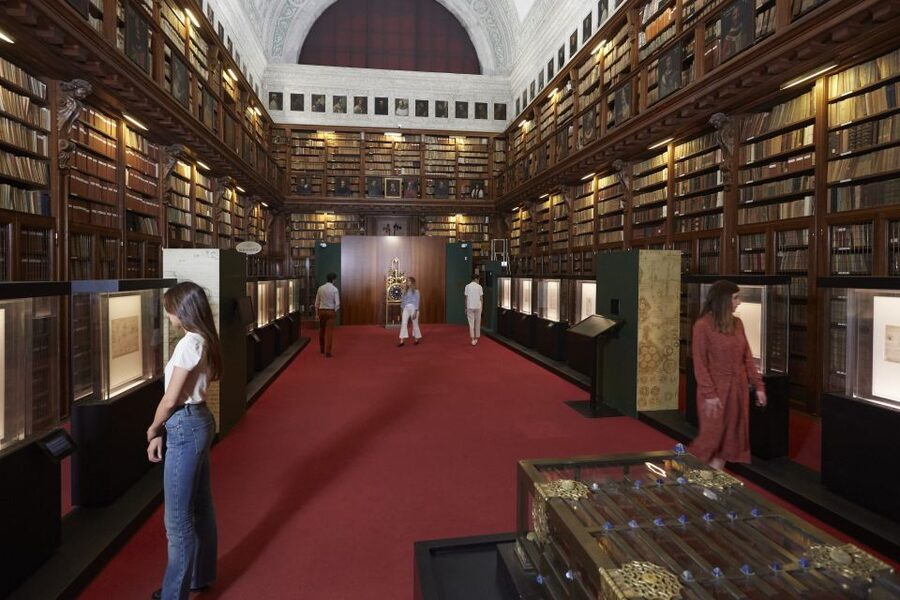
The library rooms are particularly impressive. The displays connect the works of art to the intellectual world that preserved them. For me, this makes the visit feel more complete. You see not only what Italian masters created, but also the kind of institution that collected, studied, and protected their work.
The Federiciana Room of the Ambrosiana Library adds another layer. It gives you a closer look at the library setting and helps explain the world around Leonardo’s drawings. Some parts of the building are visually striking in their own right, so keep your eyes up and take time with the architectural details.
The interior can feel dark in places. That helps focus attention on the art, and one visitor found the subdued lighting especially effective, but it can also make labels harder to read. If you have trouble with small print or dim displays, the audio guide is worth considering.
Same city, a completely different sort of day:
- Tuscany Day Trip from Florence: Siena, San Gimignano, Pisa and Lunch at a Winery
★ 5.0 · 21,634 reviews - Reserved Entrance to Leaning Tower of Pisa & Cathedral
★ 4.5 · 10,391 reviews - Milan: Da Vinci’s Last Supper Guided Tour
★ 4.7 · 10,143 reviews - Florence: Pisa, Siena and San Gimignano Day Trip with Lunch
★ 4.6 · 9,771 reviews
How the audio guide changes the visit
The audio guide is not included in the $21 ticket. You can purchase it through GetYourGuide or at the ticket office for four euros, and it is available in six languages.
You can also download the app to your device and continue listening after the visit. That is useful if you want to revisit the explanations later instead of trying to absorb every detail inside the museum.
Choose the correct visit setting before you begin. The guide may open in a one-hour mode, which covers only a limited selection of paintings. If you plan to spend two or three hours inside, switch to the longer visit option at the start.
The guide is most useful for the works that need context, especially the Codex Atlanticus and Raphael’s cartoon. You can move at your own speed rather than joining a fixed group. This suits independent visitors who want information but dislike being hurried from room to room.
Still, the app may feel cumbersome to some people. If you prefer reading labels and setting your own route, the museum is well enough organized to enjoy without it. I would add the guide if you are new to Renaissance art, want the story behind the objects, or plan to spend more than an hour inside.
A practical route through the museum
Start by getting the museum map and checking where the Leonardo exhibition and major painting rooms are located. Do not rely only on the first signs you see. The layout has several sections, and it is possible to leave without seeing every interesting room.
Next, make your way to the Pinacoteca collection. Begin with the works that interest you most, then return to the smaller paintings and objects. The collection is manageable, but a deliberate route keeps you from using all your energy before reaching the Leonardo displays.
Set aside time for Raphael’s cartoon. Study it from a distance first, then move closer to examine the design. If the explanatory film or display is available during your visit, allow time for it. The technique behind the work adds real value.
Finish with the Codex Atlanticus sections and the library rooms. Leonardo’s drawings reward patience. They are not always large or dramatic, so the details matter. Use the audio guide here if you want to understand what you are looking at rather than simply admire the handwriting and sketches.
A visit of 90 minutes is possible if you choose only the main works. I would allow two to three hours for a more satisfying visit, especially if you read the information panels or use the longer audio route. The ticket is valid for one day, so you are not forced to rush through the building.
Price and overall value at $21
At $21 per person, this is a strong value for an art-focused stop in central Milan. Your admission covers the Ambrosiana collections and the Leonardo exhibition, and you can use the full day if your schedule allows.
The value comes from the combination. A ticket to see only Leonardo’s drawings would already appeal to specialists, but the same admission also gives you Raphael, Caravaggio, Botticelli, Tiziano, the library, and additional historic objects.
You should budget another four euros if you want the audio guide. That still keeps the total modest compared with many major museum experiences, especially if you use the app after the visit as well.
There can be separate charges for areas outside the standard admission. The crypt, for example, has been described as an extra-cost visit. Check what your ticket covers before paying for add-ons, particularly if the crypt is important to you.
Getting there from Milan’s center
The Ambrosiana is at Piazza Pio XI 2, close to Milan’s central sights. The simplest metro options are Cordusio on the red line or Duomo on the red and yellow lines.
Several trams also stop nearby. Lines 12, 14, and 16 stop at Orefici Cantù, while lines 2 and 3 stop at Duomo. This makes the museum easy to combine with a day around the Duomo area.
Because the museum is centrally located, it works well as a two or three-hour stop rather than a full-day commitment. You can visit in the morning, take a break elsewhere, and still have time for another Milan sight.
The ticketing arrangement is primarily admission rather than a guided tour. Read the booking details carefully so you do not arrive expecting a guide to meet you. The standard experience lets you enter and explore independently.
Families, mobility, and comfort
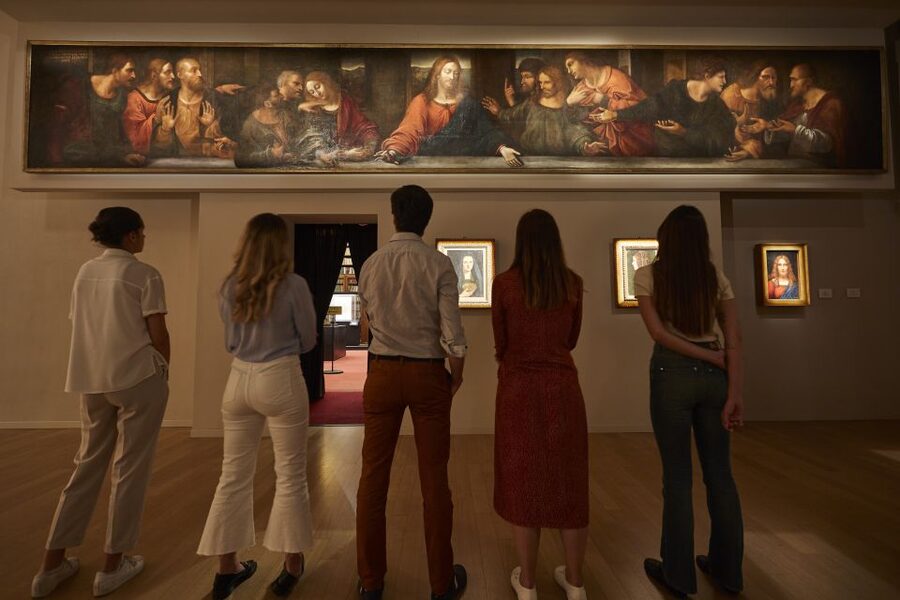
The museum has places to sit, which helps if you plan to spend several hours reading labels and studying drawings. The galleries are also air-conditioned, making the museum a useful pause during a hot Milan day.
If you are bringing a baby buggy, check the storage and access arrangements at the entrance. Some areas may not be accessible with the buggy, and it may need to remain at the entrance. This is worth planning around if you are visiting with a small child.
The museum can be calm and uncrowded, but that does not mean every room is simple to find. Keep the map in hand and ask staff for help if you lose your route. Staff assistance has been useful, although clear signs to every section would make the visit easier.
Art lovers will get the most from the Ambrosiana, especially people interested in drawings, painting technique, Renaissance thought, and historic libraries. It also suits anyone who wants a quieter alternative to Milan’s largest museums.
Who should book the Ambrosiana
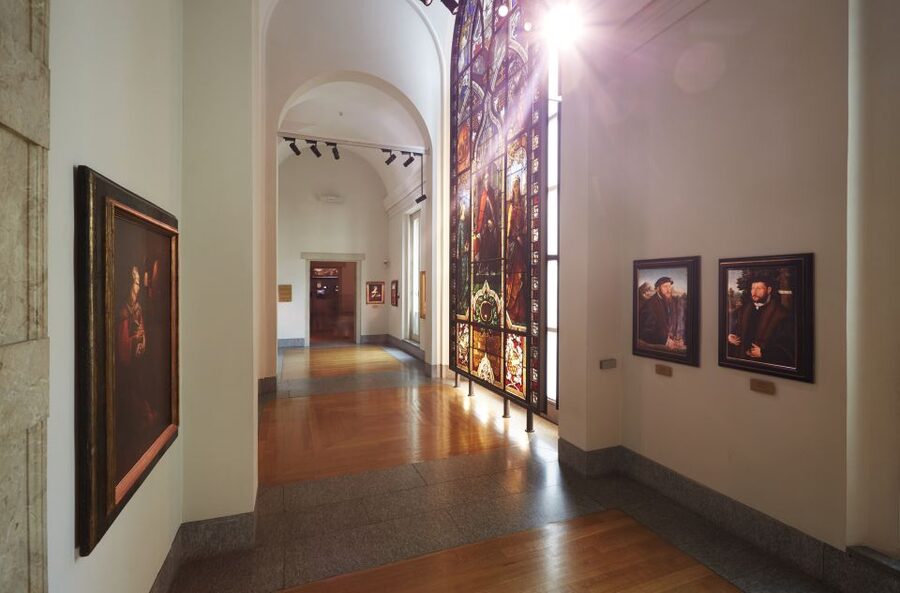
Book it if Leonardo’s working drawings interest you, if you want to see Raphael’s School of Athens cartoon, or if you prefer a museum that can be explored at your own pace.
It is also a smart choice for a short Milan visit. The central location, reasonable price, and two to three-hour visit make it easy to fit between major sights.
You may want to skip it if your Milan schedule is already packed with large museums and you are interested only in famous finished paintings. The collection is compact, some labels are dimly lit, and the route is not always obvious.
For most art-minded visitors, I would book the ticket and add the four-euro audio guide if you want context. Enter with a map, save time for the library, and do not leave before seeing both Raphael and the final Leonardo section.
FAQ
What does the $21 ticket include?
The ticket includes admission to the Pinacoteca Ambrosiana collections and the exhibition of Leonardo da Vinci’s original drawings from the Codex Atlanticus.
Is the audio guide included?
No. The audio guide costs four euros and is available through GetYourGuide or at the ticket office. It is offered in six languages.
How long should I spend at the museum?
You can see the main works in about 90 minutes, but two to three hours gives you time for the paintings, Leonardo’s drawings, Raphael’s cartoon, the library rooms, and the information panels.
Where is the Pinacoteca Ambrosiana?
The museum is at Piazza Pio XI 2 in Milan. The nearest metro stations are Cordusio on the red line and Duomo on the red and yellow lines.
Is the ticket valid for the whole day?
Yes. The admission is valid for one day, with starting times available according to the selected date.
Can I cancel the booking?
You can cancel up to 24 hours in advance for a full refund. You can also reserve now and pay later to keep your plans flexible.
Just added around Tuscany
- Florence Sunset Food Tour with Wine & Dine at a Tuscan farmhouse★ 5.0 · 194 reviews
- Wine Tasting Experience in Ponte Vecchio: Best Tuscany selection!★ 5.0 · 197 reviews
- Val d’Orcia Brunello Wine Tour with Montalcino and Montepulciano★ 4.5 · 359 reviews
- Wine Experience In Chianti Hills from Florence★ 4.5 · 195 reviews
- Tuscany Vespa Tour: Lunch & Wine Tasting, Countryside Roads★ 5.0 · 614 reviews
- Tuscany Vespa Tours Through the Hills of Chianti★ 5.0 · 515 reviews
- Tuscany Vespa Tour from Florence with Wine Tasting★ 5.0 · 425 reviews
- Tuscany Bike Tours Through the Chianti Hills with Wine Tasting★ 5.0 · 1,300 reviews
Museums, compared.
Vatican: Museums & Sistine Chapel Entrance Ticket
Read our review →
Vatican Museums & Sistine Chapel Tour with Optional Basilica
Read our review →
Vatican Museums, Sistine Chapel & St Peter’s Basilica Guided Tour
Read our review →
Skip-The-Line Uffizi Gallery Timed Entry Ticket
Read our review →
Vatican Museums, Sistine Chapel & Basilica Tour
Read our review →
Vatican Museums & Sistine Chapel Skip-the-Line Entry Ticket
Read our review →Vatican Museums, Sistine Chapel & Basilica Tour
Read our review →
Vatican Museums & Sistine Chapel Guided Tour
Read our review →Browse the lists this tour appears in