
Reviewed · WALKING TOURS
Discover Siena: Guided Walking Tour and Cathedral Visit
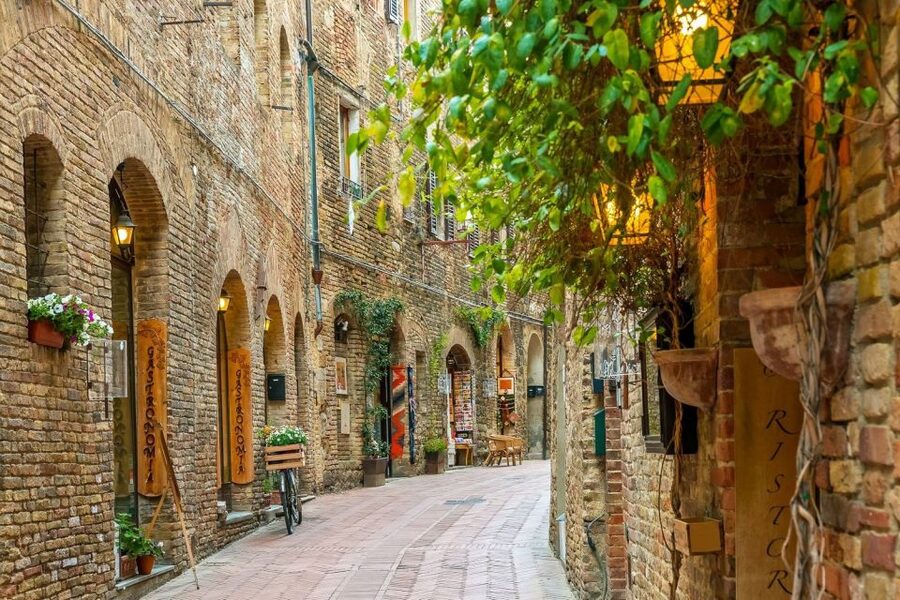
Siena makes the most sense on foot, and this tour quickly connects its grand squares, noble palaces, saints, and famous Palio horse race. I especially like the local focus: you hear about families such as the Piccolomini, Tolomei, and Salimbeni, not just a list of dates. The cathedral visit adds real artistic weight, with work by Duccio, Pisano, Donatello, Pinturicchio, and Bernini.
I also like the meeting point at Basilica Cateriniana di San Domenico, a useful place to begin understanding Siena’s religious life. The main drawback is time. The activity is listed as one hour, while its description says 90 minutes and an older booking describes two hours, so you should confirm the exact duration before booking. Either way, this is an introduction, not a full day of sightseeing.
Key points to know before booking
- Start at Basilica Cateriniana di San Domenico: Meet your guide at Piazza San Domenico, 1, before walking into the center.
- Hear the story behind the Palio: The tour explains Siena’s contrade, noble families, rivalries, and local traditions.
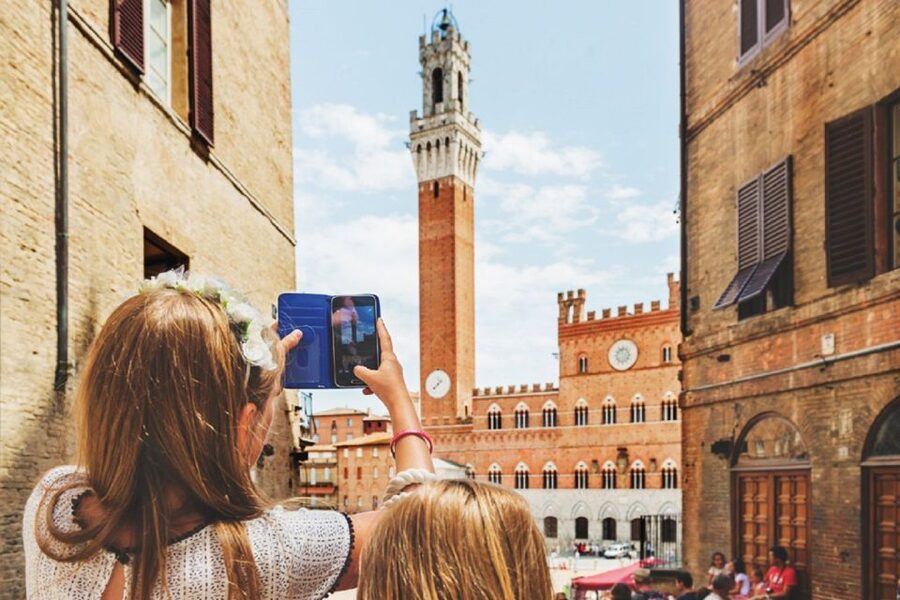
- See Siena’s essential center: The route includes Piazza del Campo, Palazzo Comunale, noble palaces, the cathedral, and Basilica San Domenico.
- Cathedral admission is included: You can see major works connected with Pisano, Duccio di Buoninsegna, Donatello, Pinturicchio, and Gianlorenzo Bernini.
- Plan carefully for Sundays: Cathedral entry is not available on Sundays or bank holidays. A different museum is substituted.
- Best for a first visit: The short format gives you a useful framework before you explore Siena independently.
Starting at Basilica San Domenico
Your meeting point is in front of Basilica Cateriniana di San Domenico, at Piazza San Domenico, 1. This is more than a convenient pin on a map. The basilica is tied to Siena’s religious traditions and to Saint Catherine, one of the city’s most important spiritual figures.
From here, your guide introduces Siena as a city shaped by faith, family power, art, and neighborhood identity. That combination is what makes the walk worthwhile. You are not simply moving from one monument to the next. You are learning why Siena developed the way it did and why its historic center still feels organized around old loyalties.
The guide is live and available in English, Spanish, or Italian. Past departures have included guides named Chiara, Letizia, Claudia, Silvia, and Gemma. The exact guide depends on the date, but the strongest part of this experience is the local perspective. One guide was described as a Sienese native, and another was noted for explaining local life as well as the city’s past.
Wear comfortable shoes. Siena’s center is made for walking, and the value of the tour comes from seeing how the streets, slopes, squares, and buildings fit together rather than viewing them from a vehicle.
More Guided Tours in Tuscany
- Milan: Da Vinci’s Last Supper Guided Tour
★ 4.7 · 10,143 reviews - Milan: Guided Tour of Leonardo da Vinci’s ‘The Last Supper’
★ 4.6 · 1,281 reviews - Pisa: Cathedral Guided Tour & Optional Leaning Tower Ticket
★ 4.7 · 1,036 reviews
Piazza del Campo and the city’s civic heart
The route leads toward Piazza del Campo, Siena’s great shell-shaped public square. This is the place most closely linked with the Palio, the city’s famous horse race, but the square has a larger role in Siena’s story.
Your guide explains how the square functioned as the civic center and points out the Palazzo Comunale, Siena’s town hall. The building and square together show the old balance between public government, wealthy families, and religious authority.
The Palio is not treated as a simple summer show. It is connected with the contrade, the city districts that organize neighborhood life and compete in the race. You hear why the event matters so much to local identity and how it fits into the traditions of Siena.
That context changes the way you see the square. Without it, Piazza del Campo can seem like a beautiful open space surrounded by cafés and visitors. With it, you begin to read the square as a place of civic pride, competition, ceremony, and memory.
If your visit falls close to the Palio, expect the subject to feel especially relevant. One booking took place on a hectic day just before the race, when the city was full of Palio activity. The tour can help you understand what you are seeing, but the short length means it will not cover every detail of the event or contrada system.
Noble families and Siena’s old power
Siena’s story is also a story of powerful families. The tour introduces the Piccolomini, Tolomei, and Salimbeni, along with the palaces connected with them.
This is one of the better reasons to take a guided walk instead of simply following a map. Many of Siena’s buildings look elegant but mysterious when you see them alone. A guide can connect a palace to the family that built it, the political role it played, and the competition that shaped the city.
The Piccolomini name appears in both Siena’s civic and religious history. The Tolomei and Salimbeni also help explain how wealth and influence were distributed through the old city. You may not remember every family name, but you will come away with a clearer sense that Siena was built by rival powers, not by a single ruler working in isolation.
This part of the walk is especially useful if you have only one or two days in Siena. It gives you a reading guide for the streets. Later, when you pass another palace or see a family name on a building, you have some context instead of treating every façade as decoration.
The limitation is that a short tour can only introduce these families. If you want detailed political history, genealogy, or a close look inside every palace, you will need more time on your own.
Siena Cathedral and its remarkable art
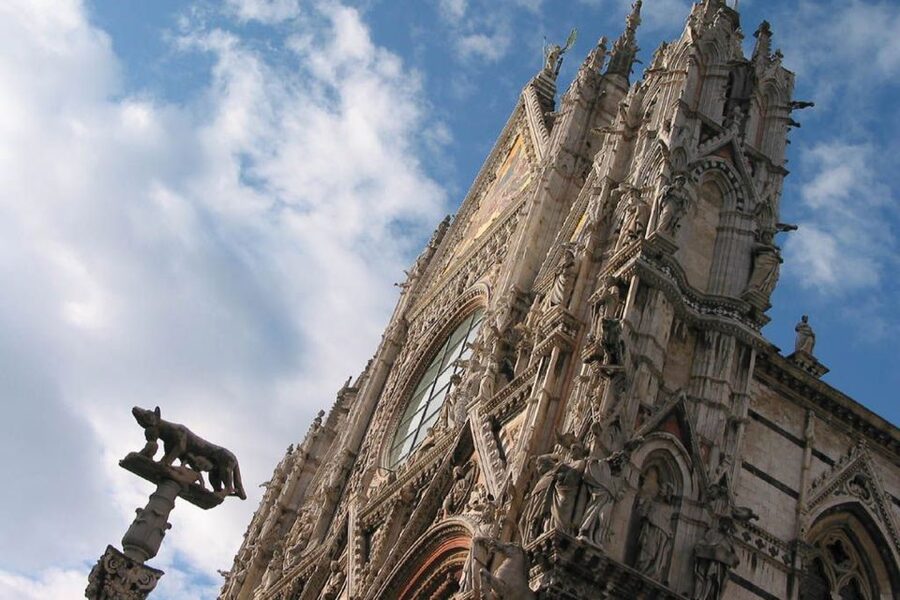
The cathedral is the artistic high point of the experience. Admission is included, and your guide explains the works preserved inside rather than leaving you to wander past them without context.
The cathedral contains work by several major artists. You may see pieces associated with Nicola Pisano, Duccio di Buoninsegna, Donatello, Pinturicchio, and Gianlorenzo Bernini. These names represent different periods and styles, so the building gives you a compact lesson in Italian art as well as a place of worship.
Duccio is especially important to Siena’s artistic identity. Pisano and Donatello bring sculpture into the story, while Pinturicchio and Bernini show how later artists continued to shape the cathedral. The guide’s job is to point out what matters and explain why it belongs in this setting.
During the summer, you can also see the cathedral’s marble floor. It is a remarkable artistic work, and its seasonal display can be a major reason to plan your visit carefully. Since the floor is not necessarily visible in the same way year-round, check the timing if it is high on your list.
The cathedral stop is where the included admission adds real value. You are not paying only for a walk through streets you could cover independently. You also receive entry to one of Siena’s essential interiors and an explanation of its art.
There is an important catch. Cathedral admission is not available on Sundays and bank holidays. If you book on one of those days, the experience visits another museum instead. That does not make the tour useless, but it changes the central attraction, so check the date before you commit.
More Walking Tours in Tuscany
- Siena: Walking Tour and Skip-the-Line Duomo Tickets
★ 4.8 · 1,116 reviews - Siena: 3h Private City Walking Tour with Optional Cathedral
★ 4.7 · 392 reviews - Siena Walking Tour with Cathedral and Crypt & Museum Option
★ 4.9 · 380 reviews - Lucca: 2-Hour City Center Walking Tour
★ 4.7 · 1,314 reviews
Basilica San Domenico and Siena’s religious character
Basilica San Domenico helps frame the religious side of the city. The tour begins nearby, and the wider route includes the basilica among Siena’s major sights.
Siena’s churches are not just stops for architecture. They are tied to pilgrimage, sainthood, local loyalties, and the stories of people who shaped the city’s spiritual life. Your guide brings those connections into the walk, including stories of pilgrimage and saintliness that distinguish Siena from many other Tuscan towns.
This is useful because Siena’s religious buildings can otherwise blur together. A guide helps you understand why one church matters to local memory and how faith influenced the city’s politics, art, and public identity.
Do not expect a long private visit inside every church named in the route. The activity is short, and the description presents several sights as part of a walking overview. Think of San Domenico as a meaningful anchor and the cathedral as the main included interior visit.
What the short duration means for you
The published details are not fully consistent. The activity information gives a duration of one hour, the main description calls it a 90-minute walking tour, and an older booking describes a two-hour tour. Starting times vary, so confirm the current schedule and length when you check availability.
That difference matters. A one-hour tour can give you a brisk orientation, but it leaves little time for questions or lingering inside the cathedral. A 90-minute or two-hour version would allow a more relaxed pace and a fuller explanation of the Palio, noble families, and art.
Either format works best early in your stay. Several past participants found that an introduction at the beginning made the rest of their time in Siena easier and more rewarding. I agree with that strategy. You will know which buildings deserve a second look, which parts of the center need more time, and where the city’s local traditions fit into what you see.
If you have only one day, the tour helps you use that day well. If you have several days, it can serve as a first orientation before you return to the cathedral, town hall, or individual churches at your own pace.
The short format also means you should not expect food, drinks, or transportation. Those are not included. Plan to eat separately and make your own way to the meeting point.
Guide quality and group comfort
The best feedback about this experience centers on the guides. Past guides named Chiara, Letizia, Claudia, Silvia, and Gemma were praised for being friendly, clear, and well informed. One guide was a local from the Siena area, which is valuable when the subject includes customs such as the Palio and the contrade.
The local angle matters more here than it would on a basic sightseeing loop. Siena’s story includes details about neighborhood identity and daily life that are difficult to pick up from a guidebook alone. A good guide can explain not just what a building is, but why it still matters to people who live in the city.
Group size can affect the experience. Earphones are provided for groups larger than 15 people. That is useful around busy squares and inside the cathedral, where it can be hard to hear a guide clearly.
The tour is not suitable for wheelchair users. Siena’s historic center can be demanding underfoot, and this experience is designed around walking. If mobility is a concern, ask the provider for a more suitable option rather than assuming the route will be easy.
Is $34 a fair price?
At $34 per person, the price is reasonable if you want both a guided introduction and cathedral admission. The value is strongest when you are new to Siena, have limited time, or prefer a live explanation of the city’s art and traditions.
You could walk through Piazza del Campo and see many exterior sights without paying for a tour. What you cannot easily duplicate is the chain of explanations linking the square, Palio, noble families, churches, and cathedral art. The included cathedral ticket adds another practical benefit.
The price is less compelling if you already know Siena well or plan to spend hours inside the cathedral with your own detailed guidebook. It is also worth checking the exact duration. At one hour, $34 feels like a compact orientation. At 90 minutes or longer, it offers a fuller return.
Free cancellation up to 24 hours before the start gives you some flexibility, and you can reserve now and pay later. Those terms are useful if your Tuscan schedule is still changing, but the main decision should remain the content and timing of the tour.
Who should book this Siena walk?
I would choose this experience if you are visiting Siena for the first time, especially for one or two days. It gives you the basic map, the key civic sights, the major cathedral art, and the local story behind the Palio.
It also suits you if you enjoy history but do not want a long academic lecture. The route moves through real streets and squares, with short explanations tied to what is directly in front of you.
Families can benefit from the clear structure, though younger children may find the art and political history demanding if the walk lasts only an hour. Couples and solo visitors who want a quick orientation should find the format practical.
I would think twice if you need step-free access, want a slow photography walk, or hope to spend extensive time inside every major monument. This is a useful starting point, not a complete tour of Siena.
Should you book it?
Book it if you want a local guide to connect Siena’s Palio traditions, noble families, and cathedral art in a short visit. The experience is particularly helpful on your first day, when you need a clear sense of the city before exploring alone.
Before booking, confirm the exact duration and check whether your date is a Sunday or bank holiday. On those days, the cathedral visit is replaced by another museum. If that change works for you, $34 is a fair price for a guided city introduction with an included cultural visit.
FAQ
Where does the tour meet?
Meet your guide in front of Basilica Cateriniana di San Domenico at Piazza S. Domenico, 1, 53100 Siena, Italy.
How long does the tour last?
The activity details list one hour, while the description says 90 minutes. An older booking refers to a two-hour tour, so check the current duration when selecting your date.
What languages are available?
The live guide is available in English, Spanish, or Italian.
Is the cathedral ticket included?
Yes. Entrance to Siena Cathedral is included in the activity price.
Can I visit the cathedral on a Sunday?
No. Cathedral admission is not available on Sundays and bank holidays. If you book for one of those dates, the tour visits another museum instead.
What happens if the group has more than 15 people?
Earphones are provided for groups larger than 15 people.
Is the tour suitable for wheelchair users?
No. The experience is listed as unsuitable for wheelchair users.
Are food and drinks included?
No. Food and drinks are not included, so you should arrange those separately.
Can I cancel my booking?
You can cancel up to 24 hours in advance for a full refund. You can also reserve now and pay later.
Just added around Siena
- Total Immersion Wine Tour in Chianti★ 4.9 · 430 reviews
- From Siena: Pienza and Montepulciano Small-Group Tour★ 4.9 · 220 reviews
- Siena Walking Tour with Cathedral and Crypt & Museum Option★ 4.9 · 380 reviews
- Siena: Pasta and Tiramisu Cooking Class with Wine★ 4.8 · 274 reviews
- Siena: Walking Tour and Skip-the-Line Duomo Tickets★ 4.8 · 1,116 reviews
- Siena: Educational Wine Tour & Tasting★ 5.0 · 203 reviews
- Siena: San Gimignano, Chianti & Montalcino Small-Group Tour★ 4.6 · 195 reviews
- From Siena: Tuscany Hills Wine Tour★ 4.1 · 323 reviews
Walking Tours, compared.
Guided Walking Tour & Last Supper Visit with Ticket
Read our review →
Rialto Bridge & Offbeat Unusual Venice Walking Tour
Read our review →
Private 3 hrs Venice Tour: St Mark’s, Walking tour & Boat tour
Read our review →
Skip the line: Uffizi and Accademia Small Group Walking Tour
Read our review →Browse the lists this tour appears in