
Reviewed · POMPEII TOURS
Pompeii: Group Tour with an Archeologist Guide
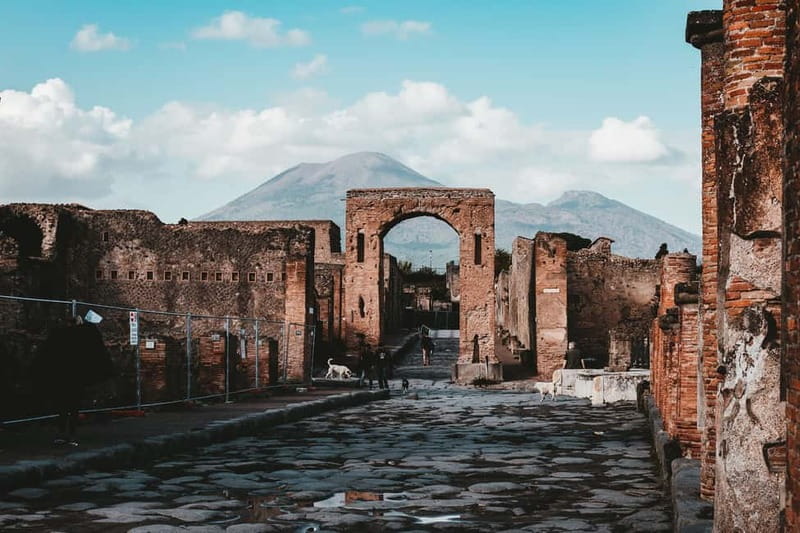
Pompeii makes far more sense with someone to point out what you’re seeing. Beneath the ash-covered streets are homes, shops, baths, theaters, political buildings, and ordinary people frozen in a terrible moment in 79 AD. I like that this tour takes you straight to the western section, where many of the city’s key monuments are packed together. I also like the two-hour length, which gives you a clear introduction without keeping you in the hot sun all day.
The main trade-off is the group format. It can be fairly large, and you may not get long at every building. Still, the guide’s explanations turn a maze of ancient walls into a city you can picture, and the included skip-the-line ticket saves useful time.
Key points to know before you book
- Meet at the Circumvesuviana station: Find the Tempio Travel office on the first floor of the station building and allow time to get oriented.
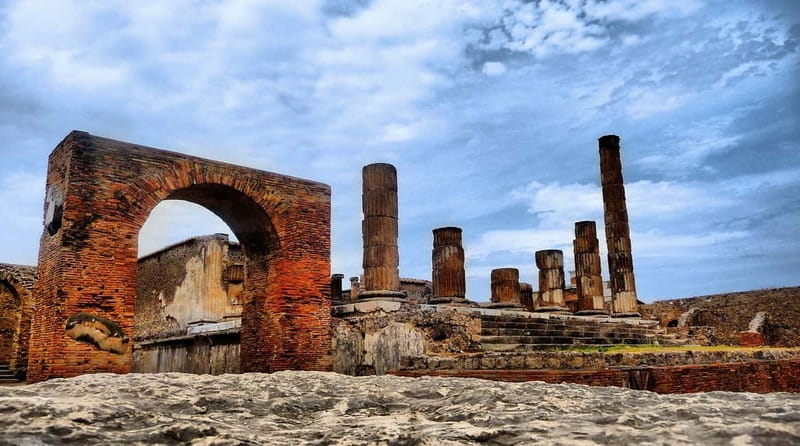
- See Pompeii’s essential sights: The route includes the Marina Gate, Basilica, Forum, baths, Lupanar, main street, theaters, and several famous houses.
- Expect strong historical storytelling: Guides including Laura, Lena, Alfonso, Giuseppe, Eraldo, and Antonio have been praised for clear explanations, humor, and good pacing.
- The tour ends with time to keep exploring: You return to the meeting point after the guided portion, but you can continue around the ruins on your own.
- Prepare for heat and uneven ground: Wear comfortable shoes, carry water, and remember that the site offers little shade in many places.
- Best for a first visit: This is a useful introduction if Pompeii feels too large to tackle without a plan.
Why a guide changes the Pompeii experience
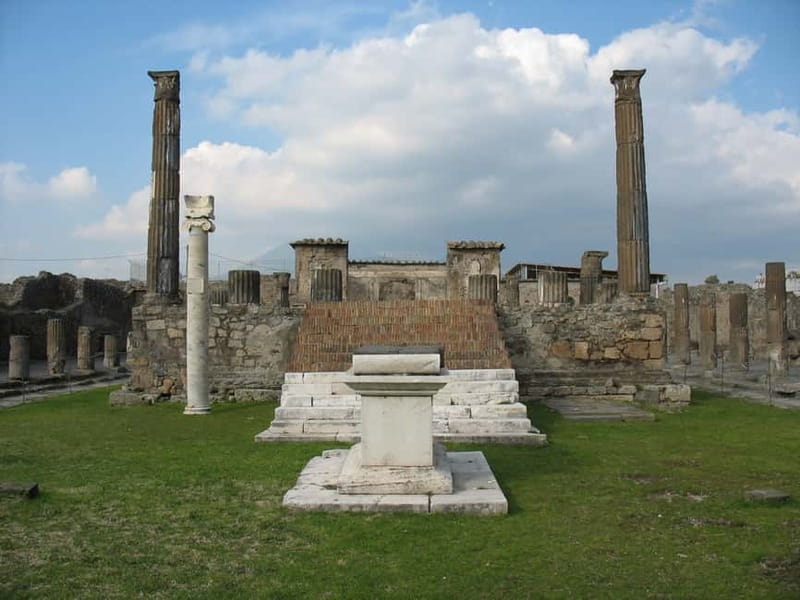
Pompeii is not a small set of ruins that you can understand in one quick circuit. It is a buried Roman town, and its streets can feel confusing at first. A doorway may look like a simple gap in a wall until someone explains that it opened onto a bakery, house, shop, bath complex, or political building.
That is the real value of this tour. You are not just walking past old stones. Your guide helps you read the city. The Forum becomes the center of public life. The Basilica becomes a place tied to law and business. The baths reveal how Romans spent time together, while the Lupanar offers a more earthy glimpse of daily life.
The guides are licensed to speak in English or Italian, and the strongest part of the experience is the way they connect facts with stories. Alfonso, Laura, Lena, Giuseppe, Eraldo, and Antonio are among the guides praised for lively explanations, good English, patience, and a sense of humor. Guide assignments can change, so you should not book expecting one particular person, but the tour has a clear record of strong guiding.
You also receive a whisper headset if the group is large. This matters in Pompeii, where several groups may gather around the same building. The earpiece helps you follow the explanation without standing shoulder to shoulder with the guide. One practical warning: it may feel a little uncomfortable after a while, but it is useful.
A few more Pompeii half-days worth a look
- Pompeii: Entry Ticket and Guided Tour with an Archaeologist
★ 4.8 · 19,459 reviews - Pompeii: Entry Ticket with Optional Audio Guide
★ 4.2 · 12,360 reviews - Pompeii: Small Group Tour with an Archaeologist
★ 4.8 · 12,264 reviews
Meeting at Tempio Travel near the train station
The meeting point is the Tempio Travel office on the first floor of the Circumvesuviana train station. This is convenient if you are arriving by train, but the directions deserve close attention. Look for the building with the red logo and take the stairs to the office level.
Do not assume you meet your guide at the archaeological entrance. You first check in at Tempio Travel, where the staff organize the group and direct you toward the site. A little extra time at the station will help, especially if you are unfamiliar with Pompeii’s layout.
Free parking may be available, but only if the lot is open and spaces remain. Hotel pickup and drop-off are not included, so you need to make your own way to the station meeting point. Food and drinks are also not included.
After check-in, the group walks toward Porta Marina, or Marina Gate. This is the entry point for the guided visit and a fitting introduction to the old city. From here, you begin seeing how Pompeii was connected to the outside world and how its streets led into the civic heart of town.
Porta Marina and Pompeii’s western quarter
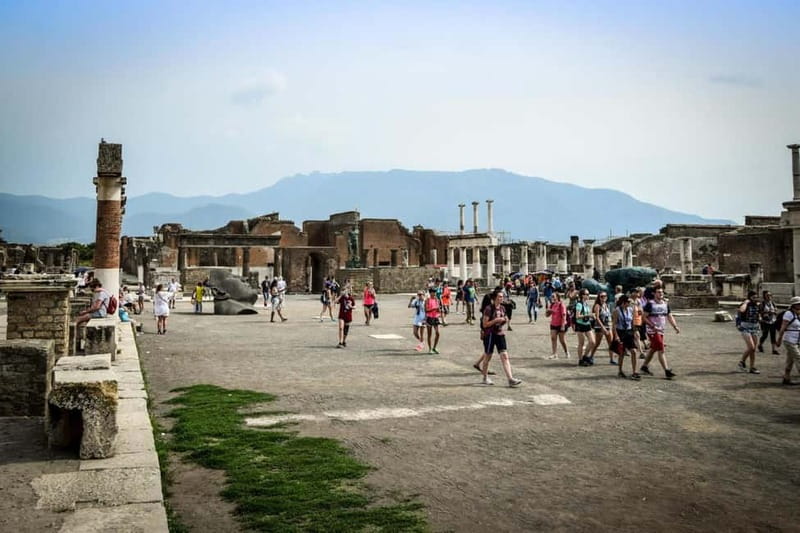
The route focuses on the western part of Pompeii, where many of the most important public buildings are found. This is a sensible choice for a two-hour visit. The whole archaeological site is too large to cover in detail in that time, so the guide concentrates on places that explain how the city worked.
Porta Marina is one of Pompeii’s major gates. From there, the route leads through the old streets and toward the Forum. You will notice deep wheel marks in the paving stones and high stepping stones built into some streets. The guide can help you understand how Roman traffic, drainage, and foot travel shaped the town.
A short tour means you will not linger at every doorway or side street. That is the price of seeing the major sights in one morning or afternoon. If you want to study every house, inscription, or painted detail, plan to stay after the tour and continue alone.
The Forum, Basilica, and public life
The Forum is the heart of the visit. This broad public square was surrounded by important buildings and served as the center of civic, commercial, and religious life. It is also one of the places where the size of Pompeii becomes clear. You are looking at a functioning town, not an isolated monument.
The nearby Basilica helps show how business and legal matters were handled. These structures can be hard to interpret from ruins alone, especially when columns and walls are only partly preserved. Your guide’s job is to explain the original use of each space and help you picture the people who once filled it.
This is where the tour’s short, focused route works well. The guide can give you a framework for the city rather than a long list of dates. Several guides have been praised for presenting information in a clear, concise way and for answering questions without turning the visit into a lecture.
Same city, a completely different sort of day:
- From Naples: Pompeii Ruins & Mount Vesuvius Day Tour
★ 4.3 · 11,459 reviews - From Rome: Pompeii, Amalfi Coast, and Sorrento Day Trip
★ 4.6 · 7,031 reviews - From Rome: Pompeii, Amalfi Coast and Positano Day Trip
★ 4.6 · 6,620 reviews - Pompeii Small Group Tour with an Archaeologist
★ 5.0 · 6,593 reviews
Baths, the Lupanar, and the less formal side of town
The baths offer another window into Roman life. They were not simply places to wash. They were social spaces, and the remains help explain how people spent time, met others, and cared for their bodies.
The Lupanar is one of Pompeii’s most famous stops. Its small rooms and surviving images make it memorable, but it is also a reminder that Pompeii was a real working town with a wide range of businesses and services. The guide provides context so you can understand the building without reducing it to a quick curiosity.
The main street ties these places together. As you walk along it, you begin to see the town as a network of homes, shops, public buildings, and entertainment spaces. Pompeii feels most powerful when you notice the ordinary details, not only the grand monuments.
Theaters and the city’s cultural life
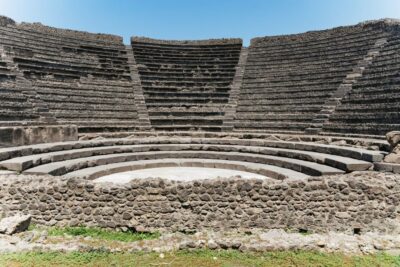
The theaters show that Pompeii’s residents made room for entertainment as well as business, religion, and politics. The tour includes the theaters, giving you a sense of the city’s public culture.
The amount of time spent here depends on the group and the guide’s route. In a two-hour visit, you should expect an overview rather than a full examination of every seating area or architectural feature. The benefit is that you also see the Forum, baths, Lupanar, houses, casts, and Garden of the Fugitives in the same outing.
If you are visiting on a tight schedule, this balance is useful. If theaters are your main interest, you may want to explore them again after the guided walk ends.
Frescoes, plaster casts, and famous houses

Pompeii’s painted walls are among its greatest rewards. The frescoes in the houses show color, decoration, taste, and wealth in a way that bare walls cannot. Your guide takes you to several named homes, including the House of the Tragic Poet and the House of the Golden Cupid.
The names can sound grand, but the value is in the details. These houses help you understand how Roman families arranged rooms, displayed art, received visitors, and signaled their status. A guide can also explain why a particular fresco or architectural feature matters, rather than leaving you to guess.
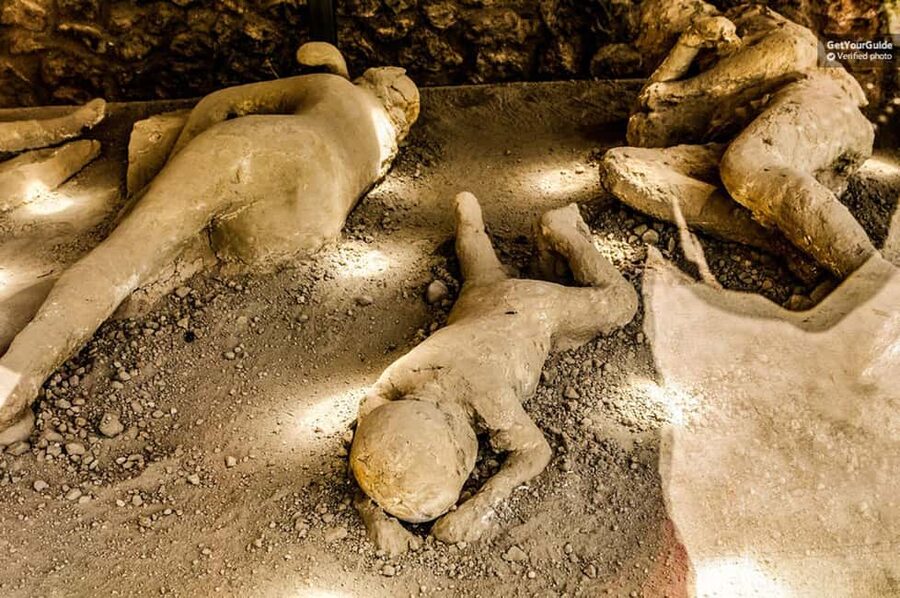
You will also see plaster casts of people who died during the eruption. This is one of Pompeii’s most difficult sights. The casts are not simply archaeological objects. They make the disaster personal, and the guide’s explanation helps place them in the wider story of the eruption and the city’s final hours.
The Garden of the Fugitives is another especially moving stop. Its name refers to people who tried to escape. You should expect this part of the route to be emotional, even when the guide presents it in a calm and factual way.
Because the site is exposed and the ruins are spread out, the quality of the explanation matters here. A guide such as Lena or Laura can connect the buildings, art, and human stories so the visit does not feel like a checklist of famous names.
Two hours in the sun, heat, and ancient streets
Two hours is a sensible length for Pompeii, especially in warm weather. One guide-led visit described the heat as intense even in the afternoon, with two hours feeling like the right amount of time. You can see the central sights without exhausting yourself before the rest of your day.
Wear shoes with good support. The ancient streets are uneven, and you will be walking over old paving stones and rough ground. The tour is not suitable for people with mobility impairments, and the route may be difficult if you need smooth surfaces or frequent seating.
Bring water, although food and drinks are not included. Shade can be limited. A paper umbrella was purchased outside the entrance by one visitor, and roadside stalls may sell sun protection or rain gear, but you should not count on finding everything you need inside the site.
Rain does not necessarily stop the tour. The group can still visit the grounds in wet weather, but you should bring an umbrella or raincoat. The same practical rule applies in every season: check the forecast before leaving and dress for an exposed archaeological site.
Large bags and luggage are not allowed. Bring a passport or ID card, as requested for the activity, but leave suitcases and bulky items elsewhere.
What the group format is really like

This is a shared tour, not a private walk. The group may feel fairly large, and you need to stay close enough to hear through the headset and keep up with the guide. That can make intimate conversation harder, especially near popular monuments.
The upside is cost. At about $50.11 per person, the tour is priced for an organized introduction rather than an exclusive experience. The ticket is included, and skipping the ticket line can protect a meaningful part of your day, especially when Pompeii is crowded.
The guides generally keep the group moving at a steady pace. Several have been praised for making sure no one falls behind, explaining places clearly, and keeping children engaged. One particularly strong family experience involved children aged eight to twelve, with the guide balancing patience, humor, and a practical route.
If you prefer to stop for ten minutes at every fresco, this may feel rushed. If you want a well-planned first look and the freedom to continue alone, the format works better.
Continue exploring after the guided walk
The tour ends back at the meeting point, and you can remain in Pompeii to see more on your own. This is an important part of the value. The two-hour route gives you an orientation, then you can return to areas that caught your attention.
Ask your guide for suggestions before leaving. The guide can also direct you to the modern city of Pompeii and the Sanctuary Dedicated to Our Lady of the Holy Rosary, only a short distance from the archaeological site.
This makes the activity easy to combine with a wider Pompeii visit. Start with the guided route, use it to learn the basic layout, then decide how much more energy you have for additional ruins or the sanctuary. You are not forced to finish your day when the guided portion ends.
Is $50.11 a fair price?
For roughly $50.11, you are paying for three useful things: an entry ticket, a planned route through a huge site, and a live archeologist guide who explains what you are seeing. The price makes more sense if you value your time or are visiting Pompeii for the first time.
The ticket alone is not the whole issue. Without a guide, you can walk through the ruins, but you may miss why the Forum, Basilica, baths, houses, and theaters mattered. You also risk spending too much time on minor streets and missing the sites you most wanted to see.
The value is weaker if you already know Pompeii well or prefer an unhurried archaeological study. In that case, a self-guided visit may give you more freedom. For a first visit, a cruise-day stop, or a family outing, the structure and explanations are worth considering.
Free cancellation up to 24 hours before the tour and reserve-now, pay-later booking add flexibility. The first Sunday of each month is a special case: Pompeii entry is free, but tickets cannot be reserved in advance, so admission is not guaranteed. The paid tour may be a practical choice on that date if you want a confirmed place.
Who should book this Pompeii tour?
I would choose this tour if you want to understand Pompeii rather than simply walk through it. It suits first-time visitors, people with only a few hours, families who need a clear route, and anyone arriving by the Circumvesuviana train.
I would also choose it if heat is a concern. Two focused hours are easier to manage than wandering for half a day without a plan.
I would think twice if you have mobility limits, dislike group tours, or want long stretches of quiet time at individual houses. The guide-led route is active and fairly brisk, and the ruins are not an easy surface for every visitor.
For most first visits, the combination of a strong archeologist guide, included entry, and access to Pompeii’s key sights makes this a sensible introduction. Book it if you want the big picture, then use the remaining time to follow your own interests.
FAQ
How long does the Pompeii guided tour last?
The guided tour lasts two hours. Starting times vary, so check availability when booking.
Where does the tour start?
Meet at the Tempio Travel office on the first floor of the Circumvesuviana train station. Look for the building with the red logo and take the stairs to the office level.
Where does the tour end?
The activity ends back at the meeting point.
Which languages are available?
The live guide speaks English or Italian.
Is Pompeii admission included?
Yes. Skip-the-line entrance tickets are included in the tour price.
What should I bring?
Bring your passport or ID card and comfortable shoes. Water, sun protection, and rain gear are also sensible for the exposed archaeological site.
Can I bring luggage or large bags?
No. Luggage and large bags are not allowed.
Is the tour suitable for people with mobility impairments?
No. The activity is not suitable for people with mobility impairments.
Can I cancel the booking?
You can cancel up to 24 hours in advance for a full refund. Reserve-now, pay-later booking is also available.
Just added around Pompeii
- Vesuvius National Park Skip-the-Line Ticket★ 3.8 · 221 reviews
- From Rome: Sorrento & Pompeii Day Tour with Hotel Pickup★ 4.2 · 257 reviews
- From Rome: Day Trip to Pompeii with Tickets★ 4.4 · 1,161 reviews
- Pompeii Ruins Private Tour with Optional Skip-the-Line Entry★ 4.9 · 732 reviews
- From Rome: Pompeii All-Inclusive Tour with Live Guide★ 4.3 · 261 reviews
- Pompeii: Exclusive Tour with Archaeologist and Entry Tickets★ 4.9 · 634 reviews
- Pompeii 3hours Villa of Mysteries tour with an Archaeologist★ 4.8 · 486 reviews
- Pompeii and Vesuvius Full-Day Tour from Amalfi Coast★ 4.4 · 319 reviews
Pompeii Tours, compared.

Entry Ticket and Guided Tour with an Archaeologist
Read our review →

From Naples: Pompeii Ruins & Mount Vesuvius Day Tour
Read our review →
From Rome: Pompeii, Amalfi Coast, and Sorrento Day Trip
Read our review →
From Rome: Pompeii, Amalfi Coast and Positano Day Trip
Read our review →Pompeii Small Group Tour with an Archaeologist
Read our review →
Pompeii, Amalfi Coast and Positano Day Trip from Rome
Read our review →Browse the lists this tour appears in