
Reviewed · ANCIENT RUINS
Syracuse: Neapolis Archaeological Park Small Group Tour
Syracuse’s Neapolis Archaeological Park packs Greek theaters, Roman ruins, stone quarries, and one famously strange grotto into a single hillside. The Ear of Dionysius is the crowd-pleaser: step inside, hear the unusual echo, and you will quickly understand why this cave has inspired so many stories.
I like the way the tour links separate ruins into one story, and I like the small-group format, which makes it easier to hear guides such as Eva or Federica. The main consideration is language: the listed tour language is Italian, and a 1.5-hour visit may feel slow if you already know ancient Greek and Roman sites well.
Key points at a glance
- Enter the Ear of Dionysius: See the famous quarry grotto and listen to its unusual acoustics.
- Look across Syracuse from the Greek Theater: The theater’s setting on Temenite Hill gives the ruins a memorable view toward the bay.
- Cover Greek and Roman Syracuse in one walk: The route includes the Altar of Hieron and Roman Amphitheater, not just the headline theater.
- Expect a guide-led visit: Guides including Eva, Federica, Galina, and Anne-Marie have been praised for clear explanations and lively storytelling.
- Pay about $26 for 1.5 hours: That is a fair price if you want context rather than a quick walk through the ruins.
- Choose shared or private: A private option suits families and travelers who want the guide to adjust the pace.
Why Neapolis is worth your time
Syracuse is often introduced through Ortigia, its beautiful historic island, but Neapolis tells a different part of the city’s story. Here, the evidence is spread across open ground and cut directly into the rock. You are not simply looking at one surviving building. You are moving through theaters, quarries, caves, altars, and an amphitheater that show how Greek and Roman Syracuse used the same area over many centuries.
I find a guided visit especially useful here because the ruins do not always explain themselves. A curved stone wall can look like a random fragment until someone shows you how it fitted into a theater or quarry. The best guides on this tour make those connections without burying you in dates.
The experience has earned a 4.7 rating from 350 reviews, with especially strong praise for guides named Eva and Federica. Eva is repeatedly described as clear, patient, and well prepared, while Federica is praised for making the subject easy to follow and for offering useful suggestions about Syracuse beyond the park.
At about $26 per person, the price is modest for a licensed guide and a 1.5-hour walking visit. You are paying for interpretation, not transportation or a meal. That matters at Neapolis, where walking independently is possible but you may miss why each quarry, theater, and Roman structure mattered.
More Ancient Ruins in Sicily
- Agrigento: Valley of the Temples Skip-the-Line Sunset Tour
★ 4.5 · 1,512 reviews - Palermo: Agrigento and the Valley of the Temples Day Tour
★ 4.2 · 1,240 reviews - Agrigento: Valley of the Temples Ticket & App Audioguide
★ 4.3 · 1,160 reviews
Meeting at Largo Anfiteatro
The listed starting point is Largo Anfiteatro, though the exact meeting location can vary with the option you book. You should check your confirmation carefully before setting out, especially if you choose a private tour or a different ticket arrangement.
The tour begins at the entrance gate of the archaeological park. From there, you follow the guide on foot through the principal monuments and finish back at Largo Anfiteatro. The route is compact enough to fit into a morning or afternoon plan, though the park itself contains enough to keep you longer if you want to explore after the guided portion.
Bring a passport or identity card, as requested for the activity. The park is listed as wheelchair accessible, but the experience still takes place across an archaeological site with outdoor walking and uneven historic surfaces. If mobility is a concern, ask about the specific route when booking.
The tour is listed in Italian. In rare cases, a very small shared group may receive explanations in two languages. Do not assume an English-language tour from the international booking page. Confirm the language that applies to your selected departure.
Latomie del Paradiso: quarries with a softer side
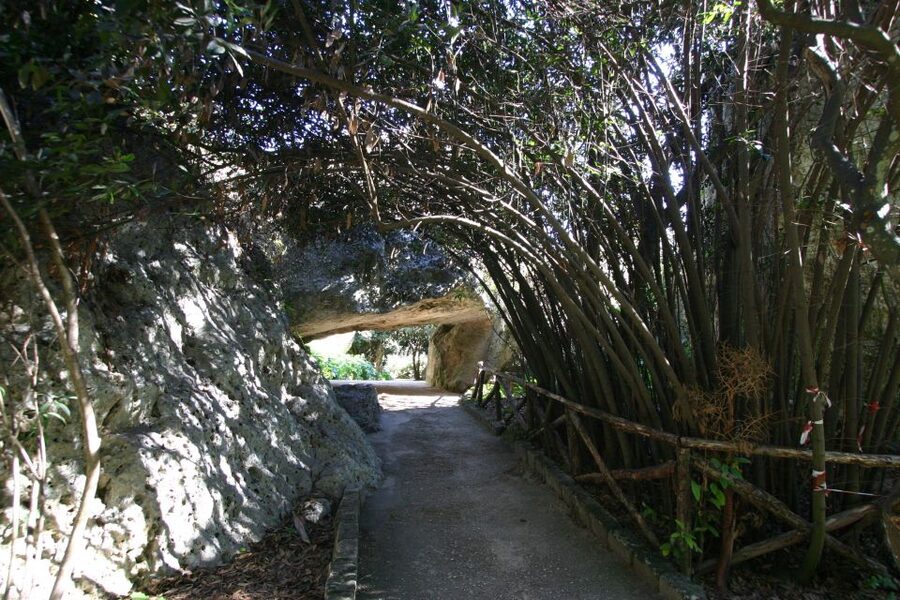
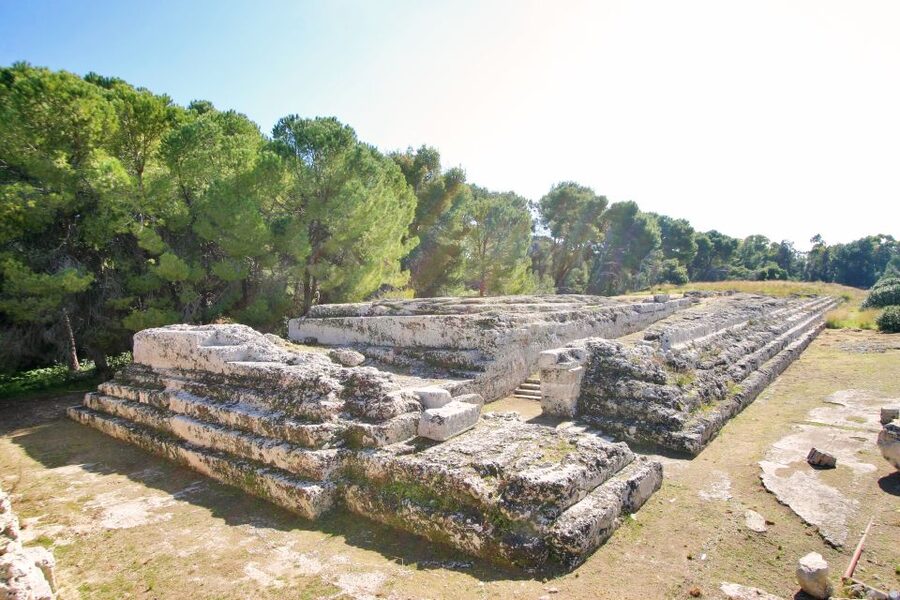
The first major stop is the Latomie del Paradiso, an ancient stone quarry shaped by excavation. The quarries are not just bare cuts in rock. Local plants grow through and around the stone, giving this section a calmer feel than the open theater and amphitheater.
This is a useful opening stop because it shows the raw material behind Syracuse’s monuments. The same kind of stone that was removed from the hillside became part of the city’s buildings. Your guide can also explain how the quarries fit into the wider story of ancient Syracuse, rather than treating them as an isolated geological curiosity.
The scheduled explanation here is about 15 minutes. That is enough time to get the basic layout and see the quarry walls without lingering too long at the first stop. In spring, the park can be especially pleasant, with orange and lemon blossom adding scent to the walk.
Do not expect a long nature walk. The appeal is the contrast between the cut rock and the plant life, along with the human stories tied to the quarries. The guide’s explanation gives this area meaning that a quick glance from the path may not provide.
Grotta dei Cordari and the quarries underground
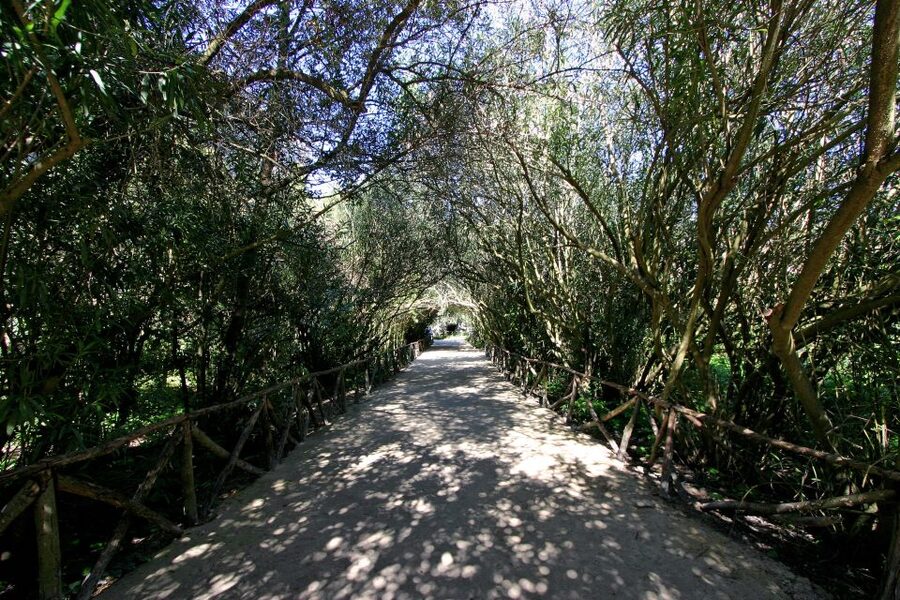
The itinerary next includes Grotta dei Cordari, with another guided segment of about 15 minutes. It is located within the quarry area, so this part continues the theme of people working with, living beside, and reshaping the rock.
The stop helps break up the larger monuments. Instead of moving from one grand ruin to the next, you get a closer look at the smaller spaces that made the quarry complex useful. Your guide may point out details that are easy to pass without noticing.
This is also a good place to pay attention to the pace. Some visitors find the full route pleasantly measured, while one four-star assessment felt the visit could have been shorter. If you prefer a brisk tour, the quarry sections may feel more deliberate. If you like context and questions, the slower rhythm gives you time to listen and look.
Same city, a completely different sort of day:
- Catania: Mount Etna Morning or Sunset Day Trip with Tasting
★ 4.8 · 4,028 reviews - Mount Etna: Guided Volcano Summit Hiking Tour with Cable Car
★ 4.7 · 3,784 reviews - Palermo: NO Mafia Walking Tour
★ 4.8 · 2,431 reviews - Palermo: Hop-on Hop-off Bus Tour 24-hour Ticket
★ 3.9 · 2,410 reviews
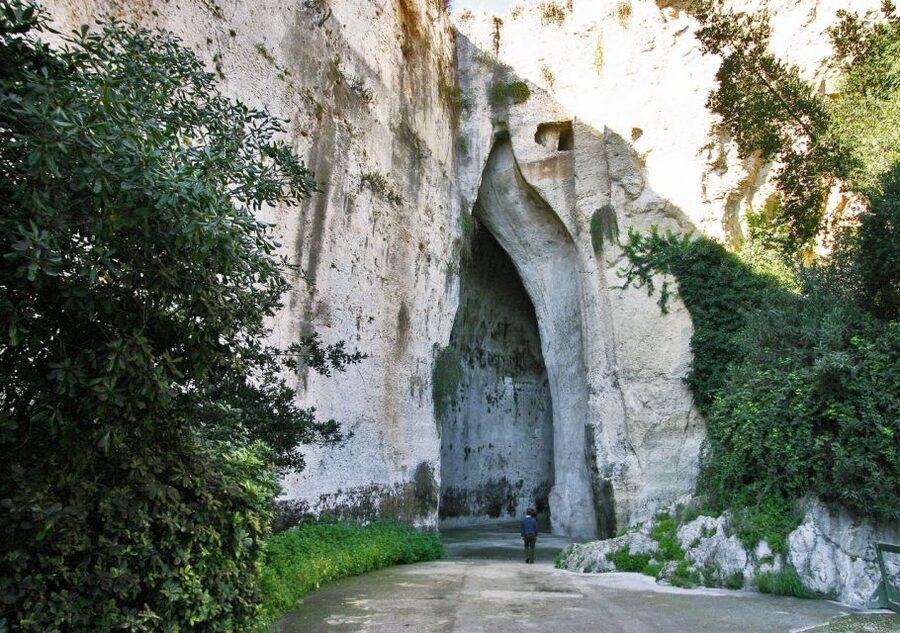
The Ear of Dionysius and its strange echo
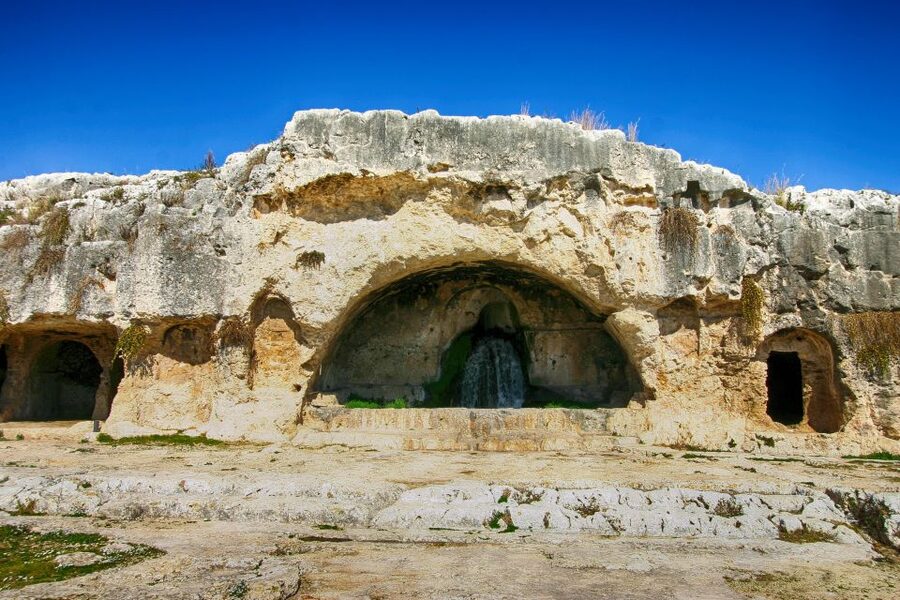
The Ear of Dionysius is the most theatrical stop, even before you reach the Greek Theater. This tall, cave-like grotto was carved into the quarry and is famous for its shape and echoing sounds. Its name comes from its resemblance to a human ear.
Your guide will take you inside and explain the features that made the grotto so memorable. The acoustics are the point. Sounds carry in a way that feels surprising when you are standing inside the stone chamber, and the enclosed space offers a strong contrast to the open Roman and Greek ruins later in the tour.
This is one place where a guide adds real value. Without context, you may see a striking cave, listen to the echo, and move on. With an explanation, you get a better sense of how the grotto fits into Syracuse’s quarry complex and why it became one of the park’s best-known sights.
Allow for a little crowding if several groups reach the grotto together. The tour uses shared groups or private arrangements, and large shared groups may receive radio receivers. Smaller groups, often around 10 people according to one experience, are easier to manage and make it simpler to hear the guide directly.
The Greek Theater on Temenite Hill
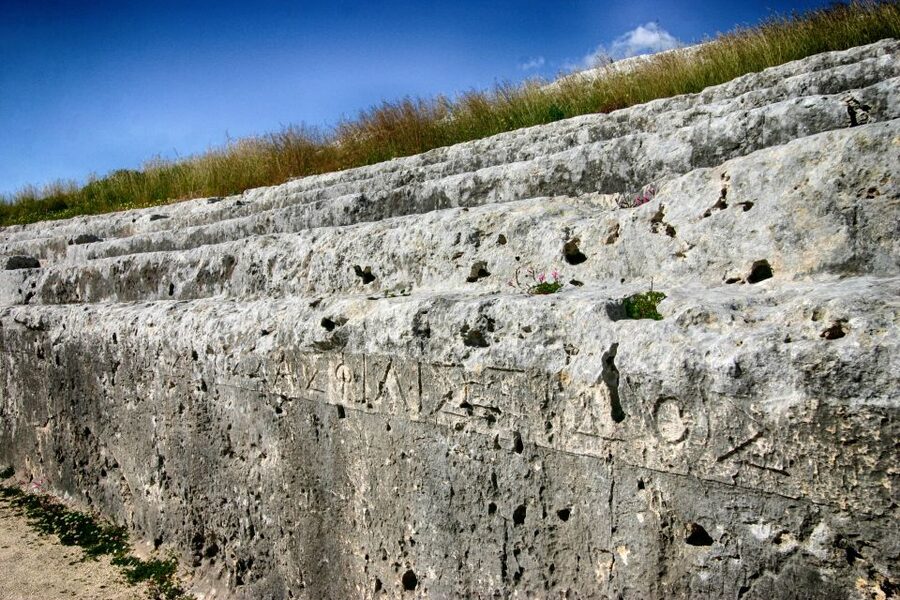
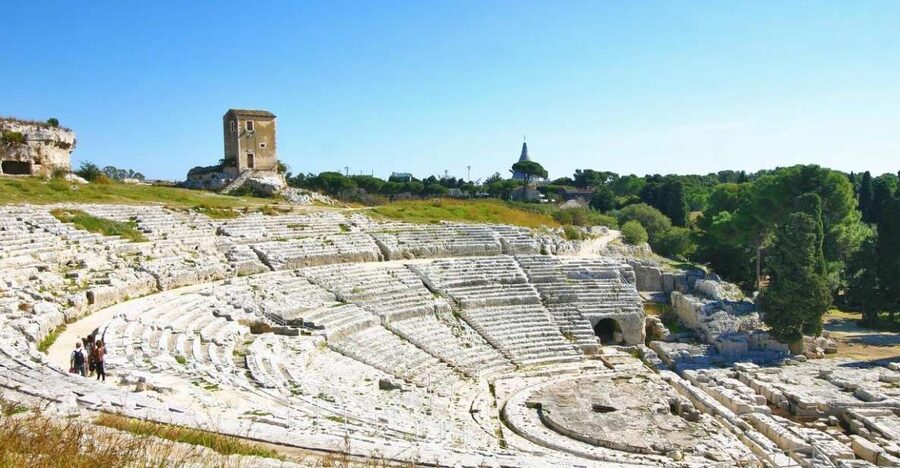
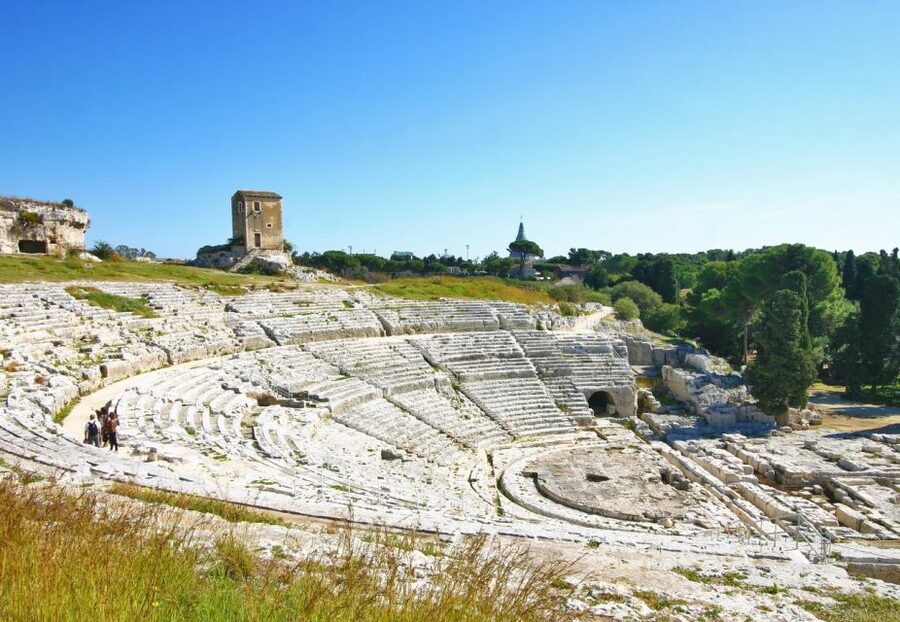
The Greek Theater is the centerpiece of the park. Cut directly into the rock of Temenite Hill, it shows how Greek builders used the slope rather than forcing a separate structure onto flat ground.
You will spend about 30 minutes here, the longest scheduled stop. That makes sense. The theater deserves time for its shape, setting, and role in ancient Syracuse. Your guide can help you read the stone seating and understand how the hillside formed part of the design.
I especially like the view from this area. You can look toward the town’s bay while standing among the theater’s ancient stonework. The combination of open sky, water, and carved rock gives this stop more emotional force than a theater viewed only as a set of measurements.
The theater also benefits from a guide who can explain what you are seeing without turning the visit into a lecture. Eva has been praised for giving the right amount of information, answering questions, and bringing the setting to life. Other guides, including Galina and Anne-Marie, have been described as engaging and enthusiastic about Syracuse.
Take photos here, but also pause before raising your camera. The arrangement of the theater and the view beyond it are easier to appreciate when you look at the whole setting rather than only at individual stones.
A short photo stop across Neapolis
After the main theater visit, the route includes a brief five-minute photo stop in the broader Neapolis Archaeological Park. It is a short pause, but it gives you a chance to record the scale of the site and catch your breath before the Roman monuments.
The park is open and exposed in places, so sun and heat can affect your comfort. One visitor specifically found an evening departure helpful during very warm weather. If you have a choice of times, consider the season and the day’s temperature rather than choosing only by convenience.
Rain can also change the feel of the visit. The tour has continued in wet conditions, but slippery paths and open ruins are less comfortable. A light layer and suitable walking shoes make sense when the forecast is unsettled.
The Altar of Hieron II
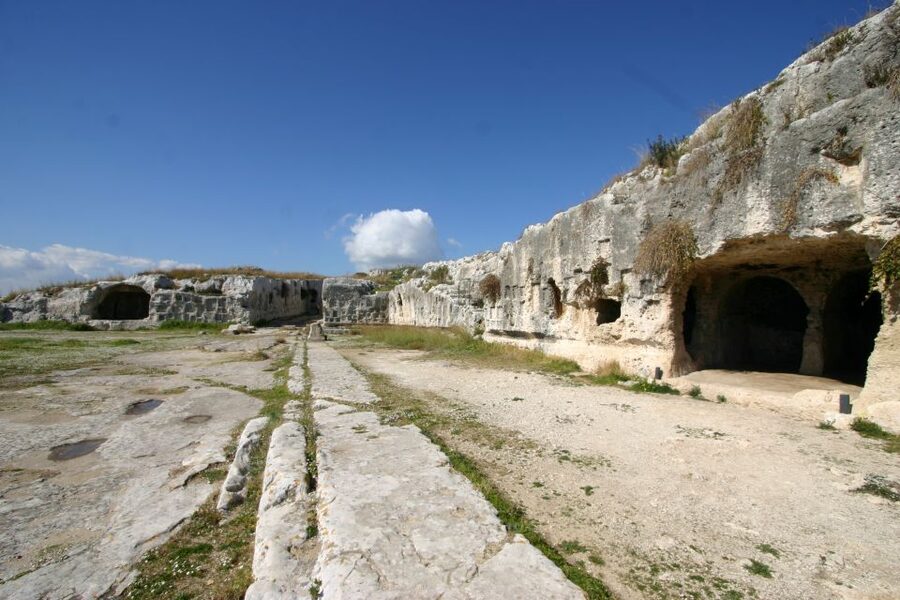
The next stop is the Altar of Hieron II, with about 10 minutes of guided explanation. Even if little of the original structure remains in front of you, the scale and purpose of the site help show the power of ancient Syracuse.
This is the kind of ruin that can be easy to skip when exploring alone. A guide gives you the basic frame: who commissioned it, what role it played, and how it fits into the city’s Greek period. The stop is short, so expect a focused explanation rather than a long pause.
I appreciate that the tour includes this monument instead of concentrating only on the theater and Ear of Dionysius. The altar adds a civic and religious dimension to the route. You leave with a broader picture of the ancient city, not just its entertainment spaces.
The Roman Amphitheater finishes the walk
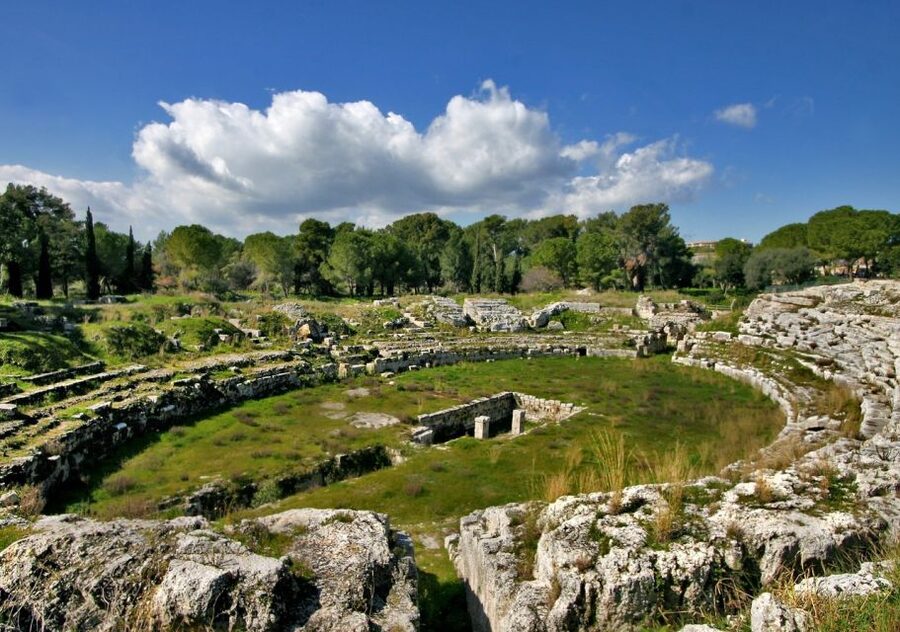
The Roman Amphitheater closes the main route, with roughly 15 minutes of guided time. Its inclusion gives the tour a clear Greek-to-Roman arc. You have seen a Greek theater cut into the hill, and now you can compare it with a Roman arena built for a different style of public spectacle.
The structures are not presented as interchangeable ruins. Their forms, settings, and uses differ, and the guide helps you notice those differences. This is also a good final stop because it brings the park’s later period into view before you return to the starting area.
Access to the amphitheater can occasionally be affected by closing arrangements. On one past visit, the guide pressed for the group to enter after that section had closed unexpectedly. That suggests a practical reason to keep your confirmation and schedule handy, but you should still understand that site operations can change.
Shared group or private visit?
The shared tour is the better value for most people. At around $26, you get a certified guide and a structured route through the park without paying private-tour rates. A small group also makes it easier to ask questions and keep the guide in sight.
Large shared groups may use radio receivers, which helps when you are spread out near the theater or amphitheater. Very small shared groups may hear explanations in two languages, so the pace can vary.
A private tour makes more sense for a family with children, a group with a particular interest in archaeology, or anyone who wants to move at a personal pace. One private visit was adapted for an eight-year-old, with the guide changing the content and allowing the family to set the rhythm.
The guide quality is one of the experience’s strongest points. Eva appears often in the feedback and is praised for patience, clear speech, and a strong grasp of both the park and Syracuse. Federica is also repeatedly singled out for energy and clear explanations. Other named guides include Galina, Anne-Marie, and Carmine.
Because the official language is Italian, ask about language before you pay. That is the single most important practical check for international visitors.
Timing, comfort, and value at $26
The published duration is 1.5 hours, with the stop-by-stop schedule adding up to a carefully planned walking circuit. Some people may find the pace just right, especially when they want time for photos and questions. Others may feel the route could be completed faster.
The tour is long enough to cover the major monuments without turning into a full-day commitment. You can pair it with time in Ortigia or another Syracuse activity, and some guides offer suggestions for nearby things to do.
At $26, the tour is good value if you care about the story behind the ruins. The entry ticket is included only when the selected option specifies it, so check the exact booking choice rather than assuming every price includes admission. The activity also offers free cancellation up to 24 hours before the start and a reserve-now, pay-later option, which can help if your Sicily schedule is still shifting.
Wear comfortable shoes and bring water, especially during hot months. You will walk between open-air monuments, quarries, and historic stone surfaces. The park is listed as wheelchair accessible, but an accessible route may not feel identical to the standard path, so confirm the details if needed.
Who should book this Neapolis tour?
I would recommend it to first-time visitors to Syracuse, anyone who enjoys ancient sites but wants help making sense of them, and families who prefer a guided walk to reading signs on their own. Teenagers can follow the Ear of Dionysius and amphitheater more easily than a long museum lecture, and the theater gives everyone a strong visual centerpiece.
It is also a good fit if you have limited time. In 90 minutes, you see the park’s most important Greek and Roman monuments with a licensed guide, then continue with your day.
I would be more cautious if you already have a strong background in classical archaeology or want to explore every corner independently. The tour follows a set route, and one visitor found the pace slower than necessary. You may prefer to buy admission and wander at your own speed, provided you are comfortable supplying your own context.
Should you book it?
Book this tour if you want Neapolis to make sense rather than simply look impressive. The Greek Theater, Ear of Dionysius, quarries, altar, and Roman Amphitheater form a much stronger experience when someone connects them.
The price is fair, the route covers the essential monuments, and guides such as Eva and Federica have a strong record for clear, engaging explanations. Check the tour language, confirm whether admission is included in your selected option, and choose an evening time in hot weather if available. For most visitors to Syracuse, those small checks make this short guided walk a smart addition to the itinerary.
FAQ
Where does the tour meet?
The listed meeting point is at the entrance area of Neapolis Archaeological Park, with Largo Anfiteatro, 2 shown as the starting and ending location. The exact meeting point may vary by booking option.
How long does the tour last?
The tour lasts 1.5 hours.
What does the tour visit?
The route includes Latomie del Paradiso, Grotta dei Cordari, the Ear of Dionysius, the Greek Theater, a photo stop in Neapolis Archaeological Park, the Altar of Hieron II, and the Syracuse Roman Amphitheater.
Is the entrance ticket included?
Entry tickets are included if the option you select specifies them. Check the details of your chosen booking option.
Is the tour private or shared?
You can choose between a shared group tour and a private tour.
What language is the tour in?
The listed tour language is Italian. In rare cases, a very small shared group may receive explanations in two languages.
Are radio receivers provided?
Radio receivers are available only for the large shared group option.
Is the tour wheelchair accessible?
The activity is listed as wheelchair accessible.
What should I bring?
Bring a passport or identity card.
Can I cancel the booking?
You can cancel up to 24 hours before the tour for a full refund.
Can I reserve now and pay later?
Yes. The activity offers a reserve-now, pay-later option.
Just added around Sicily
- Tour Etna & Wine Tasting★ 5.0 · 317 reviews
- Syracuse, Ortigia and Noto walking tour from Catania★ 5.0 · 273 reviews
- The Godfather Movie Tour★ 5.0 · 275 reviews
- Etna, Wine and Alcantara Tour – From Taormina★ 5.0 · 464 reviews
- The Original Catania Street Food and Market Tour by Streaty★ 5.0 · 345 reviews
- Etna and Alcantara Gorges Excursion★ 4.5 · 256 reviews
- Etna Tour in 4×4★ 5.0 · 583 reviews
- Etna Morning Jeep Tour★ 4.5 · 241 reviews
Ancient Ruins, compared.
From Naples: Pompeii Ruins & Mount Vesuvius Day Tour
Read our review →
Herculaneum: Skip-the-Line Guided Tour with Archaeologist
Read our review →
Archaeological Park Tour with Ticket on request
Read our review →
Discover the Ancient Ruins of Pompeii: Day Trip from Rome
Read our review →
Discover Matera, the ancient city – English tour
Read our review →
Agrigento: Valley of the Temples Skip-the-Line Sunset Tour
Read our review →
Agrigento and the Valley of the Temples Day Tour
Read our review →
Agrigento: Valley of the Temples Ticket & App Audioguide
Read our review →Browse the lists this tour appears in