
Reviewed · WALKING TOURS
Palermo: NO Mafia Walking Tour
Palermo’s No Mafia Walking Tour does something many city tours avoid: it treats the Mafia as a force that shaped ordinary life, not as a colorful movie theme. In three hours, you walk from Teatro Massimo through markets, squares, and historic streets while learning about intimidation, violence, politics, and the civic movement pushing back.
I like the clear anti-romantic view. You get the grim reality behind the glamorous film image. I also like the way the tour connects history to present-day choices, especially the orange stickers on shops that support pago chi non paga, or I pay who does not pay. The main drawback is that the tour is talk-heavy, with no museum or monument entry, so you need comfortable shoes and a real interest in the subject.
Key points to know before you book
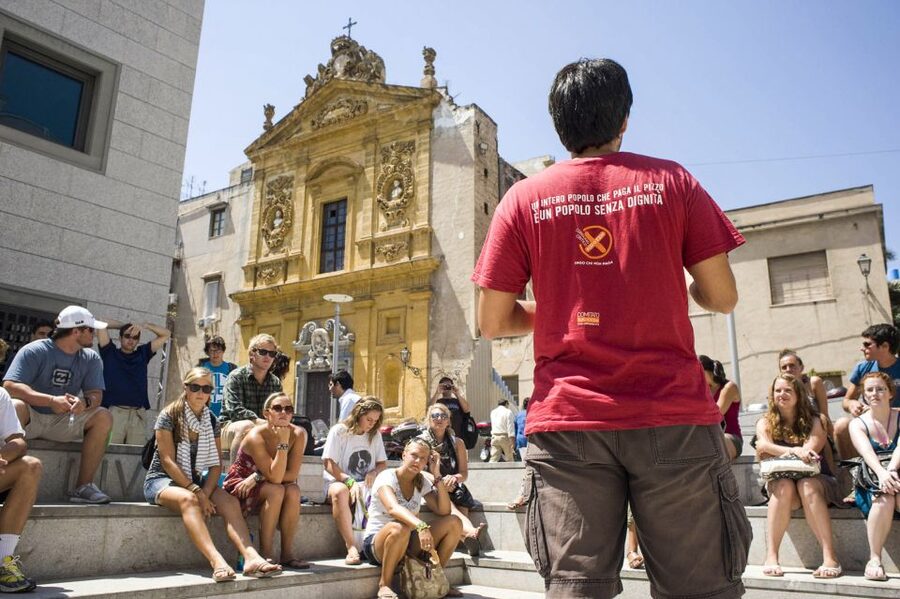
- Three hours through central Palermo: See Teatro Massimo, Il Capo market, the cathedral, city hall, and several important squares on foot.
- The Mafia is explained beyond movie clichés: The guide covers its influence on society, politics, business, and daily life.
- Anti-mafia resistance is central: Learn about Addiopizzo, ethical shopping, and the people who challenged extortion and violence.
- Guides bring the subject to life: Guides including Valeria, Attilio, Salvatore, Giuseppe, Linda, and Marinella have been praised for clear, passionate storytelling.
- The route passes real civic symbols: Piazza della Memoria and orange stickers on local businesses give the subject a visible place in today’s Palermo.
- Good value at $40: The fee includes the guide, the walking tour, and a contribution to Addiopizzo, but not entry to monuments.
Why this Palermo tour is different from a standard city walk
A regular Palermo walk might focus on churches, palaces, markets, and grand façades. This one includes those sights, but uses them as the setting for a larger story about power and public life.
That makes the tour useful early in your stay. You still see major landmarks, yet you also learn how to read the city through a social and political lens. An orange sticker in a shop window is no longer just a bit of decoration. It signals a business connected to an ethical consumer campaign against extortion payments.
The approach is serious without being dull. Guides such as Attilio and Ermes have kept groups engaged for the full three hours, while Valeria, Laura, Marinella, and Salvatore have been praised for combining clear explanations with humor and patience. That matters here. The subject includes murder, fear, corruption, and long-running social harm. A guide who can explain difficult material in a human way makes the walk easier to follow.
This is not a tour of movie locations or a search for glamorous crime scenes. It is a lesson in how the Mafia affected Sicilian society and how citizens organized against it.
More Walking Tours in Sicily
- Palermo Original Street Food Walking Tour by Streaty
★ 5.0 · 2,105 reviews - Palermo: Street Food and History Walking Tour
★ 4.9 · 1,294 reviews - Palermo: Private Custom Walking Tour with Local Guide
★ 4.7 · 661 reviews
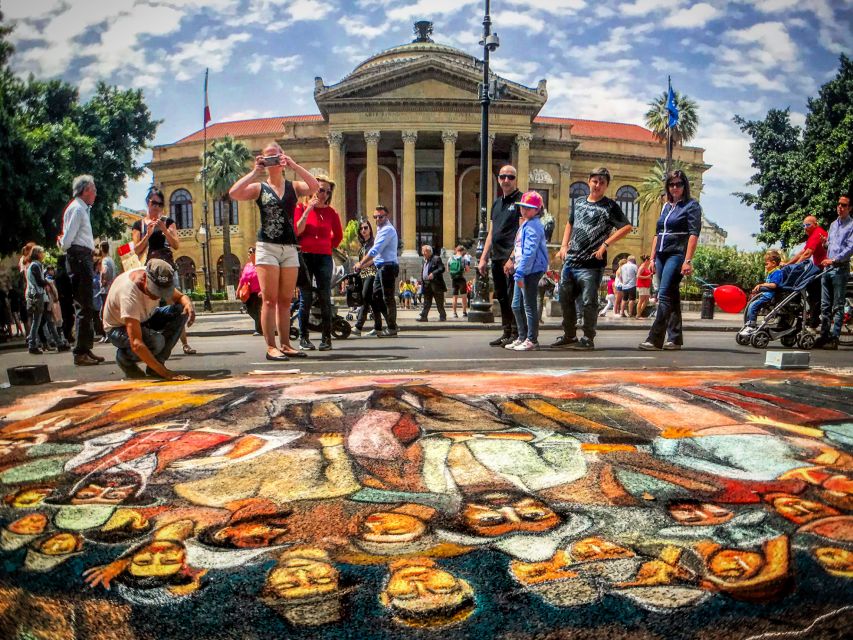
Starting with Palermo’s grandest stage, Teatro Massimo
Teatro Massimo is one of the first major sights on the route. Its scale gives the walk a strong opening, but the theater is not simply a photo stop. Here, the guide begins placing Palermo’s public spaces within the story of the city.
You should expect explanation rather than an interior visit. Entrance to museums and monuments is not included, so the value comes from the guide’s account and the surrounding streets, not from going inside the opera house.
This is a useful distinction when comparing the tour with a standard sightseeing package. You are paying for interpretation and conversation, not admissions. If your priority is to see the inside of Teatro Massimo, you will need to arrange that separately.
The tour also gives you a chance to ask questions. Many people arrive with ideas shaped by American films, television, and games. The guide helps replace that glamorous image with a more grounded picture of intimidation, violence, and the impact on ordinary people.
Il Capo market brings the subject down to street level
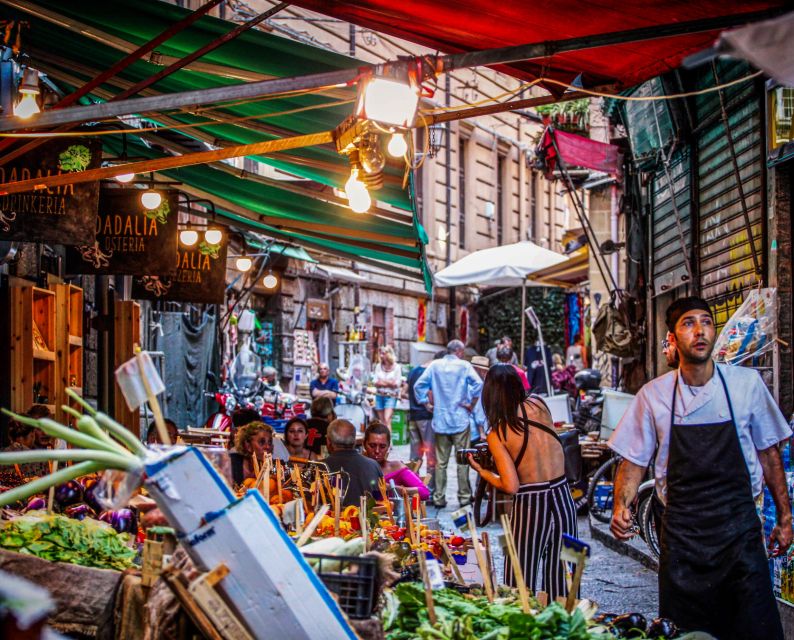
From the monumental theater, the route continues toward Il Capo, an open-air market. This change of setting is one of the walk’s strengths. You move from a formal cultural landmark into a working part of the historic center.
Markets make the discussion feel less abstract. Instead of hearing only about institutions and famous figures, you are surrounded by shops, stalls, streets, and daily commerce. The tour asks you to consider how pressure on businesses affects the city you are seeing now.
Il Capo is also a place where the walking pace changes. Expect to pause, listen, and watch the activity around you. The route is not a nonstop march from one monument to another. The guide uses the city itself as a classroom.
The practical point is simple: wear comfortable shoes. Three hours on Palermo’s streets can feel long if you arrive in unsuitable footwear. The pace is manageable, and one guide specifically made room for people to sit in the shade during longer explanations, but this remains a walking tour with extended standing.
Piazza della Memoria and the cost of resistance
Piazza della Memoria is dedicated to prosecutors and judges killed by the Mafia. It gives the tour a quiet, direct memorial point.
This stop helps explain why the anti-mafia movement is not just a slogan or a campaign for ethical shopping. It grew from real losses and from the courage of people who challenged a system that used threats and violence to protect its power.
The guide uses the memorial to connect past events with the civic work happening now. You are not asked to admire Mafia figures or treat them as folk heroes. Instead, the focus stays on the harm caused and on the people who resisted.
For many visitors, this is likely to be one of the most serious moments of the tour. It can also be one of the most valuable. Palermo’s history is easier to understand when you see how public memory, justice, and civic action meet in the same place.
More Walking Tours in Palermo:
- Palermo: Street Food Walking Tour with Local Guide & Tasting
★ 4.9 · 632 reviews - Palermo: UNESCO World Heritage Sites Guided Walking Tour
★ 4.8 · 548 reviews - Palermo: Street Food Walking Tour at Sunset
★ 4.9 · 492 reviews - Palermo: Walking Tour of Historic Markets and Monuments
★ 4.9 · 478 reviews
Along the Cassaro, look for the orange stickers
The walk continues along the Cassaro, one of Palermo’s main historic routes. Here, keep your eyes on shop windows and business fronts.
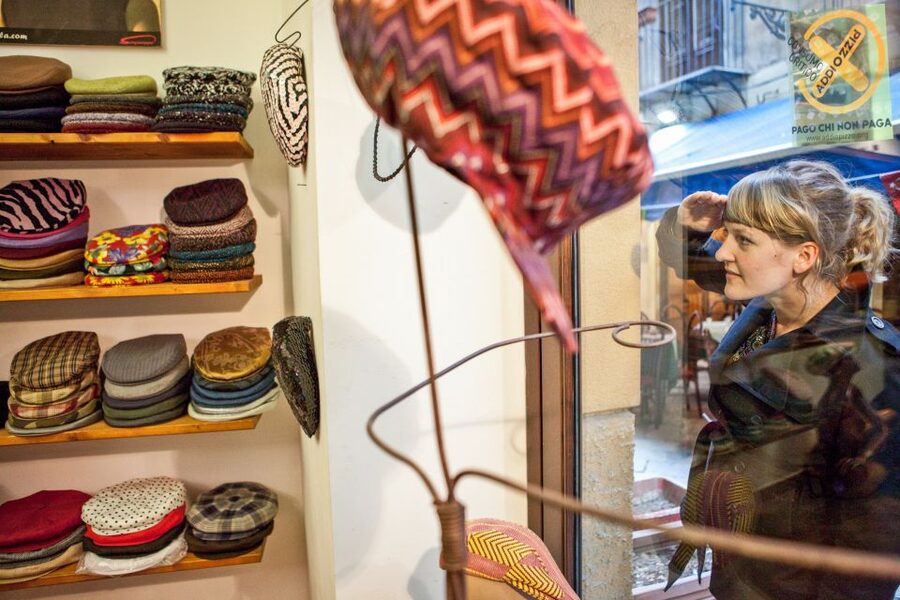
The orange stickers identify owners who have said no to paying extortion and joined the pago chi non paga campaign. The phrase means I pay who does not pay. It turns an ethical idea into something visible and practical for people who live in or visit Palermo.
This is one of the tour’s best details because it gives you something to notice after the guide has finished. You can use the campaign as a guide when choosing where to spend money. The tour also includes a contribution to Addiopizzo, the organization connected with this anti-extortion work.
I appreciate this direct link between sightseeing and responsible spending. You are not just hearing that civic resistance exists. You learn how a visitor can support businesses that refuse extortion.
The guide will not treat this as a simple story of victory. The tour covers the past, present, and future of the anti-mafia movement. That leaves room for progress, continuing problems, and the work still required from local people and institutions.
Piazza Beati Paoli, the cathedral, and city hall
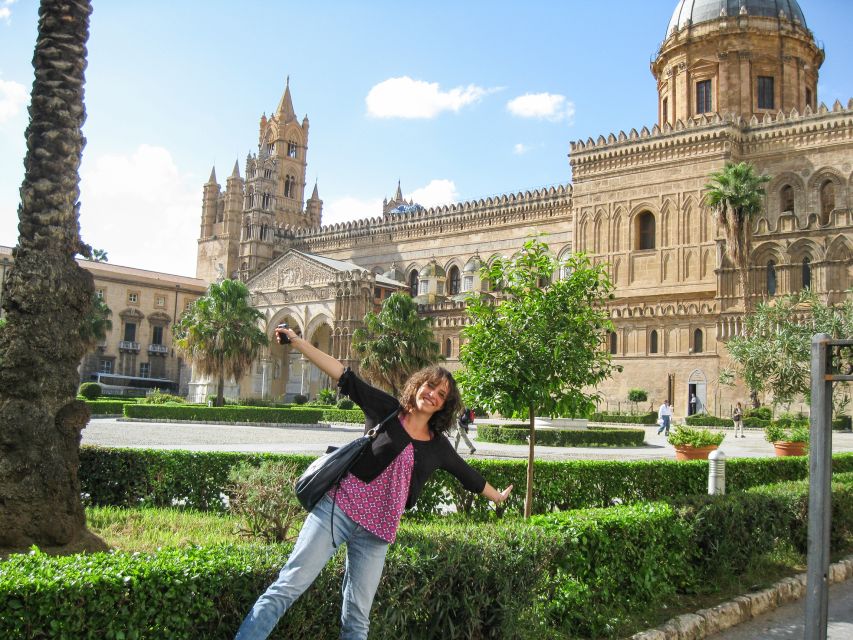
The route passes Piazza Beati Paoli, Palermo Cathedral, and the city hall before reaching the old town center. These stops broaden the walk beyond the Mafia theme and give you a useful introduction to central Palermo.
Piazza Beati Paoli brings another layer of local association and storytelling. The cathedral provides one of the city’s major architectural landmarks, while city hall connects the discussion to public administration and civic life.
Again, do not expect an interior tour of every landmark. The schedule is built around the guide’s narrative, with stops outside and along the route. If you want detailed art history or time to explore each building, plan separate visits.
That said, the combination works well. You get enough of Palermo’s physical setting to understand where the events and social changes took place, without spending the entire morning looking at façades. Guides also share food suggestions and ideas for continuing your visit, which can help you plan the rest of your day.
The guides are the heart of the experience
The subject is demanding, and the guide matters more here than on a simple orientation walk. Strong delivery keeps the timeline clear and prevents the tour from becoming a list of names and tragedies.
Several guides have received especially warm praise for their approach. Valeria is known for a proud, personal delivery and for explaining the social and political context in detail. Attilio is described as engaging, funny, and able to hold attention for three hours. Salvatore combines friendly conversation with strong command of the subject, while Marinella has been praised for covering history, economics, and culture in clear English.
Other named guides include Linda, Giuseppe, Ermes, Claudio, Laura, and Silvia. The guide assigned to your departure can vary, so you should not book expecting one particular person unless the booking option confirms it.
Language choices are English, Italian, French, and Spanish. The tour is not offered in Polish according to the available information, which may matter if you need that language. English delivery has been described as clear, but ask questions if you need a point repeated. The subject includes many people, events, and political details.
Small-group availability is another plus. A smaller group usually makes it easier to hear the guide and ask questions, though the exact group size depends on the option you select.
What the $40 price really includes
At $40 per person, this is not the cheapest way to see Palermo’s center. Yet it is fair value if you want a guided interpretation of the city rather than a simple landmark checklist.
Your fee covers a three-hour guided walk and a contribution to Addiopizzo. You are also getting the guide’s explanation of a difficult subject that can be hard to understand through casual reading or film.
Nothing is included for museum or monument entry. That keeps the price from rising, but it also means you should budget separately if you want to visit Teatro Massimo, the cathedral, or another paid site.
The best value comes when you treat the tour as both a history lesson and a city introduction. You see several central sights, learn how to recognize anti-extortion businesses, and leave with practical ideas for eating and shopping responsibly.
Who will get the most from this walk?
I would recommend it to you if you want more than Palermo’s architecture. It suits first-time visitors who want context, history-minded people, and anyone curious about how organized crime affects ordinary civic life.
It is also a strong choice for families with older children and teenagers. One family found the three-hour story held a teenager’s attention, which says something about the guides’ ability to keep the material moving.
You should think twice if you want a relaxed stroll with only light commentary. The tour deals with murder, intimidation, corruption, and social harm. It is not a comic crime tour, and it does not present the Mafia as stylish or entertaining.
It may also feel too long if you prefer to spend your Palermo visit inside monuments. The walk includes no museum admissions and has substantial spoken content. For the right audience, that is the point. For a visitor seeking only architecture, it may not be.
Practical advice for making the walk comfortable
Book it near the beginning of your Palermo stay if you want the city context to shape the rest of your visit. The route ends in the old town center, and the guide offers suggestions for Sicilian food and further sightseeing.
Wear comfortable shoes. Bring water and prepare for three hours of walking and standing, although seating and shade may be available at some stops. The meeting point can vary by booking option, so check your confirmation rather than assuming the tour begins at Teatro Massimo.
The activity allows cancellation up to 24 hours ahead for a full refund, and you can reserve now and pay later. Starting times vary, so check availability before planning museum visits around it.
FAQ
How long is the Palermo No Mafia Walking Tour?
The tour lasts three hours.
How much does the tour cost?
The listed price is $40 per person.
Which languages are available?
The tour is offered in English, Italian, French, and Spanish.
What sights are included on the route?
The walk includes Teatro Massimo, Il Capo market, Piazza della Memoria, the Cassaro, Piazza Beati Paoli, Palermo Cathedral, and city hall.
Are museum and monument entrances included?
No. Entrance to museums and monuments is not included in the tour price.
What does the tour explain about the Mafia?
It covers the Mafia’s history, influence within Sicilian society, everyday effects, violence and intimidation, and the difference between popular myths and social reality.
What is Addiopizzo’s connection to the tour?
The price includes a contribution to Addiopizzo, the anti-mafia organization linked with the ethical consumer campaign pago chi non paga.
Can I cancel the booking?
You can cancel up to 24 hours in advance for a full refund. Reserve-now, pay-later options are also available.
Should you book Palermo’s No Mafia Tour?
Book it if you want to understand Palermo through the people who resisted its criminal power, not just through its churches and palaces. The route gives you major sights, but the real value is the guide’s explanation of extortion, civic resistance, public memory, and responsible spending.
I would especially choose it for the first or second day of a Palermo visit. It gives you a useful frame for the city and points you toward businesses connected with the anti-mafia campaign. At $40, it is a solid buy for curious visitors who want a serious, local perspective.
Skip it only if you want a monument-focused walk or find difficult modern history uncomfortable. For everyone else, this is one of the more meaningful ways to spend three hours in Palermo.
Just added around Palermo
- Sicily: Etna Volcano & Taormina Tour★ 4.4 · 199 reviews
- Palermo: Pizza and Gelato Cooking Class with Dinner and Wine★ 4.9 · 951 reviews
- Palermo, tour tra monumenti unici e mercati colorati★ 4.9 · 271 reviews
- Palermo: UNESCO World Heritage Sites Guided Walking Tour★ 4.8 · 548 reviews
- Palermo: Walking Tour of Historic Markets and Monuments★ 4.9 · 478 reviews
- Palermo: Full-Day Snorkeling Boat Tour with Lunch and Wine★ 5.0 · 196 reviews
- Palermo: Street Food and History Walking Tour★ 4.9 · 1,294 reviews
- Palermo: Street Food Walking Tour with Local Guide & Tasting★ 4.9 · 632 reviews
Walking Tours, compared.
Guided Walking Tour & Last Supper Visit with Ticket
Read our review →
Rialto Bridge & Offbeat Unusual Venice Walking Tour
Read our review →
Private 3 hrs Venice Tour: St Mark’s, Walking tour & Boat tour
Read our review →
Skip the line: Uffizi and Accademia Small Group Walking Tour
Read our review →Browse the lists this tour appears in