Reviewed · ROME TOURS
Rome: Welcome To Rome Immersive Multimedia Show
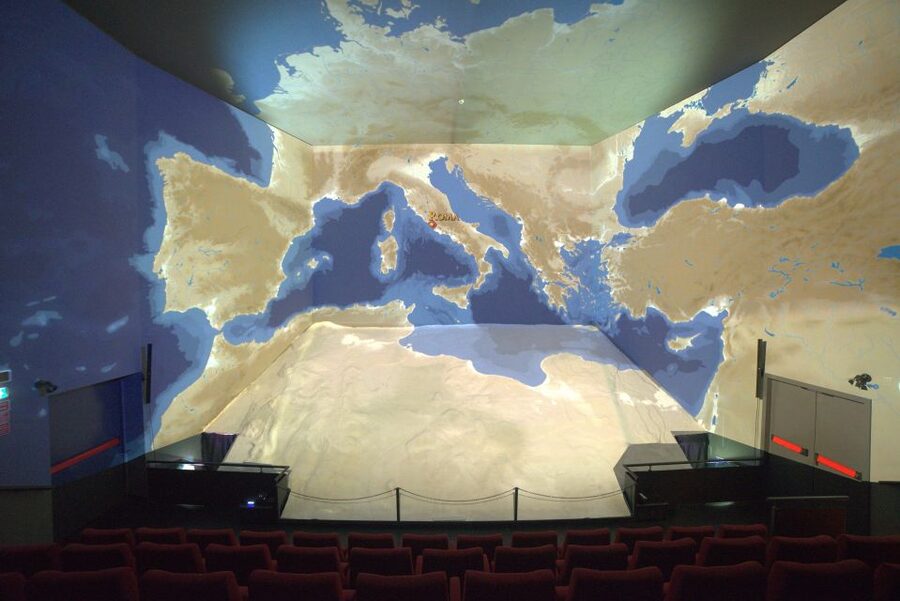
Rome is easier to understand after you have seen it change. At Welcome to Rome, walls, ceilings, and a large floor model show how the city grew from ancient settlement to imperial capital, papal center, and modern metropolis. The main projection covers 2,700 years in 27 minutes, then four interactive models add detail to major monuments.
I like the clear timeline and the way the show connects ruins to the streets you see today. I also like the flexible entry, since the presentation runs continuously during opening hours. The main drawback is price: at $21 per person, it is not a cheap hour, and the show gives you an overview rather than the depth of a live archaeological tour.
Key points to know before you go
- A 27-minute projection covers 2,700 years: You see Rome change across ancient, imperial, religious, and modern eras.
- The city model lights up below you: The floor model helps explain how monuments fit into the wider city.
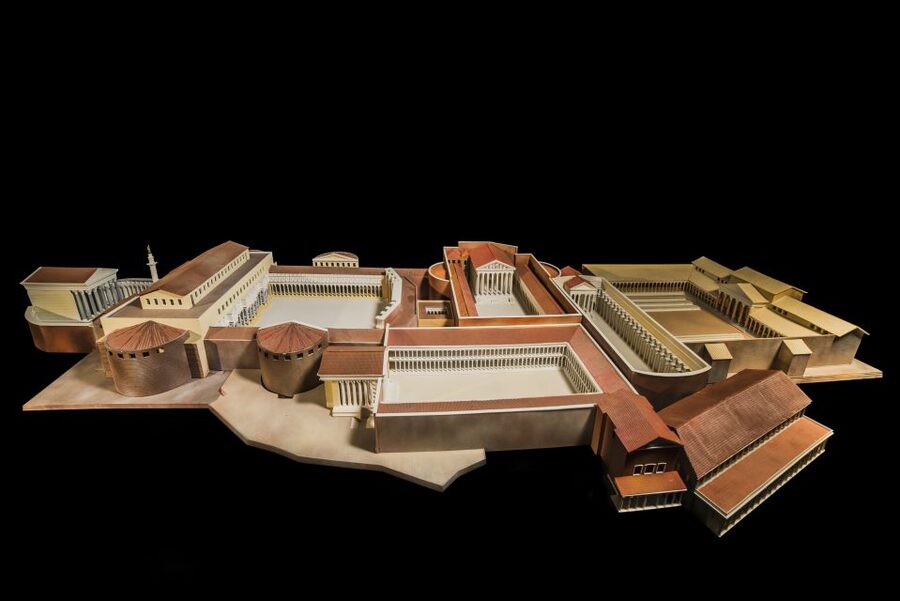
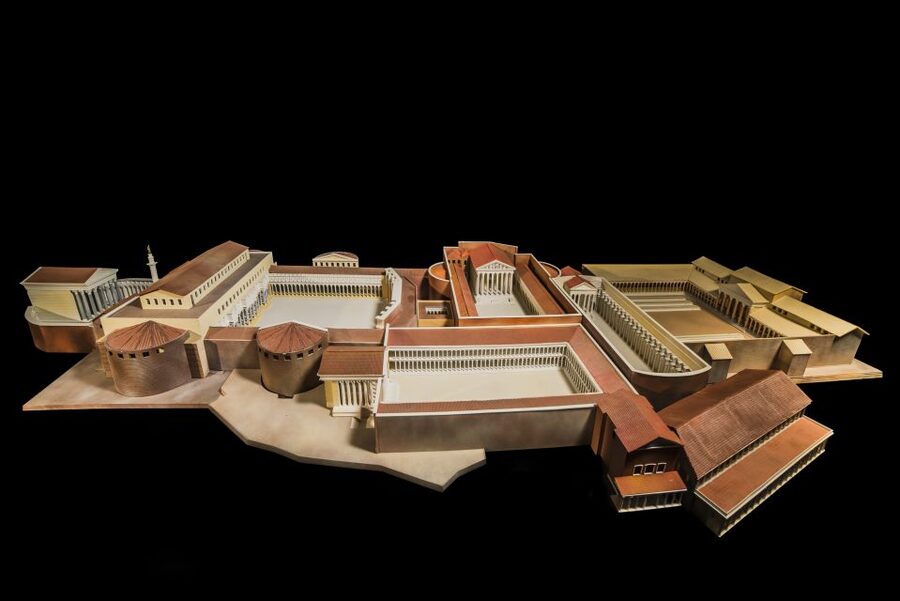
- Four major sites get their own interactive models: Explore the Imperial Forum, Augustus Forum, Hadrian’s Mausoleum, and St. Peter’s Basilica.
- Go early in your Rome visit: The show can make later visits to the Colosseum, Forum, churches, and palaces easier to follow.
- Audio narration comes in nine languages: Choose Italian, English, Spanish, French, German, Russian, Chinese, Croatian, or Japanese.
- The show works well as a heat break: The indoor setting gives you a useful activity when Rome’s streets feel too hot.
Why this short Rome history show works
Rome can be confusing at first. You walk past a column from the Roman Empire, a medieval church, a Baroque fountain, and a modern traffic lane within a few minutes. The city rarely explains how those layers fit together.
Welcome to Rome tackles that problem with pictures rather than a long lecture. The projection lets you watch the city expand and change. Ancient structures appear, disappear, or become part of later buildings. Streets develop around monuments. The effect is simple but useful: you get a mental map before you spend days looking at fragments.
I especially like this format for a first visit. You do not need a strong background in Roman history, and the presentation keeps moving. It is not a university course, but it gives you the broad sequence needed to understand what you are seeing.
The four models continue that work in a more focused way. They let you look closely at important buildings and sites before seeing the real remains. For children, the combination of moving images, scale models, and sound is usually easier to follow than a standard museum display. Younger children may lose interest during the narration, but school-age children and older family members can get a lot from it.
More shows and demonstrations in Rome:
- Rome: Gladiator Show and Museum Tickets
★ 4.5 · 237 reviews - Glass Blowing Show Visit Murano Glass Factory & Showroom OMG
★ 4.2 · 679 reviews
Inside the former Cinema Augustus
The show takes place inside the former Cinema Augustus at Corso Vittorio Emanuele II, 203. The entrance is a few hundred meters from Piazza Navona, so it fits naturally into a walk through central Rome.
You enter an indoor exhibition space before reaching the main presentation. The setting is practical rather than grand, but that is part of the appeal. You are not committing to a full museum visit or a half-day tour. You can step in, follow the exhibits, watch the projection, and continue with your sightseeing.
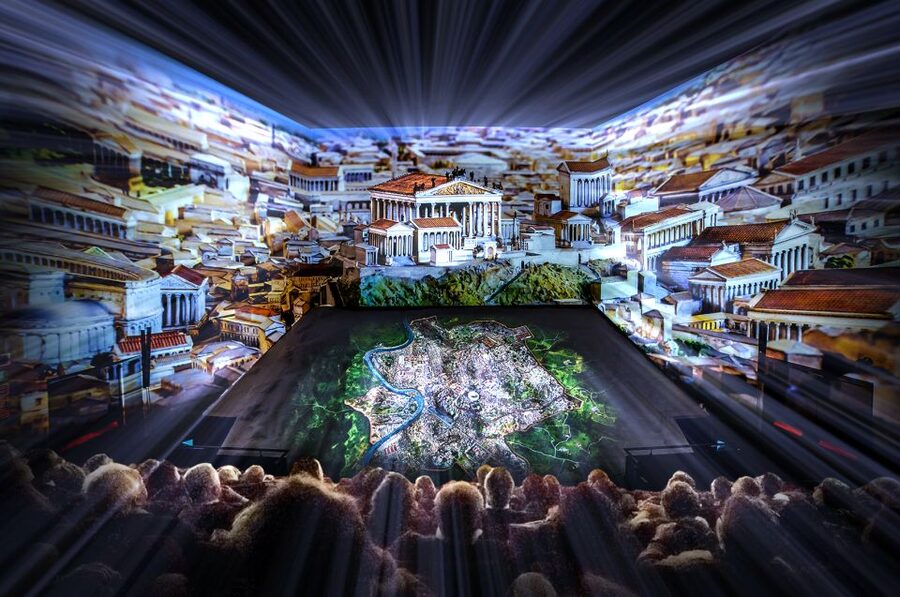
The presentation uses large projections across walls and ceilings. The floor model lights up as the city changes. This gives you two views at once: the close-up world of buildings and monuments around you, and the wider shape of Rome below.
The main show lasts 27 minutes. Since it runs continuously, you do not have to arrive at one exact departure time. You may enter at any point during opening hours, though arriving near the beginning of a cycle will make the story easier to follow from start to finish.
The last show begins one hour before closing. Keep that rule in mind if you are planning a late visit. The activity is valid for one day, but the supplied information does not give a fixed overall opening schedule, so check the available times for your date before setting out.
Watching Rome develop over 2,700 years
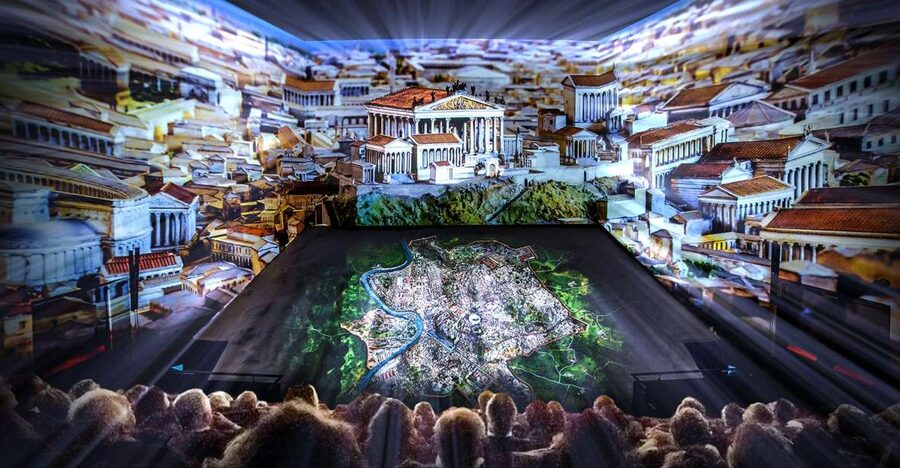
The projection is the heart of the experience. It gives you a fast visual account of the forces that shaped Rome and the monuments that remain.
You will see the city presented across its different ages, with major buildings and public spaces appearing in their historical setting. The key benefit is not memorizing every date. It is seeing the relationship between old and new. A ruin is no longer just a broken wall. A church is no longer an isolated stop on a walking route. You begin to understand how later Rome was built around, over, and beside earlier Rome.
The illusion of flying over the city adds scale. Rome is too large and layered to understand from street level alone. From above, the show can connect individual sites to the larger city. That helps with places such as the Forum, where the remains can otherwise feel scattered, and with monuments that now sit among busy streets and modern buildings.
The presentation also moves inside monuments, palaces, churches, and squares. That is valuable because many historic structures have changed dramatically over time. You can get a sense of their original scale and purpose before encountering their surviving pieces.
The narration is available in nine languages: Italian, English, Spanish, French, German, Russian, Chinese, Croatian, and Japanese. An audio guide means you can follow the explanation in a language you understand well instead of relying only on visual clues.
Do not expect every building in Rome to receive equal attention. A 27-minute show cannot explain every emperor, pope, architect, and political change. Its job is to give you a strong outline. If you want detailed archaeological evidence or stories about individual people, you will need a longer guided visit elsewhere.
The four interactive models
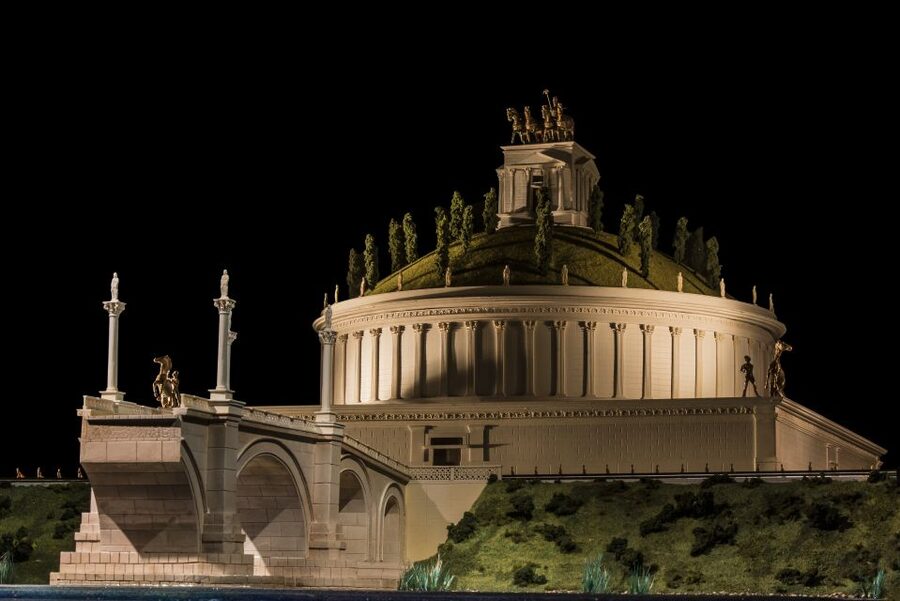
After the projection, you can examine four large interactive models. These are especially useful if you want more than a cinematic overview.
A few more Rome half-days worth a look
- Vatican: Museums & Sistine Chapel Entrance Ticket
★ 4.5 · 144,003 reviews - Vatican Museums & Sistine Chapel Tour with Optional Basilica
★ 4.3 · 67,413 reviews - Colosseum, Roman Forum & Palatine Guided Tour
★ 4.7 · 63,148 reviews - Vatican Museums, Sistine Chapel & St Peter’s Basilica Guided Tour
★ 4.5 · 39,149 reviews
The Imperial Forum
The Imperial Forum model helps you see the group of forums as a planned urban center rather than a collection of ruins. This matters when you visit in person. Standing among columns and fragments, it can be hard to tell where one complex ends and another begins.
A model restores the missing connections. You can picture the streets, temples, and public spaces as parts of a functioning city. The real site remains more powerful, but the model gives you a clearer starting point.
Augustus Forum
The Augustus Forum offers another look at Roman public architecture and imperial ambition. The model shows how the forum was designed as a complete space, not just the surviving wall and columns visible today.
This is one of the better reasons to visit before a Forum tour. You can look at the ruins later and understand that the missing sections are not empty by accident. They are the remains of a much larger architectural plan.
Hadrian’s Mausoleum
The model of Hadrian’s Mausoleum, later known as Castel Sant’Angelo, helps explain the building’s changing role. Rome is full of structures that began with one purpose and were later adapted. A model can make those changes easier to grasp than a present-day exterior alone.
The exhibit is also useful for orientation. The mausoleum is an important landmark along the Tiber, but its original setting and form are not always obvious from street level.
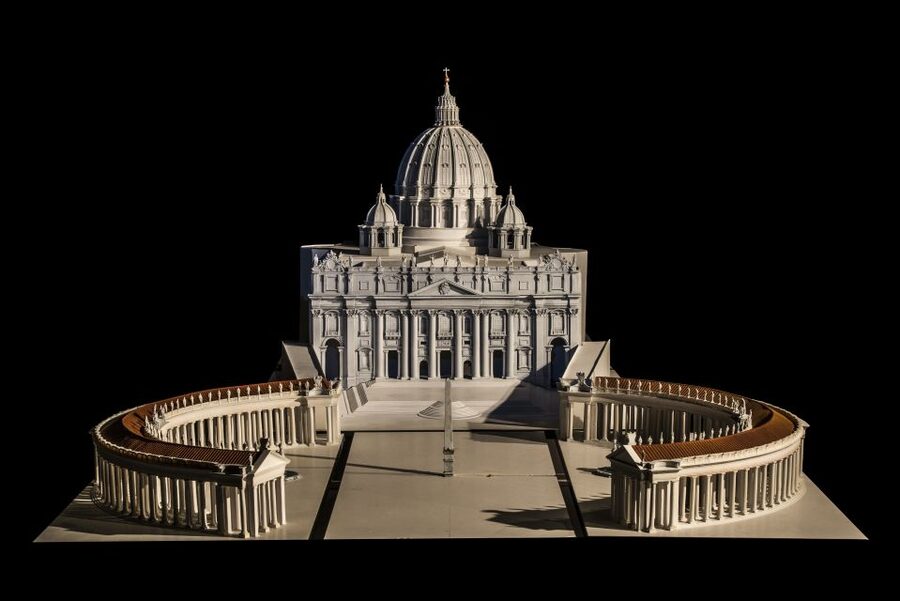
St. Peter’s Basilica
The St. Peter’s Basilica model brings the story into the Christian and papal eras. It helps show the scale of the basilica and the importance of the space around it.
This section can be useful before a visit to Vatican City, especially if you are trying to understand why the basilica feels so much larger than the surrounding streets suggest. Again, the model is preparation, not a substitute. Nothing replaces standing inside the real building and seeing its art and architecture directly.
The best time to schedule your visit
I would place Welcome to Rome near the beginning of your stay. Several people have used it as their first Rome activity, and that makes good practical sense. The show gives you a timeline before you start collecting disconnected facts at the Colosseum, Roman Forum, Pantheon, churches, and museums.
You can also use it after visiting the major sights. In that order, the projection works as a review. If you have already walked through the Forum, seeing the city rebuilt on screen can help the scattered remains fit together.
For most visitors, allow about an hour for the full stop. The central projection is 27 minutes, followed by the four models and the surrounding exhibits. Your exact time depends on how long you spend at each display.
Morning visits may be quieter, based on the available experience reports, and the indoor venue gives you a cool break during hot weather. The location near Piazza Navona also makes it easy to combine with central Rome sightseeing. You might visit before lunch, then walk toward the Pantheon or Piazza Navona, or use it as a pause between outdoor stops.
Is $21 a fair price?
At $21, this is more expensive than a simple museum hour, so the value depends on how you use it. The show is most worthwhile if you are new to Rome, visiting with children, or finding the city’s history hard to organize.
You are paying for a polished visual presentation, multilingual narration, a flexible arrival time, and the four large models. The experience also saves you time. Instead of trying to assemble the history from several separate sites, you get the main sequence in one place.
The price feels less convincing if you already know Rome well or prefer traditional museums and live guides. The presentation is broad, and the models cannot provide the same depth as an expert walking tour. One visitor considered a lower price, around $12 to $15, more appropriate for an hour. That is a fair concern.
My view is that $21 can be reasonable on a first visit, especially if the show improves several later sightseeing stops. It is harder to justify as a repeat visit unless you are bringing someone new to Rome.
Who will get the most from it?
This is a good match for:
- First-time visitors who want the city’s history put in order.
- Families with children who respond to animation, scale, and movement.
- Short-stay visitors who need a useful overview without giving up half a day.
- History fans who want to picture ancient buildings as complete structures.
- Visitors arriving in hot weather who need an indoor break with some substance.
- People visiting Rome after a long gap who want a quick reminder of the major eras.
It may be less satisfying for you if you want a detailed scholarly account, a personal guide, or a long visit focused on original artifacts. The show is also not designed to replace the real monuments. It gives you context, then you still need to see Rome on foot.
Accessibility is a strength. The projection and interactive exhibits are accessible to people with disabilities, and the venue is wheelchair accessible. One practical point is that some parts of the visit may involve standing, and seating is not described for every exhibition area. If you need to sit regularly, ask the staff when you arrive.
How to make the most of the show
Go with a simple plan. Before starting, think about the main places you will see in Rome. Then listen for the connections between those sites rather than trying to remember every name.
If you have already visited the Colosseum or Forum, pay attention to how the presentation restores the missing city around the ruins. If the Vatican is on your schedule, watch the later sections and the St. Peter’s Basilica model closely.
Choose the audio guide language you can follow most comfortably. The nine-language choice makes the activity practical for international families and mixed-language groups.
Do not rush the models. The projection is timed, but the interactive exhibits can be approached at your own pace. The models are where you can pause, compare details, and prepare questions for later visits.
Finally, avoid arriving too close to closing. Since the last show begins one hour before the venue shuts, a late arrival may leave little time for the models.
Should you book Welcome to Rome?
Book it if you want a fast, visual framework for Rome, especially at the start of your first visit. The strongest feature is the way it connects the city’s ancient, imperial, religious, and modern layers in one clear sequence.
I would not book it as a replacement for the Colosseum, Roman Forum, Vatican Museums, or a good walking tour. Think of it as preparation for those places. At $21, it is worth the cost when it helps you understand several major sights over the rest of your trip. If your schedule is already packed and you prefer seeing monuments directly, you can skip it. For most first-time visitors, though, an hour here can make the rest of Rome easier to read.
FAQ
Where is Welcome to Rome located?
The entrance is at Corso Vittorio Emanuele II, 203, in Rome. It is a few hundred meters from Piazza Navona.
How long is the main projection show?
The main multimedia projection lasts 27 minutes.
How much history does the show cover?
The presentation covers approximately 2,700 years of Rome’s history and development.
Can I enter at any time?
Yes. The show runs continuously during opening hours, so you can begin your visit at any time during the available schedule.
What happens after the projection?
You can view four large interactive models covering the Imperial Forum, Augustus Forum, Hadrian’s Mausoleum, and St. Peter’s Basilica.
Which languages are available for the audio guide?
The audio guide is available in Italian, English, Spanish, French, German, Russian, Chinese, Croatian, and Japanese.
Is the experience wheelchair accessible?
Yes. The projection and interactive exhibits are wheelchair accessible.
What is the last available start time?
The last show begins one hour before closing.
Can I cancel and receive a refund?
You can cancel up to 24 hours in advance for a full refund.
Can I reserve now and pay later?
Yes. The reserve now and pay later option allows you to keep your plans flexible and pay nothing at the time of booking.
Just added around Rome
- Boat excursion to Gaeta with a stop for swimming and snorkeling 2 HOURS★ 5.0 · 240 reviews
- Palatine Hill and Roman Forum Tour with Fast-Track Entrance★ 4.2 · 417 reviews
- Tivoli: Villa D’Este & Villa Adriana Pass & App Audioguide★ 4.4 · 364 reviews
- Tivoli: Villa D’Este Entry Ticket and App Audio Guide★ 4.3 · 191 reviews
- From Rome: Villa D’Este & Villa Adriana Day Trip with Lunch★ 4.4 · 289 reviews
- Vatican Museums & Sistine Chapel Skip-the-Line Guided Tour★ 4.6 · 254 reviews
- Rome: Capitoline Museums and Centrale Montemartini Tickets★ 4.4 · 328 reviews
- Rome: The Three Tenors at St. Paul’s Church Concert Ticket★ 4.7 · 699 reviews
Rome Tours, compared.
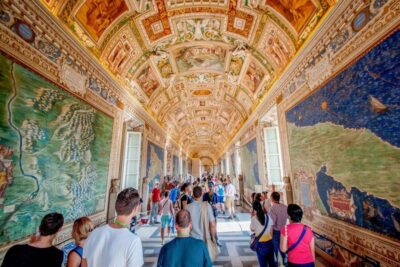
Vatican: Museums & Sistine Chapel Entrance Ticket
Read our review →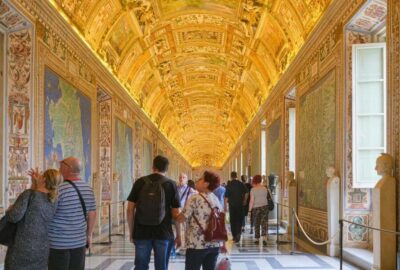
Vatican Museums & Sistine Chapel Tour with Optional Basilica
Read our review →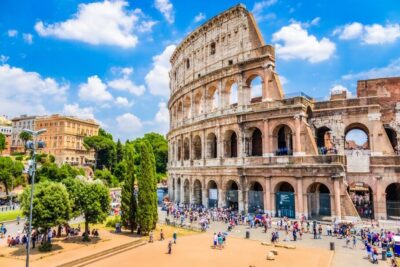
Colosseum, Roman Forum & Palatine Guided Tour
Read our review →
Vatican Museums, Sistine Chapel & St Peter’s Basilica Guided Tour
Read our review →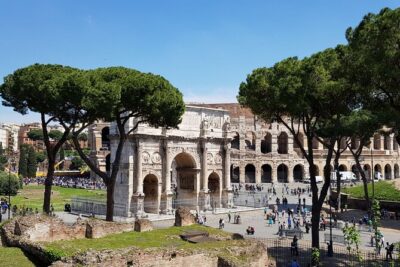
Colosseum, Palatine Hill and Roman Forum Guided Tour
Read our review →
Guided Tour of Colosseum, Roman Forum & Palatine Hill
Read our review →
Colosseum & Forum with Audio Guide App -Optional Arena
Read our review →