
Reviewed · MUSEUMS
Rome: Gladiator Show and Museum Tickets
The best part of this evening is the setting: you enter the Gruppo Storico Romano gladiator headquarters, 3.5 kilometers from the Colosseum, then watch armored fighters use real weapons in an equipped arena. Music, lights, incense, and a booming presenter turn a history lesson into a lively night out.
I like two things here. First, the program gives you more than swordplay: there is a small museum, Roman food and drink, ancient dancing, rituals, comedy, and audience participation. Second, the cast makes a real effort to include you, with chances to handle armor, pose for photos, and speak with performers. The main drawback is the out-of-the-way location, especially after the 22:00 finish when buses may no longer be running.
Key points to know before booking
- Real weapons and armor: Historical reenactors perform choreographed fights with equipment designed to look and feel authentic.
- A full Roman evening: Expect museum displays, snacks, a cocktail, dances, Vestal rites, pantomime, and combat.
- Family-friendly but theatrical: The fighting looks intense, while the comedy and audience participation keep the tone light.
- Late finish: Entry is at 20:45, and the event ends around 22:00, so plan your return before the show begins.
- Outside central Rome: The venue is about 3.5 kilometers from the Colosseum, with buses serving the area earlier in the evening.
- Good value at $29: The price covers the museum visit and show, with food and drink included according to the experience details and visitor accounts.
What the $29 evening actually includes
At $29 per person, this is not a grand arena production or a substitute for visiting the Colosseum. It is a small, theatrical reenactment with a museum visit and refreshments folded into the evening.
That distinction matters. You are paying for a compact entertainment experience, not a formal archaeological tour. The museum is described as a historical educational museum for Roman legionaries, but it is modest in scale. One account compares it to a small museum rather than a full institutional collection, and large groups may find the display area crowded.
I think the price works well if you want a fun Roman-themed activity after a day of ruins. The package includes both the museum and the performance, and food and drinks add to the value. You should not book it expecting a full dinner, though. The refreshments are simple Roman-style nibbles and a cocktail, not a restaurant meal.
The strongest value comes from the range of activities. For the cost of a casual evening attraction, you get a guided introduction, historical objects, costumed performers, staged combat, music, dancing, and a chance to join in. That mix is why this suits families and first-time visitors who want history with less sitting and note-taking.
More Entry Tickets in Rome
- Vatican: Museums & Sistine Chapel Entrance Ticket
★ 4.5 · 144,003 reviews - Rome: Pantheon Fast-Track Ticket and Official Audio Guide
★ 4.3 · 21,008 reviews - Rome:Hop-On Hop-Off Panoramic Open Bus Ticket 3 Circuits x 1
★ 4.0 · 15,405 reviews
Arriving at the gladiator headquarters
Look for Rome Gladiator School, Gruppo Storico Romano. The venue sits about 3.5 kilometers from the Colosseum, so it is close in Roman terms but not in the middle of the usual historic-center walking route.
Public transport can work earlier in the evening. Buses 118 and 218 serve the area, and one account notes a walk of about five minutes from the stop. Another person took a bus to the venue but needed a taxi after the show because public transport had stopped for the night.
That is the key transport issue. The event begins at 20:45 and ends around 22:00, when service can be limited. The venue is also described as isolated, with no nearby services for dinner. I would arrange your return before the show, either by checking the late bus or booking a taxi. Staff have helped people arrange taxis after the performance, but I would not leave this until the final applause.
Do not plan on arriving hungry and finding a restaurant next door. Eat beforehand, or treat the included snacks as part of the experience rather than your evening meal. This small bit of planning will make the night much easier.
The museum visit and Roman welcome
The evening begins with access to the Museo storico-didattico del legionario romano, a small educational display connected with Roman soldiers and gladiator life. You may see weapons, armor, and objects that help explain the world the performers are about to recreate.
This opening is useful because the fights make more sense when you have some context. You are not simply watching people swing swords. The guide and presenter explain the setting, the life and training of gladiators, and the rituals linked to public entertainment.
The display is not large, and the experience can feel crowded when many people arrive at once. I would treat it as an introduction, not a museum afternoon. If you want detailed archaeological interpretation, the Colosseum, Roman Forum, and National Roman Museum are much better choices. Here, the museum does its job by giving you something to look at and handle before the show begins.
One especially enjoyable feature is the chance to see or try on replica armor and weapons. That makes the history more physical and memorable, especially for children. It also gives you good photo opportunities before the arena portion starts.
The welcome sets the mood. Roman music and incense have been used at the beginning, and the person introducing the evening takes on a character role, described by one family as a slave owner explaining what is about to happen. That theatrical approach is not subtle, but it quickly tells you this is entertainment built around historical atmosphere.
Roman snacks, wine, and a short taste of ancient hospitality
The included food is simple. Expect Roman-style nibbles and a drink rather than a full meal. Some accounts describe wine with honey, an old Roman-style combination, and a cocktail in the armory of the legion.
I like this detail because it gives the evening a sensory layer. Food and drink help the history feel less like a school presentation and more like a social event. You can chat, take photos, and look around before the fighting begins.
Keep your expectations sensible. The snacks may be delicious, but they are appetizers. If you need dinner, make separate plans before arriving. There are no nearby restaurants to count on after the show, and the late finish makes a post-show meal less convenient.
The armory also adds atmosphere. Seeing armor and weapons around you while holding a Roman-style drink is a neat prelude to the arena. It is a small touch, but it helps connect the museum objects with the performance.
More Museum Tours in Rome
- Vatican Museums & Sistine Chapel Tour with Optional Basilica
★ 4.3 · 67,413 reviews - Vatican Museums, Sistine Chapel & St Peter’s Basilica Guided Tour
★ 4.5 · 39,149 reviews - Rome: Vatican Museums, Sistine Chapel & Basilica Tour
★ 4.3 · 13,872 reviews - Vatican Museums & Sistine Chapel Skip-the-Line Entry Ticket
★ 4.4 · 13,838 reviews
The arena show: battles, dances, and ancient ritual
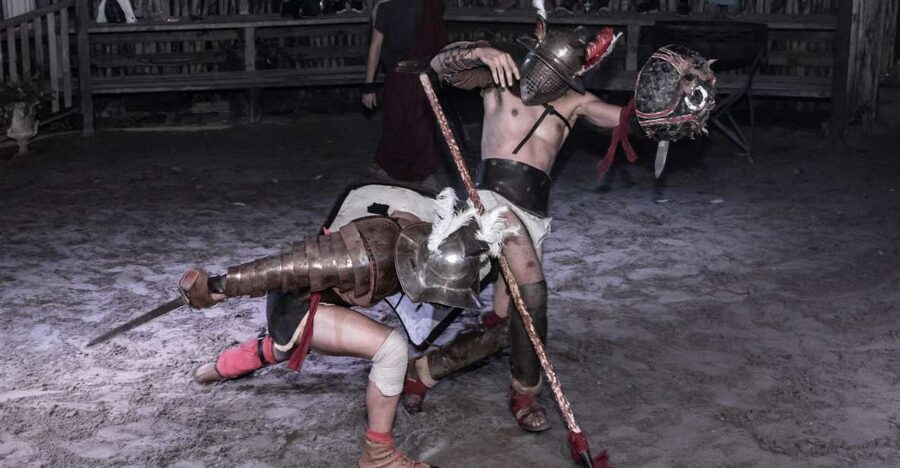
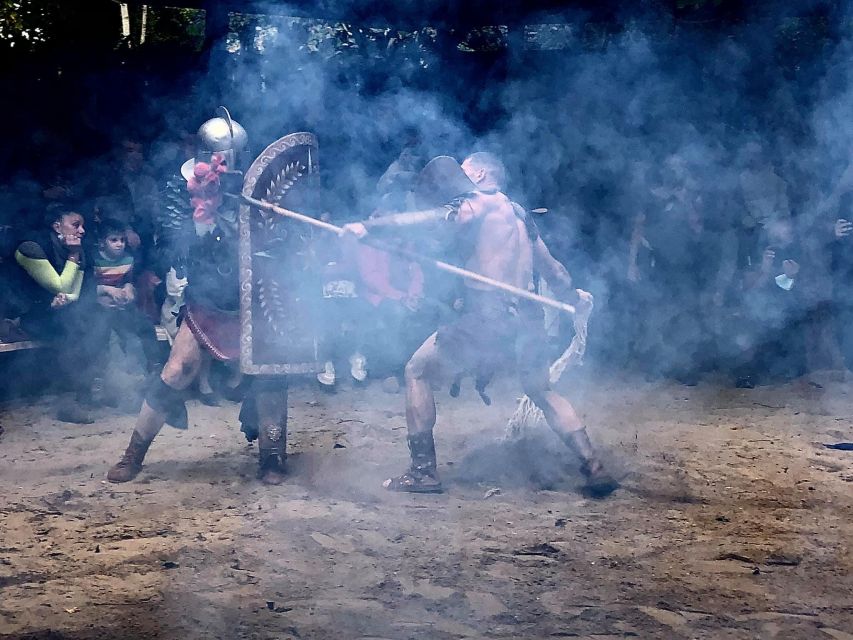
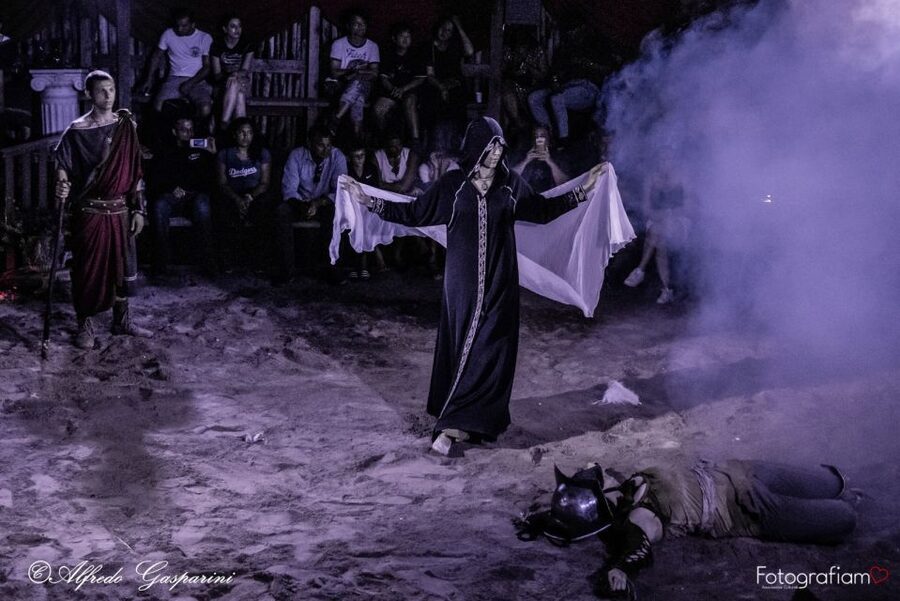
The main performance combines several parts rather than presenting one long fight. You can expect gladiator combat, ancient dances, Vestal rites, pantomime, and comic moments. Music, lights, and visual effects keep the pace moving.
The performers are historical reenactors using real weapons and armor. That does not mean the combat is uncontrolled. It is a staged show, but the quick swordplay and falls can look convincing enough to make you wonder, for a moment, if someone has been hurt.
This is the right place to set your expectations. The show aims for excitement and participation more than strict academic precision. Some moments are intentionally broad or cheesy, especially the comedy. I see that as part of the charm, provided you enjoy live theater and do not expect a museum lecture with props.
The combat is the main draw. Fights are designed to look physical and dramatic, and the performers use the arena space well. Between battles, dancing and ritual scenes give the show variety. That balance keeps younger children interested and gives adults more than repeated sword clashes.
The Vestal rites and ancient dances add a glimpse of Roman ceremony, while pantomime makes the program easier to follow even if English is not your first language. Much of the communication is visual, through movement, expression, and gesture.
Audience participation makes the difference
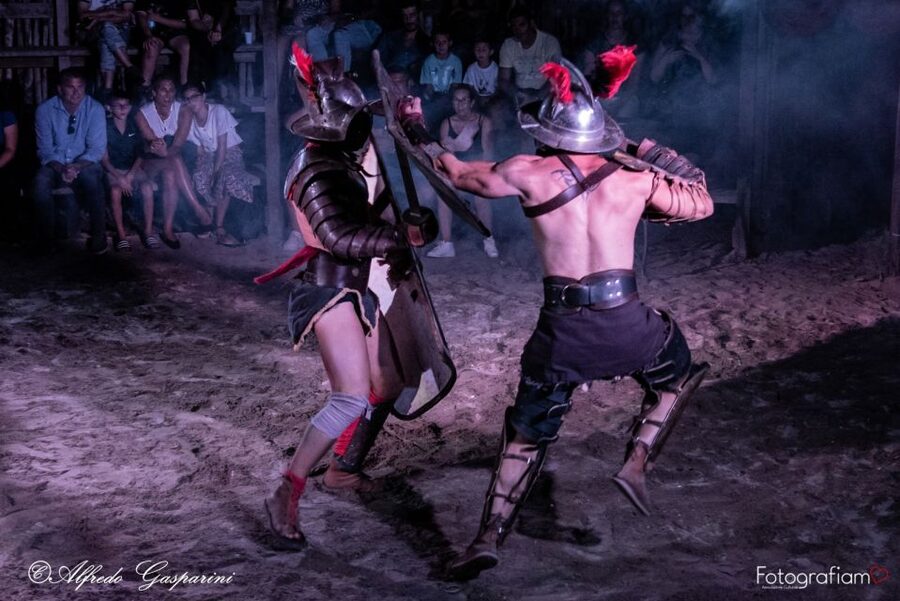
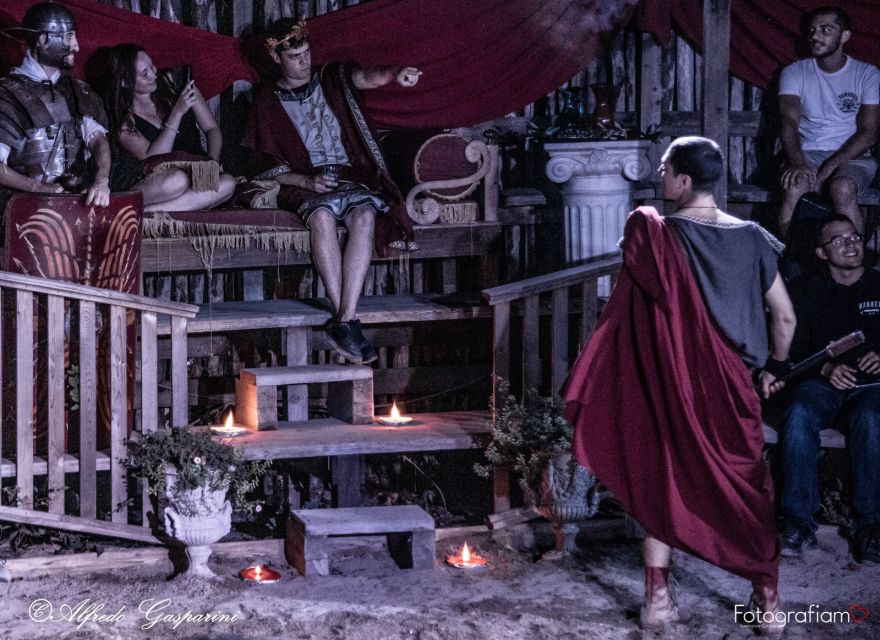
This is not a performance where you sit silently in the dark. The presenter regularly brings the audience into the action, and the cast encourages participation. Depending on the evening, you may be asked to respond, pose, join a simple activity, or interact directly with the performers.
That involvement is one of the main reasons the show works for families. Children have something to do, while adults can relax and enjoy the playful side of Roman history. If you dislike being addressed by performers, you may prefer a more formal theater show. The interactive approach is central here, not an occasional extra.
The cast also makes time for photos and conversation. People have been able to speak with the performers before and after the show, and the staff have been helpful with practical matters such as arranging a taxi. That personal contact gives the evening a friendly feel.
A presenter with a strong, sonorous voice helps hold the program together. The guide introduces the Roman world, explains what is happening, and keeps the crowd involved. The exact presenter may vary, so I would not book based on a particular guide being present. Still, the hosting role is important: without it, the separate dances, fights, and rituals would feel less connected.
Is the violence suitable for children?
The show uses real weapons and staged combat, so there is plenty of theatrical violence. The fighting can look intense, and performers may fall in the dirt after fast exchanges.
At the same time, the tone is playful. Comedy, dancing, food, costumes, and audience activities soften the darker parts. Children have enjoyed the event, including a 10-year-old who was especially pleased, but families should decide based on how their children react to staged fighting.
I would describe it as family-friendly entertainment with mock violence, not a quiet educational program. Older children and teenagers are likely to enjoy the action and the chance to interact. Very young children may find the shouting, weapons, and falls startling.
Timing, season, and the late return
The show operates from May through September, with the supplied schedule covering 2026 dates. Entry is listed at 20:45, and the complete event lasts about 1.5 hours, ending around 22:00.
That timing has advantages. Rome is hot and crowded during the day, so an evening performance gives you a break from the sun. It also fits nicely after a visit to the Colosseum or Roman Forum, provided you leave enough time to travel across the city and reach the venue without rushing.
The late ending is the main practical concern. Some bus service may still be available, but you should not assume it. One person caught a bus shortly after the show, while others needed a taxi. Check the return route before you arrive, and consider asking the staff to help arrange a taxi if needed.
The experience is wheelchair accessible, which makes it more usable than many historic sites. You should still confirm the exact arrangements when booking if you have specific mobility needs, since the information provided does not describe every surface or seating detail.
Free cancellation up to 24 hours before the start and a reserve-now, pay-later option give you some flexibility. Those terms are useful when your Rome schedule depends on weather, transport, or changes to your sightseeing plans.
Who will enjoy this most?
I would recommend this to families, couples looking for a different evening, and solo visitors who enjoy live performance. It is also a good choice if you have already visited the major ancient sites and want to see Roman themes presented in a more relaxed, playful way.
You will get the most from it if you are willing to join in. The cast works hard to involve the audience, and the show gains energy when people respond rather than watch with folded arms.
History enthusiasts should view it as a supplement, not a replacement for Rome’s archaeological sites. The museum is small, the scenes are theatrical, and some details are simplified. Still, the objects, costumes, rituals, and demonstrations can help you picture Roman public life in a way that a label in a glass case cannot.
I would skip it if you need a serious scholarly lecture, a gourmet meal, or a central venue you can reach easily on foot. The location takes planning, and the comedy may feel corny if you prefer restrained performances.
Should you book the gladiator show?
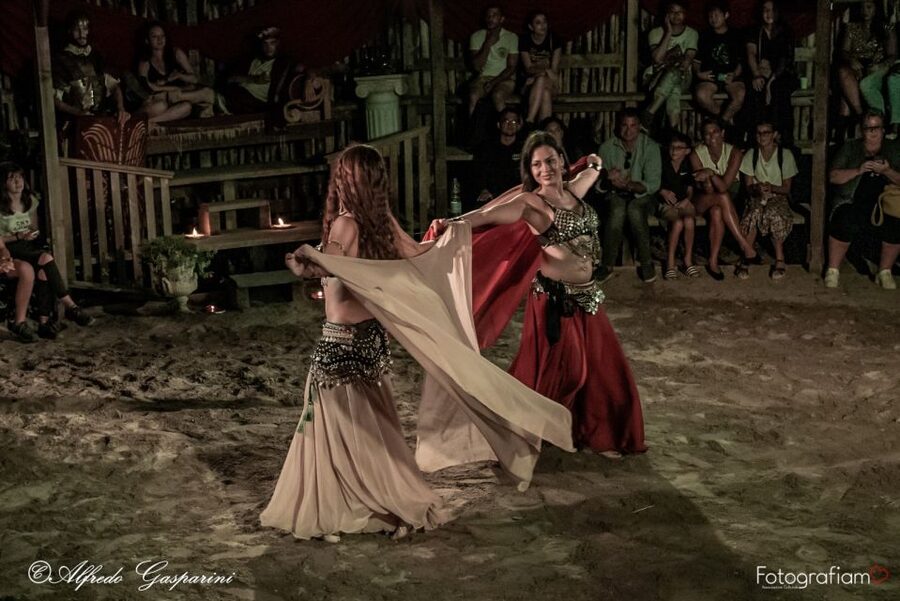
At $29, this is a good-value evening for the right audience. You get more than a staged sword fight: there is a small museum, Roman snacks and drink, costumed reenactors, dancing, rituals, pantomime, audience participation, and a performance lasting roughly 1.5 hours.
Book it if you want hands-on Roman entertainment and do not mind leaving central Rome. Plan dinner separately, check your return transport, and arrive ready for audience interaction. If you want a polished theater production or serious archaeological detail, spend the money elsewhere.
For families and anyone seeking a lively break from ruins, I would add it to the shortlist. The show’s mix of action, humor, and welcoming staff makes the evening memorable, while the transport issue is manageable if you prepare ahead.
FAQ
Where does the gladiator show take place?
It takes place at the headquarters of the Gruppo Storico Romano, also identified as Rome Gladiator School. The venue is about 3.5 kilometers from the Colosseum.
How long does the activity last?
The full event lasts about 1.5 hours. Entry is listed at 20:45, and the evening ends around 22:00.
What does the ticket include?
The ticket includes the Museo storico-didattico del legionario romano visit and the gladiator show. Roman-style snacks and a drink are also described as part of the evening.
Is this a real gladiator fight?
No. The fights are historical reenactments and use real weapons and armor as part of a staged performance.
What else happens besides gladiator battles?
The program includes ancient dances, Vestal rites, pantomime, music, lights, visual effects, and audience participation.
Is the show suitable for families?
Yes. The experience is designed for adults and children, but it includes theatrical fighting with weapons. Parents should decide if that style of action suits their children.
Is the venue accessible by public transport?
Buses 118 and 218 serve the area, and the venue is about a five-minute walk from the bus stop according to the provided directions. Return service may be limited after the 22:00 finish.
Can I cancel my booking?
You can cancel up to 24 hours in advance for a full refund. A reserve-now, pay-later option is also available.
More Shows and Demonstrations in Rome
- Rome: Welcome To Rome Immersive Multimedia Show
★ 4.6 · 3,161 reviews - Glass Blowing Show Visit Murano Glass Factory & Showroom OMG
★ 4.2 · 679 reviews
Just added around Rome
- Boat excursion to Gaeta with a stop for swimming and snorkeling 2 HOURS★ 5.0 · 240 reviews
- Palatine Hill and Roman Forum Tour with Fast-Track Entrance★ 4.2 · 417 reviews
- Tivoli: Villa D’Este & Villa Adriana Pass & App Audioguide★ 4.4 · 364 reviews
- Tivoli: Villa D’Este Entry Ticket and App Audio Guide★ 4.3 · 191 reviews
- From Rome: Villa D’Este & Villa Adriana Day Trip with Lunch★ 4.4 · 289 reviews
- Vatican Museums & Sistine Chapel Skip-the-Line Guided Tour★ 4.6 · 254 reviews
- Rome: Capitoline Museums and Centrale Montemartini Tickets★ 4.4 · 328 reviews
- Rome: The Three Tenors at St. Paul’s Church Concert Ticket★ 4.7 · 699 reviews
Museums, compared.
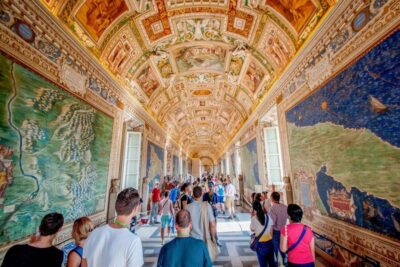
Vatican: Museums & Sistine Chapel Entrance Ticket
Read our review →
Vatican Museums & Sistine Chapel Tour with Optional Basilica
Read our review →
Vatican Museums, Sistine Chapel & St Peter’s Basilica Guided Tour
Read our review →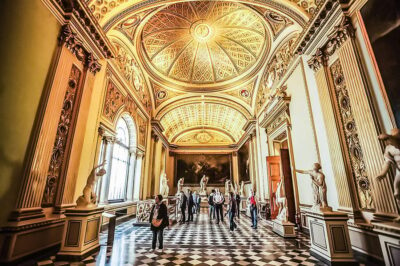
Skip-The-Line Uffizi Gallery Timed Entry Ticket
Read our review →
Vatican Museums, Sistine Chapel & Basilica Tour
Read our review →
Vatican Museums & Sistine Chapel Skip-the-Line Entry Ticket
Read our review →Vatican Museums, Sistine Chapel & Basilica Tour
Read our review →
Vatican Museums & Sistine Chapel Guided Tour
Read our review →Browse the lists this tour appears in