
Reviewed · CITY TOURS
Rome: City Walking Tour in English or Spanish
Rome reveals itself best on foot, and this 2 to 2.5-hour city walk gives you a useful first look at the historic center without burying you in museum rooms. You move from Piazza Venezia and Trajan’s Column to the Trevi Fountain, a painted gallery, Sant’Ignazio, and the Pantheon, with stories linking ancient Rome to the city you see today. I especially like the mix of famous sights and quieter corners, plus the chance to ask about food and practical Rome tips at the end.
Two things make this tour a good value: the guides, including Dan, Dinara, Paulina, Anna, and Domenica, are repeatedly praised for clear storytelling and friendly answers, and the route helps you get your bearings early in your trip. The main consideration is simple: this is an outdoor overview, not an inside visit to the monuments. Expect walking, crowds, traffic, and limited time at each stop.
Key points at a glance
- A strong first-day route: See several major central Rome sights in one compact walk.
- Stories, not just photo stops: Guides explain Roman history, culture, and unusual details along the way.
- Trevi Fountain gets real time: The fountain is scheduled for about 30 minutes, longer than most stops.
- A useful mix of grand and overlooked places: Galleria Sciarra and Sant’Ignazio add variety beyond the standard postcard route.
- English or Spanish guiding: You can choose the language that suits your group.
- Practical advice at Piazza Navona: Ask your guide for suggestions on restaurants, bars, and rooftop terraces.
Why this walk works as a Rome introduction
Rome can feel confusing at first. Ancient ruins, Baroque churches, grand government buildings, narrow lanes, and busy roads all crowd into the same central district. A guided walk helps you see how the pieces fit together before you spend money on longer museum visits or more specialized tours.
This route focuses on the city center rather than one single archaeological site. You will not enter the Colosseum, climb a monument, or tour the Pantheon’s interior as part of the standard plan. Instead, you get a broad introduction, with time to look, listen, take photographs, and ask questions.
I like this format for a first morning or afternoon in Rome. The walk gives you a mental map of important places, then leaves you near Piazza Navona, where you can continue exploring or stop for food. It also works well if you have only a short stay and want more than one sight without committing to a full-day excursion.
The tour costs $28 per person. That is a fair price for a live guide covering this much central Rome, especially if your guide is as strong a storyteller as Dan, Polina, Vlad, or Sela. The value comes less from access to monuments and more from context, navigation, and the chance to ask questions as the city passes around you.
More City Tours in Rome
- Rome: City Sightseeing Hop-on Hop-off Bus with Audioguide
★ 4.0 · 16,045 reviews - City Sightseeing Rome Hop-On Hop-Off Bus Tour
★ 3.5 · 5,446 reviews - Rome: City Highlights Open-Top Bus Night Tour
★ 4.1 · 2,038 reviews
Starting at Piazza d’Aracoeli or Piazza di Pasquino
There are two possible starting locations: Piazza d’Aracoeli or Piazza di Pasquino. Your exact meeting point depends on the option you book, so check the confirmation carefully before setting out.
The two choices put you in different parts of central Rome. That matters because the opening stretch can shape your first impression of the city. Arrive early enough to find the guide without rushing. One practical point from the experience: guides may be easier to spot in daylight than in the evening, and a more distinctive sign or brighter clothing would help at darker meeting times.
Wear comfortable shoes and comfortable clothes. This is not a stroll of a few hundred yards between bus stops. You will cover several streets and piazzas on foot, often while pausing on hard paving or standing near busy public spaces.
Piazza Venezia and Trajan’s Column
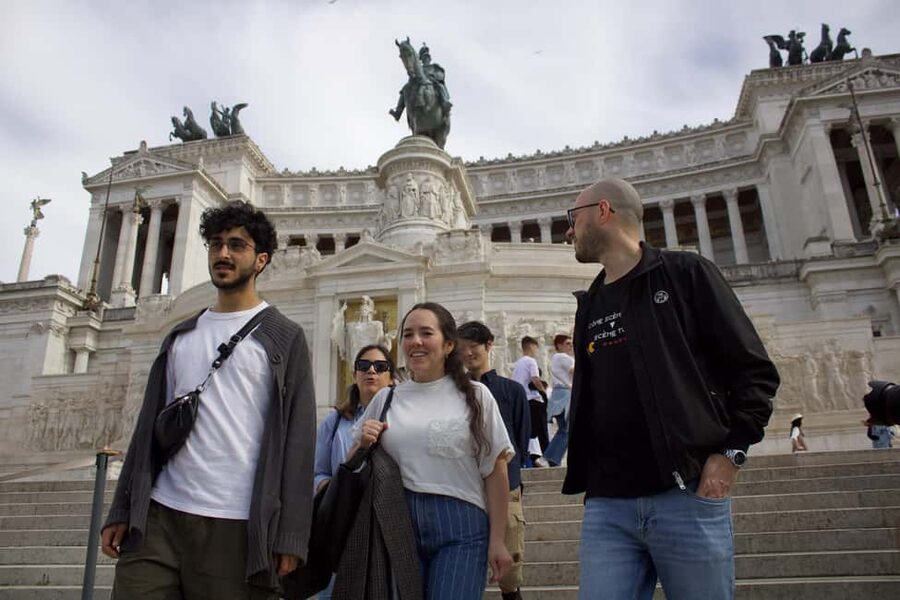
The first major stop is Piazza Venezia, one of Rome’s most dramatic urban spaces. The square is dominated by the enormous white monument associated with Victor Emmanuel II, though the focus here is the wider story of Rome’s political center and changing city life.
A guide can make this kind of place easier to read. Without context, Piazza Venezia may look like a grand traffic junction with a huge building beside it. With explanation, you begin to see how modern Rome, imperial Rome, and the city’s later political history overlap in one view.
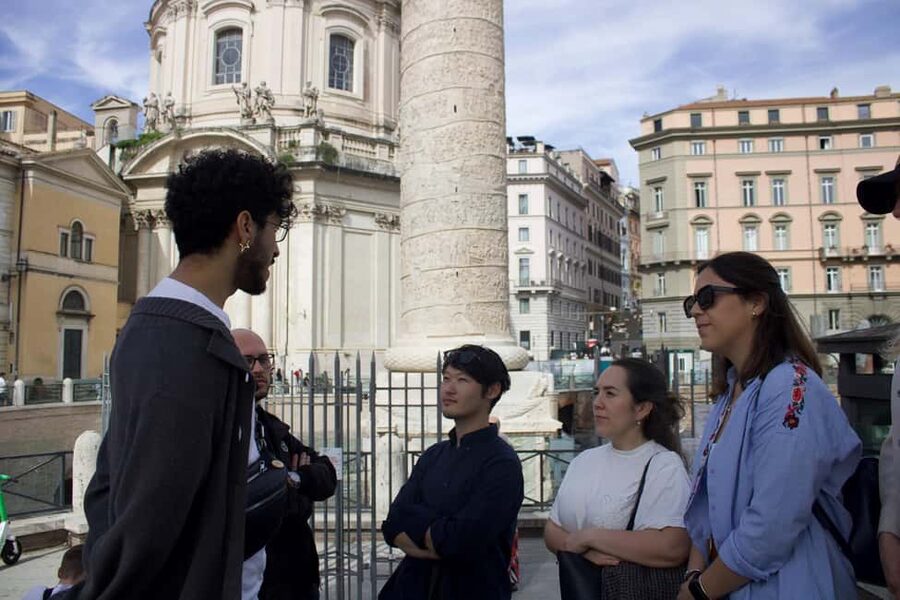
The tour then gives about 20 minutes to Trajan’s Column. Its carved spiral is one of the most remarkable surviving records of Roman military campaigns. You will view it from outside, not climb the column, but the guide’s account helps you understand why the reliefs matter and how Roman monuments were designed to tell political stories.
This is a good example of the tour’s purpose. You are not simply collecting photographs. You are learning what to look for in a monument that can otherwise become background scenery.
Trevi Fountain gets the longest stop
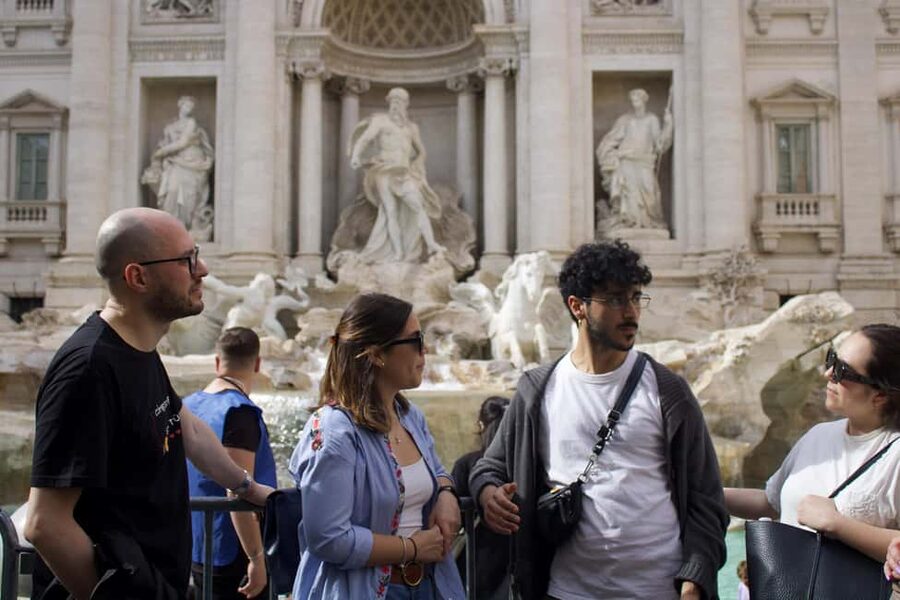
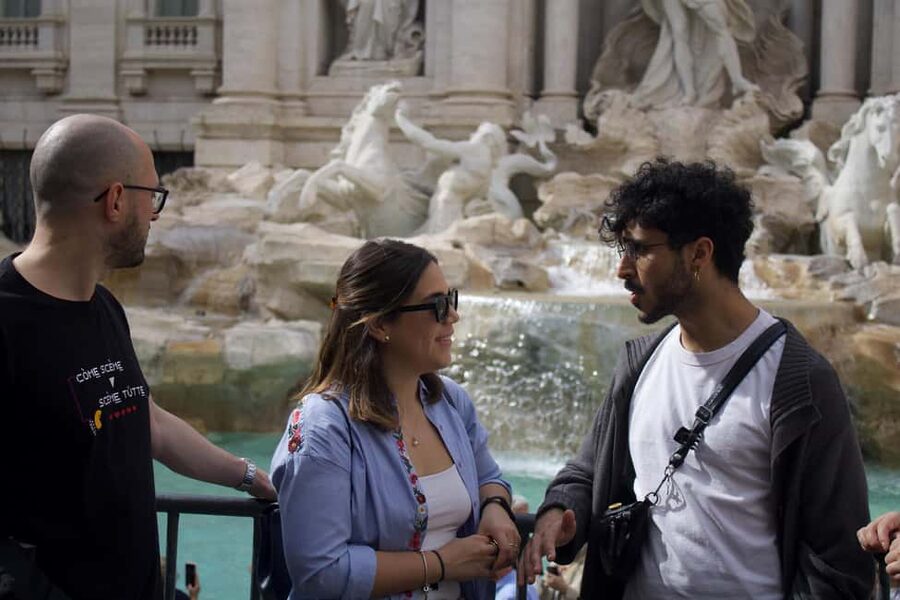
The Trevi Fountain receives about 30 minutes, making it the longest scheduled stop. That is sensible. The fountain is one of Rome’s busiest sights, and a quick glance rarely feels like enough.
Your guide can point out the main figures and explain the fountain’s place in Rome’s grand Baroque tradition. You will also need to manage the practical side of the visit: crowds, narrow viewing areas, and plenty of people trying to take the same photograph.
The tour does not promise a quiet fountain experience. It cannot control the number of people gathered there. What it does provide is a way to make sense of the scene and to visit with a group rather than wondering where to stand or what details matter.
I would treat this stop as a lesson in patience. Listen first, then take your pictures when there is a clear opening. If you have time after the tour, you can return on your own, but the walk gives you a useful first visit without requiring a separate booking.
More Walking Tours in Rome
- Rome: Trastevere & Campo de Fiori Street Food Walking Tour
★ 4.9 · 2,768 reviews - Rome: Paranormal Night Walking Tour & Secret Backstreets
★ 4.9 · 1,921 reviews - Rome by Night Walking Tour – Legends & Criminal Stories
★ 4.5 · 1,003 reviews - Rome: Guided City Center Evening Sightseeing Walking Tour
★ 4.4 · 953 reviews
Galleria Sciarra, a colorful surprise in the city center
Galleria Sciarra is one of the route’s more unusual stops. This covered courtyard is known for its ornate decorations and painted architectural details, offering a very different mood from the open piazzas and ancient column.
The stop lasts about 20 minutes. That is enough time to look closely and hear why this less famous space matters. It also gives your feet a break from the open streets while keeping the focus on Rome’s architecture.
This is where the route earns its title as more than a checklist of headline monuments. The famous sights draw you in, but smaller places such as Galleria Sciarra help you notice the city’s layers. You may otherwise walk past without realizing there is something worth seeing inside.
Sant’Ignazio and Rome’s theatrical churches
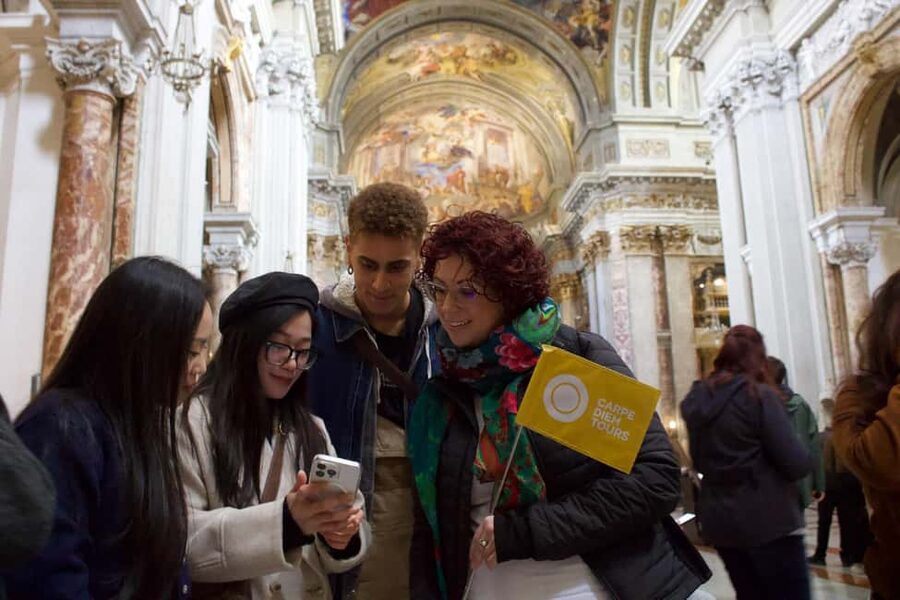
The Church of Sant’Ignazio di Loyola receives another 20-minute guided visit. Rome’s churches can be difficult to appreciate on your own because so many compete for attention. A guide helps you slow down and notice the interior design, illusion, and historical setting.
Sant’Ignazio is especially useful in a walking tour because it shows a different side of Rome from the ancient monuments. The route moves from imperial power and civic squares into religious art and dramatic church architecture. You get a sense of how Rome changed over centuries without needing a separate lecture.
As with the other stops, the activity is primarily a guided visit from the outside or within the public areas available at the time. The supplied plan does not promise a specialist art tour or a long interior examination, so keep your expectations at the level of a lively introduction.
Passing the Pantheon, with Piazza Navona ahead
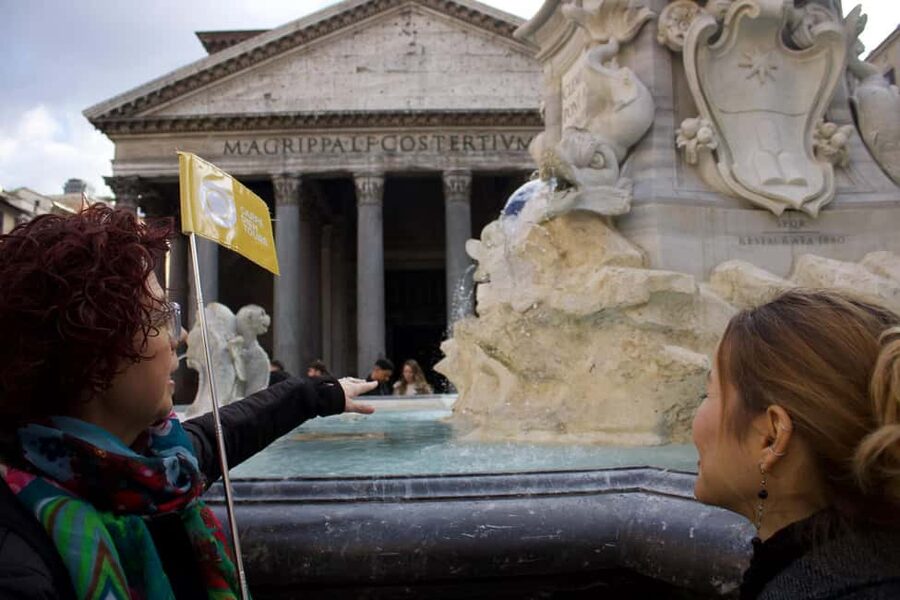
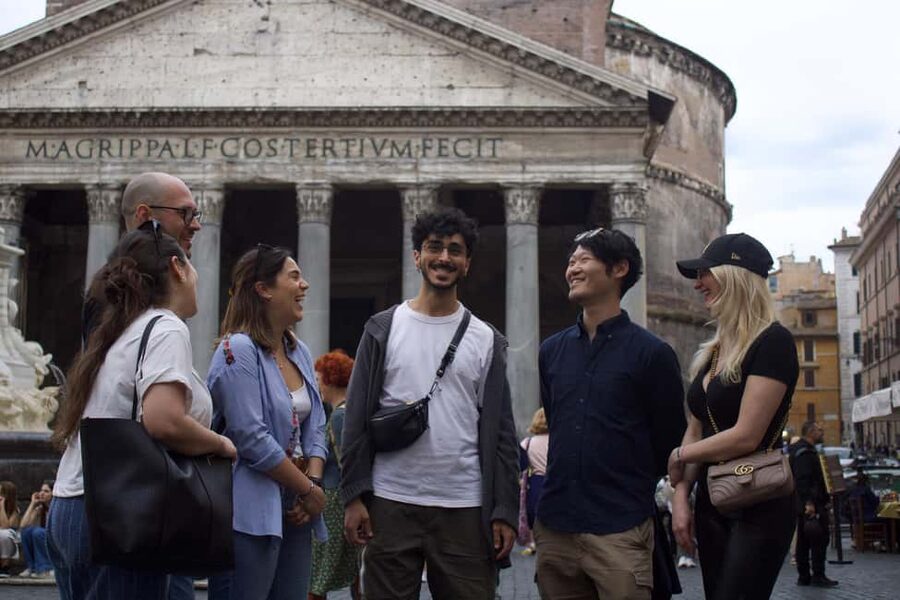
The Pantheon is listed as a pass-by stop with about 20 minutes. You should expect to see and discuss the building rather than receive a full interior tour.
That distinction matters if the Pantheon is high on your personal list. This walk can introduce it and explain its place in Rome, but you may want to return separately if you wish to spend more time inside. The same principle applies to the other major monuments: this is a survey of central Rome, not a collection of entry tickets.
The walk finishes with drop-off options that include Piazza Navona and the Colosseum, with the exact end point depending on the booked option. The main description places the end at Piazza Navona, a practical finish because the square has many places to eat and drink.
Ask for food advice before you leave
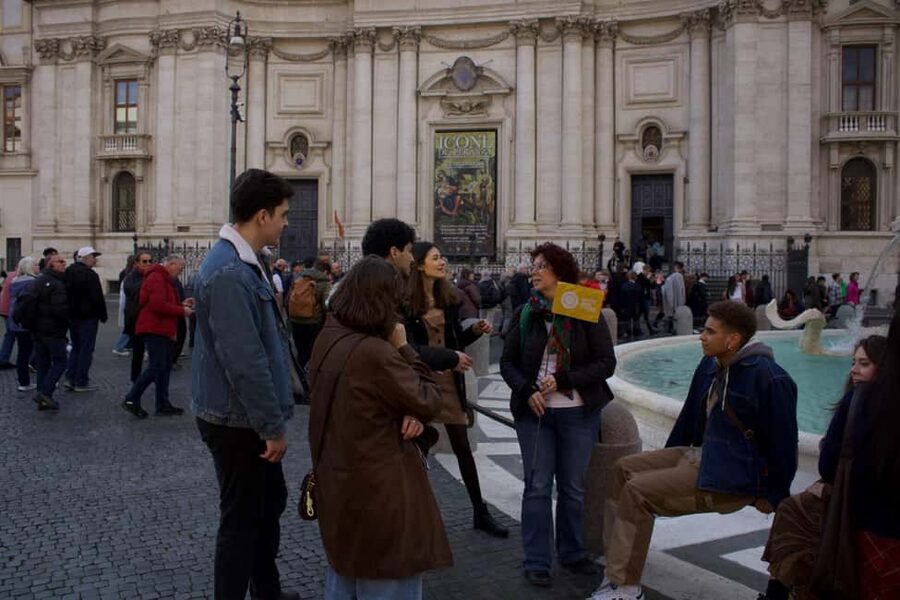
The final stop is not only about geography. Piazza Navona is a useful place to end because your guide can suggest where to eat, where to find a bar, and where to look for a rooftop terrace.
Use that moment. Ask specific questions about the neighborhood where you are staying, the kind of meal you want, and how much time you have. Guides have also helped with restaurant suggestions near hotels, which can save you from choosing the first menu you see after a long walk.
The tour does not include food or drinks, so budget for your own meal afterward. That is not a weakness, but it means you should view the Piazza Navona finish as a convenient starting point for your next activity, not as part of a food tour.
The guide makes or breaks the experience
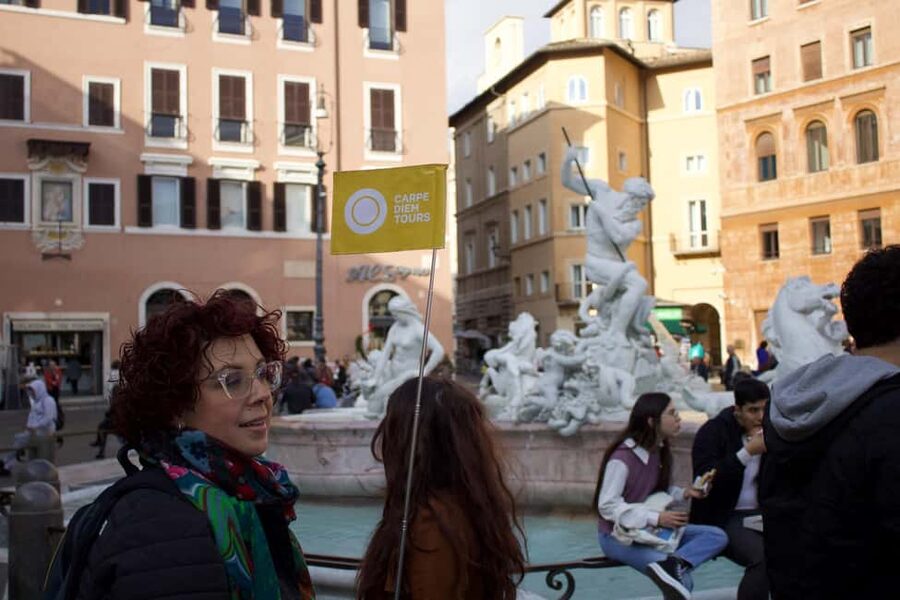
The strongest part of this tour is the guiding. Several guides receive especially warm praise for making history easy to follow rather than turning it into a list of dates.
Dan is described as an impressive history scholar who explains complex subjects in a friendly, accessible way. He also keeps the pace moving, which matters on a route with several stops. Dinara is praised for clear English, intelligence, warmth, and an ability to keep the two hours moving quickly.
Paulina and Polina are noted for fun facts, strong storytelling, and helpful advice. Anna is described as friendly and informative, while Domenica is praised for combining historical details with stories and curiosities about Rome. Vlad receives particular credit for humor, organization, professionalism, and suggestions for nearby restaurants. Sela is described as personable and able to make the walk feel fun.
Of course, you may not be assigned the guide you prefer. Guide quality can vary from one departure to another, but the repeated pattern is encouraging: clear explanations, a friendly attitude, and useful answers to questions.
One guide also made a point of choosing spots where the group could hear better. That is important in Rome, where traffic and crowds can swallow a quiet voice. A small group gives you a better chance to interact, and private groups are available if you want a more personal format.
Pace, language, and group comfort
The walk is offered in English or Spanish. If you are booking for a mixed group, choose the language in which everyone can follow historical explanations and ask questions comfortably.
The reported pace is steady rather than rushed. One guide is specifically praised for walking at a comfortable speed, while another kept the group connected through busy areas. Still, Rome’s center can be crowded, and you should expect to stand during explanations and walk over uneven streets.
A group member may be able to ask a personal question while moving between stops, which makes the experience feel less formal than a lecture. Headphones were also appreciated on at least one departure, since they made the guide easier to hear. Equipment can vary, so do not assume every group will receive the same audio setup.
If you want total flexibility, a private group is available. That option should suit families, couples, and small groups with different interests. A standard group is the better value if you mainly want orientation and general history.
What you do not get for the $28 price
The price covers a local guide and the walking route. It does not include hotel pickup, hotel drop-off, food, or drinks. Monument entry is not presented as part of the experience, so plan to visit the Pantheon, Colosseum, or other interiors separately if you want more time inside.
That is why I would not compare this directly with an entry-ticket tour. You are paying for a compact introduction and local explanation, not reserved access.
At $28, the value is strongest when you use the tour as a starting point. Take notes on the places you want to revisit, ask for restaurant suggestions, and use the route to plan the rest of your time. The value is weaker if you already know central Rome well or prefer to move at your own pace without a guide.
Free cancellation up to 24 hours before the activity and the reserve-now-pay-later option make it easier to fit into an uncertain schedule. Check the available starting times because the tour lasts 2 to 2.5 hours, and the exact departure schedule can change.
Who should book this Rome walking tour?
I would recommend it to first-time Rome visitors, short-stay visitors, and anyone who wants a clear introduction before choosing longer visits. Families with older children may also like the variety, since the route changes scenery often and the guide can answer questions along the way.
It suits you if you enjoy history presented through stories, want help spotting details, and prefer a compact morning or afternoon activity. It is also a good fit if you want food suggestions from someone who knows the central neighborhoods.
I would choose a different format if your main goal is entering major monuments, taking a slow architectural study, or focusing on one period of Roman history. The Pantheon and Colosseum are not treated as full interior visits, and the route can feel quick if you want long stops for photographs.
FAQ
How long does the Rome walking tour last?
The tour lasts about 2 to 2.5 hours. Starting times depend on availability.
What languages are available?
The live guide is available in English or Spanish.
How much does the tour cost?
The listed price is $28 per person.
Where does the tour start?
There are two possible starting locations: Piazza d’Aracoeli and Piazza di Pasquino. The meeting point may vary based on the option booked.
Where does the tour finish?
The activity description places the main finish at Piazza Navona. The available end-point options also list Piazza Navona and the Colosseum, so check the selected option when booking.
Does the tour include hotel pickup?
No. Hotel pickup and drop-off are not included.
Are food and drinks included?
No. Food and drinks are not included.
Is this a private tour?
A private group option is available. The activity may also be booked as a standard group experience.
What should I bring?
Bring comfortable shoes and comfortable clothes for walking through Rome.
Can I cancel for a full refund?
Yes. You can cancel up to 24 hours in advance for a full refund. You can also reserve now and pay later.
Should you book it?
Book this tour if you want a well-paced introduction to central Rome, especially at the start of your visit. You will see major landmarks, hear the stories behind them, find a few less obvious places, and finish in a neighborhood suited to a meal or evening drink.
The best reason to book is the guide-led context. A strong guide such as Dan, Dinara, Paulina, Anna, Domenica, Vlad, or Sela can turn a crowded street and an old façade into something you understand. Just remember what you are buying: a lively outdoor overview for $28, not monument admission or an in-depth art tour.
Just added around Rome
- Boat excursion to Gaeta with a stop for swimming and snorkeling 2 HOURS★ 5.0 · 240 reviews
- Palatine Hill and Roman Forum Tour with Fast-Track Entrance★ 4.2 · 417 reviews
- Tivoli: Villa D’Este & Villa Adriana Pass & App Audioguide★ 4.4 · 364 reviews
- Tivoli: Villa D’Este Entry Ticket and App Audio Guide★ 4.3 · 191 reviews
- From Rome: Villa D’Este & Villa Adriana Day Trip with Lunch★ 4.4 · 289 reviews
- Vatican Museums & Sistine Chapel Skip-the-Line Guided Tour★ 4.6 · 254 reviews
- Rome: Capitoline Museums and Centrale Montemartini Tickets★ 4.4 · 328 reviews
- Rome: The Three Tenors at St. Paul’s Church Concert Ticket★ 4.7 · 699 reviews
City Tours, compared.

City Sightseeing Hop-on Hop-off Bus with Audioguide
Read our review →
City Sightseeing Hop-On Hop-Off Bus with Audio Guide
Read our review →
City Sightseeing Rome Hop-On Hop-Off Bus Tour
Read our review →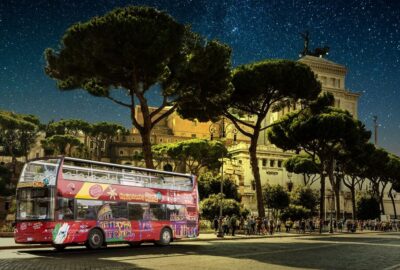
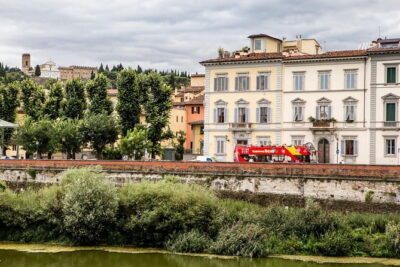
City Sightseeing Florence Hop-On Hop-Off Bus Tour
Read our review →
Eco-Friendly Golf Cart City Tour with Audio Guide
Read our review →
Florence in a Day: Michelangelo’s David, Uffizi and Guided City Walking Tour
Read our review →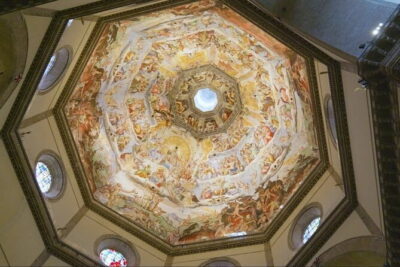
Florence in a Day: David, Cathedral & City Highlights Guided Tour
Read our review →Browse the lists this tour appears in