
Reviewed · HOP-ON HOP-OFF BUSES
Milan: City Sightseeing Hop-On Hop-Off Bus with Audio Guide
Milan’s hop-on hop-off bus is most useful as a first-day orientation ride. The four connecting routes carry you from the Duomo and La Scala to Navigli, Brera, CityLife, and San Siro, giving you a quick sense of how the city fits together before you commit to museums, churches, and shopping streets. I especially like the open-top view and the freedom to change lines with one ticket.
I also like the $26 starting price, which is fair if you use the bus for a full day or choose the 48 or 72-hour option and make several stops. The main catch is Milan traffic and sometimes long waits between buses. A poorly marked starting point at Foro Buonaparte can also waste time, so arrive with the stop location clear on your map.
Key points to know before you board
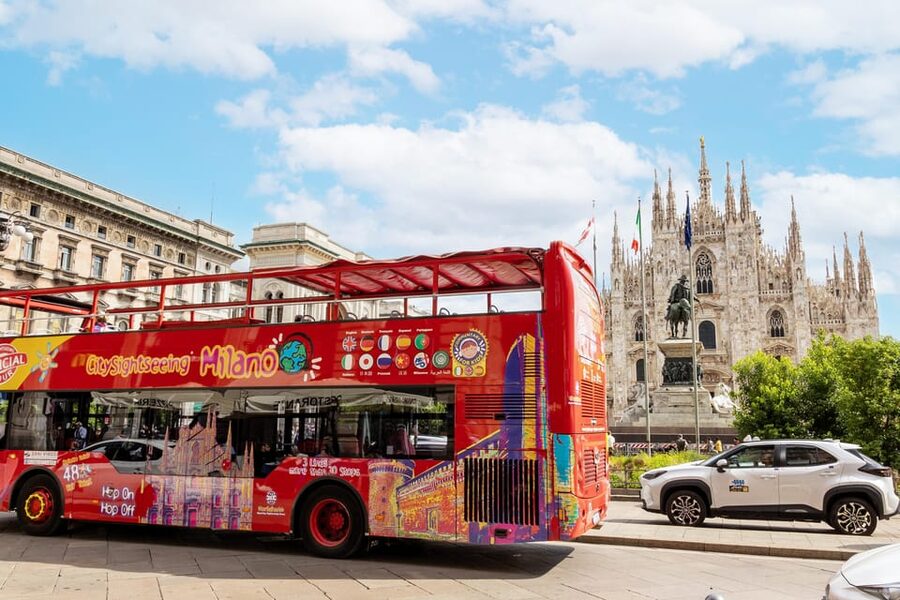
- Four connected routes: Cover central Milan, Navigli, Brera, CityLife, the Central Station area, and San Siro with one ticket.
- Best central stops: Duomo, Castello Sforzesco, Cadorna, La Scala area, Monte Napoleone, and Brera put major sights within easy reach.
- Useful for a short visit: Two rides can give you a quick overview, while a full day lets you add several stops.
- Audio in 10 languages: Choose English, Italian, Spanish, French, German, Portuguese, Russian, Japanese, Chinese, or Arabic.
- Extra digital help: The ticket includes onboard Wi-Fi, a paper map, children’s commentary, and free walking tours through the mobile app.
- Allow for traffic: Buses can be delayed at traffic lights, and missing one may mean a wait of around 50 minutes on some parts of the network.
What the Milan bus tour actually does well
This is not just a ride around the Duomo. The four routes create a useful picture of Milan’s different personalities. One loop keeps you close to the historic center, another reaches the grand Central Station and Porta Venezia, a third runs toward CityLife and San Siro, and the fourth links the center with Navigli and Brera.
I like that mix. Milan is easy to explore on foot in the center, but the city spreads out quickly. The bus lets you see areas you might skip if you stayed around the cathedral. It also gives your feet a break, which matters after a morning inside the Duomo or a long museum visit.
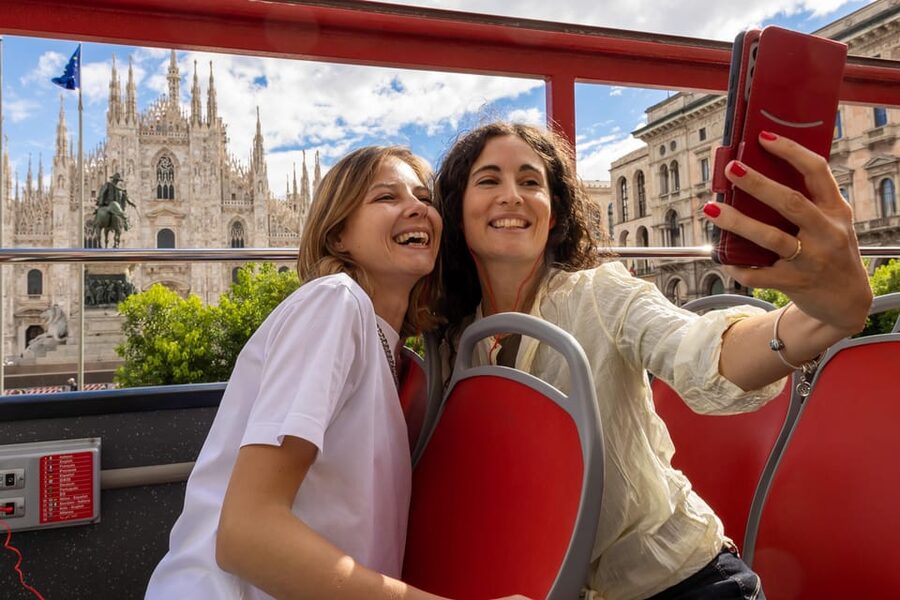
The open-top deck is the main attraction on a pleasant day. You get a higher view of streets, buildings, and passing neighborhoods than you would from a standard city bus. On hot days, an air-conditioned lower deck provides shelter, though the upper deck offers the better sightseeing position.
The commentary adds context without requiring a private guide. It covers notable buildings such as La Scala and Castello Sforzesco, along with Milanese food. Listen for the explanation of cotoletta alla Milanese, the city’s breaded veal cutlet, and panettone, the sweet bread closely linked with Milan.
More Hop-On Hop-Off Buses in Milan
- Milan: Gray Line Milan Open Tour Hop-On Hop-Off Bus Tour
★ 4.0 · 1,549 reviews - Milan: Skip-the-Line La Scala Museum Tour + Hop On Hop Off
★ 4.3 · 406 reviews - Milan Duomo Rooftops Tour + Optional Hop-on-Hop-off ticket
★ 4.3 · 271 reviews
Starting at Foro Buonaparte or Piazza Duomo
For Lines A, C, and D, the first stop is at Foro Buonaparte. Line B begins at Piazza Duomo. This sounds simple, but Foro Buonaparte is a large area, and the wording can leave first-time riders searching.
I would use the map before setting out and look for the travel information point or the exact marked corner rather than relying on the broad name Foro Buonaparte. One passenger spent an hour trying to match the location with a photo, so this is the one part of the setup where a few minutes of preparation can save a great deal of frustration.
At Piazza Duomo, allow extra time to find the correct bus among the crowds and traffic. Staff are usually present at the principal stops, and the buses are easy to spot, but the area around the cathedral can be hectic.
Your voucher may need to be exchanged for a ticket before you board, depending on how you book. One visitor lost time at an information office that was not operating, so I would not leave this step until the last minute. Keep the ticket handy if you plan to change routes often.
Line A: the compact historic-center circuit
Line A is the best place to begin if you want Milan’s classic sights. Its stops are:
- Castello
- Cadorna
- Cenacolo
- Corso Magenta
- Duomo
- Monte Napoleone
- Manin
- Moscova
Castello is the starting point for Castello Sforzesco and the surrounding park. The castle is one of Milan’s key landmarks, with museums and courtyards to explore. Attraction admission is not part of the bus ticket, so plan separately if you want to go inside.
Cadorna is useful for the transport network and for reaching the city center from a different direction. Cenacolo is the stop for Leonardo da Vinci’s The Last Supper, though the bus ticket does not include admission. If seeing the painting is a priority, arrange its separate entry in advance and use the bus only as transportation.
Corso Magenta gives you a graceful historic stretch between major sights. From there, the route continues to the Duomo, the natural centerpiece of a first Milan visit. Get off here for the cathedral, the rooftop terraces, and the surrounding piazza, but remember that the square is crowded and buses may take time to load.
Monte Napoleone brings you into Milan’s famous luxury shopping district. You do not need to shop to enjoy the polished streets and window displays. Manin and Moscova lead toward quieter city sections, restaurants, and the Brera side of central Milan.
The drawback of Line A is that several stops are close enough to walk between. That makes it useful for orientation, but less useful if your only goal is to move quickly across town.
Line B: Central Station, Porta Venezia, and San Babila
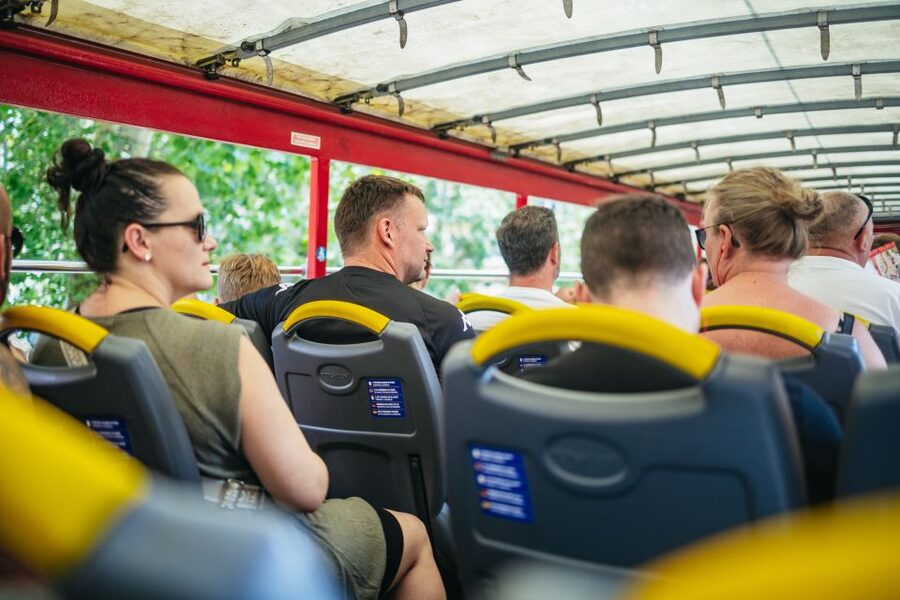
Line B begins at the Duomo and follows this route:
- Duomo
- Monte Napoleone
- Manin
- Repubblica
- Palazzo Lombardia
- Stazione Centrale
- Buenos Aires
- Porta Venezia
- San Babila
This is the route I would choose for a wider look at modern Milan. Repubblica and Palazzo Lombardia show a more contemporary side of the city, while Stazione Centrale is one of Milan’s major transport landmarks. The station itself is worth seeing from outside for its large scale and dramatic architecture.
Buenos Aires leads into one of the city’s main shopping corridors. Porta Venezia offers access to another well-known neighborhood, and San Babila returns you toward the Duomo and central shopping streets.
Line B is practical if you are staying near the Central Station or Porta Venezia area. It can also help you connect the city center with parts of Milan that are less likely to appear on a short walking route.
The route overlaps with Line A at Duomo, Monte Napoleone, and Manin. That overlap is useful when changing buses, but it also means four lines do not equal four completely separate sightseeing experiences. If you have only one day, focus on the sections that add new ground rather than repeating the same central streets.
Same city, a completely different sort of day:
- Milan: Cathedral and Duomo’s Terraces Entrance Ticket
★ 4.6 · 61,054 reviews - Milan Cathedral: Duomo Terraces Ticket (No Church Access)
★ 4.6 · 6,111 reviews - Milan: Milan Cathedral Direct Entrance – Terrace Excluded
★ 4.5 · 5,782 reviews - Milan: Guided Walking Tour & Last Supper Visit with Ticket
★ 4.7 · 5,409 reviews
Line C: CityLife, the stadium, and Milan’s western side
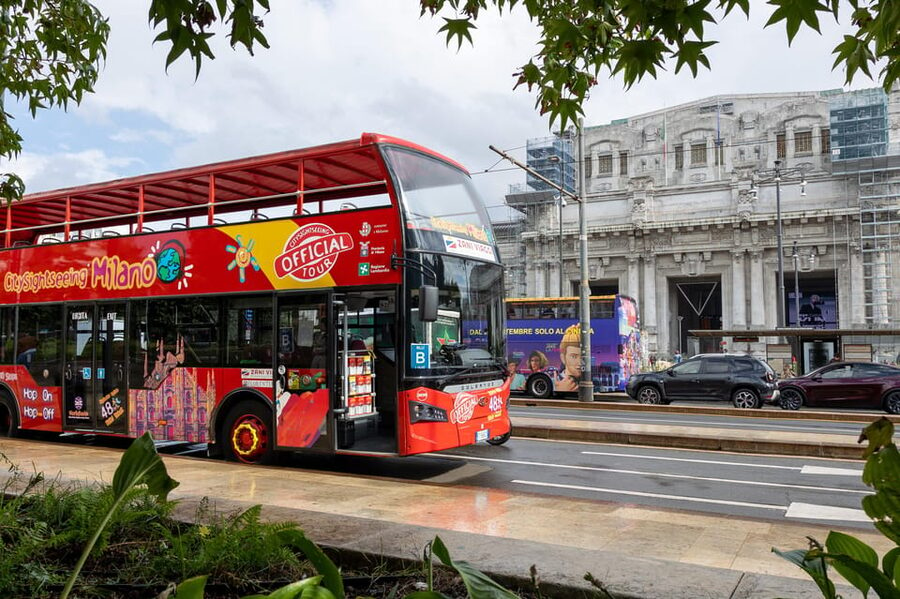
Line C is the longest and most varied route:
- Castello
- Triennale
- Arco della Pace
- CityLife
- Casa Milan
- MiCo Congress Centre
- Lotto, Montebianco
- Lido
- Ippodromo
- Stadio San Siro
- Lotto, Monterosa
- Buonarroti
- Pagano
- Conciliazione
- Parco Sempione
Triennale serves Milan’s design and arts district, while Arco della Pace opens onto one of the city’s broad public spaces. CityLife then shifts the mood toward new architecture, offices, and modern development.
Casa Milan is the stop for the football club’s museum and related attractions, though admission costs extra. The route continues toward MiCo, Lido, Ippodromo, and San Siro. If you are interested in football, San Siro is the obvious reason to take Line C. If not, it still offers a look at a part of Milan far outside the central postcard route.
Plan carefully at San Siro. You may have only a brief photo stop or face a long wait for the next bus, depending on the timetable. Do not get off casually if you have a tight schedule.
The return side of the circuit includes Buonarroti, Pagano, Conciliazione, and Parco Sempione. Parco Sempione connects naturally with Castello Sforzesco, so this line can work well as a loop combining historic Milan with the western districts.
Line C is the route that gives the ticket its strongest value. The center is walkable, but CityLife and San Siro take more effort to reach. Traffic can make this circuit slow, so I would reserve it for a day when you can tolerate a flexible schedule.
Line D: Navigli, Brera, and an evening-friendly city view
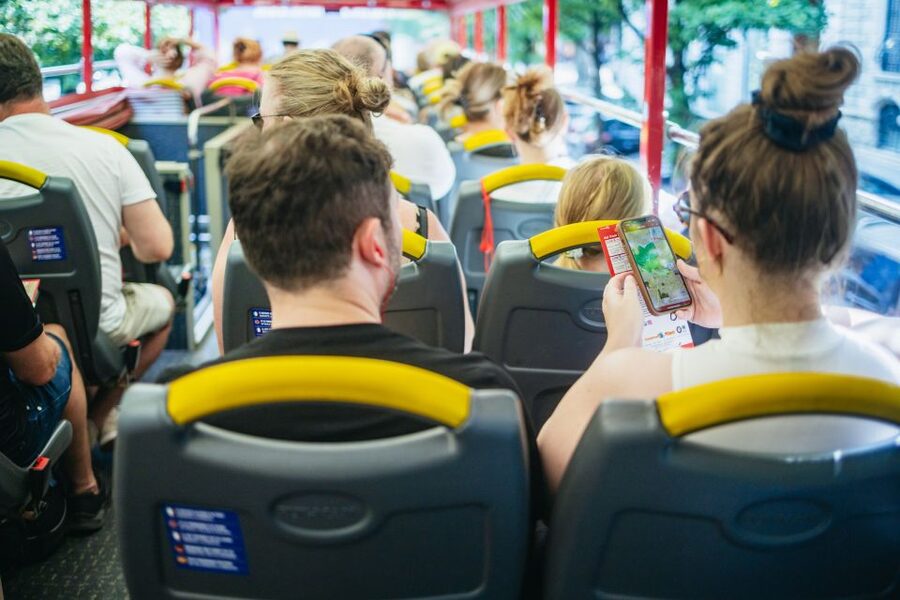
Line D follows:
- Castello
- Cadorna
- Cenacolo
- Navigli
- Piazza XXIV Maggio
- Duomo
- Monte Napoleone
- Brera
This is the route for a more local-feeling side of Milan. Navigli is known for its canals and waterside streets, with places to eat and linger. Piazza XXIV Maggio gives you another view of the southern central area before the bus returns toward the Duomo.
Brera is one of the most appealing stops for a relaxed walk. Its narrow streets, galleries, cafés, and artistic identity make it a good place to leave the bus and explore on foot. From Brera, you can also make your own way toward the Duomo or Castello.
Line D overlaps heavily with the central routes, but its Navigli section is the reason to choose it. One ride along the canal area can show you a side of Milan that does not appear in a standard Duomo-focused visit.
If you buy a 72-hour ticket for a weekend from June through September, the Milan Night Tour is included. Check the current schedule when booking, since this extra applies to the stated weekend period and is not part of every ticket.
Audio commentary, Wi-Fi, and the onboard experience
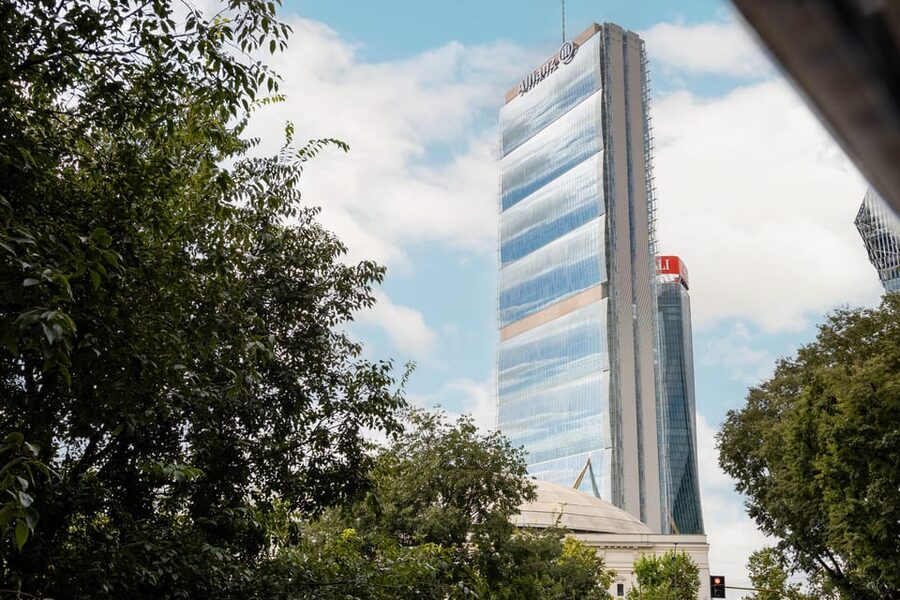
The audio guide is available in 10 languages: Spanish, Chinese, English, French, German, Italian, Russian, Portuguese, Japanese, and Arabic. A separate children’s commentary gives families an option beyond the standard narration.
I like the way the commentary mixes buildings with food. You hear about La Scala and Castello Sforzesco, then get details about cotoletta alla Milanese and panettone. That helps turn a simple transfer into a better introduction to local life.
The equipment is generally easy to use, but test your headphones before the bus moves. A few seats have had faulty audio sockets, and changing seats or asking for replacement headphones may be necessary. One passenger found working equipment a few rows away, while another changed headphones without much trouble.
The buses include Wi-Fi and the ticket comes with a city map. You also get free walking tours through the mobile app in five languages. These extras will not replace a museum guide, but they are useful for filling gaps between bus rides.
How much time should you allow?
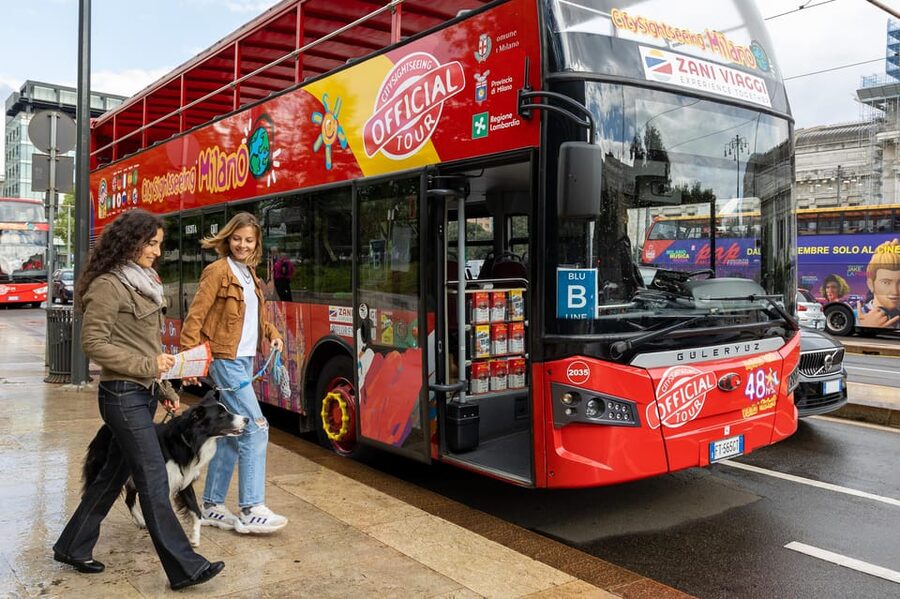
The ticket is available for 1, 2, or 3 days, with the exact price depending on the option you choose. The listed starting price is $26 per person. That is good value if you use the bus as both sightseeing and transportation, especially on the longer routes.
A one-day ticket can work well if you mainly want to ride the main circuits and make a few stops. Several people have managed to see all four lines in one day, but that means a fast pace and limited time off the bus.
I would choose two days if you want to visit the Duomo, spend time at Castello Sforzesco, walk around Brera or Navigli, and reach San Siro without rushing. A 72-hour ticket makes the most sense if you prefer to split sightseeing into shorter outings or want the summer weekend night tour.
Do not assume the bus will save time on every journey. Milan traffic, traffic lights, and crowded transfer points can slow the ride. Some sections may have waits of roughly 50 minutes between buses, so keep a little space in your schedule.
Who gets the most from this ticket?
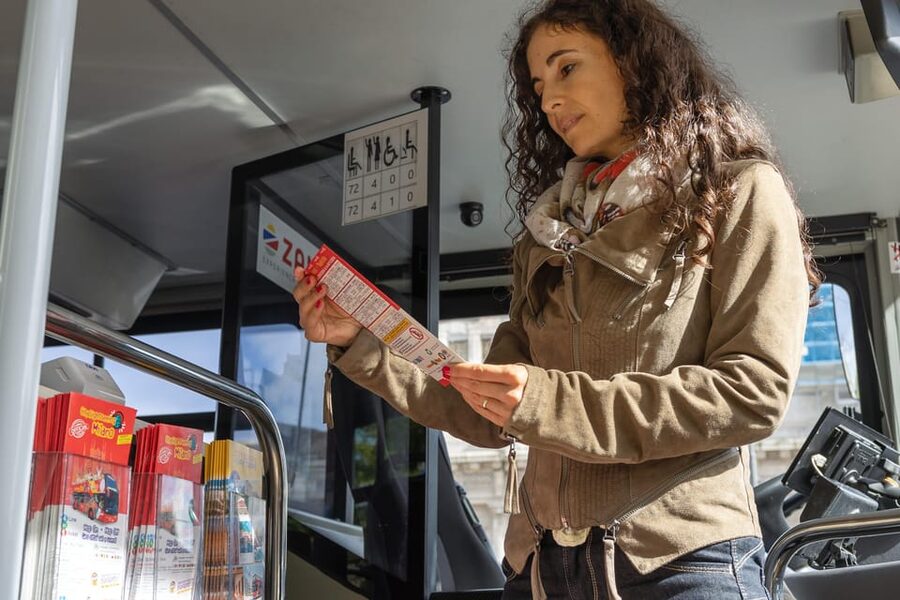
I would recommend it to you if:
- You have only one full day in Milan and want an overview first.
- You prefer riding to walking long distances.
- You are staying outside the immediate Duomo area.
- You want to see Navigli, CityLife, or San Siro.
- You are visiting with children and want a simple way to cover ground.
- You enjoy audio commentary and independent sightseeing rather than a fixed walking group.
It is less essential if you are staying in central Milan and mainly want the Duomo, La Scala, Brera, and Castello. Those sights are close enough to combine on foot, and the bus may spend as much time in traffic as you would spend walking.
The ticket also works well for a first ride followed by independent exploring. I would take a complete circuit early in the visit, note the areas that interest me, then hop off on the second circuit. That approach gives you orientation without turning the whole day into a bus timetable exercise.
Practical details that affect your day
Bring your booking information and locate the stop before you leave your hotel. Foro Buonaparte is broad, and the precise boarding point matters.
For the best view, sit on the open upper deck when the weather is comfortable. Keep a lower-deck option in mind if the sun is strong or conditions change. Check the audio socket as soon as you sit down.
The main stops usually have helpful staff, and the service is generally easy to recognize. Still, buses can fill up when changing lines, especially at popular central stops. If the first bus is full, you may need to wait for the next one.
Attraction tickets are not included. Budget separately for the Duomo, The Last Supper, Castello Sforzesco, Casa Milan, San Siro, or any museum you plan to enter.
There may also be temporary route changes. The current information notes a closure of Green Line Stop 2 during the Winter Olympic period and suspension of Castello on Saturday, February 21. Check the latest notice for your travel date rather than relying only on a printed map.
Should you book the Milan hop-on hop-off bus?
Book it if you want quick orientation, broad coverage, and easy access to outlying areas. The four routes, multilingual audio, Wi-Fi, app walking tours, and open-top views give you plenty for the price, especially with a 48 or 72-hour ticket.
Skip it if your Milan plan is almost entirely walkable and built around the Duomo, Brera, La Scala, and Castello. In that case, public transportation or your own two feet may be faster.
For most first visits, I would choose the one-day ticket for a quick introduction or two days for a more relaxed visit. Use Line D for Navigli and Brera, Line C for CityLife and San Siro, and Lines A and B for the historic center and Central Station area. That gives the ticket a purpose beyond simply riding in circles.
FAQ
How many bus lines are included?
One ticket includes four separate but connecting routes, identified as Lines A, B, C, and D.
How long can I use the ticket?
You can choose a ticket valid for 1, 2, or 3 days. Check availability for the dates and starting times offered when you book.
Which languages are available for the audio guide?
The audio guide is available in Spanish, Chinese, English, French, German, Italian, Russian, Portuguese, Japanese, and Arabic. A special audio commentary for children is also included.
Are attraction admissions included?
No. The bus ticket covers the sightseeing service, but admission to attractions such as the Duomo, Castello Sforzesco, museums, Casa Milan, or San Siro is not included.
Where do I catch the bus?
Lines A, C, and D begin at Foro Buonaparte. Line B begins at Piazza Duomo. Foro Buonaparte is a large area, so check the precise stop location before setting out.
Is the Milan Night Tour included?
A 72-hour ticket purchased at the weekend rate for Saturdays and Sundays from June through September includes the Milan Night Tour. Check the current terms and schedule for your dates.
Just added around Milan
- Canyoning “Gumpenfever” – beginner Canyoningtour for everyone★ 5.0 · 391 reviews
- Bergamo: Digital guide made by a local for your walking tour★ 5.0 · 184 reviews
- Milan: City Highlights Walking Tour with The Last Supper★ 4.9 · 195 reviews
- Milan: The Milan Pass City Card★ 4.0 · 655 reviews
- Milan: Duomo & Rooftop Tour with Optional Hop-On Hop-Off Bus★ 4.5 · 262 reviews
- Milan: Skip-the-Line Guided Walk and “The Last Supper”★ 4.5 · 606 reviews
- Milan: Duomo and The Last Supper Skip-the-Line Guided Tour
- Milan: Leonardo’s Last Supper and Michelangelo’s Pietà Tour★ 4.6 · 559 reviews
Hop-On Hop-Off Buses, compared.

City Sightseeing Hop-on Hop-off Bus with Audioguide
Read our review →
Hop-On Hop-Off Panoramic Open Bus Ticket 3 Circuits x 1
Read our review →
Hop-on Hop-off Bus Tour: 24, 48 or 72-Hour Ticket
Read our review →
City Sightseeing Rome Hop-On Hop-Off Bus Tour
Read our review →
Hop-on Hop-off Sightseeing Bus Tour with Audioguide
Read our review →
Stresa: 3 Borromean Islands Hop-On Hop-Off Boat Tour
Read our review →
Big Bus Hop-on, Hop-off Open-Top Sightseeing Tour
Read our review →Browse the lists this tour appears in