
Reviewed · CATACOMBS TOURS
Rome: Catacombs Skip-the-Line Tour with Tickets
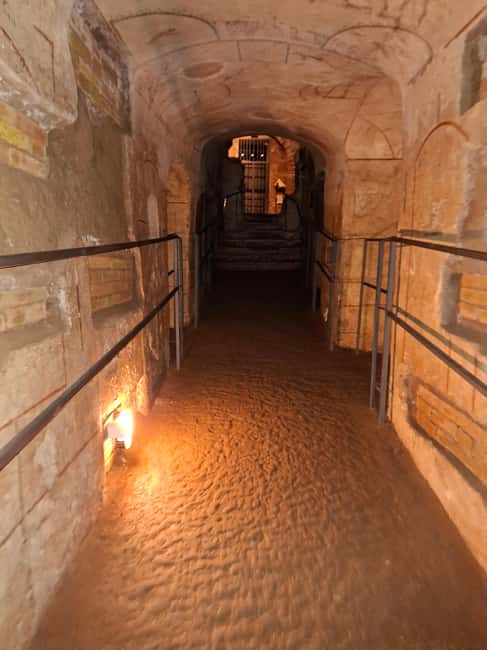
Rome’s Catacombs of San Domitilla take you below the modern city and into a world of narrow passages, burial chambers, early Christian symbols, and stories about Rome’s shift from pagan religion to Christianity. The catacombs form part of an underground network stretching more than 180 miles, though this tour focuses on a manageable section.
I like the small-group format, which gives guides such as John, Divan, Heather, Sean, and Mike room to explain the setting, answer questions, and adjust their storytelling to the group. I also like that the tour goes beyond burial customs, showing how religion, politics, art, and daily life changed together. The main drawback is that the site is underground, with narrow passages and no wheelchair access, so it is not a fit for everyone.
Key points to know before booking
- San Domitilla is the main event: You spend about two hours underground rather than moving between several attractions.
- The history has a clear theme: The guide traces Rome’s move from pagan traditions to early Christian society.
- The tombs of Nereus and Achilleus are included: These are among the named burial sites highlighted during the visit.
- The guides shape the experience: John, Divan, Heather, Sean, Devon, and Mike are praised for clear storytelling, humor, and patience.
- Bring a jacket and sturdy shoes: Underground conditions can feel cool, and comfortable footwear matters.
- Photography is not allowed inside: Plan to remember the art and architecture without taking pictures.
Why Rome’s Catacombs feel different from the usual sights
Rome gives you plenty of grand monuments above ground. The Colosseum, Pantheon, and Roman Forum tell the story through columns, arches, and open ruins. The Catacombs of San Domitilla tell it through absence, darkness, cramped corridors, and the marks people left behind in places meant for the dead.
You are not simply looking at old graves. You are learning how Roman society handled death, how early Christians practiced their faith, and how a city built around pagan religion gradually became Christian Rome. That change is the real subject of the tour.
The underground setting helps. A guide can explain religious persecution in a lecture, but the enclosed tunnels make the subject feel more immediate. You hear about people who worshipped and buried their dead outside the city walls, then see the spaces shaped for those rituals.
The catacombs are also more restrained than some people expect. One useful point to keep in mind is that this is not mainly a display of piles of bones. The focus is on the burial site, the art, the structure of the tunnels, and the beliefs behind them. If you arrive expecting a theatrical horror attraction, you may be surprised. If you want history with a strong sense of place, the setting works well.
More Entry Tickets in Rome
- Vatican: Museums & Sistine Chapel Entrance Ticket
★ 4.5 · 144,003 reviews - Rome: Pantheon Fast-Track Ticket and Official Audio Guide
★ 4.3 · 21,008 reviews - Rome:Hop-On Hop-Off Panoramic Open Bus Ticket 3 Circuits x 1
★ 4.0 · 15,405 reviews
Meeting at Via delle Sette Chiese, 282
The tour begins at Via delle Sette Chiese, 282. You meet in the garden by the picnic tables near the white gazebo or umbrellas, then return to the same point at the end.
That meeting arrangement is simple, but you should allow enough time to find it. The activity does not include transport, so you need to make your own way to the starting point. This is important when planning your day in Rome: the tour is not a hotel pickup, and it is not designed as a broad city sightseeing excursion.
The return to the same location is useful. You do not need to work out a second meeting point after leaving the catacombs, and you can plan the rest of your afternoon from there. Since starting times vary, check the available departure when you book and build in time to arrive at the garden.
The tour is offered in English, with an English-speaking guide. The description calls for a strong level of English. That matters here because the experience depends on spoken explanation. Much of the value comes from the historical links between Roman religion, burial customs, persecution, and Christian art. If you understand only basic English, you may miss the details that make the visit worthwhile.
Two hours below Rome at San Domitilla
The guided visit lasts about two hours. That is enough time to explain the site and walk through a section of the underground network without turning the experience into an exhausting half-day outing.
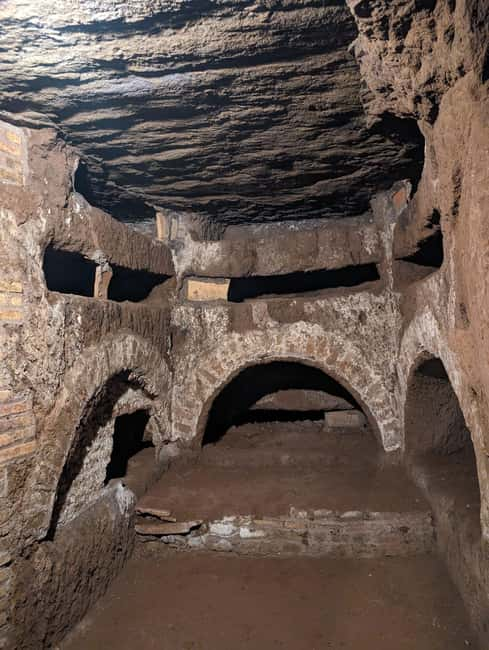
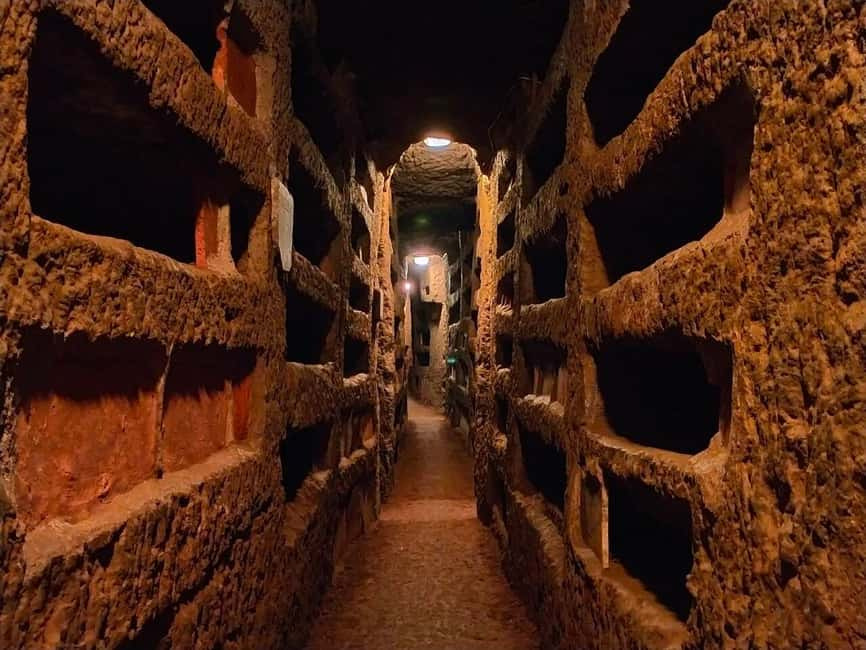
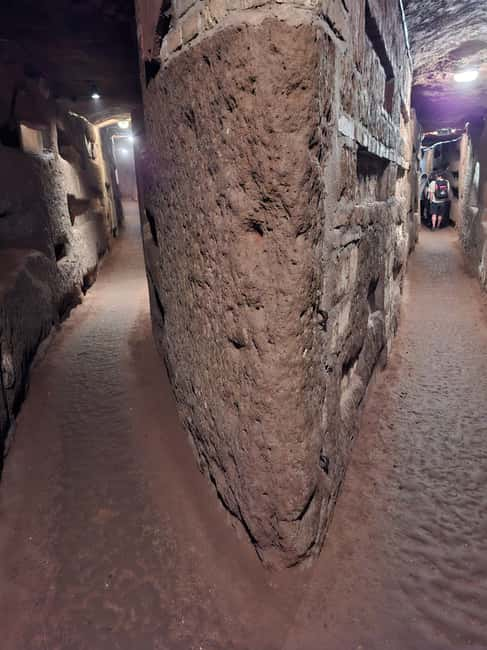
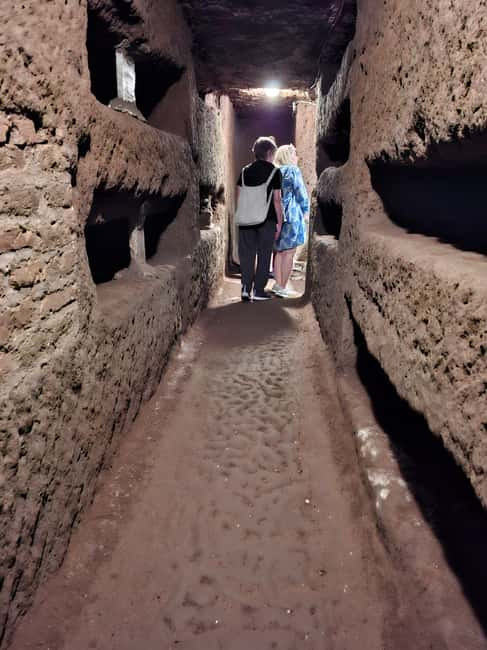
The catacombs extend for more than 180 miles in total, but you do not walk the whole system. Instead, the guide leads you through part of the Catacombs of San Domitilla and gives the wider network a human scale. You begin to understand how extensive these burial grounds were without needing to cover every corridor.
The distance walked may feel shorter than you expect. That is not necessarily a weakness. A well-paced visit leaves room for the guide to stop, explain an image, set the historical scene, and answer questions. One of the most useful aspects of the experience is the balance between seeing the tunnels and hearing why they matter.
The passages may feel narrow, and some people can feel uneasy underground with limited exits. If that sounds like you, tell the guide early. Divan is specifically praised for helping an uneasy participant feel more at ease, and several guides are described as patient and attentive. Still, a guide can offer reassurance, not change the physical setting. You should be comfortable with enclosed spaces before booking.
Tombs, symbols, and early Christian art
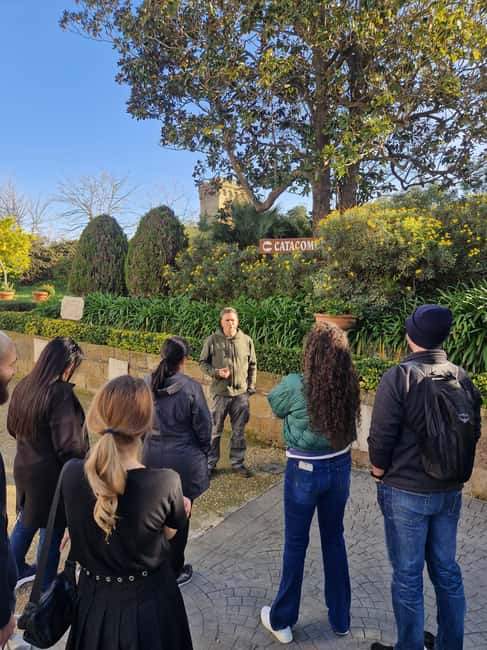
San Domitilla is valuable because it connects ordinary burial practice with the rise of Christianity. The guide explains how people were buried, what the spaces meant, and how early Christian communities expressed their beliefs.
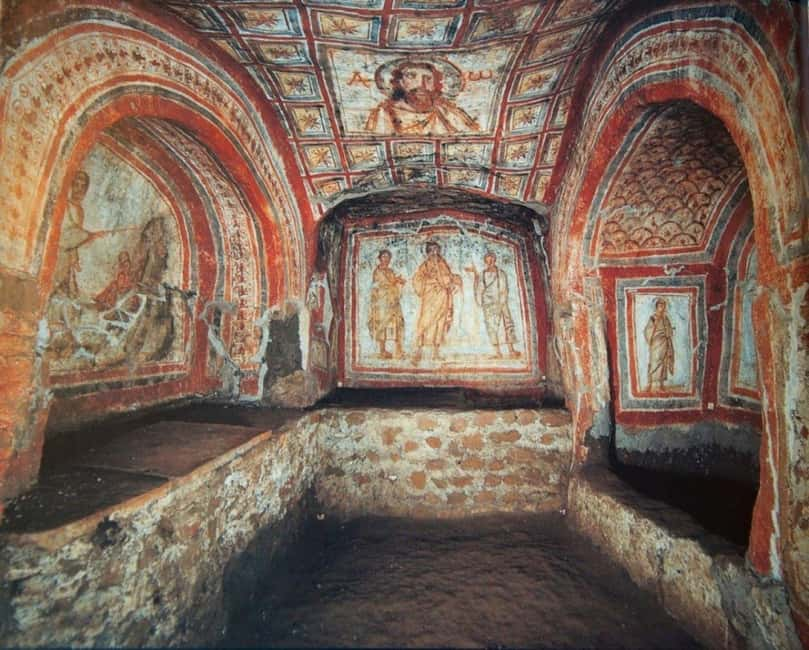
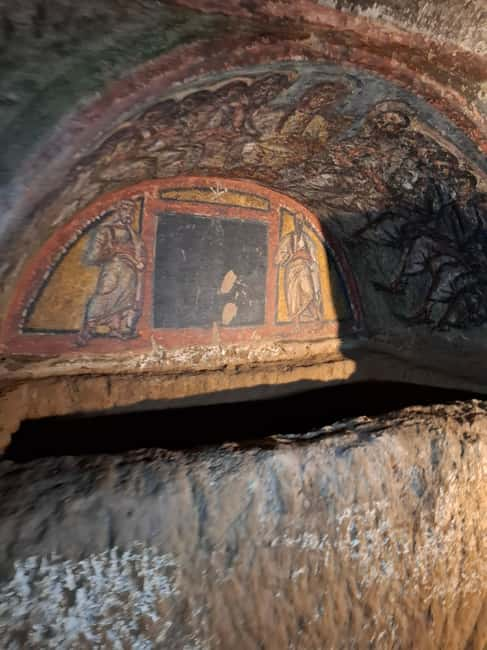
The tour includes the tombs of Nereus and Achilleus, two named figures that give the visit a clear point of focus. You also see some of the earliest Christian artworks available in Rome. These images matter because they show how a new faith appeared in visual form, within a society still shaped by older Roman religious traditions.
You may notice that the art is not presented as a separate museum collection. It belongs to the underground setting. The paintings and symbols sit within burial spaces, so the guide can explain them as part of a living religious practice rather than as isolated objects behind glass.
Photography is not allowed inside. That can disappoint visitors who like to document every stop, but it also keeps the focus on looking and listening. Bring your attention instead of planning to use your phone as a camera. The stories, layout, and visual details are what you will carry away.
More Skip-the-Line Tickets in Rome
- Vatican Museums & Sistine Chapel Skip-the-Line Entry Ticket
★ 4.4 · 13,838 reviews - Skip-the-Line Group Tour of the Vatican, Sistine Chapel & St. Peter’s Basilica
★ 4.5 · 12,779 reviews - Rome: Vatican Museums & Sistine Chapel Skip-The-Line Ticket
★ 4.2 · 11,708 reviews - Vatican, Sistine Chapel & St. Peter’s Skip-the-Line Tour
★ 4.5 · 7,770 reviews
From pagan Rome to Christian Rome
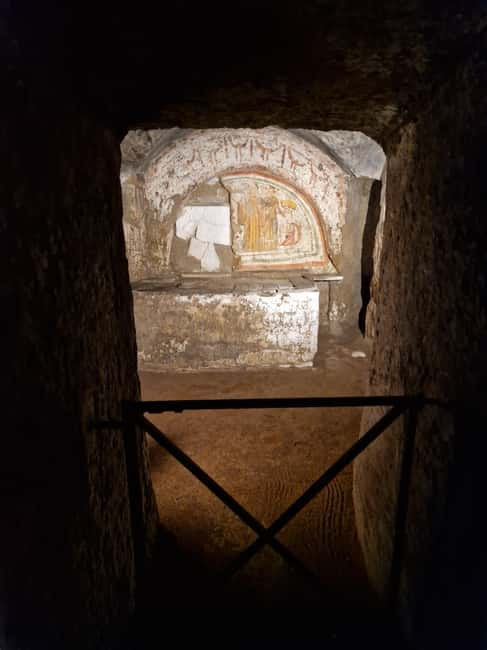
The strongest thread in the tour is the change from ancient pagan Rome to Christian Rome. This was not a quick switch, and the catacombs help show the transition through burial rites, religious symbols, and community practice.
Your guide sets the wider scene before taking you farther underground. Sean is praised for doing this clearly, giving the group the background needed to understand what follows. That approach is helpful because the tunnels can otherwise seem like a maze of old corridors. Once you know what to look for, the site becomes easier to read.
The tour also covers persecution and the beliefs surrounding death. These subjects are serious, but the guides do not have to make the visit gloomy. John is described as funny and friendly, while Heather is praised for handling historical facts with humor when appropriate and respect when the subject calls for it. That mix suits the catacombs well.
You should expect a history lesson, but not a dry one. The best guides use stories, questions, and small details to connect the site to Roman society. Divan is praised for a systematic, clear presentation, while Mike is singled out for storytelling and for keeping a young child engaged. Those strengths matter because the experience works best when the guide makes the past understandable without flattening it.
What the small group adds
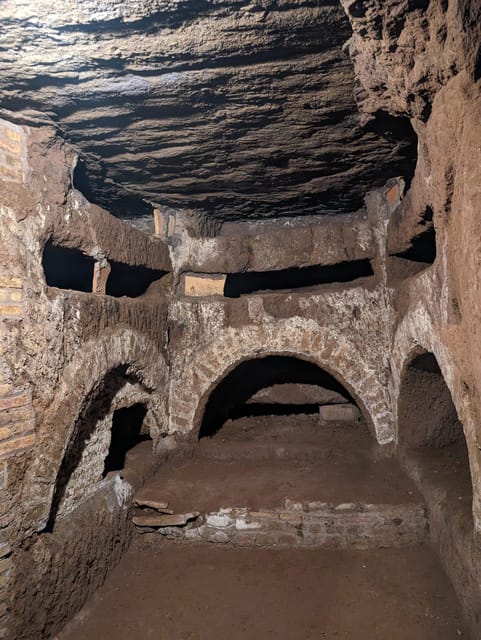
The small-group setting is one of the main reasons to choose this experience instead of visiting without a guide. Underground, sound and space matter. A smaller group makes it easier to hear and easier to ask a question without interrupting a large crowd.
You get more direct contact with the guide. Several guides are described as welcoming questions and giving clear answers, and the small group allows that exchange to happen naturally. If you want only a quick look at the tunnels, a larger group might be fine. If you want context, humor, and time to ask why a symbol or burial practice matters, the smaller format is worth paying for.
A private option is also mentioned, though the exact price and conditions depend on availability. If you are traveling with family or want more control over the pace, check whether a private departure is offered for your date.
The guide names associated with this experience include John, Divan or Diwan, Heather, Sean, Devon, and Mike. You may not receive a particular guide, so do not book on the assumption that one named person will lead your visit. The useful point is the consistent style described across the guides: strong English, clear historical explanation, humor, and patience with questions.
Price and what you receive for $54.66
At $54.66 per person, this is not the cheapest way to spend two hours in Rome. The price makes more sense if you value a live explanation and want to avoid handling the visit on your own.
Your fee includes the skip-the-line ticket and the English-speaking guide. You are paying for access plus interpretation, not transportation. Since there is no transfer, you need to add the time and cost of reaching Via delle Sette Chiese, 282.
The skip-the-line feature is useful at a popular archaeological site, though its value depends on the crowd at your chosen time. The larger value comes from the guide. Catacombs can be hard to understand from signs alone, and the art and burial customs need context. A strong guide turns a series of dark corridors into a story about Roman culture and religion.
The high rating of 4.9 from 449 ratings fits the strengths of the experience: guide quality, small groups, clear English, and a subject that feels different from Rome’s open-air monuments. You should still judge the price against your interests. If you want independent wandering, or if you dislike guided interpretation, the cost may feel high. If you want the underground setting explained properly, it is a fair use of two hours.
You can reserve now and pay later, and cancellation is free up to 24 hours before the activity for a full refund. Those terms are helpful if your Rome schedule is still moving.
Who should book this catacomb tour
I would recommend this tour to you if you enjoy history, archaeology, religion, and places that feel different from the standard Rome route. It is especially good for anyone who wants to understand the early Christian period through physical evidence rather than only through churches and museums.
Families can also enjoy it, but age and attention span matter. Mike is praised for keeping a three-year-old engaged, and Heather is praised for holding the attention of a young child and the wider group. That does not guarantee every child will enjoy two hours underground. Consider your child’s comfort with dark, enclosed spaces and spoken history.
The tour may also suit first-time Rome visitors who want a strong change of pace. After days of crowded squares and major monuments, the catacombs offer a quieter, more focused experience. You get a look at the city’s religious past from below ground, away from the familiar center.
I would skip it if you are uncomfortable in narrow underground passages, need wheelchair access, or cannot follow a strong English presentation. You should also think twice if you want to take photographs throughout the visit, since photography inside is not allowed.
Wear comfortable shoes, bring a jacket, and dress for the weather on the way there. Underground conditions and the walk to the meeting point make practical clothing more important than style.
Should you book the San Domitilla Catacombs tour?
Book it if you want a well-explained visit to an unusual Roman site, especially if the transition from pagan religion to Christianity interests you. The tombs of Nereus and Achilleus, early Christian artwork, and the scale of the tunnel network give the tour plenty of substance.
The best reason to choose it is the guide-led format. John, Divan, Heather, Sean, Devon, and Mike are all associated with the warm, clear, story-based approach this experience needs. The main caution is physical and practical: no wheelchair access, no photography, no included transport, and an underground setting that can feel tight.
For the right visitor, $54.66 buys more than a ticket. It buys the background that lets you understand what you are seeing. If you are ready for two focused hours below Rome, this is a strong addition to a city itinerary.
FAQ
How long does the catacomb tour last?
The guided visit lasts two hours. Check availability for the starting times offered on your chosen date.
Where does the tour meet?
You meet at Via delle Sette Chiese, 282, in the garden near the picnic tables and the white gazebo or umbrellas. The tour also ends at this meeting point.
Is transportation included?
No. Transfer to and from the meeting point is not included, so you must arrange your own transport to Via delle Sette Chiese, 282.
What language is the tour in?
The tour is conducted in English by a live English-speaking guide. A strong level of English is needed to follow the historical explanation.
Can I take photographs inside the catacombs?
No. Photography inside the catacombs is not allowed.
Is the tour suitable for wheelchair users?
No. The activity is not suitable for wheelchair users. Comfortable shoes, a jacket, and weather-appropriate clothing are recommended.
More Underground Rome
- Naples: Catacombs of San Gennaro Entry Ticket & Guided Tour
★ 4.6 · 7,941 reviews - Rome: Crypts and Catacombs Underground Tour with Transfers
★ 4.6 · 5,341 reviews - The Original Roman Crypts and Catacombs Tour with Transfers
★ 4.5 · 4,896 reviews - Rome: Catacombs of St. Callixtus Entry Ticket & Guided Tour
★ 4.6 · 3,037 reviews
Just added around Rome
- Boat excursion to Gaeta with a stop for swimming and snorkeling 2 HOURS★ 5.0 · 240 reviews
- Palatine Hill and Roman Forum Tour with Fast-Track Entrance★ 4.2 · 417 reviews
- Tivoli: Villa D’Este & Villa Adriana Pass & App Audioguide★ 4.4 · 364 reviews
- Tivoli: Villa D’Este Entry Ticket and App Audio Guide★ 4.3 · 191 reviews
- From Rome: Villa D’Este & Villa Adriana Day Trip with Lunch★ 4.4 · 289 reviews
- Vatican Museums & Sistine Chapel Skip-the-Line Guided Tour★ 4.6 · 254 reviews
- Rome: Capitoline Museums and Centrale Montemartini Tickets★ 4.4 · 328 reviews
- Rome: The Three Tenors at St. Paul’s Church Concert Ticket★ 4.7 · 699 reviews
Catacombs Tours, compared.
Catacombs of San Gennaro Entry Ticket & Guided Tour
Read our review →
Crypts and Catacombs Underground Tour with Transfers
Read our review →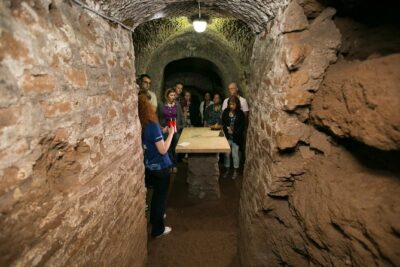
The Original Roman Crypts and Catacombs Tour with Transfers
Read our review →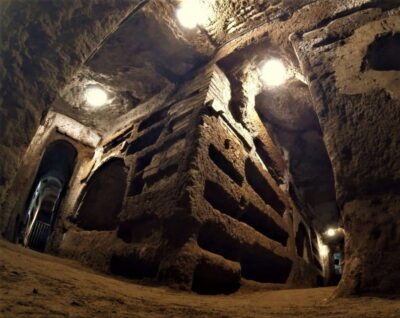
Catacombs of St. Callixtus Entry Ticket & Guided Tour
Read our review →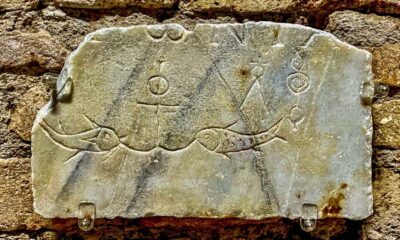
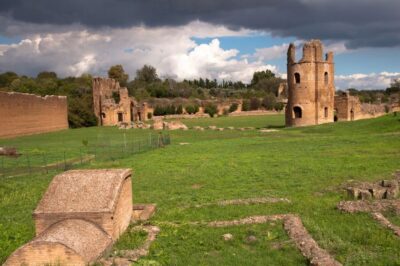

Rome EBike Tour: Appian Way, Catacombs & Roman Aqueducts
Read our review →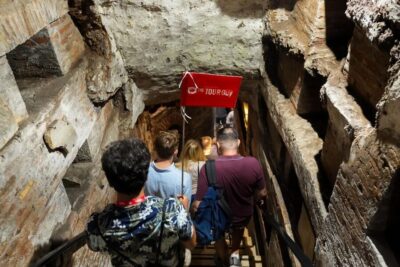
Catacombs and Capuchin Crypt Guided Tour with Transfer
Read our review →Browse the lists this tour appears in