
Reviewed · CATACOMBS TOURS
Rome: Catacombs of St. Callixtus Entry Ticket & Guided Tour
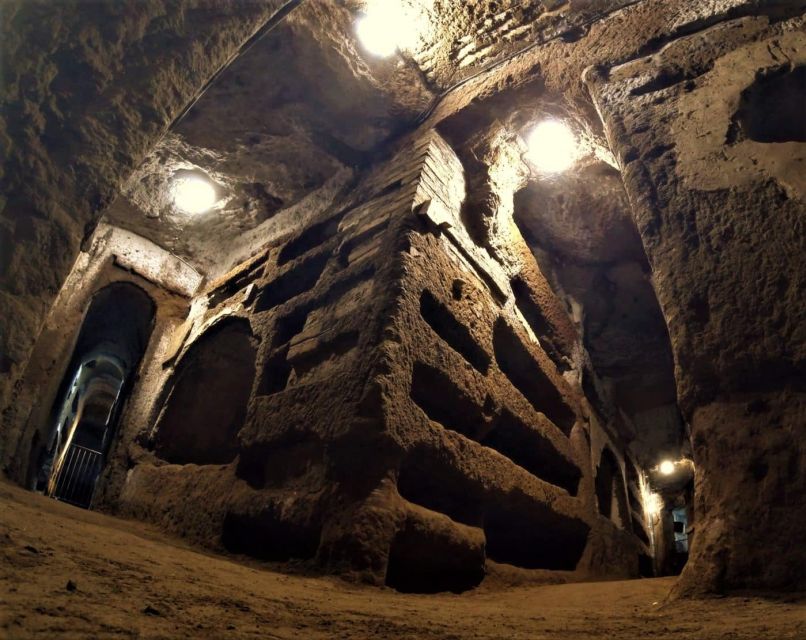
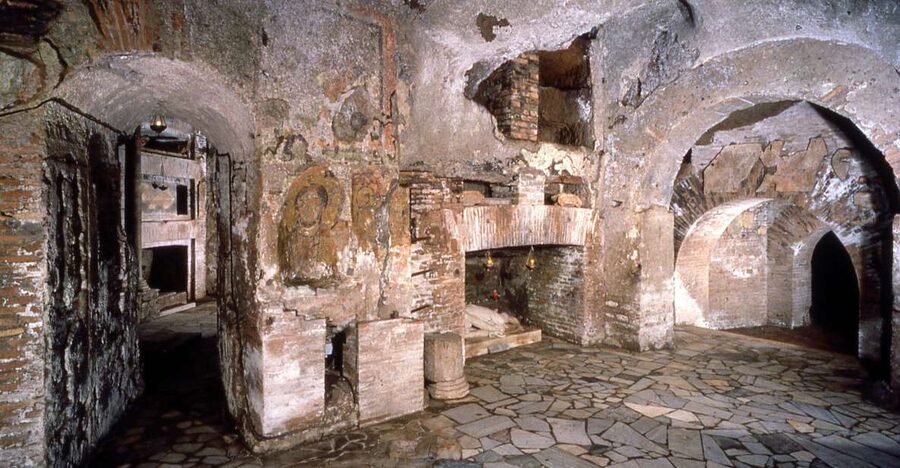
Beneath the Appian Way, the Catacombs of St. Callixtus preserve a vast network of Christian burial chambers. This is not a spooky bones-and-skulls attraction. It is a quiet, respectful visit to underground corridors, burial niches, faded paintings, and the Crypt of the Popes, where nine popes and three bishops were laid to rest.
I like two things especially: the guide gives the site human meaning instead of simply pointing out old walls, and the 30-minute format packs a lot into a modest $16 price. Guides such as Francesca, Sam, Fr. Peter, and Comfort have been praised for clear explanations and a friendly approach. The main drawback is the location. It sits outside central Rome, and reaching it by bus takes planning.
Key points to know before you go
- The Crypt of the Popes is the central stop: See the chamber connected with nine popes and three bishops.
- This is a guided visit only: You stay with the group rather than wandering through the catacombs independently.
- Do not expect skeletons: The focus is on burial chambers, inscriptions, paintings, and Christian history.
- Bring a light jacket: The underground rooms are cool, around 15 degrees Celsius according to one detailed account.
- Allow extra time for the bus journey: The catacombs are easy enough to reach by public transport, but they are not close to the main sights.
- Photography is forbidden inside: You will need to enjoy the rooms without taking pictures.
What the Catacombs of St. Callixtus reveal
Rome’s famous monuments usually rise above street level. At St. Callixtus, the important story runs below your feet. The cemetery was used by Rome’s early Christian community, and the site is linked with an estimated half a million Christian burials.
That number helps explain the scale, but the visit itself is not a march through every passage. You see a selected section with a professional guide. The point is to understand how the cemetery worked, why Christians used underground burial grounds, and how the community remembered its dead.
The name comes from Callixtus, a church leader associated with the cemetery. Your guide explains this background as you walk through the complex, adding names, dates, and religious context to what can otherwise seem like a maze of narrow corridors.
I find this setting valuable because it shows a side of Roman life that the Colosseum and Forum cannot. Those monuments tell you about public power, politics, and spectacle. The catacombs tell you about family, faith, burial customs, and a minority community maintaining its identity.
The atmosphere is quiet and reverent. The grounds above the catacombs are also described as peaceful and well maintained, giving you a useful pause before the underground visit.
More Entry Tickets in Rome
- Vatican: Museums & Sistine Chapel Entrance Ticket
★ 4.5 · 144,003 reviews - Rome: Pantheon Fast-Track Ticket and Official Audio Guide
★ 4.3 · 21,008 reviews - Rome:Hop-On Hop-Off Panoramic Open Bus Ticket 3 Circuits x 1
★ 4.0 · 15,405 reviews
The 30-minute route beneath the Appian Way
The advertised tour lasts 30 minutes, so keep your expectations sensible. You are not signing up for a long archaeological expedition. Instead, you receive a concentrated introduction to the most important parts of the site.
You meet at the catacomb ticket office, show your voucher, and join the scheduled group. Go at least 10 minutes before the tour time. A few people have found the meeting instructions unclear, especially because the meeting point is at the ticket office rather than a nearby parking area. If in doubt, look for the ticket counter and ask there before your scheduled entry.
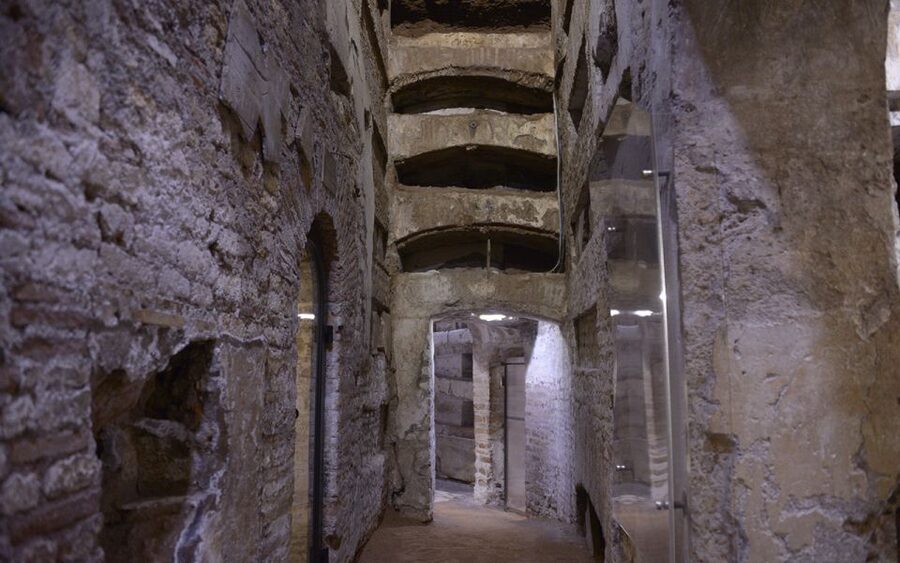
Once underground, the guide leads the group through the burial galleries. The passages and chambers are part of what makes the visit memorable. You are not simply looking at a display in a museum. You are walking through the actual spaces used for Christian burials.
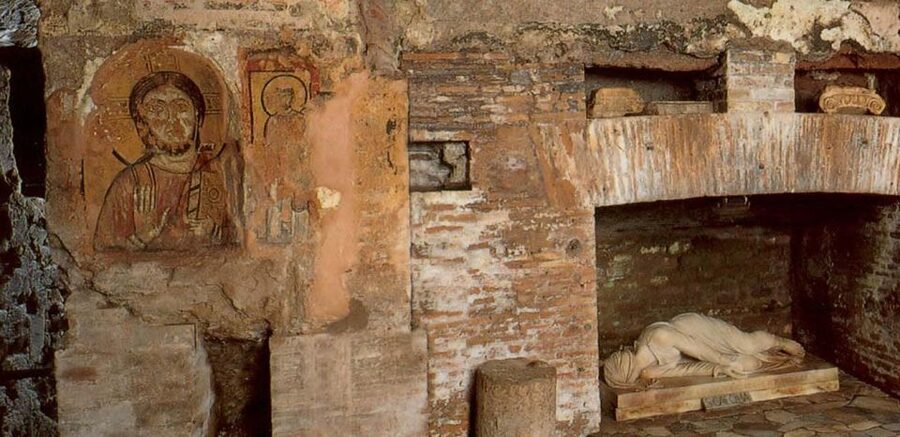
The route includes Area I, where the cubicles of the sacraments are located. These rooms contain some of the oldest frescoes found in Rome’s catacombs. The paintings are not grand works in the style of the Vatican Museums. Their value comes from their age, religious meaning, and survival in an underground setting.
The guide helps you read the space. A small chamber, wall painting, or burial niche can mean little without explanation. With context, you begin to see how the cemetery was organized and how early Christians marked their beliefs.
Some visitors have found the tour lasted slightly longer than 30 minutes, but you should treat the stated duration as the planning figure. It is short enough to fit into a busy day and long enough to cover the main points without tiring younger members of your group.
The Crypt of the Popes and St. Cecilia
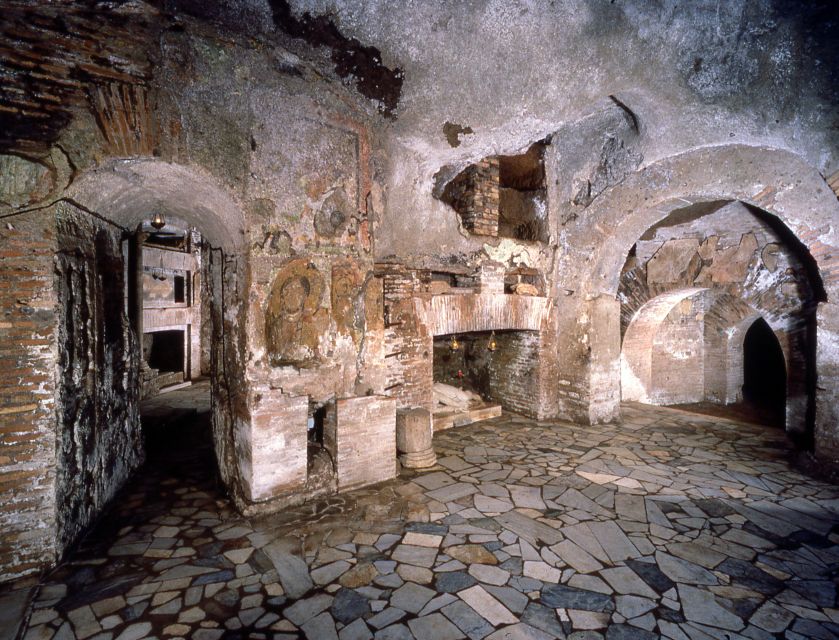
The Crypt of the Popes is the emotional center of the route. Nine popes and three bishops were buried there, making the chamber important both as a physical place and as evidence of the developing Christian community in Rome.
Your guide explains who was buried there and why the room is known by this name. The chamber is not furnished like a formal church. Its power comes from the plain underground setting and the concentration of early Christian memory in one place.
Next comes the adjoining Crypt of St. Cecilia. Cecilia was a Roman matron remembered for helping ensure that many martyrs received proper burials. Her story gives the tour a personal angle. Instead of hearing only about institutions and church leaders, you also hear about an individual whose actions were tied to the care of the dead.
This is a useful distinction to keep in mind. The catacombs were not just storage spaces for bodies. They were places connected with family duty, religious belief, community identity, and the memory of people who had suffered for their faith.
Do not expect to see exposed remains in the usual sense. The burial places are the feature, not visible skeletons. If you are hoping for dramatic displays of bones, this will probably feel restrained. If you want to understand where and how Christians were buried, the visit offers much more.
Frescoes, cubicles, and the value of a live guide
The surviving wall paintings are among the most interesting details underground. Some are very old, and the guide points out what you are seeing rather than leaving you to guess at faint shapes and symbols.
The quality of the experience depends heavily on the person leading the group. The strongest guides described in the booking information include Francesca, who is identified as an archaeologist, and Sam, who has been praised for making the subject lively and easy to follow. Other guides named in the information include Arishba, Comfort, Fr. Peter, and an older French guide who speaks five languages.
You should not assume one particular guide will lead your tour, but the range of language options is useful. Tours are offered in English, Italian, French, and German. A good guide also makes sure the group stays together and can hear, which matters in narrow underground rooms.
The tour is fully guided. You do not roam freely through the galleries or set your own pace. That limits independence, but it is also part of the site’s value. The passages can be confusing, and the guide provides both direction and interpretation.
The best explanations connect the physical details to daily life. A burial niche becomes evidence of family practice. A fresco becomes a sign of belief. A crypt becomes a record of the Christian community’s leadership and memory.
More Guided Tours in Rome
- Colosseum, Roman Forum & Palatine Guided Tour
★ 4.7 · 63,148 reviews - Vatican Museums, Sistine Chapel & St Peter’s Basilica Guided Tour
★ 4.5 · 39,149 reviews - Rome: Colosseum, Palatine Hill and Roman Forum Guided Tour
★ 4.8 · 32,814 reviews - Rome: Guided Tour of Colosseum, Roman Forum & Palatine Hill
★ 4.7 · 27,897 reviews
Getting to St. Callixtus from central Rome
The catacombs are on the Appian Way, outside the compact historic center. This is the practical issue most likely to affect your day. Build in extra time, especially if you are relying on buses and need to wait for a connection.
From Termini Station, take Metro A in the direction of Anagnina to San Giovanni. From there, take bus 218 in the direction of Ardeatina and get off at Fosse Ardeatine. The catacomb entrance should be in front of you.
Another route uses Metro B. Take it in the direction of Laurentina to Colosseo or Circo Massimo. From the bus stop at Terme Caracalla or Porta Capena, take bus 118 in the direction of Appia or Villa Dei Quintili. Get off at Catacombe di San Callisto.
Public transport can work well, but do not treat the stated route as a quick hop. One person needed to wait 20 minutes for a bus, and several people found the location less convenient than central Rome. A taxi or ride service may save time, especially if you are traveling alone, have a tight schedule, or want to avoid finding a return bus.
The return trip deserves thought. Getting to the site by bus is possible, but finding a taxi back can be harder than expected. If you plan to use a taxi in both directions, arrange the return before you arrive rather than assuming one will be waiting outside.
The distance does have an upside. The site feels removed from the heavy foot traffic around the Colosseum and Trevi Fountain. You are visiting a quieter part of Rome, with time to notice the Appian Way surroundings rather than rushing between central monuments.
Is $16 a fair price?
At $16 per person, this is one of the easier Rome experiences to fit into a sightseeing budget. The ticket includes entry to the Catacombs of St. Callixtus and the guided tour. Hotel pickup, drinks, and food are not included.
The value depends on what you want from a short visit. If you want a major monument with hours of exhibits, this is not the right comparison. If you want a focused historical experience with a live guide, the price is reasonable, particularly because you are paying for access and interpretation rather than entry alone.
The half-hour length also works in your favor if your Rome schedule is crowded. You can combine the catacombs with other Appian Way sights or return toward the city for another activity. Several people have found the tour brief but full of information, and some groups stayed a little longer when the guide continued answering questions.
There are costs beyond the ticket. Public transport takes time, and a taxi adds to the total. I would judge the $16 ticket as good value, but I would include the journey when planning your budget and schedule.
Comfort, clothing, and access
The underground rooms are cool, with one detailed account placing the temperature around 15 degrees Celsius. Bring a light jacket or sweater even in Rome’s summer heat. The cool air can be welcome after walking in the sun, but shorts and a thin shirt may leave you uncomfortable.
Wear comfortable shoes. The route is underground, and the information specifically advises comfortable clothing and footwear. The catacombs are not suitable for people with mobility impairments or claustrophobia. Baby carriages are not allowed.
The lighting is part of the underground character, but it may feel limited in some corners and on steps. If you have trouble with low light, uneven surfaces, or enclosed spaces, think carefully before booking. This is not the place to rush.
Photography is not allowed inside. That rule may disappoint you if you like to document every stop, but it also keeps the visit quiet and respectful. You will need to remember the paintings and chambers rather than relying on your phone.
Who will enjoy this Roman underground visit?
I would recommend the tour to anyone interested in early Christianity, Roman burial customs, archaeology, or lesser-known historic sites. It also works well for families with older children and teenagers, especially if they like stories about people and places rather than long museum labels.
The guide-led format helps younger visitors. A lively guide can turn a short visit into a clear story, and the tour does not demand hours of concentration. One family with teenagers found the experience worthwhile despite limited interest in ancient history beforehand.
The site is also a good choice for repeat visitors to Rome. If you have already seen the headline attractions, the catacombs offer a different view of the city and its communities.
I would hesitate to recommend it to someone who wants visible bones, dramatic chambers, or complete freedom to explore. I would also avoid it if enclosed spaces make you anxious or if stairs and dim lighting are difficult.
Booking, meeting point, and cancellation
Go directly to the catacomb ticket office, not simply to a parking area or a general point shown on a map. Show your voucher at least 10 minutes before the scheduled start. Some directions describe the correct spot as opposite the ticket counter or about 100 meters from a misleading map location, so ask the ticket-office staff if you are unsure.
The tour offers a skip-the-ticket-line arrangement, but you still need to exchange or present your voucher correctly at the office. Do not arrive at the last second.
You can cancel up to 24 hours in advance for a full refund. A reserve-now-and-pay-later option is also available, which helps if your Rome plans are still shifting. Check the available starting times before booking, since the visit runs at scheduled times rather than as an open-ended walk-in experience.
Should you book the Catacombs of St. Callixtus?
Book it if you want a short, affordable, well-explained look at Rome’s early Christian burial world. The Crypt of the Popes, the Crypt of St. Cecilia, and the old frescoes give the visit real substance, while the guide makes the underground spaces easier to understand.
Skip it if you are mainly seeking skeletons, photography, or a site in the center of Rome. The journey takes planning, and the tour is brief. For the right visitor, though, that combination of quiet surroundings, serious history, and a $16 price makes St. Callixtus a strong addition to a Rome itinerary.
FAQ
How long does the Catacombs of St. Callixtus tour last?
The scheduled guided tour lasts 30 minutes. Some visits may run a little longer if the guide continues answering questions.
How much does entry cost?
The listed price is $16 per person. It includes entry to the Catacombs of St. Callixtus and the guided tour.
What languages are available?
Guided tours are available in Italian, French, German, and English.
Can I visit the catacombs without a guide?
No. This activity is a fully guided visit, and you need to stay with the group.
Will I see human bones or skeletons?
No visible skeletons are included in this visit. The route focuses on burial places, chambers, frescoes, and the history of the Christian community.
Can I take photographs inside?
No. Photography inside the catacombs is not allowed.
What should I wear?
Wear comfortable clothes and comfortable shoes. Bring a light jacket or sweater because the underground rooms can be cool.
Are the catacombs suitable for people with claustrophobia?
No. The activity is not suitable for people with claustrophobia.
Can I bring a baby carriage?
No. Baby carriages are not allowed.
How do I reach the meeting point from Termini Station?
Take Metro A toward Anagnina to San Giovanni, then bus 218 toward Ardeatina and exit at Fosse Ardeatine. The catacomb entrance is in front of you. You can also take Metro B to Colosseo or Circo Massimo, then bus 118 toward Appia or Villa Dei Quintili and exit at Catacombe di San Callisto.
More Underground Rome
- Naples: Catacombs of San Gennaro Entry Ticket & Guided Tour
★ 4.6 · 7,941 reviews - Rome: Crypts and Catacombs Underground Tour with Transfers
★ 4.6 · 5,341 reviews - The Original Roman Crypts and Catacombs Tour with Transfers
★ 4.5 · 4,896 reviews - Rome: Guided Roman Catacombs Tour with Transfers
★ 4.6 · 1,830 reviews
Just added around Rome
- Boat excursion to Gaeta with a stop for swimming and snorkeling 2 HOURS★ 5.0 · 240 reviews
- Palatine Hill and Roman Forum Tour with Fast-Track Entrance★ 4.2 · 417 reviews
- Tivoli: Villa D’Este & Villa Adriana Pass & App Audioguide★ 4.4 · 364 reviews
- Tivoli: Villa D’Este Entry Ticket and App Audio Guide★ 4.3 · 191 reviews
- From Rome: Villa D’Este & Villa Adriana Day Trip with Lunch★ 4.4 · 289 reviews
- Vatican Museums & Sistine Chapel Skip-the-Line Guided Tour★ 4.6 · 254 reviews
- Rome: Capitoline Museums and Centrale Montemartini Tickets★ 4.4 · 328 reviews
- Rome: The Three Tenors at St. Paul’s Church Concert Ticket★ 4.7 · 699 reviews
Catacombs Tours, compared.
Catacombs of San Gennaro Entry Ticket & Guided Tour
Read our review →
Crypts and Catacombs Underground Tour with Transfers
Read our review →
The Original Roman Crypts and Catacombs Tour with Transfers
Read our review →

Rome EBike Tour: Appian Way, Catacombs & Roman Aqueducts
Read our review →
Catacombs and Capuchin Crypt Guided Tour with Transfer
Read our review →
Appian Way, Catacombs, & Roman Aqueducts E-bike Tour
Read our review →Browse the lists this tour appears in