
Reviewed · CATACOMBS TOURS
Rome: Catacombs of Priscilla Entry Ticket & Guided Tour
Rome’s Catacombs of Priscilla offer something the Colosseum and Trevi Fountain cannot: a close look at early Christian life, death, and art underground. You walk through irregular galleries first used around the beginning of the third century, passing wall tombs, old inscriptions, and frescoes that survived nearly two thousand years.
I like the small groups, which make it easier to hear the guide and ask questions. I also like the tour’s narrow focus: in 45 minutes, you get a clear introduction without spending half a day underground. The main drawback is that the visit is brief, photography is forbidden, and the catacombs are not suitable for people with mobility impairments.
Key points to know before you go
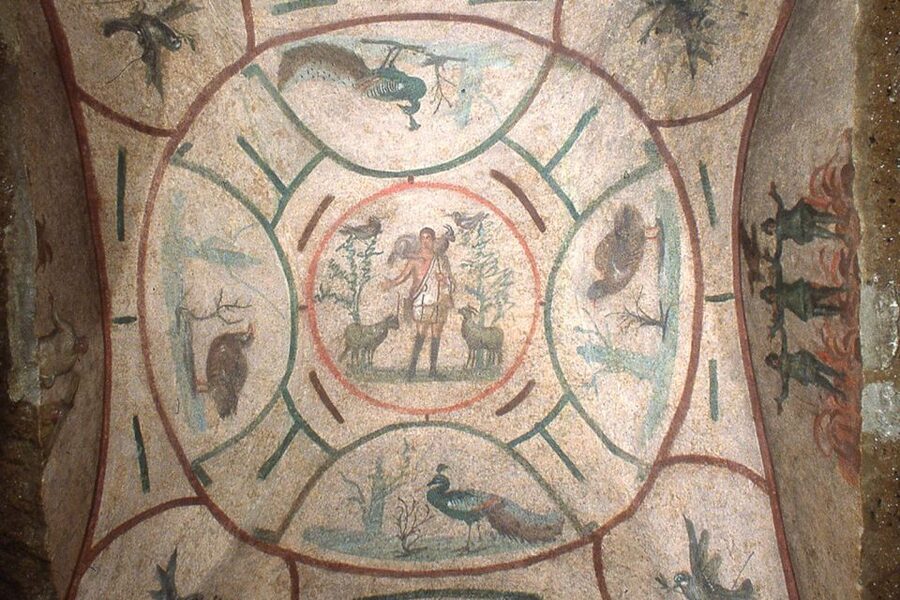
- Ancient Christian art: See frescoes dating from the third century, including early images connected with the Virgin Mary and Jesus.
- A small group of up to 10: This helps in the tight corridors and gives you a better chance to hear the guide.
- A 45-minute visit: Short enough to fit into a busy Rome day, but focused enough to feel substantial.
- Via Salaria location: The catacombs are outside the main ancient Rome sights, so allow time for your own transportation.
- No photography inside: You will need to rely on memory, explanations, and postcard prints sold at the site.
- Best for history and art lovers: The tour suits adults, older children, and anyone curious about early Christianity and Roman burial customs.
What makes Priscilla different from other Roman sights
The Catacombs of Priscilla are not a grand monument built to impress the living. They are a network of burial galleries shaped by practical need, faith, and the limited space available outside ancient Rome.
The catacomb occupies two underground levels on Via Salaria. Its name probably comes from a woman named Priscilla, connected with the senatorial Acili family. An inscription found in the nearby hypogeum of the Acili helps link the site with that family.
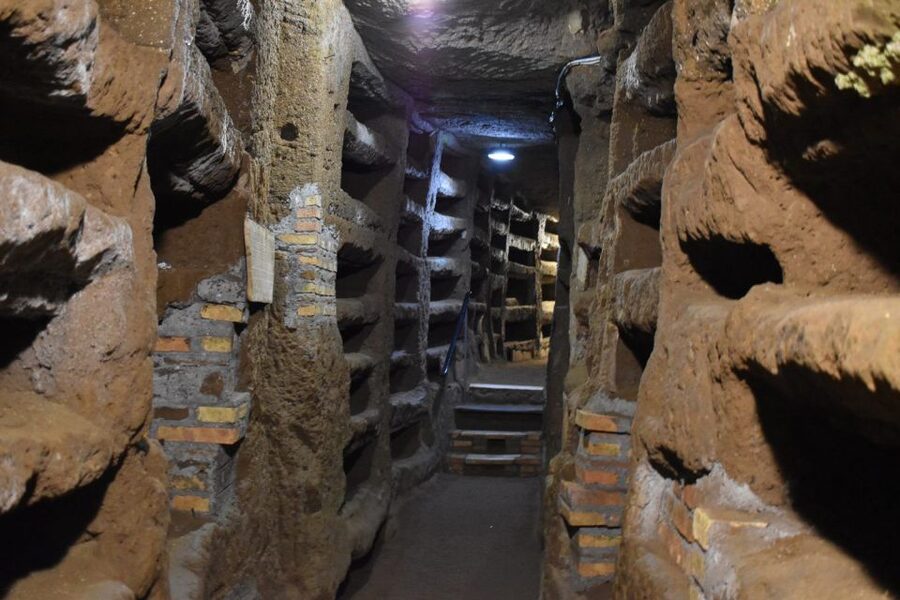
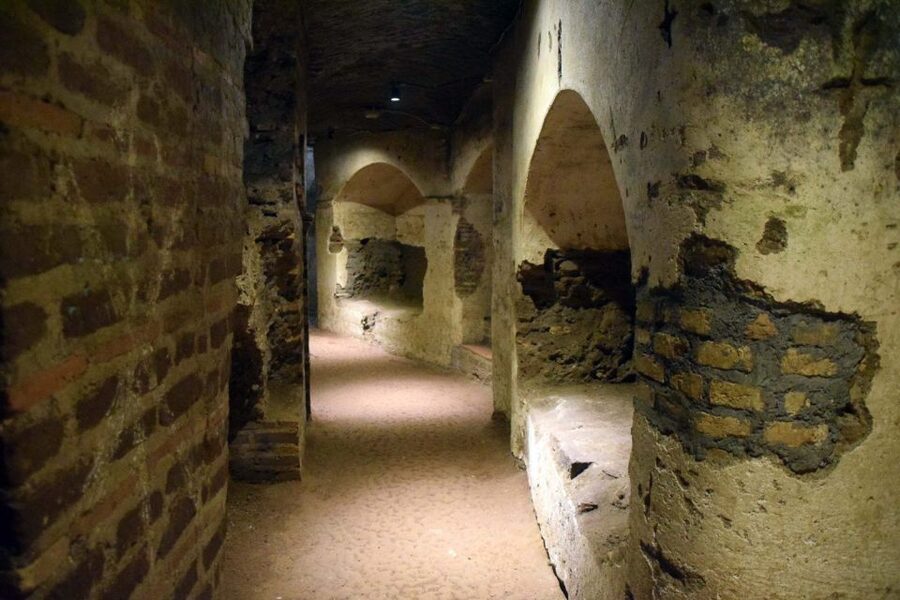
The origins of the place are unusual. It began as an arenarium, a site where sand was extracted, and was later abandoned. Christians began using its large, uneven galleries around the start of the third century. They created about twenty larger niche tombs and cut hundreds of smaller burial spaces into the walls.
That history gives the visit a very different mood from Rome’s polished museums. The corridors feel worked rather than designed. You are seeing a place that grew over time as the Christian community needed burial space, not a single building completed according to one plan.
The visible tombs are empty today, with bodies moved elsewhere. That is worth knowing before you arrive. The importance of the site lies in its layout, inscriptions, artwork, and connection to the people who used it.
More Entry Tickets in Rome
- Vatican: Museums & Sistine Chapel Entrance Ticket
★ 4.5 · 144,003 reviews - Rome: Pantheon Fast-Track Ticket and Official Audio Guide
★ 4.3 · 21,008 reviews - Rome:Hop-On Hop-Off Panoramic Open Bus Ticket 3 Circuits x 1
★ 4.0 · 15,405 reviews
Walking through the burial galleries
The tour begins at the catacomb ticket office, where you should show your reservation at least 10 minutes before the scheduled start. Once inside, your guide leads the group through the underground passages and explains how the galleries were made and used.
Expect narrow, twisting routes rather than broad corridors. One guide described in the tour feedback, Clara, was praised for keeping the group together while answering questions and adding extra detail. That matters here because it is easy to focus on the walls and lose track of the people ahead of you.
The group limit of 10 is a real advantage. In a larger crowd, the person at the back could miss the explanation or struggle to see a painting. With a small party, you have a better chance of standing close enough to follow the guide’s pointing and asking a question without holding up a large procession.
The first level contains the main network of galleries. You will see the repeated niches cut into the walls, along with larger tomb spaces linked to important families and community members. The guide helps explain what these spaces tell us about Roman burial customs and the growth of Christianity.
Do not expect a large number of grand objects. Much of the interest comes from scale and context: hundreds of wall niches, irregular passageways, and the knowledge that this was once an active burial ground used by a real religious community.
Frescoes and the Greek Chapel
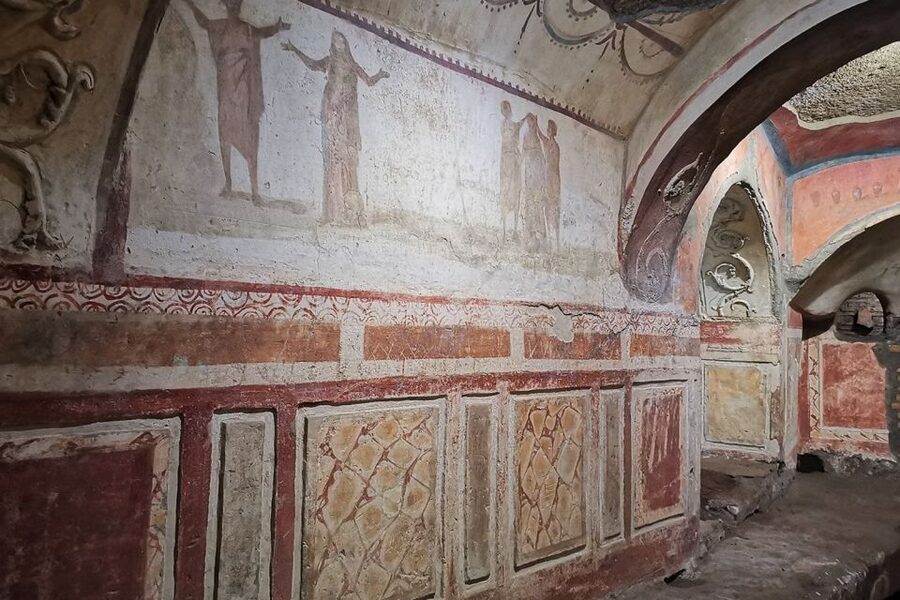
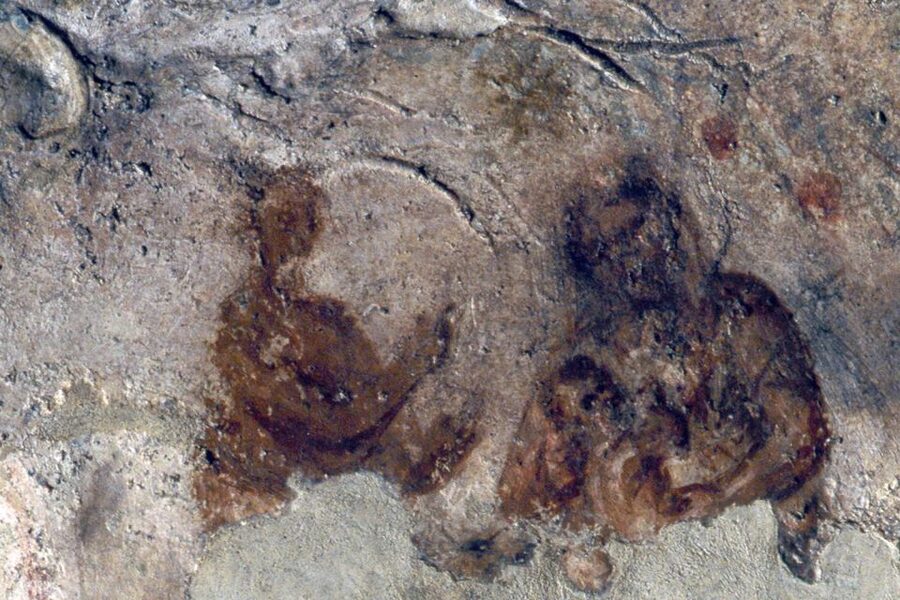
The artwork is the main reason many people choose Priscilla over a more general Roman history tour. Some frescoes date from the third century, and the catacombs contain some of the oldest surviving Christian paintings.
The tour includes the Greek Chapel, an underground room in an adjoining area. Its name comes from the Greek inscriptions found there. It forms part of a cryptoporticus, an underground passage or covered gallery, and gives the visit a more formal setting than the rougher burial corridors.
The paintings are important not simply because they are old. They show how early Christians expressed belief through symbols and scenes at a time when Christian art was still developing. Your guide provides the needed background, since the images may not be obvious if you simply walk past them.
Several guides, including Sister Lydia and Sister Lidia in different tours, are praised for explaining the site with both historical and religious context. That combination suits Priscilla. If you want only archaeology, you can focus on construction, inscriptions, and dates. If you are interested in Christian belief, the guide also explains why the paintings and burials mattered to the people who created them.
One celebrated image presented during the visit is an early depiction of the Virgin Mary with the infant Jesus. It is often described at the site as one of the earliest known examples of this subject. You cannot photograph it, so pay attention while the guide explains its age and meaning.
The no-camera rule can be frustrating. A postcard print may be available for a small cost, and buying one is a practical way to take an image home without breaking the site’s rules. I also found the restriction fitting for a place that is still treated as a sacred burial site rather than a photo backdrop.
Popes, martyrs, and the Acili family
Priscilla has strong links with early Christian leaders. Several popes were buried here, including Marcellinus, Marcellus, Sylvester, Liberius, Siricius, Celestine, and Vigilius.
The catacomb is also associated with Saint Felicita and her seven sons: Felice, Filippo, Alessandro, Marziale, Vitale, Silano, and Gennaro. Felice and Filippo are remembered among the martyrs buried at Priscilla, and the guide uses these stories to connect the underground spaces with individual lives.
That personal element makes the site easier to understand. You are not only looking at an old system of tunnels. You are hearing about families, church leaders, martyrs, and the ways a community remembered its dead.
The nearby hypogeum of the Acili adds another layer. It began as a water cistern and later contained inscriptions connected with the Acili family. Those inscriptions have been found and displayed, giving you a direct link between the underground site and one of Rome’s noble families.
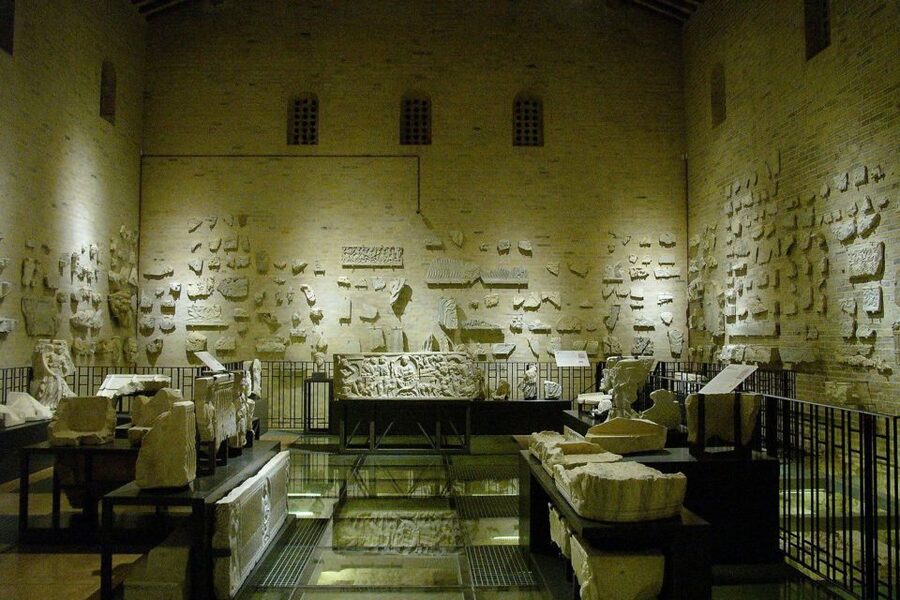
The catacomb also has a connection with the Basilica of Saint Sylvester in Villa Ada. The basilica was built by Pope Sylvester near the tombs of Felice and Filippo. A museum in the area holds hundreds of sarcophagus fragments discovered during excavations around the catacomb.
The 45-minute visit does not cover every part of this wider story in great depth. Still, it gives you enough structure to understand why Priscilla matters and what you would miss by treating it as simply an underground walk.
More Guided Tours in Rome
- Colosseum, Roman Forum & Palatine Guided Tour
★ 4.7 · 63,148 reviews - Vatican Museums, Sistine Chapel & St Peter’s Basilica Guided Tour
★ 4.5 · 39,149 reviews - Rome: Colosseum, Palatine Hill and Roman Forum Guided Tour
★ 4.8 · 32,814 reviews - Rome: Guided Tour of Colosseum, Roman Forum & Palatine Hill
★ 4.7 · 27,897 reviews
How the guide shapes the visit
This is a guided visit, not a self-guided ticket where you wander at your own pace. That is important because the spaces are dark, tight, and filled with details that would be easy to overlook.
The guide usually explains the galleries as you move, stopping at notable paintings, tombs, and inscriptions. Several guides have been praised for using humor, asking questions, and making time for explanations. Alexandria, Clara, Sister Lydia, and Sister Lidia are among the names associated with particularly strong tours, although your guide may be someone else.
Language choices are Italian, English, and Spanish. If you need English, confirm the selected time and language when booking. One English-language visit received a lower rating because the guide’s English was harder to follow, so language ability can affect how much you get from the tour.
A good guide also helps set the right expectations. Priscilla is not the Vatican Museums or the Colosseum. You will not see a huge architectural showpiece. You will see a quieter archaeological site where the best moments come from careful explanations and close attention.
Timing, cost, and getting there
At $16 per person, this is a sensible purchase for a short specialist tour. The price includes entry and the live guide, but not transportation or hotel pickup and drop-off.
The 45-minute length works well if you want to add one unusual stop to a day of major sights. It is also a useful choice during hot weather, since the underground rooms offer relief from the Roman sun. Bring a light layer, as the temperature below ground can feel cool.
The location on Via Salaria requires planning. It is not beside the Colosseum, Pantheon, or Trevi Fountain, and you should not assume that transportation is included. A bus can make the trip affordable, but allow time to find the entrance and ticket office. Signage near the catacombs may not be as clear as you expect, so arriving early is wise.
You must go directly to the catacomb ticket office and show your reservation at least 10 minutes before the tour. Keep the booking confirmation available, even though staff may be able to locate your reservation if an email does not arrive.
The cancellation policy allows a full refund when you cancel at least 24 hours ahead. That gives you some flexibility if your Rome schedule changes.
Who will enjoy this tour most
I would choose this tour if you are interested in early Christian art, ancient burial practices, archaeology, or the less polished side of Rome. It also suits families with older children and teenagers, especially those who have already seen the city’s standard monuments and want something different.
The experience is short enough for a family itinerary, but young children may find the dark corridors and serious subject matter less engaging. Baby strollers are not allowed, and the tour is not suitable for people with mobility impairments.
You should also be comfortable with tight underground spaces. The route includes narrow turns and uneven-looking galleries, and you will spend the visit on your feet. If you dislike enclosed areas, this may not be the right Rome activity.
This is less suitable if your main goal is to take photographs. The no-photo rule is firm, and the artwork is viewed from the guide’s explanations rather than through your own camera. It is also not the best choice if you want a long, leisurely archaeological visit. Some people wish the tour lasted longer, while others appreciate that 45 minutes is enough time underground.
Should you book the Catacombs of Priscilla?
Book it if you want ancient Christian art and burial history, not another grand Roman monument. The combination of third-century frescoes, early Christian symbols, popes’ tombs, martyr stories, and narrow galleries gives you a side of Rome that many first-time itineraries leave out.
At $16, the tour offers good value because entry and a live guide are included, and the small group keeps the experience personal. Just allow extra time for Via Salaria, arrive 10 minutes early, leave your camera in your bag, and wear something suitable for a cool underground setting.
I would especially recommend it after you have seen the Colosseum and central Rome. The contrast is the point. Here, the reward is not size or spectacle, but the chance to stand in a place where early Christians buried their dead and preserved some of the oldest Christian art still visible today.
FAQ
How long does the Catacombs of Priscilla tour last?
The scheduled tour lasts 45 minutes. Some visits may run longer when the guide answers questions or adds extra explanations.
How much does the experience cost?
The listed price is $16 per person. It includes the entrance ticket and guided tour.
What languages are available?
Live tours are offered in Italian, English, and Spanish.
How large is the group?
The group is limited to 10 participants. This is useful in the narrow underground passages.
Where do I meet the guide?
Go directly to the ticket office at the Catacombs of Priscilla on Via Salaria. Show your reservation at least 10 minutes before the scheduled start.
Is transportation included?
No. Hotel pickup, hotel drop-off, and transportation to the catacombs are not included.
Can I take photographs inside?
No. Photography inside the catacombs is not allowed. Postcard prints of the artwork may be available for purchase at the site.
More Underground Rome
- Naples: Catacombs of San Gennaro Entry Ticket & Guided Tour
★ 4.6 · 7,941 reviews - Rome: Crypts and Catacombs Underground Tour with Transfers
★ 4.6 · 5,341 reviews - The Original Roman Crypts and Catacombs Tour with Transfers
★ 4.5 · 4,896 reviews - Rome: Catacombs of St. Callixtus Entry Ticket & Guided Tour
★ 4.6 · 3,037 reviews
Just added around Rome
- Boat excursion to Gaeta with a stop for swimming and snorkeling 2 HOURS★ 5.0 · 240 reviews
- Palatine Hill and Roman Forum Tour with Fast-Track Entrance★ 4.2 · 417 reviews
- Tivoli: Villa D’Este & Villa Adriana Pass & App Audioguide★ 4.4 · 364 reviews
- Tivoli: Villa D’Este Entry Ticket and App Audio Guide★ 4.3 · 191 reviews
- From Rome: Villa D’Este & Villa Adriana Day Trip with Lunch★ 4.4 · 289 reviews
- Vatican Museums & Sistine Chapel Skip-the-Line Guided Tour★ 4.6 · 254 reviews
- Rome: Capitoline Museums and Centrale Montemartini Tickets★ 4.4 · 328 reviews
- Rome: The Three Tenors at St. Paul’s Church Concert Ticket★ 4.7 · 699 reviews
Catacombs Tours, compared.
Catacombs of San Gennaro Entry Ticket & Guided Tour
Read our review →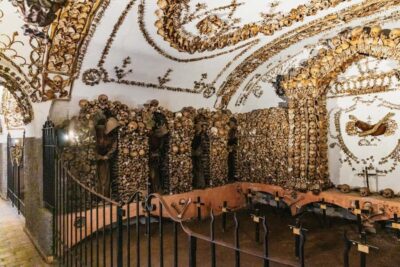
Crypts and Catacombs Underground Tour with Transfers
Read our review →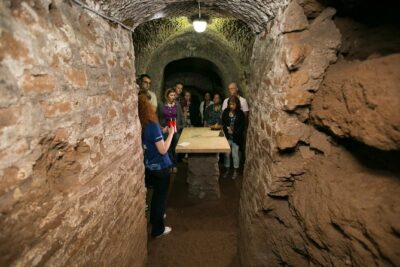
The Original Roman Crypts and Catacombs Tour with Transfers
Read our review →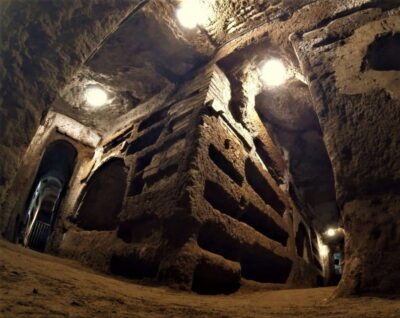
Catacombs of St. Callixtus Entry Ticket & Guided Tour
Read our review →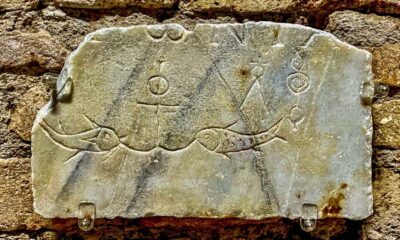

Rome EBike Tour: Appian Way, Catacombs & Roman Aqueducts
Read our review →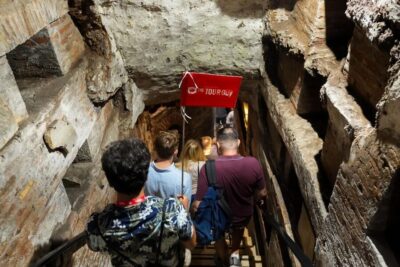
Catacombs and Capuchin Crypt Guided Tour with Transfer
Read our review →Browse the lists this tour appears in