
Reviewed · TRAIN EXPERIENCES
From Rome: Ostia Antica Guided Half-Day Trip by Train
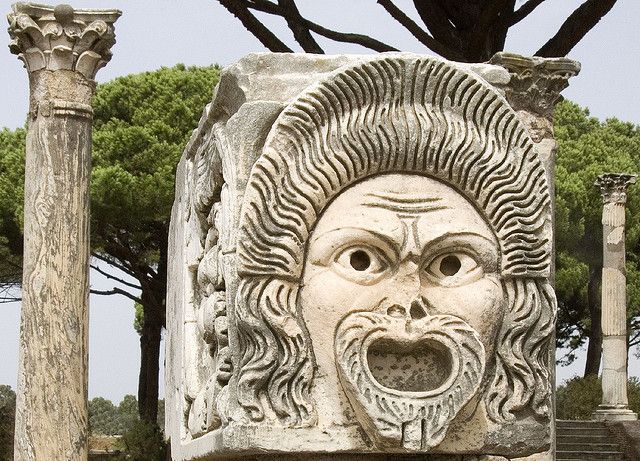
Ostia Antica is where ancient Rome feels less like a collection of grand monuments and more like a real town. You walk the Decumanus Maximus, pass old shops and warehouses, and see the communal Forica, a long marble bench with twenty toilet openings. The details are earthy, practical, and surprisingly funny.
I like the easy train ride from Rome and the small groups of no more than 12 people. Guides such as Rob, Cat, Alberto, Laura, and Caterina are praised for clear storytelling, good pacing, and turning walls and mosaics into scenes of daily life. The main drawback is that the site is large, sunny, and uneven, so this is not a good choice for wheelchair users or anyone who struggles with a long walk.
Key points
- Ancient port city near Rome: Explore Ostia Antica, founded in the 4th century BC and once home to more than 100,000 people.
- A short train journey: Travel from Piramide in central Rome to Ostia Antica, with the guide handling the outward journey and tickets.
- Everyday Roman life: See taverns, warehouses, baths, public toilets, theaters, and streets rather than only imperial monuments.
- Major highlights included: Visit the Baths of Neptune, the amphitheater, the Decumanus Maximus, and the communal Forica.
- Time beyond the guided visit: Stay for further exploration, visit the museum, continue to modern Ostia, or head to the beach.
- Good value for a half-day: The $58 price includes transport, admission, and a live English-speaking guide in a small group.
Why Ostia Antica feels different from Rome’s famous ruins
Rome’s central monuments show you power. Ostia Antica shows you plumbing, trade, entertainment, food, housing, and the ordinary business of getting through the day. That difference is the main reason I recommend this trip.
Ostia began as Rome’s port town and grew into a large commercial and military center. The site once held more than 100,000 residents, according to the tour description, and its remains give you a sense of a working city rather than a ceremonial one.
You will see broad streets, substantial walls, shops, storage buildings, thermal baths, theaters, and religious spaces. The preserved layout helps you understand how Roman cities functioned. You can follow a road, pause outside an old commercial building, and then step into a bath complex or theater without needing a long explanation of where the modern city has gone.
That open setting also changes the mood. Ostia Antica is close to Rome, but it usually feels far removed from the city center. The ruins spread across a large archaeological park, and several reviews describe quiet visits with very few other people around. That makes it easier to listen, take photographs, and picture the town as a place where people worked and lived.
More Day Trips in Rome
- Tivoli Full Day Trip from Rome: Hadrian’s Villa and Villa D’Este
★ 4.5 · 1,730 reviews - Rome: 1 Day Vatican & Colosseum Tour
★ 4.5 · 1,081 reviews - Hadrian’s Villa and Villa d’Este Half-Day Trip from Rome
★ 3.5 · 808 reviews
Meeting at Piramide and taking the train
The meeting point is Cafe Piramide at Piazzale Ostiense, 9. When you face the Piramide Metro stop on Line B, the cafe is on your right, near the railway tracks and the train exit. Look for the white umbrellas outside and a City Wonders sign.
This detail matters because the station area can be confusing. One review specifically noted that white umbrellas across the street can draw people in the wrong direction. Give yourself extra time, especially if you are arriving from Termini or another crowded part of Rome.
Your guide provides the return train ticket and accompanies the group on the outward journey. The train ride to Ostia takes about 15 minutes. From Ostia Antica station, the archaeological site is less than a five-minute walk, according to the practical directions provided by a previous participant.
The train is a sensible choice here. You avoid arranging a private transfer, and the journey is short enough that Ostia works well as a half-day addition to a Rome itinerary. If public transport is affected by a strike or another unexpected problem, a minibus is provided at no extra cost.
The return arrangement is slightly less hands-on. The guide explains how to get back, but the return train is unescorted. The tour service ends in Rome at Piramide at about 1:00 PM if you return with the group.
Walking the Decumanus Maximus
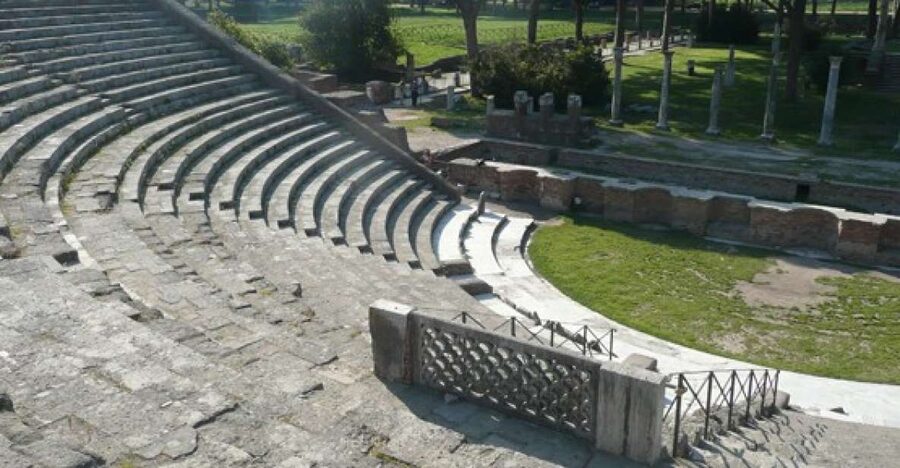
The guided visit lasts about three hours. You should expect a steady walk through the archaeological park, with stops at the main buildings and time for questions.
The Decumanus Maximus is the natural spine of the tour. This main road leads through the old town and gives you a clear sense of urban scale. Roman statues line parts of the route, and the remaining walls help you see that the buildings were not low piles of rubble. In places, enough survives to suggest the height and shape of the original town.
A guide adds real value here. Without one, you can admire stone streets and broken walls, but it is harder to understand which spaces were shops, public buildings, homes, or work areas. Guides such as Rob and Alberto are especially praised for using stories, images, humor, and occasional acting to make the setting easier to picture.
The tour is not simply a list of dates. The strongest guides explain how a port town supported Rome. They connect storage buildings, markets, baths, and public entertainment to the people who used them. That is what turns the site from a quiet collection of ruins into a functioning city.
The small group limit helps. With no more than 12 people, you can usually hear the guide without standing shoulder to shoulder with a large crowd. You also have a better chance to ask a question or pause for a photograph without losing the group.
The Baths of Neptune and their sea-god mosaic
The Baths of Neptune are one of the tour’s visual highlights. The complex is crowned by a well-preserved mosaic showing Neptune, the sea god, being pulled by a four-horse chariot.
This is the kind of stop that benefits from a guide’s explanation. You are not looking at a random patch of patterned floor. The scene connects directly to Ostia’s identity as a port town and to the Roman taste for grand public bathing complexes.
The mosaic also gives the tour a useful change of pace. After walking streets and examining walls, you get a clear artwork that can be read as a scene. Guides often use such details to explain what Roman residents saw underfoot and around them, rather than limiting the story to emperors and generals.
The site is exposed, so expect sun in warm weather. A guide may look for shade during explanations, as Alberto did for one group on a hot day, but you should still bring water, comfortable shoes, and protection from the sun.
More Ancient Ruins in Rome:
- Ancient Ostia Antica Semi-Private Day Trip from Rome by Train with Guide
★ 4.5 · 579 reviews - From Naples: Pompeii Ruins & Mount Vesuvius Day Tour
★ 4.3 · 11,459 reviews - Herculaneum: Skip-the-Line Guided Tour with Archaeologist
★ 4.8 · 3,439 reviews - Pompeii: Archaeological Park Tour with Ticket on request
★ 4.5 · 2,283 reviews
The amphitheater and the communal Forica
The amphitheater was built in 12 BC and held about 3,500 spectators. Standing in the seating area gives you a useful sense of the crowd that once gathered there. The scale is smaller than Rome’s Colosseum, but that is part of the point: this was a local venue serving the residents of a busy port city.
The guide helps you imagine the building as an active part of town rather than an empty shell. You can take your place in the stands and look across the performance space, just as local residents once did.
Then comes one of Ostia’s most memorable and human stops: the communal Forica. Four walls hold a marble bench with 20 evenly spaced openings. It is not glamorous, but it says a great deal about shared public life in ancient Rome.
You may even be invited to sit down and experience the arrangement for yourself. This moment often gets a laugh, but it also makes the site feel honest. Roman cities needed public toilets, water systems, baths, food shops, and storage rooms. Ostia preserves those practical details alongside the grander monuments.
What the guided storytelling adds
I would not choose a self-guided visit here unless you already know the site well. Ostia Antica is large, and the remains are spread out. A guide helps you cover the key areas without wandering past important buildings or spending too much time trying to guess what each room once was.
The strongest guide feedback centers on delivery as much as facts. Rob is praised for funny anecdotes and small re-enactments. Cat is described as friendly, organized, and good at answering questions. Alberto is often noted for a clear, entertaining style, while Laura is praised for keeping both adults and children involved.
Those names do not guarantee who will lead your tour, but they show the level of guide-led interpretation you can expect from this experience. The tour is conducted in English, and the group stays together through a large open site.
The pacing also matters. The walk is not designed as a frantic race through every corner. Guides select the main highlights, allow short breaks, and keep people moving at a manageable rate. One detailed account describes two 15-minute periods when the group could wander a little on its own, followed by additional time to explore after the formal tour.
Time to explore after the three-hour visit
At the end of the guided portion, you have choices. You can remain inside the archaeological area and continue exploring, or join the guide on the return train to Rome.
I recommend staying if your energy and schedule allow. The guided route focuses on the major highlights, but Ostia Antica is extensive. Additional time lets you revisit a favorite building, take photographs, or enter the museum if it is open.
The museum deserves a scheduling check. One winter visit found that it closed early, around 1:30 PM, so you should ask your guide about current opening times and go early if it is important to you. Another practical point: the guided tour may finish near the museum, which can make it convenient to continue from there.
You can also leave the ruins and explore modern Ostia. The tour information specifically allows time for the modern town or a nearby beach. Bring a towel, beachwear, and sports shoes if you plan to add that option. The beach is not part of the guided archaeological visit, so treat it as an optional extension rather than a guaranteed beach excursion.
If you return to Rome, the guide gives you the train tickets and instructions, but you travel back without an escort. Pay attention to the directions before splitting from the group.
Is $58 a fair price?
At $58 per person, the tour includes three things that are useful here: the return train ticket, entry to Ostia Antica, and a live English-speaking guide. The cost is reasonable if you want the site explained rather than simply visited.
You could save money by arranging the train and admission yourself, but you would then need to navigate a large archaeological park without the same context. Ostia’s ruins are impressive, yet many rooms and buildings need explanation. The guide is the main part of the value.
The small group also makes the price easier to justify. A 12-person limit is far more personal than a large coach excursion, and the guide can watch the pace, answer questions, and keep the group together at the station and across the park.
I would be less enthusiastic about the price if you only want a quick look at the ruins before rushing back to central Rome. The tour already takes four hours, and the walking time is substantial. It works best when you treat Ostia as the main activity for the morning, not as a quick add-on squeezed between two major Rome sights.
Who should book this Ostia Antica tour?
You should consider it if you want to understand ordinary Roman life, not just see famous imperial monuments. It suits history fans, first-time visitors looking for a quieter archaeological site, families with older children, and anyone who has already visited Pompeii and wants another Roman town to compare.
The site is also a good choice if you want a break from Rome’s crowded center. The train is short, the ruins are close to the station, and several visits found the archaeological park notably quiet.
You should think twice if you have limited mobility, need a wheelchair-accessible route, or dislike extended outdoor walking. Baby strollers are not allowed, and wheelchair users are specifically advised against booking. Comfortable shoes are essential, and summer heat can make the open site tiring.
The tour is also less suitable if your priority is a fully escorted return. The outward train is guided, but the journey back to Piramide is unescorted. That is not difficult, but you need to listen to the instructions and keep your ticket safe.
Should you book it?
Yes, if you have four hours to spare and want a more complete picture of Roman society. Ostia Antica offers streets, baths, public toilets, mosaics, theaters, and trade buildings in one walkable archaeological park. The train ride is quick, the group is small, and a strong guide can make the difference between seeing old stones and understanding a city.
Book it with enough time for the ruins themselves. If you can, stay after the guided visit for the museum or more independent exploring. Add the beach only if you have planned for it with suitable clothing and extra time.
FAQ
Where does the Ostia Antica tour meet?
Meet at Cafe Piramide at Piazzale Ostiense, 9. The cafe is on the right when you face the Piramide Metro stop on Line B, near the train tracks and train exit. Look for white umbrellas and a City Wonders sign.
How long does the tour last?
The full experience lasts about four hours. The train ride to Ostia takes about 15 minutes, the guided visit lasts about three hours, and the return train takes about 20 minutes.
Is the train ticket included?
Yes. A return train ticket from Rome to Ostia Antica is included in the price.
Is the entry ticket to Ostia Antica included?
Yes. Admission to the archaeological site is included.
What language is the tour conducted in?
The live guided tour is conducted in English.
How many people are in the group?
The group is limited to 12 participants.
Can I stay at Ostia Antica after the guided tour?
Yes. You can remain in the archaeological area, explore modern Ostia, or go to a nearby beach. You can also return to Rome with the train ticket provided.
Is the return train escorted by the guide?
No. The guide accompanies the group on the outward journey, but the return journey to Rome is unescorted. The guide provides instructions for getting back to Piramide.
Is the tour suitable for wheelchair users or baby strollers?
No. The tour is not suitable for wheelchair users, and baby strollers are not allowed. Comfortable shoes are recommended because the visit involves walking through a large archaeological site.
Just added around Rome
- Boat excursion to Gaeta with a stop for swimming and snorkeling 2 HOURS★ 5.0 · 240 reviews
- Palatine Hill and Roman Forum Tour with Fast-Track Entrance★ 4.2 · 417 reviews
- Tivoli: Villa D’Este & Villa Adriana Pass & App Audioguide★ 4.4 · 364 reviews
- Tivoli: Villa D’Este Entry Ticket and App Audio Guide★ 4.3 · 191 reviews
- From Rome: Villa D’Este & Villa Adriana Day Trip with Lunch★ 4.4 · 289 reviews
- Vatican Museums & Sistine Chapel Skip-the-Line Guided Tour★ 4.6 · 254 reviews
- Rome: Capitoline Museums and Centrale Montemartini Tickets★ 4.4 · 328 reviews
- Rome: The Three Tenors at St. Paul’s Church Concert Ticket★ 4.7 · 699 reviews
Train Experiences, compared.
Bernina Red Train, Swiss Alps & St Moritz From Milan
Read our review →
Swiss Alps Bernina Red Train and St.Moritz Tour from Milan
Read our review →
Rome to Pompeii Guided Tour with Wine & Lunch by High Speed Train
Read our review →
Small-Group Lake Como & Lugano by Swiss Train + Boat Cruise
Read our review →
From La Spezia: Shore Excursion to Cinque Terre by Train
Read our review →
From Naples: Guided tour of Pompeii skip-the-line and round-trip train
Read our review →
Intimate Small-Group Bernina UNESCO Scenic Train on Swiss Alps
Read our review →Browse the lists this tour appears in