
Reviewed · CITY TOURS
Ferrara: City Highlights Walking Tour with Local Guide
Ferrara’s best feature is how much history fits into a human-sized city. This two-hour walk links the Estense Castle with the grand Renaissance streets planned by the d’Este family, then moves through gardens, a former Carthusian church, and Piazza Ariostea. You get a useful first look at the city without spending a full day on your feet.
I like the route for two clear reasons: it shows both Ferrara’s political heart and its quieter corners, and it reaches places many quick city visits miss, especially San Cristoforo alla Certosa and Massari Park. The main drawback is simple: the tour is in Italian, and entrance tickets are not included, so you should not expect a full castle museum visit as part of the $17 price.
Key points at a glance
- Estense Castle meeting point: Begin in the castle courtyard near the loggia, right at Ferrara’s most recognizable landmark.
- Renaissance city planning: Follow Corso Ercole I d’Este through the Addizione Erculea, the major urban expansion created under Duke Ercole I.
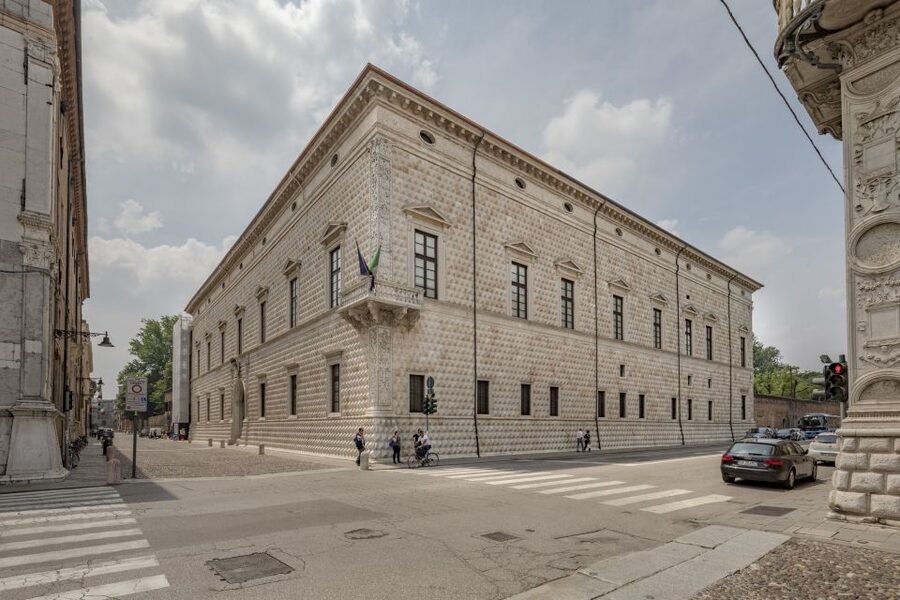
- Palazzo dei Diamanti: See Ferrara’s famous palace of diamond-shaped stone blocks from the outside.
- Quiet green spaces: Walk past Massari Park and the University Botanical Garden for a slower change of pace.
- Certosa church visit: Enter the Renaissance church of San Cristoforo alla Certosa, once used by Carthusian monks and later connected with the monumental cemetery.
- Italian-language focus: The live guide and included audio guide are in Italian. Guide Maria Chiara has received particular praise for her clear, warm presentation.
Why this short Ferrara walk works well
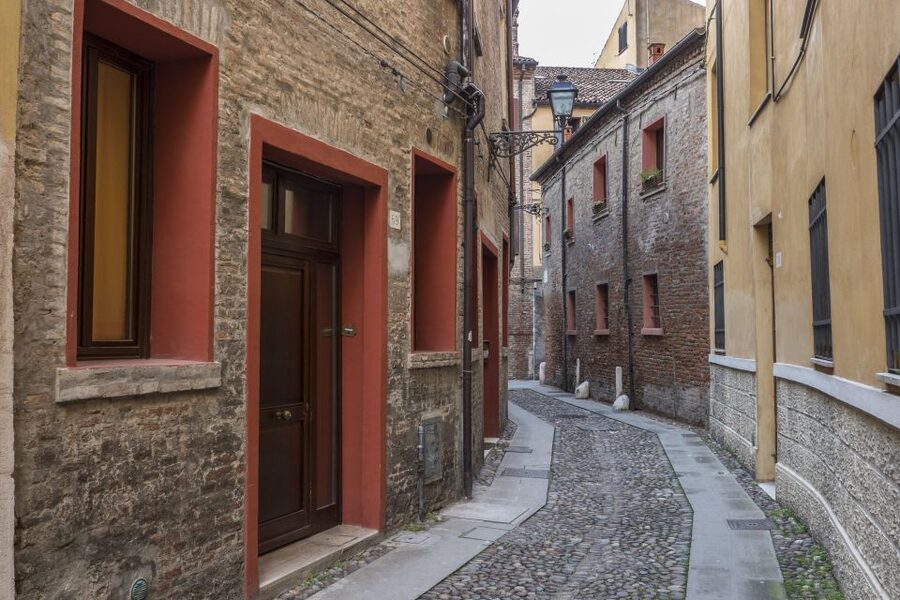
Ferrara is easy to underestimate. It does not have the wall-to-wall crowds or famous-name checklist of Florence or Venice, but that is part of its appeal. The city gives you medieval power, Renaissance planning, churches, gardens, and literary connections without forcing you to cover huge distances.
This tour has a sensible shape. It starts at the castle, the old center of d’Este rule, then heads north along Corso Ercole I d’Este. From there, it reaches the Renaissance extension, the Palazzo dei Diamanti, Massari Park, the Certosa complex, and Piazza Ariostea.
I especially like that the route is not limited to grand facades. You see the city’s main symbols, but you also get arcades, trees, open squares, and a former religious complex. That variety keeps two hours from feeling like a parade of palace doors.
The walk is also a good orientation tool. Afterward, you will have a clearer sense of how Ferrara’s medieval center connects to the later Renaissance expansion. That matters if you plan to explore alone afterward, since the streets and landmarks will make more sense as parts of one city plan.
The guide speaks Italian, and the audio guide is also in Italian. If you understand Italian, the tour offers a direct way to hear the stories and legends linked to the Estense family. If you do not, the language arrangement is a serious limitation, so check carefully before booking.
More Walking Tours in Bologna:
- Bologna: City Center Walking Tour
★ 4.5 · 3,478 reviews - Bologna: Walking Food Tour with a Local Guide
★ 4.8 · 882 reviews - Private Half Day Parma Food Walking Tour
★ 5.0 · 561 reviews
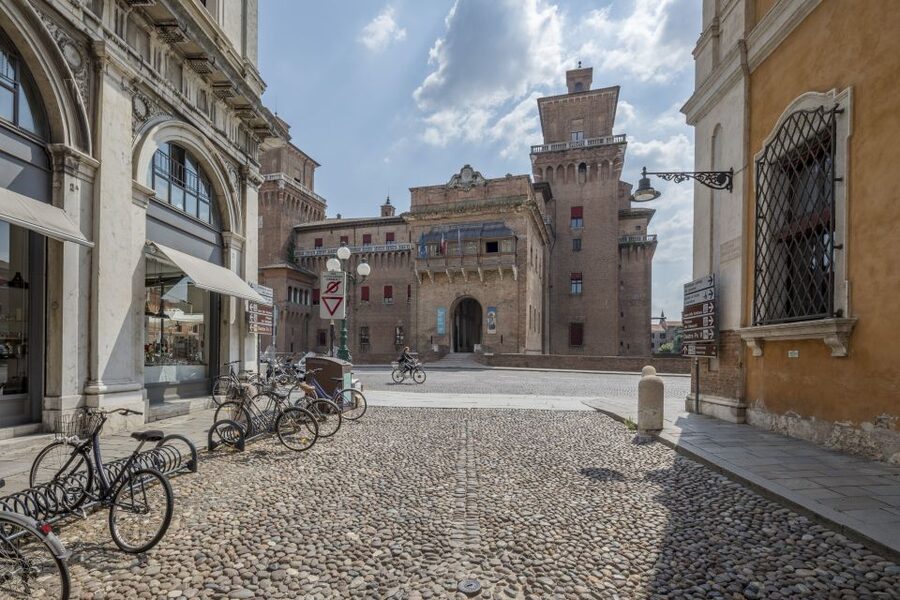
Starting under the Estense Castle loggia
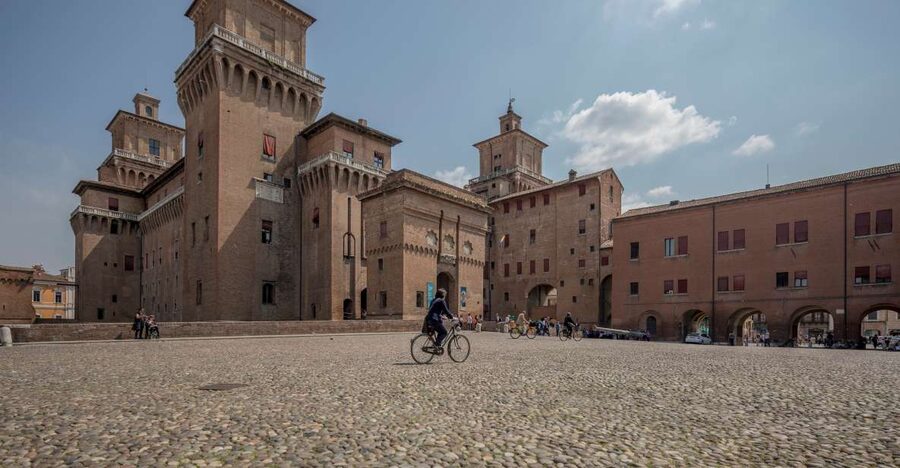
Meet in the courtyard of Estense Castle, near the loggia. This is an easy place to recognize, and beginning here gives the tour an immediate sense of place.
The castle is more than a photogenic starting point. It represents the power of the Estense family, the dynasty that shaped Ferrara’s political and cultural life. The tour uses the castle to introduce the family’s secrets and legends, then places their ambitions into the streets around you.
You should understand one practical point before arriving: entrance tickets are not included. The experience is primarily a guided walk, not a ticketed castle tour. You may admire the castle from the meeting area and learn about its role, but any paid entry connected with the castle or another monument is separate.
That arrangement helps keep the price low. At $17, you are paying for a focused introduction and a live Italian-speaking guide rather than a package of museum admissions. For someone who wants context before exploring independently, that is good value.
Walking Corso Ercole I d’Este
From the castle, the route follows Corso Ercole I d’Este. This road runs toward the northern gate of the city walls and crosses the Renaissance expansion ordered by Ercole I d’Este.
This is the architectural core of the tour. Instead of viewing Ferrara as a random collection of beautiful buildings, you see how its rulers planned a larger and more orderly city. The Ferrarese architect Biagio Rossetti carried out this major urban project, known as the Addizione Erculea.
The practical pleasure of this section is the changing scale. Near the castle, you begin with a powerful symbol of ducal authority. Farther along, the street opens into views of Renaissance palaces and churches. The effect is calm and spacious, not cramped or frantic.
You will want comfortable shoes, even though the route is only two hours. A walking tour gives you details that pass quickly from a car or bus, but it also means you stay outdoors for the whole experience. Bring an umbrella if rain is possible, as advised for this activity.
The guide’s role matters here. A bare sightseeing walk would show you handsome buildings. A good explanation connects those buildings to Ercole I d’Este, Rossetti, and the city’s growth. Recent feedback has singled out guides for being prepared, punctual, empathetic, and pleasant, with Maria Chiara named specifically for her excellent work.
Seeing Palazzo dei Diamanti from the Renaissance crossroads
The route reaches Palazzo dei Diamanti in the heart of the Addizione Erculea. The palace gets its name from the diamond-shaped stone blocks covering its exterior, one of Ferrara’s most distinctive visual details.
This is a strong stop for anyone interested in architecture. The palace does not rely on size alone. Its surface creates a shifting pattern of light and shadow, giving the building a texture that is easy to remember.
The tour describes the area as a historic crossroads, which helps you read the palace as part of the wider city plan. You are not simply stopping for a photograph. You are seeing how the palace fits into the planned Renaissance quarter around it.
The activity information does not promise entry into Palazzo dei Diamanti, and entrance tickets are excluded. Expect to appreciate the building from the route and hear its place in Ferrara’s architectural story. If you want to see an interior exhibition or museum collection, plan that separately.
This is also where the tour’s balance works well. The palace is one of Ferrara’s major sights, but the walk does not stay only among headline monuments. After this stop, the route turns toward greenery and quieter spaces.
A few more Bologna half-days worth a look
- Ravenna: UNESCO Monuments and Mosaics Guided Tour
★ 4.8 · 3,108 reviews - Guided Tour of Mosaic Tiles in Ravenna
★ 5.0 · 1,693 reviews - Maranello: Ferrari Museum Entrance Ticket
★ 4.6 · 1,505 reviews - Bologna Food & Market Tour with 6 Tastings, Pasta, Wines & More
★ 5.0 · 1,328 reviews
Massari Park and the Botanical Garden
A short distance from Palazzo dei Diamanti, the walk reaches Massari Park. The park is known for its old cedars of Lebanon and substantial plant life, with the University Botanical Garden nearby.
This section gives your eyes and feet a break. Two hours of buildings can become tiring, even in a small city. Here, the route shifts from stone facades to trees and open green space, while still keeping you inside Ferrara’s cultural center.
I like this part because it shows how Ferrara’s appeal is not only about monuments. The city’s beauty comes from the way buildings, arcades, gardens, and squares sit together. You get a more complete sense of the place by moving through both formal architecture and planted spaces.
The tour does not provide a separate botanical garden admission, and tickets are not included. Treat the garden as part of the street-level route unless the guide explains otherwise on the day. The supplied information does not specify how much time is spent inside any garden facility.
Entering San Cristoforo alla Certosa
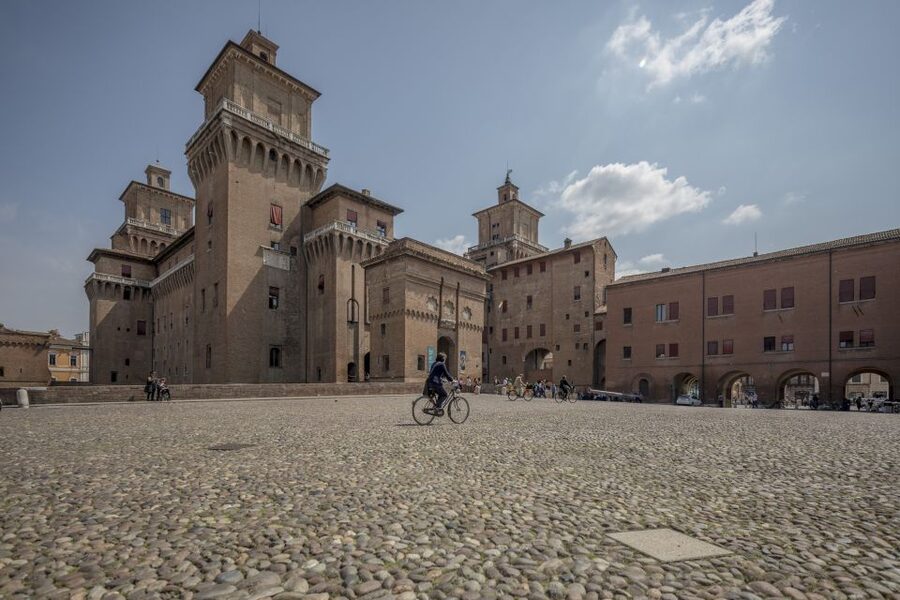
The nearby complex of San Cristoforo alla Certosa is one of the most unusual parts of the itinerary. It began as a religious site for Carthusian monks, who were called to Ferrara by Duke Borso d’Este in the mid-15th century. Over time, the complex became a monumental cemetery.
The church itself receives an internal visit. That is important because the tour moves beyond exterior sightseeing here. You get to enter the Renaissance church, an old Carthusian temple, and see the atmosphere of the complex from within.
The square in front is framed by elegant arcades. Their repeated forms create a quiet, reflective setting, which fits the site’s later role as a monumental cemetery. This is a very different mood from the castle and Palazzo dei Diamanti.
For me, this stop adds depth to the walk. The Estense family’s story can easily become a tale of dukes, palaces, and urban power. San Cristoforo shows another side of Ferrara: religious life, silence, death, and the reuse of historic places over time.
Keep the ticket policy in mind. The tour includes an internal visit to the church, but the general terms say entrance tickets are not included. If a separate admission is required at the time of your visit, you should be prepared to pay it yourself. The exact ticket arrangements are not specified.
Finishing at Piazza Ariostea
The final stop is Piazza Ariostea, a historic square named for the poet Ludovico Ariosto. His statue rises above the central column, giving the open space a clear literary focus.
The square provides a relaxed ending. After the denser streets and formal buildings, you finish under the loggia beside the green area. It is a pleasant place to pause and let the route settle in your mind.
This ending also widens the story beyond the d’Este rulers. Ferrara was a center of court life and architecture, but it was also connected with major poetry and writing. Ariosto’s presence gives the tour a cultural note rather than ending only with buildings.
The itinerary says the route closes beneath the loggia flanking the green area. It does not specify whether the guide returns you to the castle, so plan your onward route from Piazza Ariostea rather than assuming a loop.
What the $17 price really gives you
At $17 per person, this is priced as an affordable city introduction. You receive a two-hour walking route, a live Italian-speaking guide, and an Italian audio guide. The value comes from the sequence and explanation, not from bundled admissions.
I would consider the price fair if you want help connecting Ferrara’s landmarks. A self-guided walk can show you the castle, palace, park, church, and square, but it may not explain why the Addizione Erculea matters or how the Estense family shaped the city.
The price is less attractive if your main aim is to enter several museums or monuments. Those tickets are not included, so your total cost can rise if you add paid visits afterward. Think of this as a guided city walk first, with optional sightseeing costs on top.
The strong rating of 4.6 from 219 reviews supports the idea that the format generally works well. The most praised qualities are the guides’ preparation, warmth, courtesy, punctuality, and ability to make the route interesting. Maria Chiara is specifically named, while other comments describe the guiding as precise and professional.
Who should book this Ferrara tour?
I would choose this walk if you are visiting Ferrara for the first time and want a clear introduction before exploring alone. It suits anyone who enjoys architecture, urban planning, local dynasties, churches, gardens, and literary connections.
It is also useful if your time in town is limited. Two hours gives you a broad look at the city without taking over your day. You can then decide which places deserve a longer visit.
The tour should suit wheelchair users because it is listed as wheelchair accessible. Still, the route includes streets, a park, arcades, and a historic religious complex, so it is sensible to confirm any specific access needs before arrival.
I would hesitate to book if you need an English-language tour. The live guide and audio guide are in Italian, and no other language is listed. I would also look elsewhere if you want a museum-heavy experience with admissions included.
Practical details before you go
The meeting point is the courtyard of Estense Castle, near the loggia. Check the available starting times when booking because the exact departure time is not fixed in the information provided.
The tour lasts two hours. Wear shoes suitable for city walking and bring an umbrella in case of rain. The route stays outside for much of its length, although it includes the interior of San Cristoforo alla Certosa.
You can cancel up to 24 hours before the start for a full refund, and the reserve-now-pay-later option lets you hold a place without paying immediately. Those terms are useful if your Emilia-Romagna plans are still shifting.
Should you book it?
Book this tour if you want an affordable, well-shaped introduction to Ferrara and can follow Italian. Its best quality is the route itself: castle, planned Renaissance avenue, Palazzo dei Diamanti, park, Certosa, and Piazza Ariostea, all linked in a logical two-hour walk.
Skip it if you need English, a small-group guarantee, or admission to multiple interiors included in the price. For Italian speakers, though, the praised guides, the Maria Chiara recommendation, and the chance to see both famous landmarks and quieter corners make this a sensible first look at Ferrara.
FAQ
How long does the Ferrara walking tour last?
The tour lasts two hours.
Where does the tour meet?
Meet in the courtyard of Estense Castle, near the loggia.
What language is the tour in?
The live guide speaks Italian, and the included audio guide is also in Italian.
Is the tour wheelchair accessible?
Yes, the activity is listed as wheelchair accessible.
Are entrance tickets included?
No. Entrance tickets are not included in the tour price.
Does the tour include a church visit?
Yes. The itinerary includes an internal visit to the Renaissance church of San Cristoforo alla Certosa.
What landmarks does the route include?
The walk includes Estense Castle, Corso Ercole I d’Este, Palazzo dei Diamanti, Massari Park, the University Botanical Garden area, San Cristoforo alla Certosa, and Piazza Ariostea.
Can I cancel for a full refund?
Yes. You can cancel up to 24 hours in advance for a full refund.
Just added around Bologna
- Bologna Private Highlights & Hidden Gems Tour with a Local★ 5.0 · 359 reviews
- Bologna on the plate, Cooking Class with Alessia★ 5.0 · 260 reviews
- Bologna: Full meal Food Tour with Local Delights by Do Eat Better★ 5.0 · 541 reviews
- Bologna Local Pasta Cooking Class, Ragu, Spritz, Wine & Gelato★ 5.0 · 527 reviews
- Pastamama, Home Cooking Classes at Grace’s Home★ 5.0 · 521 reviews
- Bologna Private Food Tour with 6 or 10 Tastings★ 4.5 · 344 reviews
- Bologna Food Tour by Taste Bologna: Intimate Group (Max 10)★ 5.0 · 424 reviews
- Bologna: Pasta and Tiramisu Small Group Cooking Class with Wine★ 5.0 · 409 reviews
City Tours, compared.

City Sightseeing Hop-on Hop-off Bus with Audioguide
Read our review →
City Sightseeing Hop-On Hop-Off Bus with Audio Guide
Read our review →
City Sightseeing Rome Hop-On Hop-Off Bus Tour
Read our review →
City Sightseeing Florence Hop-On Hop-Off Bus Tour
Read our review →
Eco-Friendly Golf Cart City Tour with Audio Guide
Read our review →
Florence in a Day: Michelangelo’s David, Uffizi and Guided City Walking Tour
Read our review →
Florence in a Day: David, Cathedral & City Highlights Guided Tour
Read our review →Browse the lists this tour appears in