
Reviewed · BOLOGNA TOURS
Ravenna: UNESCO Monuments and Mosaics Guided Tour
Ravenna’s mosaics are not background decoration. They are the main event, covering domes and walls with emperors, saints, animals, symbols, and a sky full of stars. I like that this tour teaches you how to read them, rather than simply pointing out the prettiest bits. I also like the skip-the-line entry, which matters when several sites are busy.
The choice between a two-hour highlights route and a three-hour full route is useful. Guides such as Chiara, Marco, Serena, Roberta, and Cinzia have been praised for clear explanations and good humor. The main consideration is that you will walk between sites and may stand for much of the visit, often on cobblestones or uneven ground.
Key points to know before booking
- Two routes suit different schedules: Choose the 2-hour Essential Experience or the 3-hour Complete Experience.
- Five UNESCO monuments are included on the longer route: The Chapel of Saint Andrew, Neonian Baptistery, San Vitale, Galla Placidia, and Sant’Apollinare Nuovo.
- The mosaics are explained, not just displayed: Your guide points out religious symbols, political messages, artistic details, and links between buildings.
- Skip-the-line entry saves valuable time: The tour is especially useful on a short visit or a crowded day.
- The meeting point is simple: Check in at the Tourist Information Office at Piazza San Francesco 7.
- Bring wired earphones: The radio guide requires earphones with a jack connection.
Why Ravenna’s mosaics deserve a guided visit
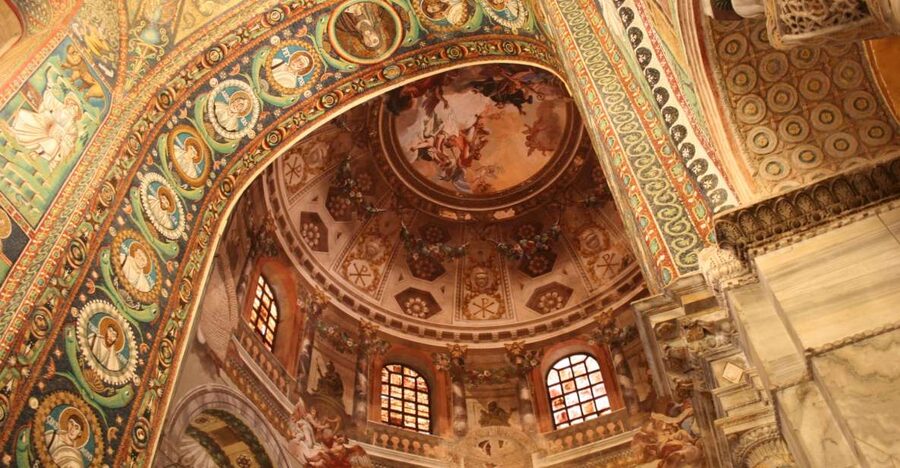
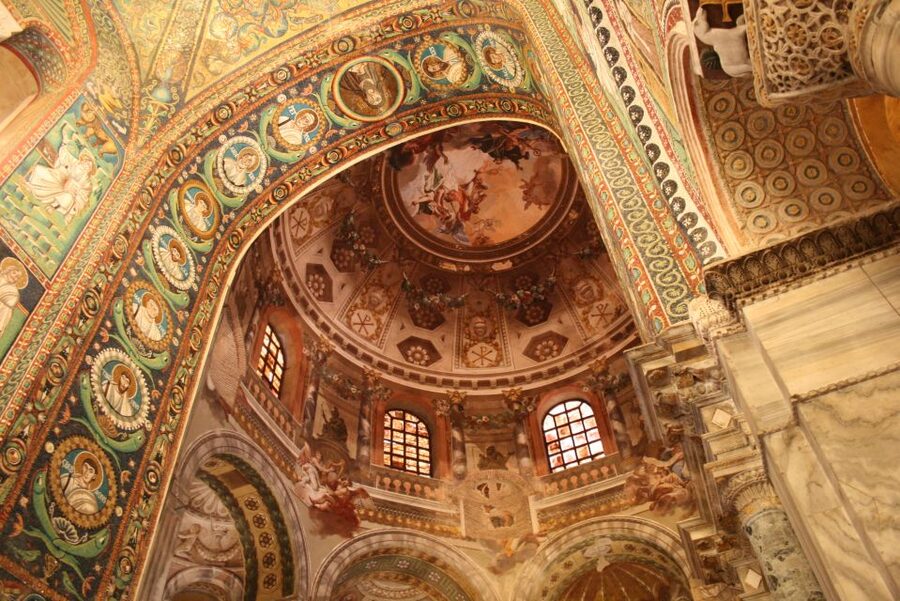
Ravenna can look modest at street level. Its great treasures are often tucked inside plain brick buildings, and the most important details sit high above your head. Walk into San Vitale or the Mausoleum of Galla Placidia, though, and the city changes completely.
The mosaics date from the fifth and sixth centuries, when Ravenna served as a capital and a meeting point between the Roman world, the Byzantine East, and Christian Italy. The art reflects that position. You see Roman naturalism, Eastern ceremony, Christian symbolism, and imperial power sharing the same walls.
I would not choose a guided visit simply to hear dates. The real benefit is learning where to look. A guide can explain why Justinian and Theodora appear in San Vitale, what the stars in Galla Placidia’s dome suggest, and how the scenes at Sant’Apollinare Nuovo tell a larger story.
Without that context, the gold and color are beautiful but easy to skim past. With it, small details begin to matter.
A few more Bologna half-days worth a look
- Bologna: City Center Walking Tour
★ 4.5 · 3,478 reviews - Guided Tour of Mosaic Tiles in Ravenna
★ 5.0 · 1,693 reviews - Maranello: Ferrari Museum Entrance Ticket
★ 4.6 · 1,505 reviews
The 2-hour Essential Experience
The shorter option focuses on three of Ravenna’s strongest sights: the Neonian Baptistery, San Vitale, and the Mausoleum of Galla Placidia. This is the route I would choose if you have only a morning, are visiting from Bologna by train, or want a strong introduction without filling your entire day.
The tour begins at the Tourist Information Office in Piazza San Francesco 7. Enter the office, check in at the front desk, and wait for the staff to direct you to your guide. From there, the group walks through the historic center at a relaxed pace.
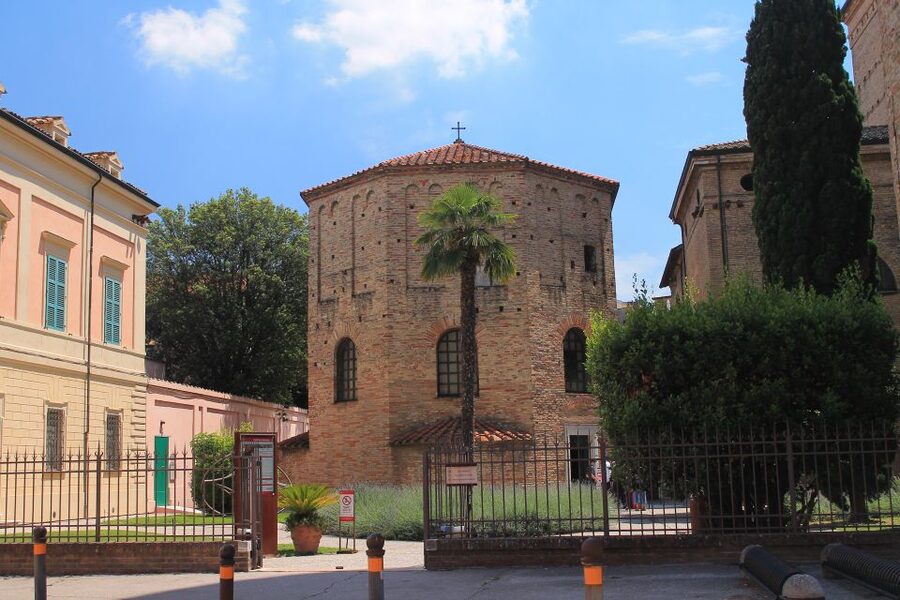
The Neonian Baptistery
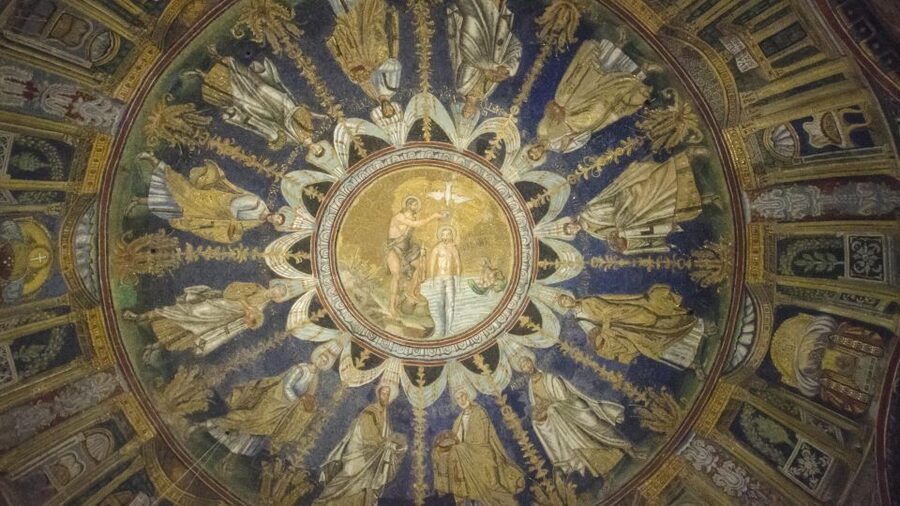
The Neonian Baptistery is one of Ravenna’s oldest buildings. Its octagonal shape and early Christian decoration offer a useful starting point because the mosaics show a clear connection to Hellenistic and Roman art.
Look up at the dome and you will find the Baptism of Christ at the center, surrounded by figures and decoration arranged in orderly circles. A guide helps you understand how the image works as both a religious scene and a carefully planned composition.
The building is not large, so crowding can affect your view. That is another reason the guide helps. You are shown the best angle and given time to take in the dome instead of wandering around wondering what matters.
San Vitale
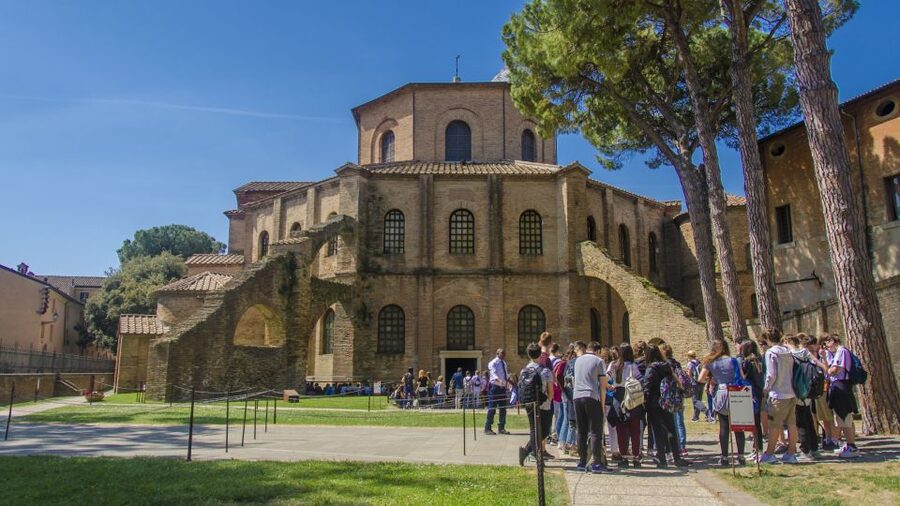
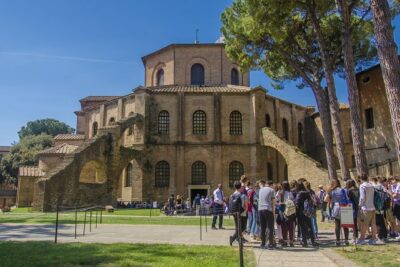
San Vitale is the architectural and artistic high point for many people. The interior rises dramatically, and its mosaics glow with gold, green, blue, and red. The famous panels of Emperor Justinian and Empress Theodora are more than portraits. They present the rulers as powerful Christian leaders connected to Ravenna’s church and court.
Your guide can draw your attention to clothing, gestures, attendants, halos, offerings, and the way the figures face the altar. These details explain how the image communicates authority.
I particularly like the way this stop turns a grand room into a readable political message. You do not need a background in art history. Clear storytelling is enough, and guides including Marco, Serena, and Roberta have been praised for explaining difficult material in an accessible way.
More Guided Tours in Bologna:
- Bologna: Walking Food Tour with a Local Guide
★ 4.8 · 882 reviews - Ferrara: City Highlights Walking Tour with Local Guide
★ 4.6 · 219 reviews - Colosseum, Roman Forum & Palatine Guided Tour
★ 4.7 · 63,148 reviews - Vatican Museums, Sistine Chapel & St Peter’s Basilica Guided Tour
★ 4.5 · 39,149 reviews
The Mausoleum of Galla Placidia
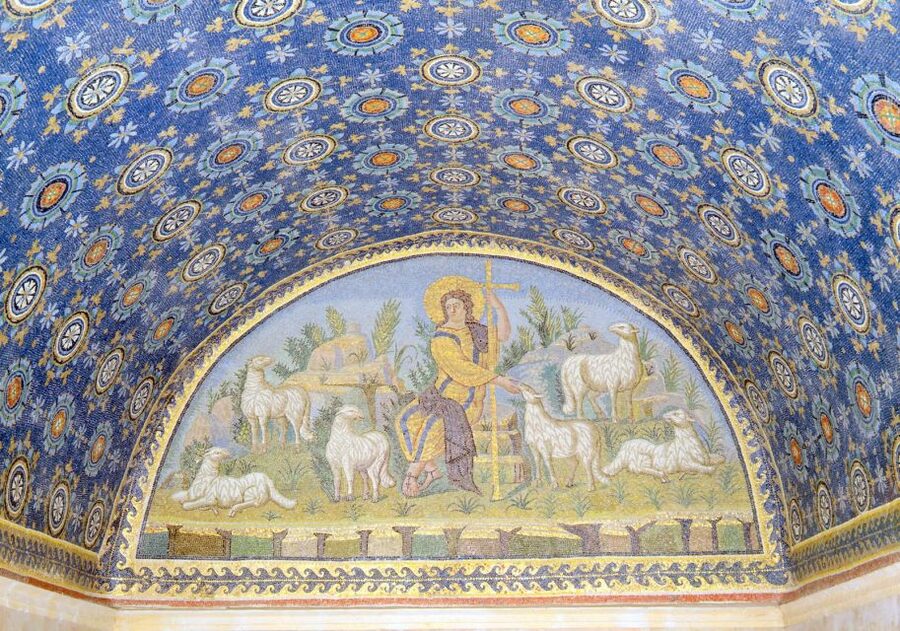
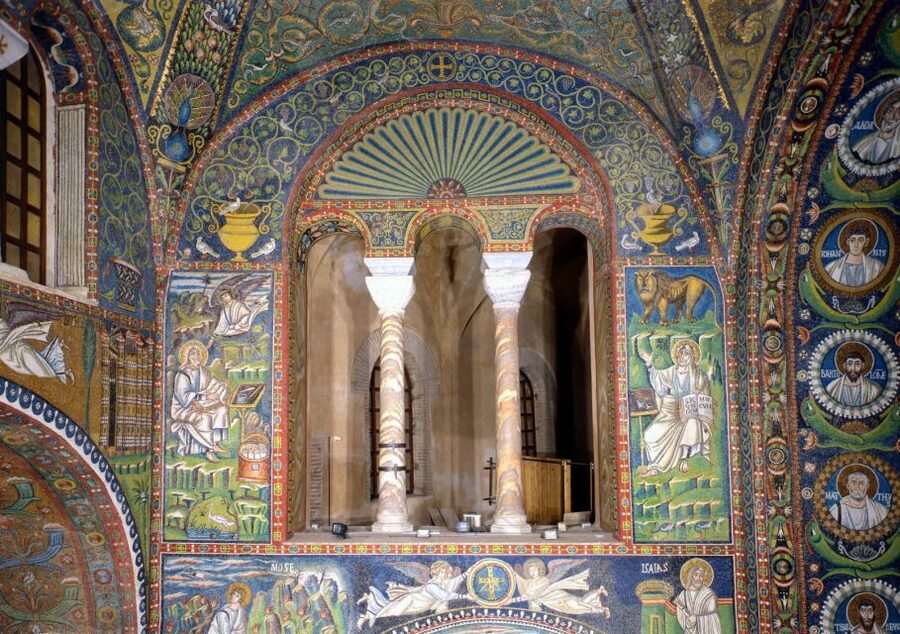
The Mausoleum of Galla Placidia is small, dark, and intensely atmospheric. Its starry blue dome is the image most people remember, but the rest of the decoration deserves time too. Gold stars fill the ceiling, while Christian symbols and carefully placed figures create a sense of order around the room.
The building is often linked with Galla Placidia, although its exact original purpose is more complex than the name suggests. Your guide explains the setting and symbolism rather than leaving you with a simple postcard view.
The dome has inspired visitors for centuries, including Dante Alighieri. You can understand why once your eyes adjust to the dim interior and the ceiling begins to sparkle above you.
At the end of the Essential Experience, you may continue independently to Sant’Apollinare Nuovo. The entrance is part of the combined ticket, but the guided explanation of that basilica belongs to the longer option.
The 3-hour Complete Experience
The longer route adds the Chapel of Saint Andrew and Sant’Apollinare Nuovo. If Ravenna is the main reason for your visit, I would choose this version. Three hours gives the guide room to connect the monuments and explain how the city’s art developed across different periods and rulers.
The pace remains relaxed, but this is still a substantial walking and standing visit. Some sites have limited seating, so comfortable shoes and realistic expectations matter.
The Chapel of Saint Andrew
The Chapel of Saint Andrew is inside the Archbishop’s Museum. It is an early Christian archiepiscopal chapel, preserved in a setting that is easy to miss if you are moving quickly through Ravenna.
Its scale differs from the great basilicas. That makes the stop valuable. You see how Ravenna’s mosaic tradition worked in a more private and official religious space, not only in monumental churches.
Because the chapel is part of a museum, the visit adds variety to the route. It also shows how much of Ravenna’s art survives in less obvious places.
Sant’Apollinare Nuovo
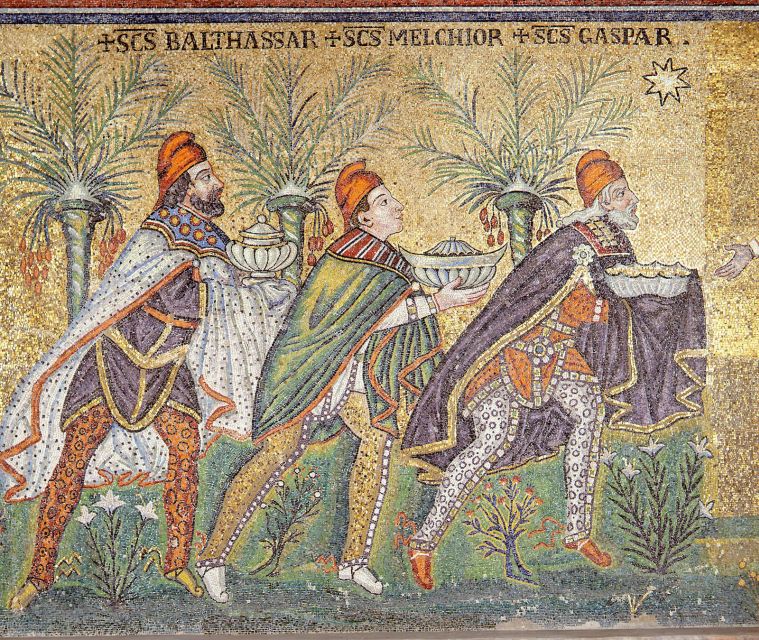
Sant’Apollinare Nuovo contains one of the longest mosaic cycles in Ravenna. The walls guide your eye through scenes from the life of Christ, arranged in a long sequence that rewards a slower look.
This is where the guide’s storytelling matters most. You can follow the scenes, compare repeated figures and gestures, and see how the images teach as well as decorate. The basilica also helps place the other monuments in context because it gives you a broad view of Ravenna’s changing religious and political identity.
The church can feel like a lot to absorb after San Vitale and Galla Placidia. I would avoid rushing your photographs. Look first, listen to the explanation, then use the free time to return to the details you want to remember.
What the guide adds to the experience
The strongest part of this tour is the human explanation. Guides such as Chiara, Marco, Serena, Roberta, Cinzia, Sergio, Ivan, Celia, and Baldo have been praised for combining historical detail with humor and local stories.
That range of names matters less than the pattern: the company uses live guides in English, Italian, German, and French, and the experience is arranged by language. English explanations have been described as clear, with guides willing to answer difficult questions rather than simply delivering a fixed speech.
Some guides are archaeologists or have long experience in Ravenna. Roberta, for example, has been described as a qualified archaeologist, while Cinzia brings a local connection and can add details about Ravenna beyond the monuments.
A good guide also manages the practical side. Groups have been moved through crowded interiors, kept together during city events, and directed to useful viewpoints. One guide even built in a bathroom stop, a small detail that can make a three-hour outing more comfortable.
The radio system helps you hear in large spaces, but bring your own earphones with a jack connection. One participant reported that the sound stopped near the end, so it is sensible to treat the equipment as useful rather than flawless.
How much walking and standing to expect
This is a walking tour, not a bus-based monument visit. The routes connect sites in the center at a relaxed pace, but you will cover streets with cobblestones and uneven surfaces.
Not every monument offers seating. You may stand while listening, especially inside the baptistery, basilicas, and chapel. The activity is wheelchair accessible, but the stated surface conditions are worth considering when deciding if the route fits your needs.
Wear shoes that are comfortable for pavement and stone floors. Bring identification, or a copy of your passport or ID card, as requested. Pets are not allowed.
The small-group experience can vary, but several accounts describe groups of around five to eight people. A small group makes it easier to hear, ask questions, and find a clear view of the mosaics. Larger groups may require more patience in narrow interiors.
Price and ticket value at $33
At $33 per person, the tour offers solid value because entrance tickets to the included sites are covered. You are paying for the guide, the organization, and the time saved at entrances, not just for access to buildings you could potentially visit alone.
The price makes particular sense if you are in Ravenna for one day. Buying tickets, checking opening arrangements, finding each site, and working out the best order can consume much of your visit. The guided route removes that friction and gets you to the main monuments efficiently.
The value is strongest on the Complete Experience. You see all five sites covered by the combined ticket and receive an explanation of how they relate to each other. The Essential Experience is still a good buy if your schedule is tight, especially because it concentrates on three outstanding monuments.
The tour has a current rating of 4.8 from more than 3,100 ratings, with repeated praise for guide quality, clear storytelling, efficient organization, and ticket-line access. I would treat that as a strong sign of consistency, while remembering that the exact guide and group dynamic can change from one departure to another.
Who should choose this tour
I would recommend it to first-time visitors, art lovers, history fans, and anyone making Ravenna a day trip from Bologna. It is also useful if you want a firm introduction before spending extra time exploring on your own.
Choose the Essential Experience if:
- You have only two hours.
- You want San Vitale, Galla Placidia, and the Neonian Baptistery.
- You prefer a focused visit with time afterward for lunch, shopping, or independent sightseeing.
- You are unsure how much standing your group can manage.
Choose the Complete Experience if:
- Ravenna’s mosaics are a main purpose of your trip.
- You want all five included UNESCO monuments.
- You want to understand the wider artistic and religious story.
- You have three hours and can manage steady walking and standing.
I would not choose this as a casual stroll with no fixed schedule. The tour follows a set route, uses radio equipment, and moves between several interiors. If you prefer to spend half an hour photographing one ceiling, independent entry may suit you better.
Practical details that make the day easier
The meeting point is the Tourist Information Office at Piazza San Francesco 7. Go inside and check in at the front desk rather than waiting outside.
Starting times vary, so check availability when booking. You can reserve now and pay later, and cancellation is free up to 24 hours before the scheduled start.
The tour is offered in English, Italian, German, and French. Confirm your selected language when booking, then bring wired earphones with a jack connection for the radio guide.
Plan for two to three hours, depending on the option you choose. If you take the Essential Experience, you may continue to Sant’Apollinare Nuovo independently afterward, giving you a useful mix of guided interpretation and personal time.
Should you book the Ravenna mosaics tour?
Yes, if you want the main monuments explained in a logical order and you value saved time at the entrances. The guide is the reason to book, while the included tickets and access to five UNESCO sites make the price sensible.
Choose the two-hour version for a focused introduction. Choose the three-hour option if you want the full artistic story, including the Chapel of Saint Andrew and Sant’Apollinare Nuovo. Either way, you will see why Ravenna is one of Italy’s most rewarding stops for early Christian and Byzantine art.
FAQ
Where does the Ravenna UNESCO monuments tour begin?
The meeting point is the Tourist Information Office at Piazza San Francesco 7. Enter the office, check in at the front desk, and staff will direct you to your guide.
How long does the tour last?
The Essential Experience lasts two hours. The Complete Experience lasts three hours.
Which monuments are included in the 2-hour option?
The Essential Experience includes the Neonian Baptistery, the Basilica of San Vitale, and the Mausoleum of Galla Placidia. You may continue independently to Sant’Apollinare Nuovo afterward.
Which monuments are included in the 3-hour option?
The Complete Experience includes the Chapel of Saint Andrew inside the Archbishop’s Museum, the Neonian Baptistery, the Basilica of San Vitale, the Mausoleum of Galla Placidia, and the Basilica of Sant’Apollinare Nuovo.
Are entrance tickets included?
Yes. Entrance tickets to the sites included in your selected option are included.
What languages are available?
Live guides are available in English, Italian, German, and French.
What should I bring?
Bring a passport or ID card, or a copy, plus your own earphones with a jack connection for the radio guide. Wear suitable shoes because the route includes walking on cobblestones and uneven surfaces.
Just added around Bologna
- Bologna Private Highlights & Hidden Gems Tour with a Local★ 5.0 · 359 reviews
- Bologna on the plate, Cooking Class with Alessia★ 5.0 · 260 reviews
- Bologna: Full meal Food Tour with Local Delights by Do Eat Better★ 5.0 · 541 reviews
- Bologna Local Pasta Cooking Class, Ragu, Spritz, Wine & Gelato★ 5.0 · 527 reviews
- Pastamama, Home Cooking Classes at Grace’s Home★ 5.0 · 521 reviews
- Bologna Private Food Tour with 6 or 10 Tastings★ 4.5 · 344 reviews
- Bologna Food Tour by Taste Bologna: Intimate Group (Max 10)★ 5.0 · 424 reviews
- Bologna: Pasta and Tiramisu Small Group Cooking Class with Wine★ 5.0 · 409 reviews
Bologna Tours, compared.


Bologna Food & Market Tour with 6 Tastings, Pasta, Wines & More
Read our review →
Bologna Food Experience: Factory tours & Family-Style Lunch
Read our review →
Maranello and Modena: Ferrari Museums Combo Tickets
Read our review →
Browse the lists this tour appears in