
Reviewed · ENTRY TICKETS IN MILAN
Milan: Pinacoteca Ambrosiana and San Sepolcro Crypt Ticket
The most surprising thing here is how many major works fit inside a relatively manageable museum. In one visit, you can see Caravaggio’s Basket of Fruit, Raphael’s full-size cartoon for the School of Athens, Leonardo da Vinci’s portrait of a musician, and original drawings from the Codex Atlanticus.
I like the calm pace and the strong mix of art, books, and city history. I also like that the crypt follows naturally after the museum, turning a painting visit into a look below modern Milan. The main drawback is that the crypt is small, dark, and reached by stairs, so visitors with mobility limits should book the Pinacoteca alone.
Key points to know before you go
- Start near the Duomo: The Pinacoteca Ambrosiana is at Piazza Pio XI 2, about a five-minute walk from the cathedral.
- See several famous masterpieces: Caravaggio, Raphael, Leonardo, Brueghel, Botticelli, and other Italian and Flemish artists appear in the collection.
- Allow about two hours: The museum usually takes around 1.5 hours, though art lovers may want longer.
- Save time for the crypt: San Sepolcro takes about 30 to 40 minutes, and its final admission is at 5:30 PM.
- Use the self-guided format: Download the app to your device and listen during the visit or afterward.
- Plan around access rules: Large bags, backpacks, and baby strollers are not allowed, and the crypt has architectural barriers.
Why the Ambrosiana is worth your Milan afternoon
Milan has famous sights that demand advance planning, long lines, or a good deal of patience. The Pinacoteca Ambrosiana offers a different kind of visit. It is close to the Duomo, but it feels quieter and more contained, with enough important art to reward serious attention without exhausting you.
At about $25 per person, the combined ticket is a fair buy if you want both art and archaeology. You receive entry to the Pinacoteca and the Crypt of San Sepolcro, and the two stops complement each other well. The museum shows how collectors, artists, and scholars shaped Milan’s cultural life. The crypt takes you below street level to the physical remains of the ancient city.
This is not a guided group excursion. You set your own pace. That matters because some rooms deserve a quick look, while others invite you to sit and study a drawing or painting. The downloadable app adds context without forcing you to move with a group. You can also listen after the visit, which is useful if you prefer to see the art first and read the explanations later.
More Entry Tickets in Milan
- Milan: Cathedral and Duomo’s Terraces Entrance Ticket
★ 4.6 · 61,054 reviews - Milan Cathedral: Duomo Terraces Ticket (No Church Access)
★ 4.6 · 6,111 reviews - Milan: Guided Walking Tour & Last Supper Visit with Ticket
★ 4.7 · 5,409 reviews
Entering the Pinacoteca at Piazza Pio XI
You begin at Piazza Pio XI 2, a short walk from the Duomo. The ticket lets you skip the ticket line, though you still need to follow the museum’s entry procedures and leave prohibited items behind.
The Pinacoteca occupies an impressive historic building, and the setting is part of the experience. You move through rooms that combine paintings, drawings, sculpture, decorative details, and signs of the institution’s long intellectual life. It is a museum you can appreciate even if you do not know every artist in advance.
The layout is organized enough to give you a sense of movement through time. Some sections may take only a few minutes, while the major works slow you down. I recommend resisting the urge to hurry toward the famous names. Smaller paintings and the building itself help explain the taste and purpose behind the collection.
You should plan on at least 1.5 hours. If you like to read labels, sketch, or use the app carefully, two hours or more is reasonable. The museum has seating in several areas, making it easier to spend time with the art instead of simply checking off names.
Caravaggio’s Basket of Fruit
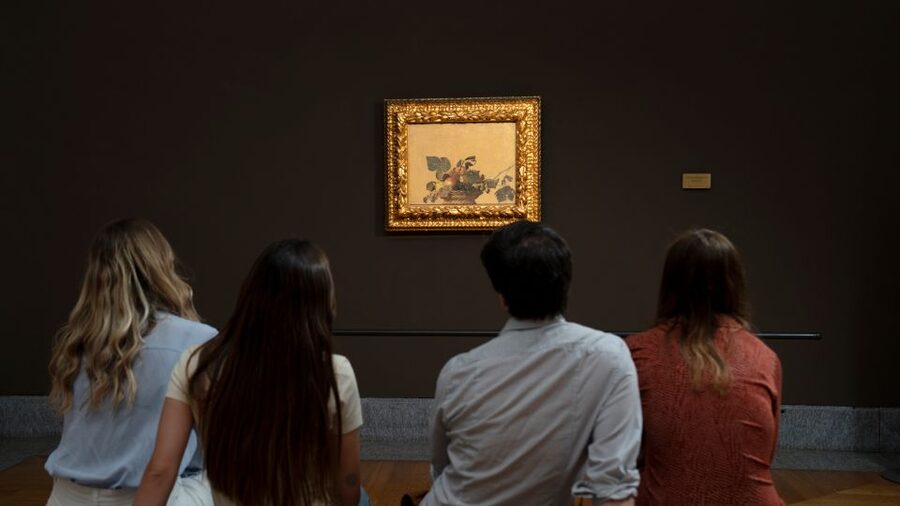
Caravaggio’s Basket of Fruit is one of the essential stops. At first glance, it is a simple subject: fruit arranged in a basket. Look longer and the painting becomes less decorative and more physical. The fruit has weight, texture, and signs of age. The image asks you to notice beauty and decay at the same time.
This work is a good example of why seeing the original matters. Reproductions often flatten the surface and lose the force of the arrangement. In person, you can spend a few quiet minutes looking at the leaves, fruit, shadows, and edge of the basket.
The painting is also a useful counterpoint to the religious and historical works elsewhere in the museum. You do not need a long lecture to understand its appeal. The subject is ordinary, but the attention given to it is extraordinary.
Raphael’s full-size School of Athens cartoon
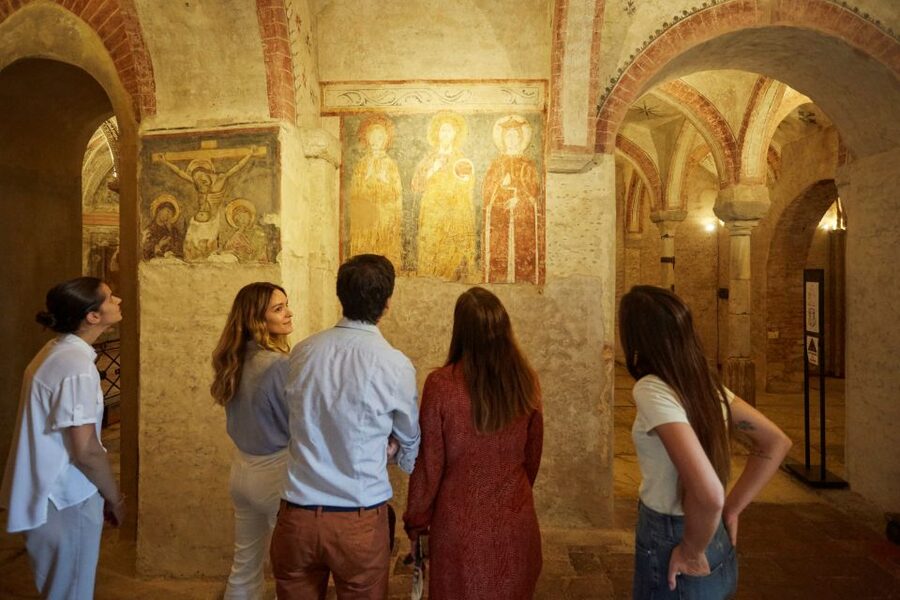
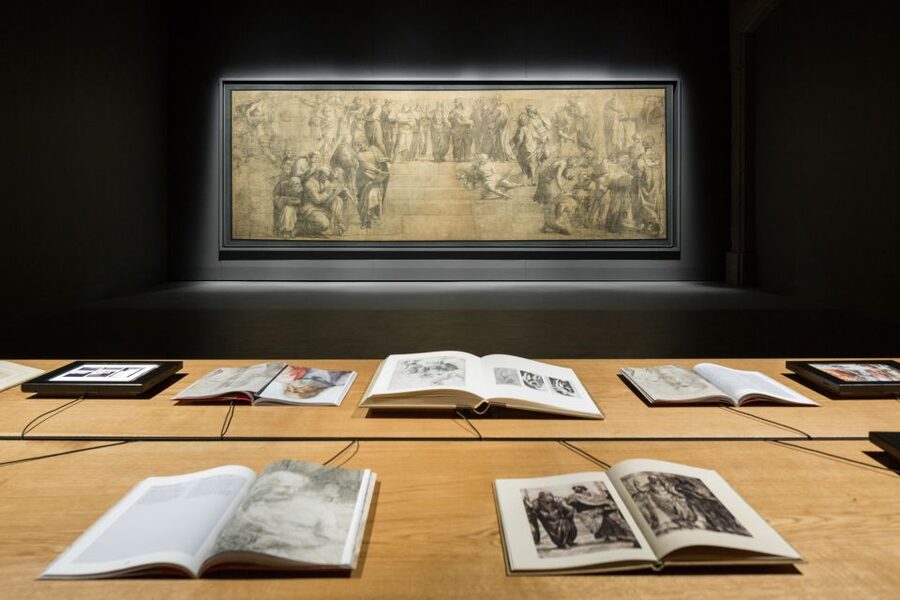
The Raphael cartoon is another major reason to come. It is a preparatory drawing for Raphael’s School of Athens, and its size gives you a sense of how much planning went into the finished fresco.
Do not treat it as a lesser version of the famous painting. A cartoon is a working design used to transfer a composition to a wall. Here, Raphael’s figures and architecture appear as a carefully balanced arrangement, with every gesture and grouping doing a job.
The size can catch you off guard. It is not just a small study or a page in a sketchbook. Give yourself space and time to look across the whole composition, then return to individual figures. The museum also provides visual material that can help explain the relationship between the cartoon and the finished work.
For many people, this is the museum’s defining object. If your schedule is tight, make this and the Leonardo rooms your priority.
A few more Milan half-days worth a look
- Milan: City Sightseeing Hop-On Hop-Off Bus with Audio Guide
★ 4.0 · 6,256 reviews - Milan: Milan Cathedral Direct Entrance – Terrace Excluded
★ 4.5 · 5,782 reviews - Milan: Fast-Track Milan Cathedral and Terraces Guided Tour
★ 4.7 · 5,240 reviews - Milan: Navigli Canal Boat Cruise
★ 3.3 · 4,502 reviews
Leonardo’s drawings and the library reading room
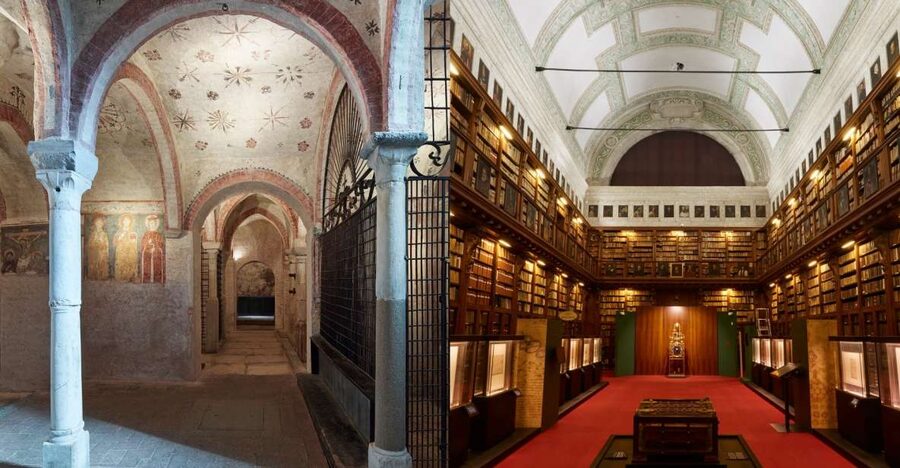
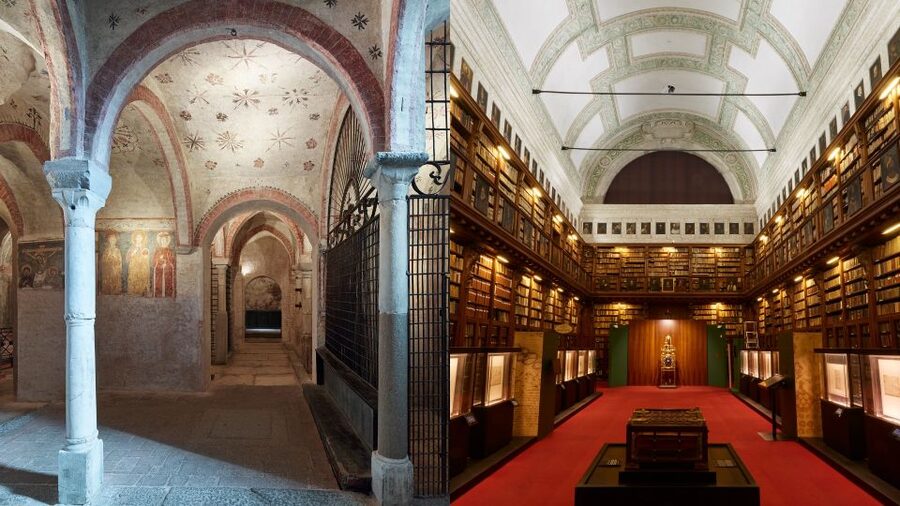
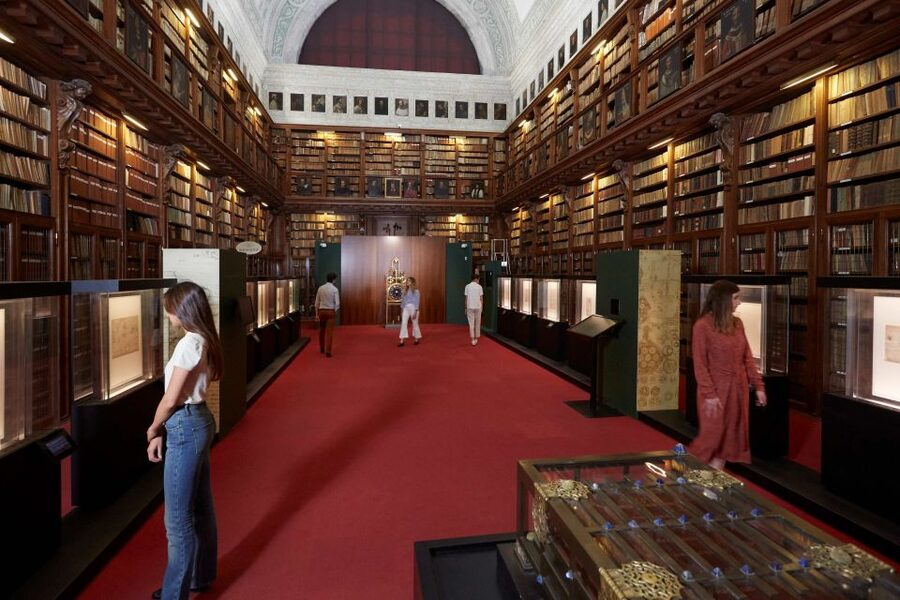
The library is one of the most distinctive parts of the visit. You can see a 17th-century reading room and original drawings connected with Leonardo da Vinci’s Codex Atlanticus.
The Codex Atlanticus is not a single narrative book in the usual sense. It gathers Leonardo’s notes and drawings, giving you a direct look at how he observed, tested, and recorded ideas. The pages connect art, engineering, anatomy, mechanics, and everyday curiosity.
This section is valuable because it presents Leonardo as more than the painter of the Last Supper or Mona Lisa. You see a working mind on paper, with ideas developing through sketches, diagrams, and written observations. The experience can be especially rewarding if you enjoy the link between artistic practice and scientific thought.
Take your time in the reading room. The room itself is worth seeing, and the display is easy to rush past if you are focused only on paintings. The library atmosphere also changes the mood of the visit. After rooms filled with finished works, you are looking at ideas in progress.
One practical point: the app is useful here because a drawing may need more explanation than a label can provide. You can listen as you move, or return to the information later on your device.
The musician and the wider collection
Leonardo’s portrait of a musician is another important work. It offers a quieter encounter than the large Raphael cartoon, but it gives you a chance to look closely at Leonardo’s handling of the face, hair, clothing, and expression.
The collection also includes works by Brueghel, Botticelli, Tiepolo, Luini, Mengs, and other Italian and Flemish painters. You will find religious scenes, portraits, still lifes, and decorative works. Not every room will have the same impact, and some lighting can be uneven, but the strongest pieces are presented in a way that lets you study them without the pressure of a large crowd.
That quieter setting is one of the museum’s practical strengths. You may find yourself with enough room to stand in front of a major work and look properly. There is no need to follow a guide’s schedule, and you can return to a favorite room if the layout allows.
The collection has a strong religious presence, reflecting the period and the institution’s origins. If you prefer modern art or a large chronological survey, this may feel narrow. If you enjoy Renaissance and Baroque painting, drawings, old books, and historic interiors, the focus works in your favor.
From the museum to San Sepolcro
You leave the Pinacoteca on Piazza San Sepolcro, where the crypt entrance is located. This makes the combined visit simple: you do not need transport between the two sites or a separate search through the city.
Do watch the clock. The crypt’s last admission is at 5:30 PM, and it closes at 6:00 PM. Since the museum can take longer than expected, especially if you use the app or stop often, visit the crypt before you reach the end of your day.
The crypt normally takes 30 to 40 minutes. You may need less time if you are mainly interested in seeing the space, or more if you use the historical material carefully. It is not large, and it does not offer the same number of objects as the Pinacoteca. Its value comes from the setting and the layers of Milan beneath the modern streets.
San Sepolcro Crypt and ancient Milan
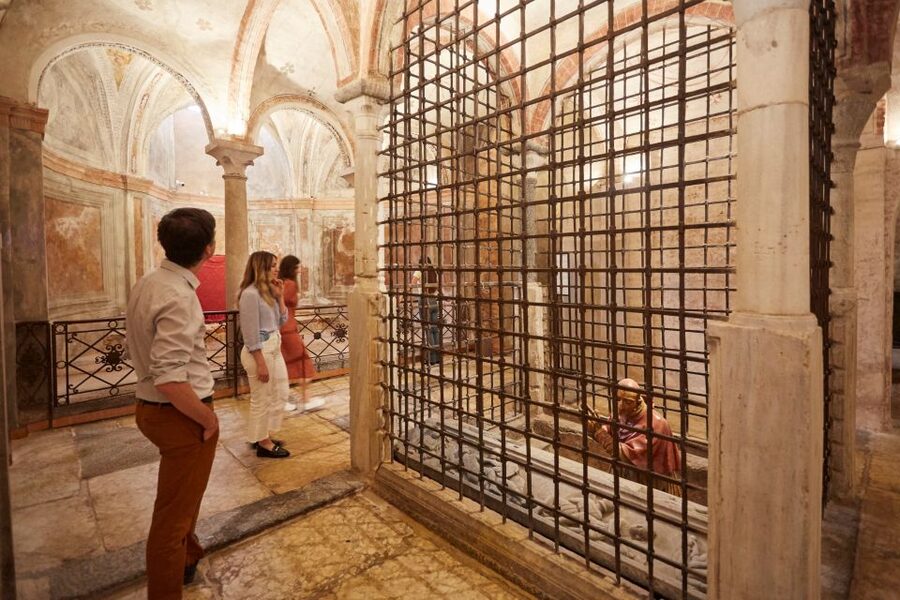
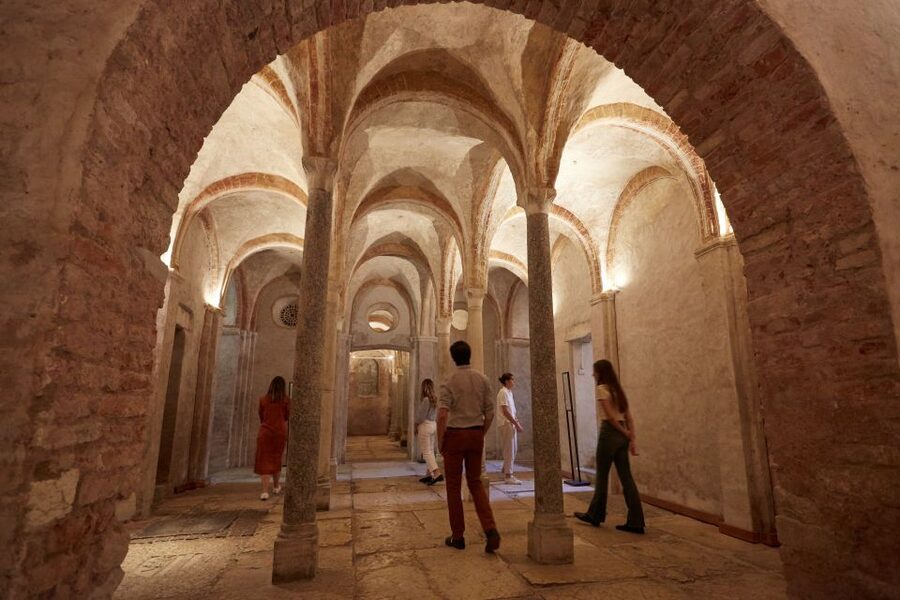
San Sepolcro is a medieval underground church, or hypogean church. Its pavement incorporates ancient stones from Mediolanum, the Roman city that came before modern Milan.
That detail changes how you read the room. You are not simply entering an old religious space. You are standing above and among physical traces of earlier Milan. The crypt gives the city a sense of depth that busy streets and modern buildings can hide.
The room may appear plain at first. Without context, it can feel like a small basement with a historic floor. The explanation is what brings its layers into focus. If you have the option to add a virtual reality experience at the crypt, the information can help you understand what you are seeing, though that addition is paid for separately at the entrance and is not part of the combined ticket.
Look up as well as down. The ceiling and architectural details deserve attention, even though the crypt is compact. The atmosphere is different from the museum above, and that change makes it a fitting final stop.
Keep your expectations realistic. This is not a vast underground complex. It is a short visit in a confined space, best appreciated as a focused look at Milan’s older foundations.
Timing, comfort, and access
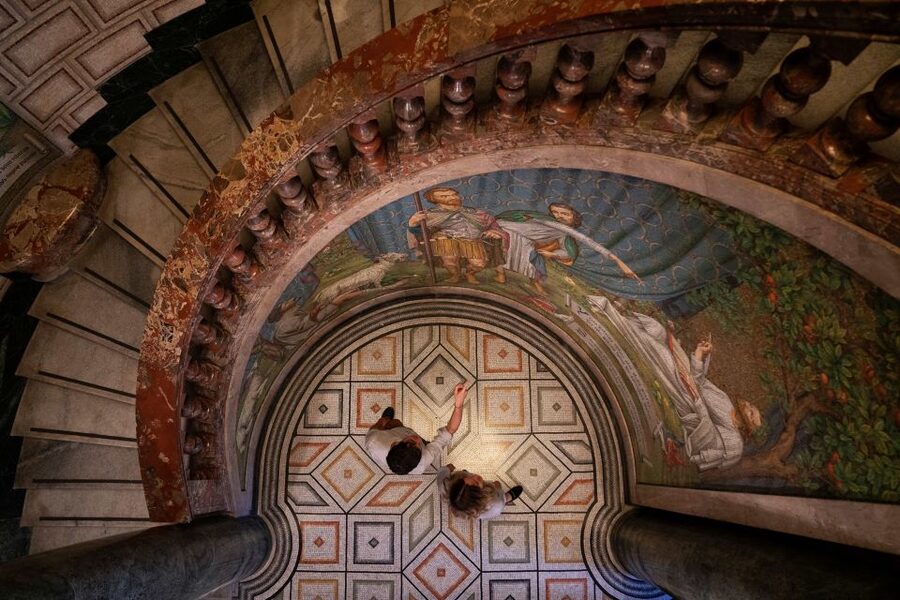
The official visit length is about two hours in total: 1.5 hours for the Pinacoteca and 30 to 40 minutes for the crypt. You can move faster, but rushing would weaken the point of combining the two.
I would schedule the Pinacoteca first, then go directly to the crypt. If you enter the museum late in the day, leave a clear margin before 5:30 PM. This is especially important if you want to use the app, read labels, or pause in the library.
The visit is not fully accessible to wheelchair users or people with physical impairments because of architectural barriers in the crypt. Most of the Pinacoteca’s exhibition rooms are wheelchair accessible, so visitors with mobility concerns should consider booking the museum alone.
Baby strollers, luggage, large bags, and backpacks are not allowed. Plan to visit without bulky belongings. This is an important detail if you are between hotels or arriving at the museum directly from a train journey.
The self-guided setup suits independent visitors, couples, families with older children, and anyone who dislikes being rushed. It is less suitable if you want a live guide explaining every room or if you need a fully accessible route.
Is the $25 ticket good value?
For $25, the ticket offers two different experiences within easy walking distance of the Duomo. The museum alone would justify the price for people interested in Leonardo, Raphael, Caravaggio, or old-master painting. Adding the crypt gives you a second setting and a clearer sense of Milan’s long past.
The value is strongest when you have at least two hours and plan to use the visit as a main part of your afternoon. It is weaker if you only have time to rush through the museum and arrive at the crypt near closing.
The app also affects the value. A self-guided visit can be very satisfying when you want freedom, but you need to take responsibility for your own context. If you walk quickly from room to room, you may miss why the drawings, library, and crypt matter.
Free cancellation up to 24 hours before the visit and the option to reserve now and pay later add useful flexibility. Still, the practical issue is timing, not payment. Make sure your chosen entry time leaves room for both stops.
Who should book this experience?
Book it if you want a compact art visit with several genuinely important works. It is particularly good for first-time visitors who want Leonardo without committing to a long museum day, and for returning visitors who have already seen Milan’s most famous central sights.
Art students, sketchers, history fans, and readers will find plenty to study. Families can also manage the museum’s size more easily than a giant gallery, though younger children may have limited patience for the library and crypt.
You may want to skip the combined ticket if you need step-free access throughout, are carrying luggage, or prefer a live guide. You should also skip it if your schedule leaves less than two hours before the crypt’s final admission.
FAQ
Where does the visit begin?
You begin at the Pinacoteca Ambrosiana at Piazza Pio XI 2 in Milan. After the museum, you exit on Piazza San Sepolcro, where the crypt entrance is located.
How long does the complete visit take?
The Pinacoteca normally takes about 1.5 hours. The Crypt of San Sepolcro takes about 30 to 40 minutes, so allow roughly two hours in total.
What time is the last admission to the crypt?
The last admission is at 5:30 PM, and the crypt closes at 6:00 PM. Finish the Pinacoteca in time to reach the crypt before final entry.
Is the visit guided?
The visit is self-guided. You can download an app to your device and listen during the visit or afterward.
Is the experience wheelchair accessible?
The full experience is not completely accessible because the crypt has architectural barriers. Most Pinacoteca exhibition rooms are wheelchair accessible, so visitors with mobility limitations should consider booking the Pinacoteca alone.
Can I bring a stroller, backpack, or large bag?
No. Baby strollers, luggage, large bags, and backpacks are not allowed.
Should you book it?
Yes, if you want important Renaissance and Baroque art in a manageable museum, followed by a short but meaningful look beneath Milan’s streets. Make the Raphael cartoon, the Caravaggio, and Leonardo’s drawings your priorities, then allow time for the reading room and crypt.
The combined ticket is not the right choice for every visitor. The crypt is small, access is limited, and the experience is self-guided. But for an independent art lover with a free afternoon near the Duomo, it offers an unusually strong mix of paintings, books, drawings, and ancient city remains for the price.
Just added around Milan
- Canyoning “Gumpenfever” – beginner Canyoningtour for everyone★ 5.0 · 391 reviews
- Bergamo: Digital guide made by a local for your walking tour★ 5.0 · 184 reviews
- Milan: City Highlights Walking Tour with The Last Supper★ 4.9 · 195 reviews
- Milan: The Milan Pass City Card★ 4.0 · 655 reviews
- Milan: Duomo & Rooftop Tour with Optional Hop-On Hop-Off Bus★ 4.5 · 262 reviews
- Milan: Skip-the-Line Guided Walk and “The Last Supper”★ 4.5 · 606 reviews
- Milan: Duomo and The Last Supper Skip-the-Line Guided Tour
- Milan: Leonardo’s Last Supper and Michelangelo’s Pietà Tour★ 4.6 · 559 reviews
Entry Tickets in Milan, compared.
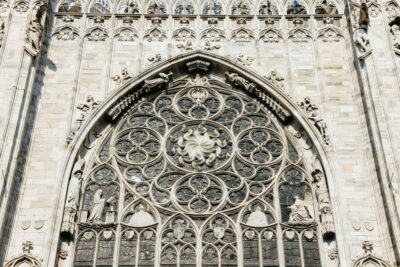
Cathedral and Duomo’s Terraces Entrance Ticket
Read our review →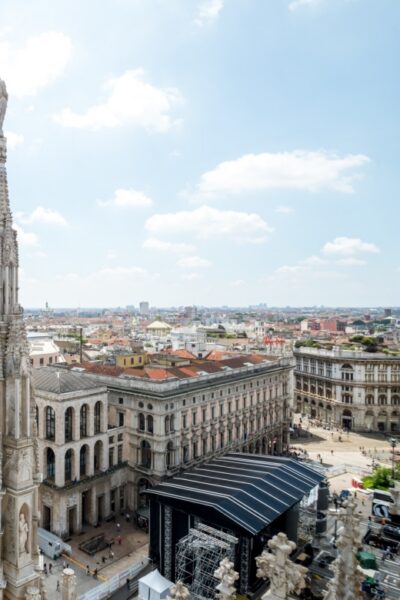
Milan Cathedral: Duomo Terraces Ticket (No Church Access)
Read our review →
Guided Walking Tour & Last Supper Visit with Ticket
Read our review →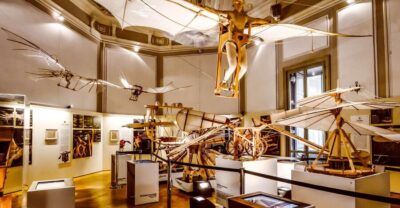
Leonardo3 The World of Leonardo Museum Entry Ticket
Read our review →
Duomo Rooftop and Cathedral Guided Tour with Tickets
Read our review →
Sforza Castle Entry Ticket with Digital Audio Guide
Read our review →
Historic Milan Tour with Skip-the-Line Last Supper Ticket
Read our review →Browse the lists this tour appears in