
Reviewed · MUSEUMS
Milan: Leonardo3 The World of Leonardo Museum Entry Ticket
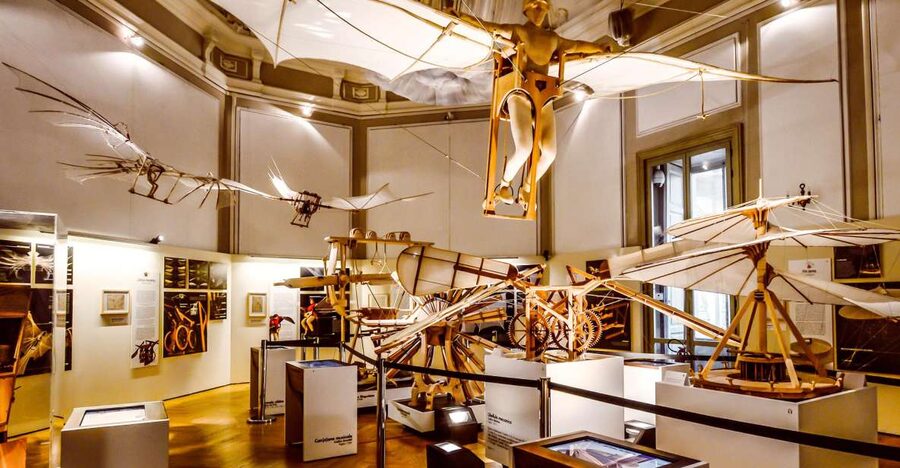
Leonardo3 turns Leonardo da Vinci’s small, cramped notebook sketches into machines you can see, study, and sometimes operate. The exhibition includes more than 200 interactive 3D models, from a mechanical dragonfly to military devices, canal equipment, theatrical inventions, and a self-supporting bridge.
I like the way the museum connects a scribbled idea to a physical working model. I also like the digital restoration of The Last Supper, which gives you a useful way to study the painting even if you cannot secure a reservation at Santa Maria delle Grazie. The main drawback is space: the exhibits are packed closely together, and popular interactive stations can be hard to reach when the museum is busy.
Key points to know before you go
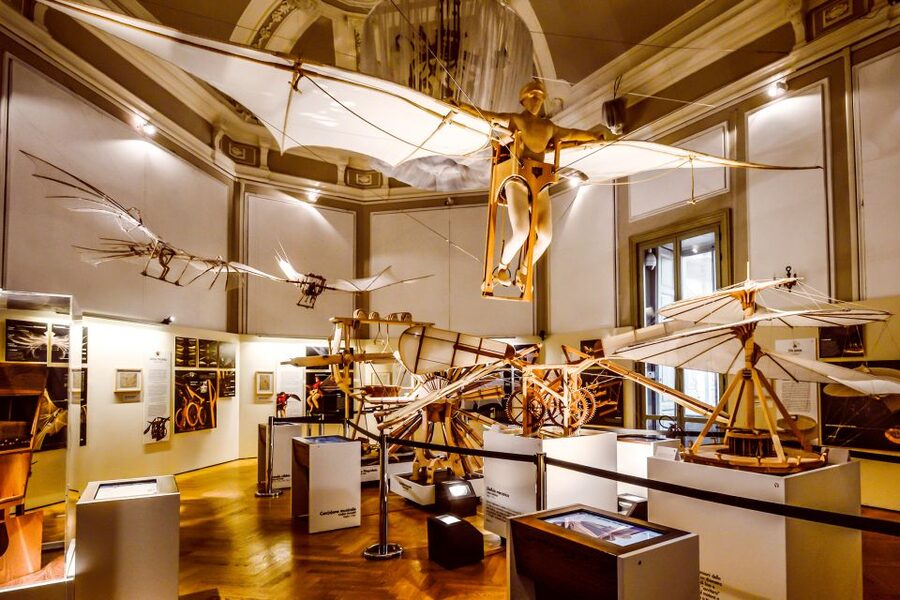
- Leonardo’s notebooks become working machines: Digital codex pages are paired with reconstructed devices based on his drawings.
- The mechanical dragonfly is a family favorite: Children have hands-on building activities, including a wooden bridge and an inventor’s certificate.
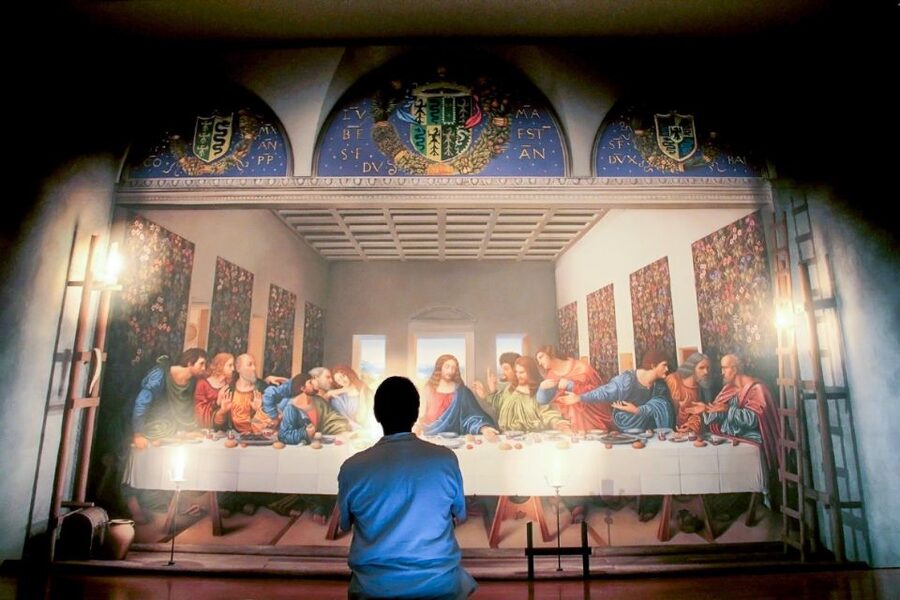
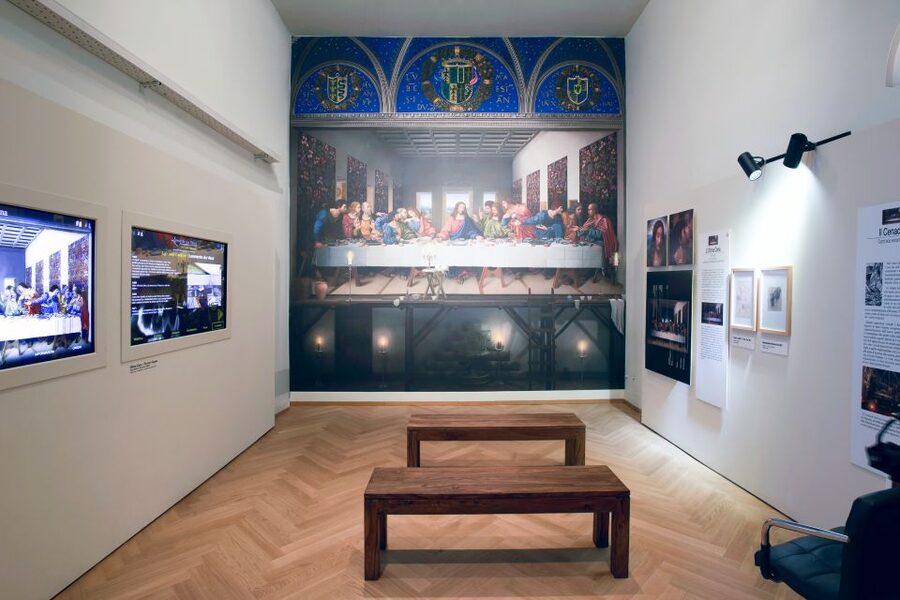
- The Last Supper gets a digital second look: Study details of the famous mural through restoration and three-dimensional reconstruction.
- An audio guide adds useful context: Choose Italian, English, Russian, German, French, Spanish, Portuguese, or Chinese.
- Allow one to two and a half hours: A quick visit can take about an hour, but careful readers can spend much longer.
- The location is wonderfully central: Enter through the Galleria Vittorio Emanuele II from Piazza della Scala.
Entering Leonardo3 from Piazza della Scala
The museum is easy to fold into a day in central Milan. You enter through the Galleria Vittorio Emanuele II, the grand covered arcade beside Piazza della Scala, then show your ticket at the museum’s ticket office.
That setting matters. You can combine the visit with a walk through the Galleria, a look at La Scala’s exterior, or time around the Duomo. There is no separate transport arrangement, so you make your own way there. The attraction is wheelchair accessible.
Your ticket is valid for one day, with entry times based on availability when you book. The ticket price is listed at $18 per person. For an attraction in such a central location, that is a fair price if you spend at least an hour with the displays. The value improves if you use the audio guide and take time with the interactive material rather than treating the museum as a quick collection of replicas.
Food and drinks are not allowed inside, and cameras are not allowed. Plan to finish snacks before entering and do not expect to document the machines with photographs.
More Entry Tickets in Milan
- Milan: Cathedral and Duomo’s Terraces Entrance Ticket
★ 4.6 · 61,054 reviews - Milan Cathedral: Duomo Terraces Ticket (No Church Access)
★ 4.6 · 6,111 reviews - Milan: Guided Walking Tour & Last Supper Visit with Ticket
★ 4.7 · 5,409 reviews
Turning Leonardo’s codex pages into machines
The best part of Leonardo3 is the translation from page to object. Leonardo left behind drawings and notes that can be difficult to read as ordinary documents. Here, digital versions of the codices let you examine his ideas, while three-dimensional reconstructions show how those ideas might work.
You will see models based on Leonardo’s studies of motion, gravity, engineering, flight, defense, water management, and mechanical systems. The exhibition does not simply present Leonardo as a painter. It shows the range of his work as an engineer, inventor, designer, and problem solver.
That approach gives the museum a useful focus. Instead of looking at a famous sketch and moving on, you can ask what the sketch was trying to accomplish. How would the gears move? How might a bridge support itself? What problem was a machine meant to solve? The models help answer those questions.
The reconstructions are interpretations of Leonardo’s drawings, not original machines made by Leonardo. That distinction is important. The project studies his manuscripts and builds functional versions from them, but some designs remain open to interpretation. If you want only authenticated objects from Leonardo’s own workshop, this is not that kind of museum. If you want to understand how his ideas may have operated, the models are far more helpful than a manuscript page alone.
Machines for war, water, work, and spectacle
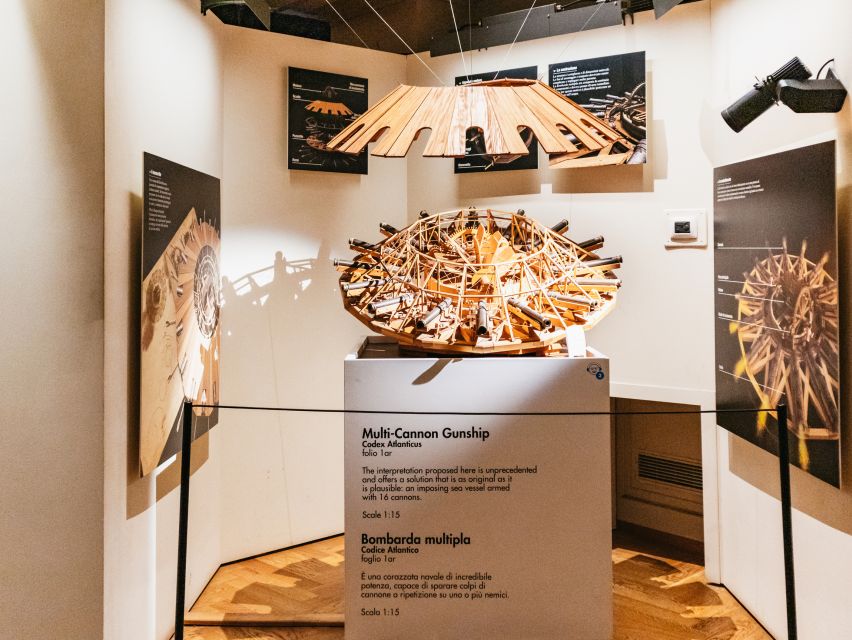
The collection moves across many sides of Leonardo’s imagination. Military designs include weapons and defensive machines such as crossbows, machine guns, and submarine concepts. These displays show how closely engineering and warfare were linked in Renaissance Italy, when city-states faced constant threats and Italy was not yet a unified country.
You also encounter designs connected to canals and urban engineering. Leonardo was interested in making cities more efficient and practical, and his notes explore ways to move water, improve transport, and manage civic life. These sections give useful context to the familiar image of Leonardo as a solitary artist. He was also thinking about public works and large-scale systems.
Another section looks at the enormous horse monument Leonardo planned for Milan. The project reveals the scale of his ambition and the practical problems behind a major sculpture. You get a better sense of how art, materials, engineering, and patronage were tied together.
The exhibition also includes theatrical and musical ideas. These displays remind you that Renaissance courts valued spectacle, and Leonardo designed machines not only for war or construction but also for entertainment. I find this range one of the strongest reasons to visit. It prevents the museum from becoming a single subject exhibition about flying machines or famous paintings.
The mechanical dragonfly and the hands-on workshop
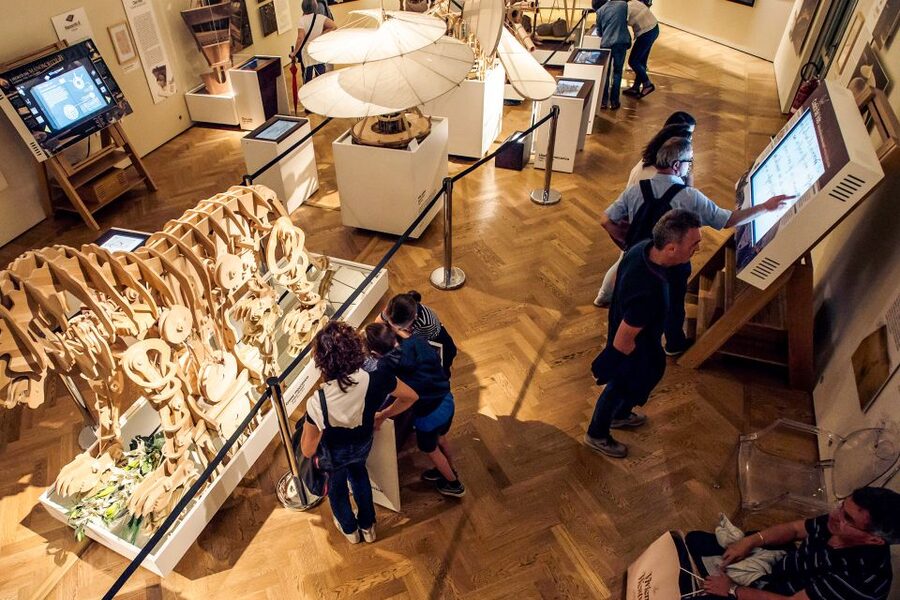
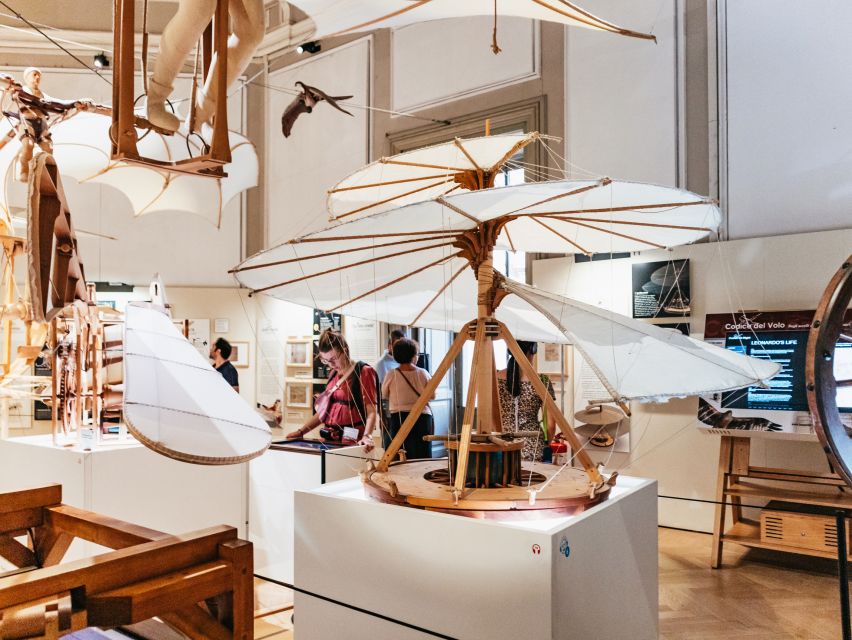
The interactive displays are not all screen-based. Some machines can be operated or examined in a more direct way. The mechanical dragonfly is one of the memorable examples, especially for children who want to see an invention move rather than read about it.
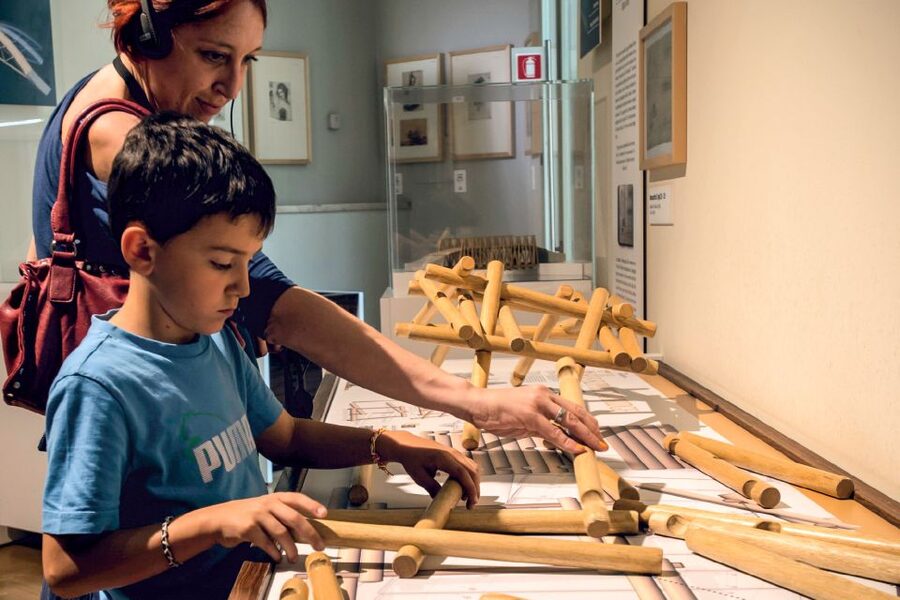
A workshop area gives younger visitors something practical to do. Children can assemble a self-supporting bridge from wooden parts or print an inventor’s certificate. These activities make the visit more than a sequence of cases and screens, and they give families a reason to slow down.
The hands-on sections are also useful for adults. Building a bridge or testing a mechanism can make Leonardo’s ideas easier to understand than a paragraph of explanation. Still, access depends on how crowded the room is. The museum occupies a relatively tight space, and the most popular stations may be difficult to reach during a busy period.
Families with children around eight and older are likely to get the most from the displays. Younger children may enjoy the moving models and building activities, but much of the exhibition depends on reading, watching explanations, and following technical ideas.
More Museum Tours in Milan
- Official San Siro Stadium and Museum Guided Tour
★ 4.4 · 3,573 reviews - Milan: La Scala Theater & Museum Guided Experience
★ 4.1 · 2,931 reviews - Milan: La Scala Theater and Museum Tour with Entry Tickets
★ 4.7 · 1,722 reviews - Milan: Cathedral, Archeological Area and Museum Ticket
★ 4.5 · 1,093 reviews
The Last Supper, rebuilt on a screen
Leonardo’s Last Supper is in Milan, but seeing the original at Santa Maria delle Grazie requires a separate reservation and a tightly controlled visit. Leonardo3 cannot replace the original mural. It can, however, help you study the work in a different way.
The museum presents an immersive digital restoration of the painting, with added three-dimensional reconstruction of the setting. You can look more closely at details of the wall painting and see how digital tools help researchers examine a fragile work.
This section is valuable even if you already have a booking for Santa Maria delle Grazie. At the original site, your viewing time is limited and the room has strict conservation controls. At Leonardo3, the digital presentation gives you more freedom to study the composition and the surrounding space.
You should keep your expectations sensible. A digital version cannot provide the material presence of the original paint, wall, and refectory. Some of the reconstructed or digitally generated elements are interpretive. Think of this as a study tool and companion experience, not a substitute for the real mural.
Using the audio guide without rushing
The audio guide is worth considering, especially if you want more than a quick look at the models. Audio is available in Italian, English, Russian, German, French, Spanish, Portuguese, and Chinese. The interactive experiences themselves are in English and Italian.
That language split matters. You can read or operate the main displays in English or Italian, then use the audio guide for explanations in your preferred language. This is especially helpful when a machine’s purpose is not obvious from its shape.
The exhibition contains a lot of information. Without guidance, you may understand what a model does but miss why Leonardo designed it or how the reconstruction team read his notes. The audio guide helps connect the drawing, the machine, and the historical problem behind it.
Do not plan to listen to every explanation if you only have an hour. Select the areas that interest you most. If you are a Leonardo enthusiast, two hours or more is reasonable. If you want a compact family activity, one hour may be enough.
How long to spend inside Leonardo3
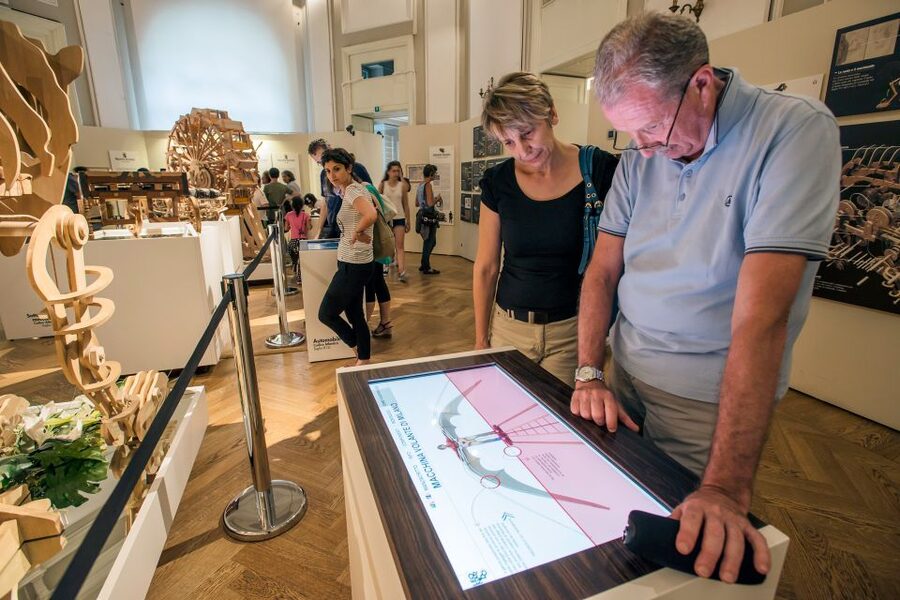
The practical visit length depends on your style. A fast visit can take around an hour. Many people will be more comfortable allowing one and a half hours, while a careful visit with the audio guide can reach two to two and a half hours.
The museum is not huge, but it is dense. You may spend several minutes at one digital station, then move only a few steps to another model. The tight arrangement means you can see a lot without walking far, though it can also feel crowded.
The exhibition can become warm, and staying longer may be uncomfortable on a busy day. Wear something suitable for indoor time and give yourself permission to move on if a station is blocked. You do not need to operate every machine to get value from the visit.
For a relaxed schedule, place Leonardo3 between other central Milan sights rather than making it your only activity. The location makes it easy to stop in for an hour, explore the Galleria, and continue toward the Duomo or nearby cultural attractions.
What the $18 ticket includes
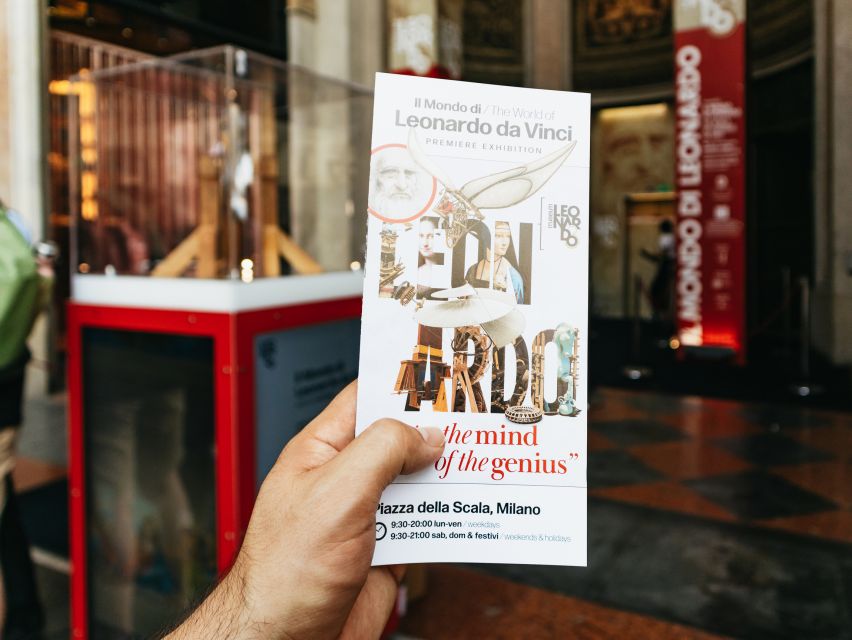
The ticket includes museum admission. An audio guide is included only if you select the appropriate ticket option, so check the booking details before assuming it comes with entry.
You also receive a 10 percent discount on books at the museum bookshop when you show your voucher at the counter. This is more useful than a general souvenir discount if you want a serious follow-up to the visit. Books can help you revisit Leonardo’s drawings and inventions after the machines have made the ideas easier to understand.
Souvenirs are not included, and transportation is not included. Neither is a problem here because the museum is in central Milan and reached through the Galleria.
The price is reasonable for adults who enjoy science, design, art, or Renaissance history. It is an even better fit for families who will use the building activities and interactive displays. If you are interested only in seeing original paintings, spend your museum budget elsewhere. This attraction is built around interpretations, reconstructions, and digital presentations.
Who will enjoy this museum most
I would choose Leonardo3 for readers who like seeing how things work. You do not need an engineering background. The models make many ideas approachable, and the combination of movement, screens, drawings, and short explanations keeps the visit active.
It is also a strong choice for families. The wooden bridge and inventor’s certificate give children a clear task, while the machines offer enough visual interest to hold attention. Older children and teenagers may especially enjoy the links between Leonardo’s sketches and modern ideas about flight, mechanics, defense, and production.
Art lovers should come with the right expectations. The exhibition includes material on Leonardo’s paintings, including The Last Supper, but the main emphasis is on inventions and technical thinking. If your main goal is to see paintings, this is not Milan’s primary art stop.
Leonardo enthusiasts can easily spend two hours here. The digitized codices and functional reconstructions offer more detail than a standard display of famous images. The museum is also useful if you could not obtain entry to Santa Maria delle Grazie, though it should not be presented as the original experience.
Small practical tips that improve the visit
Book the audio guide option if you want detailed explanations in a language other than English or Italian. The models are more rewarding when you understand the design problem behind them.
Give yourself extra time if you want to read every panel. The exhibition is full of detail, and rushing through it can turn a thoughtful visit into a quick display of machines.
Try the hands-on areas before leaving. Children often head straight toward the moving devices, but the building activities can be the most memorable part of the visit.
Use the bookshop discount if you want a book about Leonardo. Show your voucher at the counter to receive 10 percent off books.
Finally, plan around the rules. Leave food and drinks outside, and do not bring a camera into the museum. The central location makes it easy to take photographs of Milan before or after your visit.
Should you book Leonardo3?
Book it if you want Leonardo presented as an engineer and inventor, not only as the painter of the Mona Lisa and The Last Supper. The working reconstructions, digital codex pages, and hands-on activities make his ideas easier to grasp than static drawings alone.
I would especially recommend it to families, science-minded visitors, and anyone unable to visit the original Last Supper. The price is fair for a one to two-hour stop, and the audio guide adds real value.
Skip it if your Milan schedule is already packed with major art museums and you have little interest in reconstructed machines. The rooms can feel tight, the displays are interpretation rather than original objects, and crowded interactive stations may test your patience. For most curious visitors, though, Leonardo3 offers an enjoyable and unusually practical look at one of history’s great creative minds.
FAQ
Where is Leonardo3 located?
Leonardo3 is entered through the Galleria Vittorio Emanuele II in Piazza della Scala, in central Milan.
How much does admission cost?
The listed price is $18 per person.
How long is the ticket valid?
The ticket is valid for one day. Starting times depend on availability when you book.
Is an audio guide included?
An audio guide is included when you select the ticket option that includes it.
Which languages are available for the audio guide?
The audio guide is available in Italian, English, Russian, German, French, Spanish, Portuguese, and Chinese.
Which languages are used in the interactive exhibits?
The interactive experiences are available in English and Italian.
Is the museum wheelchair accessible?
Yes, Leonardo3 is wheelchair accessible.
Can children enjoy the museum?
Yes. Children can use interactive machines, print an inventor’s certificate, and assemble a self-supporting bridge from wooden parts.
Can I see Leonardo’s original machines there?
No original Leonardo machines are listed. The museum presents digital restorations and three-dimensional working reconstructions based on his manuscripts.
Is the digital Last Supper the original painting?
No. It is a digital restoration and three-dimensional reconstruction connected with Leonardo’s Last Supper. It does not replace seeing the original mural at Santa Maria delle Grazie.
Can I take photographs inside?
Cameras are not allowed.
Can I bring food or drinks?
No. Food and drinks are not allowed inside.
Is transportation included?
No. You are responsible for getting to and from the museum.
Is there a bookshop discount?
Yes. You receive 10 percent off books at the bookshop by showing your voucher at the counter.
Can I cancel my booking?
You can cancel up to 24 hours in advance for a full refund.
Just added around Milan
- Canyoning “Gumpenfever” – beginner Canyoningtour for everyone★ 5.0 · 391 reviews
- Bergamo: Digital guide made by a local for your walking tour★ 5.0 · 184 reviews
- Milan: City Highlights Walking Tour with The Last Supper★ 4.9 · 195 reviews
- Milan: The Milan Pass City Card★ 4.0 · 655 reviews
- Milan: Duomo & Rooftop Tour with Optional Hop-On Hop-Off Bus★ 4.5 · 262 reviews
- Milan: Skip-the-Line Guided Walk and “The Last Supper”★ 4.5 · 606 reviews
- Milan: Duomo and The Last Supper Skip-the-Line Guided Tour
- Milan: Leonardo’s Last Supper and Michelangelo’s Pietà Tour★ 4.6 · 559 reviews
Museums, compared.
Vatican: Museums & Sistine Chapel Entrance Ticket
Read our review →
Vatican Museums & Sistine Chapel Tour with Optional Basilica
Read our review →
Vatican Museums, Sistine Chapel & St Peter’s Basilica Guided Tour
Read our review →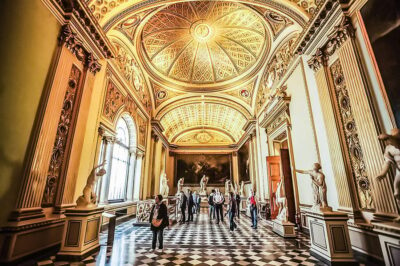
Skip-The-Line Uffizi Gallery Timed Entry Ticket
Read our review →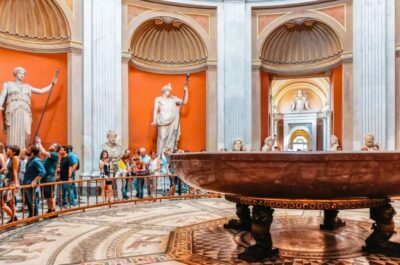
Vatican Museums, Sistine Chapel & Basilica Tour
Read our review →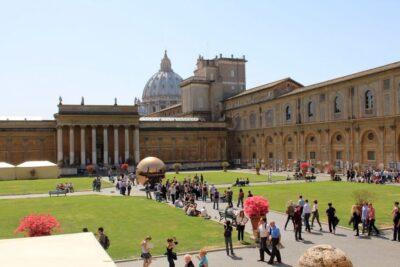
Vatican Museums & Sistine Chapel Skip-the-Line Entry Ticket
Read our review →Vatican Museums, Sistine Chapel & Basilica Tour
Read our review →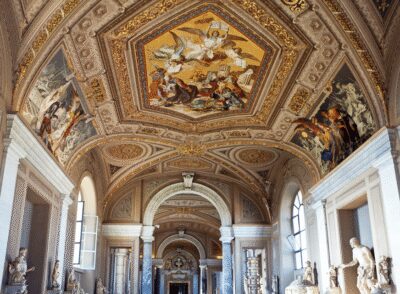
Vatican Museums & Sistine Chapel Guided Tour
Read our review →Browse the lists this tour appears in