

Reviewed · MUSEUMS
Official San Siro Stadium and Museum Guided Tour
San Siro is more than a football ground. It is a huge, bowl-shaped stage where AC Milan and Inter Milan have built their modern identities. This tour takes you past the two clubs’ changing rooms, through the mixed zone and players’ tunnel, then out toward the pitch where the stadium suddenly feels much larger than it did from the entrance.
I especially like the chance to see both Milanese teams’ spaces and the museum’s collection of shirts and trophies. I also like the view from pitch level, the benches, and the grandstand, where a guide can explain how the stadium developed over time. The main thing to keep in mind is that access can change: one visit found the AC Milan changing rooms closed for refurbishment, and some visitors hoped for more time in the museum or a chance to step fully onto the field.
Key points before you book
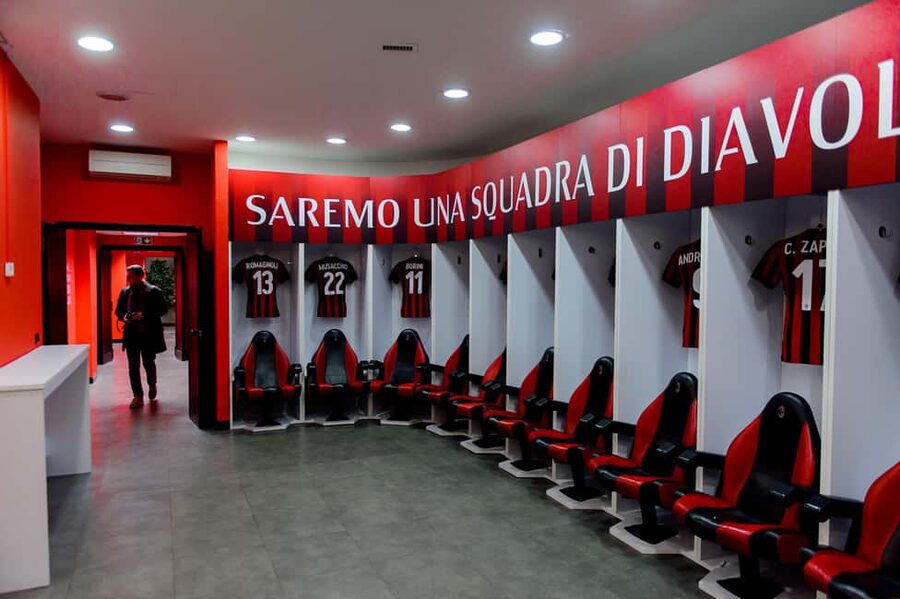
- See both clubs’ home territory: The route includes the AC Milan and Inter changing rooms when open, plus the mixed zone and players’ tunnel.
- The pitch-level view is the star: You get close to the field, sidelines, benches, and bowl of the stadium for excellent photos.
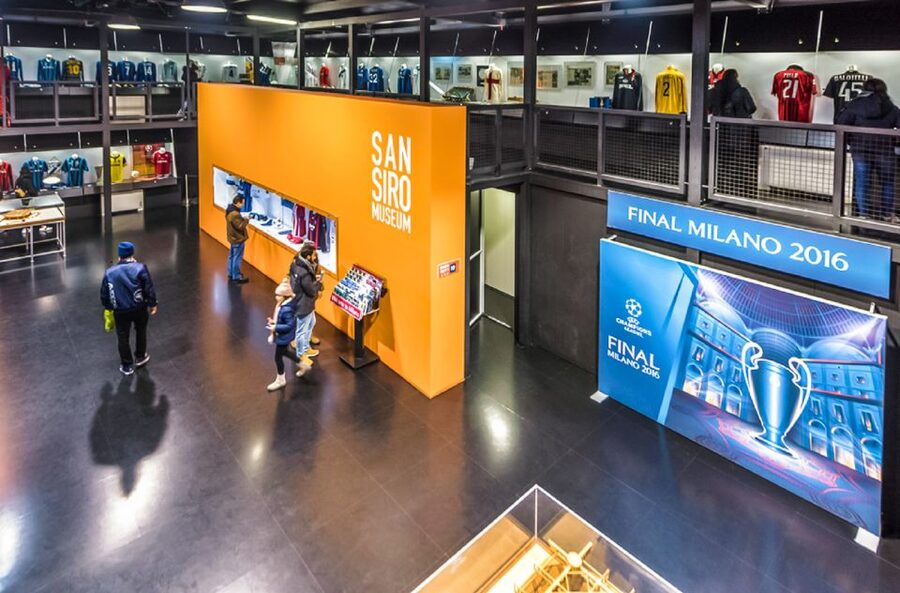
- Start with football history: The museum displays famous shirts from Milan’s clubs before the stadium route begins.
- Finish with Italy’s national team: The Italia 110 & Lode exhibition includes World Cup and European Championship memorabilia.
- Guides add the color: Italian and English tours feature staff such as Alessio, Sophia, Simone, and Sandy, depending on the day.
- Expect some flexibility: Large crowds can mean a guided or self-guided format, and certain rooms may close temporarily.
Why San Siro feels different from a normal stadium visit
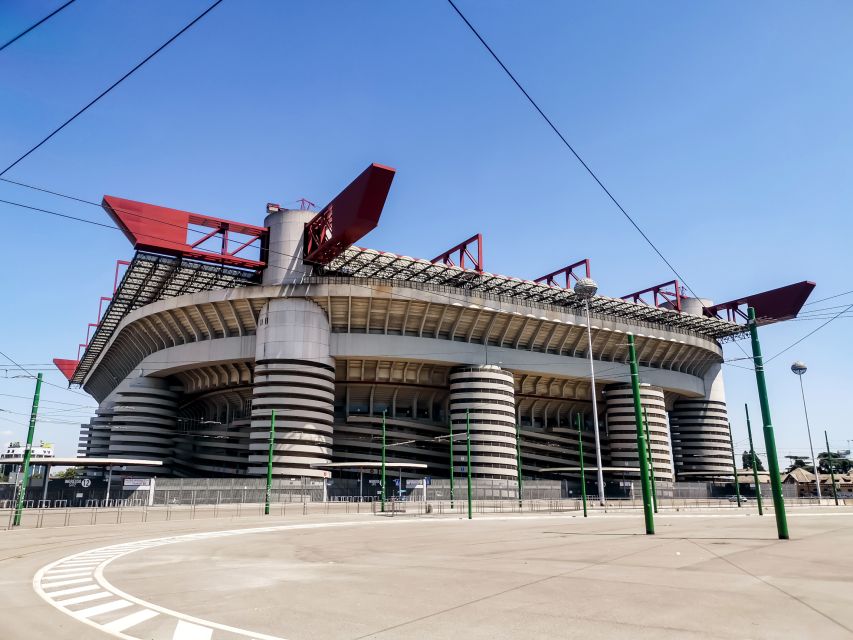
Many stadium tours are polished walks through corporate rooms and souvenir shops. San Siro feels more like a working football monument, even when no match is taking place. Its importance comes from the two clubs that share it, the famous players who have passed through it, and the sheer scale of the bowl.
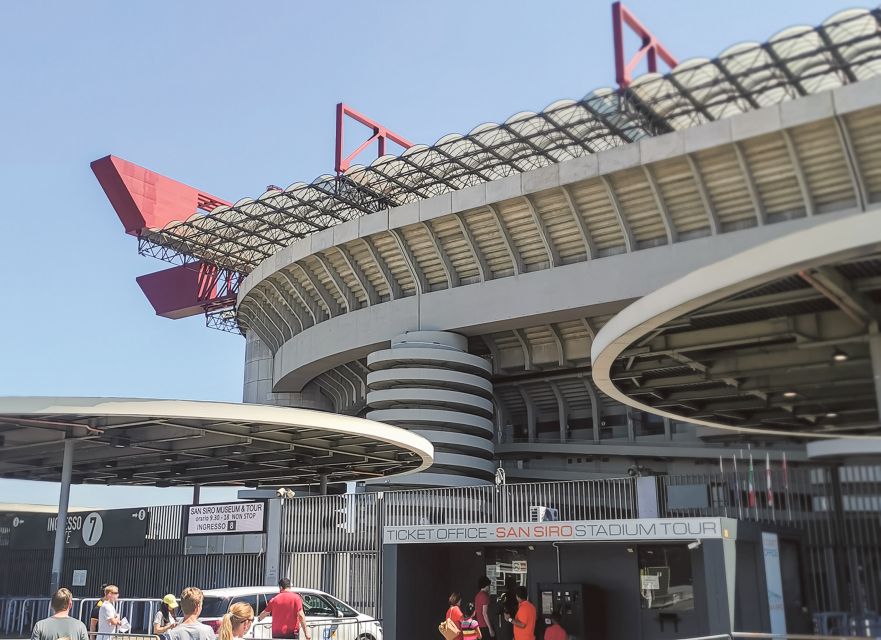
You begin at Gate 8, where you exchange your voucher at the ticket office. The skip-the-line arrangement gives you a separate entrance, which matters on a busy day. From there, the museum serves as the first chapter rather than an afterthought.
The stadium is officially the home of Internazionale and AC Milan, two of Italy’s best-known teams. That shared identity gives the visit an unusual angle. You are not simply touring one club’s ground. You are seeing the common stage used by two rivals, with their own shirts, changing areas, traditions, and stories.
The experience is rated 4.4 out of 5 from 3,573 ratings, and the strongest praise centers on the guides, the pitch-side access, and the chance to enter areas normally hidden from ticket holders. That matches the shape of the tour: the building itself is impressive, but the staff help turn a walk through concrete corridors into a football lesson.
More Guided Tours in Milan
- Milan: Guided Walking Tour & Last Supper Visit with Ticket
★ 4.7 · 5,409 reviews - Milan: Fast-Track Milan Cathedral and Terraces Guided Tour
★ 4.7 · 5,240 reviews - Milan: La Scala Theater & Museum Guided Experience
★ 4.1 · 2,931 reviews
The museum begins with shirts and club memories
The San Siro Museum is set in a dedicated area and displays jerseys worn by leading players from the two Milan clubs. It is not a large museum, so you should not plan to spend hours here. Its value is in the objects themselves and in the way they prepare you for the stadium route.
You might find this section especially rewarding if you follow football history through shirts rather than statistics. A familiar name on a jersey gives the later rooms more meaning. The museum puts the rival clubs side by side, which helps you understand why this stadium matters to the city.
The time available can feel short. One visitor felt that around 15 minutes was not enough for the museum, particularly for anyone who wants to stop at each display. I would treat this section as an introduction, not the main event. Take in the key items, note the shirts you want to revisit, and save your energy for the stadium itself.
The museum collection is followed by the Italia 110 & Lode exhibition, devoted to the Italian national team. This adds a useful national layer to the tour. You will see the first jersey used against France in 1910, a pennant from the 1938 World Cup final between Italy and Hungary, and kits connected with the 1968 final between Italy and Yugoslavia.
The displays also include tops from Italia 1970, along with trophies and shirts from Italy’s World Cup and European Championship campaigns. For an Italian football fan, this is a strong finish. For a visitor mainly interested in AC Milan or Inter, it still adds context because San Siro is part of Italy’s wider football story.
Locker rooms and the mixed zone bring you behind the scenes
The next section moves away from display cases and into the working areas of the stadium. You enter the AC Milan and Inter locker rooms, then cross the mixed zone where players meet the press after matches.
This is one of the tour’s best features because it explains how a stadium functions before and after the game. The stands and pitch are the public face. The locker rooms and mixed zone show the controlled, private side of professional football.
The exact condition of these areas can change. A recent visit found the AC Milan changing rooms closed for refurbishment, so you should not assume every room will be open on every date. The tour description includes both locker rooms, but stadium operations can override the planned route.
Your guide is likely to talk while the group moves between stops. Names praised on different visits include Alessio, Sophia, Simone, and Sandy. The guide on your day may be someone else, but the pattern is clear: staff are expected to handle Italian and English, answer questions, and keep the group moving without rushing every photo.
Large groups may be guided or partly self-guided. That is not necessarily a problem. On self-guided visits, staff are positioned around the stadium to explain sections and answer football questions. The trade-off is that you may get less continuous storytelling than you would with a single guide leading the whole route.
The players’ tunnel leads to San Siro’s best view
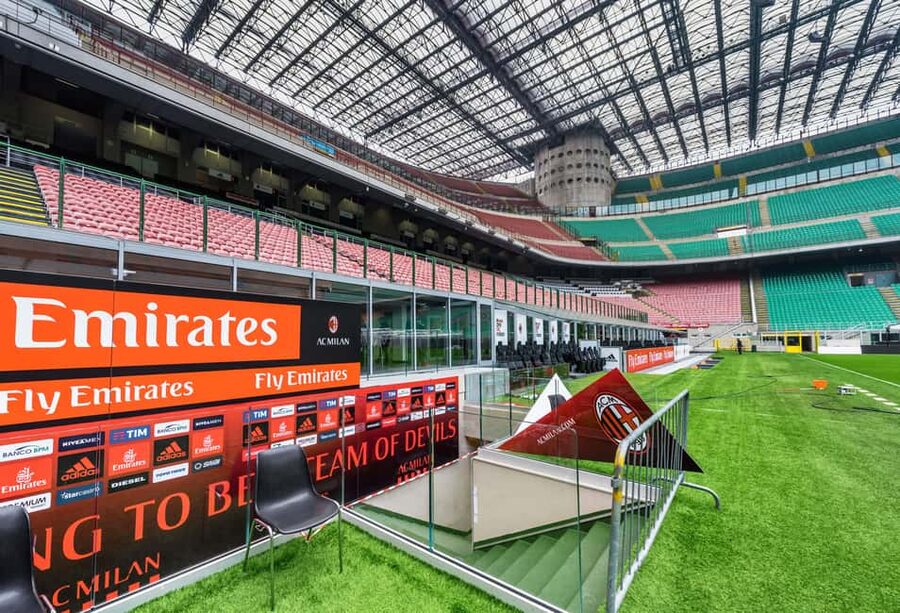
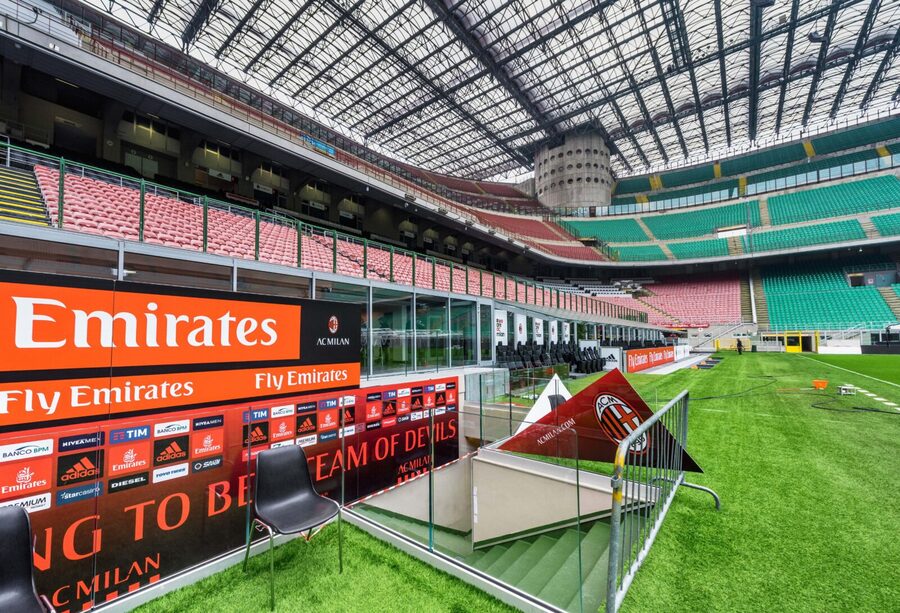
The players’ tunnel is the emotional center of the visit. You walk the route used by the teams before reaching the field area, then see San Siro from close to the touchline. The sightline changes quickly: the pitch opens ahead, while the upper tiers rise around you.
The tour describes this as walking onto the pitch, but access appears to vary by visit. Several people praised getting to pitch level and close to the field, while one visitor wished for the chance to step directly onto the playing surface. I would expect a strong pitch-side view, but not assume that you can walk across the grass.
You can usually take photos near the sidelines, benches, and field area. This is where the tour feels most personal. From the seats, San Siro is a famous stadium. From pitch level, you can look up at the bowl and imagine the sound of a full match crowd.
If photography matters to you, listen carefully to the guide’s instructions and be ready when the group pauses. The route can be busy, especially around popular photo points. One visit at 11 a.m. found the stadium busy but still had enough room for pictures and a complete look at the main areas.
The benches are another interesting detail. They connect the field to the technical and tactical side of the game. You are not just looking at a beautiful arena. You are seeing the places where substitutes, coaches, and staff follow the match minute by minute.
More Museum Tours in Milan
- Milan: Leonardo3 The World of Leonardo Museum Entry Ticket
★ 4.4 · 3,241 reviews - Milan: La Scala Theater and Museum Tour with Entry Tickets
★ 4.7 · 1,722 reviews - Milan: Cathedral, Archeological Area and Museum Ticket
★ 4.5 · 1,093 reviews - Casa Milan: Museum Entry Ticket
★ 4.6 · 969 reviews
The grandstand explains the stadium as a place
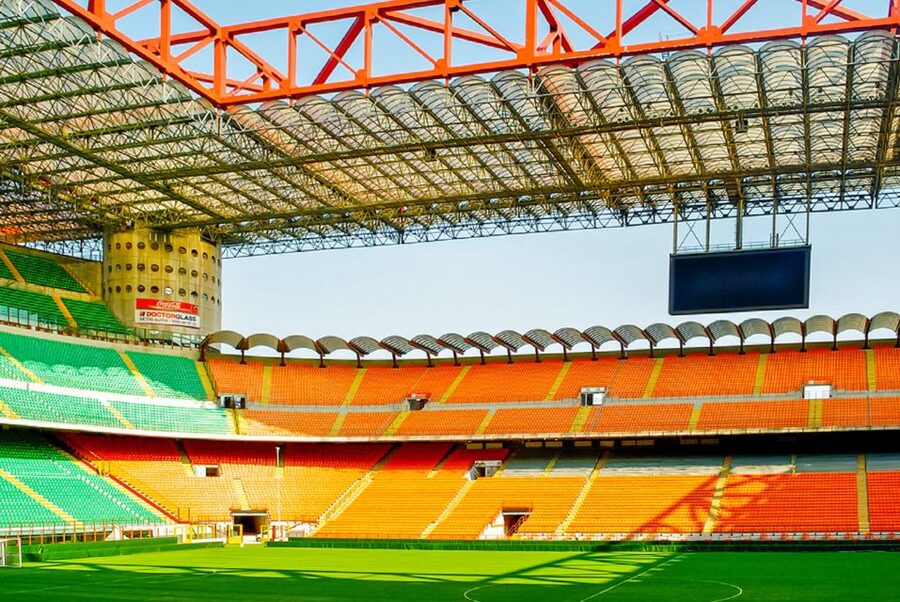
After the pitch-level section, the tour continues into the grandstand. This gives you the wide view that is impossible from the sidelines. The guide can point out the structure of the bowl and explain the stadium from a historical angle.
I like this change of position. A good stadium visit should let you understand both the human scale of the players’ route and the massive scale of the crowd. At pitch level, you notice the tunnel, benches, and touchline. From the grandstand, you see how the stadium is designed to hold thousands of supporters around the action.
The grandstand is also a natural pause in the route. Some tours push visitors from one room to the next, but this section allows a moment to sit, look around, and take in the view. It is especially useful if you are visiting with someone who knows less about football. You can enjoy the architecture even if you do not recognize every player or trophy.
The stadium’s changing appearance is worth bearing in mind. Match preparations, maintenance, refurbishment, or crowd control can affect which sections are open. The core experience remains the same, but the exact route is not entirely fixed.
The guides make the difference
The staff receive the warmest praise, and I can see why. San Siro contains plenty of concrete, corridors, and display cases. Without explanation, you could admire the setting but miss the meaning.
Alessio is praised for his passion and for bringing his football interest into the presentation. Sophia is noted for delivering the English tour clearly and for knowing the museum and stadium details well. Simone is described as helpful with photos, while Sandy receives a special mention for a family visit. Other guides may lead your group, and the quality can vary slightly with the person on duty.
Tours are offered in Italian and English. Guides may speak both languages during the same visit, which can make the presentation longer but keeps mixed-language groups together. This arrangement suits an international audience, though you should not expect a private English-only tour unless that is specifically confirmed.
If the stadium is crowded, you may receive a self-guided format instead. Staff remain available at points around the route. This can work well if you prefer to move at your own pace, but the storytelling will be less continuous.
Is $40.98 good value?
At $40.98 per person, this is not a cheap museum ticket. The price becomes easier to justify if you care about football or want a behind-the-scenes attraction in Milan rather than another formal art collection.
You are paying for several linked parts: entry to the San Siro Museum, the stadium route, access through the mixed zone and tunnel, views from pitch level and the grandstand, the Italy exhibition, and a guide. If both locker rooms are open and your tour has a strong guide, the package gives you a good amount for the money.
The value is lower if you only want to see the field from a distance, if the museum is your main reason for visiting, or if temporary closures remove parts of the route. The museum is compact, and some visitors wanted more time there. The experience is strongest when you treat the museum as a short introduction to the stadium.
There is also a souvenir shop at the end, with official merchandise from both teams and the option to customize shirts. That is convenient, but it can add to the cost. You do not need to buy anything to complete the visit.
Free cancellation is available up to 24 hours in advance, and you can reserve now and pay later. The ticket is valid for one day, with starting times shown through availability. These terms are useful if your Milan plans are still shifting.
Who should book this San Siro visit?
I would put this near the top of the list for AC Milan or Inter supporters, especially anyone who has followed the clubs since childhood. The chance to enter the locker rooms, walk the tunnel, and stand close to the field gives the visit a personal edge that a match ticket alone cannot provide.
It also suits families with football fans of different ages. Children may care most about the pitch and tunnel, while older fans can spend more time with the shirts, trophies, and national-team memorabilia. The route includes walking and standing, so younger children may enjoy it more if you keep expectations realistic.
You do not need to understand Italian football in detail to enjoy the stadium. The guides explain the key areas in Italian and English, and the building itself provides plenty to see. Still, a fan will get more from the names, rivalries, shirts, and anecdotes.
I would be more cautious if you are seeking a quiet museum visit or a long architectural tour. The museum is small, the group can be busy, and the route may change. You should also allow for the possibility that one changing room or another restricted area is closed.
Final verdict: book it for the access, not just the museum
Book this tour if you want to feel the working side of San Siro. The best parts are the changing rooms, mixed zone, players’ tunnel, pitch-side view, benches, and grandstand. The guides add stories and answer questions, while the Italy exhibition gives the visit a wider national frame.
Skip it if your only goal is a large football museum or guaranteed access to every room and the grass itself. Conditions can change, and the small museum may feel brief. For a football fan in Milan, though, $40.98 buys a close look at one of Europe’s most famous stadiums and a strong chance to see the place from a player’s point of view.
FAQ
Where does the San Siro tour start?
Exchange your voucher at the ticket office at Gate 8. The activity ends back at the meeting point.
How long is the ticket valid?
The experience is valid for one day. Starting times depend on availability.
Is skip-the-line entry included?
Yes. The ticket includes skip-the-line entry through a separate entrance.
What languages are available?
Tours are offered in Italian and English. In periods with many visitors, the experience may be guided or self-guided.
Does the tour include the San Siro Museum?
Yes. Entry to the San Siro Museum is included, and the museum begins the stadium tour.
Can you visit the changing rooms?
The route includes the AC Milan and Inter changing rooms, although access can change if an area is closed for refurbishment or another stadium operation.
Does the tour include the pitch?
The tour provides a view from pitch level and describes walking onto the pitch. Exact access may vary, so you should not assume you can step onto the playing surface.
Can you cancel for a refund?
Yes. You can cancel up to 24 hours in advance for a full refund. Reserve now and pay later is also available.
More Stadium Visits
- Milan: San Siro Stadium and Museum Official Guided Tour
★ 4.4 · 273 reviews - Milan: San Siro Stadium Entry Ticket and Optional Bus Ticket
★ 4.1 · 212 reviews - Turin: Juventus Museum entry ticket & Stadium Tour
★ 4.4 · 561 reviews
Just added around Milan
- Canyoning “Gumpenfever” – beginner Canyoningtour for everyone★ 5.0 · 391 reviews
- Bergamo: Digital guide made by a local for your walking tour★ 5.0 · 184 reviews
- Milan: City Highlights Walking Tour with The Last Supper★ 4.9 · 195 reviews
- Milan: The Milan Pass City Card★ 4.0 · 655 reviews
- Milan: Duomo & Rooftop Tour with Optional Hop-On Hop-Off Bus★ 4.5 · 262 reviews
- Milan: Skip-the-Line Guided Walk and “The Last Supper”★ 4.5 · 606 reviews
- Milan: Duomo and The Last Supper Skip-the-Line Guided Tour
- Milan: Leonardo’s Last Supper and Michelangelo’s Pietà Tour★ 4.6 · 559 reviews
Museums, compared.

Vatican: Museums & Sistine Chapel Entrance Ticket
Read our review →
Vatican Museums & Sistine Chapel Tour with Optional Basilica
Read our review →
Vatican Museums, Sistine Chapel & St Peter’s Basilica Guided Tour
Read our review →
Skip-The-Line Uffizi Gallery Timed Entry Ticket
Read our review →
Vatican Museums, Sistine Chapel & Basilica Tour
Read our review →
Vatican Museums & Sistine Chapel Skip-the-Line Entry Ticket
Read our review →Vatican Museums, Sistine Chapel & Basilica Tour
Read our review →
Vatican Museums & Sistine Chapel Guided Tour
Read our review →Browse the lists this tour appears in