
Reviewed · WALKING TOURS
Syracuse: Ortigia and Neapolis Guided Walking Tour
Syracuse makes most sense when you see its ancient Greek monuments and living city center together. This private tour links the Neapolis Archaeological Park with Ortigia, the lime-white island at the heart of modern Syracuse, so you can follow the city from Greek power to Roman rule, medieval faith, and later Spanish influence.
I like two things right away. First, your guide can connect the Cathedral of Syracuse directly to the old Temple of Athena, whose ancient columns remain part of the church. Second, a private group of up to five gives you room to ask questions and set a sensible pace. The one caution is cost: at $317.20 per group, the tour is good value for four or five people, but less so for one or two, especially since monument admission is extra.
Key points at a glance
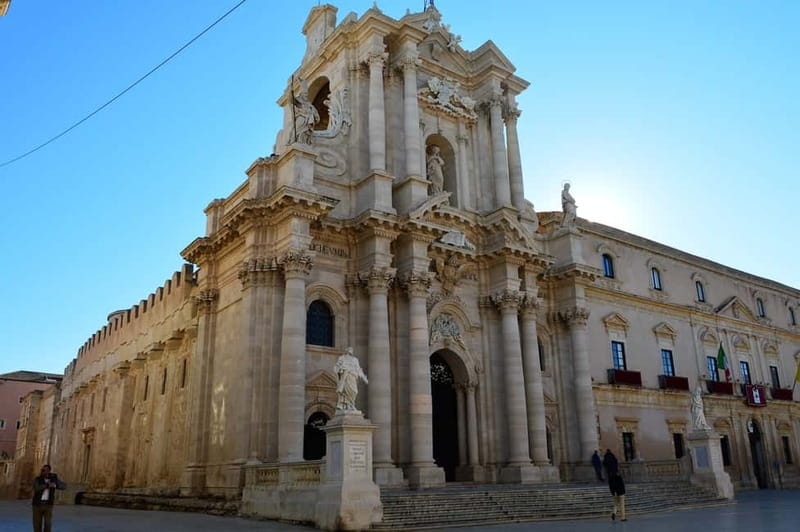
- See a pagan temple inside a cathedral: The Cathedral of Syracuse incorporates the ancient Temple of Athena, making the building a lesson in changing religions and architectural styles.
- Pair two major Syracuse sights: The tour covers Neapolis Archaeological Park and Ortigia rather than treating them as separate stops.
- Look into the Ear of Dionysus: This famous rock-cut chamber sits in Paradise Latomia, within the archaeological park.
- Enjoy Ionian Sea views from the Greek Theater: The theater gives the ancient site a striking setting as well as a sense of its scale.
- Ask questions in a private group: The guide can involve children, adjust explanations, and give slower walkers more attention.
- Plan for extra admission costs: Monument tickets are not included, and one recent tour description put the archaeological park admission at about 13 euros per person.
Why the Neapolis and Ortigia pairing works
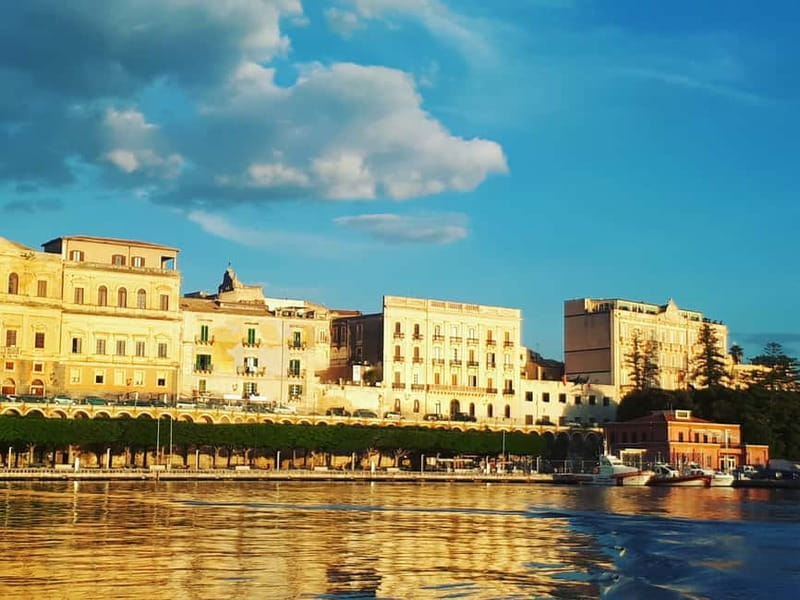
Syracuse is not a one-monument city. Its most important sights are spread between Neapolis, on the mainland, and Ortigia, the compact island joined to the city. Seeing both in three hours gives you a useful outline of Syracuse rather than a single impressive ruin without context.
The order begins at the Neapolis Archaeological Park, where the ancient Greek and Roman remains are gathered in one area. You then turn to Ortigia, where temples, churches, lanes, and later buildings show how the city kept changing while retaining its older foundations.
That combination matters because the two areas feel very different. Neapolis is about monumental archaeology and open space. Ortigia is about daily life, narrow streets, layered walls, and buildings still used for worship and civic life.
The guide is the key to making the connection. Giuseppe is praised for using stories and legends to explain the sites, while Anna is described as especially clear, patient, and strong on local history, architecture, and art. Marcelo has also led longer private visits through both the park and Ortigia. Your guide will vary, but the experience is built around a live explanation rather than a fixed audio route.
More Guided Tours in Sicily
- Palermo: Teatro Massimo Opera House Guided Tour
★ 4.5 · 1,573 reviews - Catania: Heart of the City Guided Walking Tour
★ 4.6 · 708 reviews - Palermo: Private Custom Walking Tour with Local Guide
★ 4.7 · 661 reviews
Starting at Neapolis Archaeological Park
You meet at the Biglietteria Parco Archeologico Neapolis on Via Luigi Bernabò Brea. The stated meeting point is the ticket office, where your guide will hold a sign with the local partner’s name. Another listed starting option is the Temple of Apollo in Ortigia, so check the exact starting point and time when you book.
Starting at Neapolis puts the largest ancient remains first. You will spend time among the Greek Theater, Roman Amphitheater, Paradise Latomia, and Ear of Dionysus. The park is not just a collection of stones. It shows how Syracuse worked as a major Mediterranean power, with spaces for public performance, spectacle, worship, and punishment.
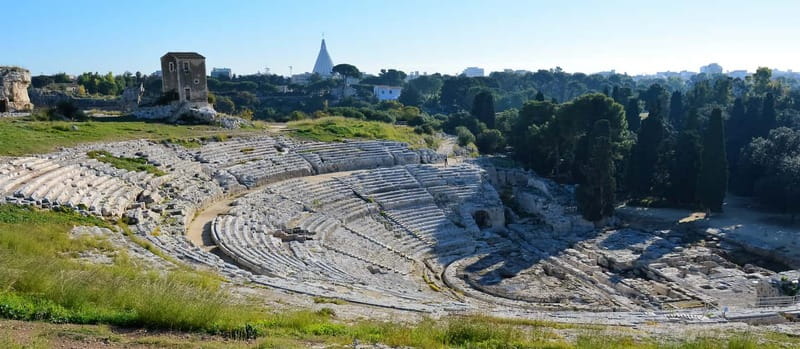
The Greek Theater is the park’s main visual prize. Its broad stone seating and open setting make it easier to picture ancient performances, while the view toward the Ionian Sea gives the site a strong sense of place. Your guide can help you read the theater as both an engineering project and a social space.
You should also expect plenty of standing and walking. Wear comfortable shoes, bring a hat, and carry water. The three-hour schedule covers a great deal, so people who prefer a slow archaeological visit with long periods for sketching or quiet study may find the pace brisk.
The Greek Theater and the Ionian Sea
The Greek Theater is where the ancient city feels largest. Its scale helps explain why Syracuse mattered well beyond Sicily. From the seating area, you can look toward the Ionian Sea and understand why the city’s position supported trade, conflict, and cultural exchange.
A guide adds value here by explaining what you are seeing instead of leaving you to guess at the surviving structure. Giuseppe is praised for keeping explanations lively and for answering a steady stream of questions. That matters at a theater, where the shape is easy to admire but the original function can be harder to picture.
Families can benefit from this part of the tour. The guide is expected to involve children as well as parents, and the storytelling approach can make a large ruin easier for younger visitors to follow. Still, the experience remains history-focused, not a children’s attraction, so the best fit is a family that enjoys walking and asking questions.
Paradise Latomia and the Ear of Dionysus
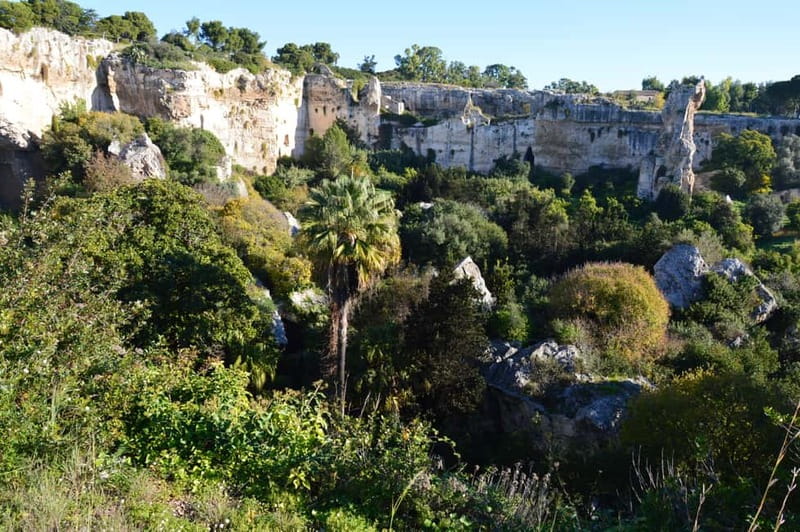
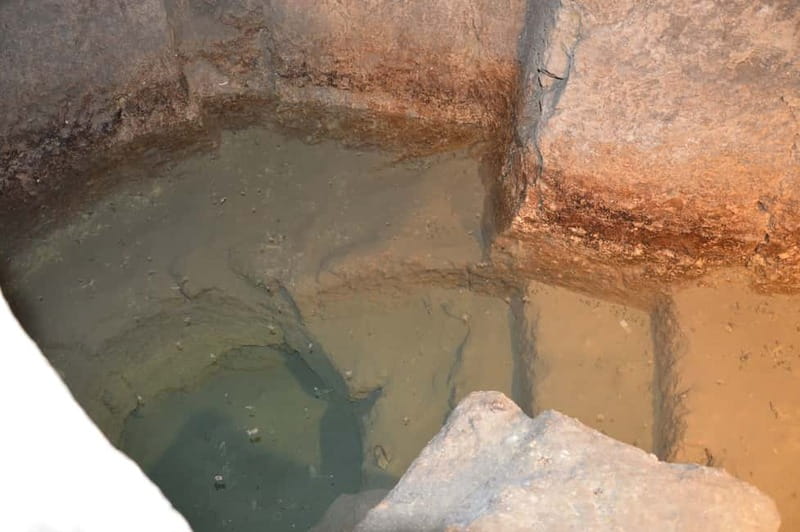
The tour continues through Paradise Latomia, a former stone quarry in the archaeological park. Its cut rock walls give the area a very different mood from the open theater. The Ear of Dionysus, a famous chamber within the quarry, is one of the park’s most memorable stops.
This is a place where a guide can add useful caution. Stories about ancient sites often mix evidence, legend, and later interpretation. A well-prepared guide can explain the traditional stories while helping you understand the archaeological setting and why the site has remained so famous.
Do not expect a long private exploration of every corner of the park. The full route also includes Ortigia, and the tour lasts about three hours. You are paying for an efficient overview with a person who can explain the major sights, not for a full-day archaeological study.
More Walking Tours in Sicily
- Palermo: NO Mafia Walking Tour
★ 4.8 · 2,431 reviews - Palermo Original Street Food Walking Tour by Streaty
★ 5.0 · 2,105 reviews - Palermo: Street Food and History Walking Tour
★ 4.9 · 1,294 reviews - Catania: City Highlights Walking Tour
★ 4.7 · 666 reviews
The Temple of Athena inside Syracuse Cathedral
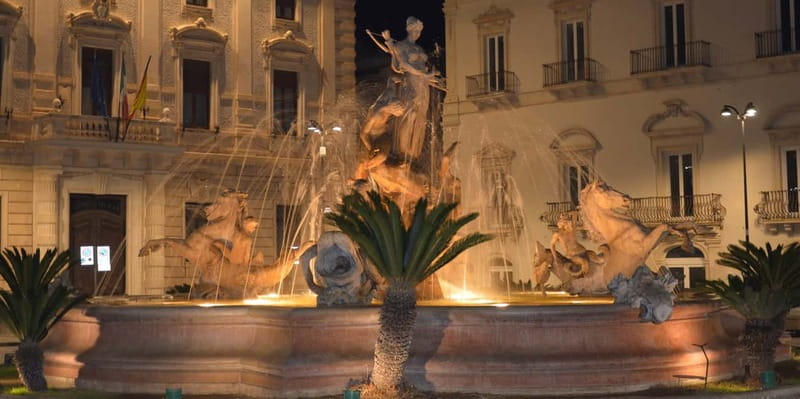
In Ortigia, the Cathedral of Syracuse provides the tour’s most striking example of historical layering. The church incorporates the ancient Temple of Athena, so pagan Greek architecture and Christian worship are physically joined in one building.
This is more than a quick photo stop. Your guide explains the building’s different architectural styles and shows how religious practice changed over time. The columns of the old temple remain part of the cathedral, making the past visible without needing much imagination.
I especially like this stop for visitors who want more than ruins. A freestanding temple can feel distant from modern life. Here, the ancient structure became part of a working cathedral, and the building carries several chapters of Syracuse in one place.
Admission to monuments is not included in the tour price. That includes the archaeological park and any other paid sites entered along the route. One tour description specifies an archaeological park admission of about 13 euros per person, but you should confirm the current amount before booking.
Walking Ortigia’s narrow streets
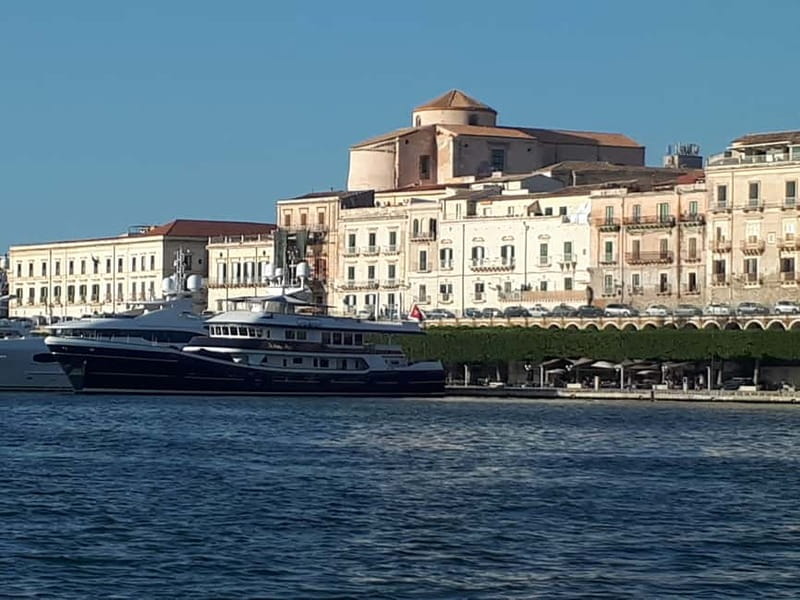
Ortigia is compact, but it is not simple. The island’s lanes form a maze of old streets, open squares, religious buildings, and stone facades. A guide helps you connect what you see instead of giving you a rushed list of names.
The walk is especially useful after the archaeological park. You have already seen the city’s Greek and Roman remains, and Ortigia shows how later communities built around, over, and alongside the older city. The transition from ancient theater to cathedral and narrow street is the central idea of the tour.
The pace can be adapted to some extent because this is a private group. One guide accommodated four older people walking more slowly, while another kept the tour going during poor weather and a sudden rainstorm. You should still expect a proper walking tour, not a vehicle-based sightseeing trip.
A short taxi ride between the park and Ortigia occurred during one private visit, but transportation is not included. Pick-up and drop-off are also excluded. Treat the meeting point as the place you must reach independently, and confirm where the tour finishes because the listed end details include both Ortigia and Neapolis while the meeting information says the activity ends back at the meeting point.
What the private format changes
The private format is the tour’s biggest practical advantage. You can stop to ask why a building has several styles, request a slower explanation, or spend a little more time at a favorite sight. That is harder in a large group moving on a fixed script.
A group of up to five also changes the price calculation. At $317.20 per group, five people pay about $63.44 each before monument admission. Four people pay about $79.30 each, while two people pay about $158.60 each. For a family or group of friends, that can be reasonable for a licensed guide covering two major areas. For a solo visitor or couple, the cost is a serious consideration.
The headset is a useful small inclusion. It helps you hear the guide in open archaeological spaces and along busy streets, where standing close together is not always convenient. The guide is licensed, and tours are offered in English, French, Italian, Russian, Spanish, and German.
The experience is listed as wheelchair accessible. If you use a wheelchair, confirm the precise route and any monument access details before arrival, since the tour combines an archaeological park with old streets and historic buildings.
Guides, storytelling, and family appeal
The guide quality matters more here than on a simple city walk because Syracuse’s history can become confusing fast. Greek foundations, Roman control, Arab and Spanish periods, religious change, and local legends all appear within a short route.
Giuseppe is repeatedly praised for enthusiasm, colorful storytelling, and stamina. He kept explaining even when the weather turned bad and was able to hold the attention of teenagers. Anna is described as professional, patient, and highly effective at explaining architecture, art, and local history. Laura is noted for a friendly manner and willingness to answer questions. Marcelo is especially associated with a strong interest in archaeology and a longer-than-planned private visit.
Those names do not guarantee your assigned guide, so book for the format and subject rather than one specific person unless the operator confirms availability. Still, the repeated pattern is useful: this tour suits you if you want a guide who interprets the sites and responds to questions, not someone who simply recites dates.
Children of all ages can join, and the guide will involve both parents and children. Teenagers may respond well to the legends and dramatic stories around the ancient sites. Younger children will need the usual help with three hours of walking and standing.
Is $317.20 good value?
The price makes sense when you use the tour as a private introduction to Syracuse. You get three hours, a licensed guide, headsets, and a route that covers both Neapolis and Ortigia. The group limit of five is small enough for real conversation.
The price is less attractive if you are traveling alone or as a couple and mainly want to see the sights without detailed explanation. You must also add monument admission, and food, drinks, transport, and pick-up are not included.
The flexible booking terms help. You can cancel up to 24 hours before the activity for a full refund, and you can reserve now while paying later. Those options are useful if your Sicily plans are still shifting.
Who should book this Syracuse tour?
I would choose this tour if you have only a short time in Syracuse, want both the archaeological park and Ortigia, or prefer a private guide to a large scheduled group. It is also a good match for families and for anyone who wants to ask detailed questions about Greek temples, Christian buildings, and the city’s later rulers.
You may want another plan if you need a very slow visit, want to spend most of the day inside the archaeological park, or are watching every euro. In that case, independent sightseeing may cost less, though you will give up the guide’s explanations and the efficient connection between the two areas.
For most small groups, the strongest case is the combination: Greek Theater, Ear of Dionysus, Temple of Athena, Cathedral, and Ortigia streets in one guided route. The admission fees and transport are extra, but the private format can make the cost worthwhile when shared among four or five people.
FAQ
How long does the tour last?
The tour lasts three hours. Starting times depend on availability when you book.
What is the price?
The listed price is $317.20 for a private group of up to five people.
What is included?
A licensed guide and a headset to help you hear the guide are included.
Are monument entrance fees included?
No. Entrance fees to the monuments are not included. One tour detail gives the archaeological park admission as about 13 euros per person, but confirm the current price before you go.
Where does the tour start?
The stated meeting point is the Biglietteria Parco Archeologico Neapolis on Via Luigi Bernabò Brea, 96100 Siracusa. Another listed starting option is the Temple of Apollo, so check your confirmed meeting details.
Where does the tour finish?
The listed drop-off options include the Island of Ortigia and Parco Archeologico Neapolis. The meeting information also says the activity ends back at the meeting point, so confirm the final arrangement with the provider.
Which languages are available?
The live guide is available in English, French, Italian, Russian, Spanish, and German.
Can children join?
Yes. Children of all ages can take part, and the guide will involve both parents and children.
Is the tour wheelchair accessible?
The activity is listed as wheelchair accessible. Confirm the exact route and monument access details if you need specific accommodations.
What should I bring?
Wear comfortable shoes and bring a hat and a bottle of water. Food and drinks are not included.
Can I cancel the booking?
You can cancel up to 24 hours in advance for a full refund. Reserve now and pay later is also available.
Just added around Sicily
- The Godfather Movie Tour★ 5.0 · 275 reviews
- Tour Etna & Wine Tasting★ 5.0 · 317 reviews
- Syracuse, Ortigia and Noto walking tour from Catania★ 5.0 · 273 reviews
- Etna, Wine and Alcantara Tour – From Taormina★ 5.0 · 464 reviews
- The Original Catania Street Food and Market Tour by Streaty★ 5.0 · 345 reviews
- Etna and Alcantara Gorges Excursion★ 4.5 · 256 reviews
- Etna Tour in 4×4★ 5.0 · 583 reviews
- Etna Morning Jeep Tour★ 4.5 · 241 reviews
Walking Tours, compared.

Guided Walking Tour & Last Supper Visit with Ticket
Read our review →
Rialto Bridge & Offbeat Unusual Venice Walking Tour
Read our review →
Private 3 hrs Venice Tour: St Mark’s, Walking tour & Boat tour
Read our review →
Skip the line: Uffizi and Accademia Small Group Walking Tour
Read our review →Browse the lists this tour appears in