
Reviewed · HISTORICAL TOURS
Palermo: UNESCO World Heritage Sites Guided Walking Tour
Palermo’s UNESCO center packs centuries of Norman, Arab, Byzantine, Spanish, and Italian influence into a walk of about three hours. You’ll move from grand theaters and noisy market lanes to glittering church interiors, marble statues, and the city’s remarkable cathedral.
I like the local guides, especially the way Simone, Renata, Stefania, and others have brought in everyday Sicilian customs alongside dates and dynasties. I also like the well-chosen route: it gives you a useful map of central Palermo before you decide where to return. The main drawback is that most monuments are viewed from outside, and the Norman Palace and Palatine Chapel are not part of the standard tour.
Key points to know before booking
- Piazza Pretoria is the visual high point, with its huge white-marble fountain and Baroque setting.
- Martorana Church is admired from outside on the regular route, so the golden mosaics are best seen by booking the optional interior visit separately.
- Palermo Cathedral entry is included, giving the walk one important indoor stop.
- The guide makes the difference, with local personalities such as Renata, Simone, Stefania, Laura, and Fabio praised for clear explanations and lively stories.
- A cannolo, granita, or another Sicilian sweet may end the walk, adding a welcome taste of local life.
- Book early in your stay if you want orientation and suggestions for places to revisit on your own.
Why this walk works as a Palermo introduction
Palermo can feel confusing at first. Major monuments sit close together, but the city’s story is not simple. A Norman church may carry Arabic design. A Christian cathedral may preserve traces of earlier buildings. A grand square may reflect the power of city government, the church, and old aristocratic families all at once.
This walking tour gives you a framework. You hear the basic story of Palermo while seeing the places where that story unfolded. The route also helps you understand distances in the center, which is useful when you return later for a market meal, a church visit, or the Norman Palace.
The standard walk lasts about three hours, though the booking options can range from three to five and a half hours. The longer version combines the city walk with a guided visit to the Norman Palace and Palatine Chapel. These are booked as two parts with different meeting points, so read the option details carefully before paying.
The tour costs about $41 per person. That is fair if you want a guide who can explain the city’s mixed cultures and point out details you might miss alone. The value is strongest for a first visit, especially if you plan to use the guide’s suggestions afterward. It is less compelling for someone who prefers to enter every church at leisure, since the regular route includes only the Cathedral interior.
More Guided Tours in Sicily
- Palermo: Teatro Massimo Opera House Guided Tour
★ 4.5 · 1,573 reviews - Palermo: Private Custom Walking Tour with Local Guide
★ 4.7 · 661 reviews - Palermo: Street Food Walking Tour with Local Guide & Tasting
★ 4.9 · 632 reviews
Teatro Massimo sets the scale
The tour begins near the Towns of Italy Tourist Hub and Cooking School on Via Volturno, 40, with the exact meeting point depending on the option you choose. From there, Teatro Massimo provides an impressive opening view.
You stop here for photographs and an introduction rather than a full theater visit. The building gives you a sense of Palermo’s 19th-century ambition, and its broad frontage makes a useful first landmark. Your guide can begin placing the modern city beside the older layers that come later.
This is also a practical starting point. If you arrive early, check your meeting instructions closely. The route is on foot, and you will want comfortable shoes, water, and sun protection, particularly in summer.
Church of Saint Dominic and Palermo’s public face
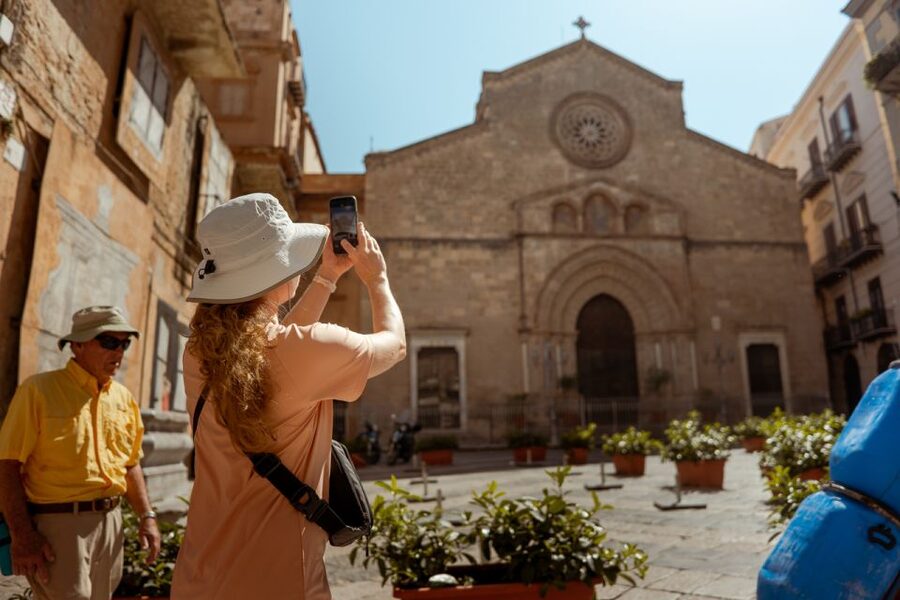
The Church of Saint Dominic is another outside stop. Its broad façade and prominent position help show how Palermo’s churches are woven into ordinary city streets rather than isolated in quiet museum grounds.
The guide’s role matters here. A bare list of architectural dates would not do much. Guides such as Renata, Laura, and Stefania have been praised for adding stories about local life, customs, and the way Palermo has changed. That mix makes the church more than a photo stop.
You may also get useful advice about nearby sights. Several guides have helped people decide where to return later, which is one reason I suggest taking this tour near the beginning of your Palermo stay.
Vucciria Market brings in the city’s voice
At Vucciria Market, the route shifts from monuments to street life. You hear vendors, smell food and pastries, and see a part of Palermo that cannot be understood through church façades alone.
The market stop is mainly for sightseeing and explanation, not a dedicated food tour. Still, it helps connect the city’s grand public buildings with its everyday rhythms. A guide can explain what you are seeing and offer a little context about Sicilian habits and local food.
This is one of the places where the pace may feel pleasantly unhurried. The walk includes pauses for photographs and questions, though you should not expect unlimited time at each stop. If markets are your main interest, plan to return separately so you can browse without keeping up with a group.
More Walking Tours in Sicily
- Palermo: NO Mafia Walking Tour
★ 4.8 · 2,431 reviews - Palermo Original Street Food Walking Tour by Streaty
★ 5.0 · 2,105 reviews - Palermo: Street Food and History Walking Tour
★ 4.9 · 1,294 reviews - Palermo: Street Food Walking Tour at Sunset
★ 4.9 · 492 reviews
Martorana Church and the golden mosaics
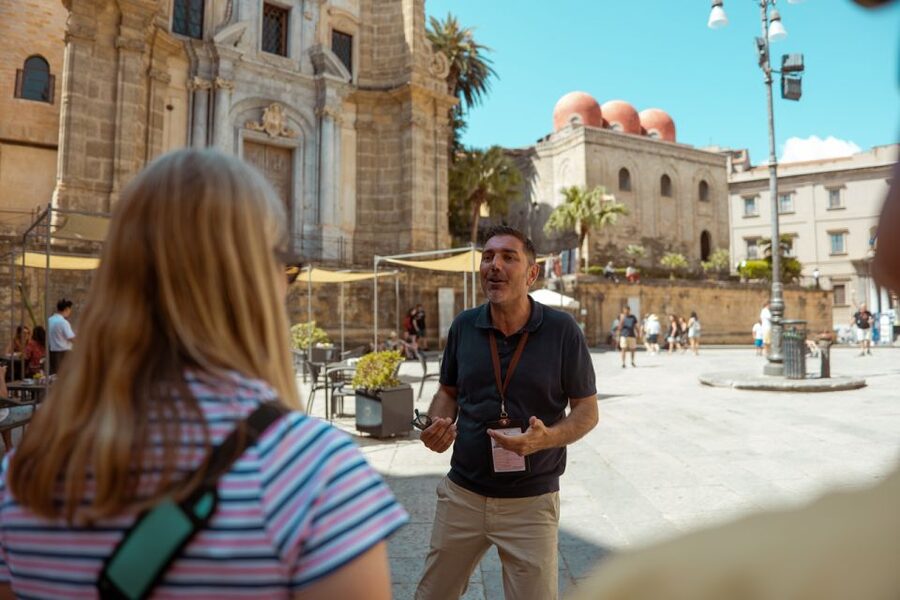
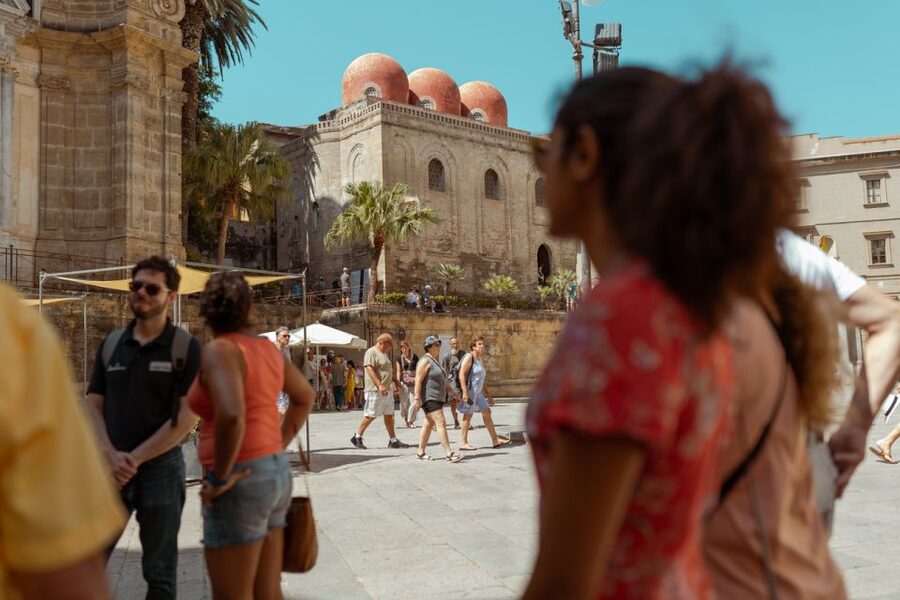
Martorana Church, formally Santa Maria dell’Ammiraglio, is one of the most important stops on the route, but there is a detail you should understand before booking. On the standard walking tour, you admire it from the outside and hear the guide explain its mosaics and cultural mixture. The description of the experience highlights its golden interior, but entry is not listed among the regular inclusions.
That distinction matters. The church is famous for glittering Byzantine-style mosaics, and the interior is the real reward. If seeing those mosaics up close is a priority, confirm the day’s arrangement or consider the longer option if it includes the appropriate visits. Do not assume that every church mentioned on the route includes admission.
Even from the street, Martorana helps explain Palermo’s unusual character. Arabic, Norman, and Christian influences meet in the city’s religious buildings, and your guide can show how those traditions overlap rather than sit in separate boxes.
Piazza Pretoria, where marble takes over
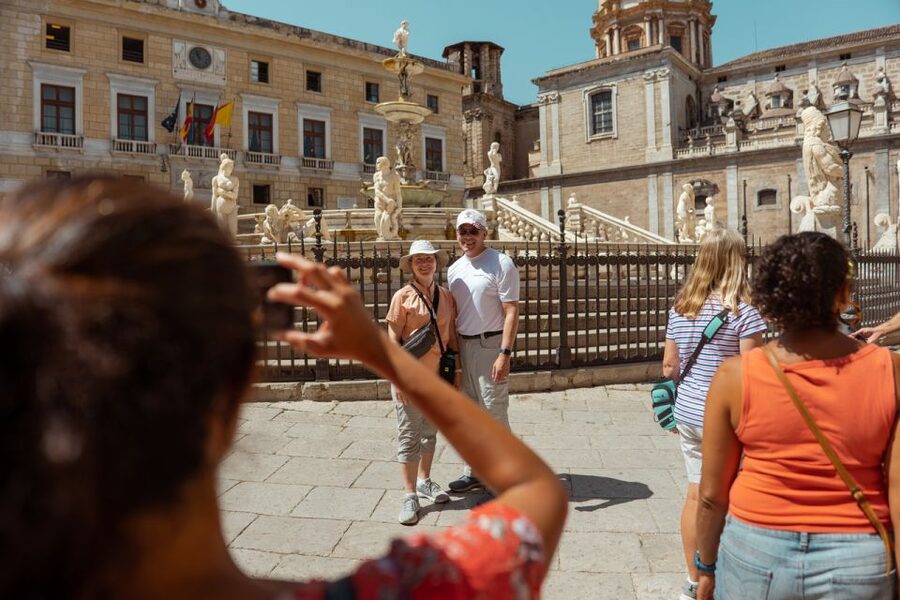
Piazza Pretoria is likely to be the most immediately dramatic square on the regular walk. Its enormous fountain fills the center with pale marble figures, basins, and curves. The statues create a theatrical scene, especially when the Sicilian sun catches the stone.
The square also brings together several layers of power. You see Baroque design, civic architecture, and the Praetorian Palace, which has housed Palermo’s town hall since the 14th century. The palace is viewed from outside. You might even see city officials passing through, but this is not a promised inside visit.
I like this stop because it gives you a clear visual lesson. Palermo’s public spaces were built to impress, and the guide can explain how city government and religious authority shaped the center. It is also a good place to pause in the shade if conditions allow. Summer heat can be serious, and one guide was specifically praised for choosing shaded spots when possible.
Quattro Canti makes Palermo legible
Quattro Canti is the route’s great orientation point. Four curved Baroque façades frame the intersection, creating a compact stage at the meeting of Palermo’s main streets.
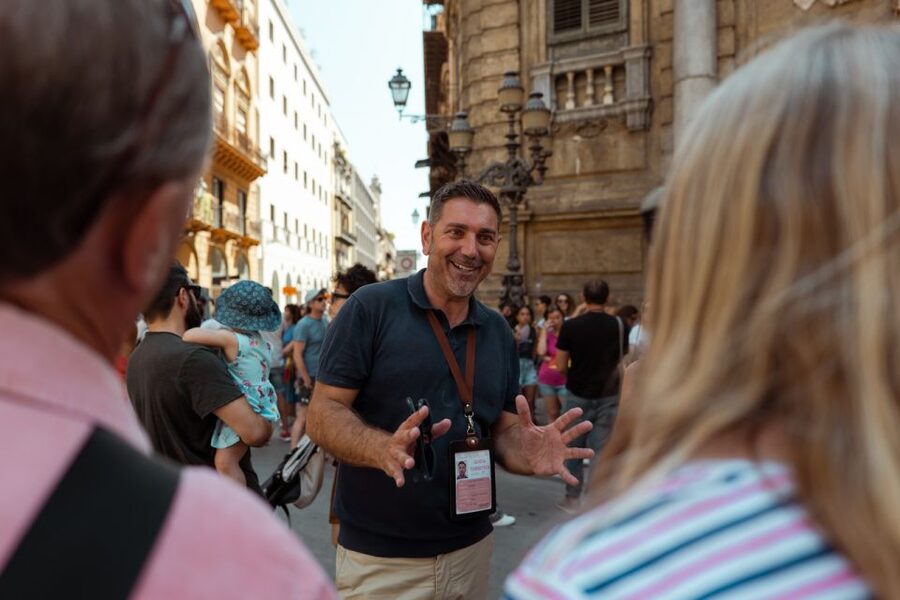
It can be crowded and noisy, so listen closely when the guide gathers the group. A good guide may use a microphone, audio system, or laser pointer when showing details high above street level. Those tools have helped visitors follow explanations about complicated ceilings and façades.
Quattro Canti is also where the route starts to feel like a lesson in city planning. From one intersection, you can understand how central Palermo was organized and how the grand buildings were meant to shape movement through the city.
Palermo Cathedral is the essential interior visit
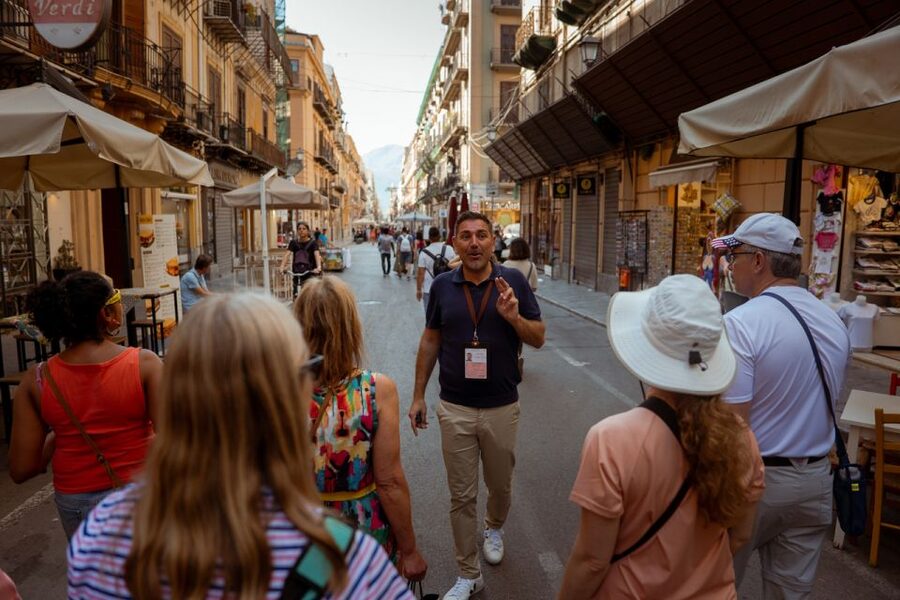
Palermo Cathedral is the one major interior stop included in the regular tour. Its entrance, towers, arches, and façades reveal the city’s habit of adding new styles to old foundations.
Expect a short guided visit rather than an exhaustive examination of every chapel. Three hours is not enough to enter every major building and explain it properly. The benefit is that you get a strong introduction, then a list of places worth exploring on your own.
The Cathedral’s appearance reflects several periods and cultures, including Muslim, Norman, and Christian influence. That mixture is easier to appreciate after the earlier stops. By this point, you have seen the city’s market life, civic center, Baroque streets, and church architecture. The Cathedral brings those threads together.
The interior can be visually busy, with high ceilings and details that are hard to see from ground level. A guide using a laser pointer can be especially helpful. If you want a quiet, slow look at every feature, return later outside tour hours and allow more time.
The Norman Palace and Palatine Chapel upgrade
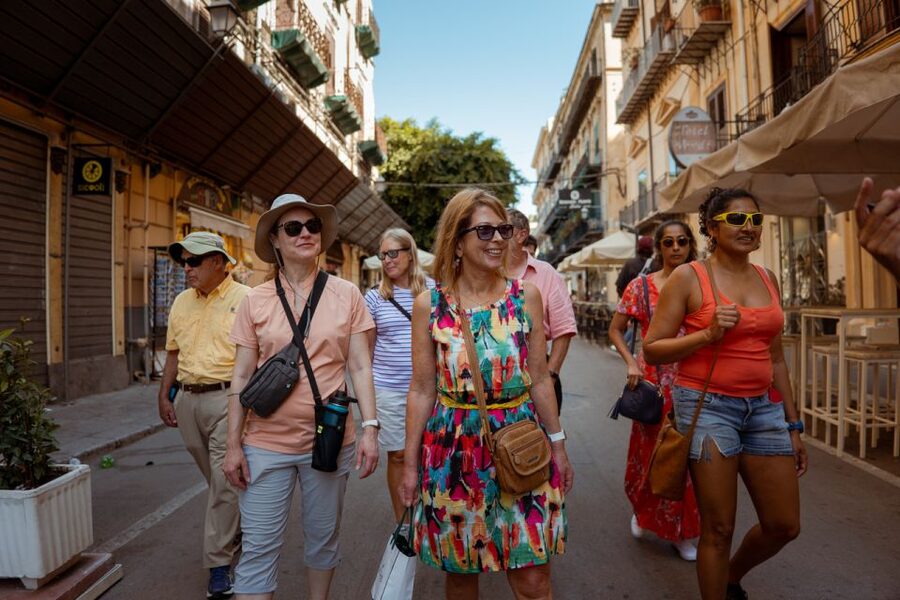
The regular walk passes the Palace of the Normans and ends near the Palazzo dei Normanni or back at the Towns of Italy hub, depending on your booking. It does not include entry to the palace or Palatine Chapel.
The optional upgrade adds a separate guided tour of these two major sights. The Palatine Chapel is famous for its gold mosaics and for the way Norman, Byzantine, and Arabic artistic traditions meet in one extraordinary interior. The Norman Palace adds political context and gives you a fuller picture of Palermo’s medieval rulers.
This upgrade is worth considering if you have limited time in Palermo and want a guide for the city’s most famous indoor monuments. It is also the better choice if Martorana’s exterior visit would leave you wanting more church interiors. Check the schedule closely, since the combined experience has two different meeting points and may last up to five and a half hours in total.
What the guides add to the experience
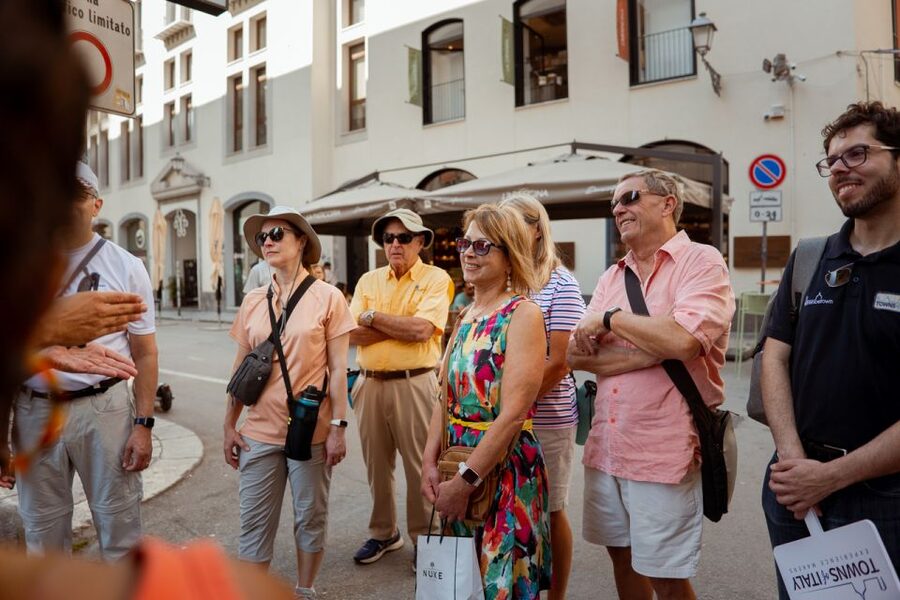
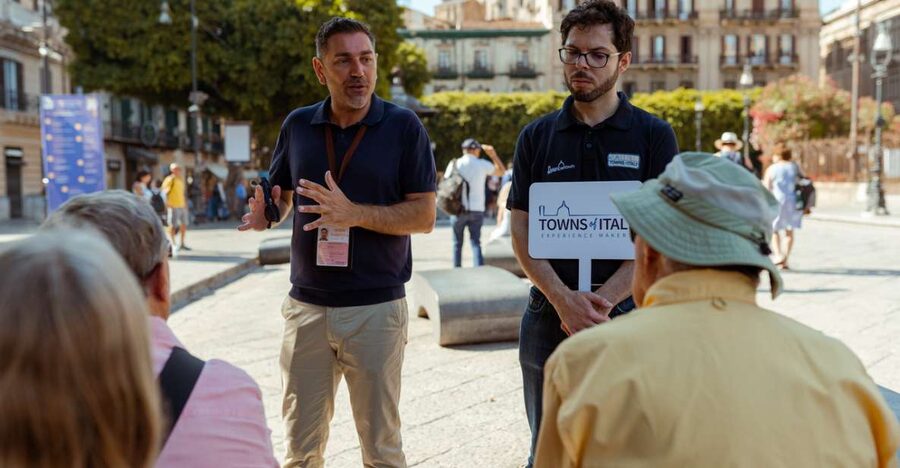
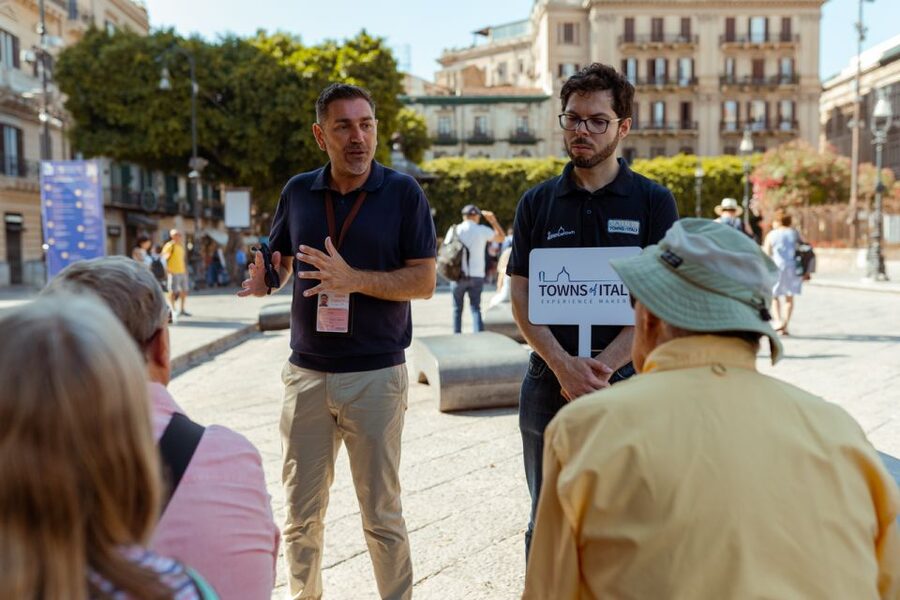
The strongest part of this walk is the human explanation. The guides are not always the same, but names that appear repeatedly in the guide feedback include Renata, Simone, Stefania, Laura, Fabio, and Enrico. Each brings a different style, yet the pattern is clear: local knowledge, enthusiasm, humor, and a willingness to answer questions are central to the experience.
Simone has been praised for bringing history to life with stories, jokes, music, and even a little singing. Renata is known for her passion for Palermo and for adding extra details when time allows. Stefania has been appreciated for answering questions, managing hot-weather pauses, and sharing local advice.
That variety means you should not book expecting one specific guide unless the provider confirms it. You can expect an English or Spanish-speaking licensed guide, but the personality and storytelling style will depend on who leads your departure.
The walk also seems well suited to people who learn through stories rather than plaques. You will hear about buildings, customs, and modern Sicilian life, including some discussion of the way the Mafia affected local society. The focus remains on Palermo as a living city, not only a collection of monuments.
The Sicilian sweet at the finish
A small local treat is included as part of the experience. Depending on the day, that may be a cannolo, granita, or another Sicilian pastry.
This is not a full meal, so arrive ready for a walk rather than expecting lunch. Still, the sweet is a pleasant ending and gives you a quick taste of the island’s food culture. Enrico was especially noted for arranging a cannolo or granita, and other guides have offered similar treats.
It also gives the tour a human finish. After marble, mosaics, and political history, you end with something simple and local. If you are sensitive to ingredients or have dietary needs, tell the operator in advance.
Pace, weather, and practical comfort
The tour runs rain or shine. Wear shoes that can handle several hours on Palermo’s streets, and bring water in warm weather. The route is designed as a walk, not a bus tour, and you should expect standing at outdoor stops.
The pace has worked well for a range of ages. One guide adjusted the walk for a tired participant, and another was praised for keeping a comfortable pace for a 76-year-old. That said, the tour still lasts about three hours, so anyone with limited mobility should contact the provider before booking. They ask you to share special needs in advance and will try to help.
Pets are not permitted because of allergy concerns and group comfort. Hotel pickup and drop-off are not included, so you must reach the meeting point yourself and arrange your own onward plans.
The tour takes place in open public spaces, where noise and crowds can make it hard to hear. An optional English audio guide may be available, and some departures use an audio system. Stay close to the guide and confirm the meeting point before setting out.
Who will get the most from this tour
I would choose this walk for a first day or second day in Palermo. It gives you a clear introduction without forcing you to spend the entire day inside one palace or museum. You can then return to the Cathedral, markets, or Norman Palace with a better sense of what you are seeing.
It suits you especially well if you:
- Want the main central sights explained in plain language
- Enjoy local stories as much as formal architecture
- Prefer a small-group walk to exploring alone
- Need help deciding which places deserve a second visit
- Like combining culture with a small taste of Sicilian food
You may want another format if you dislike group walking, need a long time inside each church, or have already studied Palermo’s architecture in detail. The standard tour is an introduction, not a full archaeological or art-history course.
Should you book the Palermo UNESCO walking tour?
Yes, if you want a strong first look at Palermo’s center for $41 and understand that most sights are outside views. The guides are the main reason to book. Their local stories, practical advice, and ability to explain Palermo’s mixed cultures make the route more useful than simply following a map.
Choose the longer version if the Norman Palace and Palatine Chapel are high on your list. Choose the standard walk if you want orientation, the Cathedral interior, Piazza Pretoria, Quattro Canti, and a sweet Sicilian finish without committing most of a day. For the best value, schedule it early in your stay and use the rest of your visit to return to the places that caught your eye.
FAQ
How long does the Palermo UNESCO walking tour last?
The standard walking tour takes about three hours. Depending on the option selected, the total experience can last from three to five and a half hours.
What sights are included?
The route passes Teatro Massimo, the Church of Saint Dominic, Vucciria Market, Martorana Church, Piazza Pretoria, Quattro Canti, the Palermo Cathedral, and the Palace of the Normans. The regular tour includes entry to Palermo Cathedral, while most other monuments are viewed from outside.
Is the Norman Palace included?
The standard walking tour passes the Norman Palace but does not include entry. An optional combined experience adds a guided visit to the Norman Palace and Palatine Chapel.
What languages are available?
The live guide is available in English or Spanish. An optional English audio guide may also be available.
Is food included?
A Sicilian sweet is included during the walking experience. The treat may be a cannolo, granita, or another local delicacy.
Is hotel pickup included?
No. Hotel pickup and drop-off are not included. The meeting point varies according to the option booked, so check your confirmation before arriving.
Just added around Palermo
- Sicily: Etna Volcano & Taormina Tour★ 4.4 · 199 reviews
- Palermo: Pizza and Gelato Cooking Class with Dinner and Wine★ 4.9 · 951 reviews
- Palermo, tour tra monumenti unici e mercati colorati★ 4.9 · 271 reviews
- Palermo: Walking Tour of Historic Markets and Monuments★ 4.9 · 478 reviews
- Palermo: Street Food and History Walking Tour★ 4.9 · 1,294 reviews
- Palermo: Street Food Walking Tour with Local Guide & Tasting★ 4.9 · 632 reviews
- Palermo: Full-Day Snorkeling Boat Tour with Lunch and Wine★ 5.0 · 196 reviews
- Palermo: Guided City Walking Tour w/Customizable Itinerary★ 4.6 · 390 reviews
Historical Tours, compared.
St. Mark Basilica Ticket, Audioguide+History Gallery
Read our review →
Venice’s Best: Basilica, Doge’s Palace, Gondola & History Gallery
Read our review →
Historic Milan Tour with Skip-the-Line Last Supper Ticket
Read our review →
Ancient History and Colosseum Underground Tour
Read our review →
Forbidden History Walking Tour & Pub Crawl with Drinks
Read our review →Browse the lists this tour appears in