
Reviewed · CATACOMBS TOURS
Naples: San Gaudioso Catacombs Guided Tour
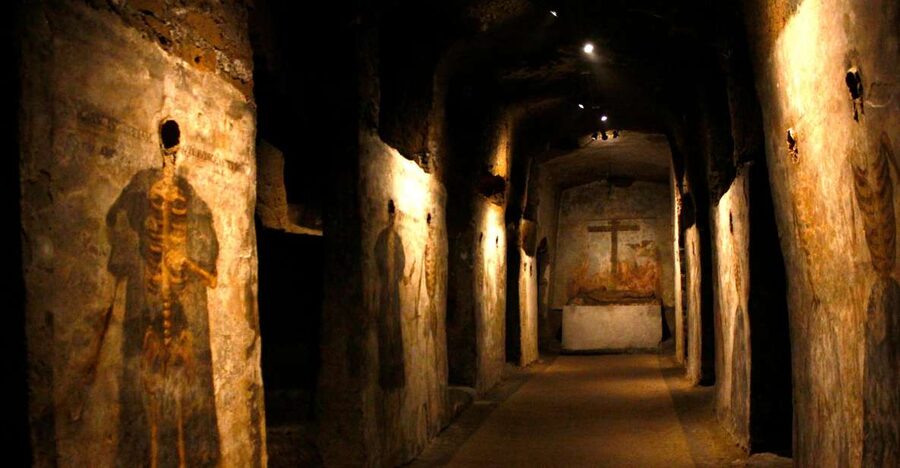
Naples keeps some of its most striking art below street level. At the Catacombs of San Gaudioso, you move from a beautiful basilica into an early Christian cemetery, then on to skull-lined walls, noble tombs, mosaics, and frescoes. It is part sacred site, part archaeological lesson, and part very Neapolitan ghost story.
I like the way the tour connects the ancient burial ground with present-day neighborhood work led by La Paranza. I also like the value: the $15 ticket covers a 45-minute guided visit and free entry to the Catacombs of San Gennaro for 12 months. The main drawback is the short running time, and the dark, enclosed setting may not suit anyone who is very squeamish or uncomfortable in tight spaces.
Key points to know before booking
- The 45-minute route includes two sites: San Gaudioso and Basilica di Santa Maria della Sanità.
- The catacombs mix beauty with macabre detail: expect early Christian frescoes, mosaics, noble tombs, and skulls displayed in the walls.
- The guide makes the difference: English and Italian tours have featured guides such as Nello, Antonella, Claudia, Flavia, and Emanuele.
- Your ticket has extra value: it includes free entry to the Catacombs of San Gennaro, valid for 12 months.
- Arrive 15 minutes early: the ticket office opens at 9:30 AM, and late arrival can mean losing the tour without a refund.
- The visit supports Sanità: ticket income helps local cultural and youth projects connected with La Paranza.
Entering San Gaudioso beneath Santa Maria della Sanità
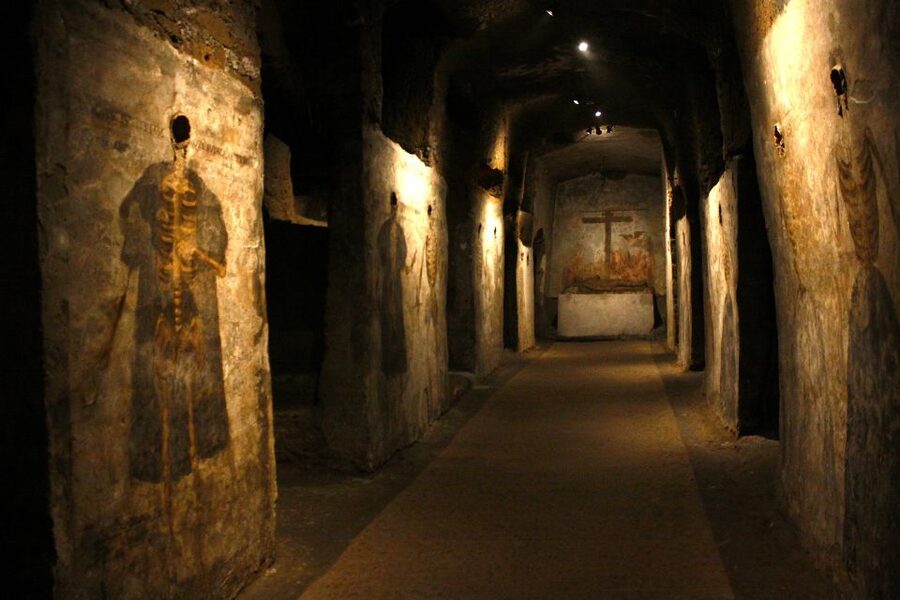
The tour begins at the ticket office for the Catacombs of San Gaudioso. Make sure you go to the entrance, not the exit. A few people have gone to the wrong part of the site, and finding the correct meeting point can take extra time if you are already rushing.
The ticket office opens at 9:30 AM. You need to arrive 15 minutes before the time printed on your booking. This matters here because the tour runs at set times, and arriving after departure does not let you join a later group or claim a refund.
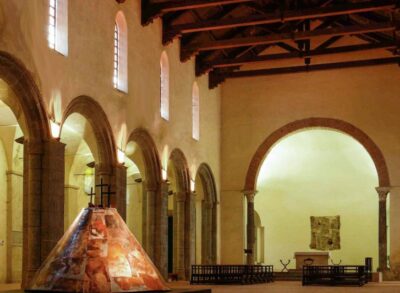
The setting above ground is part of the experience. The catacombs are connected with Basilica di Santa Maria della Sanità, a church that deserves your attention before or after the underground visit. The church has been singled out for its beauty, and the guided visit includes time there as well.
I would not treat the basilica as a quick doorway to the real attraction. It gives you a useful contrast. Above ground, you see the public religious space. Below ground, you see how Christian communities handled death, memory, status, and devotion over many centuries.
More Guided Tours in Rome
- Colosseum, Roman Forum & Palatine Guided Tour
★ 4.7 · 63,148 reviews - Vatican Museums, Sistine Chapel & St Peter’s Basilica Guided Tour
★ 4.5 · 39,149 reviews - Rome: Colosseum, Palatine Hill and Roman Forum Guided Tour
★ 4.8 · 32,814 reviews
The cemetery founded around Saint Gaudiosus
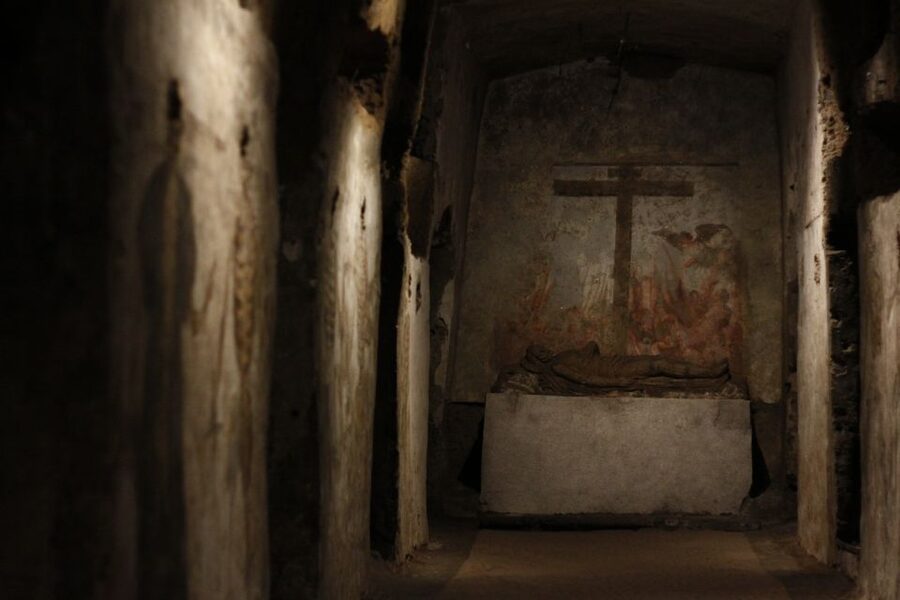
San Gaudioso takes its name from Gaudiosus, a North African bishop who was buried here between 451 and 453 AD. His burial helped the site grow into one of Naples’ most important early Christian cemeteries.
The guide explains how the catacombs expanded and how early Christians used the underground spaces. You will see the tomb associated with the saint, along with 5th and 6th-century frescoes and mosaics decorated with familiar early Christian themes.
This is where a guide matters. The spaces are not simply a collection of old walls and bones. A strong guide links the art to the burial practices and religious ideas of the period. Guides such as Nello and Antonella have been praised for telling the story clearly and adding personal touches about Naples.
The scale is manageable. You are not spending hours underground, and the route is focused enough to keep the story moving. That makes San Gaudioso a good choice if you have only a short gap in your Naples schedule, though anyone wanting a long archaeological visit may find 45 minutes brief.
Frescoes, mosaics, and the tomb of a saint
The oldest material is not all gloomy. The catacombs contain frescoes and mosaics with strong early Christian imagery, and the art gives the site more color and character than the word cemetery might suggest.
Look closely when the guide points out the smaller details. In a group, it can be easy to focus only on the largest tombs and miss the meaning of an image or inscription. One past visitor noted that commentary could become harder to follow when several groups were present, so standing close to the guide is sensible.
The tour also includes the tomb of Saint Gaudiosus. Its importance comes from the way one burial shaped the future of the site. You are not just seeing a single grave, but a place that grew around religious memory and continued to change as Naples changed.
I like this section because it avoids reducing the catacombs to a display of death. The frescoes and mosaics show faith, artistic skill, and the wish to preserve identity. The later skulls are more unsettling, but the earlier art helps you understand the site as a place of belief rather than a chamber built only to frighten.
The 17th-century return to burial
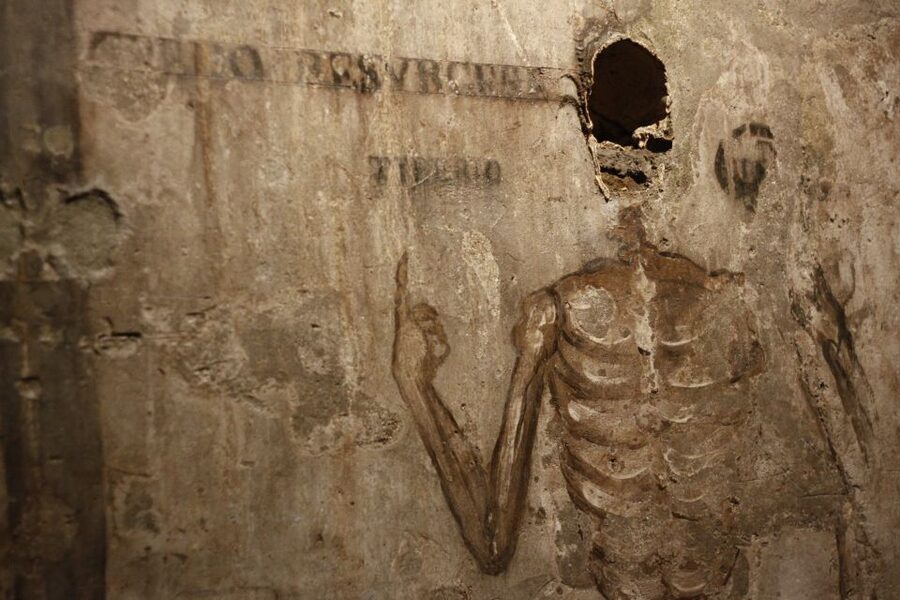
The catacombs later resumed their role as a burial site for nobles in the 17th century. This change adds a second historical layer. You move from the early Christian cemetery into a world where social rank affected how the dead were remembered and displayed.
The Dominican connection is part of this story. The tour explains how burials for higher-class people were organized, giving you a glimpse into the relationship between religion, status, and funeral customs.
This is one reason I would choose a guided visit instead of walking through a site like this alone. The walls may show the remains, but the guide supplies the link between the spaces. A good explanation turns a sequence of chambers into a story about changing customs.
You may find the subject matter uncomfortable. The tour deals directly with death and burial rites, and its appeal comes partly from that honesty. It is not a polished church visit with the difficult details removed. If you prefer light sightseeing, this may not be your best use of 45 minutes. If you like unusual history, the frankness is a major strength.
More catacombs and underground Rome:
- Naples: Catacombs of San Gennaro Entry Ticket & Guided Tour
★ 4.6 · 7,941 reviews - Rome: Crypts and Catacombs Underground Tour with Transfers
★ 4.6 · 5,341 reviews - The Original Roman Crypts and Catacombs Tour with Transfers
★ 4.5 · 4,896 reviews - Rome: Catacombs of St. Callixtus Entry Ticket & Guided Tour
★ 4.6 · 3,037 reviews
Skulls on display and Giovanni Balducci’s unusual bargain
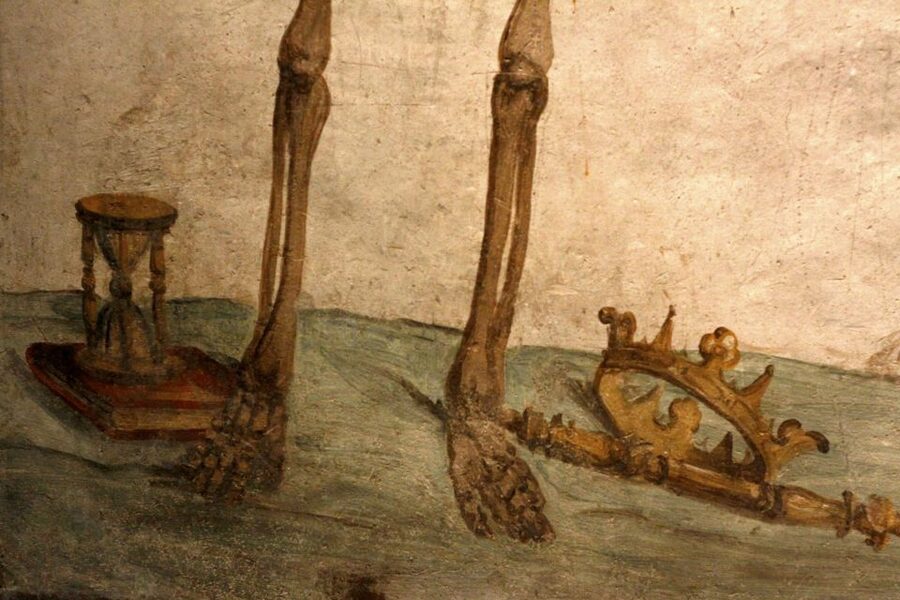
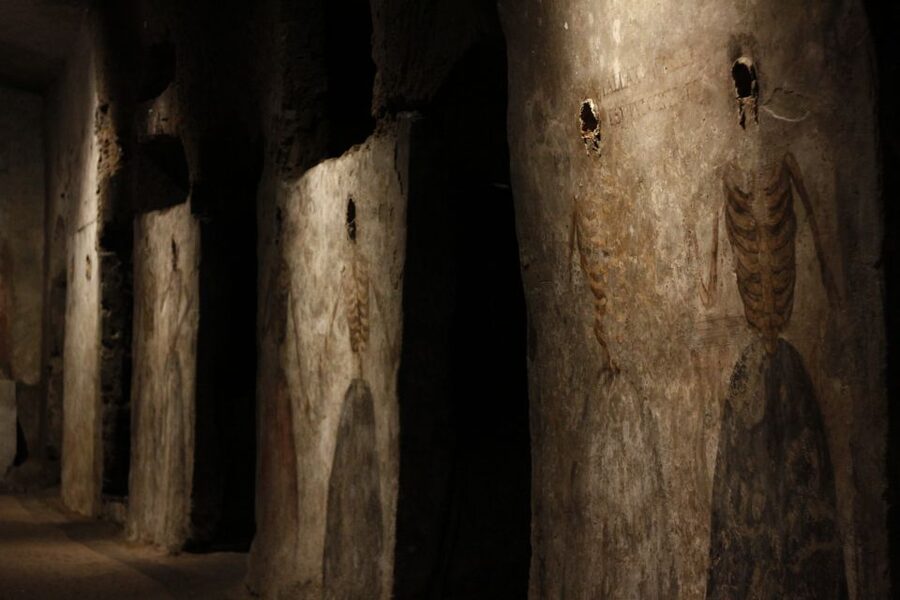
The most memorable feature for many people is the way skulls were placed on display in the walls of the ambulatory during the 17th century. The arrangement is macabre, but it also reflects the period’s approach to remembrance and public burial.
This is a moment when the tour can feel eerie rather than simply historic. The atmosphere is dark, and the subject is direct. I would not book San Gaudioso expecting a purely artistic visit. The skulls are central to the experience.
The catacombs also contain frescoes by Giovanni Balducci. His connection with the site comes with a memorable story: he refused payment for his work in exchange for being buried among Naples’ aristocrats.
That detail gives the artwork a human angle. You are not only looking at a name attached to a painting. You are hearing about an artist who valued a particular burial place enough to trade his work for a place among the city’s elite.
Why the guide is central to the visit
The strongest part of this experience is the live explanation. Tours are offered in English and Italian, and the guides have included Nello, Antonella, Claudia, Flavia, Emanuele, Lisa, Valentina, and others from the local area.
The best guides combine facts with a sense of place. Nello has been praised for his storytelling and humor, while Antonella has led both San Gaudioso and San Gennaro visits with clear explanations. Claudia has guided small groups where there was time for questions, and Flavia has explained how the project grew from local community work.
Guide quality can vary from one departure to another, as it can on any scheduled tour. Still, the repeated praise for friendly, engaging, clear explanations is important. You are paying for interpretation as much as access to the underground rooms.
The guides also place the catacombs in modern Naples. They explain the work of Don Antonio Loffredo and La Paranza, a local regeneration project connected with youth, culture, and the development of the Sanità district.
That context adds real value. Your admission is not simply paying to see an old burial site. The project uses cultural sites to support local activity and give young people opportunities as guides and workers. If you care about community-led tourism, this is a meaningful reason to choose the visit.
What the 45-minute route feels like
The itinerary is compact but varied. You begin at the ticket office, enter the basilica area, and follow the guide underground into San Gaudioso. The explanation moves through the site’s early Christian origins, the burial of Saint Gaudiosus, the older frescoes and mosaics, the 17th-century noble tombs, and the skulls in the ambulatory.
You then have the chance to appreciate the basilica itself, including its religious art and the nativity display noted by one visitor. The mix of church and catacomb keeps the experience from feeling repetitive.
A 45-minute visit is long enough to give the place meaning but short enough to fit into a crowded day. I would schedule it alongside other Sanità sights rather than treat it as a full morning activity.
The short length also means you should arrive ready. There is no good reason to lose the first part of the explanation while sorting out the entrance. Wear practical shoes and stay near the guide if the group is large, since sound can be less clear in underground spaces.
The free San Gennaro visit changes the value
The $15 price is already fair for a guided visit to San Gaudioso and the basilica. The included entry to the Catacombs of San Gennaro makes the deal much stronger.
The San Gennaro ticket is valid for 12 months, so you do not have to visit both sites on the same day. You can use the second admission later in your trip or on a return visit, subject to availability and the conditions of that ticket.
The two catacomb sites are not identical, which makes the second visit worthwhile. One past visitor specifically appreciated that San Gennaro offered a different experience from San Gaudioso. If you have time in Naples, I would plan both rather than see the extra ticket as a minor bonus.
There is also a good local reason to pay for both sites. The project’s work supports the Sanità area, so the admission helps maintain the cultural program and its community aims. That does not remove the need to judge the tour on its own merits, but it adds substance to the price.
Who should book San Gaudioso
I would recommend this tour if you enjoy archaeology, religious art, unusual burial customs, or lesser-known parts of Naples. It also suits anyone who wants a short activity with a strong sense of place.
It is especially useful for a first visit to Naples because the guide covers both the ancient site and the modern neighborhood. You get more than underground chambers. You learn how a local district has used its cultural sites to support renewal.
Families with older children may find the history compelling, but the skulls and burial material are not gentle. Anyone who is very sensitive to macabre displays should think twice.
People with claustrophobia or mobility concerns may find some parts difficult, according to one detailed account. The supplied information does not give a full accessibility description, so contact the provider before booking if you need specific arrangements.
Practical timing and booking advice
Choose your time carefully and arrive 15 minutes early. The ticket is valid only for the day and time purchased, and missing the departure can mean no later entry and no refund.
You can cancel up to 24 hours before the tour for a full refund. The reserve-now, pay-later option also lets you hold a place without paying at once, which is useful when your Naples schedule is still changing.
The ticket office is the meeting point, not a general street address. Use the correct entrance and allow time to find it. The elevator down from street level has confused some visitors, so do not assume the most obvious nearby doorway is the tour entrance.
Should you book the San Gaudioso Catacombs?
Yes, if you want a focused, atmospheric history visit with an excellent chance of meeting a lively local guide. The combination of early Christian art, noble tombs, skull displays, the basilica, and the modern Sanità project gives the tour more substance than its 45-minute length suggests.
I would skip it only if you dislike underground spaces, burial subjects, or short guided visits. For $15, the included San Gennaro admission makes the value unusually strong, especially if you can fit both catacombs into your Naples plans.
FAQ
How long is the guided tour?
The guided tour lasts 45 minutes and includes the Catacombs of San Gaudioso and Basilica di Santa Maria della Sanità.
What is included in the ticket?
The ticket includes the 45-minute guided tour and free entry to the Catacombs of San Gennaro.
How long is the San Gennaro ticket valid?
Free entry to the Catacombs of San Gennaro is valid for 12 months.
What languages are available?
Live guided tours are available in English and Italian.
Where is the meeting point?
Meet at the ticket office of the Catacombs of San Gaudioso.
When does the ticket office open?
The ticket office opens at 9:30 AM.
How early should I arrive?
Arrive at the ticket office 15 minutes before your booked time.
Can I join a later tour if I arrive late?
No. Arrival after the tour departure does not allow you to join a later tour or receive a refund.
Can I cancel the booking?
Yes. You can cancel up to 24 hours in advance for a full refund.
Is the tour suitable for people who dislike enclosed or macabre places?
The catacombs include skulls, burial sites, and dark underground areas. Anyone who is squeamish, claustrophobic, or concerned about mobility should consider these factors before booking.
Just added around Rome
- Boat excursion to Gaeta with a stop for swimming and snorkeling 2 HOURS★ 5.0 · 240 reviews
- Palatine Hill and Roman Forum Tour with Fast-Track Entrance★ 4.2 · 417 reviews
- Tivoli: Villa D’Este & Villa Adriana Pass & App Audioguide★ 4.4 · 364 reviews
- Tivoli: Villa D’Este Entry Ticket and App Audio Guide★ 4.3 · 191 reviews
- From Rome: Villa D’Este & Villa Adriana Day Trip with Lunch★ 4.4 · 289 reviews
- Vatican Museums & Sistine Chapel Skip-the-Line Guided Tour★ 4.6 · 254 reviews
- Rome: Capitoline Museums and Centrale Montemartini Tickets★ 4.4 · 328 reviews
- Rome: The Three Tenors at St. Paul’s Church Concert Ticket★ 4.7 · 699 reviews
Catacombs Tours, compared.
Catacombs of San Gennaro Entry Ticket & Guided Tour
Read our review →
Crypts and Catacombs Underground Tour with Transfers
Read our review →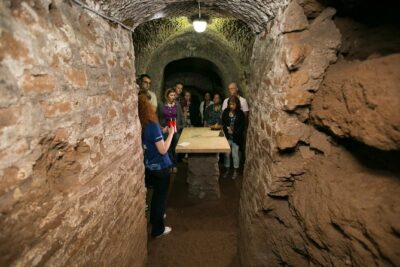
The Original Roman Crypts and Catacombs Tour with Transfers
Read our review →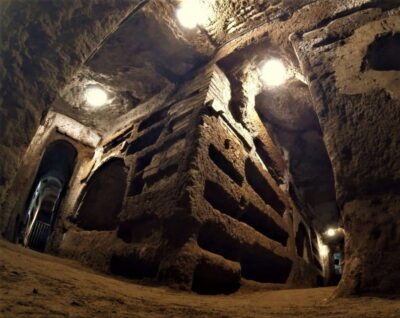
Catacombs of St. Callixtus Entry Ticket & Guided Tour
Read our review →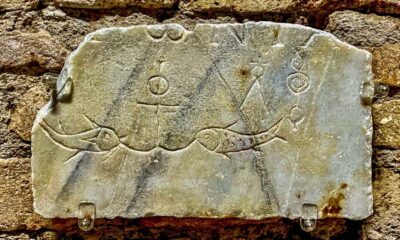

Rome EBike Tour: Appian Way, Catacombs & Roman Aqueducts
Read our review →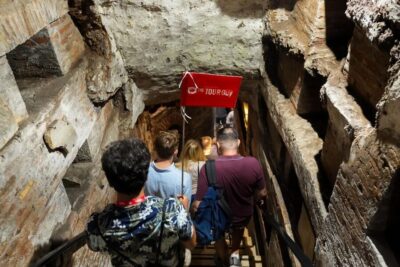
Catacombs and Capuchin Crypt Guided Tour with Transfer
Read our review →Browse the lists this tour appears in