

Reviewed · TREVI FOUNTAIN TOURS
Rome: Trevi Fountain District Underground Domus Guided Tour
Nine meters below the Trevi District, Vicus Caprarius reveals a side of Rome most visitors miss: water channels, ancient walls, a former luxury residence, and everyday objects left behind by the city’s long past. The site is small, but it packs several centuries into a short walk.
I like the clear link between the underground water system and the Trevi Fountain above, and I like having an archaeology-focused guide to explain what the stones alone cannot. The main thing to understand is that you do not go beneath the actual fountain basin, and the fountain itself remains free and crowded.
Key points to know before booking
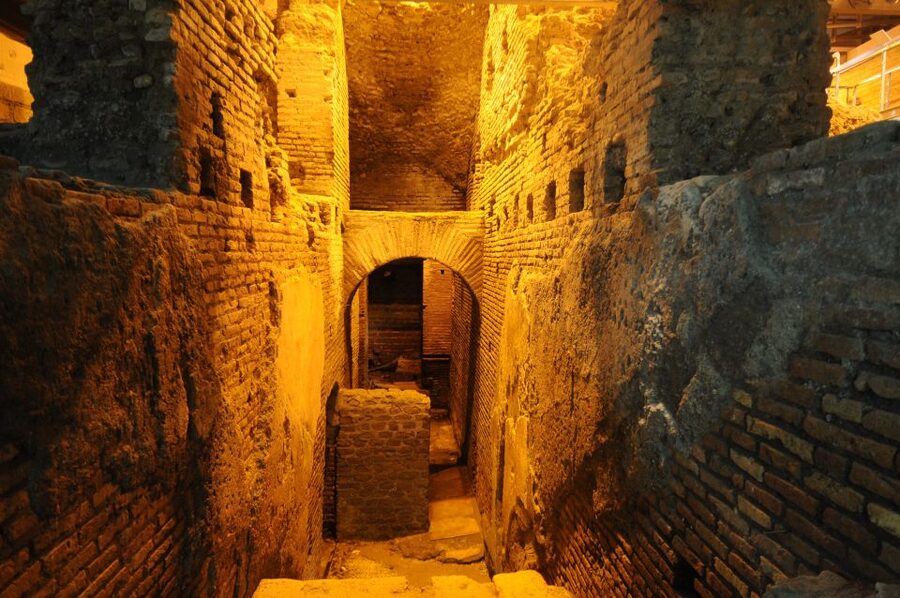
- Nine meters below street level: Walk through the Vicus Caprarius archaeological site beneath the Trevi District.
- A water story, not just a ruin: Follow the ancient flow connected with the spring that supplies the Trevi Fountain.
- Archaeology made understandable: Guides such as Erika, Naomi, Noemi, Alessia, and Michelle have been praised for clear explanations, humor, and patience.
- A short, focused visit: The underground portion lasts about 40 minutes, followed by roughly five minutes at the Trevi Fountain.
- Small space, big subject: You will see coins, African amphorae, marble, masonry, and water pipes, but the site is not a huge underground complex.
- Good value for history fans: At $50 per person, the price pays for reserved entry and interpretation rather than a long list of sights.
What is really underground near the Trevi Fountain

The name of this experience can create the wrong picture. You are not entering a chamber directly beneath the Trevi Fountain, and you do not receive private access to the famous Baroque basin.
Instead, you visit Vicus Caprarius at Vicolo del Puttarello 25, an archaeological site very close to the fountain. It is an underground excavation with Roman remains and water infrastructure connected to the wider system that feeds the Trevi area.
That distinction matters. If you want a secret room below the fountain itself, this is not that experience. If you want to understand how Rome’s water supply, buildings, and streets changed over time, this is a far more useful visit than simply tossing a coin and moving on.
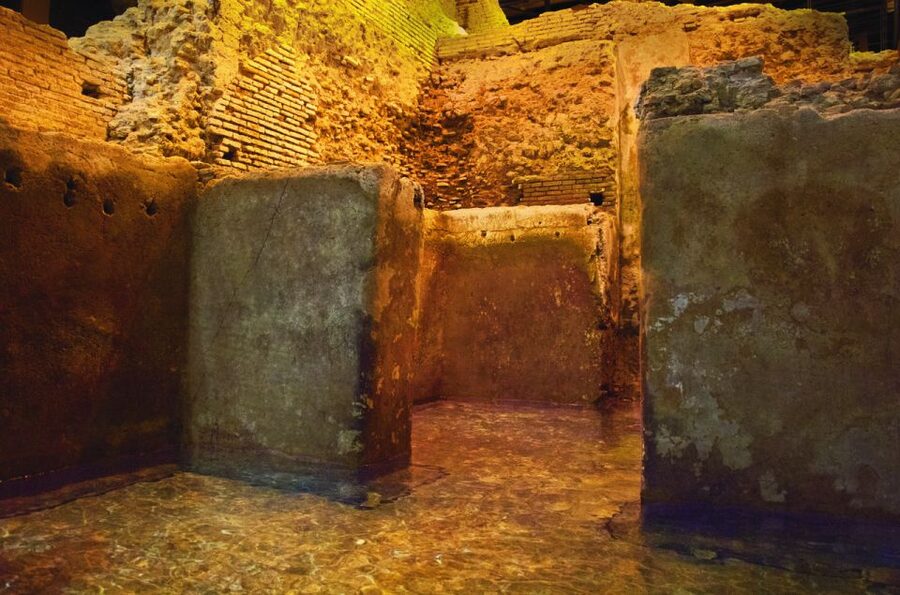
The site is known as the City of Water. The name fits because water is the thread tying its sections together. Ancient channels, masonry, pools, and pipes help show how Rome moved water through the city and into private buildings.
I find this sort of visit especially useful in Rome because the modern city often hides the ancient one. You may walk across a pavement or stand beside a fountain without seeing the structures below your feet. Here, the layers are visible in a compact setting.
More Guided Tours in Rome
- Colosseum, Roman Forum & Palatine Guided Tour
★ 4.7 · 63,148 reviews - Vatican Museums, Sistine Chapel & St Peter’s Basilica Guided Tour
★ 4.5 · 39,149 reviews - Rome: Colosseum, Palatine Hill and Roman Forum Guided Tour
★ 4.8 · 32,814 reviews
Beginning at Vicolo del Puttarello 25
Your meeting point is the entrance to the Vicus Caprarius archaeological area at Vicolo del Puttarello 25. There is no hotel pickup, so you need to make your own way there and arrive at the stated meeting time.
The tour begins below street level. Comfortable shoes are important because this is an archaeological site rather than a polished museum floor. The experience is not suitable for wheelchair users or people with mobility impairments, so consider that before paying.
The visit lasts 45 minutes in total. About 40 minutes are spent inside Vicus Caprarius, with the final five minutes devoted to the Trevi Fountain. That makes this a practical addition to a day in central Rome, especially if you want something focused rather than another long walking tour.
The underground rooms are not enormous. One visitor found the space smaller than expected, while another noted that more than one language group could be inside at the same time. A small group is available, but you should still expect a close, enclosed setting rather than a wide-open archaeological park.
Guides may use radios so you can hear them clearly. That is a useful touch in a compact site where several groups may be moving through different areas.
Three sections of the City of Water
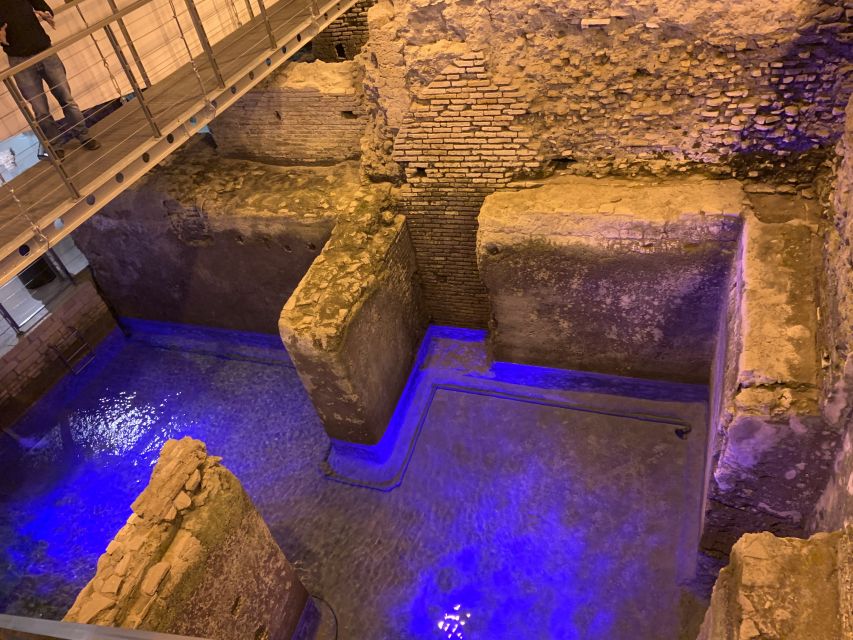
Inside Vicus Caprarius, the route passes through three sections of archaeological remains. The exact presentation can depend on the guide and group, but the focus is on the buildings, waterworks, and objects found below the modern street.
The first appeal is architectural. You see ancient masonry at close range and learn how later construction altered or covered earlier Roman structures. The stones are not presented as isolated fragments. Your guide explains how they fit into the city’s changing pattern of homes, streets, and water supply.
The second focus is the water system. The route shows how water connected the area with the spring associated with the Trevi Fountain. Ancient masonry helped filter and direct the flow, while pipes carried water toward pools and other parts of the Domus residence.
This is where a guide makes a real difference. Without explanation, a channel can look like a trench and a pipe can look like a broken piece of pottery. With context, you can picture the practical work involved in moving clean water through a dense ancient city.
The third section brings the past down to human scale. The site has produced hundreds of ancient coins and African amphorae used to transport oil. These objects help you think about commerce, food, household activity, and the ordinary movement of goods through Rome.
You may also see polychrome marble and the head of Alessandro Helios. These finds point to a more luxurious side of the residence. The mix is what makes the site effective: water engineering, domestic life, trade, decoration, and changing architecture all appear in one short route.
The Domus and its Roman comforts

The Domus residence gives the tour its sense of private life. Rather than looking only at public monuments, you get clues about how an affluent Roman household might have used space, water, decoration, and pools.
The remains are not a fully restored house. You will not walk through a complete set of rooms furnished as they once were. Instead, you see archaeological evidence and rely on the guide to explain the likely function of the structures.
That may disappoint anyone expecting grand interiors. For me, the unfinished quality is part of the appeal. You are looking at fragments and construction remains, then piecing together the story with help from an archaeologist or archaeology-trained guide.
The water connection makes the Domus more than another Roman ruin. The guide explains how water from the Trevi spring moved through ancient masonry and helped supply pools and pipes connected with the residence. It is a practical story about engineering, not just emperors and battles.
Several guides have received strong praise for making this material easy to follow. Erika is often described as enthusiastic and clear. Naomi has been praised for storytelling and humor, while Noemi, Alessia, Michelle, and other guides have been noted for answering questions and keeping the subject lively.
Guide assignments can change, so do not book solely to meet one named guide. The important point is that the experience depends heavily on the person leading it. A good guide turns a small excavation into a readable chapter of Roman life.
More Trevi Fountain walks:
- Rome: Trevi Fountain and Underground Guided Tour
★ 4.3 · 1,664 reviews - Rome: Opera Concert at Palazzo Poli – Fontana di Trevi
★ 4.7 · 1,026 reviews - Best of Rome Walking Tour including Trevi Fountain
★ 4.5 · 923 reviews - Catacombs Tour with Transfer – Optional Capuchin Crypt or Trevi
★ 4.5 · 694 reviews
Coins, amphorae, marble, and the evidence they leave behind
The objects here are valuable because they reveal more than appearance. Hundreds of coins can help indicate activity over time, while African amphorae show that goods traveled into Rome from far beyond the immediate neighborhood.
The amphorae were used to transport oil. That single detail opens a window onto supply lines and daily needs. Rome’s monuments are easy to admire, but objects like these remind you that the city depended on storage, shipping, trade, and household consumption.
Polychrome marble adds a different note. It points to taste and expense, especially in a residence described as luxurious. The head of Alessandro Helios adds another visual focus, though the main value is the chance to see actual archaeological finds within the context of the rooms and waterworks.
The guide’s interpretation is the key feature. You are not simply shown a collection of objects with labels. You hear how the finds relate to the structure around them and to the wider development of Rome from the Imperial Age into later periods.
One guide may emphasize engineering. Another may spend more time on the fountain, the archaeological dig, or the way the city changed above the remains. That variety is normal on a live tour, and it is one reason the guided format offers more than entering alone.
Connecting the underground site to the Trevi Fountain
The tour ends at the Trevi Fountain, where the guide explains its history and points out details of the Baroque design. This portion is short, about five minutes, so set your expectations accordingly.
You will have the chance to admire the fountain afterward, but this is not private or skip-the-line fountain access. Entrance to the fountain area is free, and crowds can be heavy. The supplied access ticket should not be read as a reserved lane to an empty viewing area.
That is the experience’s biggest mismatch between title and reality. The fountain is the final outdoor stop, not the main underground structure. The archaeological site is the main event.
Still, the pairing works well. You first see the older water system below, then go outside to look at the later monument that made the area famous. The connection gives the fountain more meaning than it has when treated as a quick photo stop.
Take your own photos after the guided portion, but expect people around you. The fountain can be very crowded, and getting close may take patience. The guide may point out features or help with a few photos, but you should not expect a private photo session.
Some booking versions may offer an ice cream voucher near the fountain. If that option appears when you reserve, check the exact terms and use-by conditions. It can be a pleasant extra, but the standard experience is the archaeological visit and fountain orientation.
Is $50 good value for 45 minutes?
At $50 per person, this is not the cheapest way to see the Trevi Fountain. You can visit the fountain itself for free, and you can spend far longer in Rome’s major museums for a similar price.
The value comes from the reserved entry to Vicus Caprarius and the live explanation. You are paying for access to a site that is easy to miss, plus a guide who can explain water channels, Roman building methods, trade objects, and the Domus.
I think the price makes sense for travelers who enjoy archaeology and want more context than a quick look at street-level monuments. It is less convincing for someone who wants a long tour or a major collection of statues and paintings.
The 45-minute length helps if your schedule is tight. You can fit it around the Trevi Fountain, Pantheon, Spanish Steps, or another central Rome stop. The drawback is that the visit ends quickly, and the underground rooms may feel small for the price if you prefer large archaeological sites.
A good guide improves the value. Many of the strongest experiences have come from guides who welcomed questions, used humor, and linked the site to the wider story of Rome. If your guide is especially engaging, the short visit can feel like a compact history lesson rather than a hurried walk through ruins.
Free cancellation up to 24 hours before the start and a reserve-now, pay-later option make the booking less rigid. Those terms are useful when your Rome schedule may shift, but they do not change the basic question: do you want an expert explanation of one small site?
Who will enjoy this underground Rome tour
I would choose this for an adult or older child who enjoys ancient history, engineering, archaeology, or the less obvious side of famous sights. It is also a good choice for a repeat visitor who has already seen the main monuments and wants a fresh angle on the Trevi District.
It suits you if you like asking questions. Guides have been praised for handling detailed questions and adjusting their explanations to the group. The subject has enough depth to reward curiosity, even though the visit itself is short.
It also works well early in your Rome stay. The water system and Roman building methods can help you understand other ruins you see later. Taking it near the end of a trip still works, but you may wish you had the context sooner.
I would hesitate if you dislike enclosed archaeological areas, uneven walking surfaces, or short tours with a strong lecture element. It is also not appropriate for wheelchair users or people with mobility impairments.
Most important, book it for Vicus Caprarius, not for exclusive access to the Trevi Fountain. That one adjustment in expectation will make the experience much more satisfying.
Practical details that affect your visit
Meet at the entrance to Vicus Caprarius, at Vicolo del Puttarello 25. Hotel pickup and drop-off are not included, and food and drinks are not part of the tour.
The live tour is in English. A small group option is available. An audio guide is not included, but the point of the experience is the live guide’s explanation, and radios may be used so the group can hear clearly.
Wear comfortable shoes. The archaeological area is underground and not suitable for wheelchair users or people with mobility impairments.
Plan a little extra time after the tour for the fountain itself. The guided portion there is brief, and the area may be crowded. You can continue looking at the fountain after the tour, but no special skip-the-line access is included.
Should you book the Vicus Caprarius tour?
Book it if you want to see how Rome’s water supply, private homes, trade, and later monuments connect. The underground site is small, but the combination of water channels, coins, amphorae, marble, and the Domus gives you plenty to think about.
Skip it if your main goal is to enter beneath the Trevi Fountain or receive private access to the basin. That is not what happens.
For the right audience, $50 buys a focused archaeological visit and an informed English-speaking guide. I would place it on a Rome itinerary for curious history fans, especially near the start of the trip. Just remember: the fountain is the finale, while the City of Water is the real reason to go.
FAQ
Where does the tour meet?
Meet your guide at the entrance to the Vicus Caprarius archaeological area at Vicolo del Puttarello 25.
How long does the tour last?
The experience lasts 45 minutes. About 40 minutes are spent at Vicus Caprarius, followed by about five minutes at the Trevi Fountain.
Is the tour conducted in English?
Yes. The live tour guide language is English.
Does the tour go beneath the actual Trevi Fountain?
No. The underground visit takes place at Vicus Caprarius, an archaeological site near the Trevi Fountain. It does not take you beneath the fountain basin itself.
Is entrance to the Trevi Fountain free?
Yes. Entrance to the fountain is free, and the tour does not include skip-the-line access.
What can I see at Vicus Caprarius?
The site includes ancient Roman masonry, water channels and pipes, luxurious Domus remains, polychrome marble, a head of Alessandro Helios, hundreds of coins, and African amphorae used to transport oil.
Is the tour suitable for wheelchair users?
No. The activity is not suitable for wheelchair users or people with mobility impairments.
What should I wear?
Wear comfortable shoes. The visit takes place in an underground archaeological area.
Can I cancel the booking?
You can cancel up to 24 hours in advance for a full refund. A reserve-now, pay-later option is also available.
Just added around Rome
- Boat excursion to Gaeta with a stop for swimming and snorkeling 2 HOURS★ 5.0 · 240 reviews
- Palatine Hill and Roman Forum Tour with Fast-Track Entrance★ 4.2 · 417 reviews
- Tivoli: Villa D’Este & Villa Adriana Pass & App Audioguide★ 4.4 · 364 reviews
- Tivoli: Villa D’Este Entry Ticket and App Audio Guide★ 4.3 · 191 reviews
- From Rome: Villa D’Este & Villa Adriana Day Trip with Lunch★ 4.4 · 289 reviews
- Vatican Museums & Sistine Chapel Skip-the-Line Guided Tour★ 4.6 · 254 reviews
- Rome: Capitoline Museums and Centrale Montemartini Tickets★ 4.4 · 328 reviews
- Rome: The Three Tenors at St. Paul’s Church Concert Ticket★ 4.7 · 699 reviews
Trevi Fountain Tours, compared.


Opera Concert at Palazzo Poli – Fontana di Trevi
Read our review →
Best of Rome Walking Tour including Trevi Fountain
Read our review →
Catacombs Tour with Transfer – Optional Capuchin Crypt or Trevi
Read our review →
Spanish Steps, Trevi, Navona and Pantheon Sunset Tour
Read our review →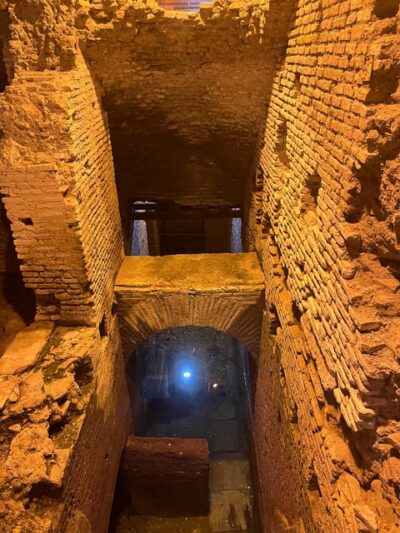
Trevi Fountain District Underground Tour and Ice Cream
Read our review →
Trevi Fountain, Spanish Steps & Pantheon Walking Tour
Read our review →
Browse the lists this tour appears in