Reviewed · ROME TOURS
Rome: Tour of St. Clement’s Basilica Underground Temples
Rome: Tour of St. Clement’s Basilica Underground Temples is the sort of outing that makes the city feel like a stack of old storybooks. You begin beneath a working 12th-century basilica and descend 14 meters through earlier churches, a Roman house, a Mithraic temple, and the sound of an underground river. San Clemente’s layered archaeology is the star here.
I like two things especially. First, the guide gives meaning to details you could easily miss, from the basilica’s gold apse mosaic to early Christian frescoes. Second, the tour reaches a pagan sanctuary that offers a rare look at Roman religion before Christianity became dominant. Guides including Francesca, Lorenzo, Paul, and Anestis have earned praise for clear explanations and lively storytelling.
The main drawback is physical and visual: the lower rooms are enclosed, the tour is not wheelchair accessible, and photography and video are forbidden inside. Santo Stefano Rotondo is an excellent optional add-on, but its martyrdom frescoes are graphic and may unsettle young children.
Key points to know before you book
- Four layers beneath one church: San Clemente links a medieval basilica, an early Christian church, a Roman house, and a Mithraic sanctuary.
- A real underground river: Water still moves below the archaeological levels, adding sound and atmosphere to the lowest section.
- Guides make the difference: Paul, described as an archaeologist and professor, and guides such as Francesca and Lorenzo have been especially praised for their explanations and humor.
- The optional second stop takes 45 minutes: Santo Stefano Rotondo is reached on foot in about 15 minutes and adds powerful martyrdom art.
- Expect a small, focused experience: The core visit lasts about one hour, while the extended version takes one to two hours.
- Dress for a church visit: Comfortable shoes are essential, and shorts, short skirts, sleeveless shirts, food, and drinks are not allowed.
Why San Clemente feels like Rome in cross-section
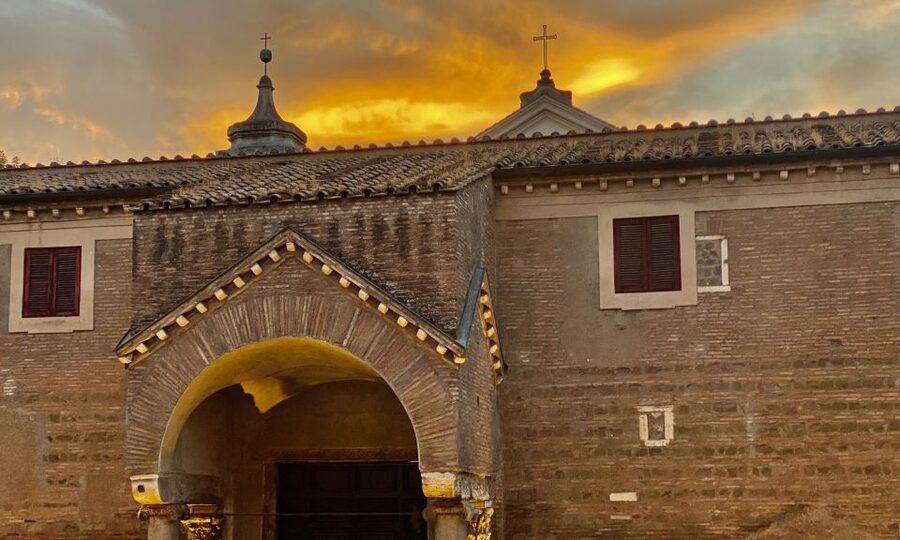
Many Roman sights ask you to picture the past from standing ruins. San Clemente lets you walk through several pasts one below another. The modern basilica sits on top, the fourth-century church lies beneath it, and the lower Roman structures reach back still further.
That arrangement gives the visit a strong sense of place. You are not simply hearing that Rome changed over time. You are seeing the physical result of those changes, with later builders placing churches directly above older homes and sacred spaces.
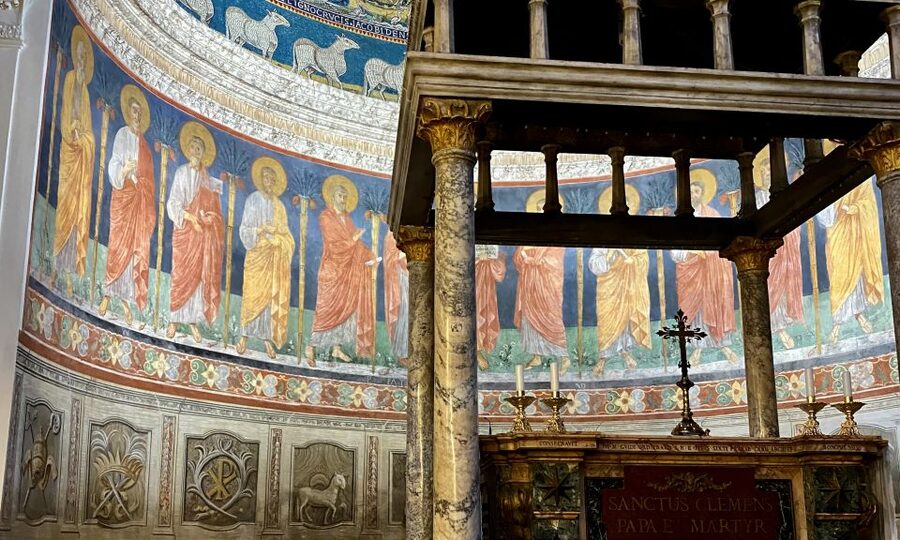
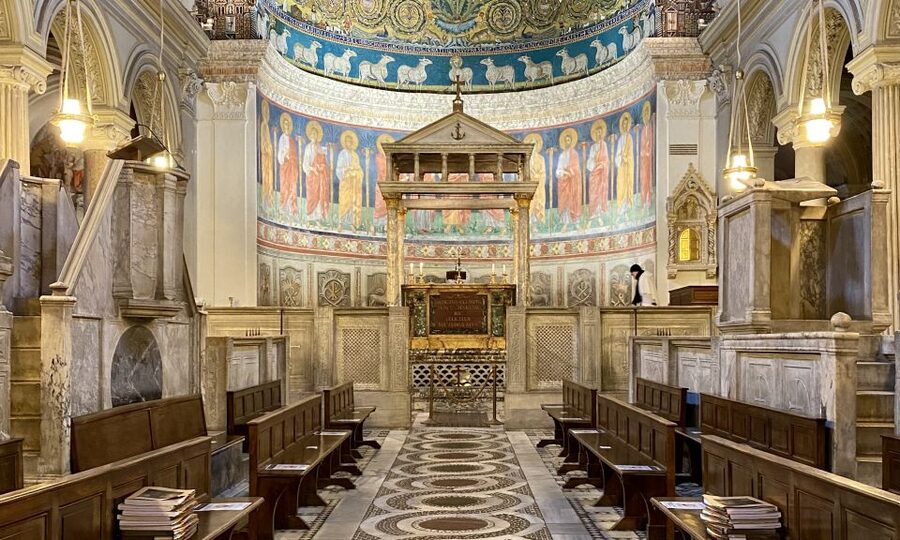
The upper basilica deserves attention before you head underground. Its apse contains a gleaming gold mosaic filled with Christian symbols. Your guide explains how the imagery expresses religious ideas, rather than leaving you to admire the glitter without context. This opening talk also gives you a useful frame for the rest of the visit: San Clemente is about belief, power, reuse, and memory.
A few more Rome half-days worth a look
- Vatican: Museums & Sistine Chapel Entrance Ticket
★ 4.5 · 144,003 reviews - Vatican Museums & Sistine Chapel Tour with Optional Basilica
★ 4.3 · 67,413 reviews - Colosseum, Roman Forum & Palatine Guided Tour
★ 4.7 · 63,148 reviews
The 12th-century basilica and its golden apse
The present church is the calmest part of the experience. Its medieval interior gives you a chance to slow down and look upward before the more dramatic descent.
The apse mosaic is the artistic centerpiece. The gold background catches the light, while the symbols carry layers of meaning tied to Christian faith. I like that the tour begins here, because the guide can show how the church’s visual message relates to the older Christian spaces below.
Do not rush this first section. You will spend much of the hour underground, and it is easy to focus so closely on archaeology that you forget the upper church is also an important work of art. A good guide connects the two rather than treating the basilica as a lobby for the excavation.
The site is a place of worship, so dress modestly. Shorts, short skirts, and sleeveless shirts are not permitted. Food, drinks, alcohol, weapons, and sharp objects are also prohibited. Photography and video are not allowed inside, so plan to remember the visit with your eyes and notes afterward.
Descending to the 4th-century church
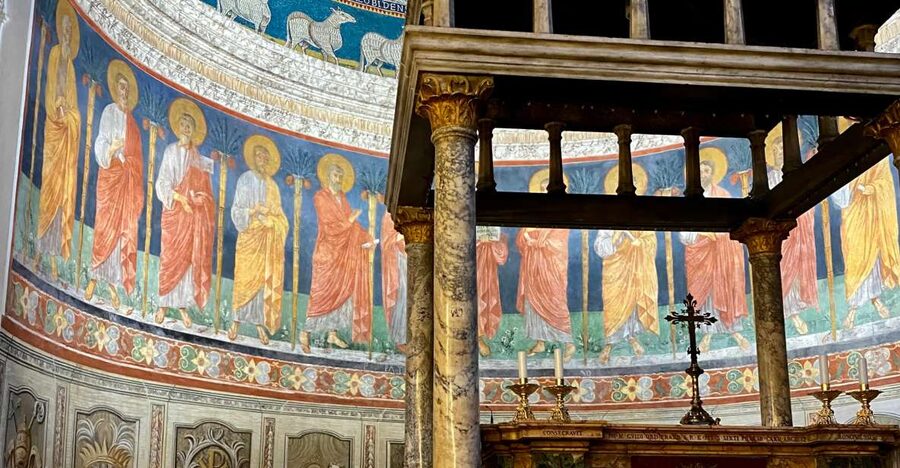
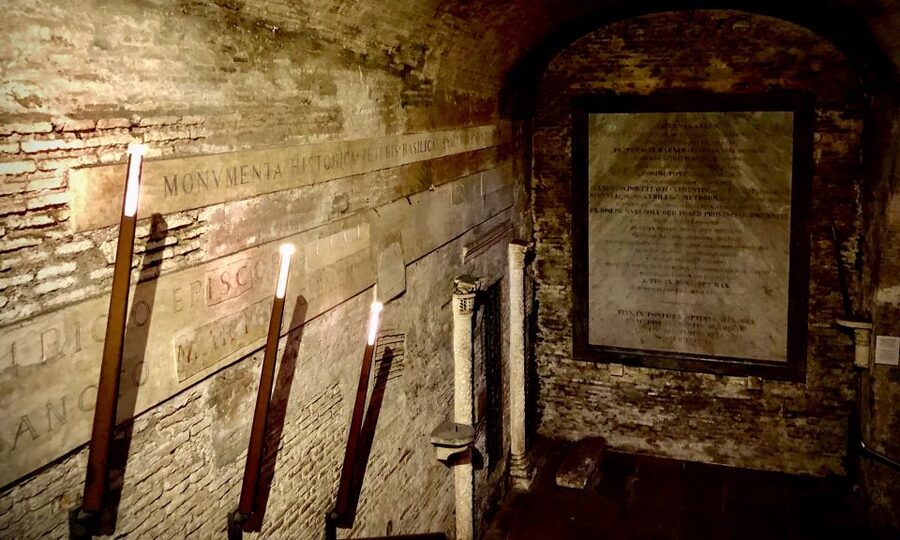
The staircase down changes the mood quickly. The upper basilica is open and bright, while the lower levels feel more enclosed and subdued. You reach a fourth-century Christian church built above the home associated with St. Clement, traditionally regarded as the third pope of Rome.
Here, the guide’s role becomes vital. A bare wall or faded painted figure can be hard to read on your own. With an explanation of the setting and subject, the early Christian frescoes become much easier to understand.
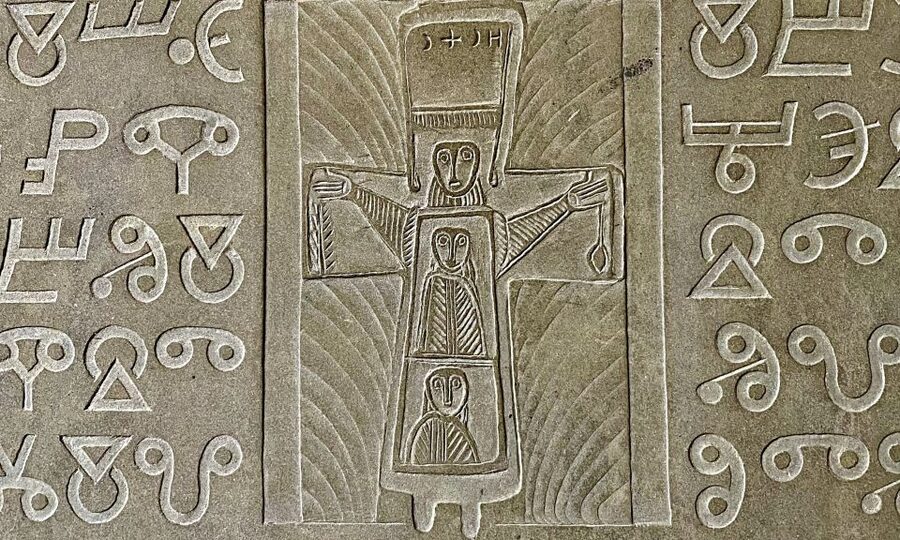
The paintings show Christian stories, including the lives and deaths of martyrs. They are not polished in the way of later Renaissance art, but their age and purpose give them force. You are looking at early Christian images created when the faith was still developing its public identity in Rome.
This section also helps explain the risks faced by early Christians. The tour does not treat martyrdom as a vague legend. It places those stories inside the political and religious world of ancient Rome, where several belief systems existed side by side and competed for followers.
Some participants have had nearly private visits, with only two people in the group. That is not guaranteed, but the private-group option is available, and the core itinerary is short enough to keep the experience focused rather than tiring.
The Mithraic temple and the underground river
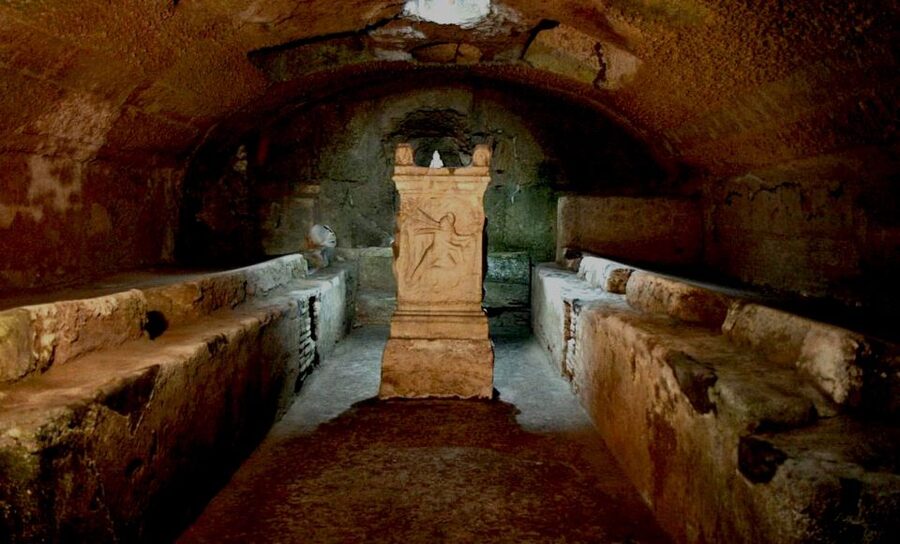
The lowest section is the most unusual part of San Clemente. You reach one of Rome’s best-preserved Mithraic temples, a sanctuary linked to the cult of Mithras, an ancient religion practiced largely by men connected with the Roman military and administration.
The attraction here is not just the stone room. It is the chance to compare two religious worlds occupying the same urban ground. The Christian church above and the Mithraic sanctuary below show how sacred spaces could be reused, covered, and transformed as Rome’s religious life changed.
Your guide explains the cult’s beliefs and rituals, including the symbolic role of Mithras and the ceremonies held in enclosed meeting spaces. Because Mithraism left fewer large public monuments than Christianity, a preserved temple such as this can be especially useful for understanding a less familiar part of Roman life.
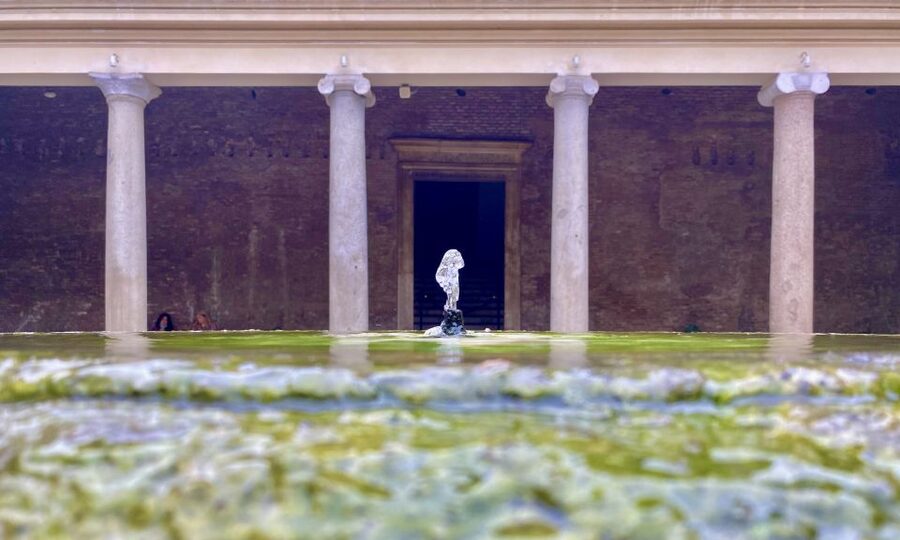
The underground river adds a physical sensation to the visit. You can hear and see water moving through the lower level, which makes the space feel less like a silent museum and more like an active part of the ancient city. It also helps explain why underground Rome can be so atmospheric without needing theatrical effects.
This is the point where you should consider your comfort level. The underground areas may not suit anyone with claustrophobia. The tour is also unsuitable for wheelchair users because of the architectural structure and stairs below the basilica.
Same city, a completely different sort of day:
- Vatican Museums, Sistine Chapel & St Peter’s Basilica Guided Tour
★ 4.5 · 39,149 reviews - Rome: Colosseum, Palatine Hill and Roman Forum Guided Tour
★ 4.8 · 32,814 reviews - Rome: Guided Tour of Colosseum, Roman Forum & Palatine Hill
★ 4.7 · 27,897 reviews - Rome: Colosseum & Forum with Audio Guide App -Optional Arena
★ 4.2 · 24,770 reviews
Santo Stefano Rotondo adds a darker second act
If you choose the extended version, you walk about 15 minutes to Santo Stefano Rotondo. The extra guided visit lasts 45 minutes and takes the tour further into early Christian art and martyrdom.
Santo Stefano Rotondo is known for its circular design, which gives it a very different feel from San Clemente. Instead of moving through stacked archaeological levels, you experience a large, central interior decorated with dramatic scenes of Christian suffering.
The frescoes are striking, but they are not gentle. Graphic scenes of martyrdom cover the walls, and some children may find them disturbing. I would treat this stop as an art and religious-history visit rather than a light family attraction.
The order can change. Depending on the schedule, you may begin at Santo Stefano Rotondo and finish at San Clemente, or do San Clemente first. Special events and liturgical celebrations can also make the extended stop unavailable. If Santo Stefano is important to your plans, check the selected option carefully when booking.
What the one-hour schedule really gives you
The basic San Clemente visit lasts about one hour. That is enough time for the upper basilica, the fourth-century church, the Mithraic temple, and the underground river, provided the guide keeps the story moving.
I see the short length as a strength for a busy Rome schedule. You can pair it with nearby sights without sacrificing half a day. At the same time, the subject is dense. You will hear about architecture, archaeology, Roman religion, Christianity, art, and urban change in a compact period.
The extended version runs about one to two hours overall, depending on the chosen option and schedule. Adding Santo Stefano gives you more art and a second church, but it also makes the visit more emotionally intense because of the martyrdom scenes.
Headsets are included, which matters in underground rooms where voices can echo. The live guide speaks English, Italian, Spanish, French, German, or Portuguese. Specific guides praised for their teaching include Francesca, Lorenzo, Paul, and Anestis, but guide assignment depends on the date and language you book.
Is $70 good value?
At $70 per person, this is not the cheapest church visit in Rome. You are paying for more than entry, though. The price includes a live guide, entrance to San Clemente, and headsets. The Santo Stefano visit is included only if you select that option during purchase.
The value depends on how much explanation you want. San Clemente can be visually interesting without a guide, but the layers are easy to misunderstand. You might see old walls, a dark corridor, and a small temple without grasping how the parts connect. A strong guide turns the site into a clear sequence rather than a pile of archaeological fragments.
The reviews point to a consistent strength in the guiding. Paul has been described as an archaeologist and Rome-based professor who worked with the priest involved in identifying artifacts at the basilica. Francesca has been praised for enthusiasm, humor, and clear explanations. Lorenzo has earned particular notice for his English, warmth, and ability to answer questions about ancient Rome.
Of course, you cannot reserve a particular guide based on those comments. Still, the repeated praise for several different guides suggests that the experience is designed around interpretation, not simply escorting you through the entrance.
The tour is a good buy for anyone interested in archaeology, early Christianity, Roman religion, or art. If you mainly want a quick look inside a church, $70 may feel high.
Practical advice for a smoother visit
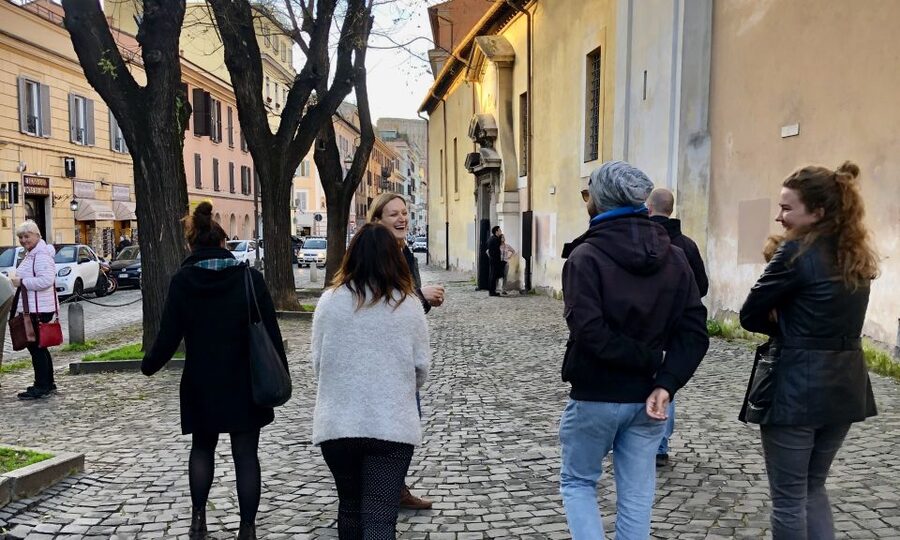
Meet at Piazza di San Clemente, although the exact meeting point can vary by the option booked. There is no hotel pickup or drop-off, so you must make your own way there and return on your own.
Wear comfortable shoes. You will walk through the basilica, use stairs, descend into lower rooms, and possibly walk to Santo Stefano Rotondo. Bring neither food nor drinks into the churches, and leave pets at home.
Do not count on taking interior photographs. Video recording and photography are prohibited inside. This rule can be frustrating if you like to document every stop, but it also keeps the visit quiet and protects the religious atmosphere.
The tour can be canceled because of weather or liturgical-calendar events. If that happens, an alternative date or a full refund is offered. You can also cancel up to 24 hours before the visit for a full refund, and the reserve-now, pay-later option keeps your schedule flexible.
Who should book this experience?
I would recommend San Clemente to you if you have already seen Rome’s major monuments and want a smaller site with a strong sense of discovery. It is also a fine choice early in a Rome visit because it explains how the city’s religions and buildings changed across centuries.
History and archaeology fans will get the most from it, especially those curious about lesser-known pagan traditions. Art lovers should pay close attention to the apse mosaic and the early frescoes. The Santo Stefano extension suits you if you want more early Christian art and can handle disturbing images.
I would skip it if enclosed underground spaces make you uncomfortable, if stairs are a serious problem, or if your main goal is photography. Families should decide based on age and sensitivity, particularly if selecting Santo Stefano Rotondo.
Should you book San Clemente’s underground tour?
Book it if you want Rome to feel less like a list of famous monuments and more like a city built layer by layer. The Mithraic temple, underground river, early frescoes, and gold mosaic give the hour real variety, while the guide supplies the connections that make the site memorable.
Choose the Santo Stefano extension if you have time for a second church and want a more intense look at martyrdom art. Skip the extension if you prefer a shorter visit or are traveling with children who may be upset by graphic scenes.
At $70, this is a specialist tour rather than a bargain admission ticket. For the right visitor, the guide-led interpretation makes the cost worthwhile. If you like archaeology, ancient religion, and unusual Roman sights, I would put San Clemente high on your list.
FAQ
Where does the tour meet?
The listed starting location is Piazza di San Clemente. The precise meeting point may vary depending on the option you book.
How long does the tour last?
The San Clemente visit lasts about one hour. The extended option, including Santo Stefano Rotondo, takes about one to two hours overall.
Is Santo Stefano Rotondo included?
It is included only if you select the extended option during purchase. The additional guided visit lasts 45 minutes.
How far is Santo Stefano Rotondo from San Clemente?
The itinerary includes a walk of about 15 minutes between the two churches.
What languages are available?
Live guides are available in English, Italian, Spanish, French, German, and Portuguese.
Is the tour wheelchair accessible?
No. The architectural structure and underground areas at San Clemente make the tour unsuitable for wheelchair users.
Is the tour suitable for people with claustrophobia?
The underground spaces may not be suitable for people with claustrophobia.
Can I take photographs inside?
No. Photography and video recording are not allowed inside.
What should I wear?
Wear comfortable shoes and church-appropriate clothing. Shorts, short skirts, and sleeveless shirts are not allowed.
Can I cancel the booking?
You can cancel up to 24 hours in advance for a full refund. The activity may also be changed or canceled because of weather or liturgical events, with an alternative date or full refund offered.
Just added around Rome
- Boat excursion to Gaeta with a stop for swimming and snorkeling 2 HOURS★ 5.0 · 240 reviews
- Palatine Hill and Roman Forum Tour with Fast-Track Entrance★ 4.2 · 417 reviews
- Tivoli: Villa D’Este & Villa Adriana Pass & App Audioguide★ 4.4 · 364 reviews
- Tivoli: Villa D’Este Entry Ticket and App Audio Guide★ 4.3 · 191 reviews
- From Rome: Villa D’Este & Villa Adriana Day Trip with Lunch★ 4.4 · 289 reviews
- Vatican Museums & Sistine Chapel Skip-the-Line Guided Tour★ 4.6 · 254 reviews
- Rome: Capitoline Museums and Centrale Montemartini Tickets★ 4.4 · 328 reviews
- Rome: The Three Tenors at St. Paul’s Church Concert Ticket★ 4.7 · 699 reviews
Rome Tours, compared.
Vatican: Museums & Sistine Chapel Entrance Ticket
Read our review →
Vatican Museums & Sistine Chapel Tour with Optional Basilica
Read our review →
Colosseum, Roman Forum & Palatine Guided Tour
Read our review →
Vatican Museums, Sistine Chapel & St Peter’s Basilica Guided Tour
Read our review →
Colosseum, Palatine Hill and Roman Forum Guided Tour
Read our review →
Guided Tour of Colosseum, Roman Forum & Palatine Hill
Read our review →
Colosseum & Forum with Audio Guide App -Optional Arena
Read our review →