
Reviewed · WINE TOURS
Rome: Jewish Ghetto & Campo de Fiori by Night Food Wine Tour
Rome’s best sightseeing may come with a fork in hand. This four-hour evening tour links the Jewish Ghetto, Campo de’ Fiori, and Piazza Navona with seven tasting stops, so Rome’s food traditions arrive alongside its fountains, ruins, and old squares. You may finish with pasta, pastries, gelato, wine, and a very full stomach.
I like the small groups of up to 14 and the way the tour works as a progressive dinner rather than one long restaurant meal. I also like the mix of familiar Roman dishes and less obvious stops, including places where local producers and food artisans take pride in old family recipes. The main drawback is dietary: vegetarian options are available, but this is not suitable for vegans or anyone avoiding gluten or dairy, and it is not a kosher food tour.
Key points at a glance
- Seven tasting venues: Expect up to 15 samples across restaurants, delicatessens, and food shops.
- Rome after sunset: See Piazza Navona, Campo de’ Fiori, Pompey Theatre, the Theatre of Marcellus, and other landmarks at a cooler, calmer hour.
- Food plus local stories: The guide covers Jewish Roman traditions, baroque architecture, ancient ruins, and neighborhood life.
- A proper meal by the end: Tastings can include pasta, fried artichokes, pastries, tiramisu, gelato, espresso, wine, beer, and soft drinks.
- Small-group format: Groups are limited to 14, allowing time for questions and conversation.
- Good first-night choice: The route introduces several central neighborhoods and can help you decide where to return for another meal.
Starting at the Turtle Fountain in the Jewish Ghetto
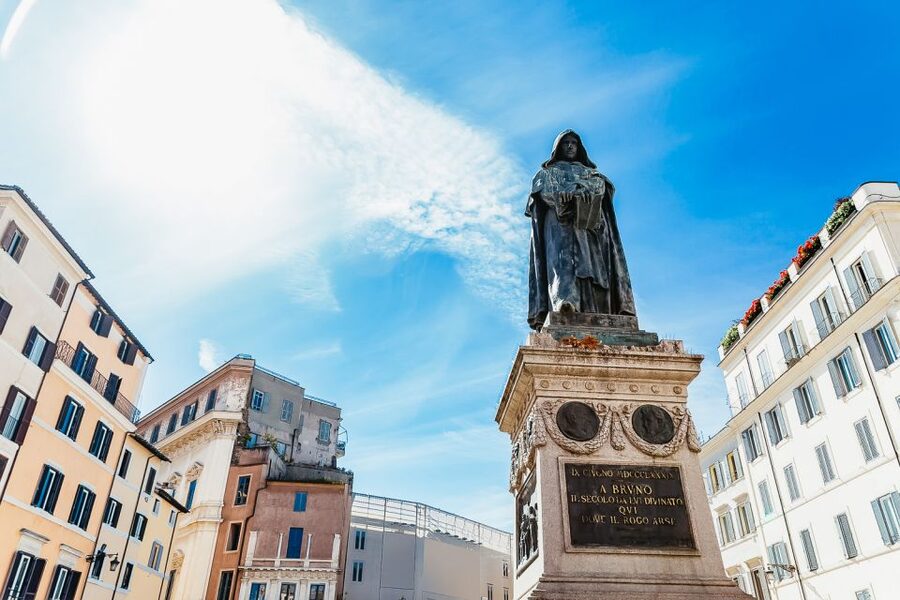
Meet your English-speaking guide at Piazza Mattei, beside the Turtle Fountain. This is a useful starting point because you are already in one of Rome’s most distinctive central neighborhoods, a compact area where ancient ruins, Jewish Roman culture, restaurants, and quiet lanes meet.
The evening begins with a walking introduction to the Jewish Ghetto. The name refers to the historic Jewish quarter, not a separate attraction with an entrance gate or museum ticket. Your guide explains the community’s long connection with Rome and points out details that are easy to miss when you are focused on getting from one famous sight to the next.
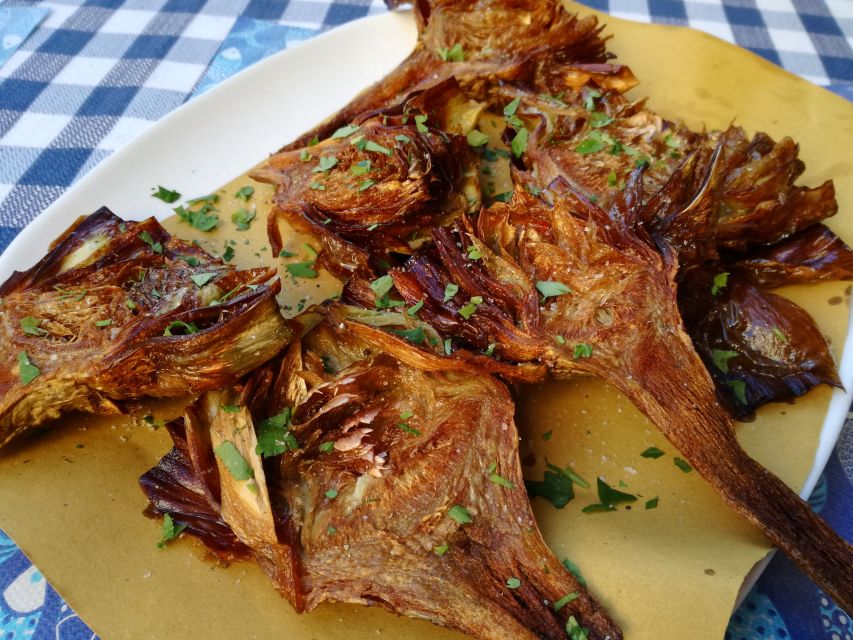
The food here gives the tour its first sense of place. Depending on the evening’s route, you might taste Jewish Roman specialties, fried artichokes, savory appetizers, or other small dishes tied to local cooking. One important clarification: the experience is not a kosher food tour, even though the Jewish Ghetto and its food traditions are central to the route.
I like this opening because it gives context before the larger meal begins. Instead of treating the neighborhood as a quick photo stop, the tour connects its food with the people and traditions that shaped it.
More Evening Tours in Rome
- Rome: City Highlights Open-Top Bus Night Tour
★ 4.1 · 2,038 reviews - Rome: Paranormal Night Walking Tour & Secret Backstreets
★ 4.9 · 1,921 reviews - Vespa Sidecar Tour By Night with Pickup
★ 5.0 · 1,803 reviews
From ancient ruins to the first Roman bites
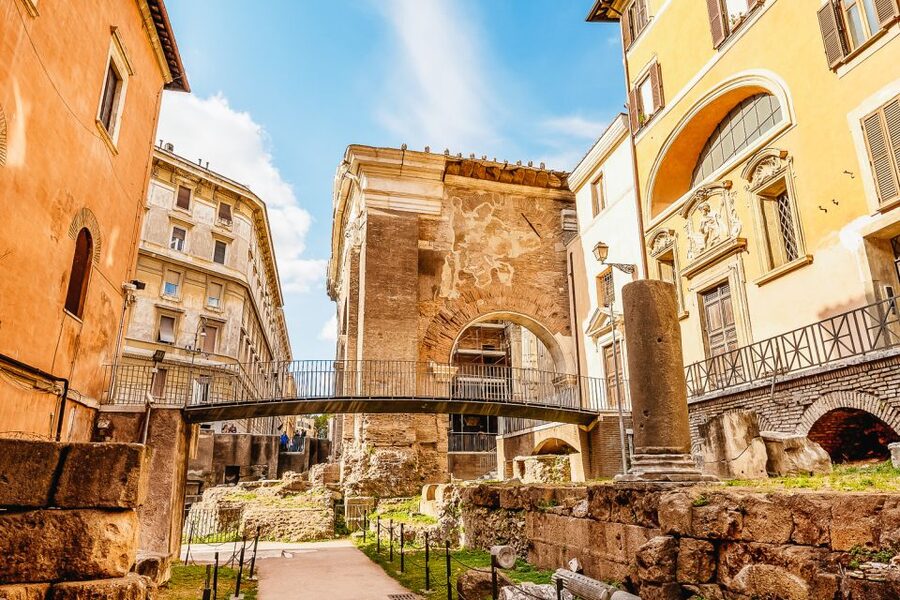
Rome’s center rewards slow walking. Between food stops, the guide takes you past significant remains such as the Theatre of Marcellus, the Temple of Apollo, and the Portico of Octavia. You may also pass the area of Pompey Theatre, traditionally associated with Julius Caesar’s death.
These sites are not presented as a formal archaeological visit, and you should not expect long stops with museum-style interpretation. Their value here is the connection between ordinary streets and Rome’s enormous past. You can be eating a small Roman specialty one minute and looking at ancient stonework the next.
That pace suits this kind of tour. Food gives you a reason to pause, while the walk keeps the evening moving. Guides including Andrea, Maria, Marco, Fabrizia, and others have been praised for balancing history with conversation rather than turning every stop into a lecture.
The route is also practical for first-time visitors. You see several central areas in one evening without arranging separate transport. Since the tour is on foot, wear shoes you can comfortably use for four hours. The walking is not described as strenuous, but the length and repeated stops make comfortable footwear important.
Piazza Navona and Rome’s grand baroque center
The route continues toward Piazza Navona, one of Rome’s most dramatic squares. The piazza occupies the site of the Stadium of Domitian and later served as a market area. Its long shape still hints at the stadium beneath the present-day city.
Here, the focus shifts from ancient Rome to baroque Rome. You will see elaborate façades, statues, and fountains, including Bernini’s Fountain of the Four Rivers. The square can be crowded, but an evening visit lets you experience the architecture after the strongest daytime heat has passed.
Piazza Navona is a useful place for a guide to explain how Rome keeps different centuries in the same frame. You are not simply checking off a fountain. You are learning how an ancient sporting site became a market and then one of the city’s best-known public spaces.
Food stops in this part of the route help break up the sightseeing. The tour may include wine, beer, or soft drinks alongside small bites, with the exact sequence depending on the evening. Several tastings are spread through the walk, so this is not a case of waiting until the final restaurant to eat.
Campo de’ Fiori after the market crowds
Campo de’ Fiori is another key stop. By day, it is known for its market stalls and busy central position. By evening, the character changes as restaurants and bars take over the square.
The tour presents Campo de’ Fiori as both a sightseeing stop and a place shaped by food commerce. That distinction matters. You see more than a famous piazza. You get a sense of how Rome’s markets, shops, kitchens, and social life overlap.
The square can be lively at night, so stay close to your guide when the group moves between venues. The meeting point is straightforward, but central Rome’s lanes and crowds can make it easy to lose sight of a group if you stop for photos.
This is also one of the route’s more recognizable locations. If you have already visited Campo de’ Fiori during the day, the evening setting still gives you a different view. The combination of old architecture, restaurant life, and food tastings makes the square feel less like a checklist stop.
More Food Tours in Rome
- Winner 2025 Rome Twilight Trastevere Food Tour by Eating Europe
★ 5.0 · 5,157 reviews - Rome: Trastevere or Jewish Quarter Street Food Tour
★ 4.8 · 3,839 reviews - Rome Food Tour: Unlimited Tastings with Fine Wine & Barolo
★ 5.0 · 3,365 reviews - Rome: Trastevere Food tour with Free-Flowing Fine Wine
★ 5.0 · 2,853 reviews
Seven venues and up to 15 samples
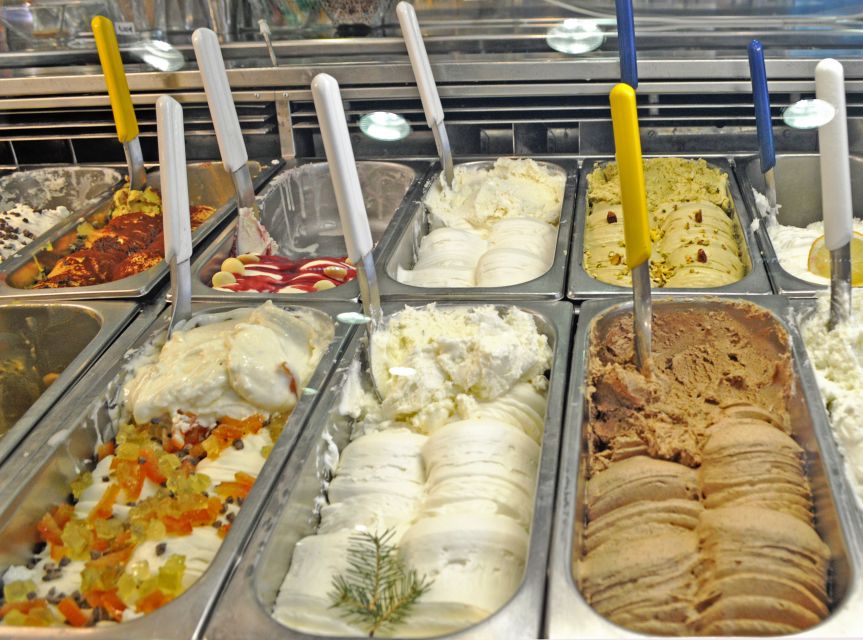
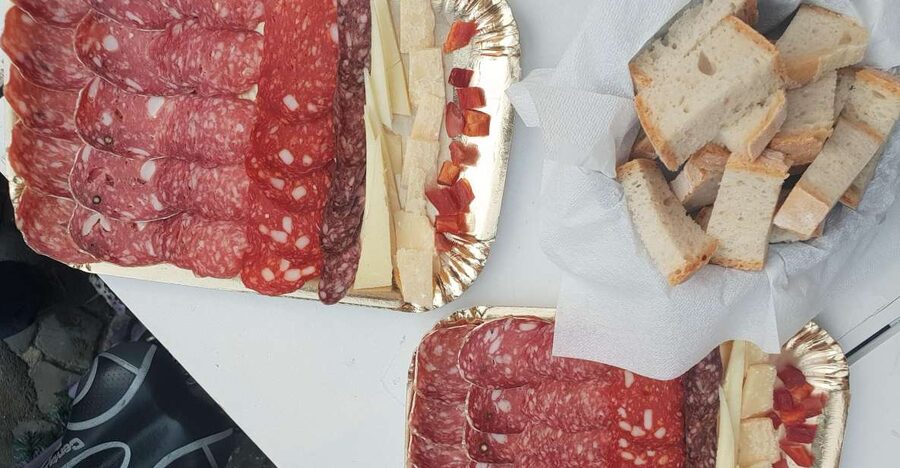
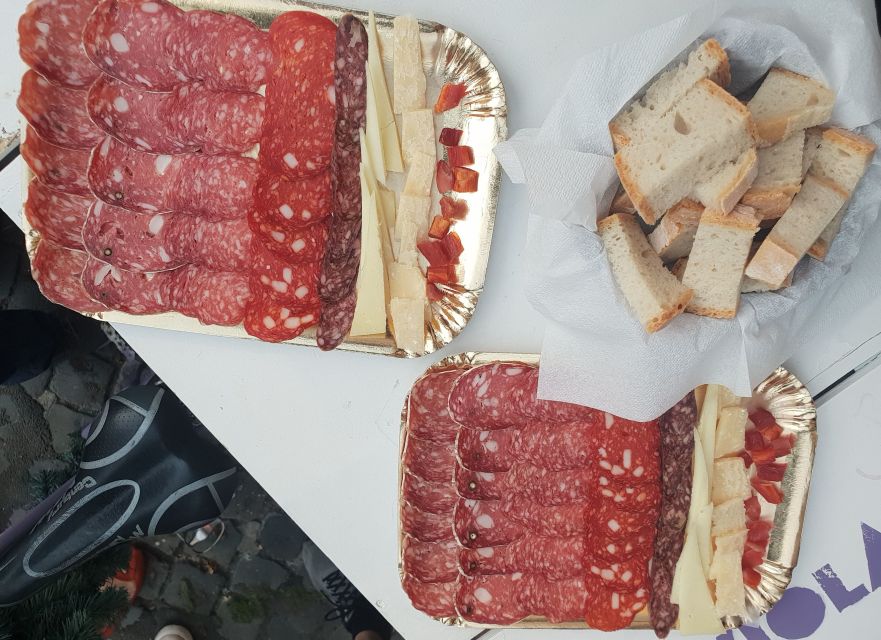
The food is the reason to book this particular walking tour, and the quantity is substantial. The experience includes up to 15 samples at seven venues, with stops at restaurants, delicatessens, and other food-focused businesses.
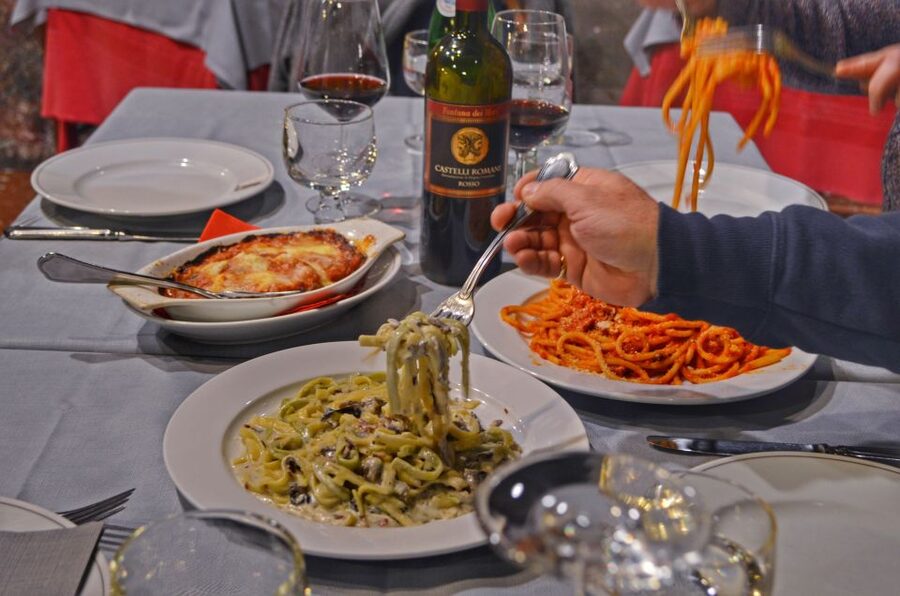
You may taste a range of Roman dishes rather than one repeated category. Examples described by the tour experience include:
- Fried artichokes and Jewish Roman appetizers
- Homemade or traditional pasta dishes
- Pizza and other savory bites
- Pastries and desserts
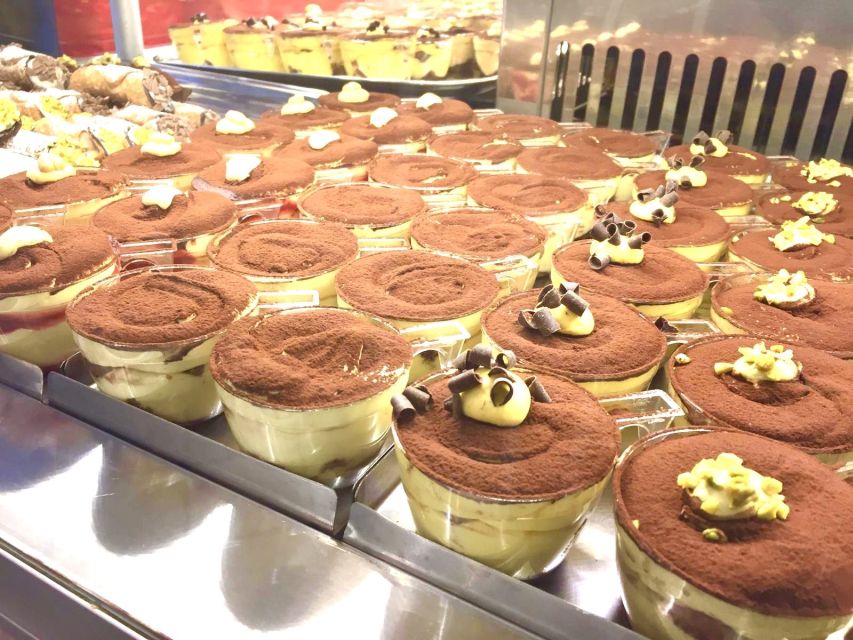
- Tiramisu, gelato, and espresso
- Wine, beer, and soft drinks
The exact menu can change, so do not book with one particular dish as a guarantee. What is consistent is the structure: several small tastings followed by enough food to function as dinner. Some evenings include a sit-down pasta course as the sun goes down, which gives the group a chance to eat together rather than spending the whole night standing at counters.
I appreciate this format because you can compare different styles of Roman food in one evening. You also gain restaurant ideas for later in your stay. Several stops are chosen because of their connection to local food culture, not simply because they are easy places for a large group to enter.
The tour is best approached as a late lunch or early dinner replacement. Come hungry, but do not arrive weak from skipping food all day. The first tastings may be modest, while later courses can be generous. By the end, many people find the meal more filling than expected.
Local guides make the difference
The guide is central to the experience. The tour is offered in English, and guides named in past bookings include Marco, Fabrizia, Fabrizio, Maria, Andrea, Matteo, Julia, Isabel, and others. The individual style will vary, but the strongest guiding approach combines food knowledge, Roman history, and a willingness to answer questions.
Marco has been praised for warmth and humor, including his ability to handle unusual questions without losing the group. Fabrizia has been singled out for her explanations of the Jewish Ghetto and wider Roman history. Maria has been appreciated for keeping the pace moving without rushing. Andrea is often associated with strong explanations of both food and the city.
Those details matter because a four-hour food tour can feel very different depending on the person leading it. A guide who only names dishes will leave you with a full stomach but little understanding. A guide who talks nonstop can make the meal feel like a classroom. The best version of this tour keeps the stories short enough to let you eat, ask questions, and enjoy the streets.
The guides also appear to be good at handling practical problems. One guide kept in touch with a late-arriving group during street closures and arranged for them to join at a later stop. Another continued the tour during heavy rain by moving the explanations under bridges and umbrellas. The tour operates rain or shine, so that flexibility is useful.
Why the evening timing works
Rome is easier to enjoy when the heat fades. The evening schedule puts the route in a more atmospheric setting, especially around Piazza Navona and Campo de’ Fiori. Fountains and illuminated façades take on a different character after dark, while the food stops fit naturally into the city’s dinner hour.
There is also a practical benefit. A four-hour food walk can be tiring in the afternoon, particularly during warmer months. Evening temperatures may be more comfortable, though you should still dress for weather and bring rain protection if needed.
The timing is especially useful on your first night. You get an orientation to several central neighborhoods, learn what Roman dishes you might want to order later, and collect restaurant ideas from the route. It is not a substitute for a full tour of ancient Rome or a dedicated Jewish history visit, but it gives you a strong introduction to the center.
Price, group size, and what the $105 covers
At $105 per person, this is not a budget snack crawl. It is a four-hour guided walk with up to 15 food samples, alcoholic and nonalcoholic drinks, seven tasting venues, and a meal-sized amount of food. Compared with paying separately for several dishes, drinks, and a professional guide, the price can be good value if you arrive hungry and use the experience as dinner.
The group limit of 14 is another reason the cost makes sense. This is not designed for a huge crowd moving between crowded Roman streets. A smaller group makes it easier to hear the guide, ask about ingredients, and speak with the people sharing the table.
Still, you should be clear about what you are buying. Transportation is not included, and this is a walking tour from Piazza Mattei onward. You are paying for food, drinks, storytelling, and access to a planned sequence of venues, not for entry to monuments.
Free cancellation is available up to 24 hours before the tour, and you can reserve while paying later. Starting times vary, so check the schedule when booking.
Who should book this Rome food walk?
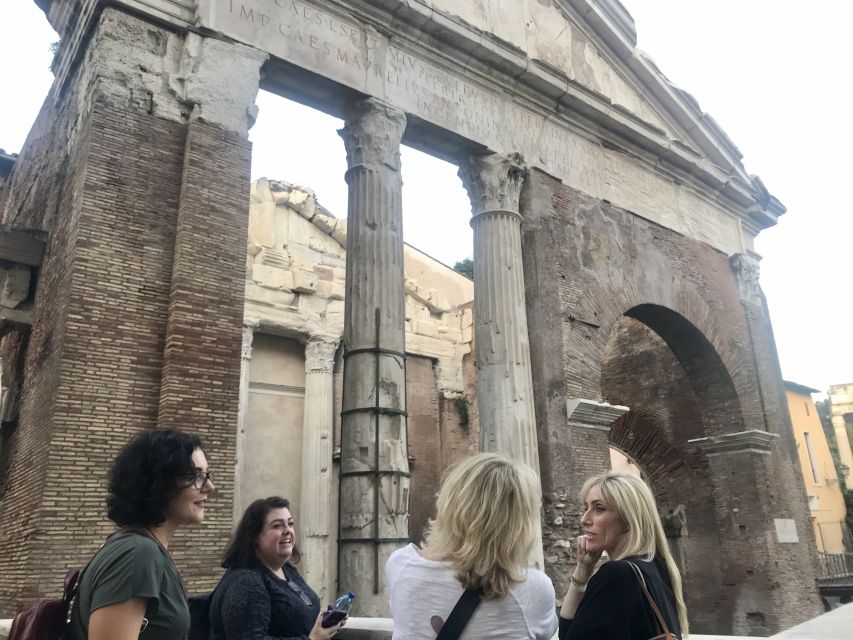
I would recommend it to first-time visitors who want an evening introduction to central Rome without spending the night in one restaurant. It also suits people who enjoy history in small portions, with a dish or drink to keep the walk engaging.
Families can enjoy it, including teenagers, provided everyone is comfortable walking and trying different foods. The social format works well for couples and solo visitors too, since the small group naturally creates conversation.
You should think twice if you need a wheelchair, since the tour is not suitable for wheelchair users. It is also a poor fit for vegans or anyone who must avoid gluten or dairy. Vegetarians can be accommodated, but you should make that clear when booking.
This is not the best choice if you want a strictly formal Jewish history tour, a dedicated wine tasting, or a guaranteed list of exact dishes. Its appeal is the combination of food, neighborhoods, monuments, and informal local explanation.
Should you book the Jewish Ghetto and Campo de’ Fiori tour?
Book it if you want a generous Roman dinner paired with a guided walk through three central areas. The strongest parts are the amount of food, the small group size, the variety of venues, and the way the guides connect dishes with the Jewish Ghetto, ancient ruins, and baroque Rome.
I especially like it as a first or second evening in the city. You will leave with a better sense of where you are, what Roman food to order, and which streets deserve another visit. Just arrive ready to walk, eat a lot, and accept that the menu and guide may vary from one date to another.
Skip it if dietary restrictions make the food difficult, if you need step-free access, or if you prefer choosing every restaurant yourself. For most visitors who can eat the menu and enjoy a social walking pace, $105 buys a full evening rather than a handful of samples.
FAQ
Where does the tour meet?
Meet your guide at Piazza Mattei, beside the Turtle’s Fountain in Rome’s Jewish Ghetto.
How long does the tour last?
The walking food tour lasts four hours.
What language is the tour conducted in?
The tour is conducted in English with a live guide.
How many food stops are included?
The tour visits seven different tasting venues, including restaurants, delicatessens, and other food-focused sites.
How much food is included?
You can receive up to 15 food samples. The tastings can include savory dishes, pasta, pastries, desserts, and other Roman specialties.
Are drinks included?
Yes. Wine, beer, and soft drinks are included.
Is this a kosher food tour?
No. The route explores Rome’s Jewish Ghetto, but the experience is not a kosher food tour.
Can vegetarians join?
Yes. Vegetarian options are available. The tour does not accommodate vegan, gluten-free, or dairy-free diets.
Is the tour suitable for wheelchair users?
No. The experience is not suitable for wheelchair users.
More Wine Tours in Rome
- Rome: Pasta & Tiramisu Class with Fine Wine by the Vatican
★ 4.9 · 4,852 reviews - Rome: Pasta Making Class with Wine, Limoncello, and Dessert
★ 4.9 · 3,177 reviews - Learn to Make Pasta & Tiramisu with Wine and Limoncello Included
★ 5.0 · 2,345 reviews - Rome: Award Winning Trastevere Group Food Tour with Wine
★ 5.0 · 2,273 reviews
Just added around Rome
- Boat excursion to Gaeta with a stop for swimming and snorkeling 2 HOURS★ 5.0 · 240 reviews
- Palatine Hill and Roman Forum Tour with Fast-Track Entrance★ 4.2 · 417 reviews
- Tivoli: Villa D’Este & Villa Adriana Pass & App Audioguide★ 4.4 · 364 reviews
- Tivoli: Villa D’Este Entry Ticket and App Audio Guide★ 4.3 · 191 reviews
- From Rome: Villa D’Este & Villa Adriana Day Trip with Lunch★ 4.4 · 289 reviews
- Vatican Museums & Sistine Chapel Skip-the-Line Guided Tour★ 4.6 · 254 reviews
- Rome: Capitoline Museums and Centrale Montemartini Tickets★ 4.4 · 328 reviews
- Rome: The Three Tenors at St. Paul’s Church Concert Ticket★ 4.7 · 699 reviews
Wine Tours, compared.
Tuscany Day Trip from Florence: Siena, San Gimignano, Pisa and Lunch at a Winery
Read our review →
Pisa, Siena, San Gimignano, and Chianti Experience
Read our review →
Small-Group Wine Tasting Experience in the Tuscan Countryside
Read our review →
Pasta & Tiramisu Cooking Class with Unlimited Wine
Read our review →
Pisa, Siena and San Gimignano Day Trip with Lunch & Wine Pairing
Read our review →Browse the lists this tour appears in