
Reviewed · WALKING TOURS
Rome: Fountains and Squares Small-Group Walking Tour
Rome’s grandest outdoor rooms unfold on this compact walk from the Spanish Steps to the Trevi Fountain. You’ll move from Renaissance church steps to Bernini’s fountains, an ancient temple, a painted illusion, and one of Rome’s most famous wishes, all on foot.
I like the excellent first-day route, since it helps you get your bearings without burying you in dates. I also like the guides’ personal style. Stefano, Bruno, Matteo, Andrea, and Paolo are praised for humor, patience, and strong storytelling. The main drawback is simple: you are outside for most of the tour, so rain, cold, heat, and crowded squares can affect the experience.
Key points to know before you book
- Spanish Steps to Trevi Fountain: The route links several central sights in a logical downhill walk and ends near one of Rome’s busiest monuments.
- Pantheon entry included: You go inside this remarkably intact Roman building, not just past its famous facade.
- Bernini appears twice: See the Fountain of the Four Rivers in Piazza Navona and the half-sunken Barcaccia Fountain at Piazza di Spagna.
- Sant’Ignazio’s painted dome: The church offers one of Rome’s finest trompe l’oeil effects, an architectural illusion that rewards a close look.
- Small group, up to 20 people: The size is manageable, though a group of 20 still requires you to stay close to the guide.
- Strong guide reputation: Stefano receives repeated praise for humor and clear explanations, while Bruno, Matteo, Andrea, and Paolo are also singled out for warm, engaging tours.
A smart introduction to central Rome
At $45.55 per person, this tour sits in the reasonable middle ground for a guided city walk. You are paying for a licensed English-speaking guide, a small-group format, and entry inside the Pantheon, while food and drinks are on your own.
The route works best if you want context rather than a rapid checklist of monuments. Rome can feel like a pile of unrelated treasures at street level. A good guide connects the churches, fountains, emperors, artists, and pop-culture references so the city begins to make sense.
The advertised duration is 2.5 hours, though the route is also described as roughly two hours. That difference may depend on the group, the pace, weather, and how long the guide spends at each stop. Plan on setting aside the full 2.5 hours, and avoid scheduling a ticketed attraction immediately afterward.
The tour is limited to 20 people. That is small enough for a personal feel, especially when the group is closer to 10 or fewer. Some departures have been especially intimate, with only a couple of people attending. At the full limit, you will need to stay near the guide to hear every explanation.
More Walking Tours in Rome
- Rome: Trastevere & Campo de Fiori Street Food Walking Tour
★ 4.9 · 2,768 reviews - Rome: Paranormal Night Walking Tour & Secret Backstreets
★ 4.9 · 1,921 reviews - Rome by Night Walking Tour – Legends & Criminal Stories
★ 4.5 · 1,003 reviews
Meeting at the Spanish Steps
You meet at the bottom of the Spanish Steps, by the entrance to the Keats Shelley Museum, in front of the Acqua di Parma store. Look for a guide wearing a GETYOURGUIDE badge or holding a matching sign, and arrive 10 minutes early.
This is a busy part of Rome, so do not cut it close. The Spanish Steps attract a constant stream of people, and the meeting point is at street level rather than at the top of the staircase. Being early gives you time to identify the guide before the group moves off.
The staircase leads toward Trinità dei Monti, the late Renaissance church above the steps. Even if you have seen the Spanish Steps in photographs, the opening view helps set the tone for the tour: Rome’s great sights are often connected by ordinary streets, short climbs, and small changes in elevation.
Wear shoes that can handle about two hours of city walking. The tour does not work well with a stroller, wheelchair, large bag, or oversize luggage. You also need clothing suitable for churches, including coverage for your shoulders and knees. Shorts, short skirts, and sleeveless shirts are not allowed.
Bernini’s Barcaccia Fountain at Piazza di Spagna
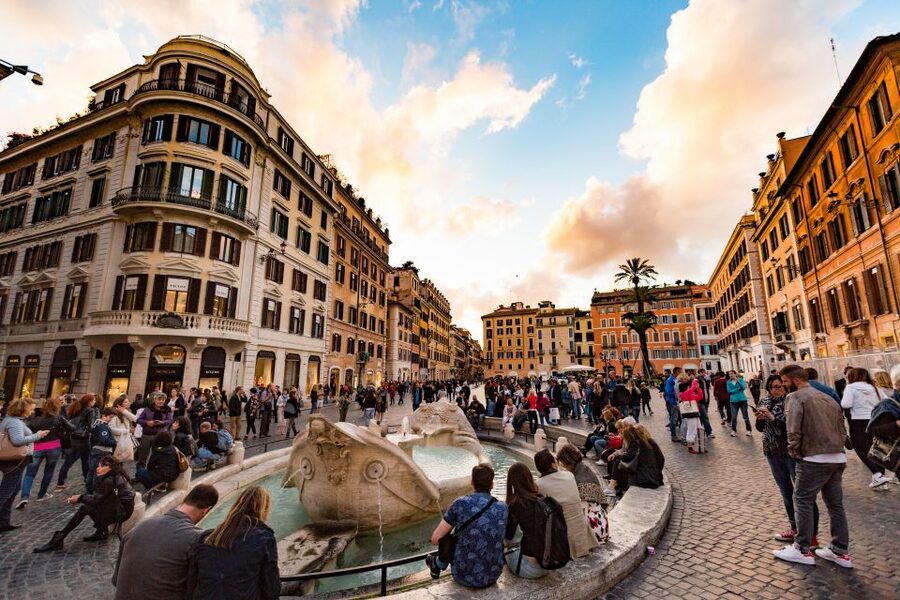
The first major art stop is Piazza di Spagna, where you see Bernini’s Fountain of the Barcaccia. Its design resembles a half-sunken boat, a playful contrast to the formal church steps rising behind it.
This is a useful place to hear how Rome’s fountains were designed as part of the city itself, not added as isolated decorations. Water, street levels, church facades, and open squares work together here. Your guide can give the fountain a human scale that is easy to miss when you are busy taking photographs.
The Spanish Steps and fountain are also a good reminder that Rome’s famous scenes are public spaces. You do not need a museum ticket to encounter major works by Bernini. You simply need to know where to look and what detail matters.
The route continues through the historic center toward Piazza Navona. Expect the walk between sights to be part of the experience. This is not a coach tour that moves from one entrance to the next. You remain on foot, with the city’s streets providing the transitions.
Piazza Navona and the Stadium of Domitian
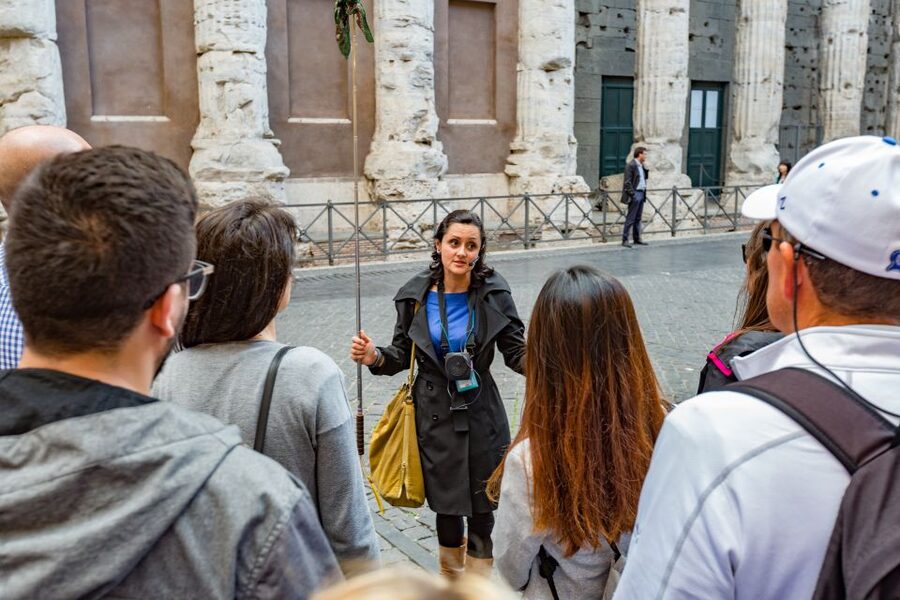
Piazza Navona is the grand centerpiece of the walk. Its long, open shape follows the footprint of the Stadium of Domitian, built in 85 A.D. for athletic games. The modern square still carries the outline of that ancient sports ground, even though its buildings and fountains belong to later periods.
Here, the guide brings together two major Baroque names: Gian Lorenzo Bernini and Francesco Borromini. Their work gives the square much of its theatrical character. The Fountain of the Four Rivers, by Bernini, occupies the center and represents four great rivers from different parts of the world.
I like this stop because it shows Rome’s habit of building one age directly over another. An ancient stadium became the shape of a later public square, and the square became a stage for Baroque sculpture and architecture. You do not need to memorize every date to appreciate the change in scale.
Piazza Navona can be crowded, especially around the fountain. Stay close to the guide and keep an eye on your belongings. The open space makes it easier to see the monuments, but noise and foot traffic can make a long explanation harder to follow when the group is large.
Same city, a completely different sort of day:
- Vatican: Museums & Sistine Chapel Entrance Ticket
★ 4.5 · 144,003 reviews - Vatican Museums & Sistine Chapel Tour with Optional Basilica
★ 4.3 · 67,413 reviews - Colosseum, Roman Forum & Palatine Guided Tour
★ 4.7 · 63,148 reviews - Vatican Museums, Sistine Chapel & St Peter’s Basilica Guided Tour
★ 4.5 · 39,149 reviews
Inside the Pantheon
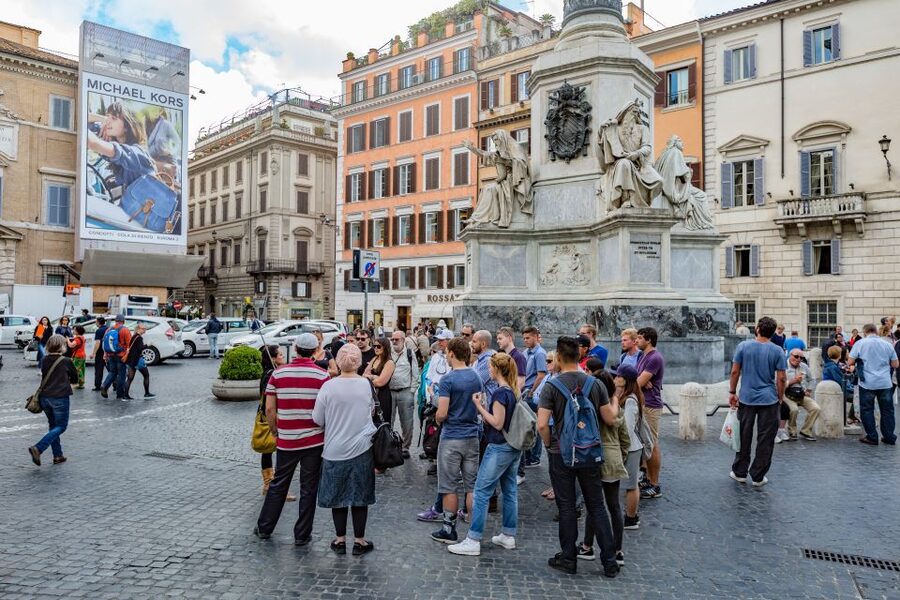
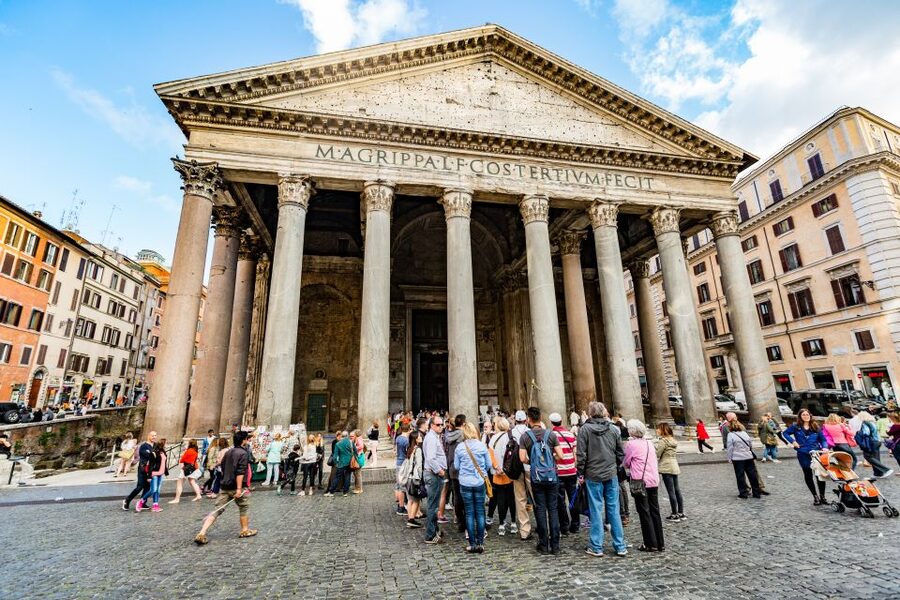
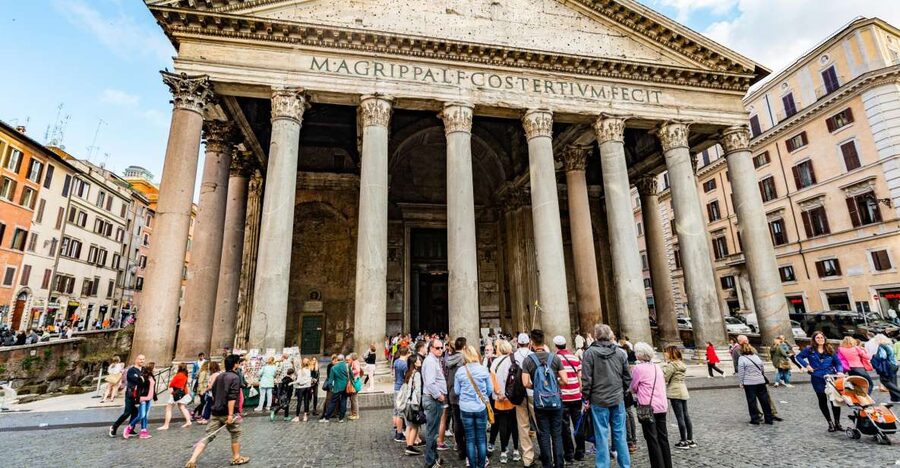
The Pantheon is one of the strongest reasons to choose this walk. The tour takes you inside a remarkably intact Greek-Roman temple, giving you more than the standard exterior photograph.
The building’s survival makes the visit especially useful. In a city filled with ruins, the Pantheon lets you see an ancient interior as a real enclosed space, not just a set of broken columns. Your guide explains how Romans used the building and helps you notice the relationship between its vast interior, stone structure, and opening to the sky.
The Pantheon can be busy, and the time inside may be controlled by the group’s overall schedule. This is not a private architectural inspection. Still, even a short guided visit adds meaning to what can otherwise seem like a quick stop on a crowded street.
The tour description also highlights the tomb of Raphael. That detail gives the Pantheon a later artistic connection: this ancient building became a place of importance long after the Roman period. Rome’s appeal lies partly in this overlap, with imperial, Renaissance, Baroque, and modern associations sharing the same few streets.
Marcus Aurelius and a cinematic Roman detail
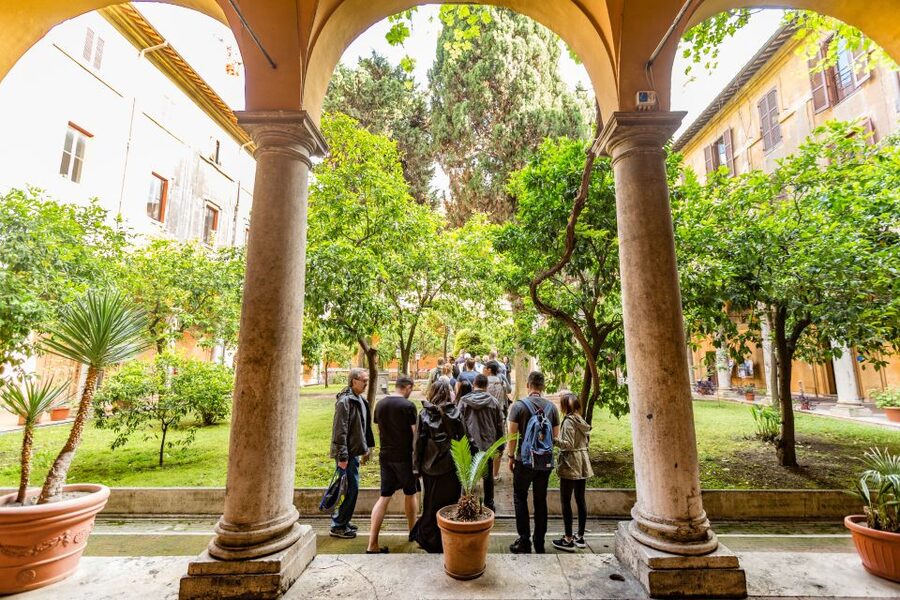
After the Pantheon, the walk reaches the carved Column of Marcus Aurelius. Its reliefs show scenes from the emperor’s military campaigns, spiraling upward around the column.
The column is a good stop for understanding how Roman monuments communicated power. You will not be able to inspect every carving from street level, but the guide can point out the storytelling method and explain why such columns mattered in ancient Rome.
The tour also connects the column with scenes from the film Gladiator. That gives the stop a modern hook, especially if you enjoy seeing how Rome’s ancient monuments continue to shape popular images of the city. The reference should complement the history, not replace it.
This part of the walk also helps break up the larger stops. Instead of spending the entire morning inside famous buildings, you pause at an outdoor monument and keep moving through the central streets.
Sant’Ignazio and the painted dome
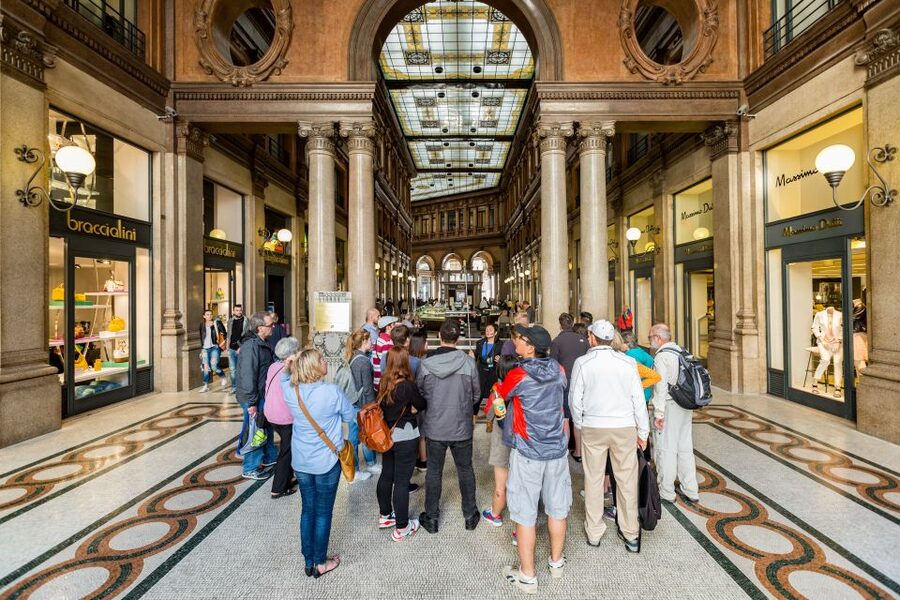
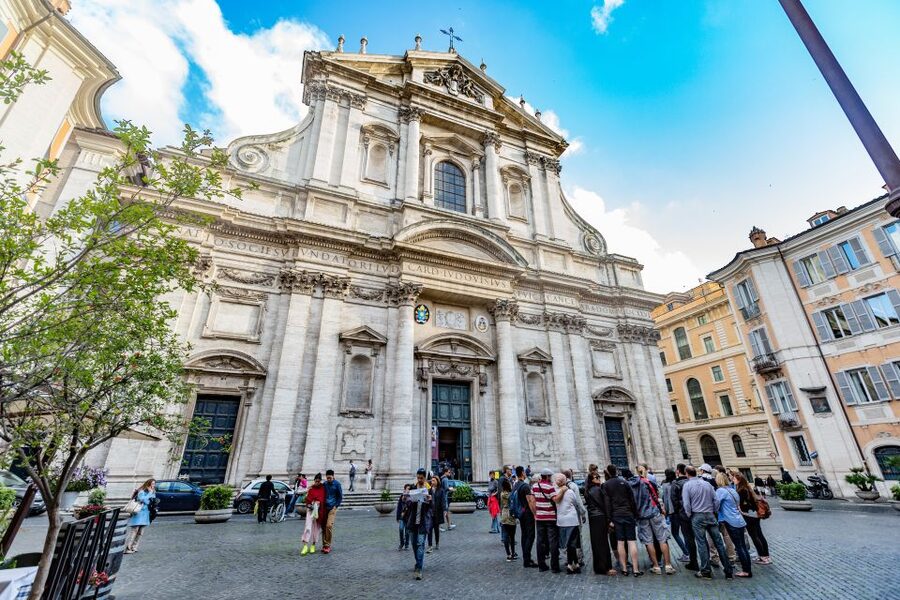
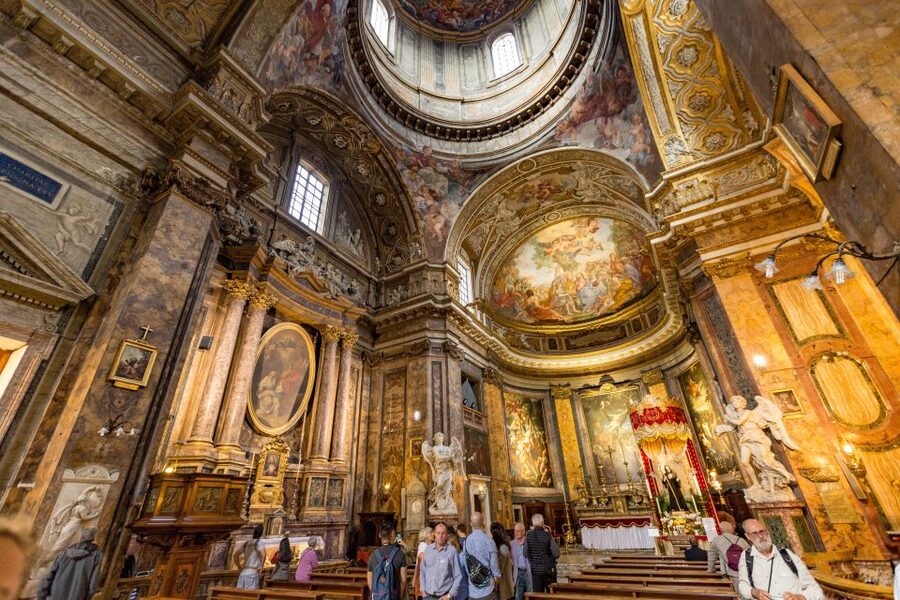
Sant’Ignazio Church offers the tour’s best surprise. Inside, the ceiling uses trompe l’oeil painting to create the appearance of architectural depth. The effect can make a flat surface look like a soaring dome or open structure.
This is the sort of sight you might pass without understanding on your own. Look up slowly and compare the painted forms with the real architecture around them. The illusion depends on perspective, so your position in the church matters.
The church also gives the itinerary a change of mood. The fountains and squares are open, noisy, and exposed. Sant’Ignazio is quieter and more focused, with the guide directing your attention upward. It is a short stop, but one that can linger in your memory longer than another exterior facade.
Dress carefully for this part of the route. Church access requires appropriate clothing, and the same rule applies to the Pantheon and other religious or private areas along the way. Bring something light that covers your shoulders and knees if your clothing does not already meet the requirement.
Ending at the Trevi Fountain
The final stop is the Trevi Fountain, where you can throw in a coin and make the traditional wish to return to Rome. The fountain is a fitting ending because it combines spectacle, water, sculpture, and one of the city’s most familiar rituals.
Trevi is often crowded, and the last stop can feel rushed if the group has lost time earlier or if the weather turns bad. One person specifically found the final stop hurried, so you should not expect a long, quiet viewing period. If Trevi matters greatly to you, return later on your own when you have more time.
The tour ends back at the meeting point, according to the activity details. That wording is worth noting because the described sightseeing route runs from the Spanish Steps to Trevi Fountain. Confirm the end-of-tour instructions with the guide on the day, especially if you have plans immediately afterward.
The fountain is also a useful place to ask your guide for practical suggestions. Guides such as Stefano have recommended other places to visit, and several guides are praised for helping people decide what to do with the rest of their time in Rome.
The guide makes the difference
The strongest part of this experience is the human element. Stefano is repeatedly praised for combining humor with clear explanations, and for keeping the group together so everyone can hear. Bruno is described as personable and flexible, with one tour even including a tiramisu treat. Matteo is praised for enthusiasm and respect, while Andrea and Paolo also receive warm mentions.
Guide assignments can change, so you should not book with a guarantee that one particular person will lead your departure. Still, the pattern is encouraging: the guides are expected to bring energy, answer questions, and make the history approachable.
The tour can continue in poor weather. A cold, rainy departure was still considered worthwhile because the guide kept the group interested and entertained. That does not make rain pleasant, though. If the forecast is bad, bring weather protection and accept that the walk will be less comfortable.
The rules also say that translating during the tour is not allowed. This keeps the group moving and helps the guide maintain a single rhythm, but it means the tour is best for people who can follow English comfortably.
Who should book this walk?
I would choose this tour for a first or second day in Rome, especially if you want a clear introduction before visiting the Colosseum, Roman Forum, or Vatican. The route gives you central landmarks, a little ancient Rome, a lot of Renaissance and Baroque Rome, and enough street walking to understand how the historic center fits together.
It suits adults and children age 10 or older who can walk steadily for the full duration. It is not suitable for children under 10, wheelchair users, or anyone traveling with a stroller or large luggage.
You should also choose it if you prefer stories and connections over long museum visits. The Pantheon is the only major interior visit listed, while much of the tour takes place in public squares and streets.
This is less suitable if you need a fully accessible route, dislike walking in bad weather, or want extensive time at each monument. It is also not a food tour. A guide may point out a good gelato stop, and one guide has offered tiramisu, but food and drinks are not included.
Practical value at $45.55
At $45.55, the tour offers solid value if you would otherwise wander between these sights without context. The licensed guide is the main purchase, and the small group makes it easier to ask questions than on a large bus excursion.
You should still compare the cost with your priorities. If you only want photographs of the Spanish Steps, Piazza Navona, and Trevi Fountain, you can see those public places without paying. The price makes more sense if you value entering the Pantheon, learning the story behind the monuments, and getting a well-paced route through the center.
Free cancellation up to 24 hours before the start gives you useful flexibility, and you can reserve now and pay later. Tips are not included, but you may tip the guide if the tour earns it.
Should you book the Fountains and Squares walk?
Book it if you want an entertaining orientation to central Rome, enjoy walking, and can follow English comfortably. The route is packed without being absurdly long, the Pantheon adds real value, and the best guides turn dates and architecture into a lively conversation.
Skip it if you need step-free access, dislike crowds, or want a slow visit devoted to one monument. For most first-time visitors who have 2.5 hours to spare, this is a practical way to meet Rome through its fountains, churches, ancient stones, and public squares.
FAQ
How long does the tour last?
The activity is listed as 2.5 hours. The route is also described as roughly two hours, so plan for the full 2.5-hour time slot.
Where does the tour begin?
Meet at the entrance to the Keats Shelley Museum at the bottom of the Spanish Steps, in front of the Acqua di Parma store.
How will I identify the guide?
The guide will wear a GETYOURGUIDE badge or hold a sign with the same logos.
Where does the tour end?
The activity details state that the tour ends back at the meeting point.
Is the Pantheon included?
Yes. The tour includes going inside the Pantheon.
Is the tour conducted in English?
Yes. The listed live tour language is English.
What is the maximum group size?
The small group has a maximum of 20 participants.
Are food and drinks included?
No. Food and drinks are not included, and eating and drinking are not allowed during the tour.
Can I bring a stroller or wheelchair?
No. The route is not suitable for strollers or wheelchair users.
What clothing should I wear?
Wear comfortable clothes and shoes, with shoulders and knees covered for churches, private areas, and some monuments. Shorts, short skirts, and sleeveless shirts are not allowed.
Can I cancel the booking?
Yes. You can cancel up to 24 hours in advance for a full refund. You can also reserve now and pay later.
Just added around Rome
- Boat excursion to Gaeta with a stop for swimming and snorkeling 2 HOURS★ 5.0 · 240 reviews
- Palatine Hill and Roman Forum Tour with Fast-Track Entrance★ 4.2 · 417 reviews
- Tivoli: Villa D’Este & Villa Adriana Pass & App Audioguide★ 4.4 · 364 reviews
- Tivoli: Villa D’Este Entry Ticket and App Audio Guide★ 4.3 · 191 reviews
- From Rome: Villa D’Este & Villa Adriana Day Trip with Lunch★ 4.4 · 289 reviews
- Vatican Museums & Sistine Chapel Skip-the-Line Guided Tour★ 4.6 · 254 reviews
- Rome: Capitoline Museums and Centrale Montemartini Tickets★ 4.4 · 328 reviews
- Rome: The Three Tenors at St. Paul’s Church Concert Ticket★ 4.7 · 699 reviews
Walking Tours, compared.

Guided Walking Tour & Last Supper Visit with Ticket
Read our review →
Rialto Bridge & Offbeat Unusual Venice Walking Tour
Read our review →
Private 3 hrs Venice Tour: St Mark’s, Walking tour & Boat tour
Read our review →
Skip the line: Uffizi and Accademia Small Group Walking Tour
Read our review →Browse the lists this tour appears in