
Reviewed · VESPA & SIDECAR TOURS
Rome Driving Tour By Vintage Fiat 500
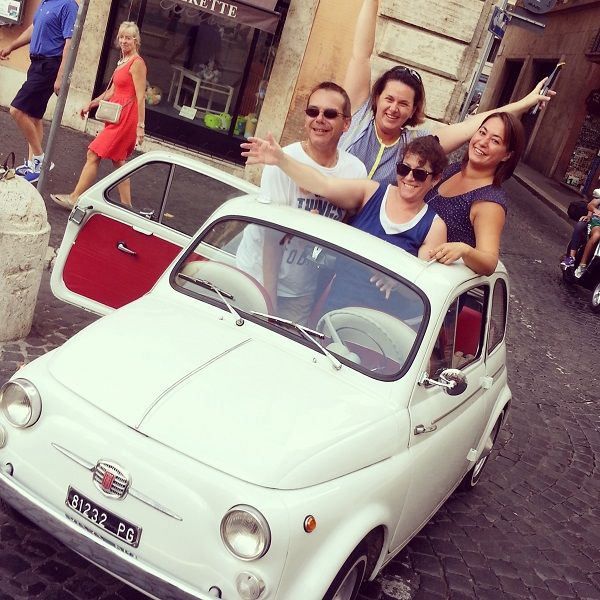
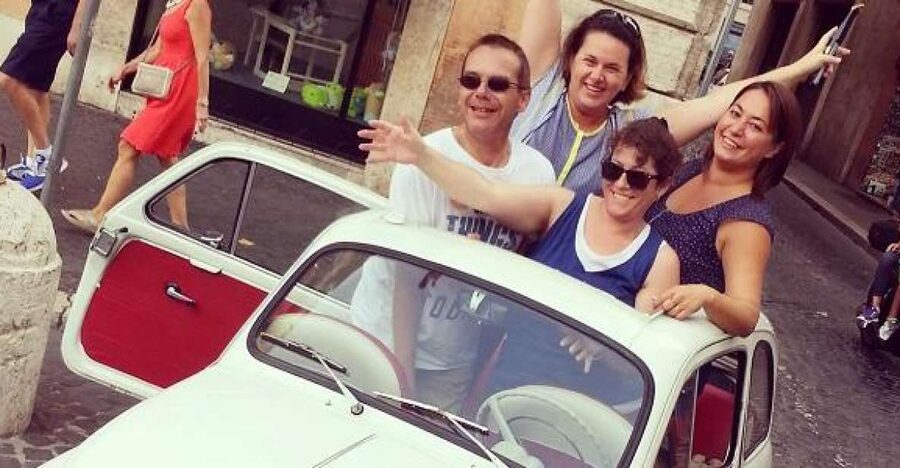
Rome is at its most entertaining from behind the wheel of a tiny vintage Fiat 500. You follow a guide through lanes too tight for tour buses, pass the Colosseum and Circus Maximus, and turn heads as if you were filming an Italian movie. The car is part of the show, not just a way to get around.
I like the access to small streets and lesser-seen viewpoints, especially around Aventine Hill and Trastevere. I also like the helpful convoy setup, with a lead guide giving commentary by walkie-talkie and, on many tours, a scooter guide helping the group through traffic. The main catch is simple: you must be confident driving a manual car in Rome.
- Vintage Fiat 500 driving: Take the wheel yourself, or request a driver for an added fee.
- Rome’s compact route: See the Colosseum, Arch of Constantine, Circus Maximus, Aventine Hill, the Tiber, and Trastevere.
- Small-group access: The cars can reach narrow streets and corners that large buses cannot.
- Guided convoy: Follow the lead car at a leisurely pace, with commentary over walkie-talkie.
- Two tour lengths: Pick a 1.5-hour outing or the fuller 3-hour route.
- Important limitation: Each car accepts three adults, or two adults and two children, and the driver must handle a manual transmission.
Starting beside the Colosseum
The meeting point is in front of Hotel Palazzo Manfredi at 125 Via Labicana, about 100 meters from the Colosseum. Arrive 15 minutes early. The cars return to this same spot at the end, which makes the tour easy to fit into a day of sightseeing around ancient Rome.
That starting point gives you an immediate sense of occasion. You are not collecting a modern rental car at a distant office. You are stepping into a tiny classic Fiat near one of the world’s most famous monuments, then setting off into Roman traffic with the Colosseum close by.
The Fiat 500s are small compared with modern cars. That is part of their charm and part of the challenge. You will have less room for bags, so leave luggage and large backpacks elsewhere. The cars have soft-top roofs, too, so bring a hat if you are sensitive to sun.
What driving a vintage Fiat in Rome feels like
The tour moves slowly, never faster than 30 kilometers per hour, or about 18.5 miles per hour. You are not signing up for a speed session. You are signing up for a careful, good-humored procession through Rome, with plenty of time to look around.
The cars use manual transmissions. The operator expects the driver to have real experience with a manual car, not just a few practice sessions. If the guide decides you cannot safely manage the car, you may be refused the driving portion without a refund, so take this requirement seriously.
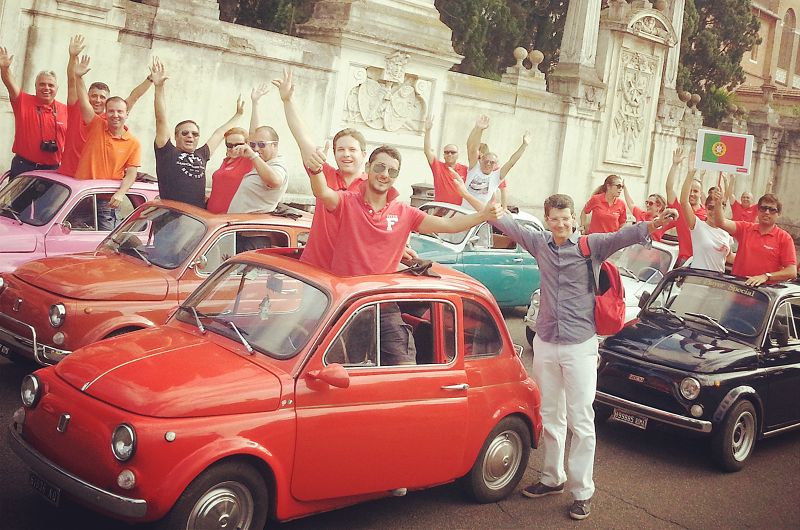
Rome traffic can feel chaotic, particularly if you are used to driving on the other side of the road. The convoy makes things easier. You follow the lead Fiat, listen to instructions, and stay with the group while a second guide on a scooter may help protect the convoy and direct traffic.
That support is one of the most useful parts of the outing. You are still driving in Rome, but you are not trying to plan every turn, read a map, and find the sights at the same time. Several people who found the traffic intimidating were able to relax after getting used to the car and the pace.
More Vespa Tours in Rome
- Vespa Sidecar Tour By Night with Pickup
★ 5.0 · 1,803 reviews - Rome Morning Vespa Sidecar Tour in Rome with Cappuccino
★ 5.0 · 1,771 reviews - Rome Vespa Scooter Tour with Professional Photographer
★ 5.0 · 857 reviews
Colosseum, Arch of Constantine, and Circus Maximus
The opening section takes you through the great ancient sights near the starting point. You see the Colosseum, then pass the Arch of Constantine and Circus Maximus. These are familiar names, but seeing them from a tiny Fiat changes the scale of the experience.
The Colosseum is usually approached on foot, with crowds and ticket lines shaping the visit. Here, you get a moving view from the surrounding streets, without entering the amphitheater. That distinction matters: this is a city tour with driving and photo stops, not an archaeological-site visit.
At the Arch of Constantine, the guide may stop so you can get out and take pictures. The same is true at Circus Maximus. These pauses break up the driving and give you a chance to see the car in its setting, which is useful because the Fiat itself attracts plenty of attention.
Do not expect a long lecture at every stop. The guide gives brief commentary before you move on, often through a walkie-talkie. The strongest part of the tour is the blend of short historical notes, local routes, and time behind the wheel.
Aventine Hill and the secret keyhole
Aventine Hill adds one of the more unusual stops. The route includes the secret keyhole and Piazza dei Cavalieri di Malta, also called the Piazza of the Knights of Malta.
This section feels different from the big Roman monuments. You are looking at a quieter corner of the city and taking part in a small visual trick rather than checking off another famous ruin. The keyhole is a memorable addition because it gives the outing a sense of discovery without needing a long detour.
The stop also shows why a small car works well here. A large sightseeing bus would not offer the same easy access to narrow streets and compact viewpoints. You are not only seeing Rome’s headline sights. You are also being guided toward places you might not think to include on your own.
The precise route can change because of traffic or public events. That is normal in Rome, where streets may close or traffic patterns may shift without much warning. Think of the listed sights as the planned framework, not a guarantee that every turn will happen in exactly the same order.
Along the Tiber and into Trastevere
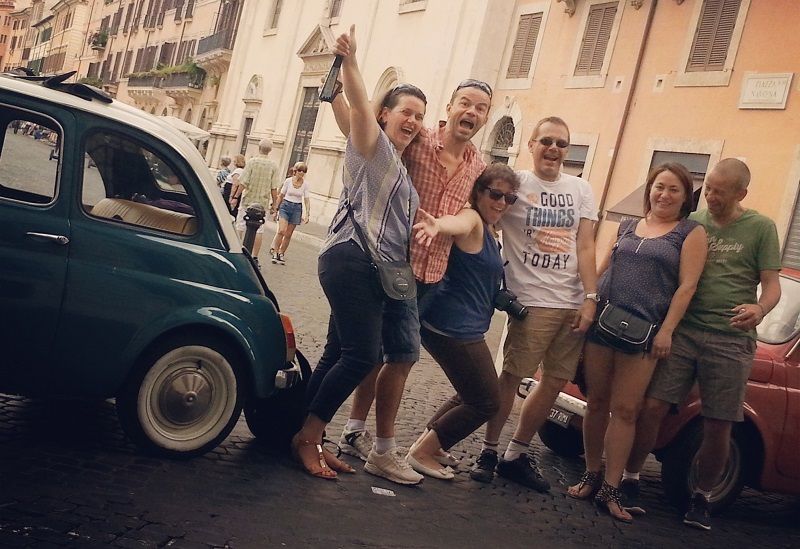
The drive along the Lungotevere follows the banks of the River Tiber. This stretch gives you a broader view of the city after the tight lanes around the ancient center. You can enjoy the river, the passing buildings, and the feeling of moving through Rome rather than simply stopping at monuments.
Then the route crosses into Trastevere. The neighborhood is known here for its narrow streets, where a Fiat 500 feels much more at home than a tour coach. The car’s compact size lets you follow the guide through spaces that would be awkward or impossible for a large vehicle.
Trastevere is also where the tour feels most like a local city ride. You are not just pointing a camera at a monument. You are steering through a lived-in neighborhood, with the guide explaining what you are seeing and keeping the group moving at a relaxed pace.
The tradeoff is that you will not linger at every corner. This is a driving experience first. If your main goal is to spend an hour wandering Trastevere on foot, book separate time for that. The Fiat tour gives you a moving introduction and a different view of the district.
Same city, a completely different sort of day:
- Vatican: Museums & Sistine Chapel Entrance Ticket
★ 4.5 · 144,003 reviews - Vatican Museums & Sistine Chapel Tour with Optional Basilica
★ 4.3 · 67,413 reviews - Colosseum, Roman Forum & Palatine Guided Tour
★ 4.7 · 63,148 reviews - Vatican Museums, Sistine Chapel & St Peter’s Basilica Guided Tour
★ 4.5 · 39,149 reviews
Why the guide matters so much
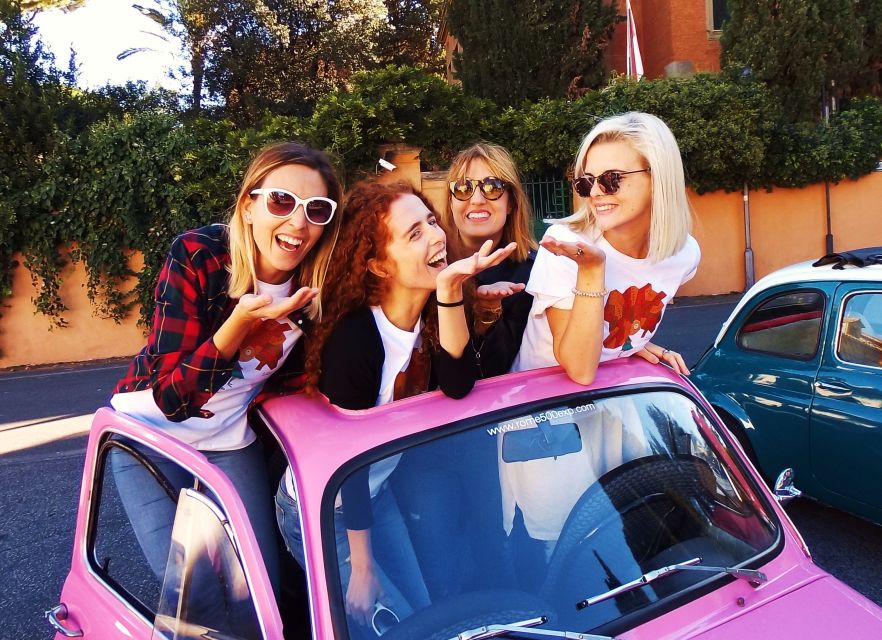
The guide can make or break a driving tour, and this experience relies heavily on the person leading your convoy. Guides named in the tour feedback include Alex, Alexis, Francesco, Fernando, Marco, Max, and Mike.
Alex is repeatedly singled out for his patience, energy, history commentary, and help with nervous drivers. Alexis is praised for being friendly, funny, and full of information. Francesco is noted for his humor, useful explanations, and willingness to take photographs.
You should not assume you will receive a particular guide, but these names give you a sense of the style to expect. The guide is not simply pointing out buildings. He or she sets the pace, explains the route by walkie-talkie, helps with traffic, and often takes photographs of you with the car.
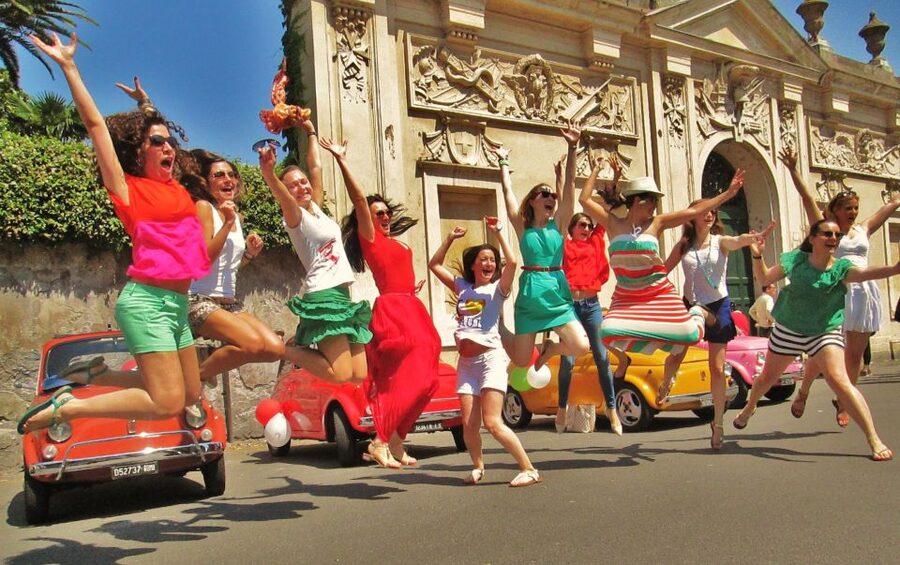
That photography help is a useful extra. You can enjoy the drive without constantly stopping to take selfies, and the cars make strong subjects in pictures. Their bright colors and small size look especially good against Rome’s ancient walls and stone streets.
The tour is available in English, French, and Italian. Commentary is brief enough to follow while driving, rather than being a long classroom talk. That suits the activity, since you need to keep your attention on the road.
Choosing between 1.5 and 3 hours
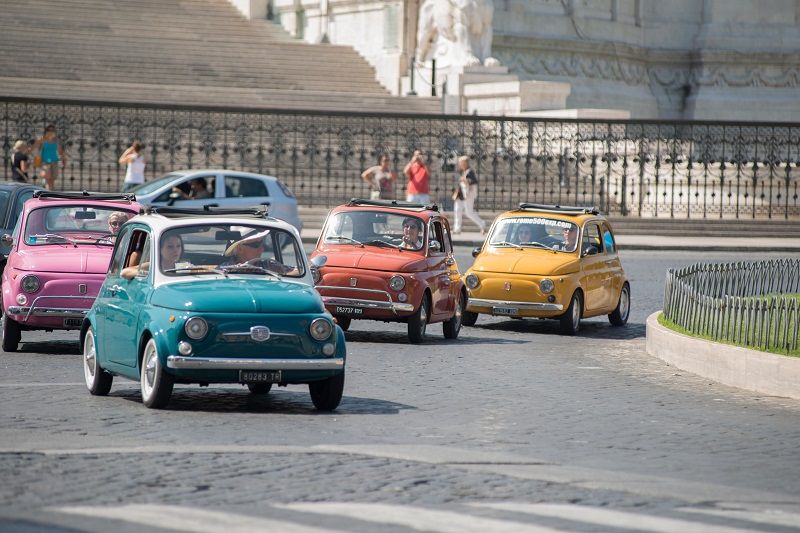
The 1.5-hour version works if you want the novelty of driving a vintage Fiat and a quick look at Rome’s main sights. It can fit neatly into a packed itinerary, especially if you are already visiting the Colosseum and need an activity that begins nearby.
The 3-hour tour gives the experience more breathing room. You have more time for the river drive, Trastevere, Aventine Hill, photo stops, and the simple pleasure of learning the car’s controls without feeling rushed.
I would choose three hours if the Fiat itself is a major reason for booking. It takes a little time to get comfortable with an old manual car, particularly in Roman traffic. A longer outing also gives the guide more room to include the smaller streets and unusual stops that make this different from a standard city circuit.
The shorter tour makes sense for families with young children, visitors with limited time, or anyone who wants a taste rather than a full afternoon activity. Remember that each car holds either three adults or two adults and two children. Larger groups will be split between cars.
Is $169.93 per person good value?

At $169.93 per person, this is not a cheap way to get from one Roman sight to another. You are paying for the vintage car, fuel, insurance, tour leader, route planning, and the unusual chance to drive through central Rome with support.
The value improves if you see it as a special experience rather than ordinary transport. The car rental alone would not give you a guide-led route, a convoy, traffic assistance, or the confidence of having someone show you where to go. You also avoid the stress of navigating Rome’s streets while trying to locate the sights.
The price feels harder to justify if you do not care about classic cars or if you only want a history lecture. A walking tour and public transport will cover more history for less money. This tour earns its price through the combination of driving, access, photographs, and the attention the cars receive on the street.
The included insurance and fuel simplify the cost. Food, drinks, and admission to archaeological sites, galleries, and villas are not included. You can stop for a cappuccino, espresso, or gelato, but plan to pay for those yourself.
Who should book this Fiat 500 tour?
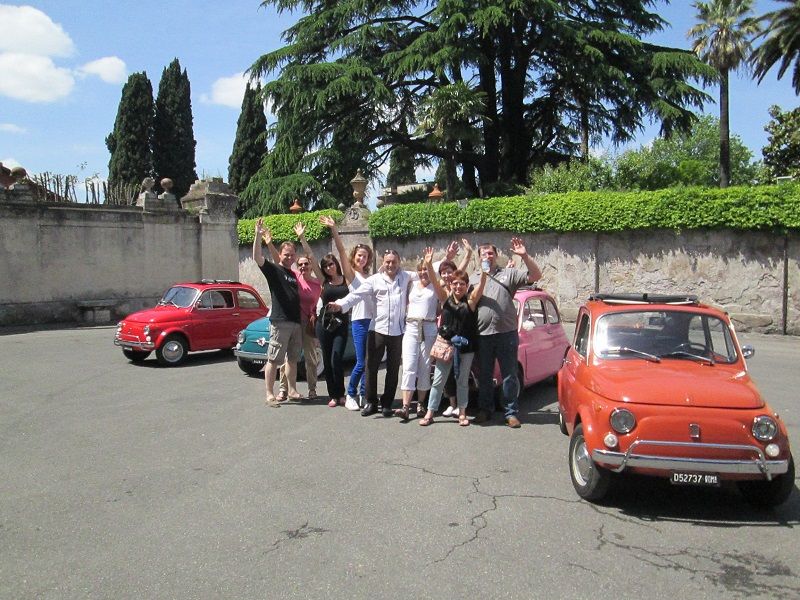
I would recommend it to confident manual drivers who want to see Rome in a playful, unusual way. It is especially good for couples, families with children who fit the seating limits, and friends who can share a car and enjoy the attention.
Classic-car fans will get the most from it. The Fiat is not just decoration. You are actually driving it through the city, feeling the older controls and the modest pace while modern Rome moves around you.
It can also suit nervous drivers if you have solid manual experience. The guides are there to help, and the convoy keeps the route organized. But you should not book this as a way to learn manual driving from scratch.
The activity is not suitable for people with back problems or mobility impairments. The cars are small, low, and old-fashioned, and the tour involves getting in and out for stops. Anyone who dislikes traffic, sun, or public attention may prefer a standard walking or bus tour.
Bring your driver’s license and an international driver’s license. The driver must carry a valid European Union license or international license. Check the document rules that apply to your nationality before departure.
What to know before you go
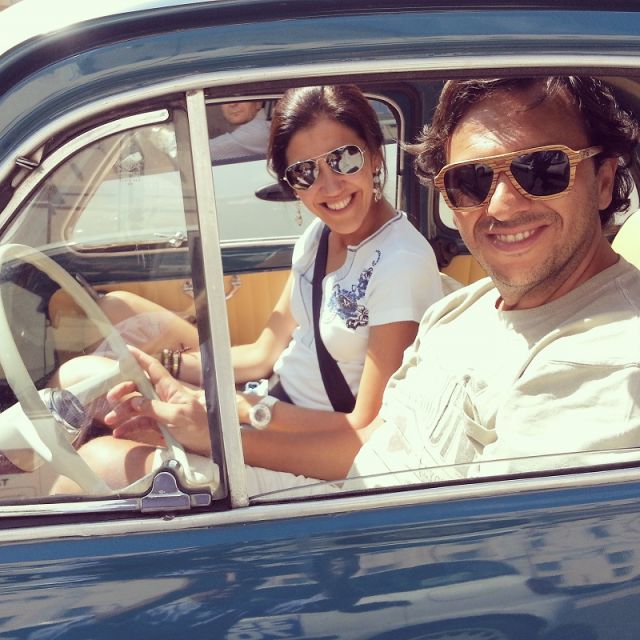
Arrive 15 minutes early at Hotel Palazzo Manfredi. The meeting point is close to the Colosseum, but you still need time to identify your guide, settle into the car, and receive instructions before the group leaves.
Wear comfortable clothing and bring sun protection. The soft-top roof can make the ride feel open and bright, which is pleasant on a mild day but less comfortable under strong sun without a hat.
Leave large bags behind. The cars have limited space, and the operator specifically does not allow luggage or large bags.
You can request a driver for a small surcharge if you would rather enjoy the route than handle the manual transmission. That option is worth considering if you meet the license requirement but do not feel ready for Roman traffic.
Free cancellation is available up to 24 hours before the activity for a full refund. You can also reserve now and pay later, which helps if your Rome schedule is still shifting.
Should you book it?
Book this tour if you want an active Rome experience, not just another seat in a vehicle. The Colosseum, Circus Maximus, Tiber, Aventine Hill, and Trastevere provide the setting, but the small Fiat, convoy, guide, and narrow streets provide the real reason to go.
Choose the three-hour option if you love classic cars or want the fullest route. Choose 1.5 hours if you have limited time. Skip it if you cannot drive a manual car confidently, need room for luggage, or want extended visits inside Rome’s archaeological sites.
For the right person, this is one of the more memorable ways to get around the city. You will see major sights, reach streets a bus cannot use, and probably find yourself waving back as Romans and tourists stop to admire your candy-colored car.
FAQ
Where does the Rome Fiat 500 tour start?
The tour starts in front of Hotel Palazzo Manfredi at 125 Via Labicana, about 100 meters from the Colosseum. You should arrive 15 minutes before the scheduled start.
Where does the tour end?
The activity ends back at the same meeting point near Hotel Palazzo Manfredi.
How long is the tour?
You can choose a 1.5-hour tour or a 3-hour tour. Starting times depend on availability.
Do I need to drive a manual car?
Yes. The driver must be experienced with manual transmission. Occasional practice is not considered enough, and the operator can refuse to let an inexperienced driver use the car without a refund.
What driving license do I need?
The driver must carry a valid European Union driving license or an international driving license. Bring your driver’s license and international driving license.
How many people fit in one Fiat 500?
Bookings are accepted for three adults, or two adults and two children per car.
Can I book a driver instead of driving?
Yes. A driver can be provided for a small additional fee if you prefer not to drive the vintage Fiat yourself.
Just added around Rome
- Boat excursion to Gaeta with a stop for swimming and snorkeling 2 HOURS★ 5.0 · 240 reviews
- Palatine Hill and Roman Forum Tour with Fast-Track Entrance★ 4.2 · 417 reviews
- Tivoli: Villa D’Este & Villa Adriana Pass & App Audioguide★ 4.4 · 364 reviews
- Tivoli: Villa D’Este Entry Ticket and App Audio Guide★ 4.3 · 191 reviews
- From Rome: Villa D’Este & Villa Adriana Day Trip with Lunch★ 4.4 · 289 reviews
- Vatican Museums & Sistine Chapel Skip-the-Line Guided Tour★ 4.6 · 254 reviews
- Rome: Capitoline Museums and Centrale Montemartini Tickets★ 4.4 · 328 reviews
- Rome: The Three Tenors at St. Paul’s Church Concert Ticket★ 4.7 · 699 reviews
Vespa & Sidecar Tours, compared.
Florence Vespa Tour: Tuscan Hills and Italian Cuisine
Read our review →
Rome Morning Vespa Sidecar Tour in Rome with Cappuccino
Read our review →
Chianti Vespa Tour with Lunch from Florence & E-car Option
Read our review →
Rome Vespa Scooter Tour with Professional Photographer
Read our review →
Highlights Vespa Sidecar Tour with Coffee and Gelato
Read our review →
Self-Drive Vintage Fiat 500 Tour from Florence: Tuscan Hills and Italian Cuisine
Read our review →
Self-Drive Vintage Fiat 500 Tour from Florence: Tuscan Wine Experience
Read our review →Browse the lists this tour appears in