Reviewed · ROME TOURS
Rome: Domus Aurea, Nero’s Golden House guide tour
Nero’s Golden House is one of Rome’s most unusual ancient sites. You walk through dark, chilly rooms built for an emperor whose palace once covered an enormous part of the city, then use virtual reality to picture the marble, color, and decoration that have vanished. It is part archaeological visit, part time machine.
I like the combination of a real ruin and a VR reconstruction. The surviving walls and frescoes give you something solid to study, while the headset helps you grasp the palace’s original scale. I also like the guides, especially Claudia, Simone, and Nico, who have been praised for clear storytelling and a good sense of humor.
The main drawback is practical: the meeting instructions can be hard to follow, and the underground rooms stay around 10 degrees Celsius. Bring a jacket, arrive with your full name and ID, and do not expect an easy visit if you have mobility limitations.
Key points to know before you book
- VR makes the vanished palace easier to picture: The headset shows how Nero’s rooms may have looked in the first century.
- The site is cold and underground: A jacket, warm layers, and comfortable shoes are essential.
- The guide adds the meaning: You receive live commentary in English, Italian, Spanish, or French.
- The palace was enormous: The scale of the surviving complex is one of the visit’s biggest surprises.
- Allow 90 minutes: The tour focuses on the Domus Aurea itself, not a long list of nearby monuments.
- Plan carefully for entry: Your first and last names must be supplied, and you must carry identification.
Why Nero’s Golden House feels different from other Roman ruins
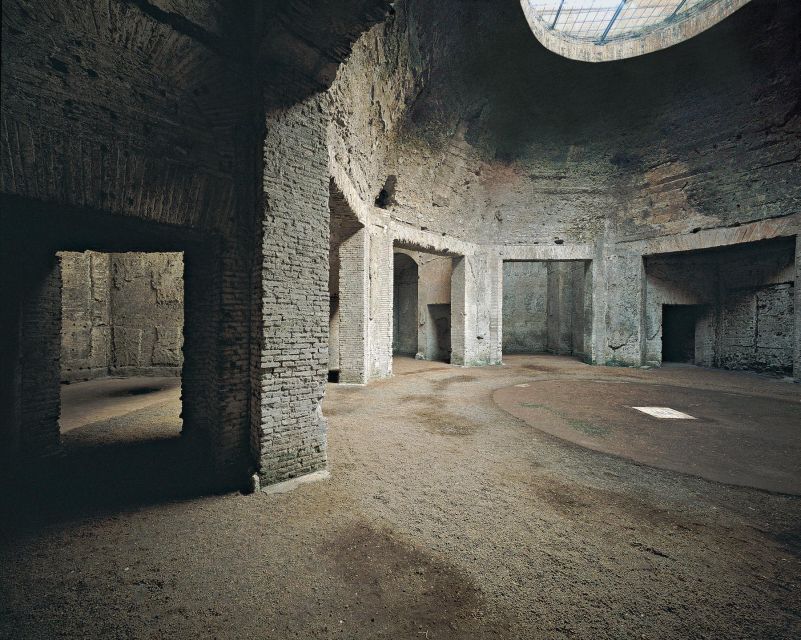
Many ancient Roman sites are open to the sky. At the Domus Aurea, you enter a buried palace and move through enclosed rooms where the lighting, temperature, and silence change the mood at once. The building feels less like a conventional museum and more like an archaeological excavation that you are allowed to walk through.
Nero constructed the Domus Aurea after the great fire of Rome in AD 64. The palace complex was vast, richly decorated, and deeply unpopular because it represented the emperor’s private luxury on a huge scale. After Nero’s death, later rulers covered or reused much of it, helping preserve the rooms below ground while also removing the setting in which they were first seen.
You should not come expecting a complete palace with furniture, bright walls, and a clear view of every room. What you see are surviving walls, vaults, traces of decoration, and carefully managed areas of restoration. That incomplete quality is part of the appeal. You are looking at a building that survived through burial, damage, changing use, and centuries of rediscovery.
The guide helps connect the bare remains to Nero’s ambitions. Without that explanation, some spaces can seem like a sequence of brick chambers. With it, the rooms become evidence of a grand imperial project, and the missing pieces become easier to understand.
A few more Rome half-days worth a look
- Vatican: Museums & Sistine Chapel Entrance Ticket
★ 4.5 · 144,003 reviews - Vatican Museums & Sistine Chapel Tour with Optional Basilica
★ 4.3 · 67,413 reviews - Colosseum, Roman Forum & Palatine Guided Tour
★ 4.7 · 63,148 reviews
Meeting near Via delle Terme di Tito
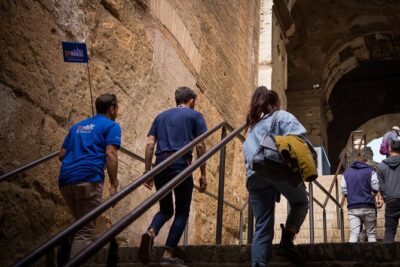
The tour has starting options on Via delle Terme di Tito. Read the meeting instructions closely before leaving your hotel, because this is one area where a small mistake can create stress. A few visitors have found the directions unclear, and one useful orientation tip is that the meeting point may be up the steps from the metro station.
You may receive contact through email or WhatsApp, so provide an address or number that you check while in Rome. The meeting point can vary according to the option you book. This is not the kind of tour where I would arrive at the last minute and hope to sort things out.
Bring your identification document and make sure the booking contains the first and last name of every participant. The entrance staff can refuse admission if those details are missing. That rule is easy to overlook, but it matters more here than on a casual city walk.
The tour includes an entrance ticket, guide, taxes, and VR equipment. An express security check is included, which helps reduce waiting at the site, but it does not remove the need to be organized before arrival.
Entering the underground palace
The visit lasts about 1.5 hours. Once inside, you follow the guide through the archaeological remains while learning how the palace was built, altered, buried, and later studied. The pace is generally suitable for taking in the walls and ceilings rather than rushing from room to room.
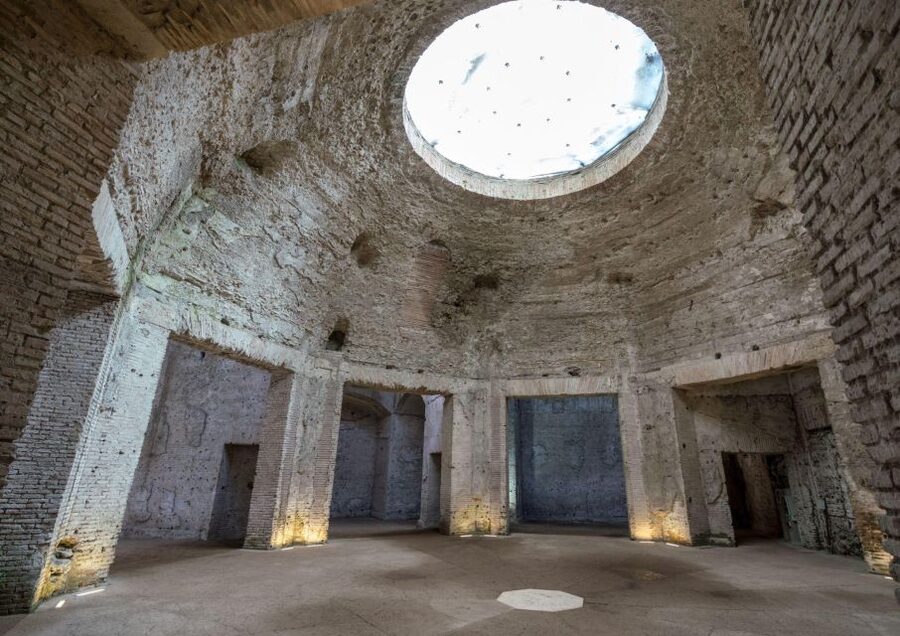
The palace’s size is one of the first things that hits you. Even in its reduced and damaged form, the complex feels far larger than the word villa suggests. The rooms are linked by passages and halls, and the surviving architecture gives you a sense of how ambitious Nero’s project was.
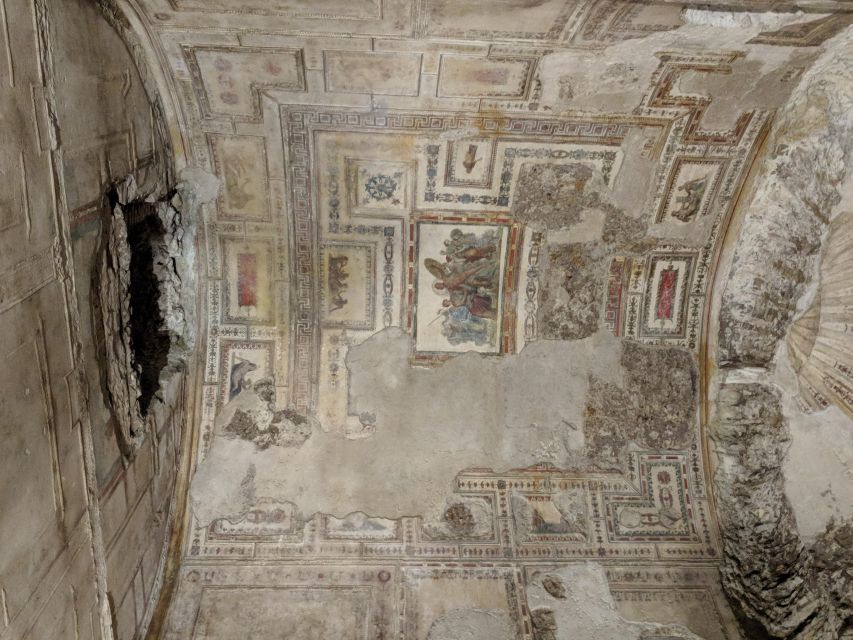
Look up as much as you look ahead. The vaults, painted surfaces, and decorative details are important clues to the original design. The site also helps explain why later artists were fascinated by Roman ornament. The rediscovery of underground Roman decoration influenced Renaissance and later European art, and this connection adds useful context if you plan to visit Rome’s churches and palaces afterward.
A guide is especially useful for the frescoes. In the dim rooms, it may not always be obvious where to look or what a fragment represents. A live explanation can direct your attention to a wall, ceiling, or architectural detail that you could easily pass without noticing.
What the restoration tells you
The restoration is not simply a matter of making old walls look new. You can see how modern conservation works around fragile ancient material while keeping the structure readable. The contemporary additions, including doors and windows, have been designed with care rather than treated as an afterthought.
That makes the visit valuable even if you already know something about Nero. You are seeing not just an ancient palace, but an active archaeological site whose presentation has changed over time. One repeat visitor noticed major differences from a visit several years earlier, which is a reminder that the Domus Aurea is not frozen in a final state.
The restoration also requires restraint. Ancient rooms cannot simply be opened to unlimited foot traffic, bright lights, food, or large bags. You cannot bring food and drinks inside, and luggage or large bags are not allowed. Those restrictions are sensible, but they mean you should visit with only the essentials.
The interior temperature is around 10 degrees Celsius. Even in Rome’s summer heat, you will want a jacket. The tour involves walking slowly through the site, so comfortable shoes matter more than stylish footwear. Several visitors specifically advised bringing warm layers, and a coat is the safest choice.
Same city, a completely different sort of day:
- Vatican Museums, Sistine Chapel & St Peter’s Basilica Guided Tour
★ 4.5 · 39,149 reviews - Rome: Colosseum, Palatine Hill and Roman Forum Guided Tour
★ 4.8 · 32,814 reviews - Rome: Guided Tour of Colosseum, Roman Forum & Palatine Hill
★ 4.7 · 27,897 reviews - Rome: Colosseum & Forum with Audio Guide App -Optional Arena
★ 4.2 · 24,770 reviews
The VR reconstruction and video narration
The VR portion is the tour’s biggest selling point. After seeing the real remains, you put on a headset and view a digital reconstruction of the palace as it may have appeared during Nero’s time. The contrast is striking: bare archaeological surfaces give way to an imagined world of finished rooms, decoration, and imperial display.
I like this approach because the technology supports the archaeology instead of replacing it. You first see what survives, then use the reconstruction to fill in the gaps. That order matters. A digital palace on its own could feel like a theme-park attraction, but here the ruins remain the starting point.
The VR experience can help you understand the height and scale of the rooms, along with the difference between a damaged wall and its original decorative scheme. It gives you a visual answer to questions that a guide’s words cannot fully solve. The accompanying video narration and interactive animations add another layer for visitors who learn best through images.
There is a small limitation. The VR sequence does not recreate every room in the exact place where you are standing, and one visitor wished it had been presented in the octagonal room. Think of it as an interpretive reconstruction, not a precise window into every original detail.
The equipment is included, so you do not need to arrange your own device. If you have an older phone, however, check any app instructions before arriving. One visitor had trouble because a spouse’s older phone could not download the required application. That issue may not affect everyone, but it is worth checking your technology in advance.
The guide can make or break the visit
The Domus Aurea benefits from a strong guide because the site does not explain itself easily. You need someone to connect Nero’s personality, the palace’s construction, later changes, and the restoration work without turning the visit into a lecture.
The best guides balance facts with a human voice. Claudia has been singled out for friendly storytelling, clear explanations, humor, and a steady pace. Simone and Nico have also been praised for making the rooms lively and keeping the group engaged. The guide may invite questions and point out details that would otherwise blend into the dark walls.
Language choices are English, Italian, Spanish, and French. Guide quality can vary, as it does on any shared tour. One English-speaking visitor found an accent and weak audio difficult to follow, while another praised exceptionally clear English and detailed archaeological explanations. If hearing every word matters to you, stay close to the guide and speak up if the sound is hard to catch.
Group size can affect the experience. A larger group makes it harder to see exactly what the guide is indicating, especially in narrow or dark spaces. One visitor felt the group was too large for the price, while many others found the organization and commentary strong. Booking early may help you find a better rate and a more suitable time.
Is $59 a fair price?
At $59 per person, this is not the cheapest way to see ancient Rome. You are paying for the entrance ticket, a professional guide, the VR equipment, taxes, and a guided visit lasting about 90 minutes. The price makes the most sense if you want explanation and visual context rather than simply entering the ruins on your own.
The VR component is the part that adds the most value. It answers the basic question every visitor has at the Domus Aurea: what did this place look like when it was complete? The guide also saves you from piecing together the site’s story from a few signs or from a guidebook.
I would compare this cost with your own interests. If you enjoy archaeology, Roman architecture, restoration, or visual technology, the tour offers a strong mix. If you prefer to wander silently and spend hours studying individual details, the 90-minute guided format may feel restrictive.
The tour is also useful for a first visit to the Domus Aurea. You receive a clear introduction to the site, then can use what you learn when visiting other Roman monuments. One visitor found that seeing Nero’s palace helped explain frescoes and ceilings encountered later in Rome’s Baroque buildings.
Who should take this tour?
I would recommend it to adults and older teenagers who enjoy ancient history and can handle an underground archaeological setting. It works especially well for anyone who finds it difficult to imagine ruins as complete buildings. The VR reconstruction gives you a visual bridge between the surviving stone and the original palace.
It is less suitable for young children. The tour is focused on history and archaeology, and one parent-oriented comment specifically advised against bringing children. The cold, dark rooms and steady explanations may not hold the attention of younger visitors.
The site is not suitable for wheelchair users or people with mobility impairments. Large bags and luggage are prohibited, and food and drinks cannot be taken inside. You should also be comfortable walking through an uneven archaeological environment, although the supplied information does not specify the exact surface conditions.
This is a good choice for a Rome visitor who has already seen the Colosseum and Forum and wants something less familiar. The Domus Aurea is not as immediately recognizable, but its combination of scale, restoration, and technology gives it a different character.
Practical advice for a smoother visit
I would prepare in five simple ways:
- Bring a warm jacket, even if Rome is hot outside.
- Wear comfortable shoes.
- Carry your ID and confirm that every participant’s first and last name is correctly supplied.
- Leave large bags and luggage elsewhere.
- Check the meeting point carefully, especially if you are coming from the metro.
Arrive with enough time to find the starting location. The meeting instructions have caused confusion, and the security staff may not allow you to wait inside before admission. Confirm your meeting details through the contact information provided for the booking.
The activity is non-refundable, so double-check the date, start time, names, and meeting location before paying. Starting times vary, and availability must be checked for the day you want.
Should you book the Domus Aurea tour?
Book it if you want more than a quick look at ancient walls. The strongest parts are the palace’s surprising scale, the careful restoration, and the VR sequence that gives shape to what has disappeared. A good guide, such as Claudia, Simone, or Nico, can turn the visit into a clear and memorable lesson in Roman power, art, and archaeology.
Skip it if you need wheelchair access, dislike cold underground spaces, or prefer completely independent sightseeing. Also think twice if unclear meeting instructions or a non-refundable booking would cause problems.
For most history-minded visitors, the $59 price is reasonable because it combines admission, guiding, and technology in one focused visit. Bring a coat, arrive prepared, and treat the VR as a tool for understanding the ruins rather than a substitute for them.
FAQ
How long does the Domus Aurea tour last?
The guided tour lasts 1.5 hours.
How much does the tour cost?
The listed price is $59 per person.
What languages are available?
Live tours are available in English, Italian, Spanish, and French.
Is the entrance ticket included?
Yes. The entrance ticket, professional guide, taxes, and VR devices are included.
Do I need to bring identification?
Yes. You must bring your ID, and you must provide the first and last name of every participant. Without those details, entrance may be refused.
How cold is the Domus Aurea?
The temperature inside is around 10 degrees Celsius. Bring a jacket or other warm clothing.
Is the tour suitable for wheelchair users?
No. The activity is not suitable for wheelchair users or people with mobility impairments.
Just added around Rome
- Boat excursion to Gaeta with a stop for swimming and snorkeling 2 HOURS★ 5.0 · 240 reviews
- Palatine Hill and Roman Forum Tour with Fast-Track Entrance★ 4.2 · 417 reviews
- Tivoli: Villa D’Este & Villa Adriana Pass & App Audioguide★ 4.4 · 364 reviews
- Tivoli: Villa D’Este Entry Ticket and App Audio Guide★ 4.3 · 191 reviews
- From Rome: Villa D’Este & Villa Adriana Day Trip with Lunch★ 4.4 · 289 reviews
- Vatican Museums & Sistine Chapel Skip-the-Line Guided Tour★ 4.6 · 254 reviews
- Rome: Capitoline Museums and Centrale Montemartini Tickets★ 4.4 · 328 reviews
- Rome: The Three Tenors at St. Paul’s Church Concert Ticket★ 4.7 · 699 reviews
Rome Tours, compared.
Vatican: Museums & Sistine Chapel Entrance Ticket
Read our review →
Vatican Museums & Sistine Chapel Tour with Optional Basilica
Read our review →
Colosseum, Roman Forum & Palatine Guided Tour
Read our review →
Vatican Museums, Sistine Chapel & St Peter’s Basilica Guided Tour
Read our review →
Colosseum, Palatine Hill and Roman Forum Guided Tour
Read our review →
Guided Tour of Colosseum, Roman Forum & Palatine Hill
Read our review →
Colosseum & Forum with Audio Guide App -Optional Arena
Read our review →